10 Reasons Why Your Shopify Store Needs a Mobile App

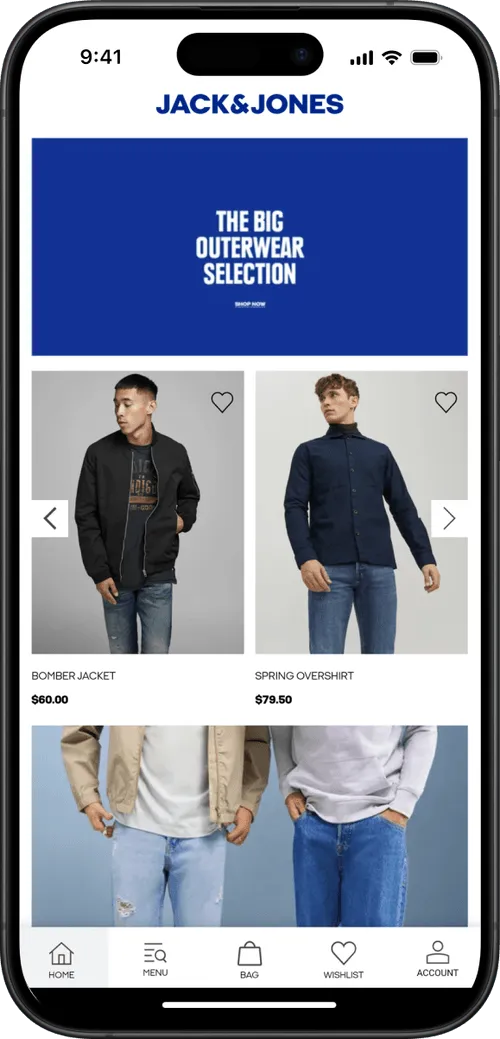
Most of your customers are on mobile. They browse on their phones, they buy on their phones, they do everything on their phones.
You’re serving these customers with a responsive, mobile-friendly website. But your mobile website should be the start of your mobile strategy - not the end.
Your most engaged customers, the top cohort driving most of your revenue, want an easier way to come back to your store, to shop and buy, and to get updates on the latest product drops or promotions.
A mobile app is a channel still relatively few Shopify brands have. It’s a competitive advantage - and it’s easier to launch one than you think.
Keep reading and we’ll break down ten compelling reasons why your store should have an app, along with the best way to build it.
Key takeaways
- An app holds onto the top cohort of customers who already drive most of your Shopify revenue.
- App users open more often and spend more per order than the same customers on mobile web. Pharmazone, a Shopify retail pharmacy, runs 63% of their online revenue through their app, from just around 15% of their total customer base.
- Push notifications reach the lock screen in real time, cost nothing per send, and outperform email on click-through and triggered conversions.
- Fewer than 0.5% of Shopify stores have a mobile app, making it a huge competitive advantage.
MobiLoud is the best way to build one, letting you go live with minimal effort, and without the overhead of having to maintain a second platform.
1. An app keeps your best customers close
One thing is crucial for sustainable growth today: retention.
If you want to run a profitable Shopify store, you need customers coming back, buying regularly. Yet the state of ecommerce right now is making this harder than ever.
It’s getting harder to reach customers via email, SMS gets costly, and retargeting ads cost more and more.
Your best customers are getting harder to reach, and brands that don’t have a reliable connection to these customers risk letting them slip away.
An app fixes that. It provides one-tap access to your store from the customer’s home screen, and you can reach them directly on their lock screen, with no intermediaries, via push notifications.
It’s a direct line to your best customers. That, alone, is reason enough to have an app.
2. App users buy more often and spend more per order
Something changes when a customer installs your app. They start opening it more often. They browse longer. They place bigger orders. Same person, same brand, different behavior.
The numbers we’ve seen from our customers tell the story.
Pharmazone is a 65-store retail pharmacy on Shopify out of Kuwait. Their app drives 63% of their online revenue, on just around 15% of their total customer base. The app does 7x higher conversion rates than their mobile website, 7x higher AOV, and drives 5x as many sessions. The result is 15x more revenue per user in the app vs the website.
Kiokii, a Canadian beauty brand on Shopify, gets 35% of their total online revenue from their app, with about 10% of their customer base installed. XCVI, a women's fashion brand, sees 4.8x higher revenue per user from their app cohort, plus a 30% lift in AOV.
Part of this lift comes from the higher quality of customer: these are already your top customers, your most engaged segment. But it’s also a channel that incentivises more usage, and actively drives lifts in your most important metrics.
3. A mobile app reduces your dependence on paid ads
Meta and Google ads cost more every year. iOS attribution has been broken since 2021, and gets worse with every Apple privacy update. Most operators paying attention to their MER will tell you efficiency has been consistently dropping every single year.
The fix isn’t switching agencies, or better creative, or an AI tool that lets you generate 1000 UGC ads in 20 seconds.
The real fix is getting more out of the customers you already paid to bring in.
That means three things. Getting them to come back more often. Getting them to spend more over their lifetime. And finding ways to reach them, to drive follow-up purchases, that don't cost money every time.
A mobile app helps with all three. Not every customer will download your app, but those that do will contribute meaningfully higher LTV, increasing your profit margins and average revenue per customer acquired.
When customer lifetime value goes up, the math on customer acquisition cost gets a lot less painful.
4. Push notifications
Push notifications are the most economically effective marketing channel for ecommerce brands.
They show up on the lock screen. The customer sees them right away. There's no Gmail Promotions tab to get filtered into, no Facebook algorithm deciding whether the message gets through.
What’s more, they’re free to send, and there’s about a 95% chance that the customer will see your message.
What would you pay for a channel with 95% open rates?
At a time when the noise in every other channel is just getting louder and louder, a direct channel like this is priceless.
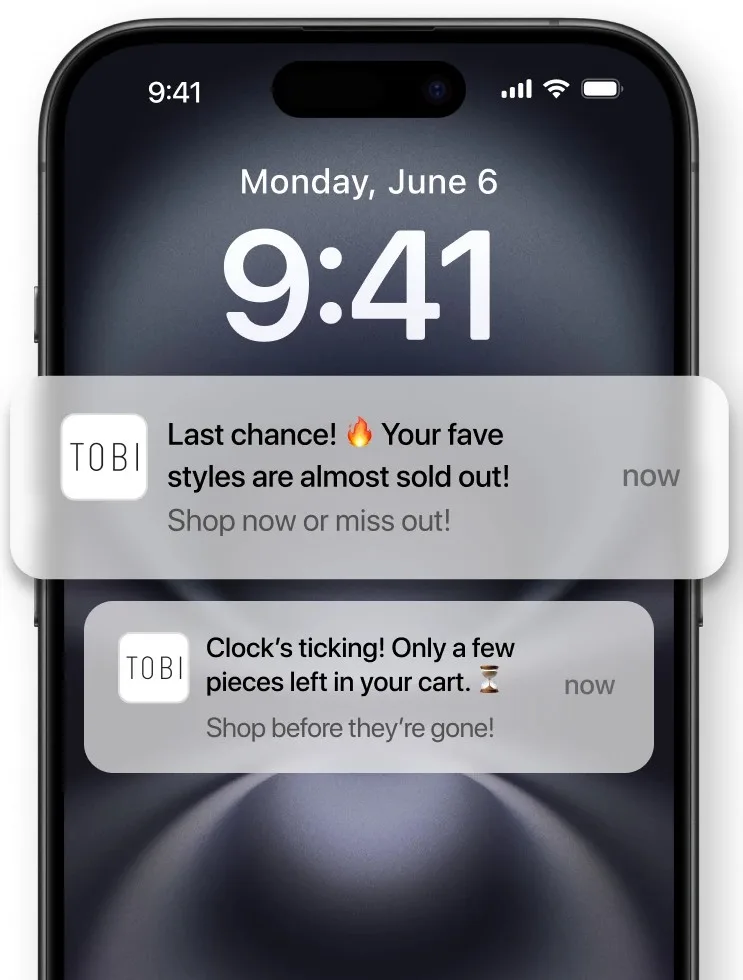
5. Abandoned cart push notifications
Push notifications are a compelling reason, on their own, to launch an app.
But we can go even further, and say abandoned cart notifications are also enough of a reason to have an app.
This one automation does a crazy amount of work. We’ve had brands driving six figures in revenue per month, just by recovering abandoned carts through their app.
It works so well because of the benefits we laid out in the section above. Messages are instant, they’re almost guaranteed to be seen. And abandoned cart push notifications are incredibly easy to automate, and give customers a one-tap path back to their cart.
Pharmazone’s abandoned cart campaign converts at 22%. Your abandoned cart emails might not even get 22% open rates. Push is just on another level for cart abandonment.
6. Reordering on mobile web is a six-step path; an app is one tap
The path for a customer to come back and buy again from your website is longer than it should be. And that friction will inevitably lead to lost sales.
Here's what a returning customer has to do to buy on mobile web:
- Remember your brand name
- Open a browser
- Type or search for you
- Scroll past competitor ads, AI overviews.
- Click through and wait for the page to load
- Log in (if cookies expired)
Each one of those is a place they can drop off, get interrupted, or decide to check Instagram and get lost in a rabbit hole of dog videos.
In an app, it’s so much faster. One tap and they’re in. No remembering a URL or searching for your brand.
For brands in natural repeat purchase categories, such as beauty, supplements, pet, food and beverage, this can make an immense difference to your repeat customer rate, which is basically life or death for your business.
7. An app makes your loyalty program work harder
Every brand has a loyalty program. But not many of them really move the needle.
That's usually not a problem with the program or how it’s set up. It’s positioning - the program’s landing in front of the wrong audience.
On your website, it’s buried. That’s natural; you’re not going to bombard someone who’s learning about your brand for the first time with a pitch to join your loyalty program.
A loyalty program is for your best customers. The same people who use your app.
In an app, your loyalty program can be more visible. Customers can see their points balance every time they open the app. You send them a notification when they hit a new tier. You offer exclusive loyalty perks for app users.
It becomes your VIP hub, not a thing you installed just because you felt you had to.
8. An app cuts through the noise during BFCM
BFCM is the biggest sales event of the year. It’s also by far the most competitive time of the year, with every brand fighting like mad for customers’ attention.
An app is the best way to cut through the noise of overflowing inboxes and ad feeds that cost 5x more than usual. You get push notifications that land on the customer’s lock screen, a benefit that’s worth 10x as much during crowded sales events like Black Friday.
Your app can be the hub for all your BFCM sales, and can help you convert more of your BFCM sales into long-term, engaged customers, who don’t drop off once November ends.
9. Less than 1% of Shopify stores have a mobile app
We pulled the data, and the results were surprising.
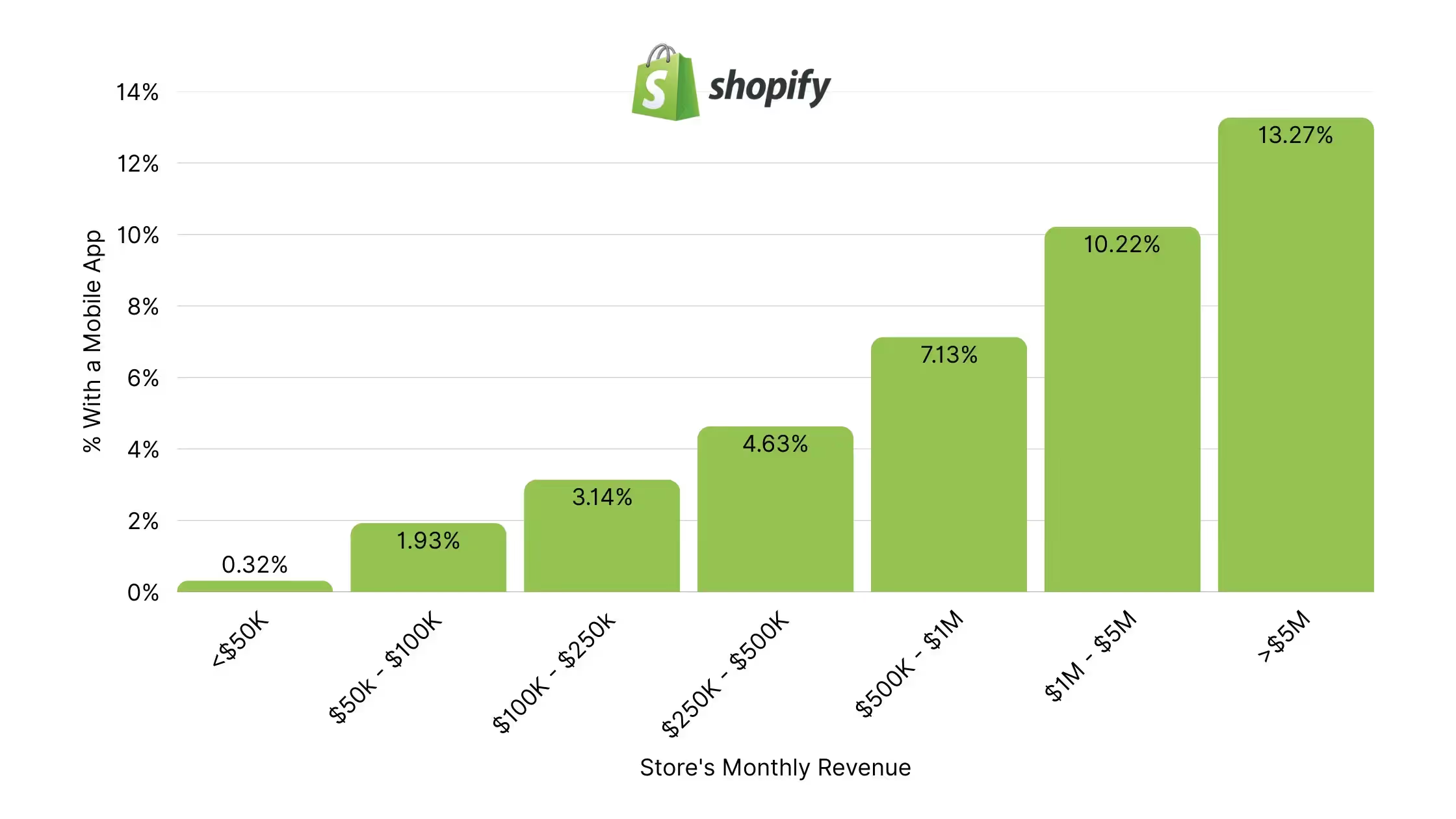
Under 0.5% of all Shopify brands have a mobile app. Remove small-scale stores and filter to brands doing $100K+ a month (roughly $1M annually), and the number only goes up to 4.24%.
That means less than one in twenty serious Shopify brands have a mobile app.
And that means it’s a powerful competitive advantage to have.
With ecommerce and Shopify becoming more saturated by the day, you need a way to stand out. To show shoppers that you’re not just another store. You’re a serious brand, with real weight.
10. A powerful churn-buster for subscription brands
Shopify runs more subscription businesses than any other ecommerce platform. And subscription brands are the type of brands where mobile apps really excel.
This category lives and dies on churn. Even small improvements here compound and make an overwhelming difference to your bottom line.
An app helps you reduce churn in a number of ways. It makes subscription management easier - customers can easily log in and pause, skip or alter their orders, keeping them subscribed instead of churning.
You can send smart renewal reminders and shipping notifications via push, which lands on the customer’s phone instantly, and prevents the kind of surprises that lead to churn.
Proactive communication is the key to lower churn, and that’s one of the biggest value-adds of a mobile app.
The best way to launch your Shopify mobile app
There are many brands that would love to have their own mobile app - but just have the impression that it’s too much work and too high of a cost to launch one.
With a Shopify mobile app builder, that’s not true anymore. Any successful Shopify store can create a mobile app, without the tax and huge operational lift of a custom development project.
There are two ways to look at this. If you’re a smaller store, needing a simple app with few complicated features (basically just a static, vanilla storefront), you can check out the Shopify App Store for cheap DIY tools that let you launch a mobile app for your store.
If you’re running the kind of brand that doesn’t fit these tools - mid-market to enterprise-level brands, with more complex requirements that a no-code tool can’t handle, MobiLoud is for you.
MobiLoud turns your existing store into a powerful, custom mobile app. Everything great about your store carries over to the app, from your integrations to theme customizations to custom features.
It’s fully managed for you, letting you keep your team focused on marketing and merchandising, while an expert team manages your app.
"MobiLoud keeps this whole thing simple and streamlined. No more juggling two different platforms, no more wasted time on maintenance. MobiLoud made a lot of sense because it literally uses Shopify. When Shopify upgrades, the app is updated."
- Eric Lowe, Director of Ecommerce at XCVI
If you’re ready to build your app, get in touch. Book a free strategy call and we'll walk you through a preview of what your app would look like, answer any questions you have, and help you map the best way to go live with your own, branded mobile app, and put your brand on your customer's home screen.
FAQs

Convert your website into a mobile app