Acquiring a new customer is expensive. And it’s getting more expensive, every. single. day.
For a lot of ecommerce brands, the first order barely covers the cost of the ads, discounts and other marketing it took to generate the sale. These brands are only making any profit if customers come back and buy for a second time.
When this is the case, repeat customer rate becomes arguably the most important metric in your business.
Mobile apps are one of the best ways to get this number up.
An app gives customers a faster route back to your store, lets you re-engage them through push notifications and amplifies the performance of things like loyalty, subscriptions and personalization, which all contribute to a higher repeat purchase rate.
A mobile app is not a panacea, and it’s not a solution for a brand whose catalog and merchandising doesn’t make sense for repeat purchases.
But when customers already have a reason to buy from you again, an app can make that repeat purchase much more likely.
What Is Repeat Customer Rate?
Repeat customer rate is the percentage of your customers who place more than one order within a given period, usually 12 months.
The formula is straightforward:
Repeat Customer Rate = Customers Who Purchased More Than Once / Total Customers x 100
Say you had 1,000 customers last year and 280 of them placed at least two orders.
Your repeat customer rate would be 28%.
It’s a simple metric, but it tells you a lot about the health of your business.
A low repeat customer rate means you’re constantly relying on new buyers to keep revenue moving. A strong rate means your acquisition spend is creating customers who continue generating revenue after their first order.
That’s where the economics get much more attractive.
What Is a Good Repeat Customer Rate in Ecommerce?
Most benchmarks put the average ecommerce repeat customer rate at around 25-30%.
Shopify cites an average ecommerce customer retention rate of around 30%, while Bluecore found a lower average repeat purchase rate of 16.5% across more than 100 major retailers. The difference comes partly from how each study defines and measures returning customers.
As a broad benchmark:
- Below 20%: There’s probably significant room to improve
- 20-30%: You’re around the average for ecommerce
- 30-40%: You’re outperforming many ecommerce brands
- Above 40%: You’re in strong territory, often seen in subscriptions and high-frequency consumable categories
But the overall average only tells you so much.
A 20% repeat customer rate could be strong for a furniture brand. For a supplement brand selling products customers use every month, the same rate could point to a serious retention problem.
The most useful comparison is with brands that sell similar products, at similar price points and with a similar natural purchase cycle.
Repeat Customer Rate by Industry
Here's how repeat customer rates typically break down across major ecommerce categories.
| Industry | Repeat Customer Rate | Key Driver |
|---|---|---|
| Grocery & Food Delivery | 40%+ | Weekly replenishment cycle |
| Pet Supplies | 30–40%+ | Autoship subscriptions, brand loyalty |
| Health & Supplements | ~29% | Consumable products, auto-refill |
| Fashion & Apparel | 20–26% | Seasonal buying, style loyalty |
| Beauty & Cosmetics | ~21–26% | Replenishment cycles, deal-hunting |
| Sporting Goods & Outdoor | ~21% | Mix of consumables and durables |
| Electronics & Tech | ~18% | Long product lifecycles |
| Home & Furniture | ~15% | Infrequent, high-ticket purchases |
| Luxury Goods & Jewelry | ~10% | High price points, long consideration |
(Industry-level data drawn primarily from Bluecore's Customer Growth Benchmarks Report and Opensend's repeat purchase rate analysis, supplemented with company-specific data where noted.)
The trend is easy to see.
The highest repeat rates generally belong to brands selling products people consume, replace or reorder regularly.
Customers need more groceries, dog food, skincare and supplements whether or not a brand runs a sophisticated retention strategy.
Durable and high-ticket categories naturally sit lower. Someone might order coffee every two weeks, but they’re not buying a new laptop or couch on the same schedule.
Why Repeat Customers Matter So Much
Repeat customers change the economics of your entire business.
Bluecore found that active buyers placed 57.6% more orders and spent 69.2% more than new customers across the retailers in its study.
A returning customer already knows your brand. They’ve tried the product, gone through checkout and seen whether you deliver on your promises.
You don’t need to build trust from zero each time.
They’re also less dependent on paid acquisition. Instead of paying Meta or Google to put your brand back in front of someone who already bought from you, you can often reach that person through channels you own.
The second purchase is especially important. It’s usually a major inflection point, where every additional purchase becomes more likely.
Once a customer comes back and orders again, you’re no longer dealing with a one-off transaction. You’re starting to create a buying habit.
Everything you can do to make that second purchase easier has the potential to compound over the customer’s lifetime.
How Mobile Apps Increase Repeat Customer Rate
A mobile app is a powerful retention channel.
You’re unlikely to convince a first-time website visitor to install it. But that’s not the goal.
The goal is to get your most engaged customers into the app, give them a better way to shop and create a direct channel to bring them back.
MobiLoud’s ecommerce benchmark data finds that 60% of first-time app buyers make at least one additional purchase. App users also purchase around 33% more often than non-app users.
Here’s why apps can have such a strong effect on repeat purchase behavior.
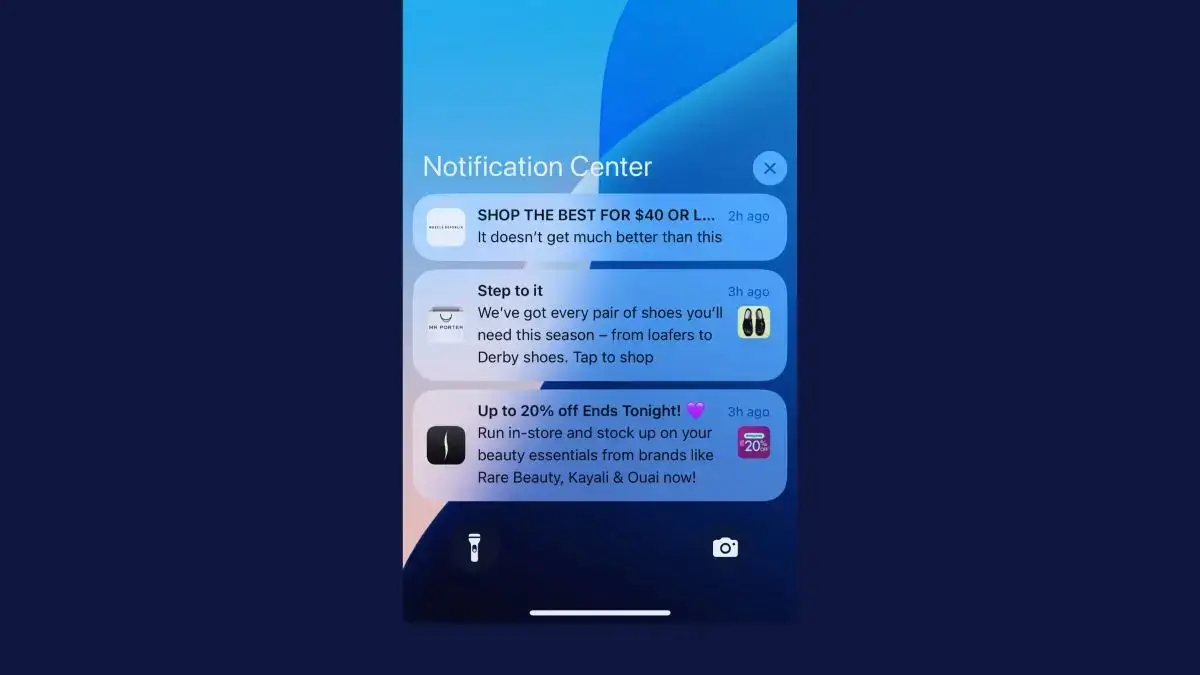
Push Notifications Give You a Direct Communication Channel
Push notifications are probably the biggest retention advantage of having an app.
Email is valuable, but everyone’s inbox is crowded, and open rates are dropping. SMS can get attention, but every message comes with a sending cost and customers get tired fast from receiving promotional texts.
Push gives you a direct, zero-cost channel your customers.
Once a customer has your app and enables notifications, you can reach them instantly on their phone without paying for every message.
You can use push notifications for things like:
- Replenishment reminders
- Product launches
- Back-in-stock alerts
- Price drops
- Loyalty rewards
- Abandoned carts
- Subscription reminders
- Personalized product recommendations
- Win-back campaigns
- App-exclusive promotions
This is extremely powerful for repeat-purchase brands.
A supplement brand can send a reminder around the point when a customer is likely to run out. A beauty brand can promote a new product that fits the customer’s previous purchases. A fashion brand can alert its best customers before a new collection goes live.
The message arrives at the right moment and opens directly into the relevant page in the app.
Minimal friction, no middleman controlling your reach, or taking a cut of your click.
Your Store Lives on the Customer’s Home Screen
A website disappears when the browser tab closes.
An app remains on the customer’s phone.
That gives your brand a permanent, visible place in the customer’s digital routine. Every time they scroll through their apps, there’s a chance they see your icon and remember your store.
More importantly, they don’t need to find their way back through another channel.
They don’t have to:
- Search for your brand
- Remember your website address
- Find an old email
- Click a social post
- Respond to a retargeting ad
- Navigate through a marketplace
They tap the icon and they’re back in your store.
That sounds like a small improvement, but repeat purchasing is often about removing small pieces of friction.
The easier it is to return, the more likely customers are to do it.
Apps Make Repeat Purchases Faster
Returning customers don’t need the same amount of persuasion as a first-time visitor.
They already know what they want. Your job is to make it as easy as possible for them to buy it again.
A mobile app cuts friction, and lets you deliver an experience dedicated to returning customers.
Cold Culture did just that. This worldwide streetwear brand built their app with MobiLoud, and specially designed it to streamline the customer experience, removing all the elements of the site designed to sell to new customers, and creating a super-quick path to buying, for people who are already sold.
"In two clicks you have the purchase done. The worst case there will be three clicks: enter the product, add to cart, and finish the purchase."
Apps Give Your Loyalty Program More Visibility
Most brands’ loyalty programs are buried. They’re hidden away, customers don’t know (or forget) they exist, often because your priority is to convert new customers (not promote a loyalty program that a first-time buyer doesn’t care about).
Even people who join your loyalty program forget how many points they have, what rewards are available or how close they are to the next membership tier.
An app gives your loyalty program a much more visible home. Customers can open the app to check their points balance, redeem rewards, track progress towards their next tier. And push notifications are a great way for you to bring their attention back to the loyalty program, back to the rewards they can earn by shopping more often.
Read more: How to Integrate Your Shopify Loyalty Program Into a Mobile App
Apps Make Subscriptions Stronger
Subscriptions are one of the most direct ways to increase repeat purchases.
Instead of asking the customer to make a fresh buying decision every month, you turn the purchase into a default behavior.
But subscription retention depends heavily on the customer experience. Thousands of brands have turned on subscriptions, thinking it’s going to be a cheat code for retention, only to get burned by high subscription churn.
An app is one of the best ways to increase subscriber retention and get more out of your subscriptions.
It gives customers a convenient place to manage their subscriptions, and it gives you a reliable way to communicate subscription updates and other offers that can boost subscriber revenue.
Read more: Shopify Subscriptions in Mobile Apps: How to Bring Your Full Subscription Experience Into an App
Apps Make Personalization More Useful
Personalization works best when you know who the customer is and have enough information to make the experience genuinely relevant.
App users are logged in and already have a purchase or browsing history.
That gives you a strong foundation for personalized customer experiences, delivering the right recommendations to the right people, sending personalized push campaigns, and gathering data that compounds over time.
Apps Create More Reasons to Engage Between Purchases
Not every app session needs to begin with an immediate intent to buy.
That’s especially important for brands with longer purchase cycles.
You can give customers reasons to return through:
- Early access to launches
- App-exclusive products
- Limited product drops
- Member pricing
- Personalized content
- Product education
- Loyalty challenges
- Community features
- In-app events
- Interactive product tools
These experiences keep the brand present between orders.
The more often customers engage with you, the more opportunities you have to generate the next purchase when the timing is right.
The Caveat: Brands With High Repeat Customer Rates Are Best Suited for Mobile Apps
Here’s one thing to keep in mind, before you go thinking that a mobile app will let you convince someone to buy a new mattress every week.
Mobile apps are a powerful tool for repeat purchases. But in almost all cases, only when the foundation for retention is already there.
If your repeat customer rate is low because there’s little reason for someone to come back and buy again, an app is not the solution.
Apps are best for brands where repeat purchases make sense. Categories like grocery, food and beverage, supplements, where products run out and need re-purchasing.
Fashion is a great category for mobile apps too. While it’s not a consumable category, it is a category where people tend to buy more than one of something. You can convince someone to buy another shirt, or another dress.
And the better your repeat purchase rate is already, the better an app will be for you.
More regular customers = more people who can benefit from your app = more revenue upside.
Can Mobile Apps Work for Lower-Frequency Categories?
Furniture, electronics, jewelry and other high-ticket categories don’t have the same natural replenishment cycle as food, beauty or supplements.
But that doesn’t mean an app can’t work.
There just needs to be a good reason for the app to exist, and for the customer to have it on their phone.
That could mean accessories and complementary products that the customer buys through the app.
It could just mean regularly engaging with customers and understanding that the goal is not to drive a sale in every session.
John Varvatos, for example. They’re a luxury fashion brand, with an AOV well into the hundreds of dollars. Yet their app is a key channel, with app users visiting 12x more regularly, staying for 3.6x longer in each session, and contributing 10x higher revenue per user.
“In high priced fashion, people want that VIP treatment. If you go to a John Varvatos location today, we'll take care of you. It's one-on-one. We'll work with you, hand you a drink when you walk in, you sit down in the nice little lounge area. We'll bring clothes to you to try on. It's a VIP customer experience that we're providing. We also want to do that via our app.”
A luxury customer may make purchases less frequently, but the value of each customer and each order can still justify a dedicated app experience.
Final Thoughts
Repeat customer rate (and, subsequently, purchase frequency) is the most important part of ecommerce today.
When it gets so much harder to bring in new customers, getting the most out of the customers who do land on your site becomes vital.
The most straightforward thing you can do to increase repeat purchases is just making it easy for customers.
And that’s why mobile apps are so powerful for repeat purchases.
It gives customers a permanent route back to your store. It removes friction from repeat purchases. It brings loyalty, subscriptions and personalization closer to the customer.
Most importantly, it gives you push notifications: a direct, low-cost channel for bringing customers back at the right moment.