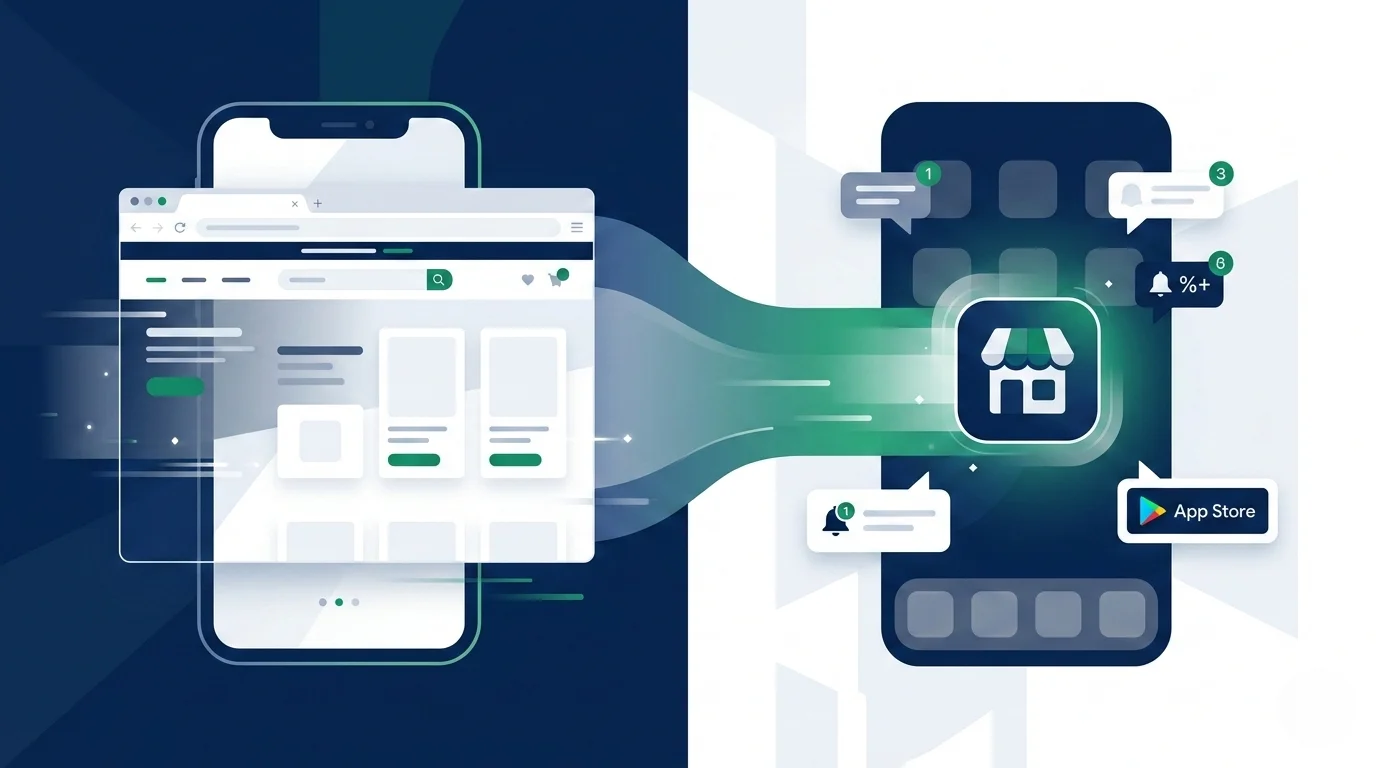
Mobile apps should be on the radar for any serious Magento or Adobe Commerce brand. The business case is clear: app users come back more often, spend more per order, and cost less to reach than customers who only visit your mobile website.
The biggest question isn't whether to build an app. It's how.
This article is the complete guide to Magento mobile app development for brand operators: a practical walkthrough of the different ways to get there, the challenges you’re likely to face, and the solution that’s most efficient for you.
At MobiLoud we’ve been working with online brands for over 12 years, including many brands with custom, Magento-powered websites. That first-hand experience working with brands like yours is what we’ve used to shape this article and provide a real, zero-fluff breakdown of the best way for you to launch your mobile app.
Why Your Magento Brand Needs a Mobile App
Magento and Adobe Commerce brands tend to be larger, more retention-driven, and more operationally complex than the average Shopify SMB.
That's exactly the profile where mobile apps have the biggest impact; the kind of brands that, without question, need to have an app.
And while everything online is talking about the death of non-Shopify ecommerce, the Magento (and Adobe Commerce) ecosystem isn’t going anywhere. It’s still one of the 5 most popular ecommerce platforms, and tends to command a higher market share among mid-market and enterprise brands.
Here are a few key reasons why your brand should have its own app:
A home screen icon keeps your brand in front of your best customers
When you have an app, your brand’s logo lives on your customer's home screen, sitting next to Amazon, Instagram, and TikTok.
That provides constant brand awareness, plus organic return visits, not dependent on a social media algorithm or ad spend.
App shoppers spend more per visit and per year
App users consistently have higher AOV and higher annual spend than mobile web shoppers. Some of that is self-selection (your most engaged customers install). The rest is experience: a native experience drives stronger and longer engagement, leading to more visits and more sales.
Push notifications reach customers directly, for free
Native push notifications are the most powerful marketing channel in ecommerce, on a message for message basis. They reach your customers on their lock screen, with zero per-send cost, and almost guaranteed visibility.
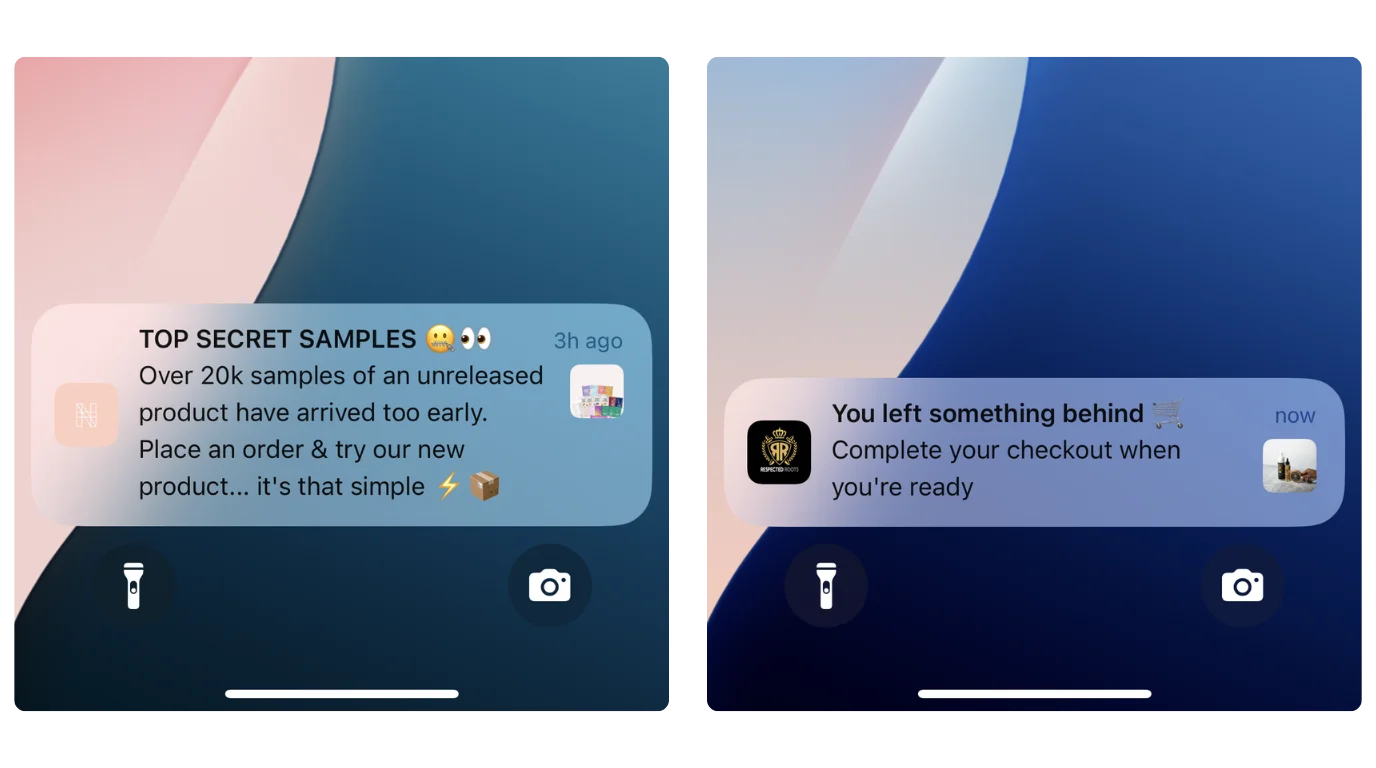
Push is the only channel you have that combines high reach, direct-to-device delivery, and effectively no marginal cost.
Behavioral push recovers revenue mobile web can't touch
Abandoned cart, back-in-stock, and price-drop notifications reach customers the moment it matters and convert at rates email can't match. With a meaningful install base, the push notifications, on their own, become one of your best revenue channels.
What to Know When Building a Mobile App for Your Magento Store
Many Magento brands, despite years building and perfecting a bespoke web experience, have little experience in the domain of mobile apps.
That means there’s a lot to learn - from the different kinds of mobile app you can build, to the cost and time expectations, plus the unique challenges for Magento/Adobe Commerce brands.
Here’s a primer on what you need to know.
The Different Ways to Build a Magento Mobile App
Not all mobile apps are the same.
Like you can build a simple website with a simple template-based CMS, or a complex self-hosted PHP site, there are varying scopes when it comes to mobile apps.
There are:
- Custom native apps: apps built from scratch in mobile-native frameworks, like Swift, Kotlin, React Native and Flutter. The app integrates with Magento via REST or GraphQL APIs, and offers optimal performance, but a high level of management required.
- Template-based apps: SaaS tools and Magento extensions that pull your product data into pre-built mobile app templates. Simple, very affordable, but inflexible.
- Progressive Web Apps: Adobe’s PWA Studio lets you put together a PWA, which is not a “real” mobile app, but a more powerful version of your site, that offers limited app-like functionality.
- Hybrid mobile apps: an approach to mobile apps that’s growing in popularity, letting you build apps that utilize and build on top of your existing web code; instead of starting over from scratch with a new codebase.
The kind of app you build is probably the most important decision you can make in the procurement process, as it influences the cost, timeline, functionality and user experience of the end product.
What it Costs to Build a Magento Mobile App
Building a mobile app for a Magento store can cost anywhere from $50 to $500K.
On the low end, some general-purpose webview app builders can cost as little as $50 to go live with your app (though it’ll essentially just be a website in a box; likely not publish-worthy).
Template-based app builders built for Magento, such as MageComp, Webkul and MageMob, cost anywhere from $200-$500 (typically per-year).
On the high end, you’re looking at a wide range - potentially $150,000-$500,000, for a custom native app built from scratch by an agency/dev team. (that’s for v1 - not including the ongoing operating cost).
With MobiLoud, you’re looking at a cost in the low-four figures per month (with little to no incremental cost on top of that, such as labor cost or opportunity cost).
The Challenges No One Warns You About
There are some obvious challenges when it comes to building a mobile app.
Your team doesn’t know how to build one.
App developers are expensive.
No-code tools are too rigid.
You can get past these challenges. But the struggle of finding the right developer or stringing together the budget for a custom app are actually not the biggest things to worry about.
The biggest roadblocks are more about what happens after you launch.
1: The overhead of a separate platform
A standalone app is a second product to maintain, with its own roadmap, its own QA cycle, its own release process.
This is a major operational drag (not to mention the recurring maintenance cost). You’re essentially giving yourself a second storefront to take care of.
2: Duplicate work
Whether you build a $500K custom app, or a $200 template app, with two separate platforms, you’re left doing the same work twice.
Merchandising, promos, seasonal changes. The same updates you do on your website need to be done again on your mobile app, creating massive duplication of effort.
3: Inconsistencies between website and app
This is something we see incredibly often.
Your website moves faster than your app; new features, updates, tests, small changes. A gap emerges between your website and app, which you’re constantly scrambling to close.
Sometimes it’s not even possible to close the gap. Some of your web features or integrations from your site might not work in your app. You can risk ending up with an app that provides a worse experience than your website - which is the opposite of what it’s supposed to be.
What Your Magento Mobile App Needs to Add to Your Website
Here's something most people overlook: your Adobe Commerce or Magento store already does almost everything your app needs to do.
Think about it.
- Your storefront has the catalog, product pages, search, cart, and checkout.
- It processes payments, including Apple Pay and Google Pay support.
- It runs your loyalty program, reviews, subscriptions, personalization, B2B logic, and merchandising rules.
- It likely integrates with a number of powerful marketing tools.
- For Adobe Commerce B2B stores, it handles company accounts, quote workflows, contracted pricing, and custom catalogs.
That took a lot of years and a lot of money to assemble. It works on your mobile. There's not a lot that’s fundamentally different about how someone buys on your app vs your website.
You’re launching an app to provide an improved mobile UX. But the differences are not that extreme.
You’re looking for a native layer on top of your existing storefront, not a completely new, completely reimagined UX. Most Magento brands need:
- A home screen icon so customers can reach you without typing a URL or digging around in their bookmarks.
- App Store and Google Play listings, which make it easy for your customers to find and download your app.
- Native push notifications.
- Small native UI improvements: native tab bar, hamburger menu, small touches that make it feel mobile-native.
- App-exclusive experiences, like exclusive pricing or products or other perks for app users, perhaps a special homepage for your app.
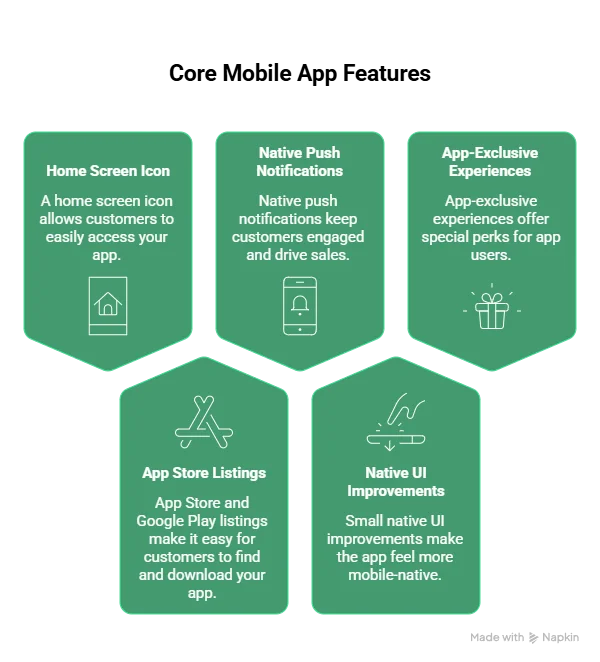
The app should feel special. But the features you need to make it feel that way aren’t.
How MobiLoud Builds Mobile Apps for Magento and Adobe Commerce Brands
MobiLoud is a custom development partner that turns your existing Magento or Adobe Commerce storefront into a native iOS and Android app.
You get a custom app, built specifically for your brand, distributed on the App Store and Google Play, with native push notifications, deep linking, native UI, and everything you need for an engaging UX.
The difference? MobiLoud’s approach builds on top of your website, not alongside it.
- You’re not creating a brand new, mobile-native codebase that needs a dedicated team to manage.
- You’re not importing product data into a basic, rigid and inflexible template.
You manage the content and design through your Magento/Adobe Commerce backend, with the same team you currently have.
Why MobiLoud Is the Best Way to Build a Mobile App for Magento and Adobe Commerce
Here's what you get with MobiLoud, and why brands like yours choose us over the alternatives:
- Built on your existing tech stack. Every feature, extension, and design update on your Magento or Adobe Commerce site works in your app. No rebuilding what already works.
- Done-for-you service. MobiLoud’s team handles everything to do with the app, from build to testing to ongoing maintenance.
- Works with Magento Open Source, Adobe Commerce, and Adobe Commerce B2B. Including Hyvä builds, Mage-OS open source forks, headless builds. Whatever flavor of Magento your storefront is on, the app inherits it.
- Native & app-only features. MobiLoud’s team helps you make your app a unique experience with virtually no limitations.
- Roughly 6-8 weeks to launch. It generally takes around 6-8 weeks to go live, significantly faster than a custom build (which is usually 6 months minimum).
- Predictable, flat-fee pricing. The cost is much more affordable than building a new app from scratch, with no revenue share or surprise bills.
MobiLoud has built over 2,000 apps since 2013, specializing in custom, bespoke ecommerce brands like those that typically run on Magento.
With no parallel codebase, and none of the limitations of no-code app builders, it’s just a better way to launch a custom app.
How MobiLoud Compares to Custom Development and Template-Based Builders
Compared to API-driven custom development, MobiLoud delivers the same native app outcome at a fraction of the cost and complexity.
No parallel engineering team to staff. Faster time-to-launch by months.
MobiLoud’s architecture, which lets you use your website as the source of all your content, product details and design, means your storefront and your app stay in sync, automatically.
Compared to template-based app builders, MobiLoud delivers a real custom app rather than a basic template. Your storefront, your design, your integrations, your B2B logic, all carry over to the app. Compliance and maintenance live with our team, not yours.
This is also where our track record on enterprise-grade ecommerce stacks matters. Magento and Adobe Commerce brands tend to run heavily customized storefronts. The architectural advantage of building on top of that storefront, instead of trying to rebuild it elsewhere, compounds with every customization.
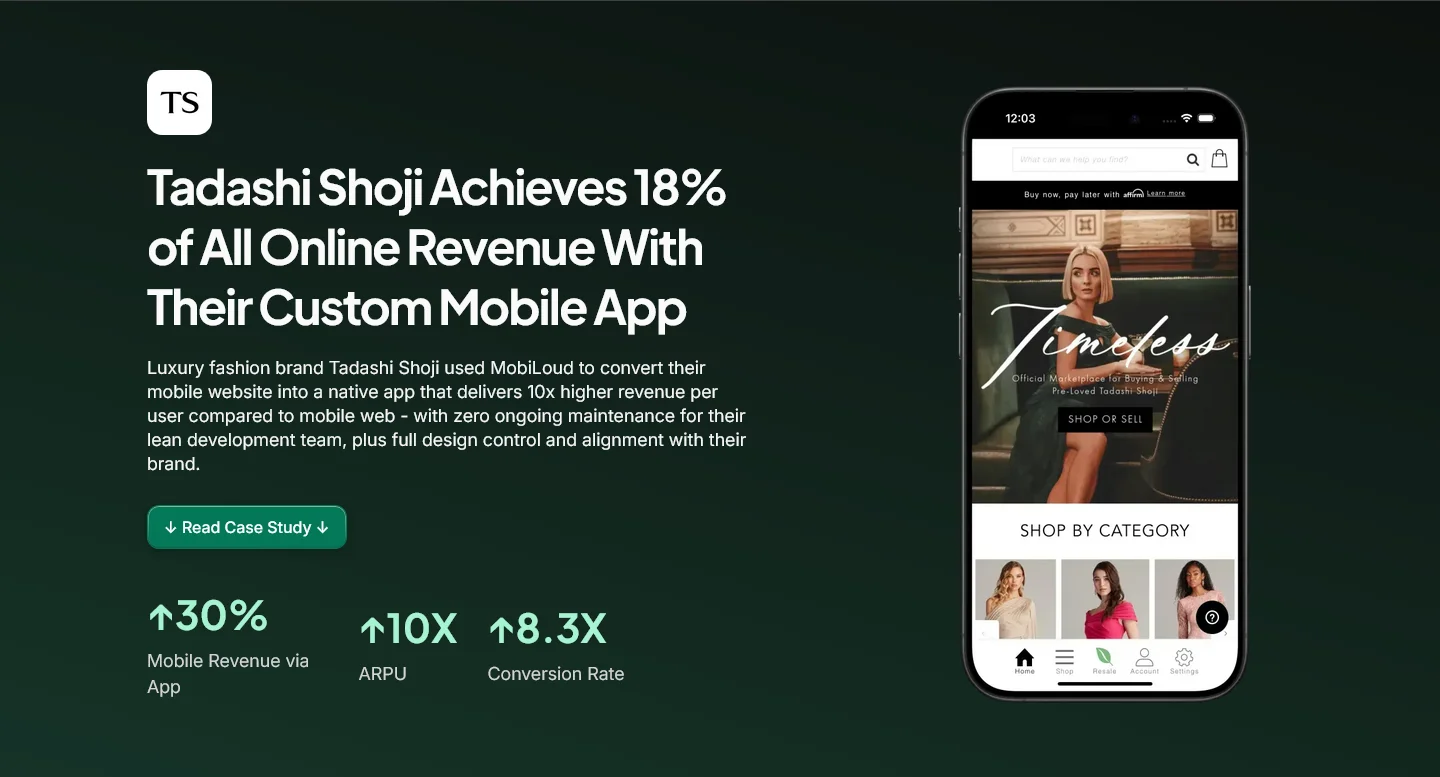
Tadashi Shoji: Custom Magento-Powered App, with a Lean Dev Team
Luxury fashion brand Tadashi Shoji partnered with MobiLoud to launch their app.
As a product-first company, they operate with a lean IT team. They don’t have mobile app developers on the team, and the prospect of building a custom native app appeared prohibitively expensive and resource-intensive when they explored it.
“At first, we explored the viability of building our own native apps from the ground up. And while that was achievable, managing them effectively moving forward would not have been feasible due to the disconnected nature of such an approach.”
-- David Chamberlin, Lead Developer, Tadashi Shoji
The solution: MobiLoud worked with them to launch a custom app, powered by the same tech stack they already used.
The result was an app that fit their brand perfectly, and delivered results with minimal upkeep - contributing 18% of their total online revenue, and 10x higher revenue per user, 8.3x higher conversion rate and 3.8x session frequency compared to their mobile website.
Getting Started: Building Your Magento Mobile App
An ecommerce brand built on Magento/Adobe Commerce will almost certainly benefit from the brand and engagement benefits of a native app.
MobiLoud is the best way to get there. You don’t need to spend six figures on a custom build that may or may not work as you want it to, and you don’t need to be hampered by the limitations of a no-code platform.
If you're ready to explore your options, book a free strategy call, and we’ll walk you through a free preview of your Magento or Adobe Commerce store as a native app, answer your questions, and help you scope what the project would look like for your brand.