You run a BigCommerce store and you want a native mobile app for your customers. Now you're trying to figure out what that takes: what it costs, what you get, and how to do it without handing over the next year of your roadmap to a mobile development project.
Your options are narrower than they are for mass-market ecommerce platforms like Shopify. BigCommerce has a smaller ecosystem of mobile app tools, and most of what exists was built for simple stores with standard catalogs.
If you've customized your Stencil theme, run B2B Edition, operate Multi-Storefront across brands or regions, or built a headless storefront on Catalyst, and you want to carry all this work over to your app, your options narrow further.
This guide covers the realistic options you have to launch a BigCommerce mobile app, the limitations and roadblocks you can expect, and how MobiLoud lets you launch an app without the custom development tax.
Does BigCommerce Have a Mobile App Builder?
No. BigCommerce is built for web storefronts and commerce backends; it doesn’t have a native iOS or Android built tool, or a first-party customer-facing mobile app product.
Three different things get called "BigCommerce mobile apps," and only one is what you're looking for:
- The BigCommerce admin mobile app. A free iOS and Android app for merchants to manage their store from a phone: view orders, update inventory, check sales. It's on bigcommerce.com/product/mobile-app. Useful for you as an operator. It has nothing to do with your customers' shopping experience.
- Installable apps on the BigCommerce developer platform. BigCommerce has extensive developer documentation for building installable apps that live in the BigCommerce App Marketplace: Single-Click Apps, Connector Apps, Scripts-Only Apps. These extend the control panel or connect third-party services to merchant stores. They're not shopping apps either.
- A customer-facing native shopping app for your store. This is the one you want. BigCommerce doesn't have a product that does this.
BigCommerce is a powerful ecommerce engine. You’ve got Stencil themes, the GraphQL Storefront API, the Checkout SDK, Catalyst for headless, and 1,200+ apps in the marketplace.
What it doesn't give you is a path from your storefront to a native app.
Why BigCommerce Stores Need a Mobile App
Most brands, today, should have their own mobile app. For a raft of reasons.
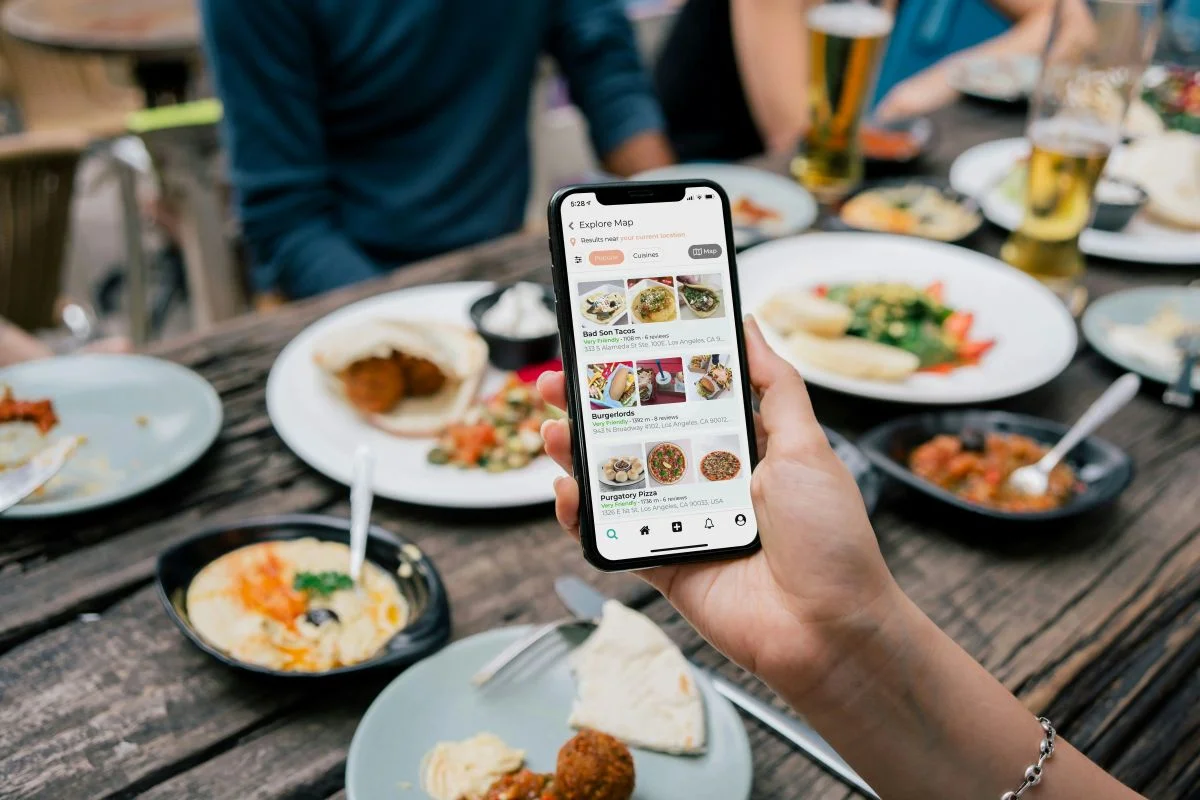
- Most of your traffic is already on mobile. A mobile app meets your customers where they are, with a more seamless user experience.
- Apps drive stronger engagement metrics across the board:10-50% higher AOV, higher conversion rates, longer session times.
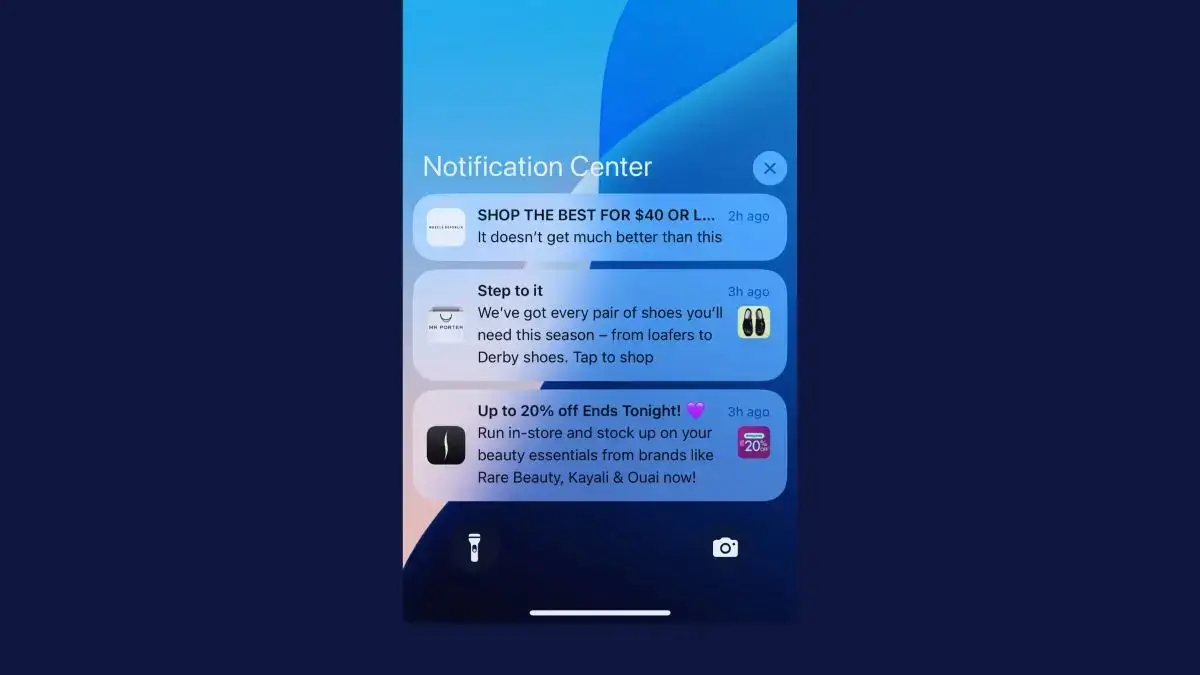
- An app keeps you closer to your customers, driving stronger retention through an always-on home screen presence, as well as push notifications (which reach your customers instantly, for free).
- Having an app is a crucial brand authority signal - particularly important for global, enterprise brands, like those that often use BigCommerce.
An app can easily make up 20-35% of your overall revenue (these numbers are common from brands we work with). That’s a channel that’s worth having, period.
The case for an app is clear. Getting there is usually the hardest part.
The Roadblocks to Launching a Mobile App for BigCommerce Stores
You want a mobile app, sure.
But most BigCommerce merchants who set out to build an app end up hitting the same roadblocks.
Let’s break them down now.
Custom Native Development Costs $150K+ (and Never Stops)
The traditional way to build an app is to hire a dev team or agency to build native apps from scratch, connecting them to BigCommerce through the GraphQL Storefront API, Checkout SDK, and Webhooks.
The math for this is pretty brutal. Here’s what you’re looking at:
- Initial build: $150,000 to $500,000+. This depends on catalog complexity, whether you run Multi-Storefront, whether you use B2B Edition, and how deep your ERP integration goes. Enterprise builds at the top of this range are common.
- Annual maintenance: $50,000 to $100,000+. iOS and Android release new OS versions every year. The App Store Review Guidelines and Google Play policies update constantly. You need engineers on retainer to keep the app compliant, secure, and running on current devices.
- Integration rebuild cost. Every BigCommerce app or integration your store depends on (Klaviyo, Yotpo, Searchspring, Avalara, ShipperHQ, Gorgias, LoyaltyLion, ERP connectors) has to be rebuilt in native code, often without a ready-made SDK. Each one is its own line item.
That’s just a difficult cost to justify, especially costs rising and margins shrinking globally, as they are now.
The Operational Complexity of Managing Two Platforms
Launching a custom app also creates major operational overhead.
You now have two codebases (three, if you have different builds for iOS/Android). Your website is maintained by one team on one release cycle. Your app is maintained by another team on a separate release cycle governed by App Store and Google Play approvals.
Every new product, pricing rule change, theme update, checkout tweak, promotional campaign, and integration swap on the website has to be replicated in native code on the app side.
What often happens is you stop maintaining the app, it falls out of step with your website, and eventually becomes a relic no one uses anymore.
No-Code App Builders Weren't Built for Serious BigCommerce Stores
There are few no-code tools that are built for the complexity of BigCommerce setups.
Sure, there are several tools out there that integrate with BigCommerce (you’ll find a couple in the BigCommerce app marketplace).
They work if your store is relatively simple. But they’ll struggle to replicate complex web features in your mobile app.
Customized Stencil themes, headless storefronts on Catalyst, Next.js, or Makeswift, B2B features, multi-storefront sites, deep integration stacks.
All these things power your website - but they’re unlikely to work with your app.
No-code BigCommerce mobile app builders are decent for what they’re built for. But for custom BigCommerce stores, these tools aren’t really an option.
A Progressive Web App Isn't a Real Mobile App
Another alternative often mooted is settling for a Progressive Web App (PWA).
If you're running a headless Catalyst storefront, you're likely already shipping a PWA by default. Catalyst targets Google Lighthouse scores of 100 out of the box and includes service workers for offline caching and add-to-home-screen capability.
This is useful for mobile web performance. It is not a substitute for a native app.
You don’t get the easy installation, full native push notifications, and brand authority that you get with a real mobile app.
What Your BigCommerce Mobile App Needs to Do
What do you really need from your mobile app?
The one thing that’s often overlooked - yet is really all you actually need from your app - is feature parity with your website.
Too many apps (especially cheaper builds) cut corners, sacrifice features from your website, and end up offering a watered-down version of your website.
This is a major problem: because if your app is not as good as your website, what reason is there for someone to use it?
“The app needs to be at least as functional as the website. It doesn’t need to be better than the website, but the user experience can’t be worse.”
Your BigCommerce website probably has some combination of the following features:
- Full catalog and pricing fidelity. Products, variants, custom fields, Customer Groups, Price Lists, B2B tiered pricing, custom facets, and active promotions, all rendered correctly.
- Your checkout, exactly as it works on web. Optimized One-Page Checkout or a Checkout SDK custom flow. Avalara for tax, ShipperHQ for shipping rules. Apple Pay, Google Pay, and every supported gateway firing cleanly inside the app.
- Every BigCommerce app and integration your store depends on. Klaviyo flows, Yotpo reviews, Searchspring or Klevu search, Gorgias support widgets, Smile.io or LoyaltyLion rewards, ERP connectors through Celigo. All working inside the app the same way they work on web.
- Multi-Storefront and B2B Edition. Multiple storefronts from one BigCommerce account. Buyer Portal, Quick Order, quote management, company accounts, purchase orders, CPQ.
- Headless and Catalyst compatibility. Works with a Catalyst frontend, a Makeswift-edited Next.js storefront, or any framework-agnostic build against the GraphQL Storefront API.
When you launch a mobile app, you want it to carry over all of the features you rely on from your website, with some core native functionality layered on top.
The Blueprint: How to Build a Native App for Your BigCommerce Store With MobiLoud
There’s one way to get everything you need from a BigCommerce mobile app, without the overhead and complexity of a custom native app.
MobiLoud takes your live BigCommerce storefront and turns it into native iOS and Android apps.
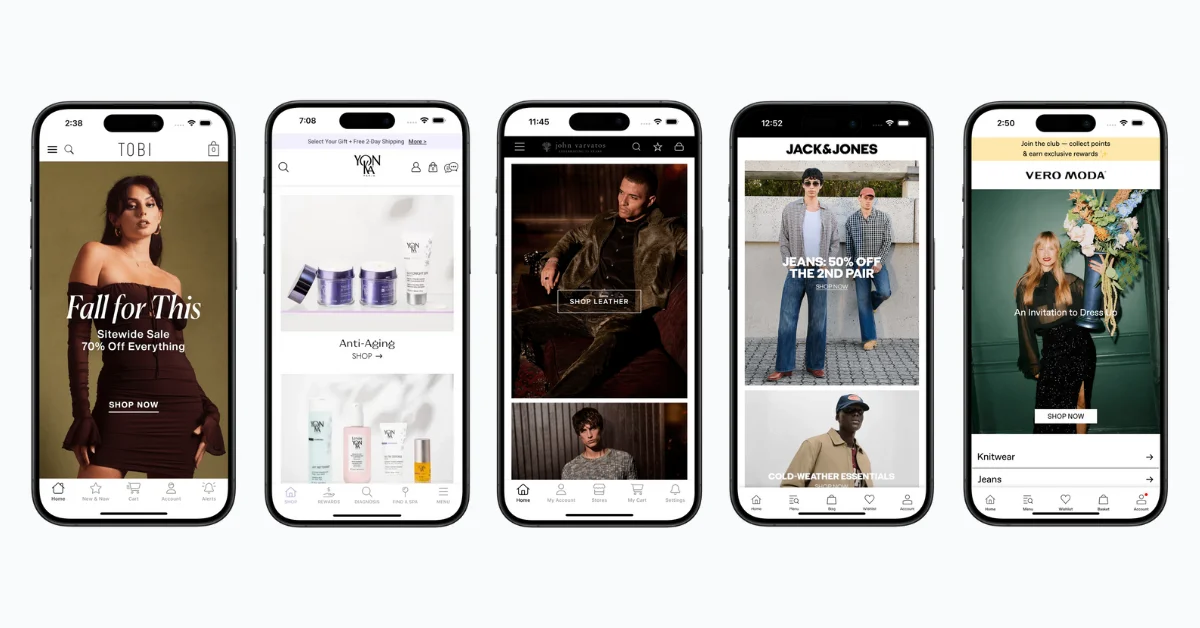
Your website powers the app. It carries over your Stencil theme, your headless Catalyst frontend, your customizations, your integrations, your checkout, your B2B and Multi-Storefront setup. Everything that already works on your website works inside the app, with real native capabilities on top.
There’s no second codebase, no parity drift, and no feature lag.
How It Works
MobiLoud builds iOS and Android apps that render your BigCommerce storefront natively. The storefront is the app. Every page, product, category, promotion, and integration that exists on your website works in the app, out of the box. The app delivers your actual storefront, not a parallel reconstruction of it.
MobiLoud adds a native layer on top of your store: push notifications, native navigation, deep linking, splash screens, and everything the App Store and Google Play require.
It’s the most direct way to turn your BigCommerce site into a mobile app.
What Carries Over
Everything you’ve invested in for your website works in your mobile app, including:
- Your Stencil theme or headless Catalyst/Next.js/Makeswift frontend, rendering natively.
- Your full product catalog, including custom fields, variants, Customer Groups, and Price Lists.
- Optimized One-Page Checkout, or your custom Checkout SDK flow, complete with Avalara tax, ShipperHQ shipping, Apple Pay, and Google Pay.
- Every BigCommerce app and integration your store runs on. Klaviyo. Yotpo. Searchspring. Klevu. Gorgias. Smile.io. LoyaltyLion. Avalara. ShipperHQ. ERP connectors through Celigo.
- Multi-Storefront configuration across brands, languages, or regions.
- B2B Edition, including Buyer Portal, Quick Order, quote workflows, and company accounts.
- Promotions, banners, A/B tests, personalization logic, and every piece of merchandising you've built.
Whatever your website shows, the app shows. When you update your website, the app updates. There’s no resubmission, no parallel development.
The Native Layer Added on Top
The app isn’t just a website in a box. It looks, feels, functions like any other native app (and is fully compliant with the app stores’ requirements).
You get:
- Push notifications - including a native abandoned cart flow, plus integrations with Klaviyo and OneSignal that allow you to set up powerful automations and segmentation.
- Native tab bar and navigation patterns customers expect from apps like Amazon or Sephora.
- Deep linking from email, SMS, and paid campaigns straight into product pages and categories.
- Native splash screens and loading states.
- Full App Store and Google Play presence with listings, creative, screenshots, and store optimization.
Your app does everything a high-end ecommerce mobile app needs to do.
The Project, Step by Step
Launching a mobile app for your BigCommerce store with MobiLoud is easy.
The whole project is managed for you by the MobiLoud team - configuration, build, testing, and app store submission. You can test and provide your input throughout the process, but otherwise, there’s very little required from you.
The process takes around two to four weeks, and there’s essentially only three steps involved:
- Setup: we’ll walk through your goals, the process, and any specific requirements for your app.
- Build: we do all the technical work, taking all the hard parts off your plate.
- Launch: we handle the app store submission process, and help you set up launch materials to start getting downloads.
After you go live, the MobiLoud team stays around to handle routine updates, technical maintenance, and work with you to grow your app and make sure it’s a success.
You’re looking at a one-time setup fee to go live, with a predictable monthly cost that’s a fraction of what you’d usually pay to keep developers on staff or an agency on retainer.
Launch Your BigCommerce Mobile App Without the Custom Dev Tax
BigCommerce is a powerful commerce engine. You’ve got a deep API, Catalyst for headless, B2B Edition, Multi-Storefront, and an integration stack that can carry a nine-figure business.
You’re just missing one thing: a native app.
MobiLoud is the easiest, most cost-effective, and all-round best way to create a mobile app for a BigCommerce store.
You get all the power of BigCommerce, all your endless optimizations and iterations, carried over to a native app that lives on your customer’s phone.
Get in touch and get a free preview of your BigCommerce app to see what’s possible.
We’ll answer your questions, walk you through the process, and break down the business case for your brand.