



















Custom Mobile Apps for PHP-Powered Brands

A PHP mobile app, without a second frontend to manage

Push notifications give you a direct line to your best customers. Native iOS and Android apps on the App Store and Google Play. Live in 6 to 8 weeks, with predictable monthly pricing.

  • We build on your existing site, instead of replicating it

  • Your site updates flow through to the app automatically

  • We handle the native side and partner to make the app successful

Get a free preview of your mobile app

We build a working preview from your live site and walk you through it on a 30-minute call. See what your users would actually experience, before you commit.

Questions? [email protected]

2,000+ apps published since 2013 G2 Review Badge Capterra Rating Badge Product Hunt - Product of the Day, 2nd

2,000+ apps published since 2013

BestsellerJohn VarvatosOnlyBuyBuyBabyBottle StopJack & JonesRiot FestTobiPerfumeEuractivNational Observer

Most app builders rebuild your frontend. We build the app on the one you already have.

Your existing frontend powers the app, with no second build to maintain.

What you get from custom-native

Rebuilding your PHP frontend in Swift, Kotlin, or React Native

Custom native means recreating every Laravel route, Symfony controller, and Magento theme override your team has shipped in a separate mobile framework. The same goes for every Blade or Twig view and custom PHP module. A real engineering project that duplicates the frontend logic your PHP team already ships, wired back through APIs.

Every PHP feature shipped twice across two codebases

Once two codebases exist, every feature ships twice: once in PHP, once in Swift, Kotlin, or React Native. Auth flows, validation rules, business logic, and the rest of your store flows, have to stay aligned across two stacks. Within months, mobile and web behave subtly differently and someone has to reconcile both.

Limited to what your PHP APIs expose to the native build

Custom native is constrained by what your PHP routes and APIs expose to a separate native frontend. Server-rendered Blade or Twig views, Livewire components, and Magento layout XML do not translate without being rebuilt on the mobile side. Custom WooCommerce hooks and queue-driven workflows hit the same wall.

A separate tech stack with its own team and release cycle

iOS, Android, and mobile DevOps engineers are a separate hiring track from your PHP team, with a different language, a different release cycle, and ongoing maintenance separate from your product roadmap. For context: custom-native costs $500K-$1M+/year fully loaded, in-house or through an agency.

What you get from MobiLoud

Your live PHP site is the source for both web and app

Your live PHP site (Laravel, Symfony, WooCommerce, Magento, OpenMage, custom) works inside the iOS and Android app. Every route, controller, and template carries through automatically. Composer packages and integrations come along. One PHP codebase to manage, not two.

Build for the app on the same PHP stack you already use

Our platform bridges your live PHP site to iOS and Android. We apply direct customizations to the app experience when needed, handle native SDK integrations (scoped add-on on Enterprise), and manage the iOS and Android side. Your PHP team builds for the app on the same Laravel, Symfony, Magento, or WooCommerce stack they already use.

No second API contract to design and maintain

The app renders your live PHP site directly through a WebView, the same way mobile browsers do. The routes your site already serves are the routes the app uses. No separate REST or GraphQL API to design for the mobile build, no parallel data layer to keep in sync.

Live in 6 to 8 weeks, not six months

We build, QA, and submit the apps under your Apple Developer and Google Play accounts in roughly 6 to 8 weeks from kickoff. We build on your live PHP site, so version one is a working app and not a demo.

Customer success helps you launch and grow the app

On Enterprise, customer success sets up the push automations through OneSignal or Klaviyo, handles the launch playbook (smart banners, install prompts, email announcements). On Enterprise, your dedicated manager reviews app performance monthly against peer ecommerce brands. The work that turns the app into a real channel happens after launch.

Built for PHP teams who don't want to staff a mobile team

Your live PHP site powers the catalog, checkout, and every tool you have already wired in. Our platform bridges web to native and brings the native features built in. Our team builds, ships, and operates the iOS and Android app.

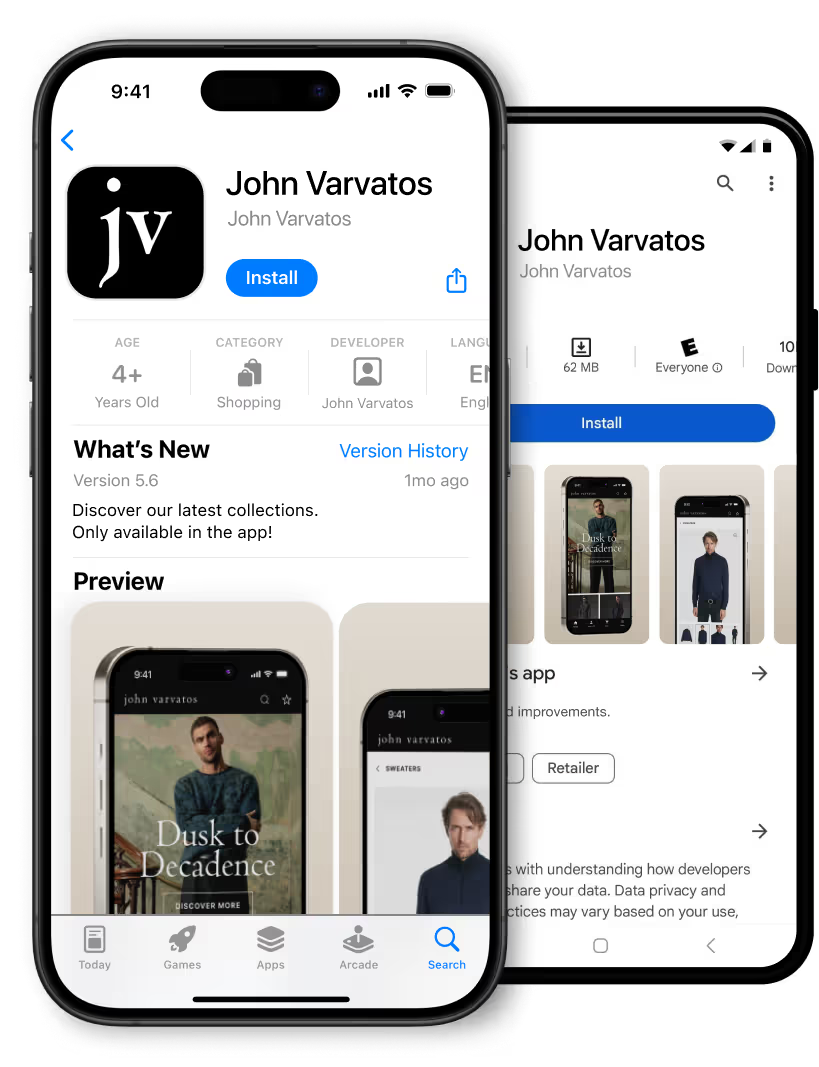
A PHP-powered brand mobile app live on the App Store and Google Play

Our platform

The native features your PHP site alone cannot deliver

App Store and Google Play presence, push on the lock screen, and deep links into every route and product. Native navigation, persistent login, and in-app payments are wired in, with analytics tied into your GA4, Firebase, or Triple Whale setup.

Push via OneSignal or Klaviyo, deep links into any PHP route Native navigation, persistent login, smart banners In-app payments, GA4 / Firebase / Triple Whale
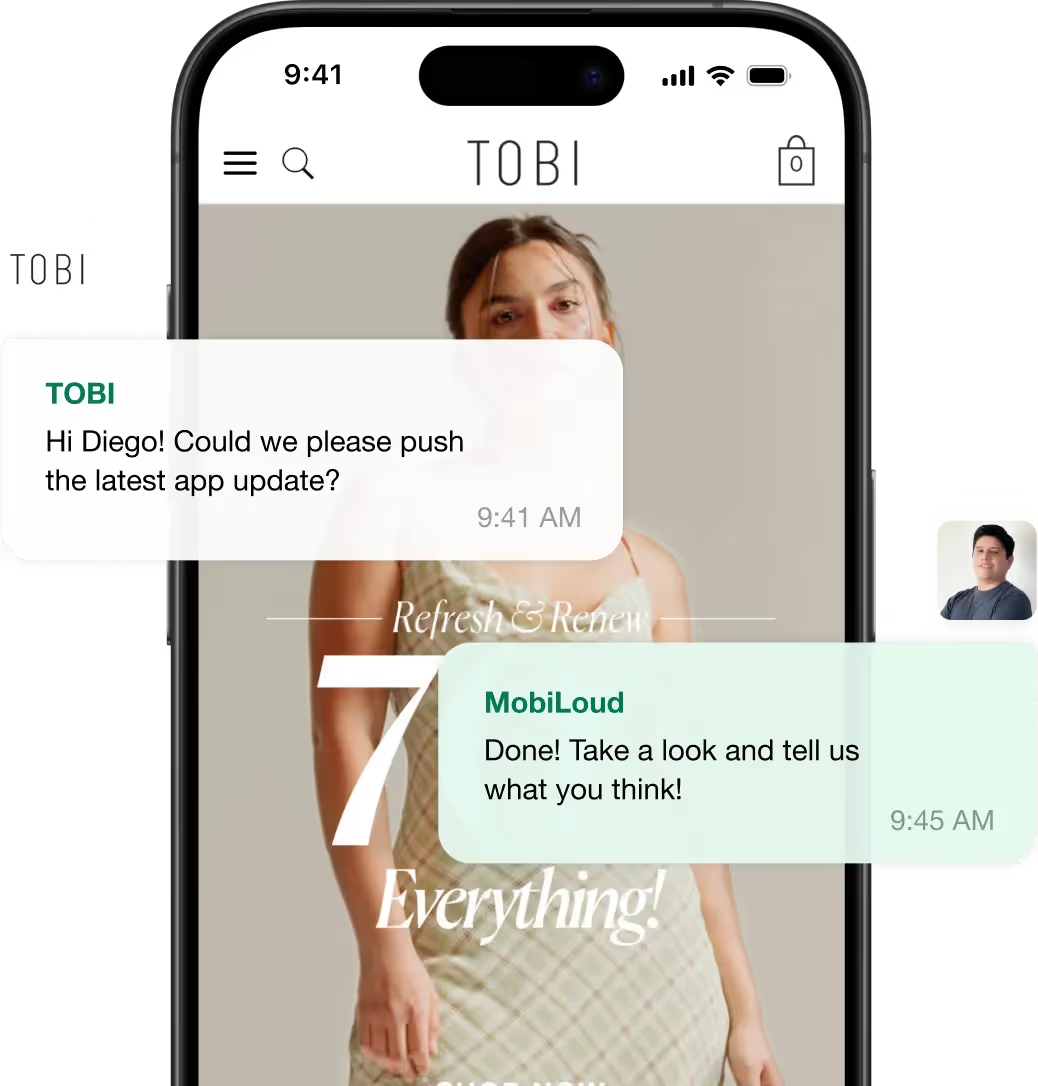
MobiLoud customer success team working with a PHP engineering team

Our team

Your mobile team, on subscription: builds it, maintains it, grows it

Replaces the mobile team you would otherwise staff. We build the app, manage the operational track (submissions, OS updates, certificate renewals, reviewer back-and-forth), and drive revenue on the channel through push automations and launch guidance. Enterprise adds regular strategy and performance reviews. Patterns proven across hundreds of brands.

Build, submission, OS updates, certificate renewals Dev support for custom app experiences Push setup and launch guidance Strategy and performance reviews on Enterprise
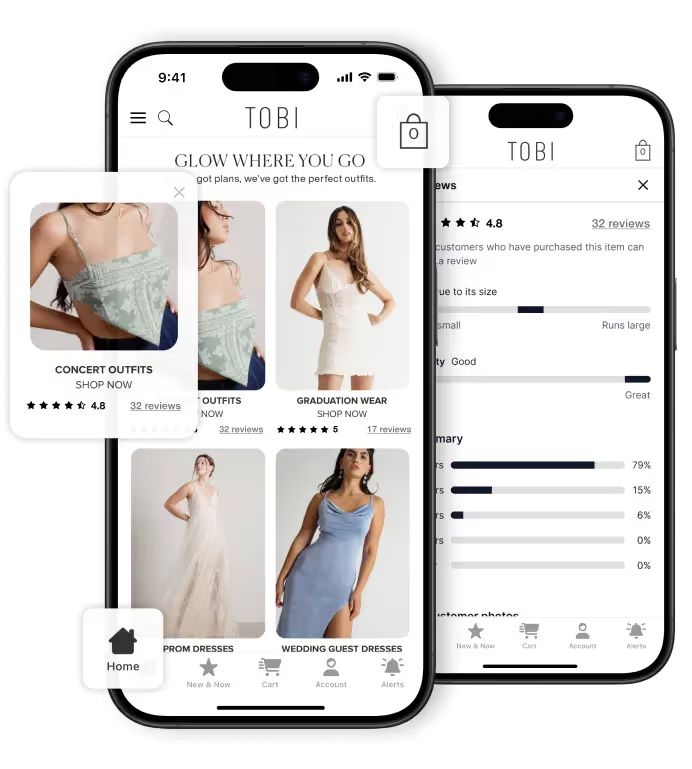
A PHP site inside a mobile app

Your PHP stack

Update the PHP site, the app updates the same day

The PHP site you already operate is the foundation. Every Composer package, route, and controller carries over to the app automatically. The rest of your stack, including WooCommerce hooks, Magento modules, and the rest of your store flows, comes along. Your team does not maintain a second codebase, and there is no PHP API contract to extend for the app.

Every Composer package and custom module Laravel, Symfony, WooCommerce, Magento, OpenMage, X-Cart One PHP codebase, not a second to manage

Leading brands get better apps at a fraction of the cost

10x

revenue per user vs mobile web

"MobiLoud gave us a way to offer our customers a true native app experience without rebuilding our entire digital platform."
Nick Barbarise

Nick Barbarise

Director of IT

10

brand apps launched with MobiLoud

"We couldn't find another company that could offer the same features at the same price point, same time to market, and make it as easy as MobiLoud could."
Svend Hansen

Svend Hansen

Product Owner at BESTSELLER

63%

of online revenue driven by the app

"MobiLoud allowed us to launch our mobile app in weeks rather than months, keeping all our pharmacy-specific features intact."
Ahmad Yousef

Ahmad Yousef

Director of eCommerce

30%

higher average order value vs mobile web

"The app has become a key channel for us. Our customers love the push notifications and the seamless shopping experience."
Jamie Schuster

Jamie Schuster

CEO

10%

of total revenue from the app

"Our app now drives 10% of our total revenue with minimal effort from our team."
Damien Smith

Damien Smith

CEO of BoozeBud

2.4x

higher conversion rate in-app

"Your level of service is unmatched. You are always there when we need you, and go above and beyond to make sure everything runs smoothly for us."
Kenneth Chan

Kenneth Chan

Founder/CEO

We've published 2,000+ apps since 2013

Our team builds the app, launches it, and keeps working on it with you after it goes live.

"We couldn't find another company that could offer the same features at the same price point, same time to market, and make it as easy as MobiLoud could."
Svend Hansen

Svend Hansen

Product Owner

Bestseller
"We wanted to give our loyal customers a convenient way to keep coming back and reach them directly with push notifications. Our app now drives 10% of our total revenue with minimal effort from our team."
Damien Smith

Damien Smith

CEO of BoozeBud

BoozeBud
"Your level of service is unmatched. You are always there when we need you, and go above and beyond to make sure everything runs smoothly for us."
Kenneth Chan

Kenneth Chan

Founder & CEO

Tobi

What PHP teams actually need to know

An app channel for PHP-powered brands, without the rebuild

The question is not whether a mobile app makes sense for the PHP site you have already built. It is how to launch one without rebuilding the codebase you have spent years investing in.

Why PHP teams reach for a hybrid app instead of staffing a native mobile team

Email open rates have fallen for years, and the promotions folder eats a large share of what does get delivered. SMS works but carries TCPA-style compliance overhead, costs that scale with volume, and a customer-experience cap before opt-outs climb. The retention-channel ceiling for ecommerce brands is well below where it used to be.

Mobile apps change the shape of the channel. An icon on the home screen, persistent login, push notifications direct to the lock screen, and the install itself as a signal of your best customers. Push reaches the customer where email and SMS cannot, and app users are already opted in by definition.

Across the ecommerce category, app users convert at up to 7x mobile web rates, spend 10-50% more per order, and deliver roughly 3x the lifetime value. MobiLoud's own roster of PHP-stack customers shows the same pattern: Tadashi Shoji, on Magento, accounts for 18% of total online revenue through the app, with app users converting at 8.3x mobile web rates. JF Petroleum, a B2B industrial brand on WooCommerce, launched their app in two months and uses it to drive reorder flow for technicians in the field. The pattern holds across PHP-stack brands that have already done the work of getting auth, catalog, pricing, and checkout right on the web.

Every other path rebuilds your storefront from scratch

The other routes to a PHP mobile app all ask the same thing: rebuild your storefront in a separate codebase. Custom native (Swift, Kotlin, React Native) means replicating your Laravel routes, Symfony controllers, and Magento modules in a different language, on a different release cycle. The rest of your stack, including Blade or Twig views and WooCommerce hooks, comes along. The team then carries the duplicated work going forward: every catalog change, pricing rule, and integration update ships twice.

The cost is real (custom-native costs $500K-$1M+/year fully loaded, in-house or through an agency), but the deeper problem is the duplication itself. You are not paying for a mobile app; you are paying to maintain a second version of your PHP application, separate from the first one, with a different language and a different team.

A real mobile app channel, managed by our team

MobiLoud is the combination of a native platform and a service team. The platform bridges your live PHP site to an iOS and Android app and brings the features a native app needs built in: push notifications via OneSignal or Klaviyo callable from any PHP job or scheduled task, deep links into any PHP route, persistent login, native navigation, smart banners, in-app payments, and analytics tied into GA4, Firebase, or Triple Whale. The native integrations you would otherwise build once-per-app are built into the platform once. No second API contract for the mobile build.

Together, your existing PHP site plus our platform is a custom mobile app experience, built on the codebase you already operate. Every Composer package, Laravel route, and Magento module that ships on the site shows up in the app automatically. The rest of your stack, including Symfony bundles, WooCommerce hooks, and theme overrides, comes along. Auth goes through your existing middleware. Payments go through whatever processor you have wired in. The same routes serve the app and the browser.

Your PHP team builds for the app the way they build for the site: PHP, the framework they already use, the Composer packages they already depend on, on the release cycle they already have. Our team guides on the app-specific patterns and applies direct customizations to the app experience when something needs to look or behave differently in the app. The native SDK integrations that come up infrequently (custom payments, native analytics, a third-party tool that needs a native bridge) we handle from our side, and we manage the iOS and Android operational track: builds and submissions under your developer accounts, OS update cycles, certificate renewals, and store policy.

"At first, we explored the viability of building our own native apps from the ground up. Managing them effectively moving forward would not have been feasible due to the disconnected nature of such an approach."

David Chamberlin, Lead Developer at Tadashi Shoji, on why the luxury fashion brand chose MobiLoud over a custom-native build on their Magento stack. The app now accounts for 18% of total online revenue, with app users converting at 8.3x mobile web rates.

After launch is where the channel actually compounds

We are focused on the results we see PHP-stack customers achieve regularly. The launch playbook is where we start: install prompts on your site, smart banners on mobile web, QR codes, email announcements to your existing customer base, and an app-user incentive to drive the first wave of installs. The push strategy gets built into the integration we set up (abandoned cart, back-in-stock, drops, promotional campaigns), sent directly out of OneSignal or Klaviyo and callable from any PHP job or scheduled task.

On Enterprise, the work continues past setup. Your customer success manager checks performance monthly against peer ecommerce brands, builds analytics dashboards on the app channel, reviews what is working in the category, and proposes what to try next. Included monthly development time covers app-side tweaks, custom platform integrations, and direct support for your PHP team when something needs an app-side fix. The push strategy gets refined as the channel grows.

MobiLoud has published 2,000+ apps since 2013. The pattern above is what the channel delivers when it is launched and managed properly. The fastest way to know whether it works for your PHP site is the free preview: we build a working version of your PHP mobile app from your live site in roughly 5 to 7 working days, so you can see exactly how it looks and feels before you commit to anything.

Questions PHP teams ask before they launch a mobile app

Still have questions? Get a free preview and we'll walk you through everything.

Get Your Free Preview

Any PHP framework or platform: Laravel, Symfony, WooCommerce, Magento, Adobe Commerce, PrestaShop, custom PHP, and headless PHP backends. The app renders your live site through a system WebView, so whatever works in a mobile browser works the same way in the app. Composer packages, custom modules, and integrations carry over.

No. The app uses the same PHP routes your site already serves, including auth, middleware, and business logic. There is no separate API contract to maintain for the mobile side. If your Laravel, Symfony, Magento, or custom PHP site responds well in a mobile browser, the app uses those same responses.

They keep working. Composer packages, Laravel packages, Symfony bundles, WooCommerce extensions, Magento modules, custom controllers, and middleware chains all carry over, because the app reads from your live site the same way browsers do. There are no PHP endpoints to extend for the app.

Performance tracks your site. WKWebView on iOS and the system WebView on Android are essentially the same rendering engines as Safari and Chrome, so a PHP site that is fast in mobile Safari feels fast in the app. The gap against fully native shows up in heavy animation and complex gestures.

MobiLoud Business is $1,499/month plus a one-time setup fee, with a 10,000 MAU fair-use cap. Enterprise is custom-priced. Custom native for an enterprise-scale PHP application typically costs $500K-$1M+/year fully loaded, in-house or through an agency.

6 to 8 weeks from kickoff is typical. It depends on how many native tweaks you want, how quickly you approve designs, and the Apple and Google review windows. We handle the build, QA, and submission under your developer accounts.

Yes. Push is delivered through OneSignal, integrated out of the box. Laravel triggers sends from any job, scheduled task, or controller. Symfony uses the HttpClient component, and Magento or WooCommerce can fire from any module, observer, or webhook handler. Klaviyo push is available too.

Yes. Some teams shipped a custom-native app years ago and no longer want the maintenance load on top of their PHP roadmap. We build a working preview from your live PHP site, compare it side by side, then migrate the App Store and Google Play listings under your accounts so reviews and install base carry over.

You do. Apps are submitted under your Apple Developer and Google Play Console accounts, so the listings, reviews, install base, analytics, and customers are yours. MobiLoud keeps the IP in the platform and the code that builds the app. Switch solutions later and the listings, reviews, and users go with you.

We work with enterprise security and legal teams routinely. A Data Processing Agreement (DPA), General Data Protection Regulation (GDPR) compliance, and insurance certificates are available on request. SOC 2 Type II is on our roadmap. Customer data stays on your PHP site, not on MobiLoud servers.

See your iOS and Android app, built on your live PHP site

30 minutes. You'll see a working preview built from your live PHP site. We'll walk through what carries over.

  • A working app preview. Built from your live site, so you see what your customers would see.

  • Your revenue model. What an app is worth on your traffic and your platform.

  • A concrete path to launch. Timeline, pricing, and what happens next.

Book a free demo

30 minutes. You leave with the preview and the numbers.

Questions? [email protected]