Last Updated on
February 27, 2026
Summarize with
ChatGPT

Shopify Headless Commerce: When Hydrogen Makes Sense (and When It Doesn't)

Published in
Key takeaways:

Shopify Plus merchants can go headless using Hydrogen (Shopify's React framework) and Oxygen (their hosting platform). It gives you full frontend control while keeping Shopify's commerce backend for products, checkout, and orders. The tradeoff is you need React developers, you lose access to many Shopify themes and apps, and you're building more than you're configuring. For the right brand, it's a significant upgrade. For many, standard Shopify Plus with Online Store 2.0 is still the better call.

Key takeaways:

Shopify Plus merchants can go headless using Hydrogen (Shopify's React framework) and Oxygen (their hosting platform). It gives you full frontend control while keeping Shopify's commerce backend for products, checkout, and orders. The tradeoff is you need React developers, you lose access to many Shopify themes and apps, and you're building more than you're configuring. For the right brand, it's a significant upgrade. For many, standard Shopify Plus with Online Store 2.0 is still the better call.

"Going headless" on Shopify used to mean stitching together the Storefront API with a third-party frontend framework and figuring out hosting yourself. It worked, but it was a custom build from the ground up.

Shopify changed that equation with Hydrogen and Oxygen. Hydrogen is Shopify's React-based framework purpose-built for headless Shopify storefronts. Oxygen is the hosting layer that runs Hydrogen apps on Shopify's global infrastructure. 

Together, they give Shopify Plus merchants an official path to headless commerce without leaving the Shopify ecosystem.

But "official path" doesn't mean right for everyone. This guide covers how Shopify headless actually works, what you gain, what you lose, and how to decide if it's the right move for your store.

How Shopify Headless Works

In a standard Shopify setup, the frontend (your theme) and backend (products, orders, checkout) are tightly coupled. You customize the storefront within the theme editor, using Liquid templates and Shopify's built-in page builder.

In a headless Shopify setup, the frontend is completely separate. 

Shopify's backend still handles everything it always has: product management, inventory, pricing, checkout, orders, payments, and fulfillment. But instead of rendering a Liquid theme, the backend exposes data through the Storefront API (a GraphQL API), and your custom frontend fetches that data and renders the experience however you want.

The Hydrogen/Oxygen Stack

Hydrogen and Oxygen are not just core elements of the Earth’s atmosphere; they’re also core elements of the headless Shopify discussion.

Hydrogen is a React framework built specifically for Shopify's APIs. It comes with pre-built components for common commerce patterns (product galleries, cart drawers, variant selectors) and hooks for Shopify's Storefront API. You get server-side rendering, streaming, and caching out of the box.

Hydrogen isn't required for headless Shopify. You can build a headless Shopify frontend in Next.js, Nuxt, Gatsby, or any other framework. 

But Hydrogen is Shopify's first-party framework with the deepest integration, and Oxygen provides hosting optimized specifically for it.

Oxygen is Shopify's edge hosting platform for Hydrogen apps. It deploys your storefront globally across Shopify's infrastructure, handles scaling during traffic spikes, and is included with Shopify Plus at no additional hosting cost.

Rounding out the core tech stack is the Storefront API.

Storefront API is the GraphQL API that powers headless data access. It exposes products, collections, customers, carts, and checkout data. 

It's read-heavy by design: great for browsing and cart management, with checkout handled by Shopify's managed checkout experience.

What You Gain by Going Headless on Shopify

Here’s why brands opt for a headless Shopify build:

Full Frontend Control

This is the primary motivation. Standard Shopify themes, even with Online Store 2.0's section architecture, have constraints. The layout system, the Liquid templating language, and the theme editor impose limits on what you can build.

With Hydrogen, you're writing React. There's no theme editor to work within and no Liquid syntax to learn. If your frontend team can build it in React, it can be your storefront. Custom product page layouts, interactive configurators, unconventional navigation patterns, rich animations: all possible without workarounds.

Brands like Gymshark, SKIMS, and Allbirds went headless on Shopify specifically for this reason. Their brand identities demanded storefronts that standard themes couldn't deliver.

Performance Optimization

Hydrogen gives you server-side rendering and streaming with fine-grained caching control. Standard Shopify themes load the entire Liquid rendering pipeline; Hydrogen lets you optimize exactly what gets rendered, when, and how it's cached at the edge.

For high-traffic stores, this translates to measurably faster page loads. Gymshark reported 30% faster load speeds after moving to Hydrogen. Faster pages mean better Core Web Vitals scores, which affect both conversion rates and search rankings.

Modern Developer Experience

For development teams, Hydrogen is a fundamentally different experience than working with Liquid themes. React, TypeScript, GraphQL, modern tooling, component-based architecture. 

Recruiting developers who want to work with these technologies is easier than finding Liquid specialists, and the development workflow (local dev, hot reloading, testing, CI/CD) is more productive.

If your team already works in React for other projects, Hydrogen eliminates the context-switching cost of maintaining a Liquid codebase alongside a modern frontend stack.

Shopify's Backend Is Still Running Everything

This is the underrated benefit of headless Shopify vs going headless on a different platform. You keep Shopify's entire backend: product management, checkout, order management, fulfillment, Shopify Payments, Shopify Capital, Shop Pay. 

You keep your Shopify admin. You keep your existing backend workflows.

Going headless on Shopify is a frontend decision, not a platform migration. Your operations team, your finance team, and your fulfillment team see no difference.

What You Give Up with Headless

As with any tech decision, there are downsides to going headless. Here are some tradeoffs to be aware of:

Most Shopify Apps Won't Work

This is the biggest practical downside. The Shopify App Store has thousands of apps, and the vast majority are built for Liquid themes. They inject scripts, add theme blocks, or modify the storefront through Shopify's theme architecture. 

In a Hydrogen storefront, none of that works.

Some apps have headless-compatible versions (Klaviyo, Yotpo, Recharge, and a growing number of others offer APIs or SDKs that work with custom frontends). But many don't. 

Features you get by installing an app in standard Shopify (reviews, wishlists, loyalty programs, upsell widgets) may need to be built manually in Hydrogen by connecting to the app's API directly.

Before going headless, audit every app you're using and check for headless/API compatibility. The apps that don't support it either need to be replaced or their functionality rebuilt.

The Theme Editor Disappears

Your marketing team can no longer make storefront changes through Shopify's theme editor. Content updates, banner changes, promotional layouts: all require developer involvement unless you set up a headless CMS (Contentful, Sanity, Builder.io) with a visual editor.

This is a workflow change that affects more than the development team. If your marketing team is used to making quick storefront updates without filing dev tickets, going headless will slow them down unless you invest in the CMS layer.

Higher Development and Maintenance Cost

A Hydrogen build requires React developers with ecommerce experience. The initial build takes longer than customizing a theme, and ongoing maintenance is more complex. 

You're responsible for frontend performance, security, and updates that Shopify's theme infrastructure would otherwise handle.

The hosting cost is covered by Oxygen (included with Shopify Plus), but the development cost is the real expense. Budget for 2-4 months of build time with a small team, or shorter with an experienced Shopify headless agency.

Shopify's Storefront API Has Boundaries

The Storefront API is powerful but not unlimited. It's designed primarily for reading product and collection data and managing carts. Some backend functionality available in the Admin API isn't exposed to the Storefront API. Metafield access, complex filtering, and certain checkout customizations have constraints.

Shopify continues expanding the API's capabilities (checkout extensibility has improved significantly), but if you need advanced backend customization, verify that the Storefront API supports your use case before committing to a headless build.

When Shopify Headless Makes Sense

Let’s give a simple decision framework for whether or not you should consider a headless Shopify build.

Go headless on Shopify when:

  • Your brand needs a storefront that standard themes can't deliver, and the limitation is clearly the theme architecture, not just the theme you've chosen
  • Your development team works in React and finds Liquid unproductive
  • Page load performance is measurably impacting your conversion rate, and you've exhausted theme-level optimizations
  • You need to share the Shopify backend across multiple storefronts (headless Hydrogen for your primary store, different frontends for sub-brands or international markets)
  • You're on Shopify Plus and committed to Shopify as your commerce backend long-term

Stay on standard Shopify when:

  • A well-built Online Store 2.0 theme meets your design and performance needs
  • You rely heavily on Shopify apps that don't have headless-compatible versions
  • Your marketing team needs to make frequent storefront changes without developer involvement
  • You don't have React developers (or budget to hire them)
  • Your current conversion rates and Core Web Vitals are adequate

There's no shame in standard Shopify. Online Store 2.0 with a well-optimized theme handles the needs of most brands, including many doing eight figures. 

Headless is for brands where the theme ceiling is genuinely limiting growth.

Getting a Mobile App from a Headless Shopify Store

Going headless on Shopify improves your web storefront. It doesn't give you a mobile app.

Your Hydrogen storefront is a website. A fast, custom, React-powered website, but still a website. 

  • It's not on the App Store.
  • It doesn't send native push notifications.
  • Customers can't add it to their home screen with the same reliability as a native app.

For headless Shopify brands that want a native iOS and Android app, there are a few ways to do it:

  • Custom build: Build native apps that consume Shopify's Storefront API directly. This is expensive ($250K+), time-consuming (6-12 months), and creates a separate codebase to maintain alongside your Hydrogen frontend.
  • Shopify app builders: These connect to Shopify's backend but build their own app frontend. They don't use your Hydrogen storefront, so the app experience won't match your headless web experience.
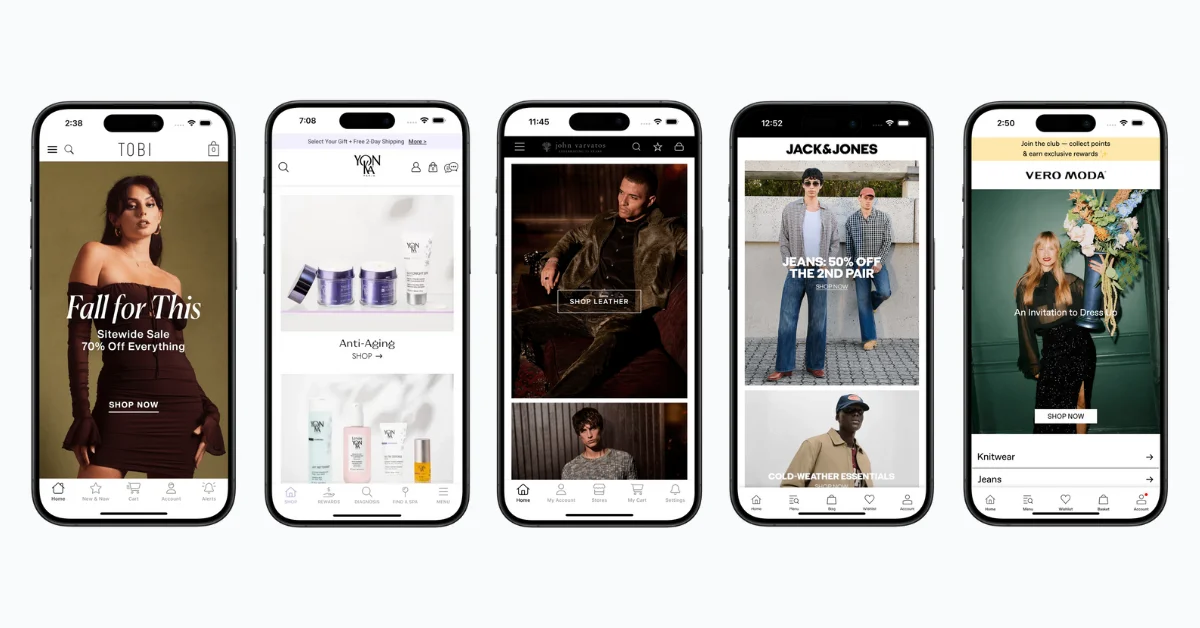
  • Extend your Hydrogen storefront into a native app: MobiLoud takes your Hydrogen storefront and delivers it inside a native iOS and Android app. Your custom design, your integrations, your checkout flow: all carried into the app because it's the same codebase. Push notifications, deep linking, and App Store distribution are layered on top.

For most headless Shopify brands, the third option makes the most sense. You've already built the storefront. Extending it into a native app means you get mobile app benefits (push notifications, App Store presence, native UX) without duplicating the frontend work.

Have a headless storefront, and want to see what it could look like as a native app? Book a free app strategy call and we’ll show, and break down your most cost-efficient path to a native app.

Headless Shopify vs Other Headless Platforms

If you're already on Shopify Plus, going headless with Hydrogen is usually the path of least resistance. You keep Shopify's backend, you get purpose-built tooling, and hosting is included.

But if you're evaluating platforms from scratch (or considering a migration), it's worth knowing how Shopify headless compares:

  • Shopify Plus + Hydrogen is the best headless option for brands that want Shopify's backend (checkout, payments, order management, fulfillment, app ecosystem) with full frontend control. The tradeoff is that you're still on Shopify's backend, with its API boundaries.
  • Commercetools is headless-first with no built-in frontend at all. It offers more backend flexibility than Shopify (custom data models, complex pricing logic, multi-tenant architectures) but requires significantly more development work and doesn't come with a managed checkout.
  • BigCommerce offers a headless approach similar to Shopify's, with their own APIs and frontend flexibility. The headless developer ecosystem is smaller than Shopify's, but the platform handles some use cases (multi-storefront, complex catalogs) more natively.

For detailed platform comparisons, see our headless ecommerce platforms guide. For the broader architectural context, see our composable commerce overview.

Final Thoughts

Shopify headless with Hydrogen is a powerful option for Shopify Plus merchants who've hit the ceiling of what standard themes can do. It gives you full frontend control, better performance, and a modern development stack while keeping Shopify's proven backend running your commerce operations.

It's not a universal upgrade. You're trading the simplicity of the theme editor and App Store ecosystem for flexibility and performance that require developer resources to build and maintain. 

If your team has the skills and your brand needs the creative control, Hydrogen is a strong choice. If you're not sure, start by pushing your current theme to its limits first.

And if you do go headless, plan your mobile strategy early. A native app is the natural next step for a headless Shopify storefront, and it's significantly easier to do when you've already built a strong web frontend to extend.

Book a free strategy call to see how your headless Shopify store looks as a native app.

FAQs

Do I need Shopify Plus to go headless?
FAQ open/close button.
Technically, any Shopify plan can access the Storefront API. But Hydrogen and Oxygen (Shopify's hosting for headless storefronts) are designed for Shopify Plus merchants. Plus also gives you checkout extensibility, which is critical for customizing checkout in a headless setup. For most practical purposes, yes, you need Plus.
Will my existing Shopify apps work with Hydrogen?
FAQ open/close button.
Most won't. The majority of Shopify apps are built to inject code into Liquid themes. In a Hydrogen storefront, those theme-based apps don't function. Some apps offer headless-compatible versions through APIs or SDKs (Klaviyo, Yotpo, Recharge, and others), but many don't. Audit every app you rely on before committing to a headless build.
Can I go headless on just part of my Shopify store?
FAQ open/close button.
Yes. Some brands keep their main storefront on a standard Shopify theme and build a headless frontend for specific experiences, like a custom landing page, a product configurator, or an international storefront. The Storefront API can power a standalone headless experience without replacing your entire theme.
How do I get a mobile app from a headless Shopify store?
FAQ open/close button.
For a native iOS and Android app, you can either build one from scratch using the Storefront API (expensive, 6-12 months) or extend your Hydrogen storefront into a native app with a service like MobiLoud. The second approach reuses your existing frontend, so there's no separate codebase to maintain.
Get weekly insights on retention and growth.

Convert your website into a mobile app

Schedule a 30-minute call with the MobiLoud team to explore when a mobile app makes sense for your business and how brands use it as an owned channel to strengthen engagement, retention, and repeat revenue.
Jack & Jones logo.Bestseller's logo.John Varvatos logo.

Read more posts like this.