
Salesforce’s rebrand of Commerce Cloud to Agentforce Commerce in late 2025 wasn't just cosmetic. Every major release since has been agent-first, shipping new AI capabilities for merchants.
These are exciting times for ecommerce, especially for SFCC merchants. Features like Personal Shopper, Merchant Agent, and Guided Shopping are transforming your web user experience. But in 2026, a great mobile website is not enough.
You need retention, ownership and reliable engagement. You need a mobile app.
But integrating all the power of Agentforce into a new channel is not as easy as you’d hope it would be.
This article is going to walk through the potential that Agentforce Commerce brings for your brand, how mobile apps amplify Agentforce’s key features, and how MobiLoud turns your existing SFCC storefront into a native app that brings every Agentforce feature with it.
What is Agentforce Commerce - And What Can It Do?
Agentforce Commerce is Salesforce's suite of AI agents built on top of Commerce Cloud and grounded in Data Cloud.
These aren't chatbots in the old sense. They reason across your catalog, inventory, customer profiles, and order history using the Atlas Reasoning Engine, then take action on behalf of the shopper or merchandiser.
Here are four of the biggest capabilities for SFCC merchants:
Personal Shopper
Personal Shopper is the flagship shopper-facing agent, available since February 2025. It handles natural-language product discovery, refines recommendations based on learned preferences, answers product questions in-conversation, and can complete checkout inside the chat window. It's grounded in your catalog, inventory, reviews, and each shopper's Data Cloud profile.
Pandora's deployment gives a sense of what this looks like live. Their Personal Shopper, "Gemma," handles jewelry discovery by occasion, recipient, and budget.
Paired with a service agent handling post-purchase questions, Pandora has reported a 10% NPS lift and meaningful call deflection.
Merchant Agent
This feature is merchandiser-facing rather than shopper-facing. Merchant Agent writes product descriptions at scale, generates promotions, flags slow-moving SKUs, and responds to natural-language requests like "boost underperforming outerwear in the US for the next two weeks."
The outputs flow to shoppers through the channels you already run: on-site banners, email, SMS, and push.
Guided Shopping
Guided Shopping is part of Agentforce for Retail. It covers product search, add-to-cart, reorder, and order tracking inside the same conversational interface, and is designed to collapse the multi-page browse journey into a single back-and-forth.
Intent-Aware Search
This is the successor to Einstein Search. Built on a commerce-tuned small language model (via Salesforce's Cimulate acquisition), Intent-Aware Search interprets shopper intent conversationally rather than matching keywords.
A query like "something for a beach wedding in Italy" returns styled, refined results instead of a literal keyword match.
These agents live as part of your storefront experience. They're served through Commerce Cloud, grounded in Data Cloud, and rendered wherever your storefront renders.
Read more: SFCC Composable Storefront & Mobile Apps: How They Work Together
The Mobile App-Agentforce Synergy
Agentforce is powerful. It’s powerful for your web storefront. And it gets even more powerful when you have a mobile app.
All these AI-driven features excel at personalization and data-driven customer experiences, all of which align perfectly with mobile apps.
Here’s what happens when you extend your Agentforce storefront to a mobile app.
Persistent sessions make conversational commerce viable
Personal Shopper, Guided Shopping, and any conversational flow depend on session continuity. A shopper asks for a recommendation, switches to check a message, comes back, asks a follow-up.
In a native app, the conversation remains. On mobile web, it often doesn't. iOS Safari will background and evict tabs when memory is tight. A shopper switching apps can return to a reset session. Network changes between Wi-Fi and cellular can drop stateful connections. Each of these breaks the thread of a conversation the shopper and the agent were building together.
The whole point of a Personal Shopper is sustained context. An app gives the agent the environment to keep that context intact.
Push turns every Agentforce signal into an addressable action
Agentforce generates signals constantly:
- Browse abandonment
- Slow-moving inventory Merchant Agent thinks should move
- Personalized promotions based on a shopper's recent behavior.
- Loyalty moments tied to reorder cadence
On web, those signals only reach a shopper who happens to be on your site when the signal fires. Everyone else sees them on their next visit, if they come back.
Native push notifications give Agentforce a direct line to the device. An agent identifies an intent, Data Cloud segments the audience, your Marketing Cloud journey fires a push message to the shopper which is virtually guaranteed to be seen.
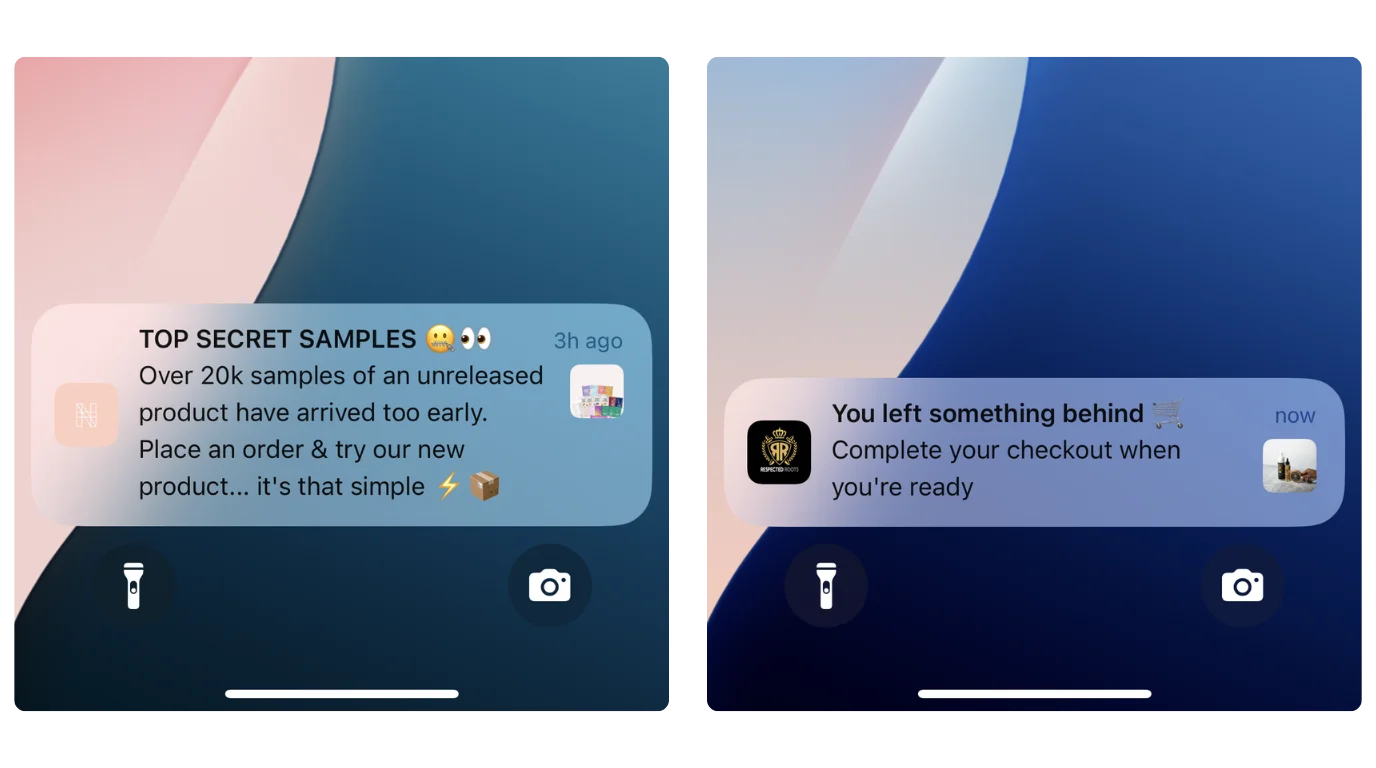
The practical result: the hyper-personalized recommendations and promotions your Agentforce investment generates reach the shopper at the moment they matter, not only when the shopper happens to be on-site.
App sessions enrich Data Cloud
Data Cloud is what makes Agentforce smart. The more signal it has on each customer, the better every agent's output.
A native app generates signal mobile web struggles to capture cleanly:
- Session frequency
- Time-in-app
- Which categories a shopper browses late at night versus at lunch
- Push engagement patterns
- In-app search queries
These events flow into Data Cloud, join the unified profile, and inform the next Personal Shopper recommendation, the next Merchant Agent promo, the next Journey Builder segment.
Your Agentforce investment compounds inside an app. The app is both a new delivery surface and a new data source.
The Mobile App Problem for Agentforce Commerce Stores
A mobile app is a powerful asset and engagement surface for any ecommerce brand, especially those running a modern storefront powered by Agentforce Commerce.
The problem? It also brings a lot of complexity that most brands would rather not have to take on.
Native app development is already a major project
Mobile app development takes a long time, costs a lot, and adds a huge amount of technical complexity to your stack.
A custom iOS and Android app means two codebases, separate development teams, and constant iterations, with all your teams scrambling to keep each channel in sync.
You’re looking at a timeline of possibly 12 to 18 months for an enterprise-grade build to go live, with a six or seven-figure investment - and recurring maintenance an ongoing line item after that.
Agentforce adds another integration layer
Custom mobile apps are already a huge investment, before you take into consideration the complexity of Agentforce storefronts.
A straightforward, no-frills shopping app may be easy enough to build. But bringing Agentforce into your app requires stitching together several SDKs.
Salesforce released the Agentforce Mobile SDK in June 2025, with iOS 17+ and Android API 29+ requirements. It handles the agent integration itself, but the surrounding infrastructure is separate work:
- MobilePush SDK for push delivery
- Data Cloud ingestion for the behavioral signals that make agents smarter
- Messaging for In-App for the chat surface
- Authentication and session plumbing that bridges your app to SLAS or your SFCC auth layer.
Four SDKs to integrate, version, secure, and maintain, each on its own release cadence.
The ongoing tax of feature parity
Agentforce is moving fast. Spring '26 added two-way commerce messaging across email, SMS, and WhatsApp. More features are undoubtedly coming.
Each new capability Salesforce ships means a new dev cycle to integrate this in your app.
As your storefront evolves, you’re faced with the decision to either invest what’s needed to keep your app in line with your website, or sacrifice features from your app and let the user experience lag behind your site.
Neither choice is ideal.
Mobile apps are still a necessary channel
Despite the complexity of building - and, more notably, maintaining a mobile app, it’s still a channel you need to have.
Shoppers today are mobile first, and with the rising cost and unpredictability of most acquisition channels, dependable retention channels are essential.
If you want to stay close to your best customers, and reduce your reliance on paid ads and retented traffic channels, and if you want to present your brand as authoritative and trustworthy, you need a mobile app.
The question is how to find a manageable way to build it.
The MobiLoud Solution for Agentforce Stores
For brands that don’t want to spend $250K+ on a custom, complex mobile app - but also don’t want to sacrifice the powerful features that Agentforce provides - MobiLoud is the answer.
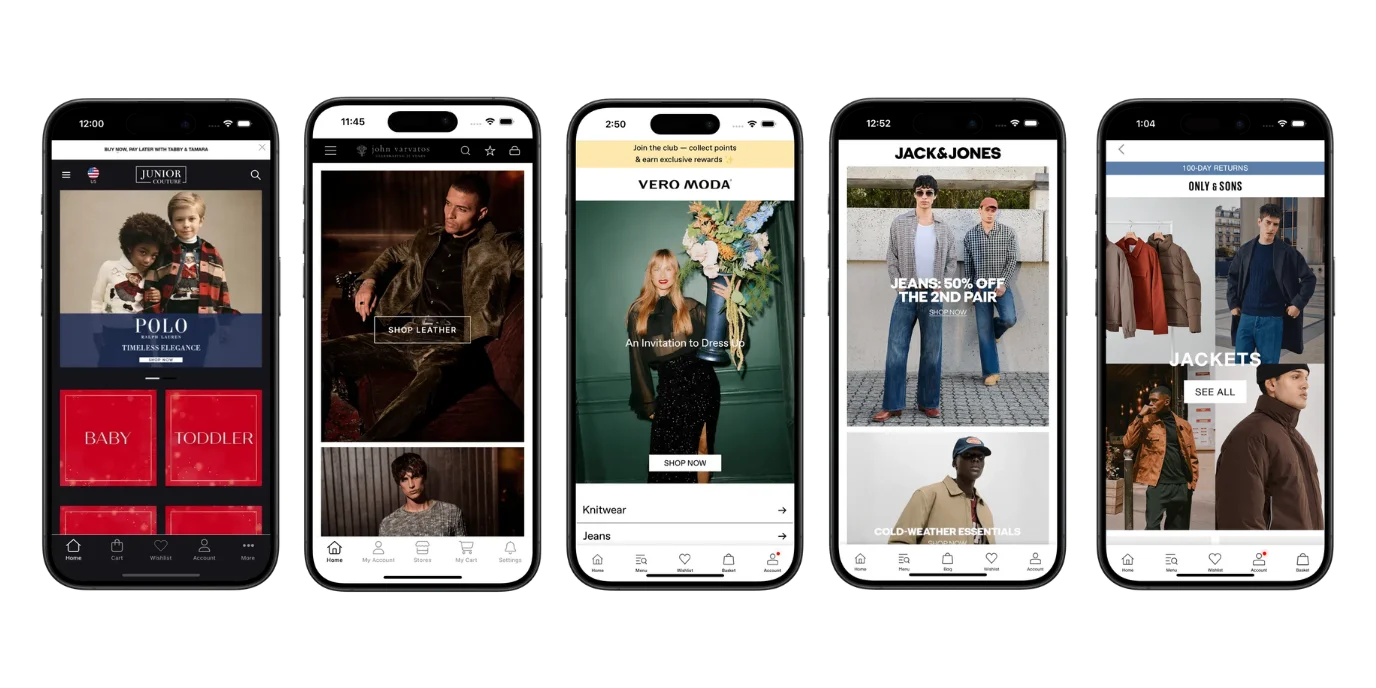
MobiLoud turns your existing SFCC storefront into full-featured native iOS and Android apps. You maintain one codebase - your storefront. That storefront powers your app, with native navigation, push notifications, and a presence in the app stores and your customer’s home screen.
Every Agentforce feature you've configured on your storefront works in the app from day one, with zero additional integration. And you don’t need to worry about the problems of juggling another codebase.
A native app powered by your existing storefront
MobiLoud gives you a true native app with native UI layered on top of your storefront: native tab bars, native menus, native transitions.
All your web features carry over, by default: SCAPI endpoints, your Page Designer content, your Adyen integration, your Algolia or Coveo search, your Agentforce widget configuration. It all continues to work exactly as they do on the web.
Every Agentforce feature carries over to your mobile app
Here’s the beauty about MobiLoud’s approach: because your storefront is what the app renders, everything configured on your storefront (including Agentforce features) works in the app:
- The Personal Shopper chat widget, in its native place on your pages
- Guided Shopping flows, with the same add-to-cart, reorder, and order tracking behavior
- Intent-Aware Search, returning the same results through the same SCAPI calls
- Merchant Agent outputs, from generated product descriptions to flagged promotions
These are features that would usually take months to build, test and ship for a native app. With MobiLoud, they work by default.
Your Agentforce investment extends to mobile as a byproduct of the app existing.
Native push for Agentforce-driven messaging
All the data signals generated by Agentforce become powerful, hyper-personalized signals for push notifications.
Browse abandonment, slow inventory, personalized promotions, loyalty moments. You use these to trigger automations, or to personalize your promotional campaigns, which already benefit from the direct, low-cost, high-visibility qualities of push as a channel.
One codebase, one team, one roadmap
The best part - you get the full power of Agentforce in your mobile app, without the downside of building and managing a new system.
You manage your website, and every new feature you build, configuration you tweak, improvement you ship, goes live in your mobile app automatically.
That automatic feature parity, without the added work of managing a separate storefront, is all the more important with the speed at which ecommerce is evolving today.
MobiLoud is the only way to ensure your mobile app keeps up.
How MobiLoud Works
MobiLoud is the most effective way for SFCC brands to launch mobile apps. We power the mobile apps for numerous Salesforce brands, providing the ideal solution for global brands with complex setups to extend that setup to high-retention mobile apps.
MobiLoud is a fully managed service. We handle everything to do with your mobile apps, including build, testing, publishing to the app stores, and ongoing maintenance after launch.
We create a native layer for your storefront, letting your existing website power a full-featured native app.
Your app and website are fully synced, meaning no feature gaps or lag between web and app, by definition. Build or design once, go live everywhere.
It’s a fraction of the cost of building a fully custom app, and significantly less operational overhead.
You can go live in around 6-8 weeks - compare that to a custom native app, which can take 12+ months to launch. By that time, the Agentforce platform could look completely different.
MobiLoud lets you build fast, and iterate faster, without sacrificing any of the features your mobile app needs.
SFCC brands running on MobiLoud
MobiLoud works with ecommerce brands across many different ecommerce platforms - but Salesforce Commerce brands are among our most notable partners.
- John Varvatos, a luxury menswear brand that runs on SFCC leverages MobiLoud to deliver a VIP app experience for their top customers.
- Junior Couture, a luxury childrenswear retailer, who also is able to maintain a low-lift, high-impact surface for their most valuable customer segment.
- Bestseller, the fashion group behind Jack & Jones, Vero Moda, and over a dozen other brands runs MobiLoud apps across its portfolio.
These are global, enterprise-level brands, who recognize that the best way to build and maintain a native ecommerce app is not a separate system, but an app fully synced and powered by their existing website.
See more MobiLoud case studies here.
Agentic Commerce is the Future. MobiLoud Helps You Keep Pace
Salesforce is not hedging on where Commerce Cloud is going. The platform is now called Agentforce Commerce. Every release is shipping agent capabilities first. The company’s roadmap is hyper-focused on building and broadening Agentforce features.
Agentic Commerce is not hype. It’s clear it’s the future of how businesses sell online.
Mobile apps extend this to a low-friction, personalized, contained surface for your best customers. And MobiLoud is the most effective way to make this happen, particularly for complex storefronts, and brands who want to be able to move fast, without multiple dev cycles for every new feature.
Talk to our team to learn how to extend your Agentforce investment into a full-featured native app. Book a free consultation, or get a free preview of your app to see what’s possible.