How Much Does It Cost to Turn an SFCC Site into an App?

It usually costs $80K–$250K+ with an agency or $350K–$600K per year with an in-house team to turn an SFCC site into an app. MobiLoud does it for low four figures in about four weeks because it uses your existing SFCC storefront instead of rebuilding pipelines, controllers, and integrations from scratch.
It usually costs $80K–$250K+ with an agency or $350K–$600K per year with an in-house team to turn an SFCC site into an app. MobiLoud does it for low four figures in about four weeks because it uses your existing SFCC storefront instead of rebuilding pipelines, controllers, and integrations from scratch.
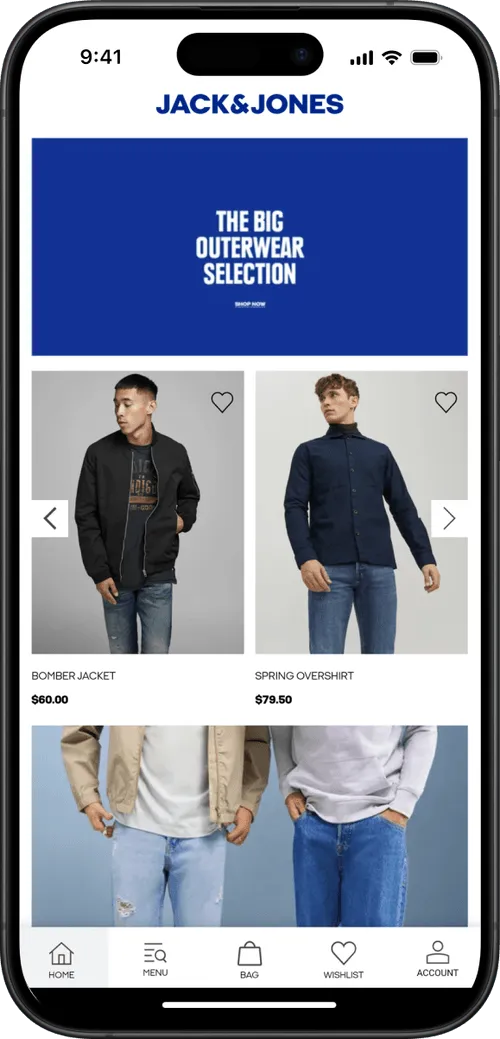
Salesforce Commerce Cloud (SFCC) brands operate in a mobile-first environment, where apps consistently outperform mobile sites for retention, repeat purchases, and overall customer experience. With most ecommerce browsing now happening on smartphones, your SFCC team would be smart to launch a dedicated mobile app.
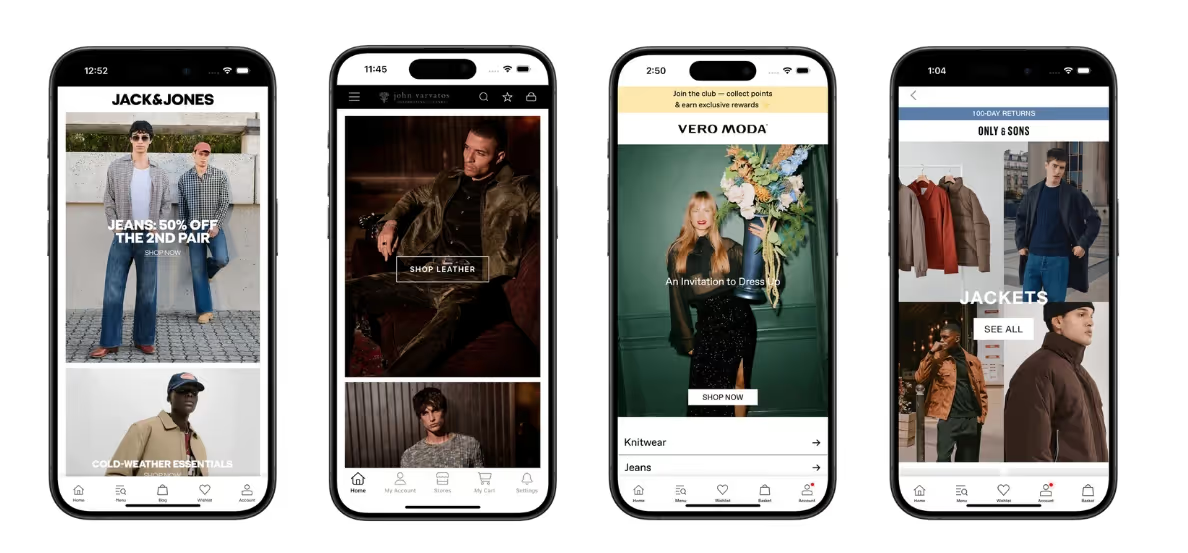
SFCC’s enterprise architecture shapes that decision. Storefronts rely on custom pipelines, controllers, integrations, and complex merchandising logic. All these need to carry over cleanly into an app. To see how this works in practice, some teams review examples of websites successfully converted into apps.
From there, the choice usually narrows to three realistic paths:
- Hiring an agency,
- Building an app in-house, or
- Using a hybrid approach such as MobiLoud.
This guide breaks down what each option costs, how long they take, and what SFCC teams should expect in terms of effort and long-term maintenance.
See how SFCC brands turn their storefronts into mobile apps in our step-by-step SFCC guide.
The Main Approaches to Building an SFCC Mobile App
SFCC teams usually evaluate three development paths when they decide to launch a mobile app. Each option fits a different level of internal resources and engineering appetite. Here’s how they compare before we break them down individually.
Option 1: Custom Native Development
A fully native app gives SFCC teams complete control, but it also means rebuilding the storefront experience, including the platform’s unique backend structure, inside two codebases.
Setup Cost: $80,000–$250,000+
SFCC implementations often include:
- Custom pipelines
- SFRA controllers
- Business rules built around OCAPI
- Multi-site logic
- Third-party fulfillment or OMS integrations
- Loyalty and promo engines
All of that needs to be re-implemented for iOS and Android. This is why native SFCC work tends to fall at the higher end of typical app development ranges.
Developer labor is also a major driver. Senior engineers commonly earn $133K+, and SFCC-capable backend developers command even more. Agencies price projects accordingly.
Development Timeline: 8–14 months
Recreating SFCC logic takes time because the app must stay consistent with complex platform behaviors:
- Product and price resolution
- Inventory rules
- Search and refinement logic
- Custom checkout flows
- Localization and multi-currency setups
- Promotions built in Business Manager
Each of these must be tested against both OS and device variations, which adds months of QA and iteration.
Maintenance Cost: 15–20% yearly
After launch, native apps need constant updates to keep pace with:
- iOS/Android OS changes
- SFRA and OCAPI adjustments
- Business Manager logic changes
- New integrations and promotions
- App-store policy changes
Any enhancement made in SFCC must also be reproduced in both native apps, creating ongoing technical debt.
Option 2: Build an App In-House
Some SFCC merchants consider forming their own mobile team. This gives full ownership, but it requires internal engineering capacity that matches the platform’s complexity.
Annual Cost: $350,000–$600,000+
A typical in-house SFCC app team may include:
- An iOS engineer
- An Android engineer
- An SFCC developer or architect (for pipelines, controllers, OCAPI/SFRA alignment)
- Backend/API support
- QA
- A designer
- PM/engineering manager
These roles carry premium salaries, especially SFCC architects, and the payroll repeats every year.
Development Timeline: 8–14+ months
Internal teams still need to:
- Design and build two native apps
- Mirror SFCC merchandising, inventory, promotions, and personalization rules
- Maintain alignment with existing customizations
- Handle multi-site or locale variations
- Integrate with OMS, ESP, reviews, loyalty, and other stack components
Recruiting and onboarding slow this further, especially since SFCC talent is scarce.
Hidden Costs
Running SFCC logic in a mobile layer means the internal team must:
- Maintain two native codebases
- Sync changes from pipelines and controllers
- Update APIs and OCAPI/SFRA versions
- Test against new OS updates
- Manage regression testing for every SFCC release
- Recreate promo logic, pricing rules, and storefront behavior in the apps
This turns the app into a year-round engineering commitment.
Option 3: MobiLoud (Hybrid Approach)
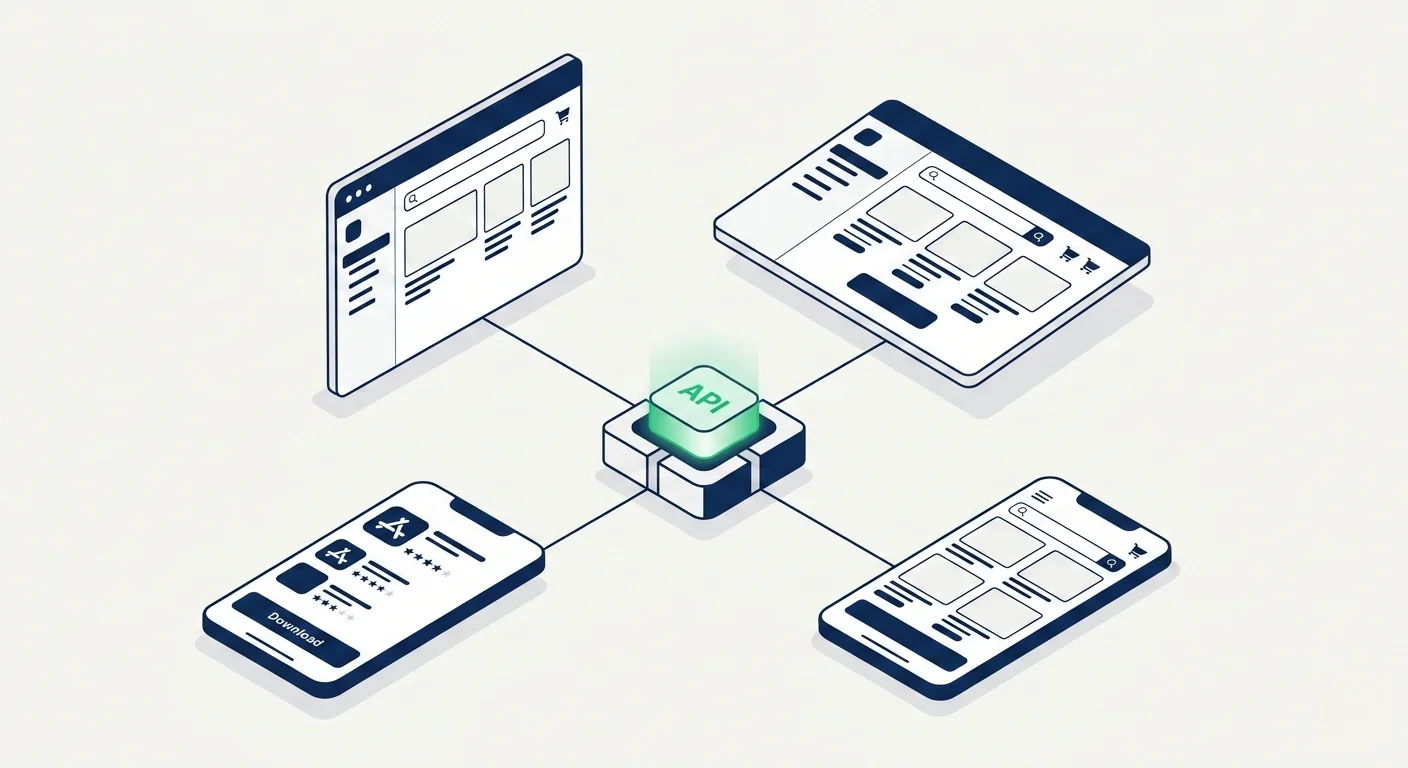
Instead of rebuilding SFCC logic in native code, MobiLoud uses your existing storefront as the engine behind native iOS and Android apps.
Your:
- Pipelines
- Controllers
- Merchandising rules
- Pricing logic
- Integrations
- Multi-site variations
…all carry over automatically because the app is powered by your live SFCC site.
Setup Cost: Low four figures
Even complex SFCC stacks (e.g., multi-site, multi-currency, heavy integrations) don’t require custom native development. Our team handles configuration, app-store submission, and native interface setup.
Ongoing Cost: From $549/month
This price includes hosting, OS updates, compatibility checks, and support. There’s no separate maintenance budget and no need to keep SFCC developers tied up rebuilding app features.
Why This Approach Works for SFCC
Because SFCC storefronts rely on custom logic, full fidelity is difficult to reproduce in native code. A hybrid approach sidesteps the rebuild entirely. Any update made in SFCC (e.g., new controllers, promo logic, content slots, etc.) instantly appears in the app.
Time to Launch: ~4 weeks
Most merchants launch in about a month because the app inherits existing storefront behavior instead of recreating it.
Maintenance Included
We handle OS updates, app-store compliance, SFCC compatibility, and continuous support so your engineering team stays focused on the storefront, not a second mobile codebase.
Review key trends and performance insights in our ecommerce mobile app benchmark report.
Final Thoughts
SFCC merchants have three realistic paths to a mobile app. Custom and in-house development offer full control, but they also require long timelines, large budgets, and ongoing engineering capacity. For teams working with complex pipelines, controllers, and integrations, rebuilding everything natively becomes a significant effort.
A hybrid approach provides a faster route to market and avoids maintaining separate codebases. MobiLoud uses your existing SFCC storefront as the foundation, which keeps the experience consistent while cutting development work dramatically.
See how your SFCC site looks and performs as a mobile app — get a free preview in minutes.
FAQs

Convert your website into a mobile app