How to Launch and Run a Great Shopify Loyalty Program

Loyalty programs are a core feature of any successful retail or ecommerce business. Yet many Shopify brands don’t see much of a return from their program, generally because they’re not building it the right way. We break down how to make yours a true revenue driver.
Loyalty programs are a core feature of any successful retail or ecommerce business. Yet many Shopify brands don’t see much of a return from their program, generally because they’re not building it the right way. We break down how to make yours a true revenue driver.
Loyalty programs are one of the highest-ROI levers any Shopify brand has.
The classic Bain study, which has been quoted in publications all over for more than ten years, is still accurate: a 5% increase in customer retention boosts profits by 25-95%. Every percentage point of repeat purchase rate is worth more to your business than a similar uptick in acquisition.
The catch: most Shopify loyalty programs underperform, because they’re just bolted on, without much thought put into the program.
Earn rate too low, redemption rate too low, tiers that don't motivate, and customers earning points they never spend. The program becomes background noise, and the merchant pays a monthly fee for a feature their customers ignore.
Instead of brushing it off as “we have a loyalty program, because we’re supposed to, but it doesn’t really do anything for us”, first take a look at what you could do to build a better loyalty program - one that does the heavy lifting to bring more repeat customers back to your store.
Why Your Shopify Store Should Have a Loyalty Program
Most businesses look at acquisition as the main driver of growth. But realistically, once you reach a certain level, it’s actually retention that’s driving the bulk of your growth.
Here are three relevant stats to think about:
- A 5% increase in customer retention boosts profits by 25-95% (Bain/Reichheld).
- Loyalty program members generate 12-18% more incremental revenue annually than non-members.
- The probability of selling to an existing customer is 60-70%, vs 5-20% for a new prospect (source: everywhere).
Loyalty programs drive more repeat purchases and higher retention, which both deliver sales with higher profit margins.
It’s structured for engagement. Birthday rewards, double-point days, tier-up celebrations, and points-expiration nudges are all reasons to email or push someone that aren't pure promotion.
Your most valuable customers stay close to your brand without you having to discount your way into their inbox.
There's a defensive argument too. Once a customer has $40 of points sitting in your store, a competitor needs to win them back from a position where they're effectively starting at -$40. That's a switching cost you didn't have before, paid for at zero direct cost (you only owe the reward when they actually redeem).
Loyalty programs aren’t free. The cost is the redemption itself, plus the app subscription. But of every retention lever available to a Shopify merchant, loyalty is the lowest-effort, most measurable one.
How a Shopify Loyalty Program Works
Your typical Shopify loyalty program has five parts:
- Enrollment. A customer signs up, usually via a post-purchase prompt, an account creation flow, or an email invite.
- Earning. They accumulate points (or status, in tiered programs) by taking actions you've defined: purchases, reviews, referrals, signups, social follows, birthdays.
- Reward catalog. A menu of things they can spend points on: discounts, free shipping, exclusive products, early access.
- Redemption. They cash points in at checkout for a reward, usually as a discount code applied to the order.
- Tier or status (optional). As they spend more, they unlock higher levels with better perks.
Within these parts, there are a few details that need to be configured. These details depend on how aggressive you want to be with your loyalty strategy.
- Earn rate. How many points per dollar spent. The standard is $1 = 1 point. Some brands run $1 = 5 or $1 = 10 to make the numbers feel bigger.
- Redemption rate. How many points convert to a dollar of value. The typical spread is 100 points = $5, which works out to about $0.05 of redemption per $1 spent. That's a 5% effective loyalty cost.
- Earning actions. What besides purchases earns points. The good ones expand engagement (reviews, referrals, birthdays). The lazy ones add noise.
- Tier thresholds. What annual or lifetime spend unlocks each level, and what each level unlocks.
We'll walk through all of these below.
Types of Loyalty Programs (and When to Use Each)
Here are five common ways to structure your loyalty program. Yours may have multiple elements, but it generally falls under one main type.
Points-based
Customers earn points for actions and redeem them for rewards. The default and the most common.
Use when: You have a typical DTC catalog and want a structure customers already recognize from other brands.
Tiered / VIP
Status-based, usually tied to annual or lifetime spend. Each tier unlocks better perks: higher earn rate, free shipping, early access, exclusive products.
Use when: You have a long-tail of high-spending customers who'd respond to status, not just discounts. Common in beauty, apparel, and premium DTC.
Paid membership
Customers pay a fee for instant benefits, such as free shipping, member-only pricing, early access. Amazon Prime, Costco, and a growing list of DTC brands run this format (such as Country Life Natural Foods, with their “Country Life Plus” program).
Use when: Your AOV and purchase frequency support a recurring fee. Strong fit for replenishment categories (supplements, coffee, pet food). Weak fit for low-AOV one-off purchases.
Value-based
Points or rewards tied to a brand value: a portion donated to charity, trees planted per purchase, community access. The reward is alignment, not dollars.
Use when: You have a clear brand mission and a customer base that engages with it. Don't fake it; customers see through values-washing fast.
Hybrid (loyalty + referral)
Loyalty program with a referral component built in. Customers earn points for referring friends, and the friends get a bonus for joining.
Use when: You're running both, and you want a single coherent system rather than two programs competing for the same on-site real estate. Most loyalty apps handle referral natively, so this is usually the default rather than a separate decision.
How to Design a Loyalty Program That Drives Repeat Revenue
Adding a loyalty program to your Shopify store is possibly the easiest thing you can do. Just go to the Shopify App Store, find a loyalty app (Joy, Smile, Rivyo, or many others), set it up, and away you go.
Launching a loyalty program that actually delivers results? Now, this is a little more difficult.
Most brands install an app, accept the defaults, and wonder why nobody redeems. Don't be most brands.
Pick the right program type
Default to points + tiers for most Shopify stores. Points give you a universal mechanic; tiers give your top customers a reason to stay engaged after they've redeemed their first reward.
If you're in a replenishment category (supplements, coffee, pet food), evaluate paid membership against (or alongside) the points program. The math can be substantially better.
Set the earn rate
The earn rate is how many points you give per dollar spent. Three common formats:
- $1 = 1 point. The straightforward standard.
- $1 = 5 or 10 points. Inflates the numbers so they feel substantial. A $50 purchase earns 250 points instead of 50.
- Tiered earn rates. Higher-tier members earn at a faster rate (1.25x, 1.5x).
The actual earn rate doesn't matter on its own. What matters is what those points are worth at redemption. Pick whichever ratio feels good for the brand and design backwards from the redemption side.
Set the redemption rate
This is the lever that decides what your loyalty program actually costs you. The standard structure is 100 points = $5, with $1 = 1 point — a 5% effective discount on repeat purchases.
Three rules of thumb:
- 5% effective rate is the typical baseline. Most ecommerce loyalty programs sit here.
- 8-10% effective rate is generous and drives faster redemption. Useful for new programs trying to build engagement quickly.
- 3% or below rarely works. Customers do the math, see the points are worthless, and disengage.
Redemption increments matter too. Smaller increments (100 points = $5, 200 = $10) get redeemed faster and create more touchpoints. Large increments (5,000 = $50) feel prestigious but lower engagement. Most stores want the smaller end of the range to keep redemption velocity up.
Choose your earning actions
Beyond purchases, which actions earn points? Each one expands engagement:
- Account creation. Bonus on signup. Drives initial enrollment.
- Reviews. Points per review (with a photo bonus). Amplifies reviews and loyalty in one move.
- Referrals. Points per qualified referred purchase. Loyalty + referral integrated natively.
- Social follows. Points for following on Instagram, TikTok. Modest reward, free distribution.
- Birthday. Bonus points on registered birthday. The cheapest engagement push you can run.
- Newsletter signup. Email or SMS opt-in.
- App download. Extra points for downloading your app (if you have one).
The mistake is including too many. It’s not really a case of letting people earn too many points, but just overcomplicating your program. Six earning actions, each worth 50 points, scattered across the account page is too much noise.
Pick three or four that map to behaviors you actually want, and weight them so the bonuses feel meaningful.
Set tier thresholds
If you're running tiers, you need to decide what spend unlocks each level and what each level offers. A workable starting structure:
- Tier 1 (default): 1x earn rate, basic rewards.
- Tier 2 ($250-500 annual spend): 1.25x earn, free shipping, early access to drops.
- Tier 3 ($1,000+ annual spend): 1.5x earn, exclusive products, surprise gifts, dedicated CS.
Two design rules:
- Make Tier 1 generous enough that customers reach it without effort. The point is to get people enrolled. If the entry tier feels too exclusionary or hard to reach, customers won't engage with anything else.
- Make tier benefits qualitatively different at the top. Higher earn rates work for Tier 2. Tier 3 should offer something money can't easily buy: early access, exclusive products, dedicated touch.
Decide on an expiration policy
Points usually expire after 12 months of customer inactivity (no purchase, no engagement). Shorter than that feels punitive; longer turns into a balance-sheet problem because every unredeemed point is a future liability.
The smart play: expiration nudge emails 30 days, 14 days, and 7 days out. These are the highest-converting redemption-driven emails most loyalty programs send.
Name your currency
This is small but it matters. "Points" may sound too generic, especially for brands with a unique brand voice. Everything else is custom-tuned to your brand - until the customer reaches the most personal part of the brand-customer relationship.
"Stars" (Starbucks), "Glow Points," "Drops," "Coins" are a few examples - anything that ties to the brand.
The currency is part of your loyalty experience. Spend ten minutes on it.
How to Set Up a Loyalty Program on Shopify (Step-by-Step)
Once you’ve made the design decisions, setup is generally pretty fast and straightforward.
Here’s what the process looks like:
- Pick a loyalty app that works with your stack, and has a feature set compatible with how you want to set up your program.
- Install and connect to Shopify. Most apps install in a couple of minutes from the Shopify App Store and auto-detect your products, customers, and order history.
- Configure the program. Plug in the earn rate, redemption rate, earning actions, tier thresholds, and expiration policy you designed above.
- Build customer touchpoints. Account page integration, header bar with points balance, post-purchase modal, transactional email mentions, and a dedicated landing page, like /rewards.
- Launch with an enrollment campaign. Email your existing customer base. Give them a one-time bonus for joining ("get 500 points free, on us"). Add prominent placements on the homepage, footer, and post-purchase screen for the first 30 days.
- Track and iterate. Watch enrollment rate, repeat-purchase rate of members vs. non-members, redemption rate, and time-to-first-redemption. Tune one variable every 90 days and measure the delta.
Best Practices for Successful Shopify Loyalty Programs
Here are some tips to take on board from successful loyalty programs, to increase the chance of yours having the same success.
- Surface the points balance everywhere. Header bar, account page, post-purchase confirmation, transactional emails. If a customer has to log in and click around to find their balance, they won't.
- Trigger redemption-driven emails. "You have $25 to spend." Customers respond to the dollar amount, not the point total. These are the highest-converting loyalty emails most programs send.
- Offer status, not just discounts. Free shipping, early access, exclusive products, surprise gifts. Discounts can feel like a commodity, whereas exclusives drive a different kind of emotional lift.
- Run double-point days and seasonal campaigns. A 2x weekend or a member-only Black Friday early-access window creates moments worth caring about.
- Tie loyalty into your email and SMS flows. Klaviyo, Attentive, and Yotpo integrations let you segment members by tier and target them with relevant copy at the right moment.
- Promote enrollment in transactional emails. Order confirmations and shipping notifications get high open rates. Stick a "join the program" link in there.
On top of that, try to avoid the following mistakes:
- Treating points as a pure discount. If your program is "earn points, redeem for $X off," you've built a discount with extra steps. Layer status, exclusivity, and access on top, or members will leave the moment a competitor offers a flat 10% off.
- Hiding tiers. Customers can't aspire to a tier they can't see. The current tier and next tier should be visible everywhere - account page, header, transactional emails.
- No redemption push. Customers earn points and forget about them. Without balance-driven emails ("you have $25 to spend") and expiration nudges, redemption rates collapse and your program quietly dies.
- Launching without an enrollment campaign. "We launched a loyalty program" is not a launch. A real launch is a dedicated email to existing customers with a join bonus, prominent on-site placement for 30 days, and integration into every transactional touchpoint.
- Making points worthless. A 1% effective discount that requires three months of buying. Customers do the math, decide it's not worth caring about, and disengage. Run the program at a 5% minimum or don't run it.
Choosing the Right Loyalty App for Your Shopify Store
There are many capable loyalty apps on the Shopify App Store.
Realistically, one app is probably not going to make or break your program (unless you choose a poor-quality app, or one that’s not compatible with the type of program you want to run).
A few popular apps, used by brands we work with, include:
- Joy Loyalty (Shopify App Store / website)
- Rivyo (Shopify App Store / website)
- Smile (Shopify App Store / website)
- Yotpo (Shopify App Store / website)
We’d advise you to go and try these apps out for yourself, look at the features they offer, read the reviews.
You’ll find one that seems like a good fit with what you want to do.
Amplifying Your Loyalty Program with a Native App
Here’s one more powerful tip for getting more out of your loyalty program:
Put it in a native app.
Mobile apps and loyalty programs are the perfect combo. Your loyalty program is designed to incentivize customers to shop more and spend more, and your app is designed to make it easy to do the same thing.
Brands that get the most out of their loyalty program also have a mobile app. The app amplifies the loyalty program, and offers extra rewards for app users, which does two things:
- Makes your loyalty program more attractive
- Offers a real incentive for people to use your app, which brings them closer to your brand, and makes them habitual, high-LTV shoppers
You can use push notifications for loyalty updates and redemption offers, and make it super simple for customers to check their balance, redeem rewards, or spend a little bit more to hit their next tier.
"We wanted an app to be in our customers' pockets, on their phone directly, be able to send push notifications, and be on top of their mind, increase loyalty and retention, to in the end increase revenue."
— Raphael Faccarello, Head of Ecommerce, Yon-Ka Paris
If you don’t have an app yet, check out MobiLoud.
MobiLoud turns your existing Shopify store into native iOS and Android apps. It keeps all the features from your site working in the app, including your loyalty program. You don’t need to manage a separate program for the app, or worry about features from the web not carrying over.
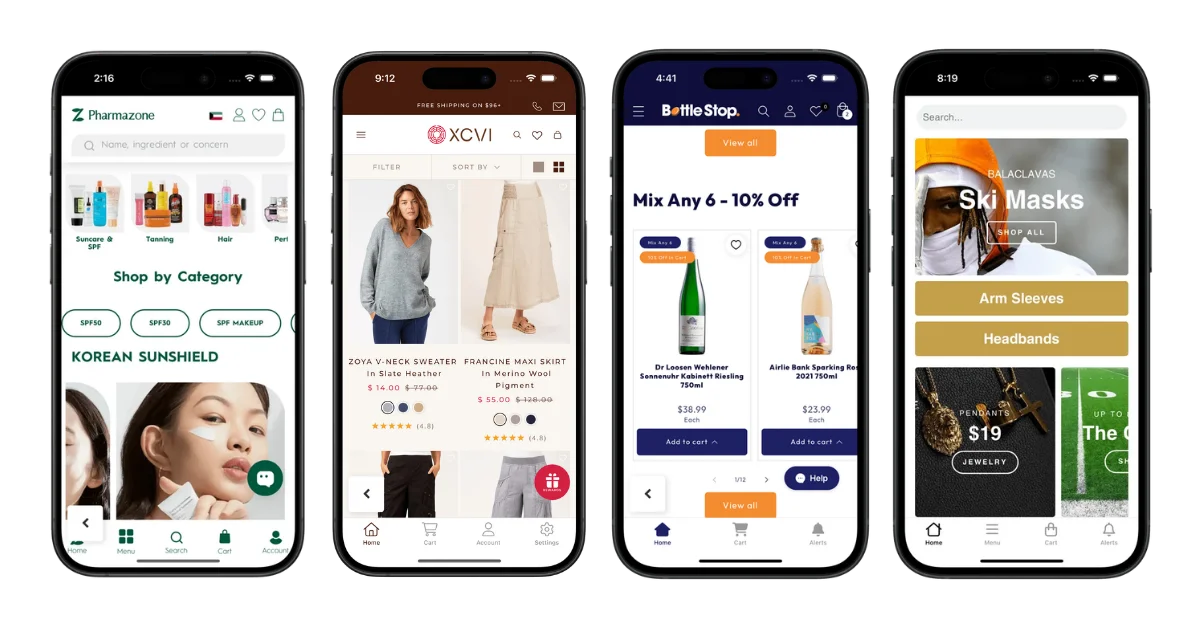
Yet you can easily customize your program to provide exclusive offers for app users, and sweeten the deal for your best customers.
It’s the perfect pairing if you want to multiply your LTV - a well-designed loyalty program, running in a MobiLoud-powered app.
Ready to Launch?
A loyalty program is one of the highest-ROI levers a Shopify store has, once it has repeat customers. Design the program first: earn rate, redemption rate, tier thresholds, earning actions, expiration policy. Pick the app that matches your size and stack. Launch with a real enrollment campaign, not a single email.
And if you want your program to run where your highest-LTV customers actually spend their time, put it inside a mobile app. MobiLoud turns your existing Shopify store into native iOS and Android apps, with your loyalty program, push notifications, and tier-up alerts built in.
Get a free consultation to see what your mobile app could look like, and how it could amplify the loyalty program you're about to launch. No commitment required. If the math doesn't work for your brand, we'll tell you.
FAQs

Convert your website into a mobile app