10 Must-Have Shopify Apps That Help Merchants Run a Profitable Store
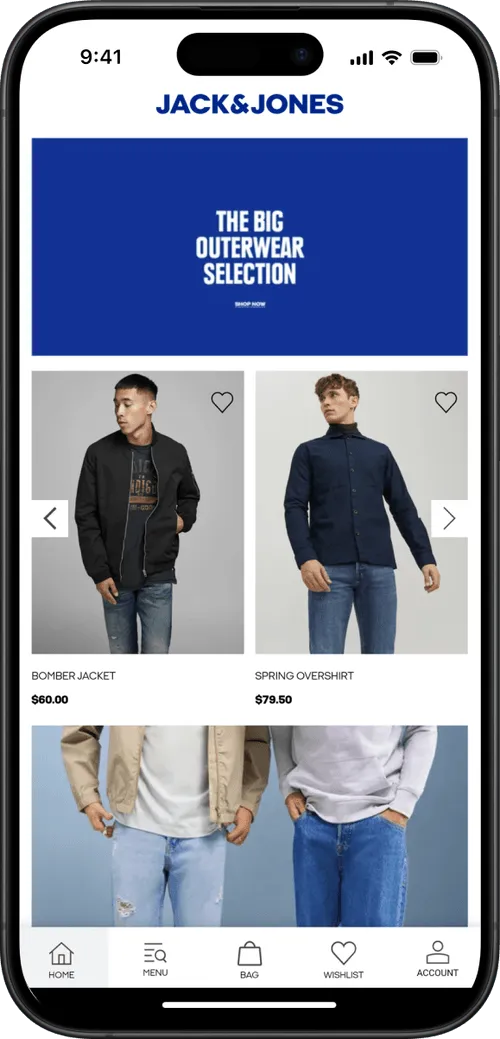
Choosing the right apps has become one of the challenging parts of running a Shopify store. With more than 10,000 apps now available in the Shopify App Store, many merchants struggle to identify which tools truly matter. The result is often overlapping features, slower store performance, hidden app conflicts, and rising monthly costs.
A clear must-have app stack helps solve this problem. Instead of adding apps based on trends, effective Shopify stores rely on a small set of core tools that support essential workflow without adding unnecessary complexity.
In this article, we share 10 must-have Shopify apps that are practical, hard to replace, and selected to help merchants run their stores smoothly while keeping performance and cost under control.
10 Must-Have Apps for Your Shopify Store
1. Klaviyo: Email Marketing & SMS
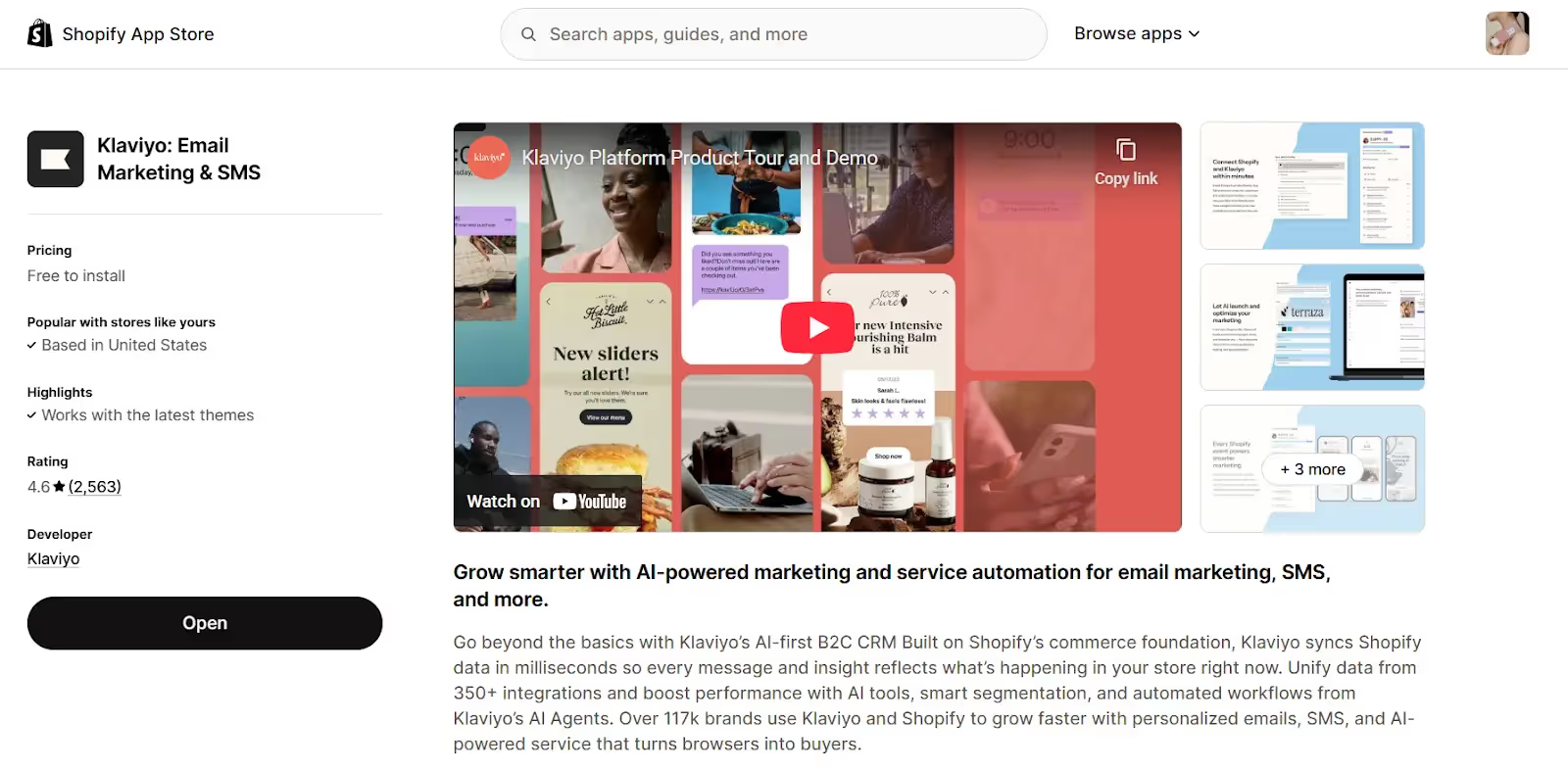
Email marketing remains one of the most reliable revenue channels for Shopify stores because it targets customers who already recognize and trust your brand.
According to a 2024 consumer study, nearly 52% of consumers made at least one purchase directly from an email in the past year, reinforcing email’s role as a core revenue driver, not just a retention tool.
That said, email only works when it is done well. Generic broadcasts and poorly timed campaigns rarely move the needle. Klaviyo email marketing solves most problems that other email marketing tools struggle with.
It uses real store data, browsing behavior, purchase history, and lifecycle events to power highly targeted messages and automated flows. Instead of sending the same email to everyone, Klaviyo helps you reach the right customer at the moment, whether that’s after a product view, an abandoned cart, a completed purchase, or a period of inactivity.
Key features:
- Syncs customer and order events for targeting
- Reporting tied to marketing performance and revenue outcomes
- Email plus mobile messaging support
- Automated flows
- Segmentation using behavior and purchase history
Watch out for:
- Overlap risk: Shopify may already send basic abandoned-cart emails, so avoid duplicate sends by designating a single owner for that flow.
- Setup mistakes: weak segmentation or too many discounts can train customers to wait for coupons and hurt margin.
- Compliance risk: SMS requires explicit opt-in and easy opt-out; do not import numbers without proper consent.
- Data hygiene: if you do not suppress unengaged profiles, costs and deliverability risk can rise over time.
MobiLoud integrates directly with Klaviyo, allowing you to incorporate app user data with your Klaviyo profiles, as well as harnessing it for native push notifications. Learn more about how we help you unlock the full power of Klaviyo here.
2. Avada SEO Image Optimizer
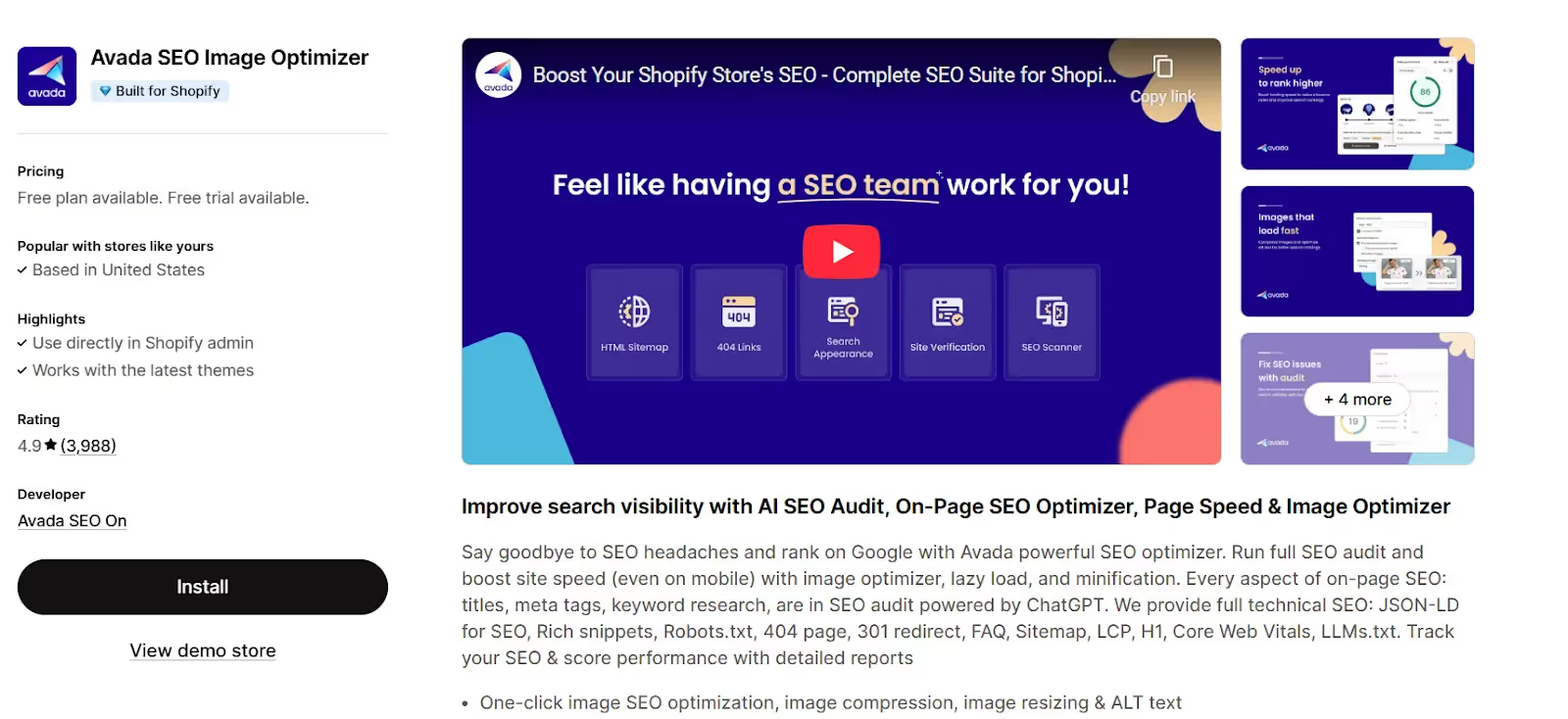
SEO only works when two things happen at the same time: search engines can clearly understand your pages, and shoppers can load them quickly.
Avada SEO Image Optimizer focuses on both. It addresses weak on-page SEO signals and reduces the performance drag caused by large, unoptimized images - a common issue in Shopify stores.
This becomes especially important for stores with extensive product catalogs or image-heavy themes. If pages load slowly on mobile or product images are uploaded inconsistently, performance and rankings tend to suffer.
Avada SEO Image Optimizer helps standardize this process by turning repetitive SEO and image-optimization tasks into a clear, manageable checklist, reducing much of the manual work that typically slows teams down.
Rather than asking you to become an SEO expert overnight, the app guides you through practical fixes that reduce friction after the click: faster loads, cleaner image structure, and clearer signals for Google to index.
Key features:
- Image compression and resizing
- Speed booster features
- SEO audit and checklist for key on-page items
- Technical SEO helpers
- Sitemap and structured data options
Watch out for:
- Quality risk: Aggressive compression can degrade product images, so use quality control and spot-check key products.
- Content risk: Automatically generated alt text should remain descriptive and user-focused. Avoid keyword stuffing that can harm accessibility and SEO.
- Data risk: Review app permissions carefully before installation so you understand what data the app can access and modify.
3. Joy Loyalty Program & Rewards
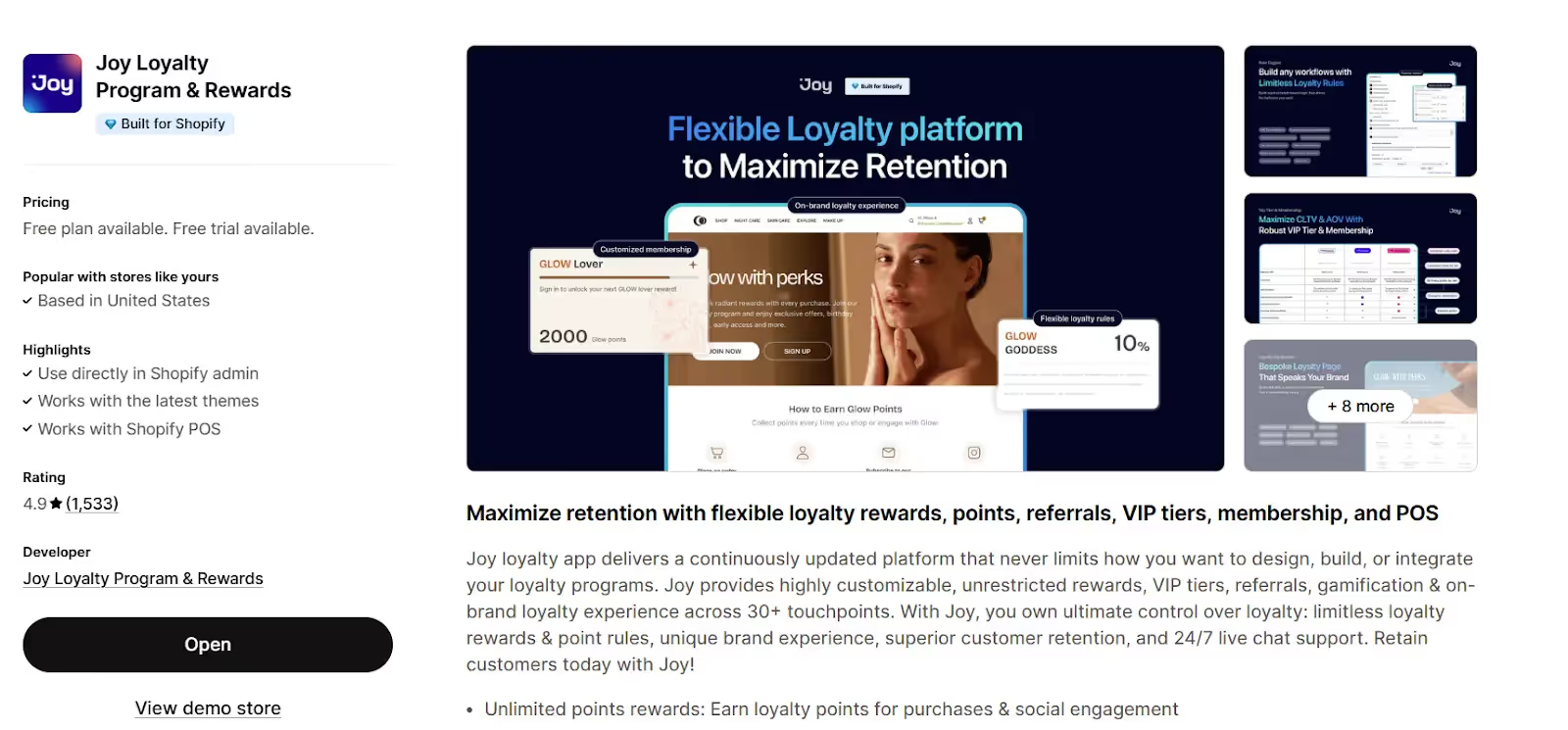
Loyalty programs are a core part of marketing strategy when they help save on acquisition costs, while ad spend keeps rising at the same time. Instead of relying on blanket discounts, Joy Loyalty turns purchases and meaningful engagement into points, rewards, referrals, and VIP perks.
This shifts retention from reactive promotions to a structured system that encourages repeat behavior. Over time, it helps lift repeat purchase rates and customer lifetime value, reducing pressure on paid acquisition while keeping incentives controlled.
It can also protect margin by replacing storewide discounts with targeted rewards that feel exclusive.
Key features:
- Points and rewards for purchases and social engagement, with flexible rules
- Referral program to bring in new buyers through existing customers
- VIP tiers and membership perks like free shipping and exclusive offers
- Shopify POS supports in-sync customer data that enables applying discounts quickly for loyalty members at stores
- Integrations like Shopify Flow and Klaviyo for segmentation and automated messages based on loyalty behavior
Watch out for:
- Overlap risk: if you already run another loyalty or discount engine, decide which one owns rewards and discount stacking to avoid confusing offers.
- Margin risk: do not over-reward low margin items, or you can trade repeat orders for lower profit.
4. Boost AI Search and Filter
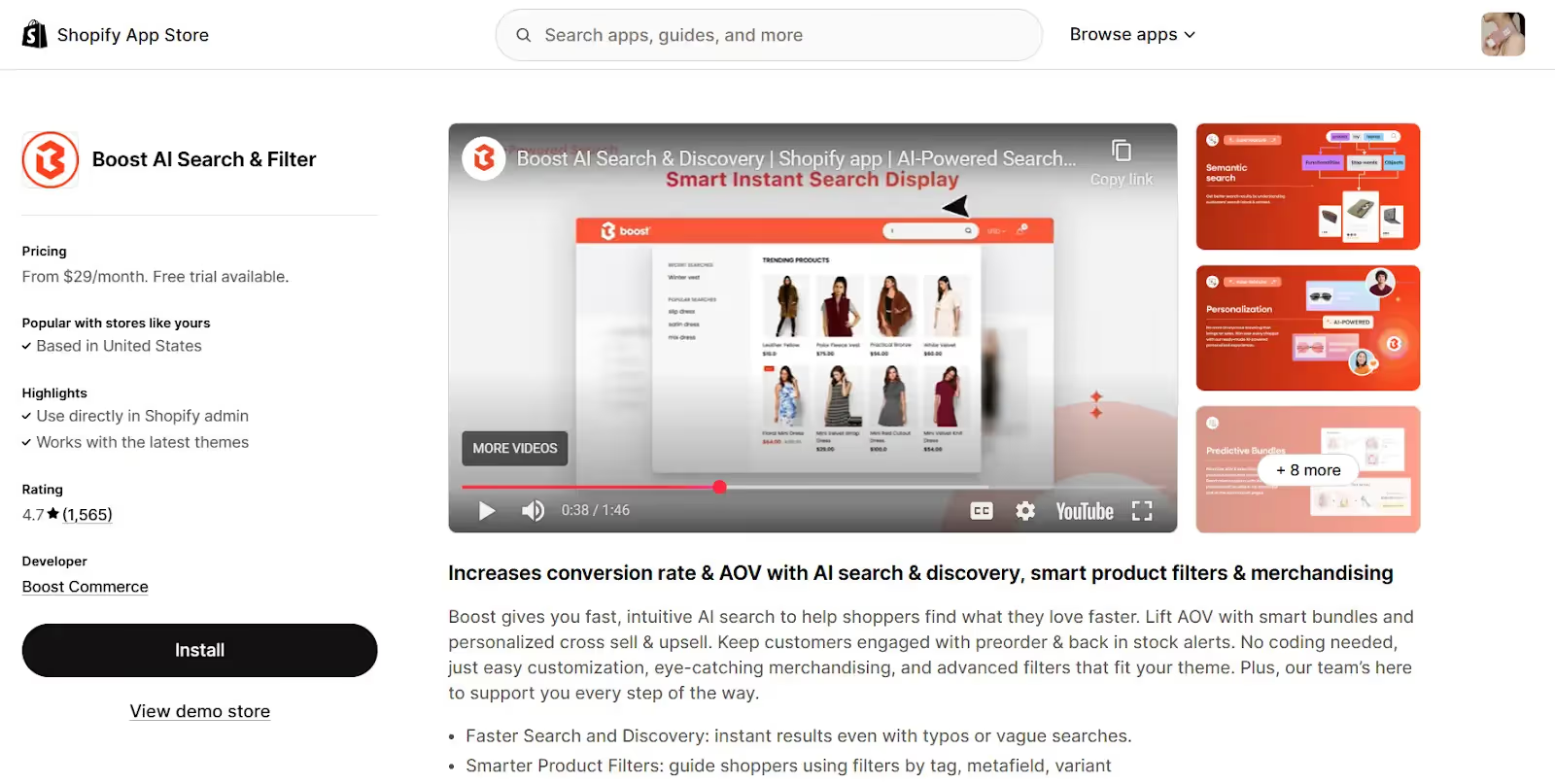
On-site search is where much of the paid traffic either converts into a sale or quietly disappears. Boost AI Search and Filter solves the problem of shoppers getting lost in your catalog, especially when you have many products, variants, or collections.
It improves conversion rate by reducing friction after the click, so your ad spend and SEO traffic do not get wasted on dead ends.
Boost AI Search & FIlter turns product discovery into a marketing advantage by increasing conversion rates and advancing the right products through merchandising rules and recommendations.
Key features:
- Smart site search
- Advanced product filters
- Visual merchandising controls
- AI recommendations plus predictive product bundles
- Insights and analytics
Watch out for:
- Avoid overlapping collection filters between Shopify's native filtering and multiple filter apps, as this can confuse shoppers with inconsistent options.
- Do not overboost products that do not align with intent, as it can erode trust and reduce conversion even if clicks increase.
- Plan your merchandising rules around margin and inventory, or you may push items that create more refunds and support tickets.
5. Judge.me
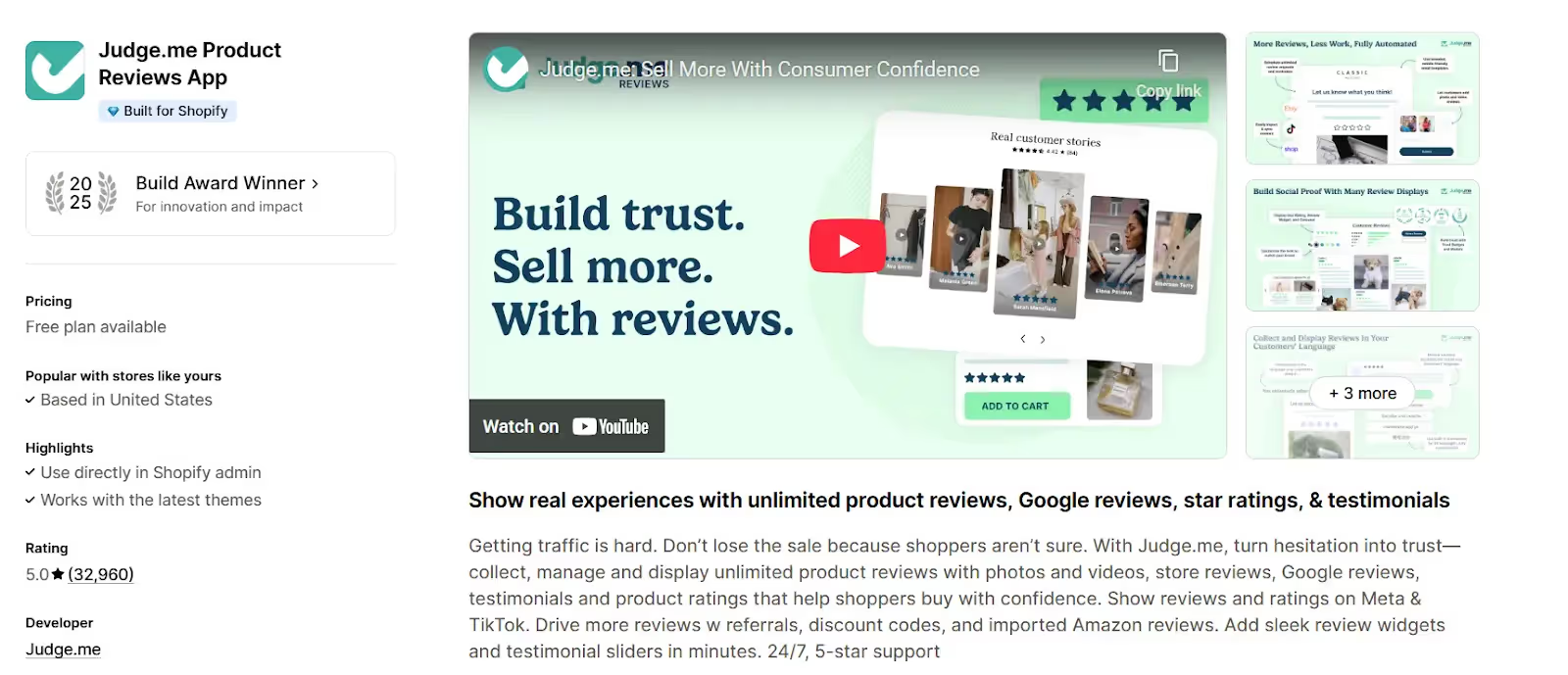
Reviews are one of the strongest trust signals because they help shoppers feel sure at the exact moment they decide to buy. Judge.me addresses that hesitation by collecting and displaying product and store reviews with clear star ratings, so your paid and SEO traffic doesn't stall on the product page.
By answering the quiet question, “Can I trust this?” it lifts conversion rate and takes pressure off your support team. In particular, shoppers can learn about fit and real-world use cases from other customers, leading to more confident purchases.
Key features:
- Unlimited review collection
- Photo and video reviews for more substantial social proof
- Review widgets and star rating badges
Watch out for:
- Setup mistake: Do not send requests too soon or send too many reminders, since the system can send up to 3 reminders based on settings and behavior.
6. Loop
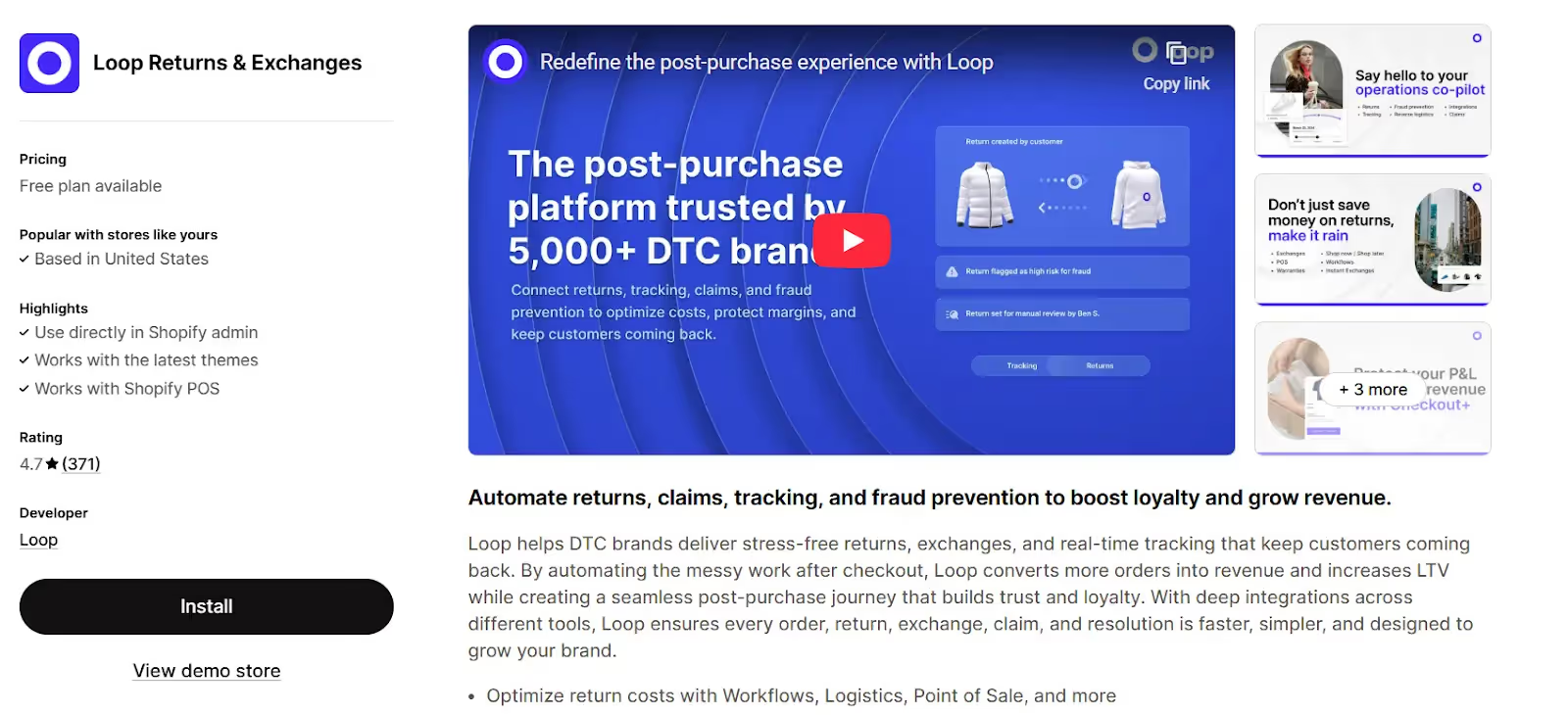
Post-purchase is still marketing, because how you handle returns and exchanges decides whether a first-time buyer trusts you again. Loop Returns and Exchanges solves the problem of messy, manual returns that drive refunds, support tickets, and margin loss.
It protects the margin by turning more refunds into exchanges or store credit. Besides, it cuts support load by moving returns into a precise self-serve flow. A smooth return experience also supports repeat purchase rates because customers who feel looked after when something goes wrong are more likely to make repeat purchases.
Key features:
- Branded return portal with automated approvals
- Exchange-focused options
- Fraud prevention tools
- Return logistics support
- Tracking plus analytics
Watch out for:
- Margin risk: Bonus credit and incentives should be tied to profitability, or you may retain revenue but lose profit.
- Setup mistake: weak exchange inventory rules can cause out-of-stock exchanges and angry customers, so map inventory and variants carefully.
- Fraud rules can backfire if too strict, so review false positives before locking policies down.
7. Vitals
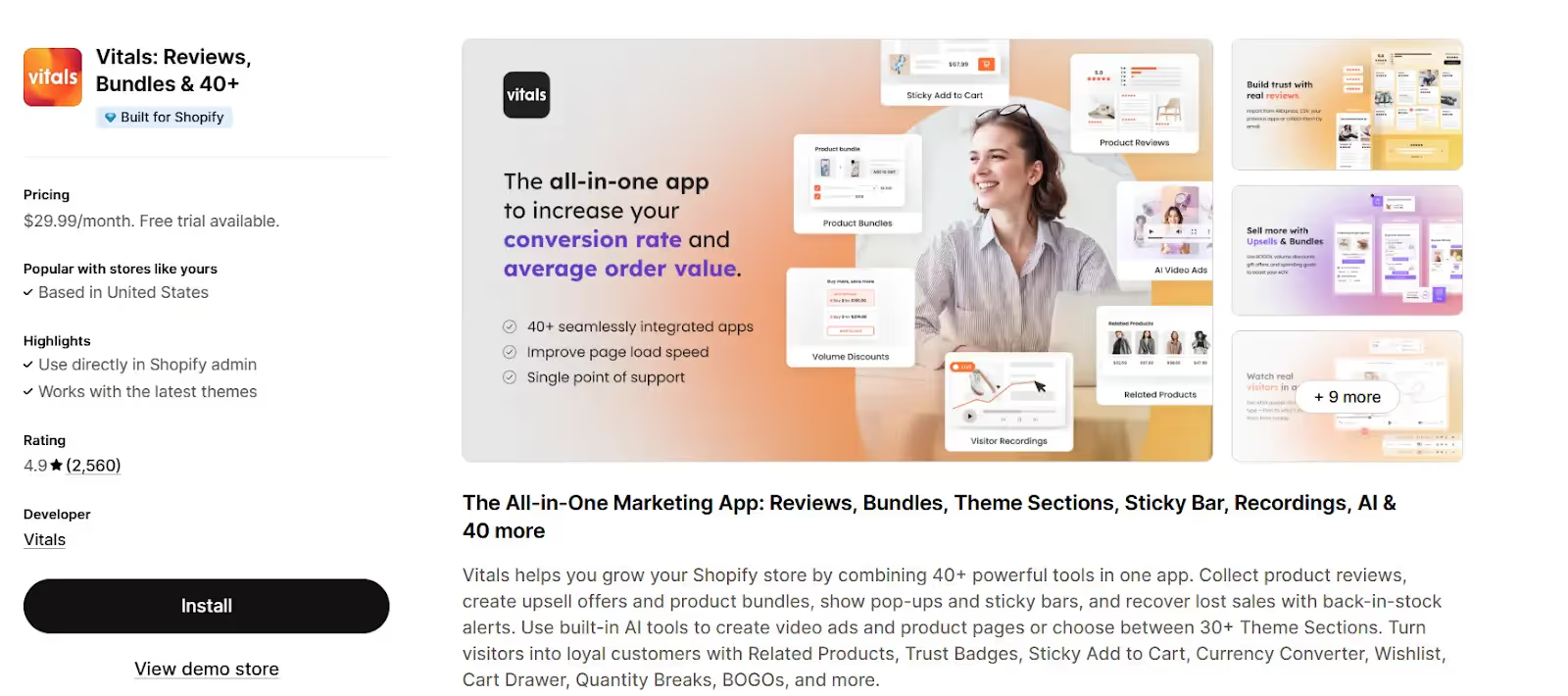
Bundling is a direct way to market higher-value orders without offering deeper discounts, as it helps shoppers build a complete set in one click.
Vitals solves the problem of small cart sizes by introducing bundle mechanics. That means you can launch quickly, test often, and place at key decision points such as the product page, cart, and post-purchase.
Key features:
- BOGO bundles and gift with purchase rules
- Volume discounts and tiered pricing to reward bigger carts
- Add to cart upsells and cart drawer offers that pair with bundles
- Design controls and targeting rules
Watch out for:
- Margin mistake: do not bundle low margin items with heavy incentives unless you have clear attach rate targets.
- Inventory mistake: bundle widgets can frustrate shoppers if one item is often out of stock, so set rules or swap fallback items.
- Clutter risk: too many bundle blocks can distract from the main product, so keep one strong bundle per page and test placement.
8. Gorgias Helpdesk Chat and FAQ
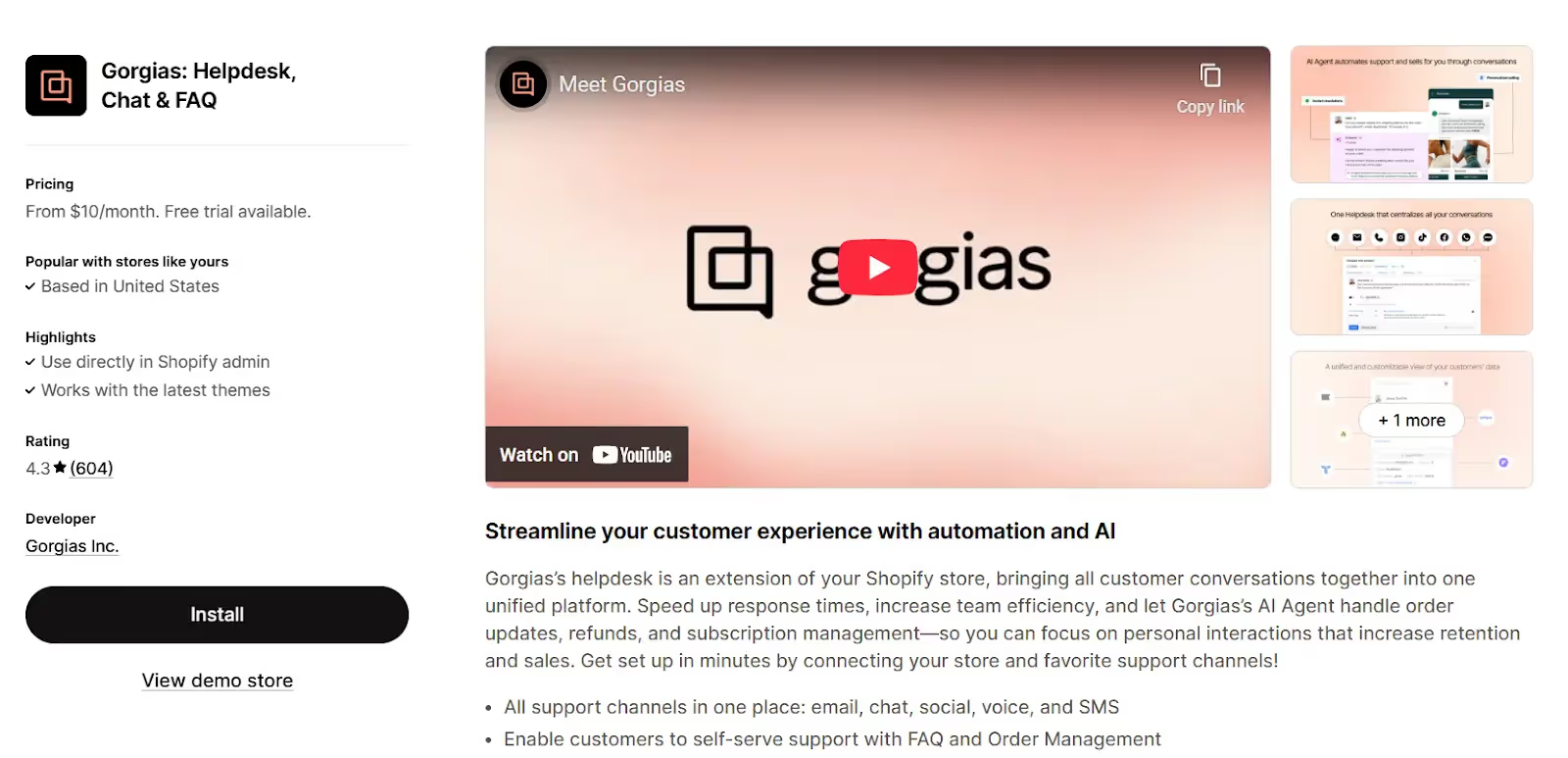
Customer support shapes trust at the exact moment a shopper hesitates. Gorgias Helpdesk, Chat, and FAQ addresses the issue of scattered conversations and slow response times.
Then, using automation and an AI Agent to handle common requests like order updates and refunds. When support tickets are rising and response times are hurting conversion, fast, accurate answers reduce drop-off right before checkout.
Key features:
- Unified helpdesk for multiple channels in one place
- Live chat, plus FAQ and self-serve order help, to deflect tickets
- An AI Agent that can resolve repetitive requests
- Automations like rules, tagging, routing, and response templates to speed up handling
Watch out for:
- Brand risk: AI Agent needs training and guardrails; otherwise, it may respond in the wrong tone or mishandle edge cases, so review transcripts early.
9. Appstle
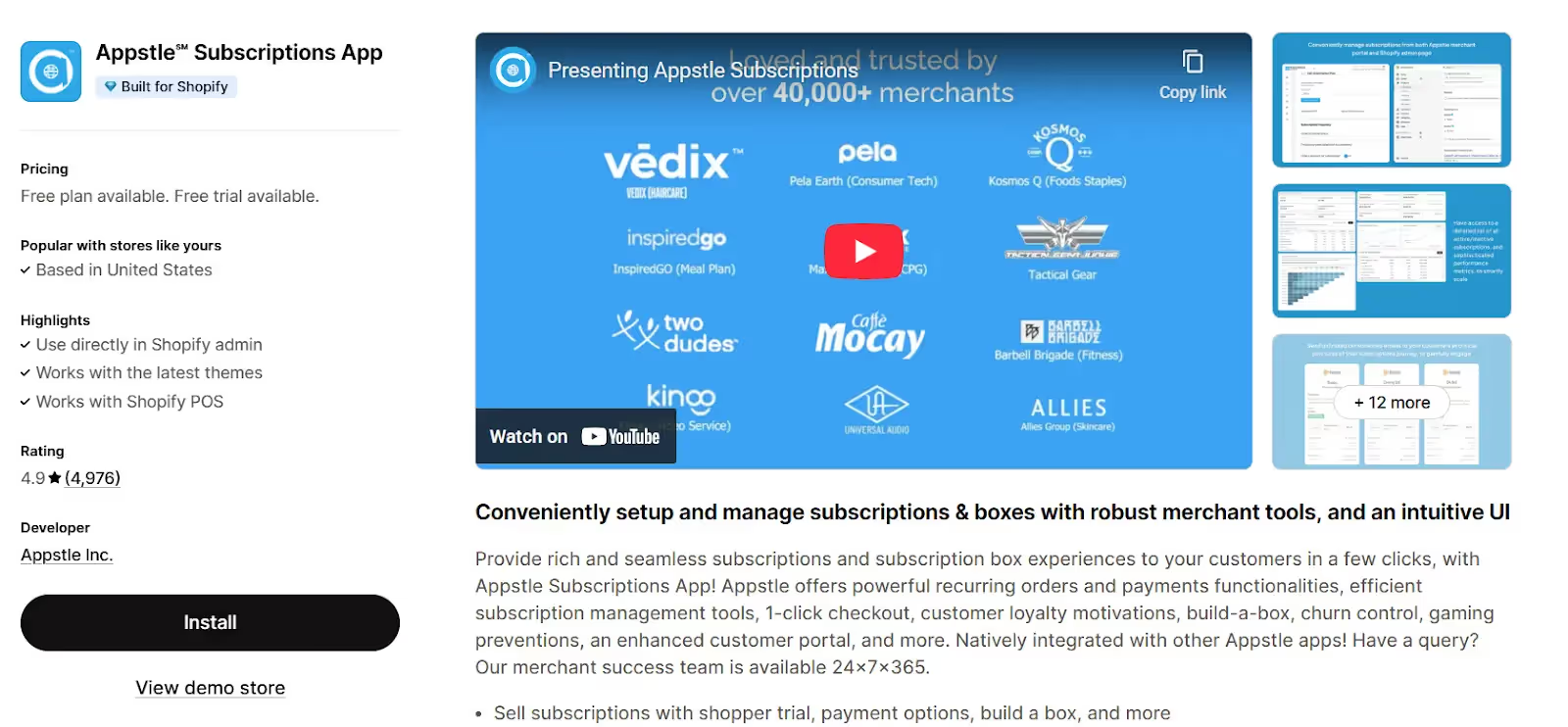
Subscription marketing is one of the clearest ways to grow predictable revenue by turning a single purchase into a repeat habit. Appstle Subscriptions solves the problem of customers wanting convenience while merchants struggle to manage recurring billing, flexible delivery schedules, and churn.
It increases repeat purchase rates by making reorders automatic while protecting margins through subscriber-only pricing rather than storewide discounts.
Key features:
- Multiple subscription models
- Customer self-management portal
- Mixed cart checkout so shoppers can buy subscription and one-time items together
- Dunning and smart retry to recover failed payments and reduce churn
Watch out for:
- Offer design risk: if your discount is too deep, you may grow subscriptions but lose margin.
10. Parcel Panel Order Tracking
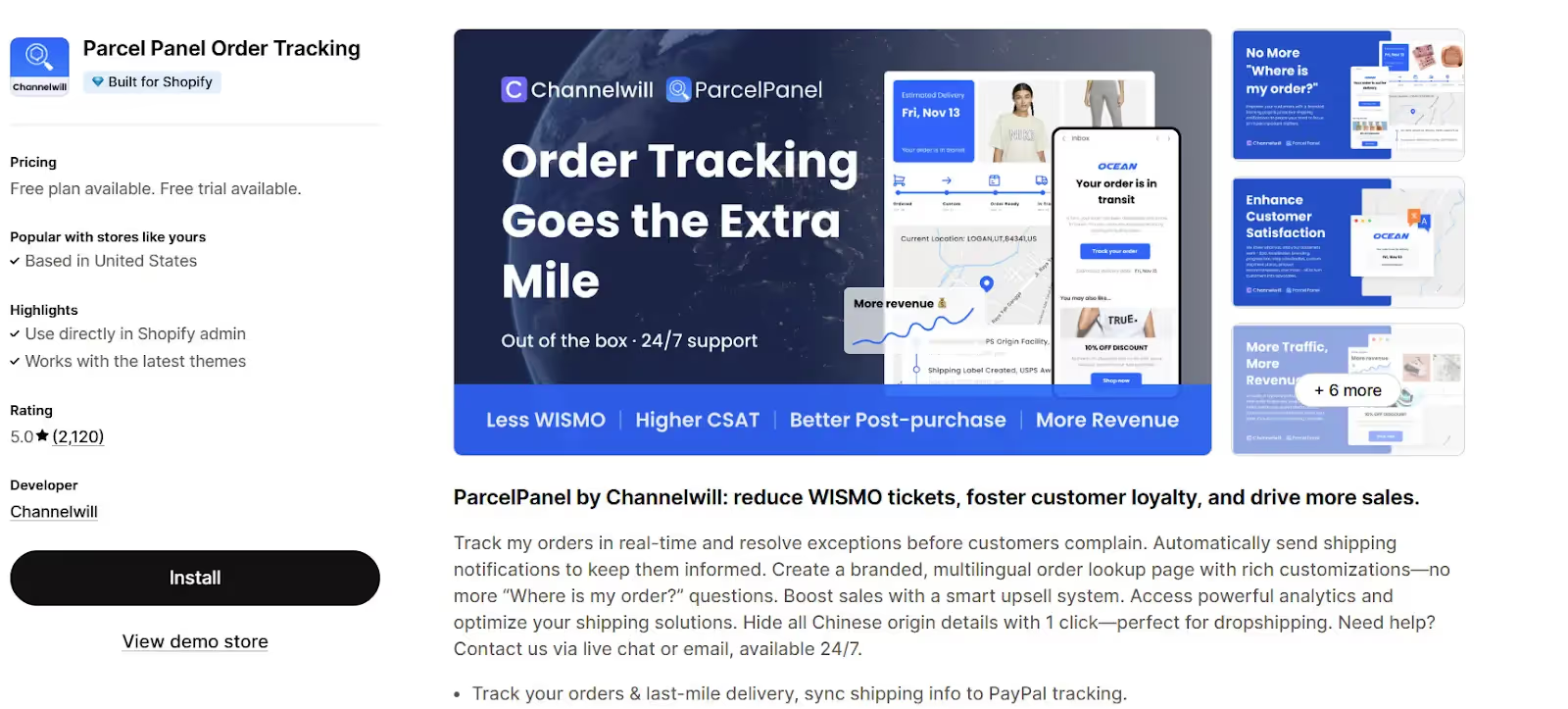
Order tracking makes every shipping update a moment when customers decide whether to trust you again.
ParcelPanel Order Tracking solves the problem of lost order tickets during transit and missed opportunities to turn tracking visits into repeat sales. It reduces support load by answering Where is my order questions before customers ask.
Key features:
- Branded tracking page and order lookup page with real-time tracking and estimated delivery dates
- Automated shipping notifications when order status changes
- Exception handling plus analytics for shipments, tracking page performance, and notification performance
- Carrier masking and dropshipping-friendly options, such as hiding Chinese origin details
Watch out for:
- Brand risk: too many notifications can feel like spam, so keep only the key milestones.
- Setup mistake: Upsells on the tracking page must align with the user's intent, or you risk undermining trust at a sensitive moment.
Get More Out of Your Shopify Apps
You've picked the perfect combination of apps for your Shopify store. Now you want to elevate your store (and your brand) by launching your own native mobile app.
You don't want to have to start your search again or drop crucial Shopify apps because they're not compatible with your mobile app provider.
MobiLoud turns your Shopify store into a mobile app, with all your Shopify apps, integrations and custom features working in your mobile app exactly as they do on your site.
MobiLoud is the only Shopify mobile app builder that guarantees compatibility with all your Shopify apps. No APIs, no custom development needed. If it works on your site, it'll work in your app - by default.
Click here to get a free preview of your app and see what's possible.
In Conclusion
Shopify's powerful ecosystem is one of the main reasons they're quickly taking over the ecommerce market.
These ten must-have apps give you a solid base for handling key tasks daily across operations, marketing, and retention. From here, choose the few apps from this guide that fit your brand, your budget, and the way you work. Then set them up with a clear goal for each one.
When every tool has a purpose, your stack stays lean, your team feels less strain, and your store is in a stronger position to grow.
FAQs

Convert your website into a mobile app




.webp)