Push Notifications vs SMS: Key Differences and When to Use Each Channel

Push notifications and SMS both deliver messages straight to your customer's phone, but they differ in cost, reach, and regulatory burden. Push is free to send and reaches your highest-value app users with zero legal overhead. SMS has broader reach and near-universal visibility. The smartest ecommerce brands don't pick one over the other. They use both for different purposes.
Push notifications and SMS both deliver messages straight to your customer's phone, but they differ in cost, reach, and regulatory burden. Push is free to send and reaches your highest-value app users with zero legal overhead. SMS has broader reach and near-universal visibility. The smartest ecommerce brands don't pick one over the other. They use both for different purposes.
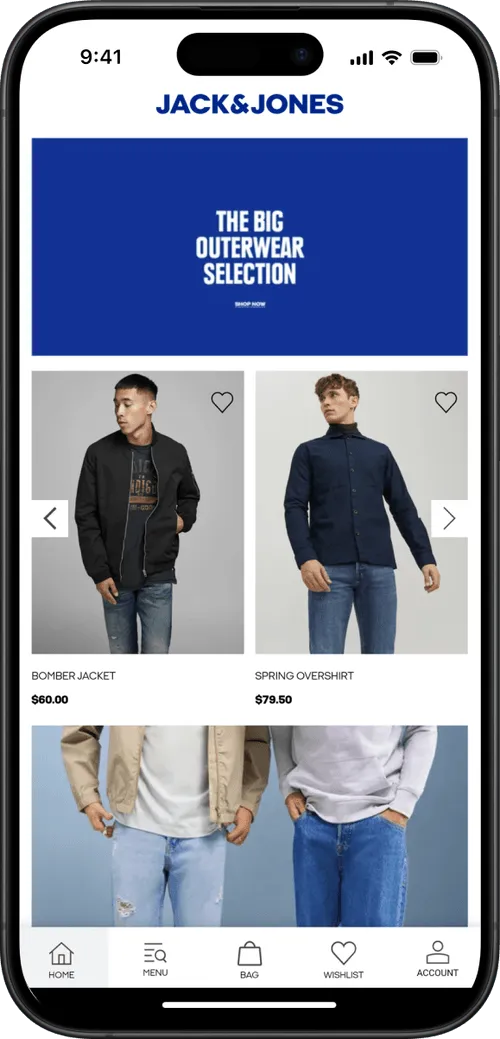
Mobile is taking over. Nearly 60% of global internet traffic comes on mobile devices, and mobile commerce sales account for more than $2 trillion yearly, 57% of all eCommerce sales around the world.
These trends show that today's brands need to invest in mobile-first communication channels, such as push notifications and SMS.
But between push and SMS, which is better? Which is most efficient, which is most effective, and are there different situations where you should use one or the other?
We'll answer all of these questions below.
Read on to learn all you need to know about the best way to get in front of mobile-first customers in 2026.
What Are Push Notifications?
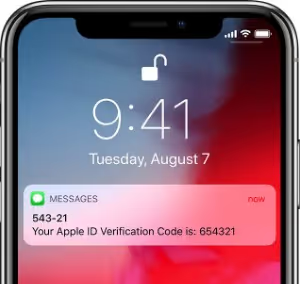
Push notifications are short messages sent from a mobile app directly to a user's device. They appear on the lock screen, in the notification center, and as banners, even when the app isn't open.
.webp)
On iOS, they're delivered through Apple Push Notification Service (APNs). On Android, through Firebase Cloud Messaging (FCM). Both systems require the user to have the app installed and to grant notification permission through the operating system's built-in prompt.
One important feature from a business standpoint: push notifications cost nothing to send.
There's no per-message fee, no carrier involvement, no third-party billing. Once you have an app with push capability, you can send 1,000 or 1,000,000 notifications at the same marginal cost: zero.
What Is SMS Marketing?
SMS (Short Message Service) messages are text messages sent to a phone number through the cellular network.
They don't require an internet connection, a smartphone, or an app. If someone has a phone number, you can text them. It’s just in the last 10-15 years that SMS has moved from a primarily person to person channel, to a legit B2C (business to consumer) one.
SMS carries a per-message cost, typically $0.01 to $0.05 per send, plus carrier surcharges that have been steadily increasing.
Push Notifications vs SMS: How Do They Compare?
Here's how the two channels stack up across the dimensions that matter most.
The table gives you the snapshot. Here's the context behind each dimension.
Cost
Push notifications cost nothing per message. SMS costs $0.01 to $0.05 per send, depending on your platform and message type, plus carrier surcharges that add $0.003 to $0.01 per message on top of that.
At scale, the gap is significant. A brand sending 100,000 messages a month pays $0 for push and $1,000 to $5,000+ for SMS, before platform subscription fees.
That's not including the compliance infrastructure SMS requires: consent management systems, opt-out processing, legal review, and 10DLC registration.
And the revenue side is just as lopsided. According to Omnisend's 2025 ecommerce report, push notifications generate 15% of attributed ecommerce revenue from just 3% of total message volume.
On a per-message basis, push is the most cost-efficient direct messaging channel available.
Reach and Audience
SMS reaches anyone with a phone number, which is practically everyone. (if someone you know doesn’t have a phone, ask them to email me, send a letter, send a smoke signal. I want to know how they do it).
You don't need them to download anything or enable anything beyond receiving texts. For broad-reach campaigns and transactional messages, that universality is hard to match.
That universal reach is SMS's biggest advantage. It's also what makes it heavily regulated.
In the US, SMS marketing falls under the Telephone Consumer Protection Act (TCPA), which requires prior express written consent before sending marketing texts. Each unsolicited message can trigger $500 to $1,500 in statutory damages.
Brands also need to register through 10DLC (10-digit long code) systems, comply with carrier filtering rules, and manage opt-out processing within 10 business days under the FCC's 2025 revocation rules.
Push notifications only reach people who have your app installed and have opted in. That's a smaller audience by definition. But it's also a more valuable one. App users are self-selected: they've already bought from you, trust your brand, and tend to have higher average order values and repeat purchase rates than your general customer base.
Think of it this way: SMS casts a wider net. Push reaches the people already in your boat.
Open Rates and Engagement
SMS has a widely cited open rate of around 98%, with click-through rates in the 21-35% range.
Push notification engagement metrics look lower on the surface. Airship's analysis of 50 billion notifications found reaction rates of about 10.7% on Android and 4.9% on iOS across all industries. Ecommerce-specific CTR runs around 3-4% (Pushwoosh 2025 benchmarks).
These numbers can be misleading, though. Opens and clicks are not as black and white as with a channel like email. Push notifications, for example, are essentially “open” already when they land on the lock screen.
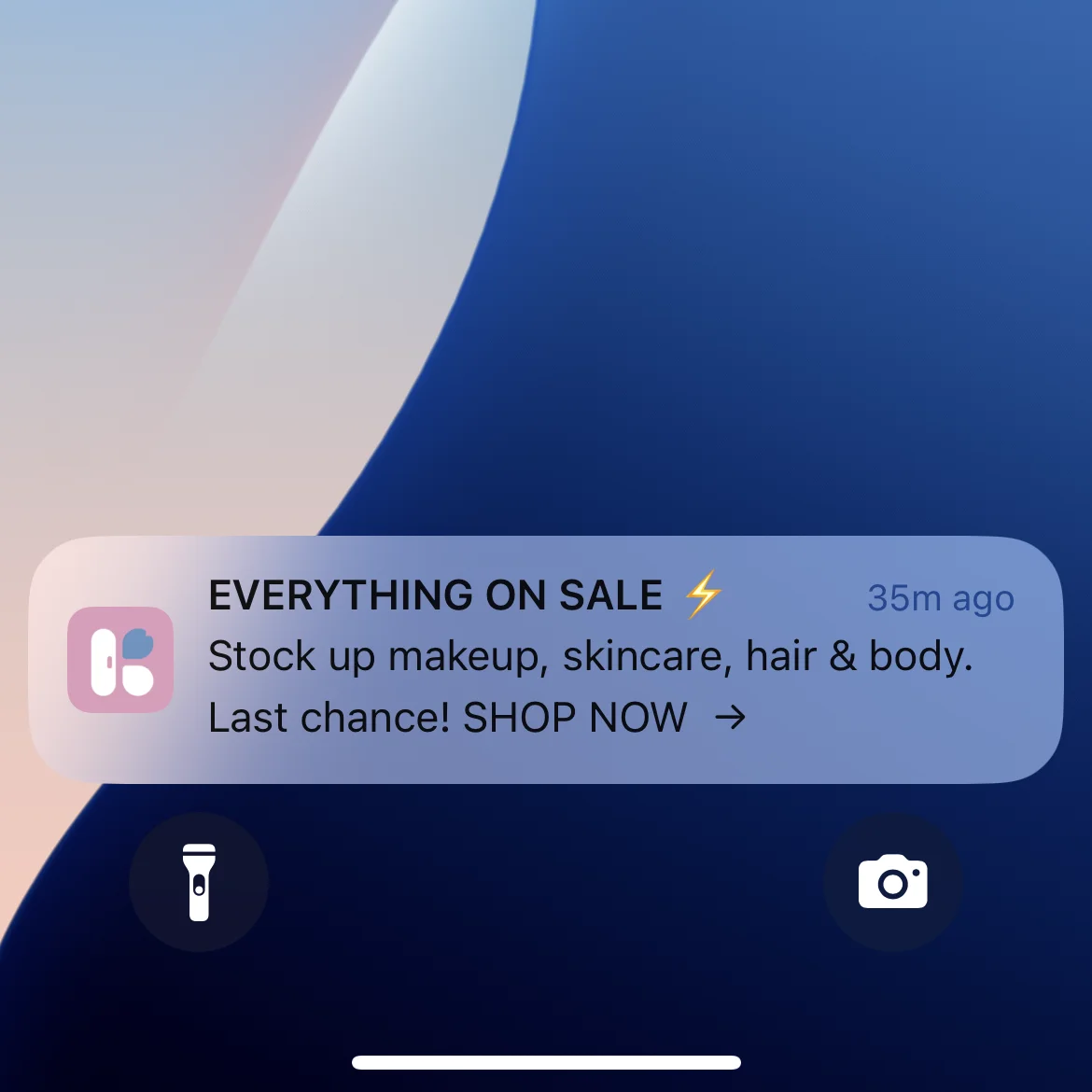
The content in short SMS messages may also be visible from the preview that shows up on the user’s device when it’s first delivered.
Regardless of how this is measured, the engagement rates of both channels are strong – particularly automated, behavior-triggered notifications (abandoned cart, browse abandonment, price drops), which convert at 22.9% according to Omnisend's 2025 data.
Rich Media and Interactivity
Push notifications support images, action buttons, deep links into specific app screens, custom sounds, and (on iOS 16+) interactive carousels.
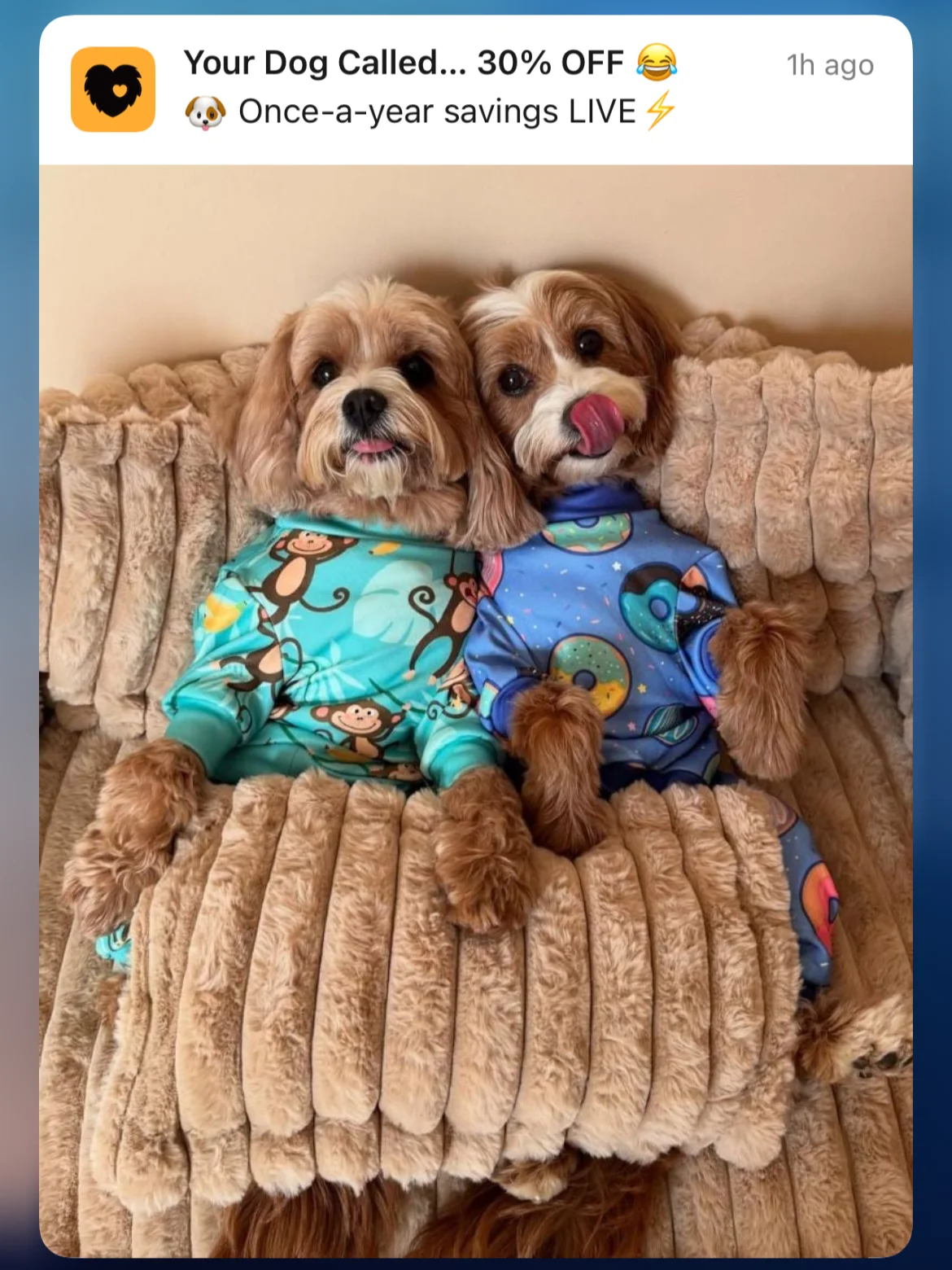
You can send a notification that takes a customer directly to the product they left in their cart, one tap from checkout.
SMS is limited to 160 characters of plain text. MMS (multimedia messaging) supports images but costs more per message and doesn't render consistently across all devices and carriers.
SMS does support two-way communication, so customers can reply directly. Push is one-directional, though action buttons can simulate choice-based interaction.
Regulatory Compliance
This is one of the biggest practical differences between the two channels, and one that most comparison articles gloss over.
SMS marketing in the US is governed by the TCPA, with statutory damages of $500 to $1,500 per unsolicited message and no cap on total penalties. TCPA class action filings increased 112% between Q1 2024 and Q1 2025, with over 2,128 lawsuits filed through September 2025. Recent settlements include DSW at $4.43 million and Zales at $7.5 million.
Beyond TCPA, SMS requires 10DLC registration, carrier approval for commercial messaging, compliance staff or legal review, and opt-out processing within 10 business days under the FCC's April 2025 rules.
Push notifications have none of this. Users opt in through Apple's or Google's native permission prompt and opt out by toggling a switch in their phone's settings. No federal regulation, carrier involvement, or class action exposure.
Delivery and Reliability
SMS works without an internet connection. As long as there's cellular signal, the message gets through. For true emergency communications and transactional alerts, that carrier-level reliability is genuinely superior.
Push notifications require an internet connection (WiFi or cellular data). If the user’s phone does not have an internet connection, the notification will most likely arrive when they connect again.
FCM (Android) can queue up to 100 notifications when a device is offline; APNs (iOS) stores only the most recent notification per app.
One additional thing to note, though: due to SMS relying on a cell carrier for delivery, there’s a third party that can affect your reach. On top of that, SMS messages from unknown senders have started to be filtered to secondary inboxes (like email).
Push notifications are more direct, and (as almost everyone has an internet connection today everywhere they go), generally more reliable at landing right in front of your customer.
When Should You Use SMS?
SMS stands out for specific scenarios:
- Transactional messages. Order confirmations, shipping updates, delivery notifications. These are expected, high-utility messages that customers want via text.
- Reaching non-app users. For customers who haven't installed your app, SMS is your only direct-to-device option. If you need to reach your full audience, SMS has the coverage.
- Urgent, time-sensitive alerts. Flash sales with a hard deadline, low-stock warnings, security codes. SMS's near-guaranteed visibility makes it the right call when timing is everything.
- Two-way conversations. Customer service interactions, conversational commerce, and quick feedback requests work naturally over text.
Platforms like Klaviyo, Postscript, Attentive, and Omnisend have made SMS marketing accessible for ecommerce brands, with built-in TCPA compliance tools and deep Shopify integrations.
When Should You Use Push Notifications?
Push notifications are strongest where cost efficiency and audience quality matter most:
- Abandoned cart recovery. Push notifications can recover up to 20% of abandoned carts, and they cost nothing to send. For a flow that triggers thousands of times per month, the savings over SMS add up fast.
- Flash sales and promotions. Rich media support means you can send a product image with a deep link straight to the product page inside your app. One tap from notification to checkout.
- Re-engagement. A well-timed push notification drives lapsed users back into a full native shopping experience, not a mobile browser. Brands using segmented push see up to 3x higher retention compared to those that don't send notifications at all (Airship).
- Loyalty and rewards. Points updates, tier milestones, exclusive offers. These are high-frequency messages that would be expensive via SMS and are a natural fit for push.
- Back-in-stock and price drop alerts. Behavior-triggered notifications that hit when intent is highest. These rank among the highest-converting ecommerce message types, with CTR as high as 8-10% (Pushwoosh/PushPushGo).
The revenue numbers reinforce this. Push notifications account for 15% of attributed ecommerce revenue from just 3% of total message sends (Omnisend 2025). That's the highest revenue-to-volume ratio of any direct messaging channel.
Why the Best Brands Use Both
If you've read this far, there’s one clear takeaway we want you to have: push and SMS aren't competing for the same job.
SMS reaches everyone. It's your broad-reach channel for transactional messages, urgent alerts, and customers who don't have your app. It works on any phone, doesn't need an internet connection, and has near-universal visibility.
Push reaches your best customers. App users have higher average order values, higher repeat purchase rates, and higher lifetime value. Push notifications are a direct line to those customers, with no per-send cost, no regulatory risk, deep-linking directly to your mobile app.
"Push notifications give us a way to get in front of high-value customers within a walled environment... they're in the app... we have their attention captured."
-- Damien Smith, Bottle Stop
Here’s a way to think about how you divide the work:
- Use SMS for broad reach. You’ll likely have more people on your SMS list than push subscribers. This list will also include people who haven’t bought from you before. You can use SMS to start building customer relationships at the early stages and turning interest into revenue.
- Use push for your app audience. Abandoned cart recovery, promotions, re-engagement, loyalty notifications... You're reaching your highest-value segment at zero marginal cost with zero compliance overhead. Basically anything you send via SMS can reasonably be sent via push, with less risk and higher ROI.
- Shift high-frequency campaigns from SMS to push. Daily deals, flash sales, loyalty updates. These are the messages that rack up the biggest SMS bills and also happen to work great as push notifications. You should segment app users (who have push enabled) so that this is the primary channel you use to reach them.
Brands running both channels in an omnichannel strategy consistently outperform those relying on a single channel. One Omnisend case study showed a brand achieving 1:300 ROI using combined email, SMS, and push automations.
How to Add Push Notifications to Your Marketing Stack
Push notifications require a native mobile app. Web push exists, but opt-in rates are significantly lower, engagement is low, and there’s limited support for iOS users.
If you're running an ecommerce store and want to add native push to your marketing channels, MobiLoud makes it easy.
MobiLoud builds native iOS and Android apps from your existing website. Your full storefront, checkout, and integrations, all delivered as a native app with push notification support built in. No rebuilding from scratch.
Here's how it works (and how easy it is):
- Book a strategy call. Share your website, talk through your goals, and find out if it's a good fit. No commitment.
- See your store as a native app. Our team builds a personalized preview so you can see exactly how it looks and performs before you decide.
- Go live on the App Store and Google Play. We handle the build, testing, and submission. Most brands launch within a few weeks.
That’s it. MobiLoud’s fully managed service means you can go live fast, with minimal effort, and essentially zero risk.
Curious whether push notifications make sense for your brand? Book a free strategy call to discuss it with our app team. We’ll walk you through the process and show you how to complete your marketing stack, by unlocking native push notifications.
FAQs

Convert your website into a mobile app