The Best Shopify Mobile App Builders: 2026 Guide

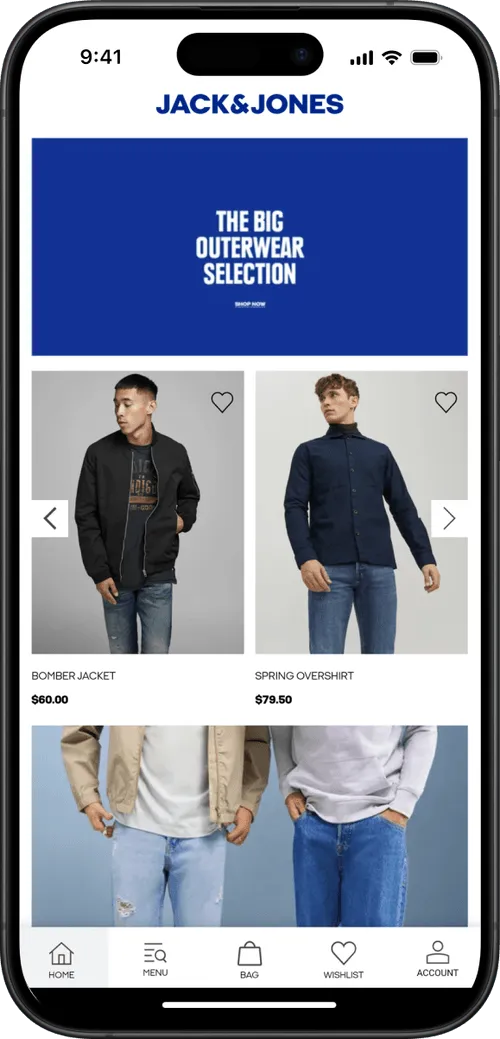
If you’re looking for a way to launch a mobile app for your Shopify store, without hiring developers, without spending $100K+ to launch, and without the overhead of custom development, you’re in the right place.
Shopify mobile app builders are built to solve this problem. They let any store launch native iOS and Android apps, unlock the power of push notifications, and get in the app stores. You don’t need to be a global heavyweight with a 200+ headcount to have your own app anymore.
But if you’re choosing the best Shopify mobile app builder, there’s a lot to unpack.
Most brands will jump straight to a feature/pricing comparison. This is missing the bigger choice to make. The choice between two distinct approaches that today’s top app builders take.
This guide breaks down both approaches, explains the technical tradeoffs most people don't learn about until they're already live, and covers the main tools in each category.
In the end, you’ll have a clear view on what the best Shopify mobile app builder is for your brand.
The Two Types of Shopify Mobile App Builder
The bigger choice than tool vs tool is which approach you prefer:
- A full website to app service
- A DIY, drag-and-drop app builder
Each one makes fundamentally different tradeoffs when it comes to customization, maintenance, and how much work falls on your team.
We’re going to break down these two different approaches in detail. If you’d rather skip straight to the best app builders, click here.
Otherwise, here’s the deep dive into how Shopify app builders work, that you’re not going to get anywhere else.
1. Website-to-App Services
This option means directly converting your Shopify store into a mobile app.
The app’s UI and UX are powered by your website. The app essentially is your website. The checkout, features, PDPs, collections pages are all pulled directly from your mobile website.

Make a change to the website, the app updates automatically.
Layered on top are native features like a native tab menu, plus native push notifications, giving it all the functionality and feel your customers expect from a mobile app.
The best way to think about it is you’re turning your mobile website into a real mobile app, which runs from one codebase - your existing website.
Pros:
- Everything on your store works in the app. No rebuilding required
- Updates to your site appear in the app automatically
- All your Shopify apps and integrations carry over by default
- Not dependent on Shopify API or custom integrations
Cons:
- Building unique, app-exclusive UI and UX is more difficult
- Less granular control over the mobile app
- The app’s performance depends on your website’s performance
- Tends to be a higher cost than basic entry-level app builders
The bottom line: If you've already invested a lot into making your Shopify store great and want an app without rebuilding or maintaining a separate experience, this is the most efficient path. If you want a completely different app design, look at a DIY builder.
2. DIY Drag-and-Drop App Builders
This is the typical no-code app builder approach.
You connect your Shopify store to the app builder, then get to work putting your app together (either starting with a template or dragging and dropping pre-made elements onto a blank canvas).
You’ll use the app builder’s pre-built integrations to connect any crucial apps your store used (Yotpo, Recharge, Gorgias, etc).
Products, orders, and customers sync through Shopify's API. UI elements need to be updated independently from your website - the app is essentially a standalone channel, with its own maintenance requirements.
Pros:
- A visual editor lets you design custom app layouts without code
- Tools are built specifically for ecommerce stores (unlike generic no-code app builders)
- Integrates with your Shopify data
- Gives you the ability to build a custom, unique, differentiated mobile app
Cons:
- You're managing two experiences (website + app) separately
- Your app relies on the Shopify API, which has real limitations (more on this below)
- Work done on your website doesn’t automatically carry over to the app
- Your team does the majority of the work - designing, building, updating, troubleshooting
- Each third-party integration is another potential point of failure
The bottom line: If your vision for your mobile app is something completely unique, separate from your website, this is the option to choose. Just be aware of the tradeoffs that come with it.
How Most Shopify App Builders Actually Work (And Why It Matters)
This is something most comparison articles skip over, and it's arguably the most important thing to understand before choosing a tool.
The Shopify API Problem
Every mobile app builder you find in the Shopify App Store connects to your store through Shopify's Storefront API.
That's how products, orders, customers, and inventory sync between your website and the app, and it’s how these tools are able to operate as a sales channel that reports straight to your Shopify dashboard.
This seems like the best way to go - the most direct integration with your Shopify store, right?
For some things, yes. For others, it can put rather strict constraints on your app.
What the API Can and Can't Do
The Shopify API is powerful, and Shopify continues to improve it.
But there's a fundamental constraint: the API returns structured data, not your rendered storefront. That distinction matters.
Custom theme code doesn't transfer
Anything custom-coded in your Shopify theme (custom product groupings, personalized layouts, advanced filtering, custom JavaScript) exists in the theme layer only.
When you launch your app, you lose those customizations.
The API returns Shopify's standard data structure, not your customized version of it. If you've invested in a custom-coded storefront experience to improve conversions, that work doesn't automatically carry over to an API-driven app.
Sort order has limitations
The Storefront API offers a fixed set of predefined sort keys for collection pages (best-selling, price, title, date created, and a few others).
If you've implemented custom sorting logic on your website, that custom logic won't transfer to an API-driven app.
There have also been reported issues with some sort options not working as expected.
It seems like a minor thing; but for high-traffic stores, even a 0.1% difference in conversion rate can add up to a major difference in revenue.
Platform changes take time to reach app builders
Shopify regularly updates its platform - raising limits, adding features, changing APIs. But those changes don't automatically flow through to every app builder.
When Shopify updates its product model or API structure, each builder has to update their integration separately.
That means there can end up being gaps between what your Shopify store supports and what the app can handle.
Metafields aren't exposed by default
If you use metafields to store custom product data (and many brands with complex catalogs do), those aren't queryable through the Storefront API unless they've been explicitly exposed via the Admin API first.
That's an extra configuration step that can catch teams off guard.
Why This Matters
For smaller stores running a fairly standard Shopify setup, these constraints may not be deal-breakers.
But for brands doing serious volume with heavily customized storefronts, even a small difference in conversion rate compounds fast.
If you've spent months optimizing how products display, sort, and convert on your website, and those optimizations don't carry over to the app, you're leaving money on the table every day.
"Sort order on a collection page, to me, is where the secret sauce of ecommerce lies. We have invested lots of time and effort in how to optimize those sort orders. We get the sort order exactly the way we want it on the website, but the API only supports the four basic sort orders that Shopify offers. And so then that breaks."
"Every time you try to do something that doesn't take the website and now has a separate code base, you run into issues. All of a sudden, something that works perfectly well on your website now doesn't function in the app."
- David Cost, Rainbow Shops
Note: Shopify has made significant improvements since this interview, including raising the variant limit from 100 to 2,048 and continuing to expand API capabilities. But the core challenge remains: API-driven apps depend on what the API exposes, not what your theme renders. And not every app builder updates at the same pace as Shopify's platform changes.
How the Website to App Approach Avoids This
A direct website to app service like MobiLoud doesn't use the Shopify API to power the app. The app renders your actual website.
So every customization, every workaround, every optimization you've built just works. There's no API translation layer that can strip things out.
When Shopify updates its platform, or when you make a change to your website, there's nothing for a website-to-app service to "catch up" on - the app already reflects whatever your site does.
The Integration Problem
DIY app builders support integrations with many of the most popular Shopify apps and third-party tools you use on your site.
This may be 50, 80, 100+ supported third-party apps. That sounds comprehensive. But here's what it actually means:
If you use one of those 100 apps, it'll probably work in your app.
If you use an app that's not on the list; let’s say a niche loyalty program, a custom subscription tool, a specific review widget; it likely won’t work at all.
We’ve found that with brands we’ve worked with - like MASC, whose Instagram reel-style shoppable videos built with Videowise wouldn’t work with their app built with another app builder.
There are more than 10,000 apps in the Shopify app store (not to mention third-party tools that aren’t in the app store).
No app builder will support every one of these tools - except for those that take the website to app approach.
Integrations Are Points of Failure
Every integration between your app builder and a third-party tool is a connection that can break.
Third-party apps update their code. The builder's integration doesn't update at the same time. Something breaks. Now you're waiting on the builder to push a fix.
The more integrations you rely on, the more things can go wrong.
"As soon as you make it that that's not a direct connection and now you've got two separate code bases, there's an infinite number of places where that can break. It's not impossible. It just makes life much more complicated and much more error prone."
- David Cost, Rainbow Shops
The Website-to-App Approach: Fewer Moving Parts
Because a website-to-app service renders your actual Shopify store, every app and integration on your site works in the app by default (and works exactly as it does on your site).
Whether it’s an analytics tool, a page builder, a niche quiz builder, or a feature you built yourself (like SLEEFS’ custom product configurator), it’ll work in your app.
No separate connections. No dependency on the builder keeping up with third-party changes. Fewer things that can break.
And there’s no limits on the number of integrations you can have. You’re not getting bumped up to another pricing tier for having one too many third-party integrations in your app.
The Cost of Managing Two Experiences
DIY builders give you freedom to create a separate app experience. For many brands, that freedom is a must-have feature.
But that freedom comes with a cost. It could be worth it - but you should understand what you’re working with.
Keeping Things in Sync
If your app is a separate experience from your website, someone on your team has to keep them in sync.
New products, promotions, homepage changes, navigation updates, seasonal campaigns, all need to be updated in both places.
As soon as you offer something different on your website, whether it’s a home page, menu, navigation, PDP, collection page, you now have something new to worry about.
Inevitably, things fall out of sync. And then you’re left with tech debt, and showing and out of date experience to your app users (who also happen to be your best, most valuable customers).
The Time Cost
Designing screens, configuring features, troubleshooting issues, managing updates is real work.
If it takes 5-10 hours per week, that's potentially $800-$2,000/month in labor - on top of the subscription fee you’re paying for the app builder.
For some brands, that investment is worth it. They want to offer a custom app experience, and believe the upside of this is worth the extra cost.
For others, that's time and money that could go toward something more impactful.
The Top Shopify Mobile App Builders (9 Platforms to Start Your Search With)
As we’ve discussed at length now, the first choice is not which platform to demo, but which approach you want to take.
If you’re ready to start looking at tools, here are some of the top choices you can make. Start with these before you dive into the myriad of options on the Shopify app store.
MobiLoud
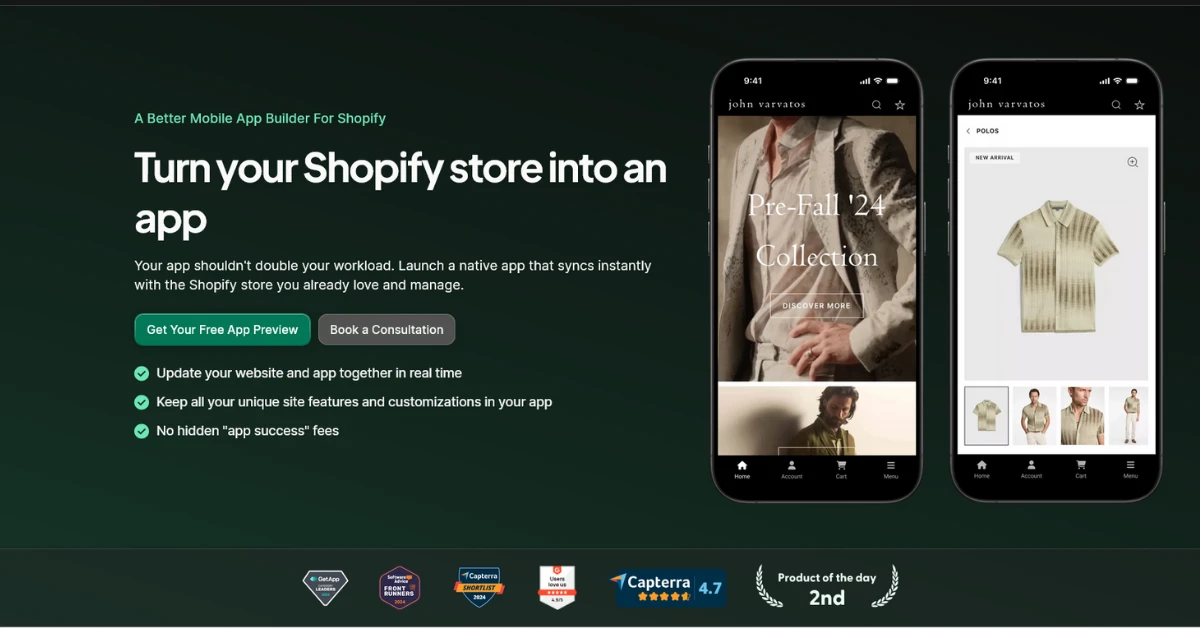
Approach: Website-to-app (managed service)
Pricing: Starts at $799/month (custom pricing to fit what you need. Get more details here)
Notable details:
- Full parity with your Shopify store - every app, integration, and customization carries over
- Not API-dependent - avoids Shopify API limitations
- Push notifications built in via OneSignal & Klaviyo
- Managed service - we handle app store submission and ongoing maintenance
- Supports multi-store-front, multi-language, multi-country stores
- Typical launch time of ~4 weeks
This is us - we’re MobiLoud.
Of course, that means we’ll be biased. But we built what we built because we really believe this is the best way, for the majority of ecommerce brands, to launch your own branded shopping app.
MobiLoud converts your Shopify store into native iOS and Android apps.
Your web store acts as the single source of truth, for both your browser and app experiences. Update once, it goes live everywhere. The app inherits everything you’ve built for the web, from features and home page design to minor CRO tweaks and analytics code.
MobiLoud adds native capabilities on top: push notifications, native navigation, and the code that lets your app run natively on mobile devices.
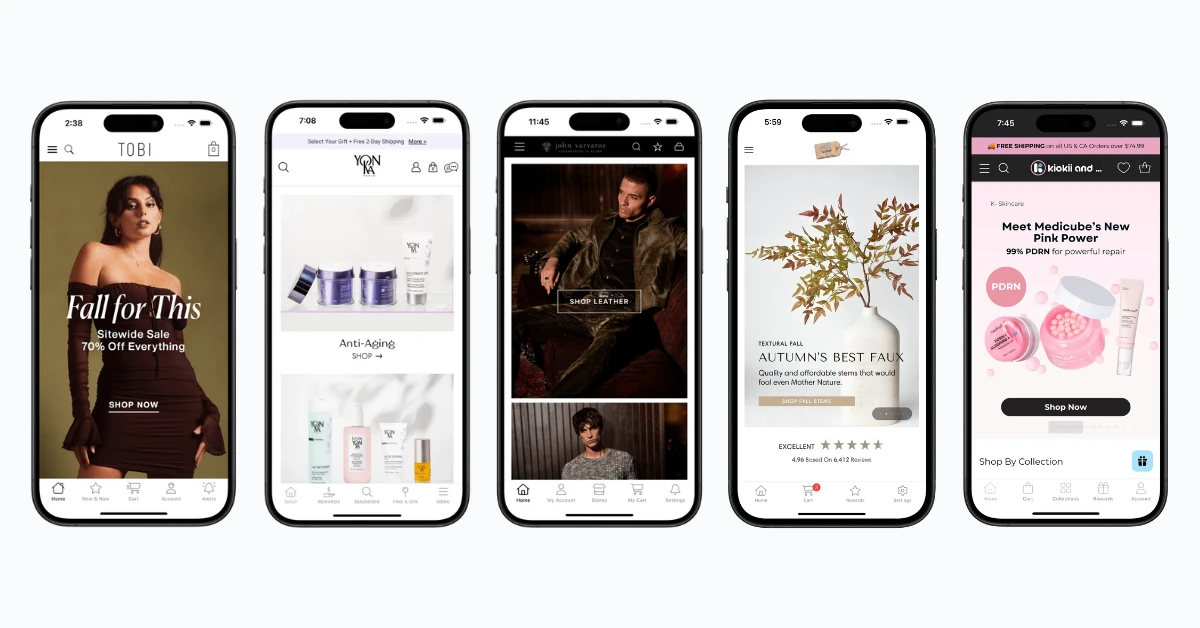
It’s not reliant on the Shopify API, or any other custom integrations that can break. This lowers overhead, as well as risk.
The Service Model
MobiLoud is a fully managed service. We handle:
- Setup — configure & building the app
- Testing — QA across devices
- Launch — publishing your app to the Apple App Store and Google Play
- Ongoing — maintenance, updates, and app marketing support
You're not finding the time or freeing up headcount to design screens, configure features, or troubleshoot app store rejections.
You get a full mobile app partner, not a SaaS tool.
What It Doesn't Do
If you want a highly customized app where you drag and drop blocks to create a totally unique UX separate from your store, MobiLoud is not for you.
The app inherits the design and functionality of your website.
There’s no drag-and-drop builder, no app-specific templates.
If you want complex native device features (e.g. bluetooth, AR, offline functionality, biometric features), MobiLoud probably isn’t for you (we may be able to do some custom features, but it’s not guaranteed. Get in touch with us to discuss more).
You can do custom app screens (you’ll build these through your website, and we’ll help you configure so they only show in the app.
It’s also easy to set up app-specific products, discounts or pricing rules (we’ll help you with this too).
But it’s not great if you want full, pixel-level control over your app’s UI/UX, without affecting your website.
It’s also not an entry-level app builder. If you’re looking to launch an app for just a couple of hundred per month, or with a one-time payment, MobiLoud is not the best fit.
Who It's Built For (And Who It's Not)
Good fit:
- Established Shopify brands with well-optimized mobile stores
- Brands with complex customizations that need to carry over to the app
- Teams that don't want to manage a separate app experience
- Brands doing strong, consistent annual revenue with meaningful mobile traffic
Not the right fit:
- You want to design a completely custom app experience from scratch
- You want full drag-and-drop control over every screen
- Your mobile site isn't in good shape yet (fix that first)
- You’re looking for a cheap tool
In short - if your mobile website already does 90% of what your app should do, and you have the traffic and revenue to support a mobile app as a legitimate sales channel, MobiLoud is the best way to do it.
If you’re looking for a cheaper tool, a DIY tool, or clear separation between your app and your website, start with one of the tools listed below.
Ready to see what your website could look like as an app? Get a free preview now.
Appmaker

Appmaker is a Shopify-focused app builder that has been around in the app development space for a long time, and recently repositioned around AI and creative control.
The platform uses a block-based drag-and-drop editor (Appmaker Studio) and layers on several AI-branded tools:
- Eidolon AI for converting screenshots or Figma files into app layouts
- John AI as an in-app analytics assistant
- AppBuzz for bridging website functionality into the app
The platform supports conditional blocks for personalized experiences (e.g., different content for returning vs. new users based on Shopify tags and metafields), and code blocks for developers who want to extend beyond the visual builder.
Appmaker promotes support with 160+ integrations and serves 400+ Shopify brands. It carries a 4.9 rating on the Shopify App Store, though with a smaller review base (~30 reviews) than some competitors. All plans include a success fee on in-app sales in addition to the monthly subscription.
Approach: DIY drag-and-drop builder (AI-assisted)
Pricing: Growth $599/month + 2% of in-app sales; Essential $999/month + 1% of in-app sales; Enterprise custom. 14-day free trial on all plans
Notable details:
- AI-powered design tools (Eidolon AI for layout generation, John AI for analytics)
- Conditional blocks for personalization using Shopify tags and metafields
- Code blocks for developer extensibility (custom loyalty flows, subscription modules, gamification)
- Extensions marketplace with 20+ pre-built add-ons (sticky carts, countdown timers, product bundles)
- Push notifications with scheduled, automated, and behavioral targeting
Appbrew
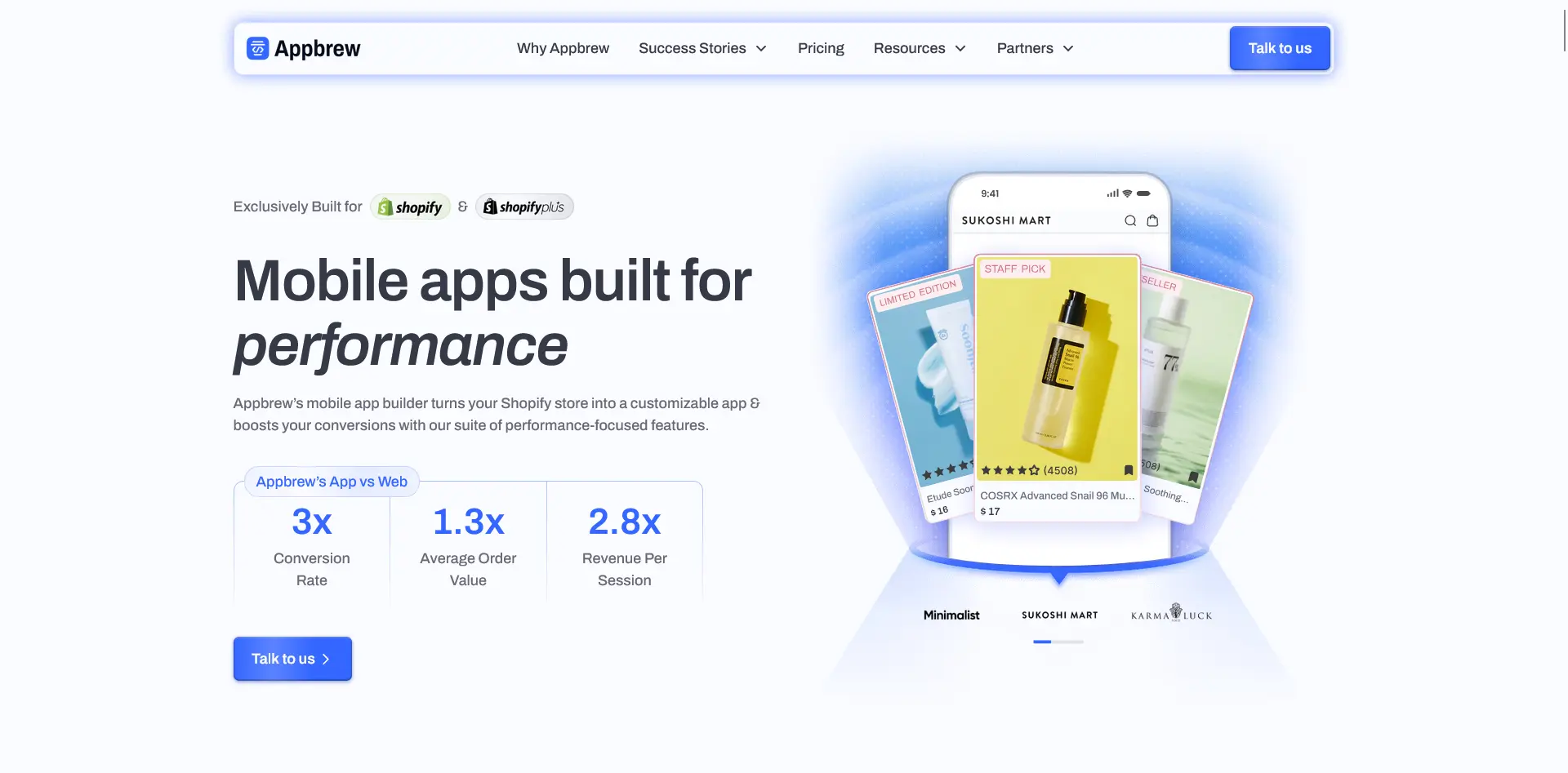
Appbrew is a Shopify-focused app builder that uses React Native to create native iOS and Android apps, positioning itself around performance and a more polished app-like experience compared to template-based builders.
The implementation is more hands-on than typical self-serve tools - Appbrew's team is involved in the design and build process, helping you design and launch the perfect app.
The platform includes AI-branded modules: an AI Concierge for in-app product discovery and an AI Skin Analyzer aimed at beauty brands.
All up it’s more flexible than many API-based app builders, with a higher level of hands-on support as well.
Approach: DIY builder (higher-touch)
Pricing: Starting at $499/month
Notable details:
- React Native architecture
- Higher-touch implementation model
- Custom design capabilities beyond templates
- Analytics and A/B testing features
Tapcart
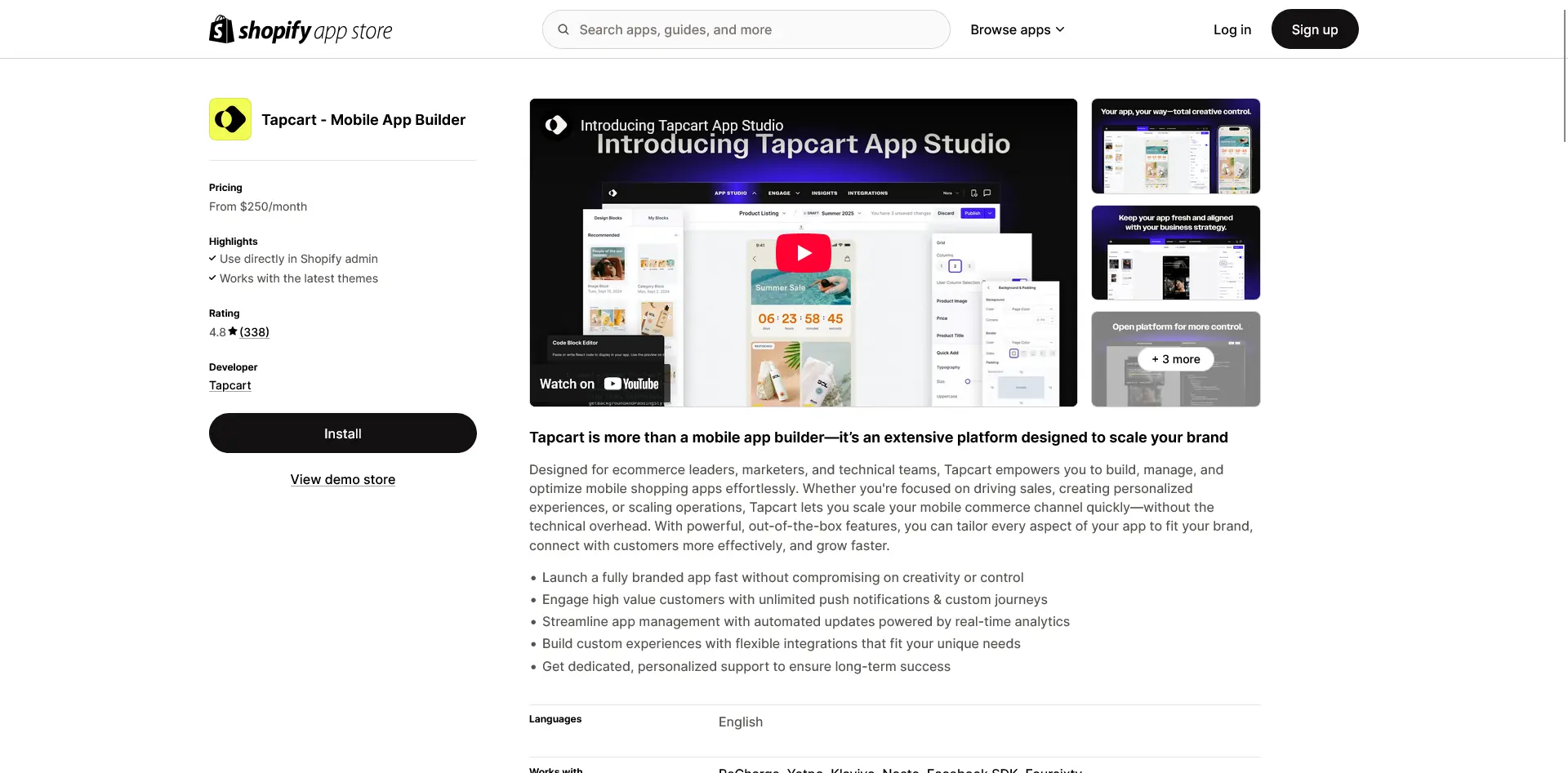
Tapcart is one of the most widely used Shopify app builders. It uses a block-based editor called App Studio for configuring app screens - home, collections, product pages, cart, and account.
The integration catalog is one of the broadest in this space, covering popular apps for loyalty, reviews, subscriptions, analytics, and marketing automation.
Higher tiers unlock developer extensibility through Custom Blocks (React-based components) and web-based custom screens via a bridge SDK.
Approach: DIY drag-and-drop builder
Pricing: Core ~$250/month; Ultimate ~$500/month with performance-based fees
Notable details:
- Block-based design system
- Push notification marketing suite
- Deep linking support
- Integrations with a large number of popular Shopify apps
StoreLab
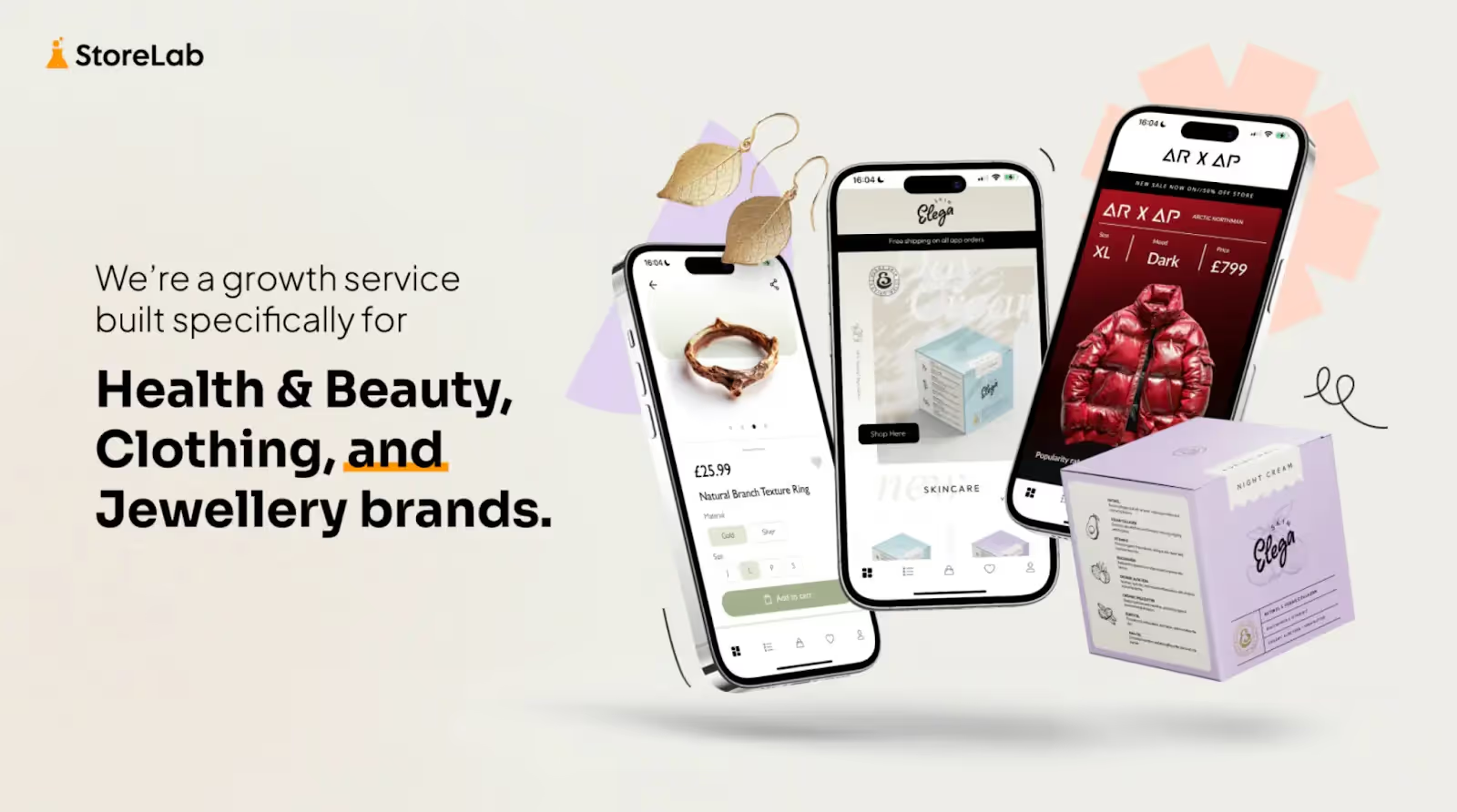
StoreLab’s Shopify Growth Service plans include using their no-code mobile app builder to grow sales and strengthen customer connections.
With its drag-and-drop interface, you can create a branded iOS and Android app without any advanced technical skills, giving customers a smoother shopping experience and faster checkout, which encourages repeat purchases.
Beyond app building, StoreLab provides ongoing expert support, including help with push notifications that increase engagement, drive conversions, and reduce abandoned carts. Combined with targeted Meta ads, this growth strategy attracts new customers and keeps them coming back - raising AOV, loyalty, and sustainable growth.
Approach: Drag-and-drop builder / managed growth service
Pricing: Starting at $499/month
Notable details:
- Quick setup process
- Push notification support
- Theme-based design
- Guidance included; app management included at higher plans
Shopney
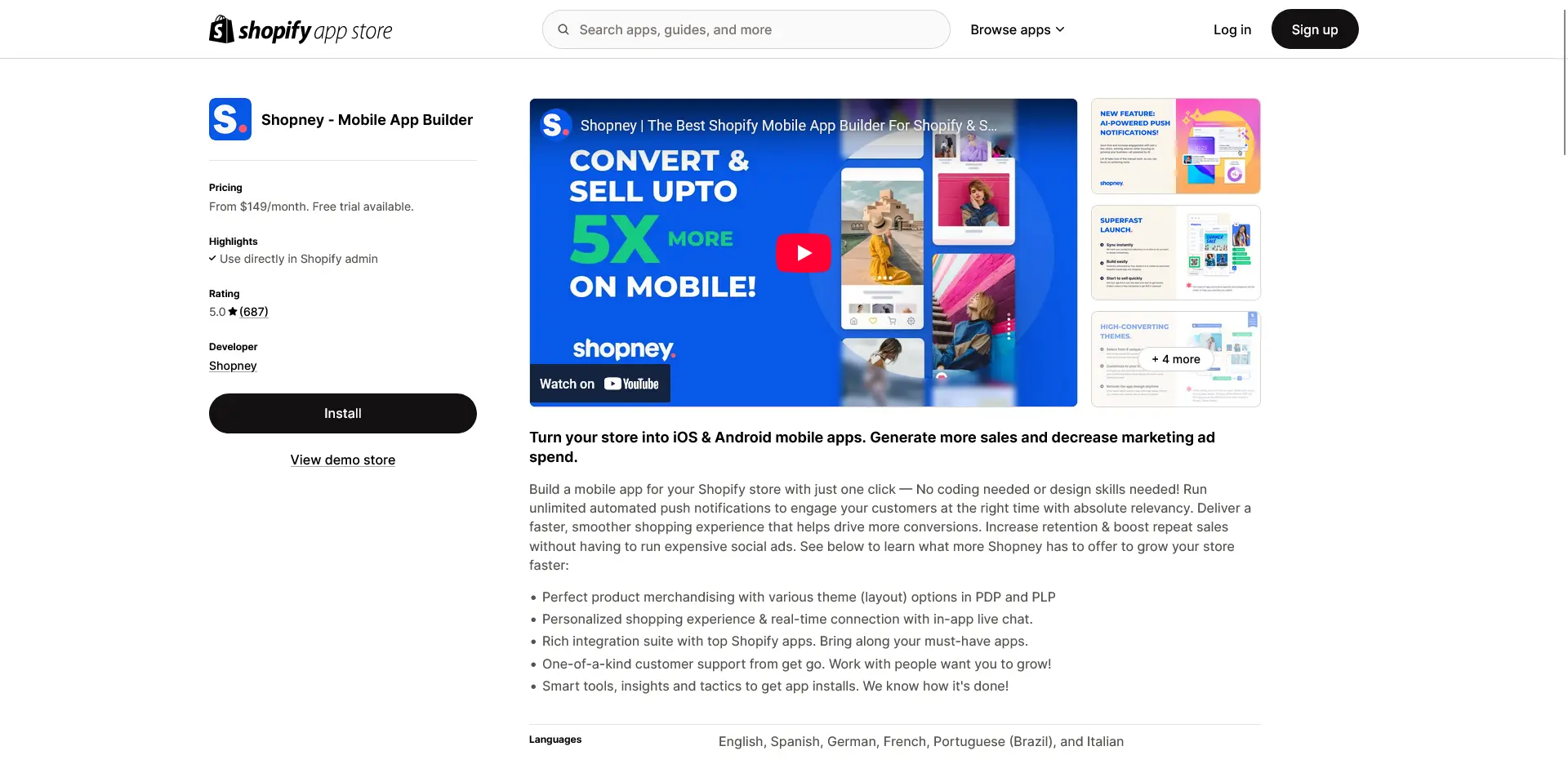
Shopney is a Shopify-native app builder that uses a theme-based design system with a drag-and-drop editor.
One thing that differentiates it from other builders is the built-in in-app live chat, integrated with Shopify Inbox on entry tiers, and Gorgias on higher plans.
Shopney uses flat monthly pricing with no revenue share or transaction fees - something we value highly as well. The platform also supports app-exclusive merchandising: app-only discounts, scheduled design elements, and app-only collections.
Reviews consistently highlight responsive customer support as a strength. Customization capacity (number of design elements, themes, and integrations available) scales by plan tier.
Approach: DIY drag-and-drop builder
Pricing: Silver $149/month, Gold $349/month, Platinum $899/month, Enterprise $1,299/month
Notable details:
- In-app live chat feature
- Theme-based design system
- Push notification automation
- Loyalty program integrations
Superfans
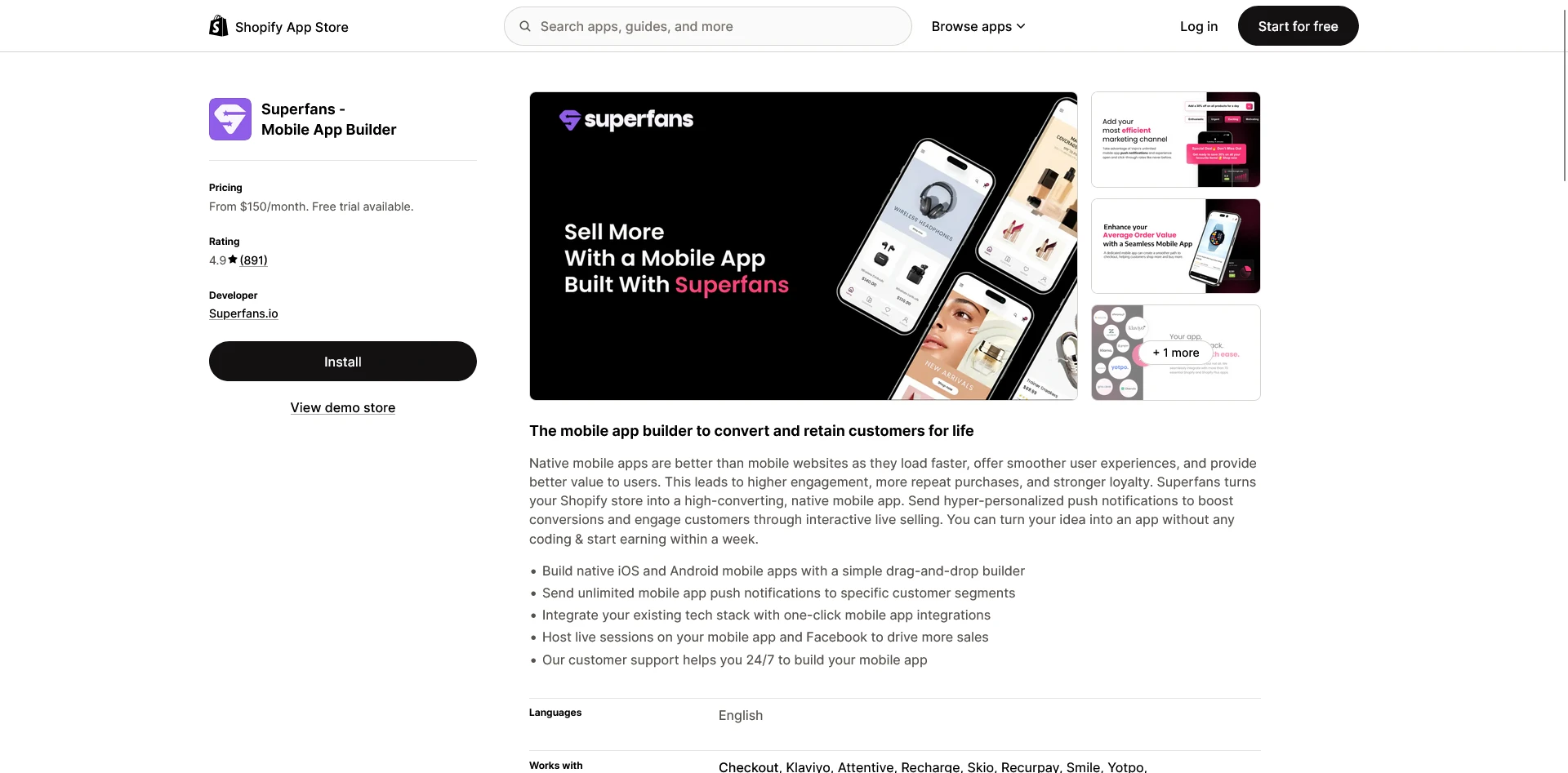
Superfans is a Shopify-native app builder that’s built its differentiation (including under their previous brand name, Vajro) with a particular focus on live selling.
Merchants can run live shopping sessions directly inside the app or broadcast via Facebook Live, with tooling for capturing orders during the session.
The platform includes push notifications with segmentation and geolocation targeting, app-exclusive promotions and product drops, and developer extensibility through Custom Blocks (HTML, CSS, and JavaScript).
The platform carries a 4.9 rating with nearly 900 reviews on the Shopify App Store, which is a strong foundation to start with if you’re looking for a drag-and-drop app builder.
Approach: DIY drag-and-drop builder
Pricing: $1,000/month
Notable details:
- Live video selling with in-video purchases
- Smart push notification automation
- Membership and loyalty tier support
- Quick-checkout features
Venn Apps
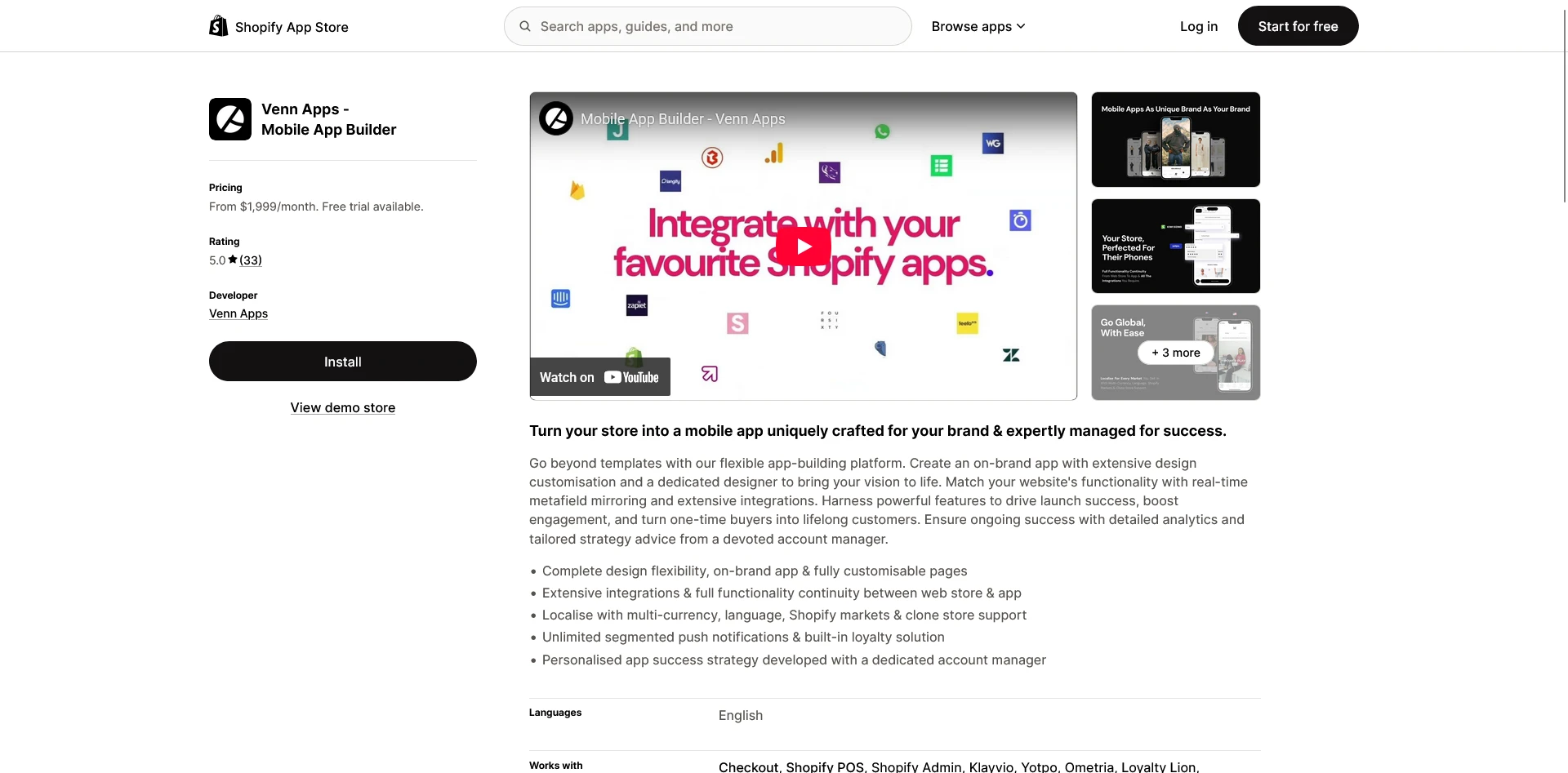
Venn Apps takes a different approach than most builders on this list, edging closer to an agency-style approach than a typical DIY app builder.
Instead of a self-serve drag-and-drop editor, it delivers fully native iOS (Swift) and Android (Kotlin) apps with a managed service.
Design, build, launch, and ongoing support are all handled by Venn's team. The platform is positioned for Shopify brands that operate across multiple regions - it supports Shopify Markets, multi-currency, multi-language, and expansion or clone-store setups.
For brands with physical retail locations, Venn Apps offers wallet passes synced to Shopify POS and geo-located push notifications tied to store locations.
Approach: Managed native app build (Shopify-specific)
Pricing: Pro $1,999/month, Enterprise $2,999/month (30-day free trial)
Notable details:
- Native Swift and Kotlin apps (not hybrid or cross-platform)
- Managed service - design, build, launch, and ongoing support included
- Segmented push notifications with geo-targeting
- Multi-currency, multi-language, and Shopify Markets support
- Wallet passes synced to Shopify POS for omnichannel
MageNative
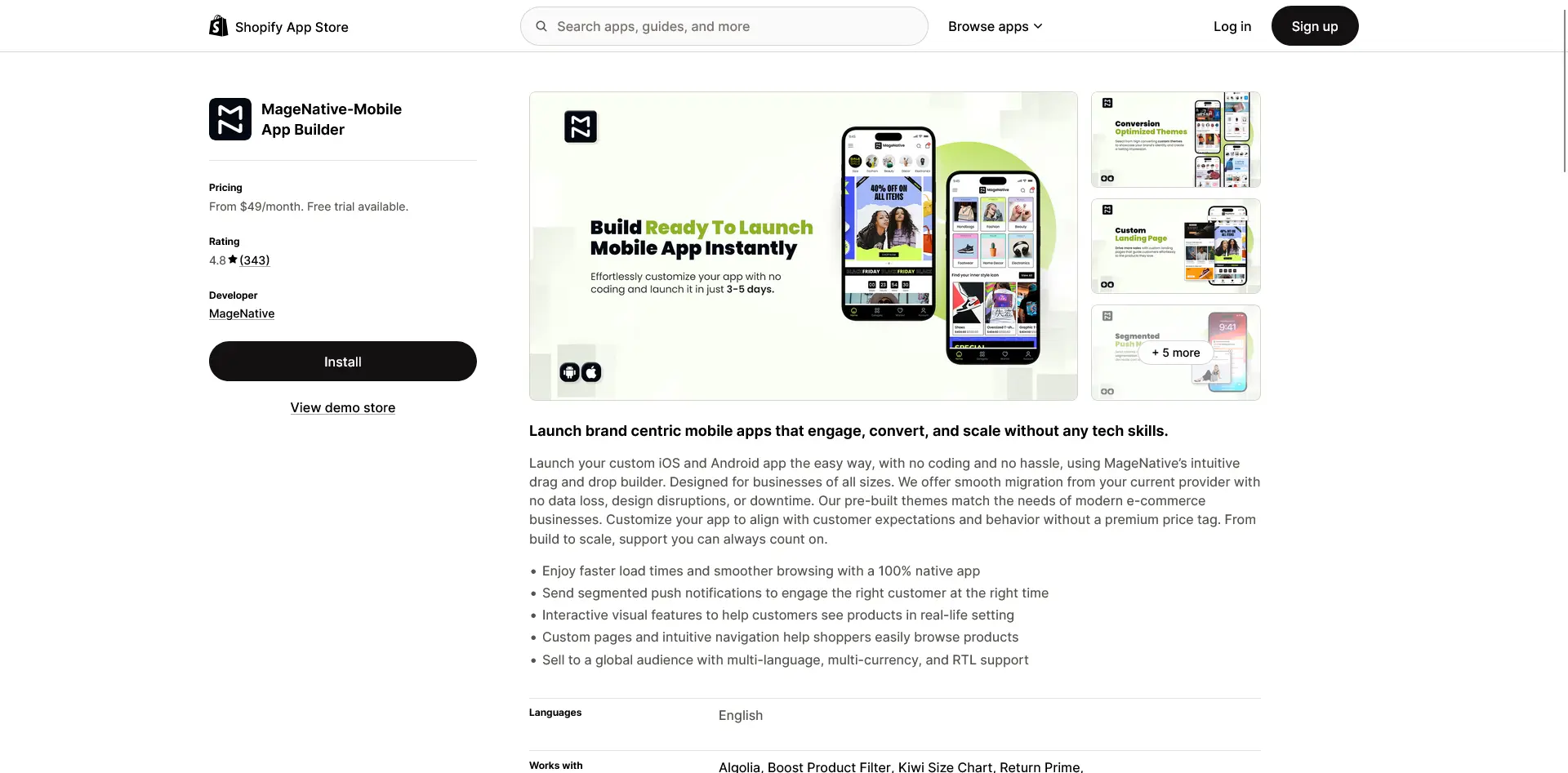
MageNative is a Shopify-native app builder with the lowest entry price on this list at $49/month.
It uses a theme-based configuration model with drag-and-drop design elements, and explicitly states 0% success fees across all plans.
The platform stands out for its device-level features on higher tiers; AR product visualization, barcode scanning, and image-based product search. It also has solid multi-language and multi-currency support, including RTL layouts, which makes it a common choice for brands selling across different regions.
Feature availability and design capacity scale by plan tier, but all tiers are among the most cost-effective on the market, making it a great choice for entry-level stores.
Approach: DIY drag-and-drop builder
Pricing: Basic $49/month, Standard $149/month, Premium $249/month
Notable details:
- AR product visualization on premium tiers
- Multi-language and multi-currency support
- Barcode and image search features
- 30+ third-party integrations
How to Decide on the Right Shopify Mobile App Builder
In recent years, many new choices have popped up.
Do you want control over app design, or do you want simplicity?
If you want to design custom screens, create app-only layouts, and build a distinct app experience, go with a DIY builder like Tapcart or Appmaker, or a managed API-based option like AppBrew.
If you want your store in an app, with everything working as-is, and you don't want to manage a separate experience - a website-to-app service like MobiLoud makes more sense.
How customized is your Shopify store?
If you've invested heavily in custom theme code, custom product display logic, or advanced integrations, an API-dependent builder may not carry all of that over.
MobiLoud preserves all of that, because the app renders your actual site.
If your store is relatively standard Shopify without heavy customization, the API constraints matter less.
Does your team have time to manage an app?
DIY builders require ongoing work - design, updates, sync, troubleshooting. If you have dedicated resources for this, great. If not, a website to app service offloads that.
How's your traffic/revenue?
The higher your traffic, the more your revenue is trending up, the more you stand to gain by turning that same experience into a mobile app.
If your revenue is lower, or things are stagnant, you may be better off either a) going with a low-cost entry-level app builder or b) bypassing the app altogether and focusing your effort on improving traffic and sales on your site.
Final Thoughts
There's no single "best" Shopify mobile app builder. There's just the best one for your brand.
If you want to design a custom app experience with drag-and-drop tools, built-in marketing automation, and full control over layouts, app builders like Tapcart, Appmaker, Shopney, Superfans, Appbrew, and MageNative all give you that.
Factor in the time investment and the Shopify API limitations, and choose the builder that fits your budget and feature needs.
If you just want to turn your Shopify site into an app, MobiLoud is the best way to do it.
It comes with lower overhead, full feature parity by default, and less risk - because you’re investing less time and effort, and converting what already works, instead of rebuilding the wheel.
Both approaches work. Neither is wrong. Start by choosing the approach, then pick the tool.
If you want to learn more about what MobiLoud can do for you, get in touch. You can book a free, no-obligation consultation to get a look at what your Shopify site could look like as an app.
Let us help you pick the best tool to help you launch the perfect mobile app for your Shopify store.
FAQs

Convert your website into a mobile app