Your most valuable customers are the ones who buy again and again. But the problem is that they are getting harder to reach in the places you used to reach them.
Email open rates keep sliding, and SMS is crowded and expensive. The channels that used to carry repeat purchases are quieter than they were.
Meanwhile, fashion moves fast. Sizes sell out and come back. New collections drop. The dress someone saved last week goes on sale this week.
Each of those is a moment when a sale is there to be won, and each one passes quickly. The day a size is back, the hour a drop goes live, the morning a wishlisted item is marked down: miss it, and the customer moves on or forgets.
Push notifications are the channel built for those moments. They land instantly on the lock screen, cost almost nothing to send, and reach the customers who already chose to install your app. Better still, they naturally align with how the fashion category already sells.
This is the playbook for using them well. In this guide, we’ll walk through the campaigns that drive real revenue for fashion brands, how often to send, who to send to, and how to write push copy that sounds like you.
When you’re done, you’ll have all you need to start executing on the channel that’s still the best kept secret in ecommerce.
Learn more: Get all you need to know about launching a mobile app for your clothing brand in our Complete Guide to Fashion App Development
Why Fashion + Push Notifications Are the Perfect Match
Push works so well for fashion because it fits the way fashion already moves.
Items sell out by size and get restocked. Demand spikes around drops and new collections. Shoppers save things and wait for the price to come down. And the whole year runs on a seasonal calendar.
The reason push fits these moments better than email or SMS comes down to how it is delivered. A push notification shows up on the lock screen, in real time, with no inbox to compete with and no carrier in between.
When a size comes back or a drop goes live, you can tell the exact people who care, the instant it matters.
The push channel (together with your mobile app), is a direct line to your best customers. The reach is lower (since it’s restricted to your app users), but compared to all your other channels, push reaches higher-quality customers, more reliably, and is more cost-efficient than any other method.
Now - let’s dive into the best ways to use push to grow revenue for your fashion brand.
1. Recover Abandoned Carts and Browsing Sessions
If you build one push campaign first, build cart recovery.
The highest-ROI push you can send is the one that brings back a shopper who already showed they want to buy.
They picked the item, they got close, and something pulled them away. A well-timed nudge finishes the job.
This play exists in every kind of ecommerce, but fashion gives it a sharper edge: you can name the exact item and lean on real scarcity, because in fashion the thing in the cart might sell out in that size.
Recovery splits into two tiers, depending on how far the shopper got.
Bring Back Shoppers Who Left a Full Cart
For a shopper who added items and then left, trigger one or two pushes in the first 24 hours. Name the product, and where it is true, use honest scarcity: the item is low in their size, or selling quickly.
Muscle Republic does the simple version of this well, with a reassuring "DID YOU FORGET SOMETHING?" followed by "Don't worry, we're holding the items in your cart for you."
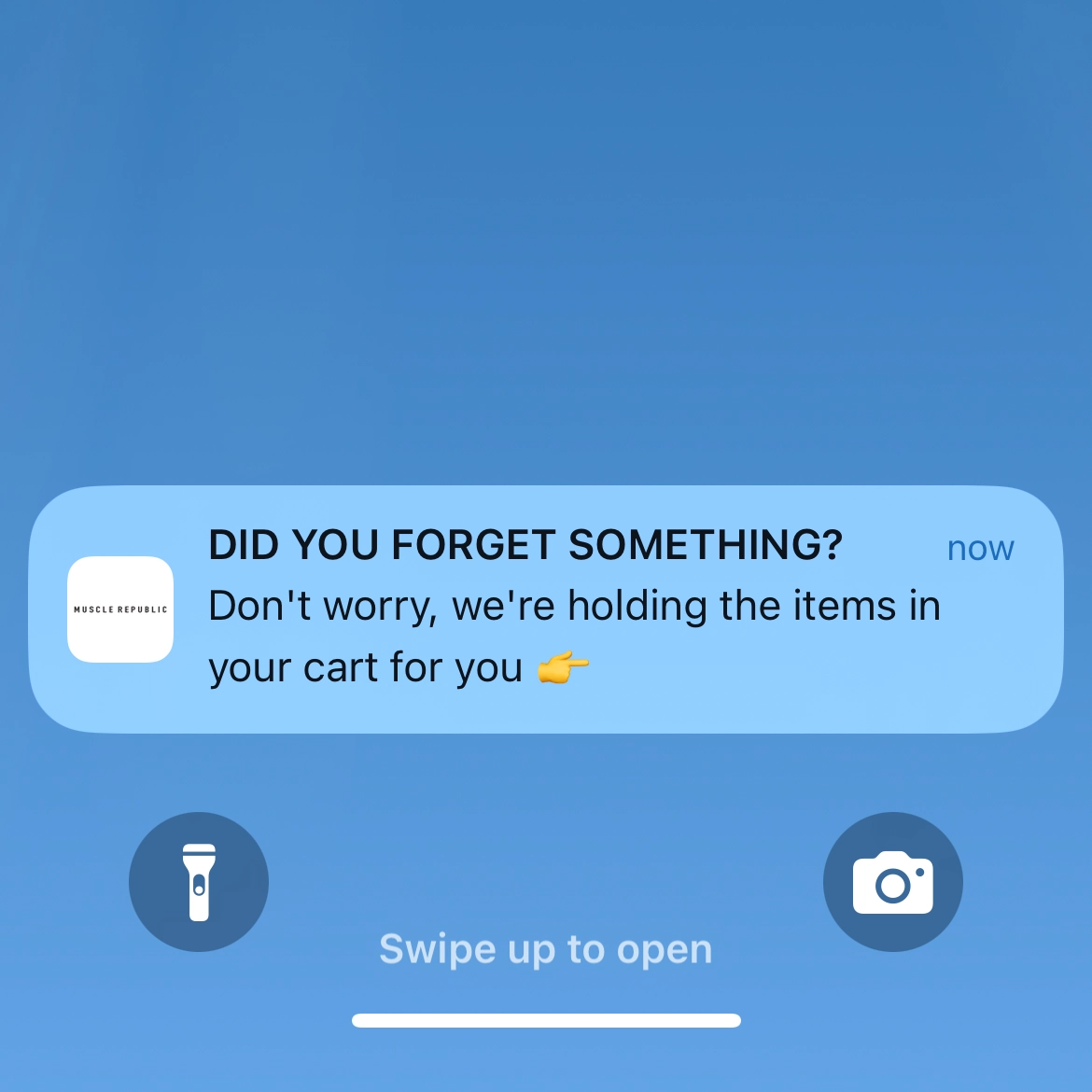
Keep it to one call to action, deep-linked straight back to the cart so the shopper lands exactly where they left off. "The [item] in your cart is selling out in your size" will always beat a generic "complete your order," because it tells the shopper something specific and true.
Re-engage Shoppers Who Browsed but Didn't Add
A shopper who browsed but never added to cart is earlier in the decision, so the nudge should be softer and the window longer.
Reference what they looked at rather than pushing for a checkout they were not close to.
Cider does this with personality: "Why haven't you seen this yet?" paired with the specific item, "Scoop Neckline Solid Knotted Short Sleeve Blouse = SO YOU." PrettyLittleThing keeps it light too, with "Those looks you loved?" and the payoff, "= everyone staring (in a good way)."
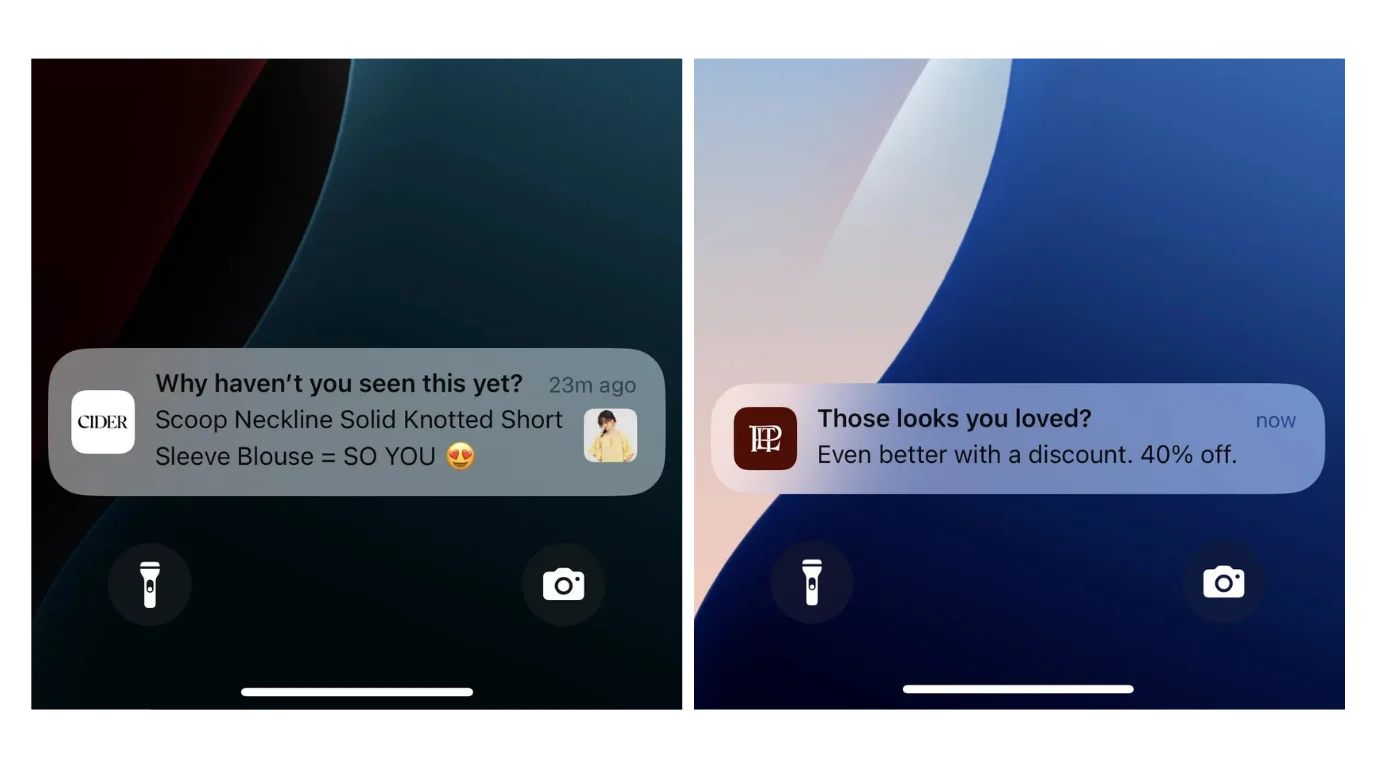
The job here is to pull the shopper back into browsing, not to close a sale that was never on the table.
2. Alert Shoppers the Moment Their Size Is Back
Size-specific back-in-stock alerts are the most underused high-intent play in fashion.
The shopper already wanted the item. They tried to buy it and could not, because their size was gone. When it returns, you are not selling anything. You are delivering news they have been waiting for.
This is where fashion differs from most ecommerce. Apparel sells out by size, not just by product, so "your size is back" is a frequent, specific, high-converting trigger.
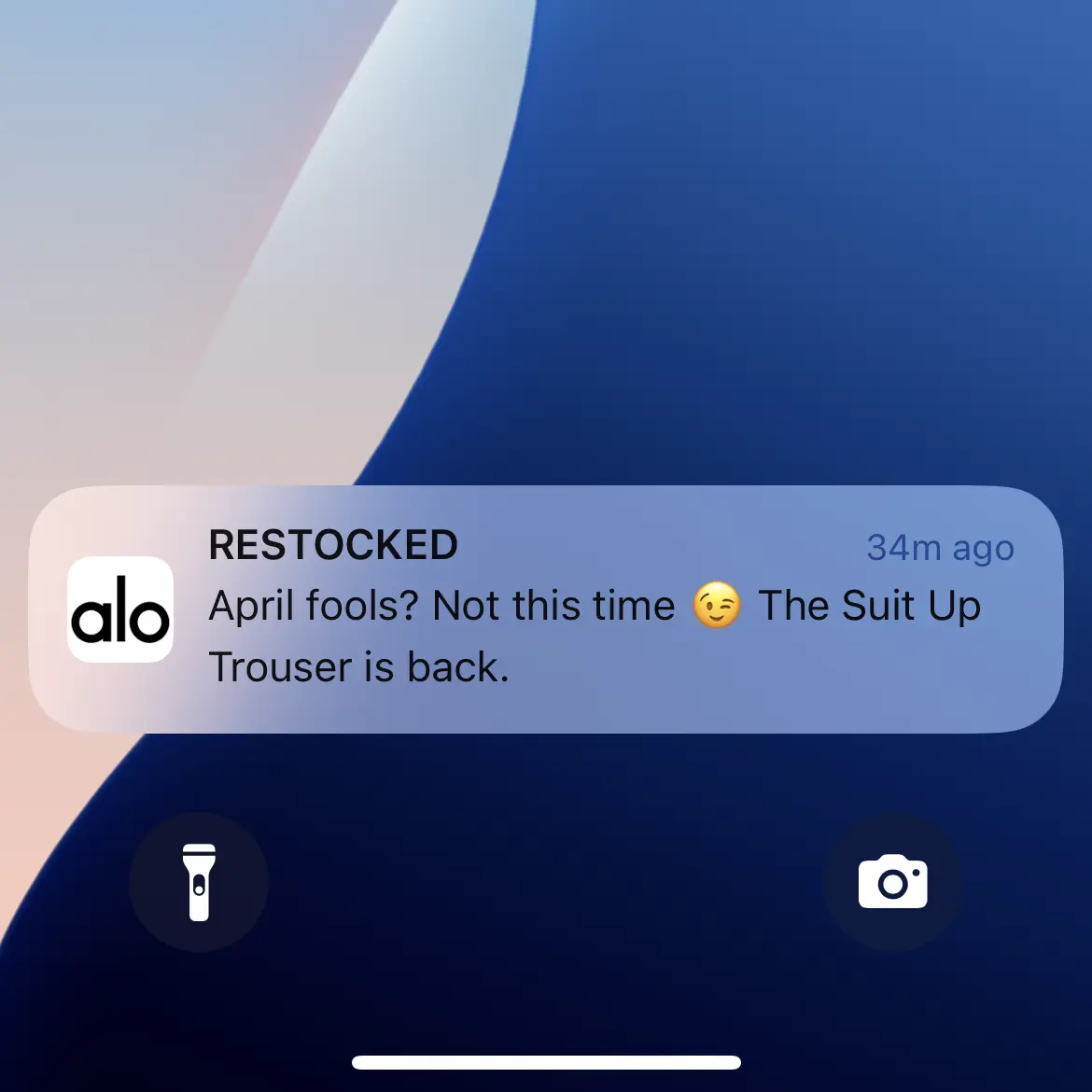
Alo runs it plainly: "RESTOCKED. The Suit Up Trouser is back."
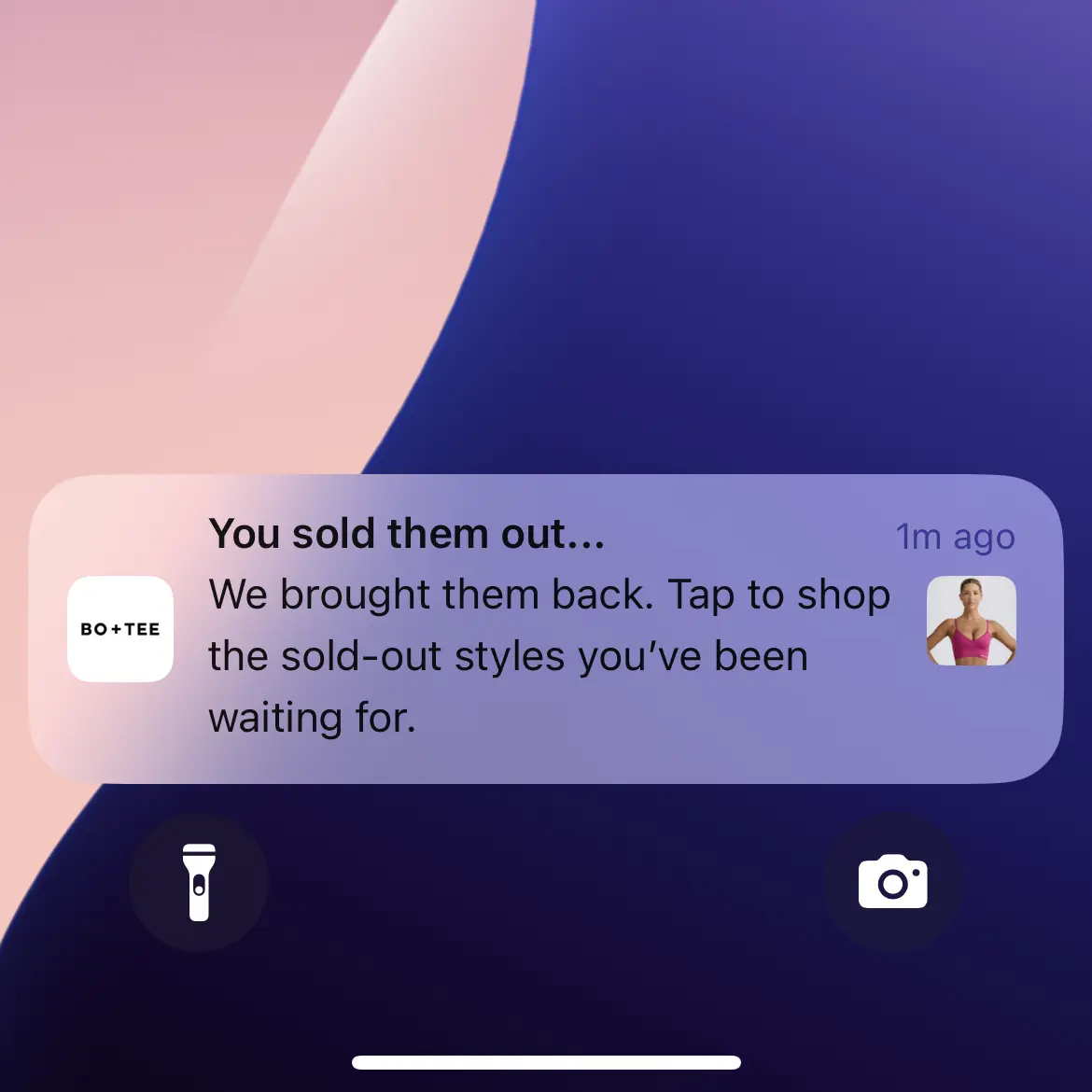
Bo+Tee adds a little flattery, "You sold them out... We brought them back. Tap to shop the sold-out styles you've been waiting for."
To run it, you need to capture size-level interest in the first place, through a waitlist, a "notify me" button, or a wishlist, and then segment on it so the alert goes only to the people waiting for that size.
That targeting is what keeps the message relevant, and it ties directly into the personalization section later in this playbook.
3. Announce Drops and New Collections to Build Demand
For drop-driven fashion, push is the mechanism that builds the demand and, for some brands, the actual door to the release.
A drop only works if people know it is coming and show up when it lands, and push is how they find out.
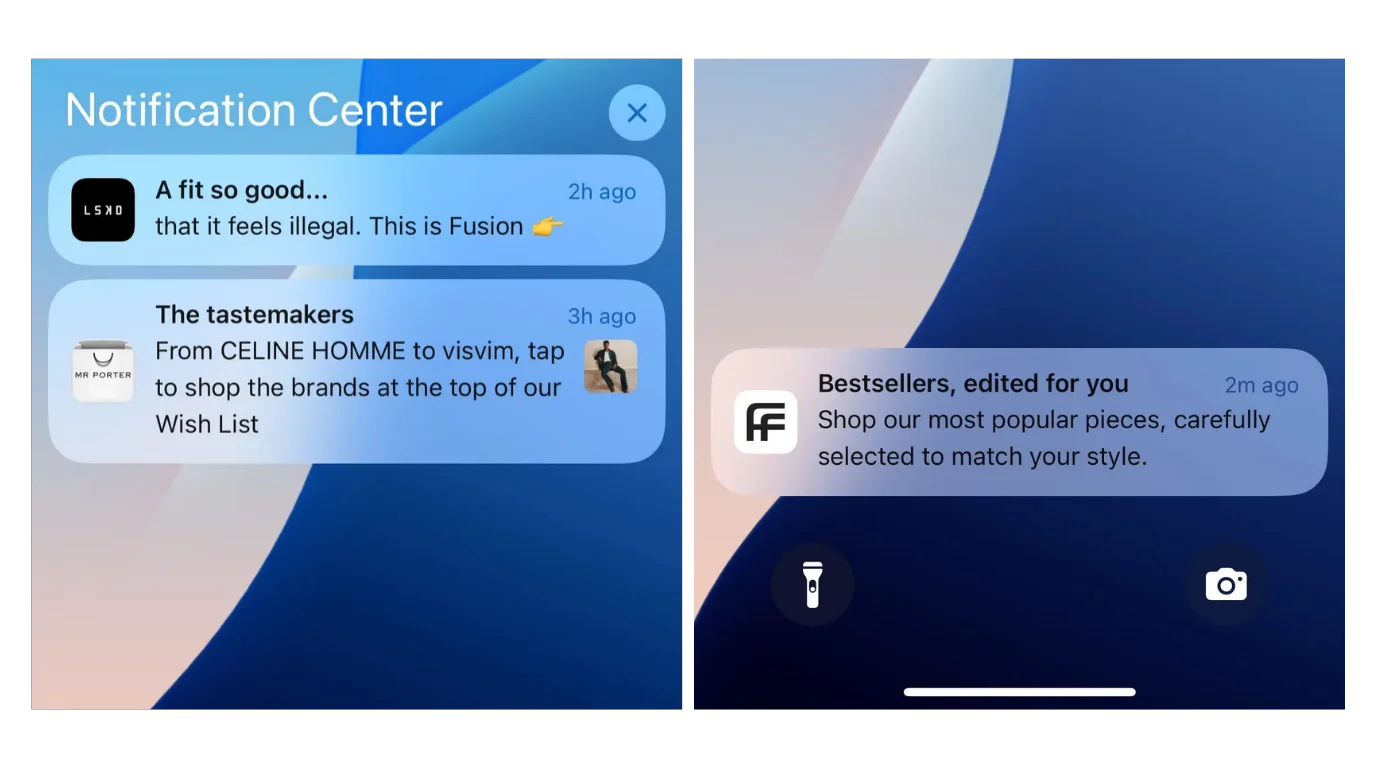
The strongest drop programs build anticipation in stages. LSKD runs a countdown across multiple sends: first "48h to go," then "24 hours to go. TRUST US PACKS drop tomorrow 6PM AEST. Sign up to shop first."
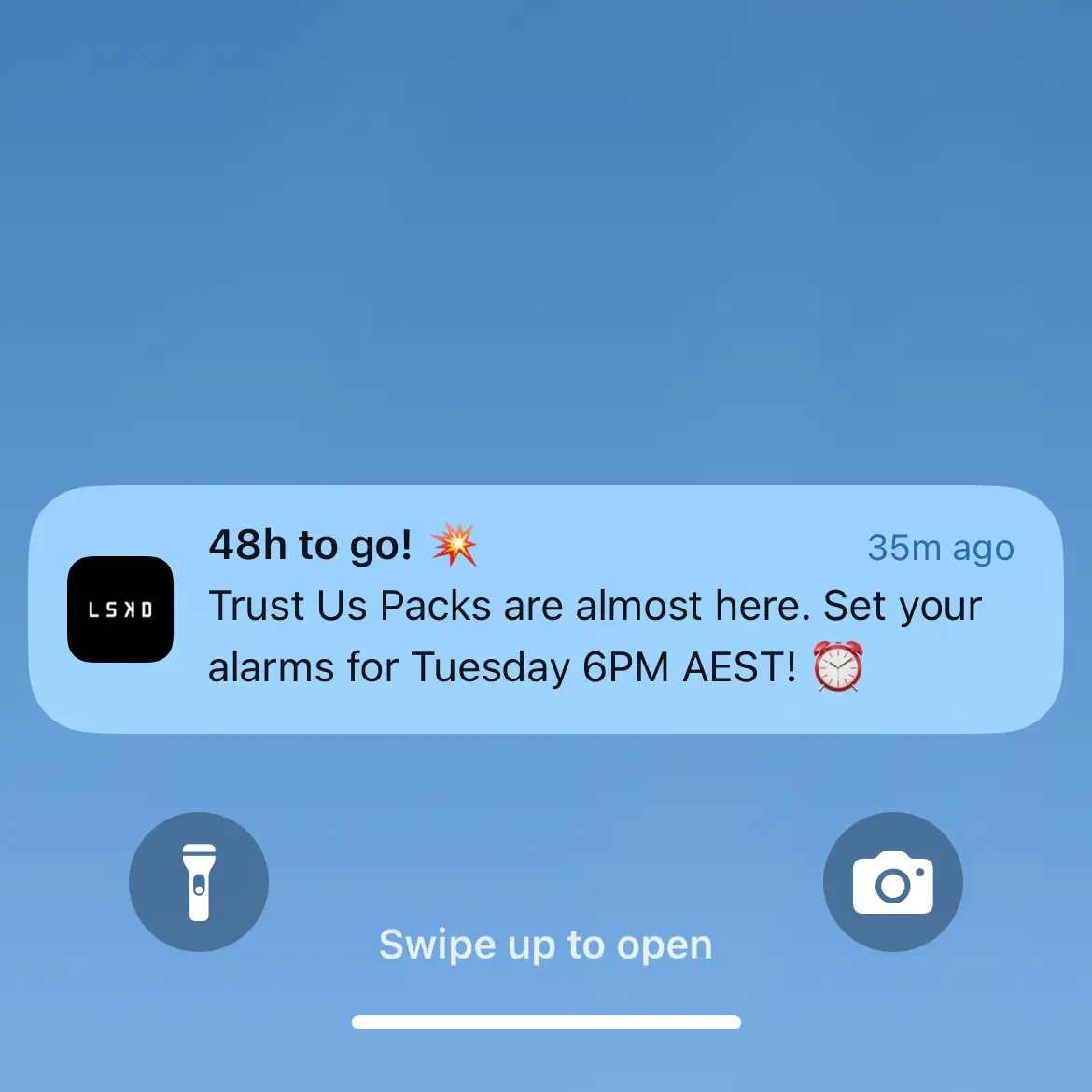
Each message raises the temperature, and the final one converts the anticipation into a visit at a precise moment.
How you frame a drop depends on what sub-category of fashion you’re operating in:
- Streetwear and sneakers make push participatory. Opening the notification is how you enter the release. Pushas calls out the exact model and colorway, "ELECTRIC PACK. Shop the Nike Mercurial Superfly 10 Elite FG 'Electric Pack Olympic Safari' today," because for that audience the specificity is the appeal.
- Activewear and fast fashion use it for a steady drumbeat of newness, often with an app-first reward. Muscle Republic frames a launch as "APP FIRST PREVIEW," which gives app users a reason to keep the app and the notifications on.
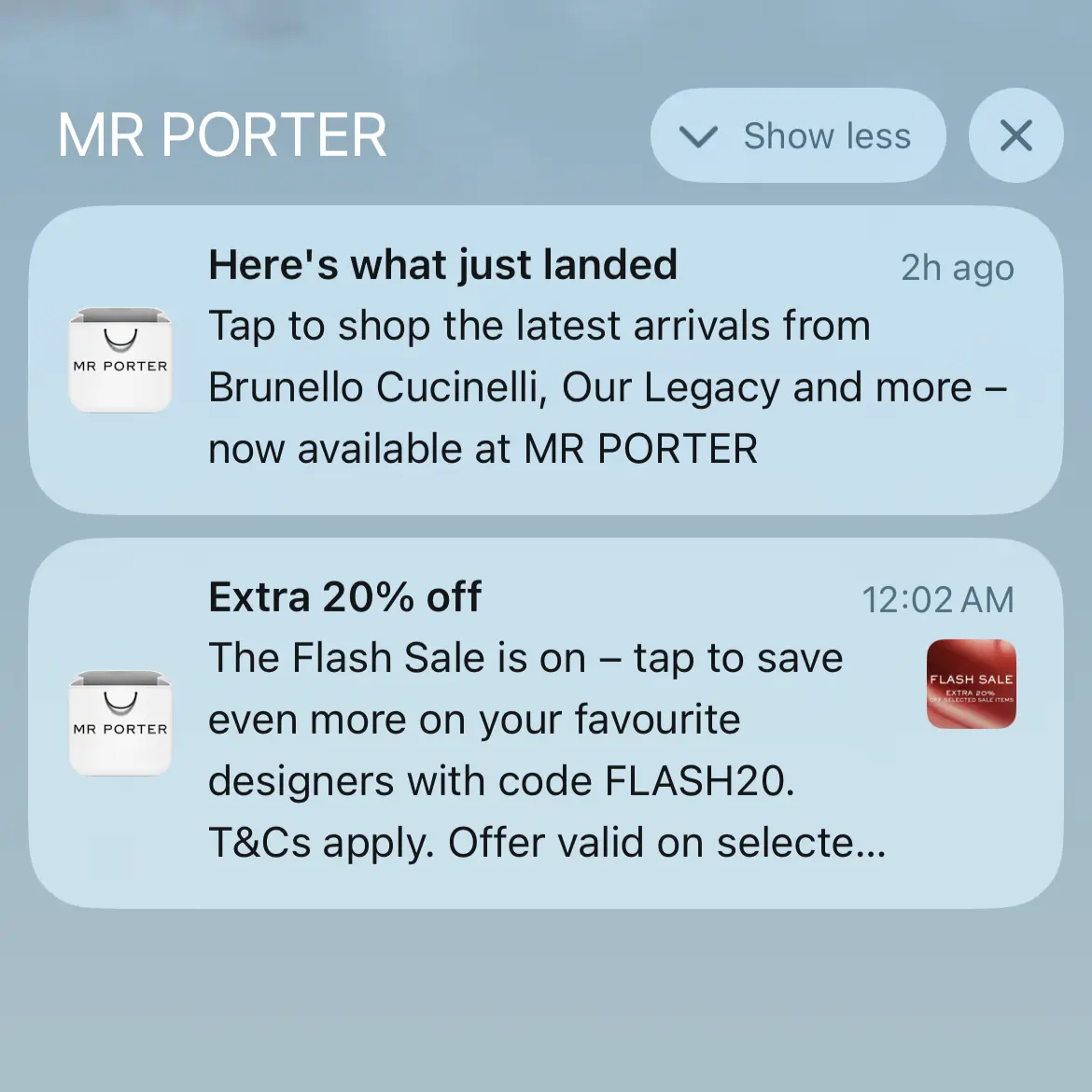
- Luxury keeps it understated. Mr Porter announces a drop as "Here's what just landed," then lets the names carry it: "the latest arrivals from Brunello Cucinelli, Our Legacy and more."
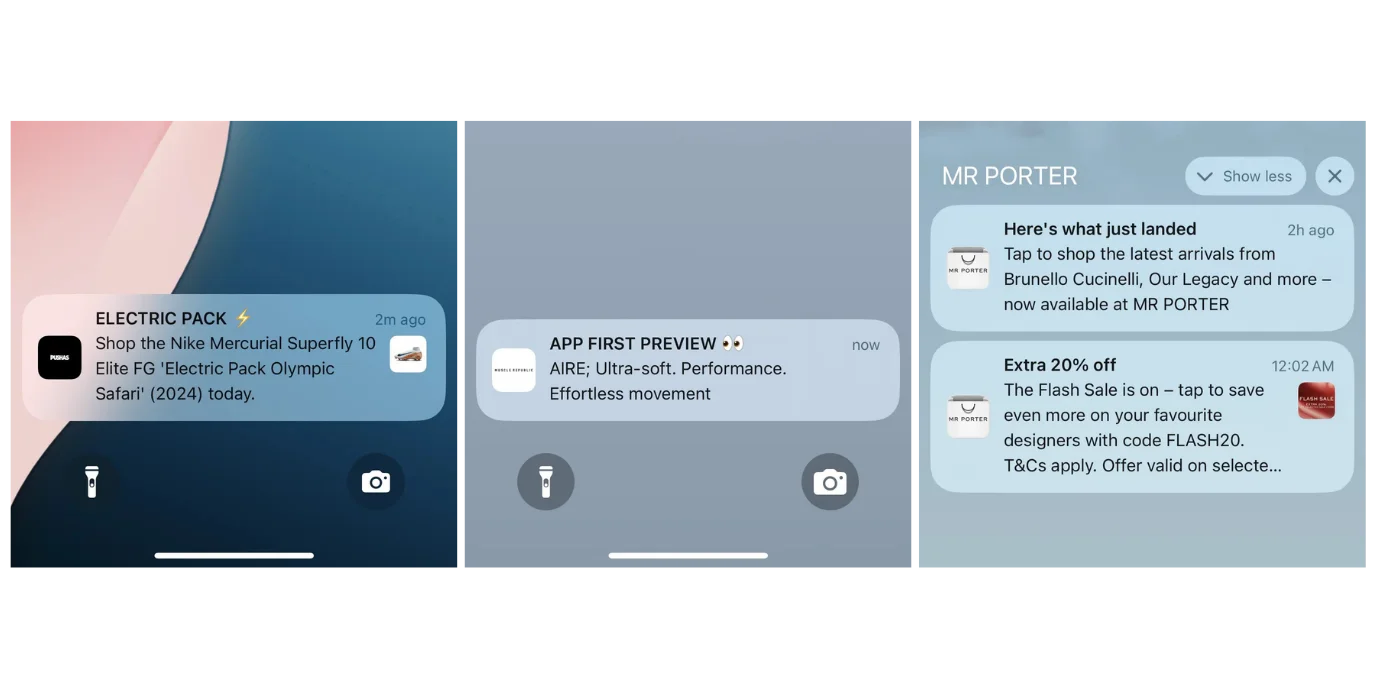
The common thread is that a drop is an event, and push is the invitation.
4. Send Price-Drop Alerts on Saved and Wishlisted Items
Fashion shoppers save things and wait. They add a piece to a wishlist, hold off, and watch for the price to move.
A price-drop alert turns that patience into a purchase at the exact moment their intent is highest, because the shopper already chose the item. All you’re doing is telling them the moment has arrived.
This is the most relevant promotion you can send, and it is automated. When a saved or wishlisted item hits a markdown, or stock starts running low, the trigger fires to the one person who raised their hand for it.
"The [item] you saved is now 30% off" needs no clever copy. The relevance does the work.
5. Time Sales and Clearance to the Fashion Calendar
Fashion runs on a calendar, so your sale and clearance push should run on one too.
New-season launches, in-season newness, end-of-season clearance, and holiday gifting each call for a different message and a different rhythm. A push schedule that ignores the calendar feels random; one that follows it feels timely.
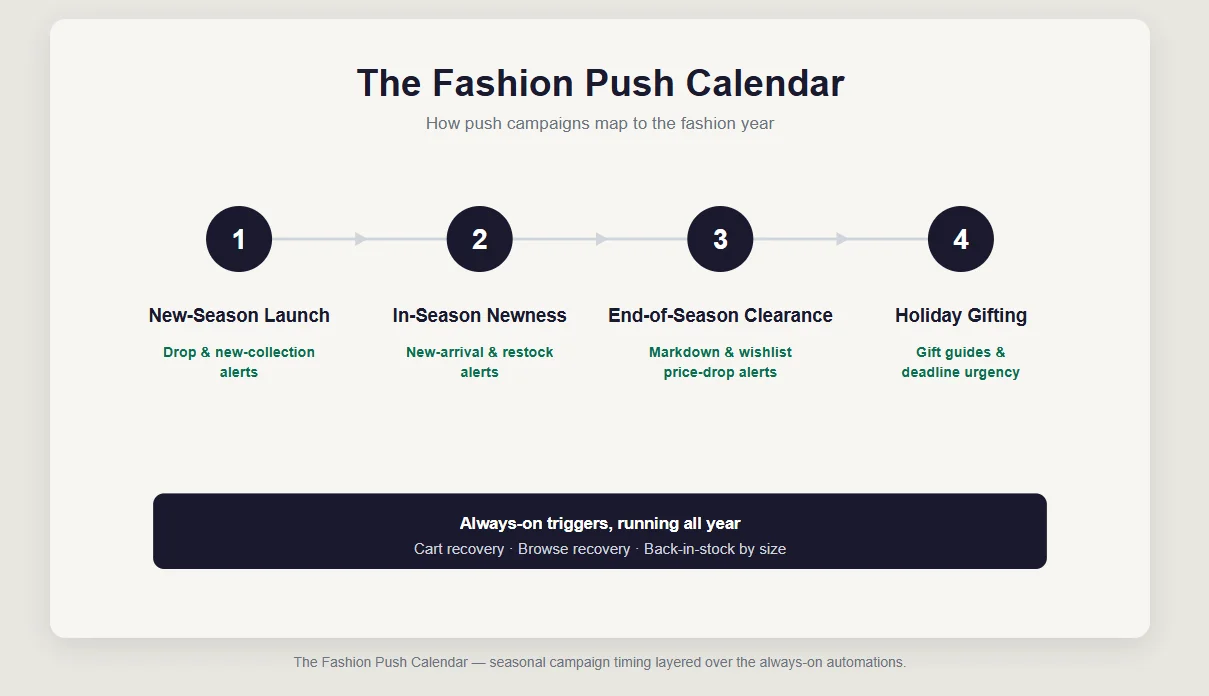
Unlike the triggered automations above, these are campaign-level sends to a segment, and they lean on urgency: countdowns, fixed cutoffs, and app-exclusive codes.
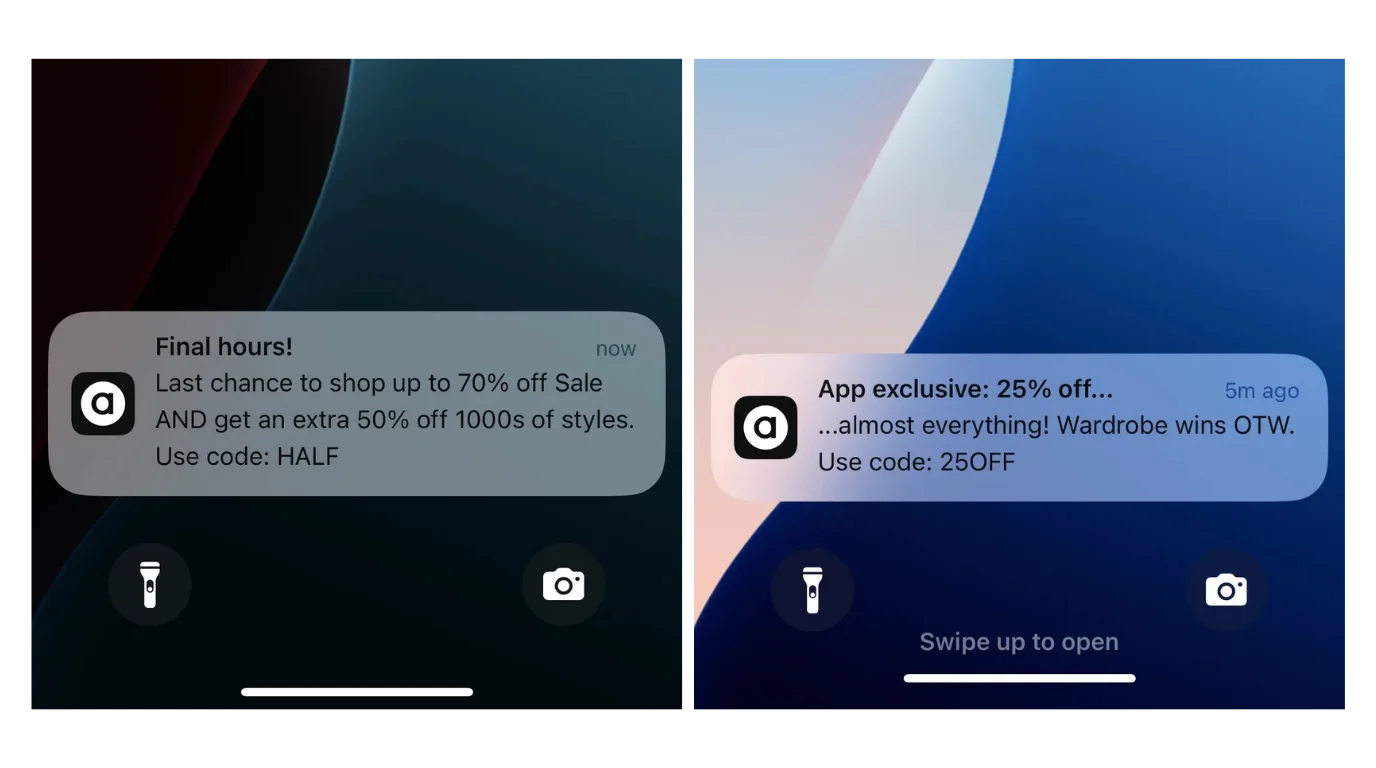
The trick is to use real deadlines rather than crying wolf. ASOS does the urgency well, with "Final hours! Last chance to shop up to 70% off Sale" and app-only hooks like "App exclusive: 25% off."
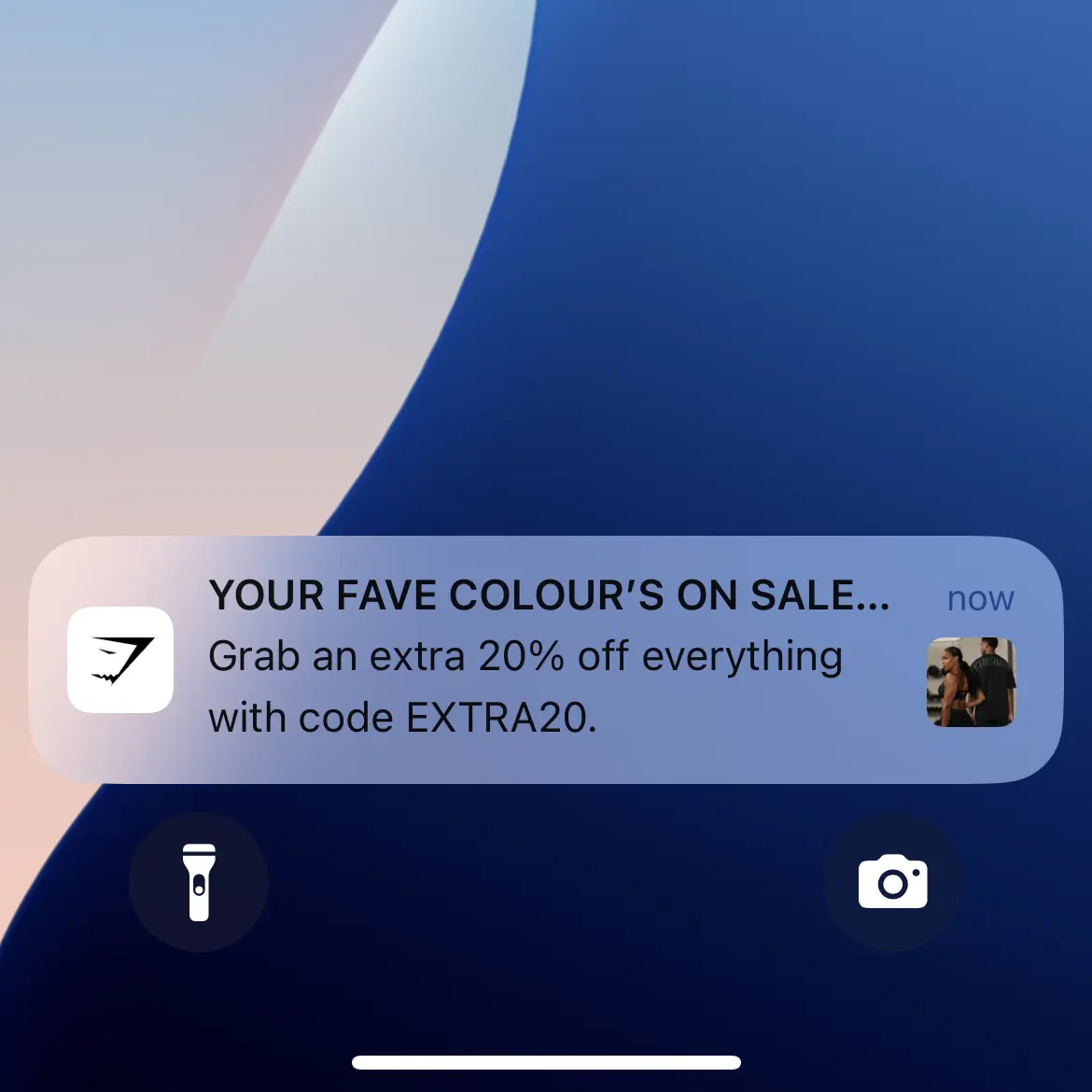
Gymshark ties a code to a clear offer: "YOUR FAVE COLOUR'S ON SALE. Grab an extra 20% off everything with code EXTRA20."
How hard you discount is a function of what kind of fashion brand you run.
Fast fashion discounts often and loudly, with the code right in the message. Luxury discounts rarely and softens the language when it does.
Mr Porter frames a markdown as "The Flash Sale is on. Tap to save even more on your favourite designers," which offers the deal without cheapening the brand.
6. Lift Average Order Value With Styling and Complete-the-Look Push
Fashion is visual and outfit-driven, which makes push a natural styling tool.
Instead of chasing one more transaction, you can suggest what pairs with what the customer already owns or viewed, and raise the size of the order in the process.
The plays here are styling and curation: complete-the-look cross-sells after a purchase, editor's picks, and trend nudges.
Done right, they read as a service rather than a sell.
The framing shifts by segment. Luxury leans editorial and curatorial. Mr Porter sends "The tastemakers. From CELINE HOMME to visvim, tap to shop the brands at the top of our Wish List," and Farfetch offers "Bestsellers, edited for you."
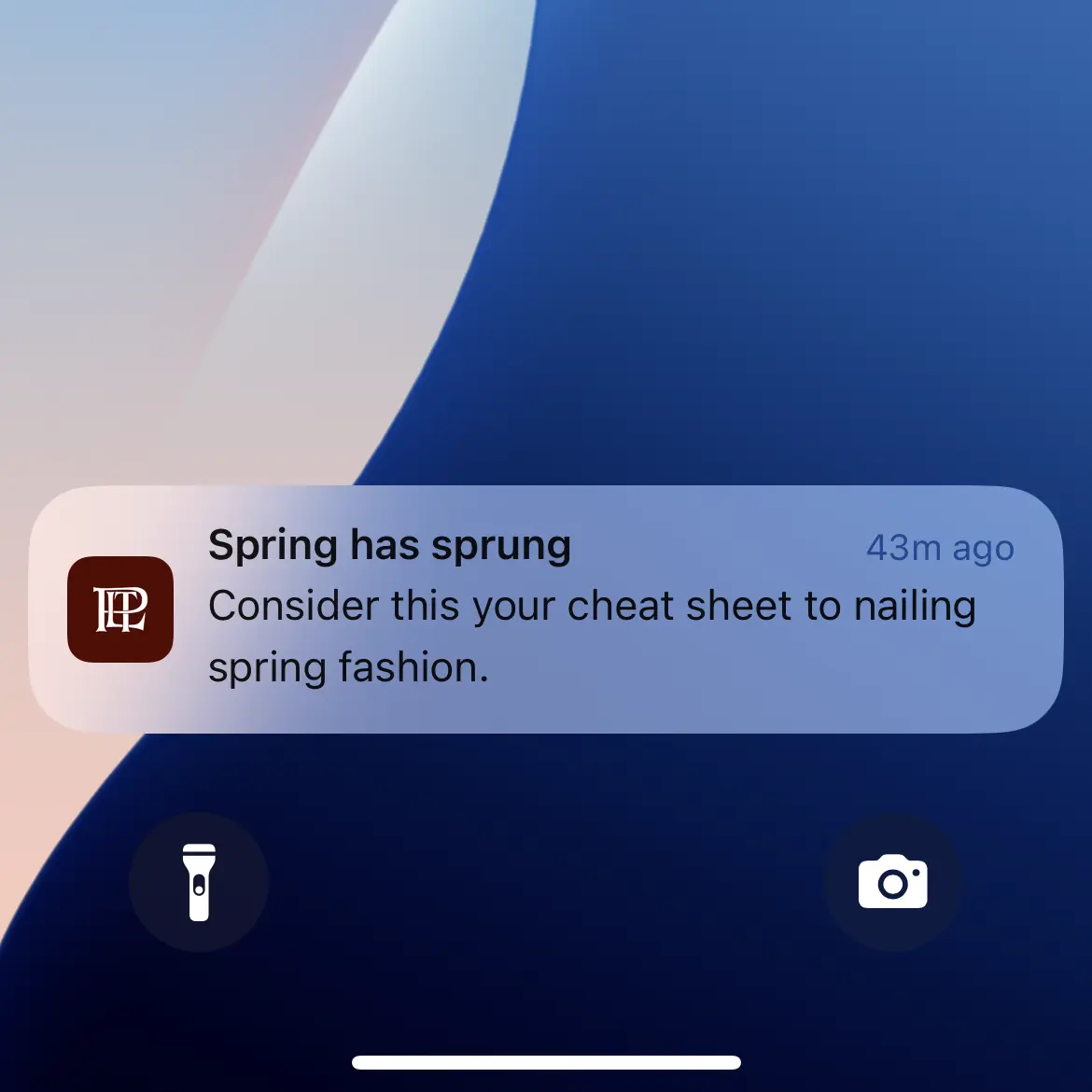
Fast fashion leans playful and seasonal, like PrettyLittleThing's "Spring has sprung. Consider this your cheat sheet to nailing spring fashion."
The point is that a styling push gives the customer a reason to come back that is not a discount. It builds the basket and the relationship at the same time.
7. Reward VIPs With Early Access and App-Only Perks
Reserving early access, exclusive drops, and app-only offers for your best customers turns push from a broadcast into something closer to a membership.
It also answers the question every app owner should care about: why does a customer keep the app installed and notifications on?
They keep it because that’s where the good stuff lands first.
Your app is a way to deliver ongoing VIP treatment: early access to a drop, a private sale window, an app-only code.
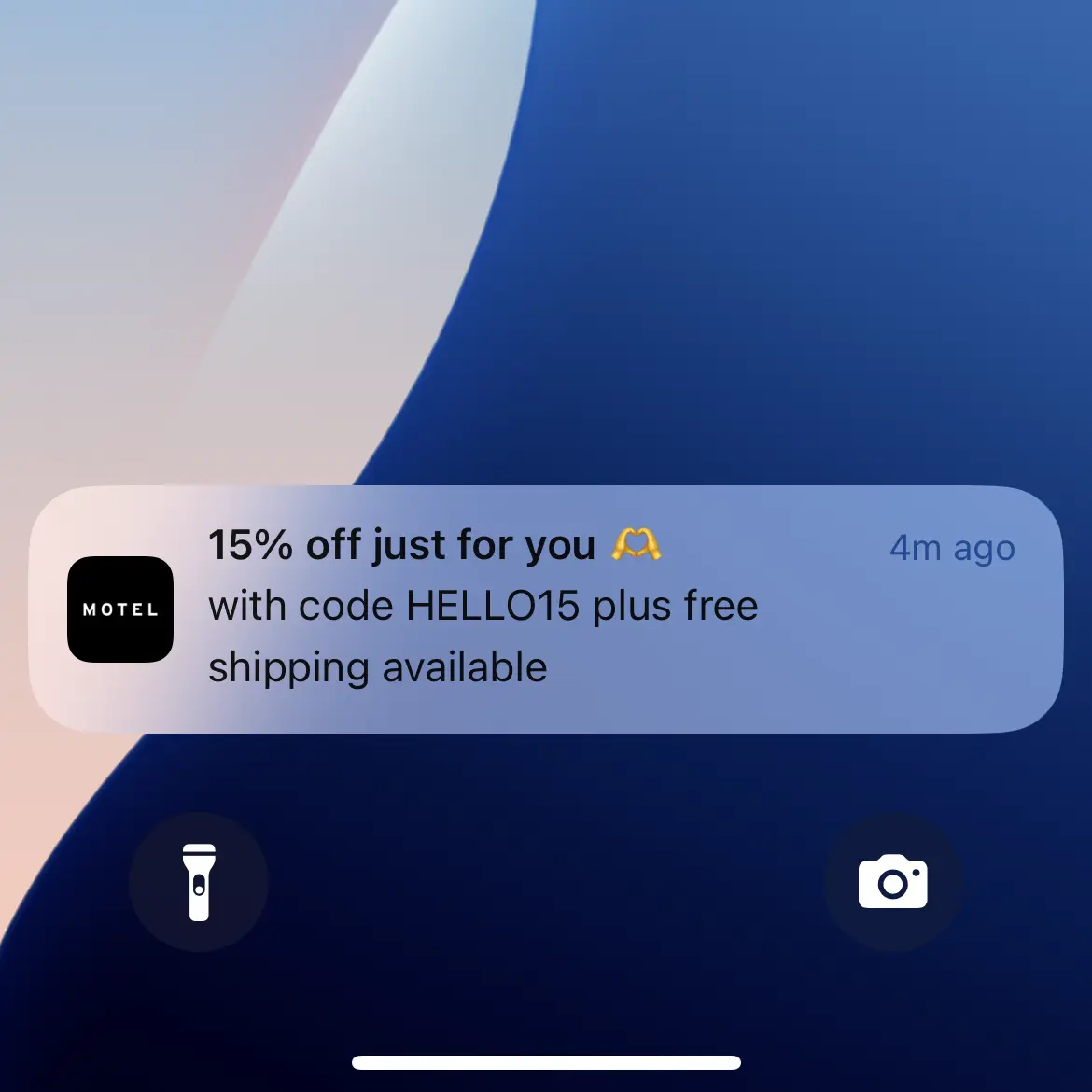
Motel keeps it personal with "15% off just for you."
App-exclusive perks are a powerful tool for fashion brands. The customer gives you a spot on their home screen and permission to notify them. In return, they get first access and better offers.
That trade is the whole reason the channel works, and the better you honor it, the longer they stay opted in.
Strategic Moves to Make Push Your Highest-ROI Channel
Just spinning up any kind of push notifications doesn’t guarantee your customers will bite. It’s still important to get the strategic details right - timing, copy, personalization.
Here are a few ways to make sure push becomes your next best marketing channel.
Match Your Sending Cadence to Your Segment
There’s no universal right frequency for push. The cadence that keeps a fast-fashion audience engaged would exhaust a luxury list, and the schedule that suits a luxury brand would leave a streetwear audience feeling ignored.
Set your frequency by segment, and watch your opt-out rate as the signal that tells you when you have pushed too far.
The deeper truth is that relevance controls fatigue more than raw volume does. People don’t opt out because they got four notifications; they opt out because they got four notifications that had nothing to do with them.
A relevant send is welcome even at a higher frequency. With that in mind, here is roughly how cadence maps to segment:
- Fast fashion sends often, sometimes close to daily, and leans promotional. The audience expects newness and deals.
- Activewear runs at a moderate, product-led pace, built around launches and drop moments rather than constant discounting.
- Streetwear and sneakers send irregularly and around events. The cadence follows the drop calendar, not a weekly slot.
- Luxury sends sparingly, prioritizing exclusivity over volume, because frequent discounting erodes the brand.
Whatever your segment, time sends to your customer's day, not your office hours, and respect their time zone. Mid-morning and early evening tend to outperform early morning and late night.
Personalize on Size, Category, and Season, Not Just Name
Relevance is what makes fashion push land and work well.
Note that relevance and personalization is not a first name dropped into a template; it’s sending based on the things that matter in fashion, so each message feels picked for the person receiving it. Size, category and style affinity, browsing and cart behavior, wishlist, season, and purchase history are the inputs that make a send feel personal.
The segments worth building are the ones that change what you send: the size a shopper wears, the categories they buy, what they recently viewed or abandoned, what they saved, and whether they are a new, lapsed, or VIP customer.
Luxury brands add another layer, the zero-party data a customer volunteers, like a style or size profile they fill out themselves, which lets the brand curate without guessing.
It is worth saying that visuals help. A product image in the notification can lift engagement, and for a visual category that makes sense. But relevance does the heavy lifting.
A relevant plain-text message will usually outperform a beautiful one sent to the wrong person. Get the targeting right first, then make it look good.
Write Push Copy That Sounds Like Your Brand
Good fashion push copy is short and unmistakably yours. The pattern that shows up again and again across strong brands is simple: the title carries curiosity or the offer, and the body names the product or the payoff.
The exception is a discount, where the number leads, because that’s the news.
Beyond the structure, the voice should match your type of brand:
- Fast fashion is playful and punny, with the discount code in the message and a clear tap cue. PrettyLittleThing gets a whole message out of "This deal? Too good to miss. 50% off everything."
- Luxury is restrained and writes in full sentences, letting designer names do the lifting, and skips the emoji entirely. Mr Porter's "New-season accessories. Tap to find everything you need to complete your outfits" is about as decorated as it gets.
- Streetwear and sneakers get specific about the model and colorway, in the language the audience uses. Pushas describing SB Dunks as "drippy af" is speaking its customer's dialect, not yours.
Final Thoughts: Build Your Push Program One Play at a Time
Push is the most direct, lowest-cost line a fashion brand has to its best customers.
There are numerous ways to build campaigns that drive real revenue: recovery, restock-by-size, drops, wishlists, and the seasonal calendar, tuned to your segment.
You don’t need to build all of this at once, and you shouldn’t try to. Start with the highest-impact automations, cart recovery first, then size-based restock alerts.
Get your cadence and your targeting right on those. Then layer in the demand plays, the drops, the wishlist alerts, the seasonal campaigns, as you go.
Treated as a program that grows with your brand. Slowly get more and more out of the channel, and learn first-hand what works best.
If you don’t have an app yet, push is probably the #1 reason to do it.
If you’re in this group - ready to launch an app and add push notifications to your marketing stack, get in touch. At MobiLoud, we specialize in helping successful brands scale their retention marketing by launching their own app.
Get a free app preview now to see what your app could look like, and walk through the process of going live (and setting up your first push campaigns) with our team.