Fashion Mobile App Development: The Complete Guide

Fashion brands that launch mobile apps see 3-10x higher revenue per user compared to mobile web. App users make up a relatively small fraction of customers, but drive a disproportionately large share of sales. In 2026, a mobile app is a crucial part of any brand’s growth strategy, and a solution like MobiLoud makes it easy to launch one.
Fashion brands that launch mobile apps see 3-10x higher revenue per user compared to mobile web. App users make up a relatively small fraction of customers, but drive a disproportionately large share of sales. In 2026, a mobile app is a crucial part of any brand’s growth strategy, and a solution like MobiLoud makes it easy to launch one.
Your best customers already shop on their phones.
80% of visits to fashion shopping sites come from mobile devices, and 70% of online fashion purchases happen on mobile.
Yet the mobile web doesn’t provide the ideal UX for mobile shoppers - particularly your best ones, the customers who want to come back, browse, and buy regularly.
That’s a mobile app. And it’s the most powerful new channel you can launch.
An app puts your brand on your customer's home screen, right next to Instagram, Amazon, and every other app competing for their attention. It gives you a direct channel to reach them (push notifications) that doesn't depend on email open rates or social media algorithms. And it cements casual repeat browsers into habitual shoppers.
Whether you’re not convinced your fashion brand really needs a mobile app, or you want to build a mobile app for your fashion brand but don’t know where to start, this article is for you.
This guide covers everything you need to know to go from "should we build an app?" to live on the App Store and Google Play, with a working strategy to make the app a real revenue channel for your brand.
Why Fashion Brands Need a Mobile App
Fashion is inherently visual, personal, and driven by repeat purchases.
Your customers aren't buying once and disappearing. They come back for new drops, seasonal collections, and sale events. An app gives them a reason to keep coming back, and gives you a way to pull them back in when they don't.
Your Customers Already Prefer Apps
70-73% of online shoppers prefer apps over mobile websites for shopping. And it's not hard to see why. Apps are faster, easier to navigate, and remember your preferences. They don't require logging in every time, reloading the page, or fighting with a mobile browser's address bar.
Consumers spend 201.8 minutes per month in shopping apps vs just 10.9 minutes on mobile websites. That's 18x more time spent browsing, discovering, and buying.
Apps Drive Dramatically Higher Revenue Per User
This is the stat that matters most. App users spend more money, from a combination of shopping more often, shopping for longer when they do, and spending more money in each transaction.
Here’s one example, from MobiLoud's Ecommerce Benchmark Report, of the results that one fashion brand saw from their mobile app.
- 7% of traffic came from app users, but they generated 20.7% of total revenue (3x their traffic share)
- 2.56% conversion rate in the app vs 0.23% on mobile web (11x higher)
- $431.80 average order value in the app
- 3.1 sessions per user, with an average session time of 6 minutes 28 seconds
This is just one example. Across fashion brands of all size, app users convert more, spend more per order, and come back more often.
Push Notifications Are Your Best Retention Channel
Push notifications are, quietly, the strongest channel for driving repeat sales and retention.
They land on the customer’s lock screen, instantly, with zero cost to send, and a direct line back to your store.
They have a near-100% visibility rate, and strong engagement rates to match. Retail apps see 3-4% click-through rates on push notifications, which is 3-5x higher than email.
Automated push campaigns (abandoned cart reminders, back-in-stock alerts, price drop notifications) generate a disproportionate share of revenue.
This is notable because it means the operational lift of push is next to none - it’s a channel that drives traffic (and revenue) on autopilot.
A Home Screen Icon Keeps You Top of Mind
Fashion is competitive. Your customers follow dozens of brands, and whoever stays visible gets the sale.
Having an app on someone's phone means your brand sits next to the apps they use every day. It's passive brand awareness that no amount of ad spend can replicate.
Nick Barbarise, Director of IT at John Varvatos, put it directly:
"Brand awareness, period. If you want to make sure you get your voice out there, you need an app these days. It is non-negotiable."
How a Mobile App Fits Into Your Growth Strategy
The objection a lot of brand owners have is that an app is a flashy toy; a “nice to have”, a vanity play, not a real growth asset.
That’s not true. A mobile app should be a core part of most brands’ growth strategy. The problem? You’re often thinking of mobile apps the wrong way.
A mobile app isn't a replacement for your website, your email list, or your social channels. It's a retention tool for your most engaged customers, and it works alongside everything else you're already doing.
Who the App Is For
You launch an app for customers who already know and like your brand. People who've bought from you before. People who follow you on Instagram. People who visit your site regularly.
These are the customers with the most value to your brand, and the app is how you keep them close.
Think of your customer base as a pyramid:
- Top layer (5-15% of customers): Your most loyal, highest-spending repeat buyers. These are your core app users.
- Middle layer: Regular customers who buy a few times a year. Some will download the app; some will stay on the website.
- Bottom layer: One-time buyers and casual browsers. These stay on your website, social media, and email list.
The app doesn't need to reach everyone. It needs to capture and retain your best customers.
Junior Couture, a luxury childrenswear brand on Salesforce Commerce Cloud, saw this play out clearly: only about 5% of their users were on the app during BFCM 2025. But those 5% contributed around 50% of their total sales for the period.
How to Use the App as a Revenue Channel
There are a few key ways that fashion brands use mobile apps to drive real (and incremental) revenue:
New arrivals and drop notifications
Apps let you send a push notification the moment a new collection goes live. Cold Culture, a fast-growing Spanish streetwear brand, uses early access drops as a core strategy: app users get access to new releases an hour before the website.
Abandoned cart recovery
Automated push notifications remind customers about items they left behind. These consistently deliver the highest conversion rates of any push campaign, and can recover five to six figures per month in new revenue, with basically no operational lift.
VIP and loyalty programs
Apps are the perfect way to elevate and increase visibility for your loyalty program.
Yon-Ka Paris, a luxury skincare brand, runs a Yotpo loyalty program that awards extra points for purchases made through the app, giving customers a tangible reason to use it.
Seasonal promotions and flash sales
Push notifications create urgency that email can't match. When a customer sees a flash sale notification on their lock screen, they act faster than they would opening a promotional email three hours later.
What a Fashion App Does NOT Need to Be
The misconception here is that a mobile app needs to be a whole new channel, bringing a brand new, unique experience, something completely different to your website.
There are cases where this is the strategy, and it can make sense. But for most brands, you just need to give a slightly improved, more convenient shopping experience for your best customers.
Your mobile website does most of the heavy lifting. Your app just needs to strip away the friction, provide a more contained experience - one that doesn’t take a whole new team to manage.
Where many brands go wrong when they launch a mobile app is that they try to do too much. They build an app with thousands of bells and whistles, with a huge upfront investment and recurring overhead, and the app has to have a major impact just to break even.
The most effective fashion apps are those that serve a niche segment of the brand’s customers, and make consistent revenue with minimal overhead.
How to Build a Fashion Mobile App
Building a mobile app doesn’t require a development team, a six-figure bill, or a 6-12 month timeline. Today, just about any fashion brand can launch their own mobile app, whether they’re an enterprise brand or a DTC brand with a 1-person technical team.
MobiLoud: Build Your App From Your Existing Website
MobiLoud takes your existing ecommerce website and extends it into a native iOS and Android app.
Your catalog, checkout, loyalty program, reviews, search, and every other integration you've built for your website works in the app from day one, because the app is powered by your website.
This is the approach used by fashion brands like John Varvatos, Tadashi Shoji, Jack & Jones, XCVI, Cold Culture, Junior Couture, Moda di Andrea and many more, to launch powerful mobile apps that drive real ROI.
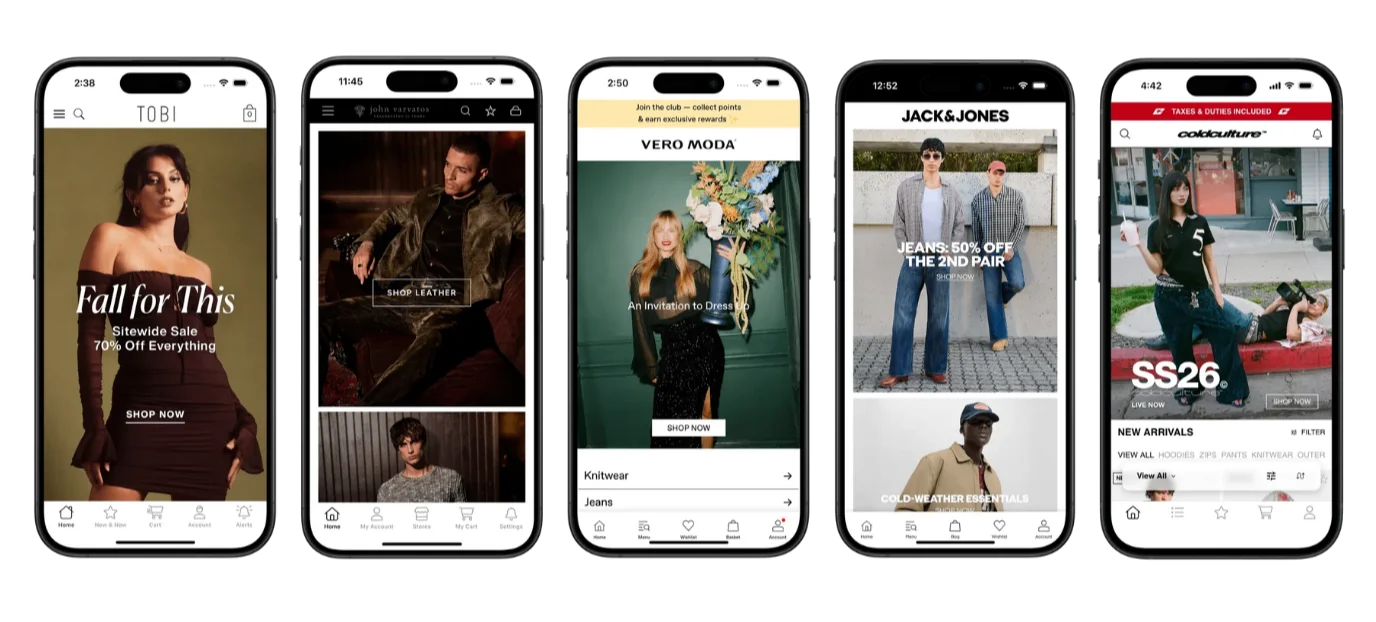
Unlike most no-code fashion mobile app builders, MobiLoud doesn’t give you a separate codebase to manage, or a watered-down version of your site.
Here’s why MobiLoud’s approach works so well for fashion brands:
- Full website parity. Every integration, plugin, and customization on your website works in the app. No custom integrations for Yotpo, Smile, Algolia, or whatever you rely on to drive revenue on your site. Everything just works, out of the box.
- Minimal ongoing app maintenance. When you update your website, the app updates automatically. No second set of content to manage, no separate design system to maintain. XCVI's team estimated they save 8-10 hours per week on maintenance compared to their previous app provider.
- Works with any ecommerce platform. Shopify, Shopify Plus, Salesforce Commerce Cloud, Magento, BigCommerce, Shopware, PrestaShop, WooCommerce, or a custom-built site.
- Native app features included. Push notifications, a home screen icon, deep linking - you’re getting a real app, not a PWA, not a workaround.
- Done-for-you service. MobiLoud handles the build, app store submission, ongoing updates, and technical maintenance. Everything about the app is handled for you.
- Live in 6-8 weeks. You can go from first conversation to live in the App Store and Google Play within a month - no drawn-out, months long dev crawl.
The cost starts at $1,499 per month - which is not much, for a channel that could grow to drive 20-35% of your total revenue (likely adding $1M+ in annual revenue). And since you’re building on what already works, it’s essentially risk-free.
Alternative Fashion App Development Methods (and How MobiLoud Compares)
There are other ways to build an app for your fashion brand. Sometimes these work; but in most cases, MobiLoud’s approach is just a more seamless and efficient way to do it.
Template-based fashion app builders let you build an app using drag-and-drop templates. They work well for simple Shopify stores; but if your fashion brand has custom UI, complex integrations, or isn’t on Shopify, you might find them too limiting.
Template-based builders are typically less expensive ($99-499/month) and are worth considering if you're on Shopify with a straightforward store setup.
Custom native development gives you complete control, but at a high cost. For many brands, spending $50,000 to $300,000+ on a mobile app is a non-starter, especially when the practical difference between this and a more affordable option is minimal.
Finally, Progressive Web Apps (PWAs) are enhanced mobile websites that can offer some app-like features (limited push notifications, home screen shortcuts).
They don't require app store submission or approval. However, they can't send native push notifications, are troublesome to download, and just aren’t a replacement for a true mobile app.
Fashion Mobile App Examples
The best fashion apps share a few traits: they make shopping faster than the mobile web, they give customers a reason to open the app regularly, and they use push notifications to drive repeat purchases.
There are some great examples, from brands ranging from massive global names to niche DTC fashion labels.
Let's dive deeper into the examples.
ZARA
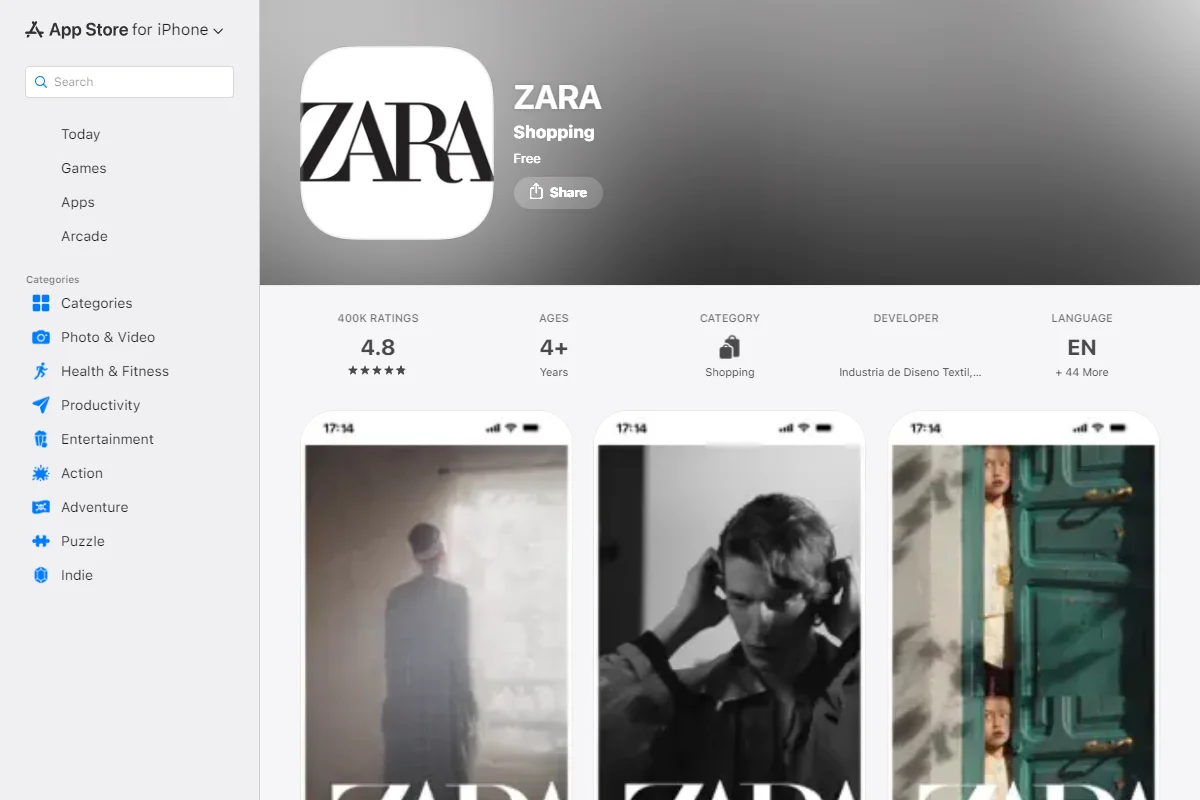
ZARA's app bridges online and in-store shopping. Shoppers can scan items in-store to check sizes and availability, shop directly from editorial lookbooks, and get personalized recommendations based on browsing history. The app is central to Inditex's omnichannel strategy, connecting the physical and digital experience into one seamless flow.
Nike SNKRS
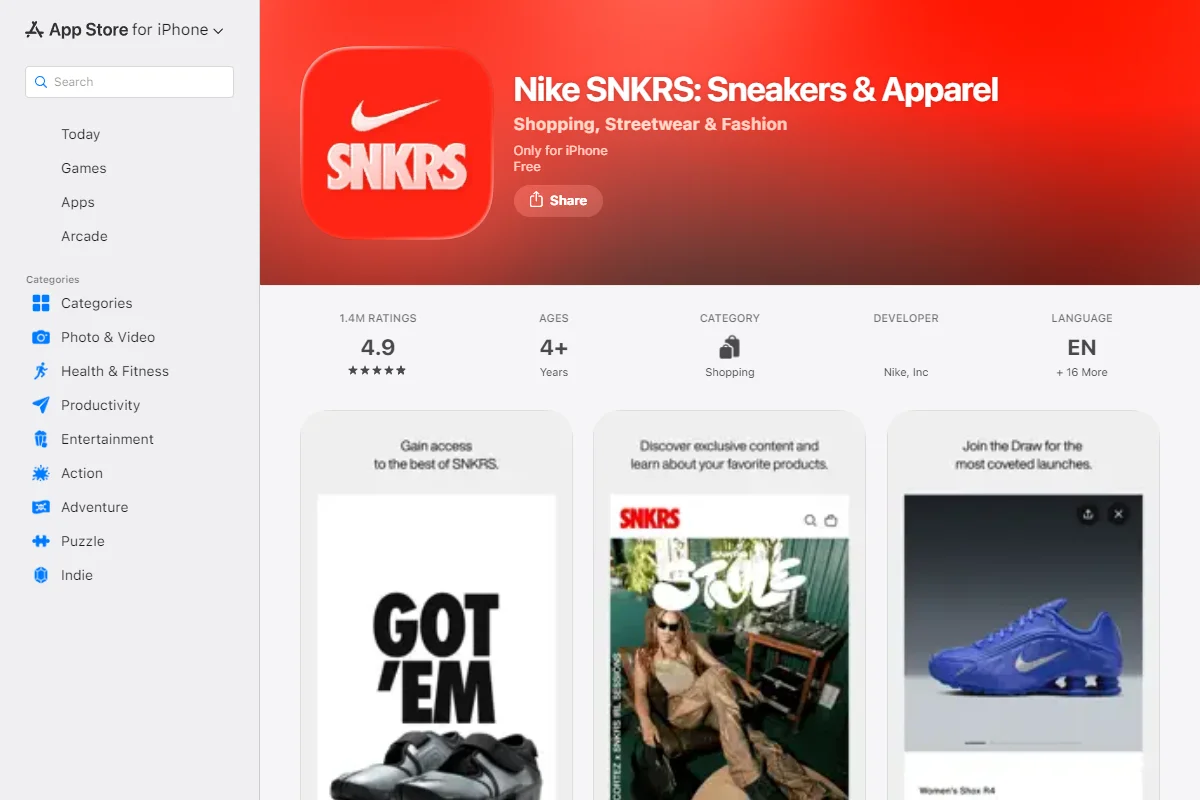
Nike turned the product drop into an app-first event. SNKRS uses invite-only launches, exclusive access for engaged members, and a preorder system (SNKRS Reserve) to create urgency that drives app adoption. For any fashion brand doing regular drops, this is the blueprint for making the app the place to be.
ASOS
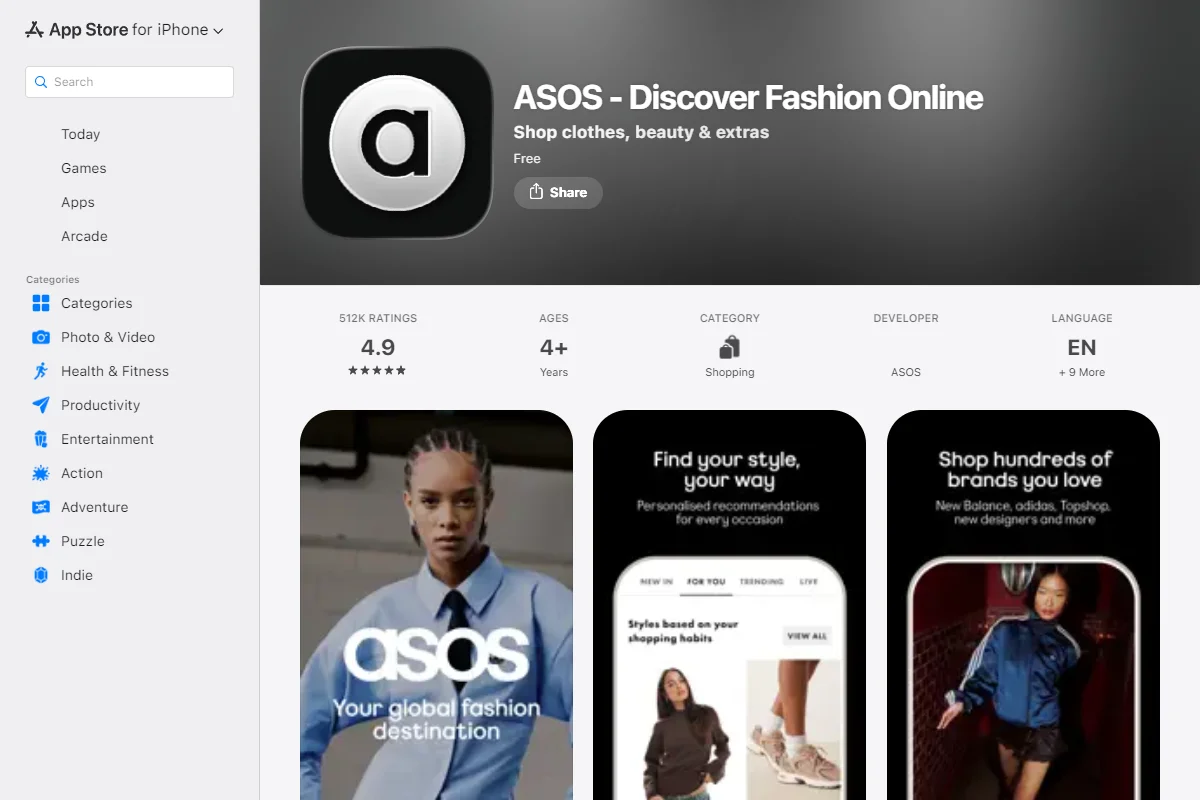
ASOS leans hard into visual discovery. Their Style Match feature lets shoppers snap a photo of any outfit and find matching items across the catalog. The app also uses personalized "Your Edit" feeds and push notifications for price drops on saved items, keeping users engaged between purchases.
Shein
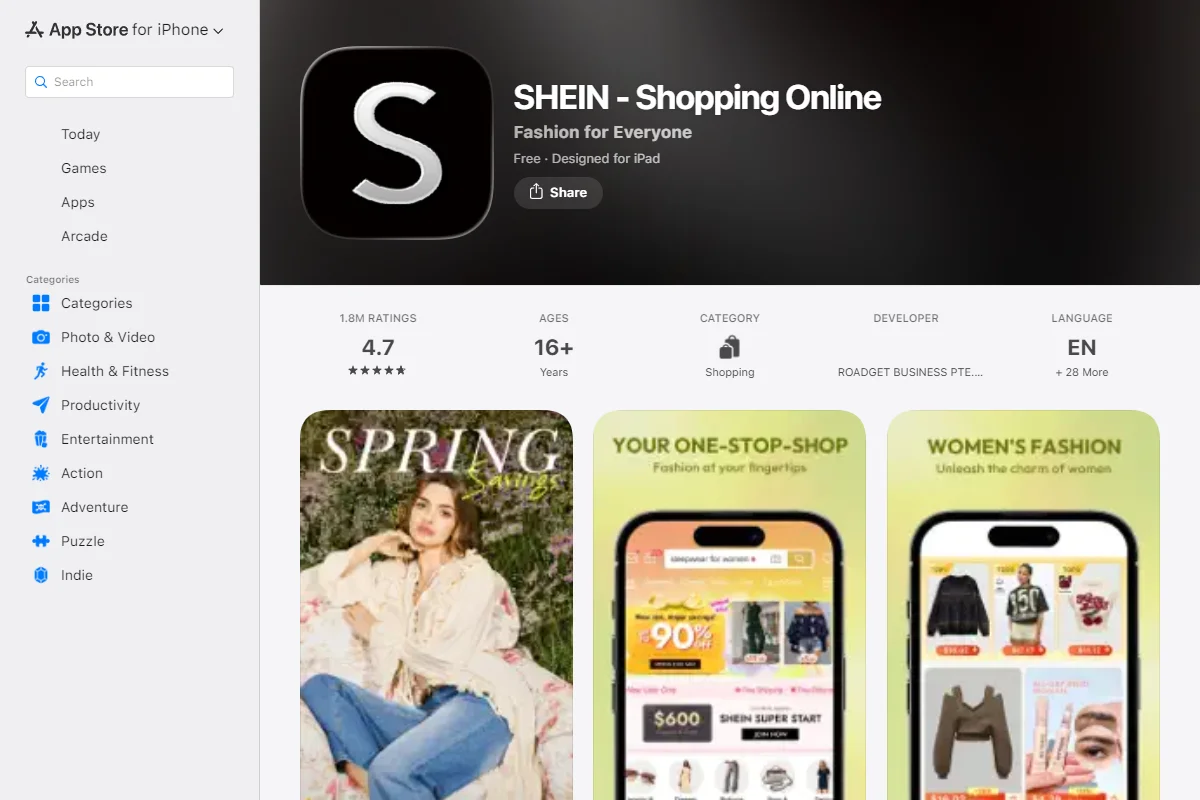
Shein is an app-first business. Their gamification engine (spin-to-win, daily check-in streaks, points for reviews and shares) keeps users opening the app daily, even when they're not actively shopping. The majority of Shein's sales happen through the app, not the website.
Kith
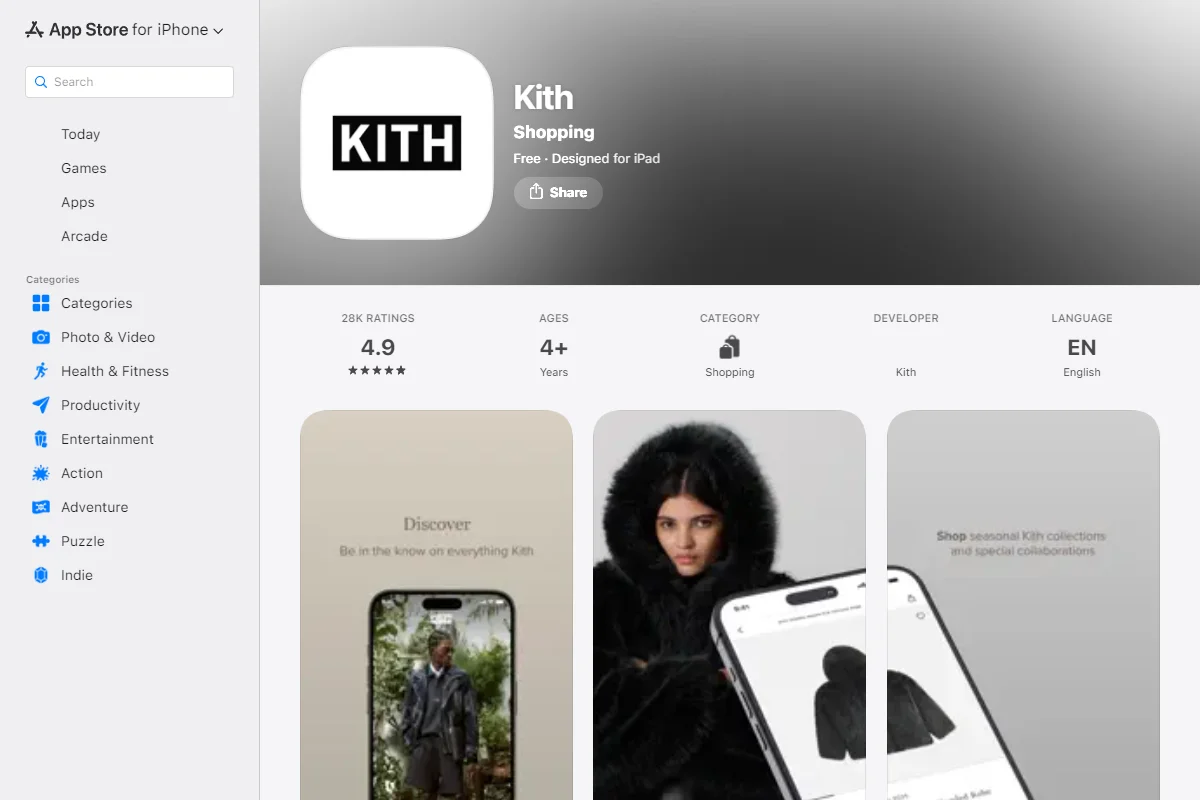
Kith runs an app-only loyalty program, deliberately not available on the website. Each tier unlocks exclusive apparel and footwear made specifically for that loyalty level. Location-based check-ins at pop-ups earn points, and top-tier members get queue-skipping at events and exclusive drawings for coveted releases.
Alo Yoga
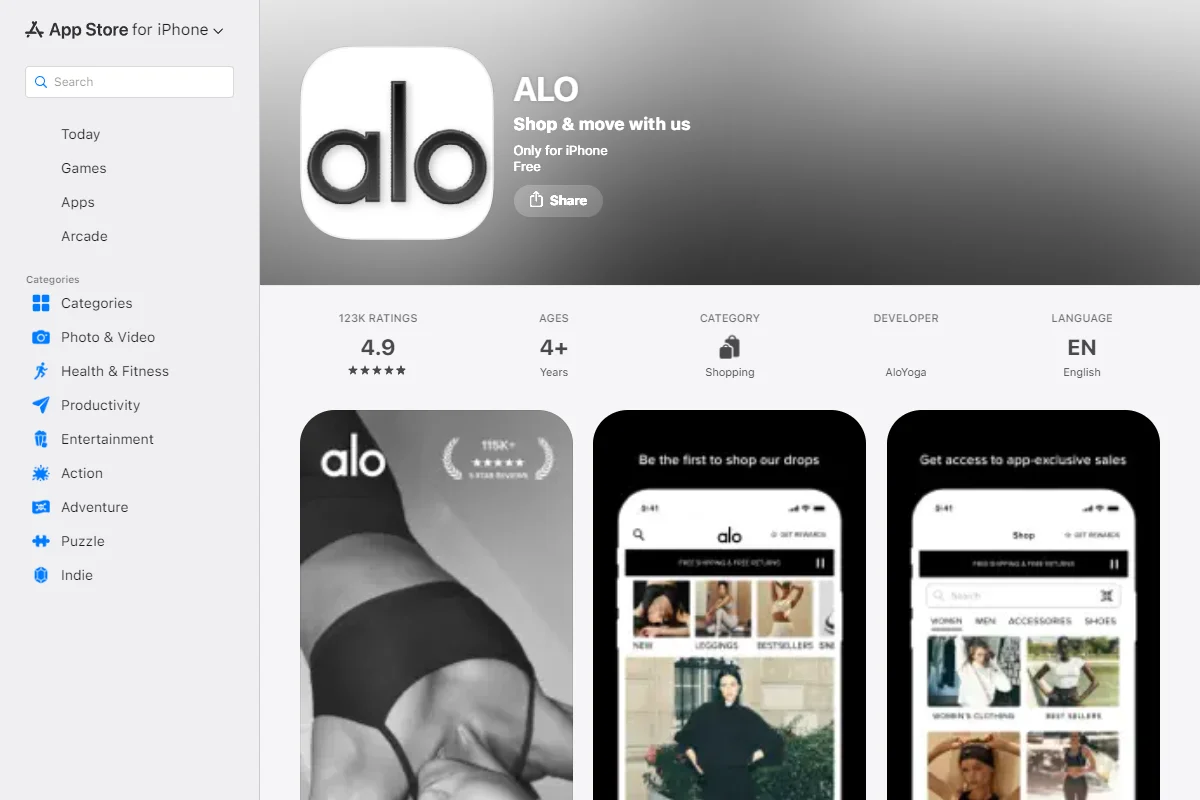
Alo combines shopping with wellness content to build a lifestyle community inside the app. App users get early access to new drops and app-exclusive discounts, while the tiered loyalty program rewards the most engaged customers. A strong example of content plus commerce in one app.
Lululemon
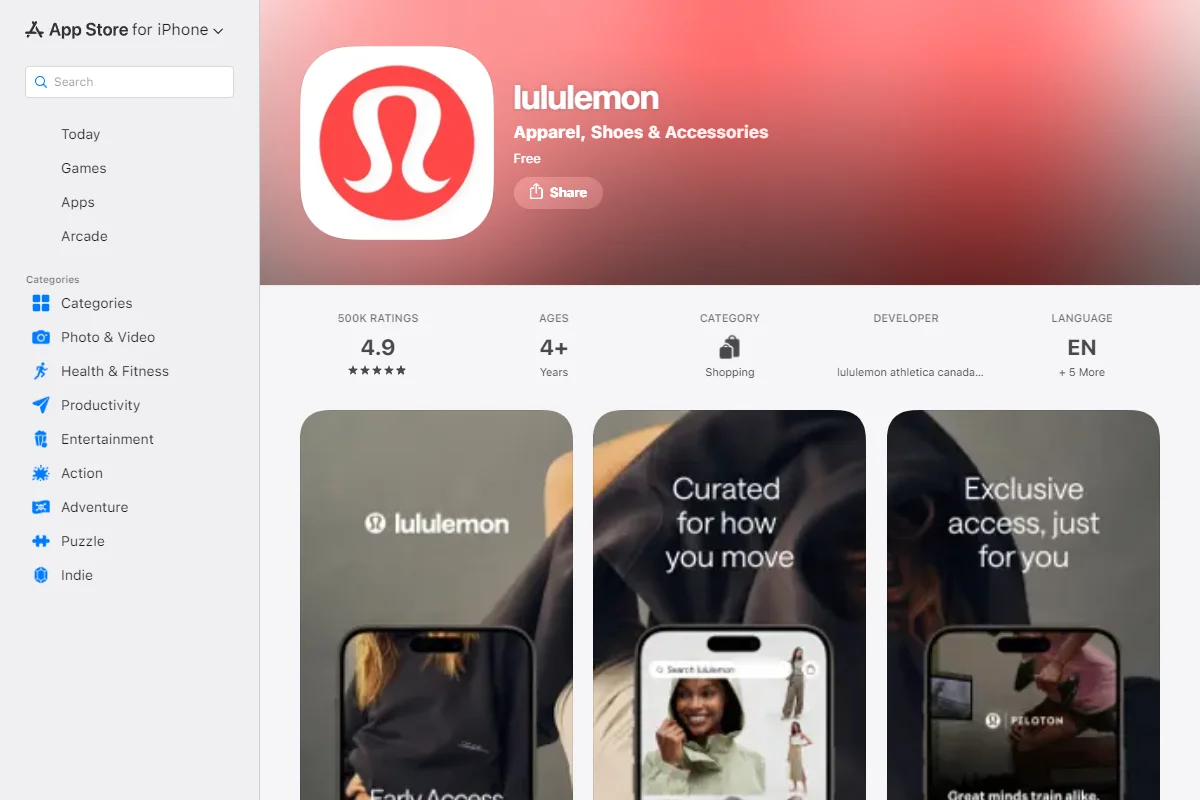
Lululemon layered a membership model on top of their app. The free tier gets a discount on gear, while the paid Studio tier unlocks thousands of fitness classes and partner studio discounts, turning the app into something customers open daily, not just when they're shopping.
John Varvatos

John Varvatos is a luxury menswear brand running on Salesforce Commerce Cloud. Their app generates 10x higher revenue per user compared to mobile web, with close to $1M in app sales, 4x higher purchase rates, and 12x more sessions per user.
"The cost we're paying versus what we're getting back is tenfold."
-- Nick Barbarise, Director of IT
Tadashi Shoji
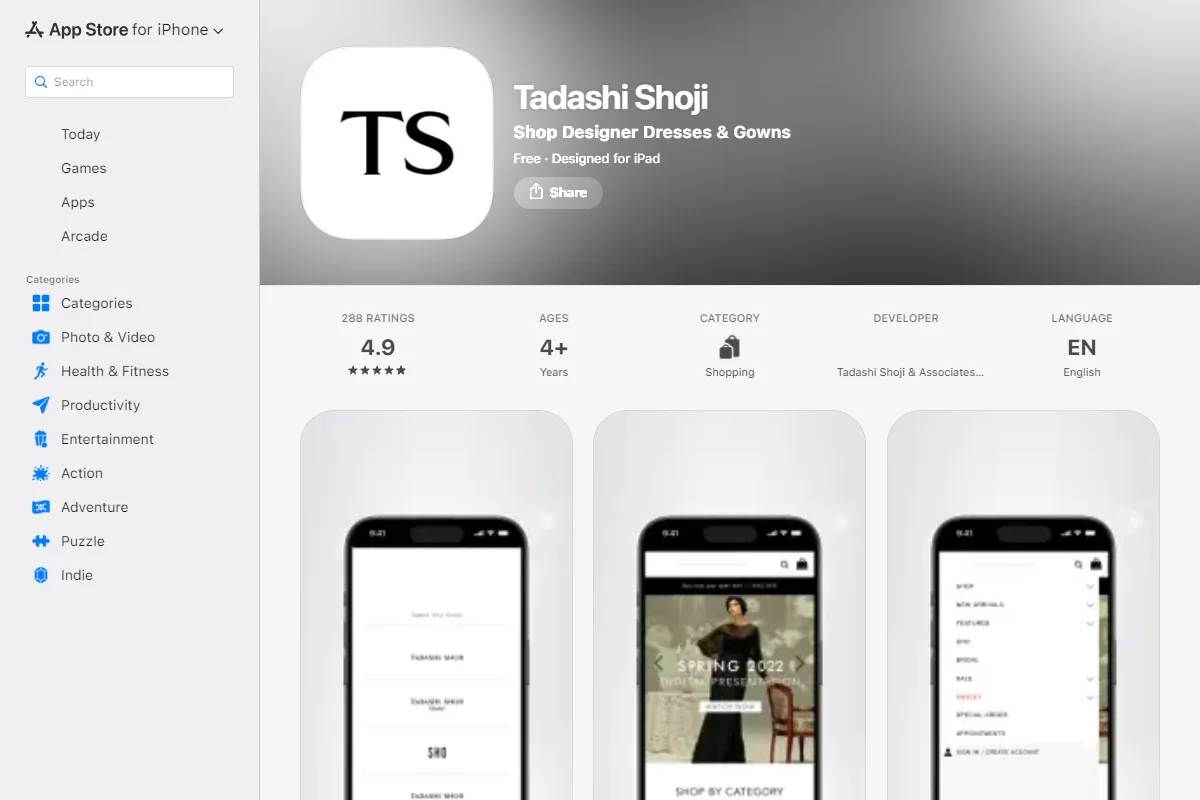
Tadashi Shoji is a luxury fashion brand on Magento. Their app accounts for 18% of total online revenue, with an 8.3x higher conversion rate compared to mobile web, 3.8x more frequent sessions, and 2x longer session times.
Jack & Jones
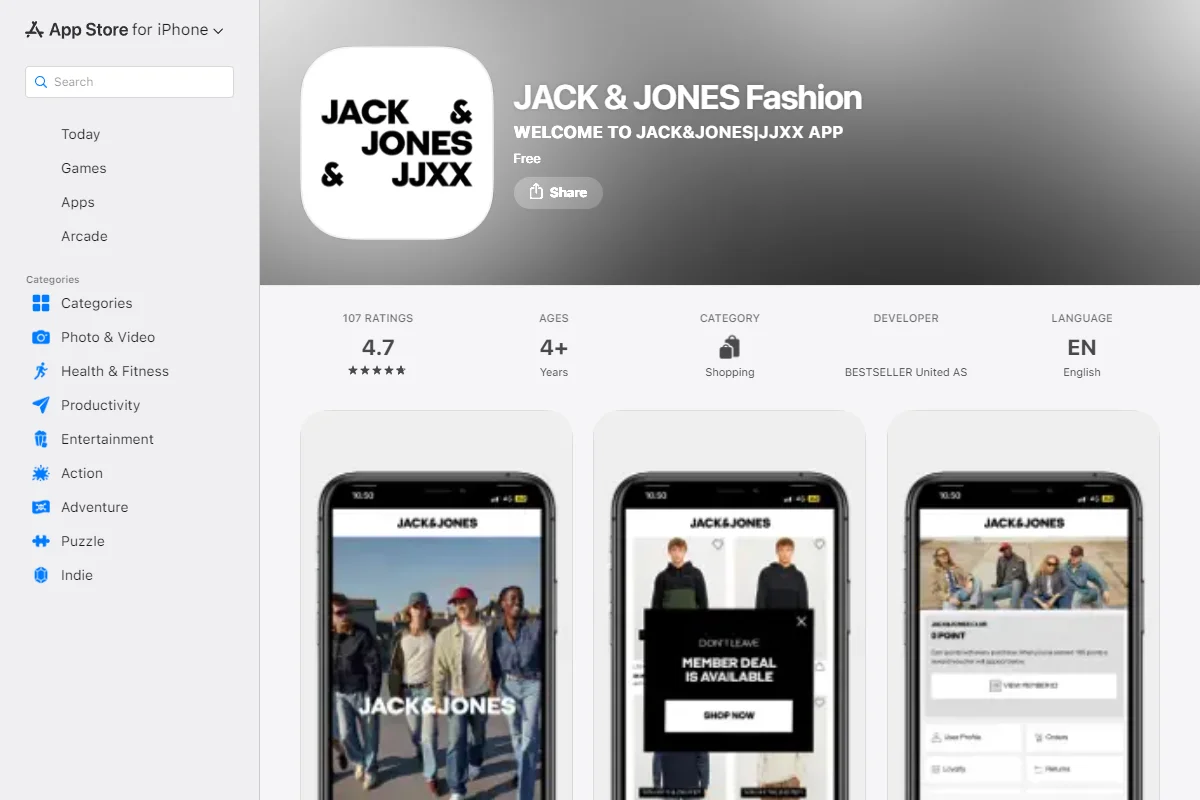
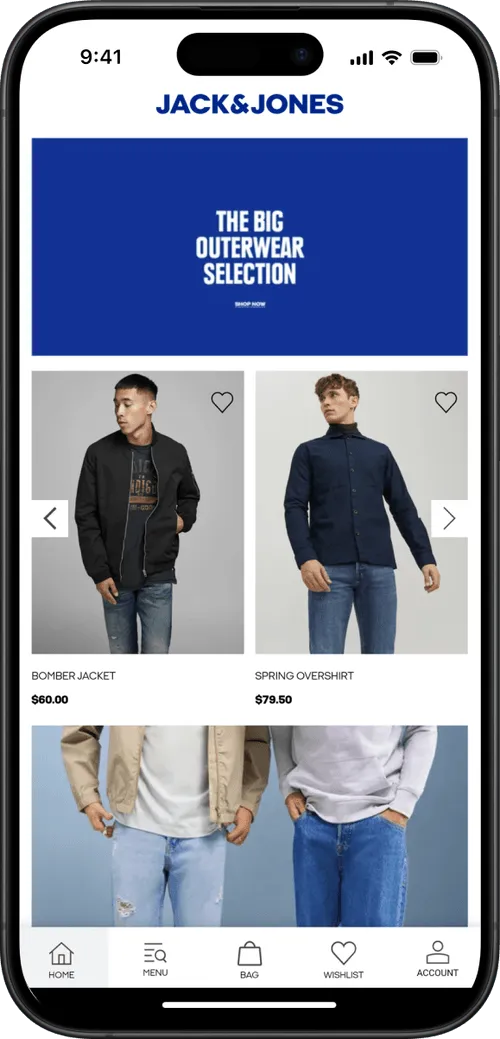
Jack & Jones is part of BESTSELLER, the $4B Danish fashion conglomerate behind 20+ brands with 800+ stores and 18,000 employees. The company previously maintained separate iOS and Android codebases, which created significant overhead. They consolidated everything into a single codebase with MobiLoud, launched in under a month, and now have near-perfect app store ratings with hundreds of thousands of downloads.
Cold Culture
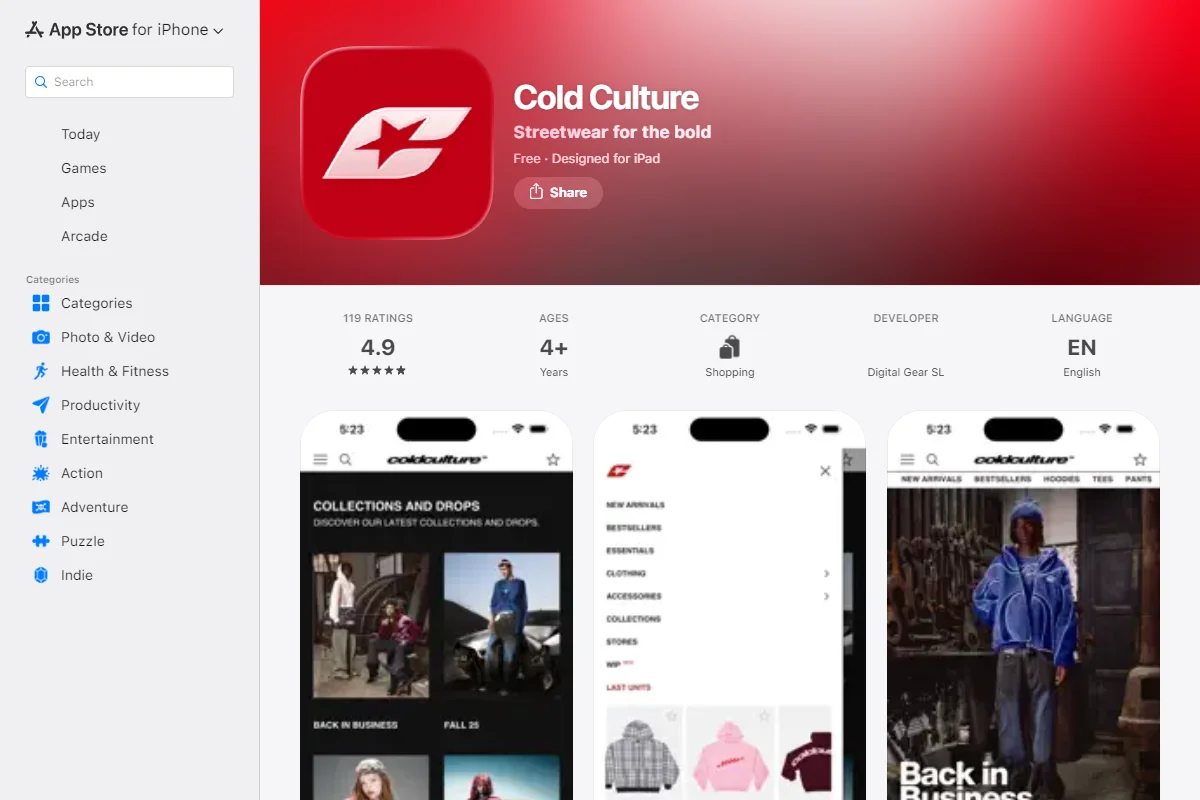
Cold Culture is a fast-growing Spanish streetwear brand with nearly 1 million social media followers and 250,000+ app downloads. Their hugely successful app strategy centers on app-exclusive early access drops, where app users get new releases an hour before the website, along with custom app-only landing pages and push notifications timed around their frequent product launches.
Check out more examples of brands using MobiLoud to launch high-ROI mobile apps in these case studies.
Step-by-Step: Going Live and Building Your App Strategy
Here's what the process actually looks like, from decision to revenue-generating channel.
Step 1: Book a Strategy Call
Start with a conversation about your goals, your platform, and your current tech stack. This is where MobiLoud's team assesses whether an app makes sense for your brand (it's not right for every business) and maps out what the app will look like based on your existing website.
Step 2: MobiLoud Builds & Tests Your App
The MobiLoud team handles everything for you, from configuration through to testing and small fixes before you go live.
Everything’s done for you. There’s no need to add headcount, or put off any other projects to focus on your app.
Step 3: Launch
MobiLoud handles everything: app build, app store submission (both Apple and Google), compliance, and optimization. Estimated time to launch is around 6-8 weeks (though often can be shorter). Your team's involvement is minimal, primarily reviewing the app and providing brand assets for the app store listing.
Step 4: Start Driving Downloads
The app only generates revenue if people download it.
Focus on these channels first:
- Smart banners on your mobile website. Your highest-intent traffic is already on your mobile site. A smart banner at the top of the page captures visitors who are ready to convert. MobiLoud includes smart banners by default.
- Email and SMS campaigns. Send a launch announcement to your customer list. Follow up with periodic reminders highlighting app-exclusive benefits (early access, push notifications for drops).
- QR codes in physical locations. If you have retail stores, pop-ups, or event presence, QR codes at checkout and on receipts drive downloads from your most engaged customers. This was John Varvatos' biggest growth lever.
- Social media. Instagram stories, bio links, and launch content announcing the app. Cold Culture promoted heavily through their community of nearly 1 million followers.
- Post-purchase page. Add an app download prompt to your order confirmation page and post-purchase emails. These customers just bought from you. They're the most likely to download.
Learn more: How to Drive App Downloads for Your Ecommerce Store
Step 5: Set Up Push Notification Campaigns
Push notifications are where the long-term revenue lives. Set these up in order of impact:
- Abandoned cart reminders. Automated, high-converting, and worth setting up on day one. Brands on MobiLoud routinely see 10-22% conversion rates on these.
- New arrivals / drop alerts. Notify app users when new collections go live. For fashion brands with frequent releases, this is the single most valuable push campaign.
- Back-in-stock notifications. Customers who wanted a sold-out item will buy fast when it returns.
- Flash sale / promo announcements. Time-sensitive offers that create urgency.
- Welcome series. New app users get a sequence introducing the brand and any app-exclusive benefits.
The optimal frequency is around 3-5 notifications per week; but you might find the ideal strategy is different for your brand.
Step 6: Track Performance and Optimize
Track the results from your app, and
- Revenue per app user vs mobile web user. This is the north star. Fashion brands on MobiLoud typically see 3-10x higher revenue per app user.
- App's share of total online revenue. Most brands see 10-30% of online revenue from the app, with high performers reaching 50-60%.
- Push notification CTR and conversion rate. Benchmark against 3-4% CTR for retail apps. If you're below that, experiment with timing, copy, and segmentation.
- Repeat purchase rate. App users should be buying more often. 60% of first-time app buyers make at least one additional purchase.
- Downloads and active users. Growth over time matters more than absolute numbers. Focus on the percentage of your customer base that's adopted the app.
John Varvatos tracks app revenue in weekly leadership meetings. It went from an afterthought to a metric the executive team watches closely. That's the trajectory most fashion brands follow once the app starts generating measurable results.
Making the App Work for Your Fashion Brand
The common thread across every fashion brand with a successful app is this: the app works because it serves the brand's most valuable customers better than any other channel. It doesn't try to replace the website. It doesn't try to reach new customers. It gives your existing fans a faster, more direct way to shop with you, and it gives you a direct line to bring them back.
For fashion specifically, the combination of frequent new arrivals, visual product discovery, and repeat-purchase buying behavior makes apps a natural fit. Your customers want to see what's new. Push notifications let you tell them the moment something drops.
If you're doing at least $1M/year in online revenue and have a customer base that buys more than once, a mobile app will likely pay for itself within the first few months. The data from hundreds of fashion brands backs that up.
Ready to see what your fashion brand's app would look like? Book a free strategy call with our team. We’ll walk you through a custom preview of your app, answer your questions, and help you decide if it's the right move.
FAQs

Convert your website into a mobile app