What's the Difference Between a Magento PWA and a Native App?

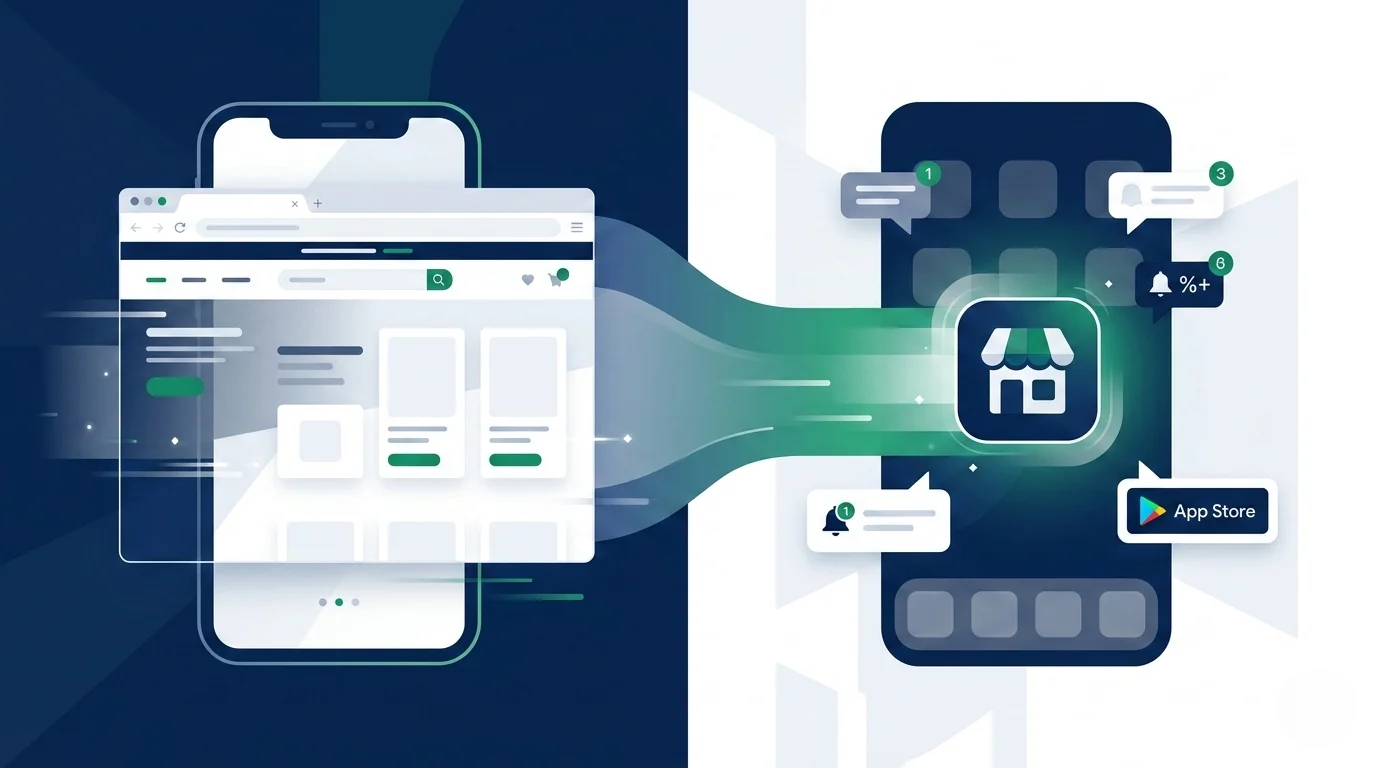
A Magento PWA improves your mobile website. A native app gets you into the App Store, puts a home screen icon on your customers' phones, and unlocks reliable push notifications on iOS and Android. For most Magento stores, it's not either/or: your existing storefront (Hyvä, headless, or Luma) can become a native app via MobiLoud without rebuilding anything.
A Magento PWA improves your mobile website. A native app gets you into the App Store, puts a home screen icon on your customers' phones, and unlocks reliable push notifications on iOS and Android. For most Magento stores, it's not either/or: your existing storefront (Hyvä, headless, or Luma) can become a native app via MobiLoud without rebuilding anything.
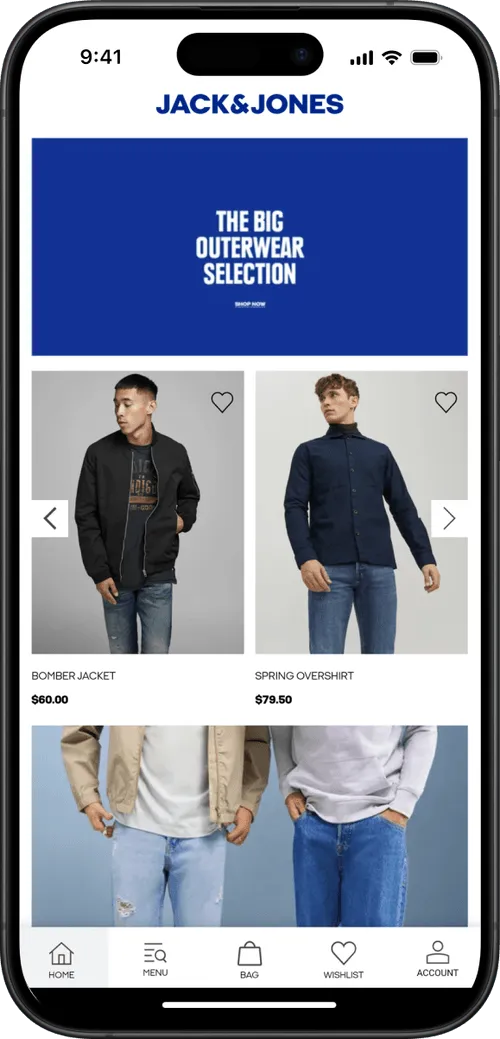
There can be some confusion as to what a “mobile app” for Magento really is.
Many Magento mobile app solutions are really for building Progressive Web Apps (PWAs). A PWA is a powerful asset - but it’s not the same as a mobile app. It’s not really a viable alternative to a mobile app either.
Keep reading and we’ll explain the difference, why it matters, and the best way to utilize both a Magento PWA and real mobile app for your ecommerce business.
What "Magento PWA" Means
Progressive Web App is a standard, not a product.
Any website that meets certain technical requirements (HTTPS, a service worker, a web app manifest) qualifies as a PWA. The term covers everything from a basic installable website to a full headless React storefront.
With Magento specifically, "PWA" gets used to describe several different things:
PWA Studio
PWA Studio is Adobe's official toolkit for building PWA storefronts on top of Magento's GraphQL API. It’s a tool built in to the Adobe Commerce ecosystem that lets any Magento/Adobe Commerce store publish a PWA.
It's now in maintenance mode FYI - with no updates for around a year. Adobe has shifted frontend investment toward Edge Delivery Services and Adobe Commerce as a Cloud Service. The developer community has largely moved to alternatives like Hyvä, Alokai, and GraphCommerce.
Hyvä Themes
Hyvä is often mentioned alongside PWA discussions, but it’s technically not a PWA.
Hyvä replaces Magento's Luma frontend with Alpine.js and Tailwind CSS, delivering dramatically better performance than Luma, but it uses server-side rendering without the service workers, offline support, or installability that define a PWA.
You get the speed gains without the PWA architecture. It doesn’t really matter that much. But if we’re being technical, it’s not a PWA.
Headless storefronts
Alokai (formerly Vue Storefront), GraphCommerce, and custom Next.js builds offer something close to a true PWA architecture. They consume Magento's GraphQL API and render via React or Vue, giving you full performance control and the ability to implement service workers for offline support and push notifications.
All of these can be called a "Magento PWA" in different conversations. What they share is that they make your mobile web experience significantly better. What they don't share is the ability to put your store in the App Store.
What You Get With a Magento PWA
If you’re thinking about building a PWA, you should understand why you’re doing it. Not just building it because it’s a flash buzzword you heard about.
Here’s what you get from a Progressive Web App:
Improved mobile web performance
Thanks to service workers enabling caching, PWAs make return visits load a lot faster. With a PWA, you’ll typically see stronger Core Web Vitals scores and overall mobile load time.
An installable experience
Every PWA can be added to the user’s home screen, creating a shortcut that looks and behaves like an app icon. The PWA opens without browser chrome (no address bar, no tabs), so it feels more like a native app.
Basic push notifications
Service workers enable web push notifications on Android and desktop browsers. iOS added support in iOS 16.4 (2023), but with a significant catch: users must first add the PWA to their home screen before they can receive push notifications.
No app store friction
Users don't have to find your store in the App Store, download it, and wait for an install. They click a prompt and it's added.
What a Magento PWA Doesn’t Do
This is where you see the difference emerge between native apps and Progressive Web Apps - and why a PWA is not a legitimate substitute for a native app.
No App Store or Google Play listing
Your PWA won't appear in search results on the App Store or Google Play. Customers can't discover you there. You can't run App Store-specific promotions. You don't exist as an app on the two platforms where people go to find apps.
Low home screen adoption
PWAs realistically get a very low number of installs. There’s an “Add to Home Screen” prompt on certain devices that makes it a little easier, but otherwise, the install path is unintuitive.
It essentially requires the user to know that the option to add a site to their home screen is possible - and few people actually know this.
It’s a long way from how easy it is for someone to just tap a button to get your app from the App Store or Google Play store.
Limited push notifications
PWAs can send push notifications - but they’re web push notifications. Not native app push notifications.
That greatly limits what you can do. Apple's support for web push on iOS (added in iOS 16.4) requires the user to have first installed the PWA to their home screen. Since relatively few users do that, right from the start you’re limited on how many people you can contact.
These push notifications also don’t have the reach that native push notifications do, nor the intuitive opt-in flow. Simply put, you won’t get nearly the same results from PWA push notifications.
No home screen presence for non-installers
The 99%+ of visitors who don't install the PWA continue accessing your store through a browser, with no home screen icon, no App Store reviews, no push notifications. They're mobile web visitors, not app users.
What You Get With Native Apps for Magento
A native iOS and Android app gives you things that aren't achievable through the browser, regardless of how good your PWA is.
App Store and Google Play presence
Your store appears in search results when customers look for brands to shop. You can run ads targeting app downloads. You appear in "suggested apps" and category browsing. This is a distribution channel that doesn't exist for websites.
Reliable push notifications (on both iOS and Android)
Native push notifications reach customers directly on their lock screen, in their notification center, regardless of whether they have a browser open.
This doesn't require any prior home screen install. It does require permission from the user (the push notification prompt you get shortly after installing an app), but it’s a lot more intuitive (just one tap to allow).
It’s also seamless on both platforms - not limited, like iOS push notifications for PWAs.
A home screen icon next to Amazon and Instagram
This is both a retention mechanism and a brand presence. Your store competes for attention in the same space where customers spend hours every day.
A direct line to your highest-value customers
App users are self-selected. They downloaded your app, kept it, and return to it regularly. MobiLoud's customer data shows app users generate 3.5-7x the revenue per user of mobile web visitors.
That's because the customers who use apps are your best customers. And launching an app keeps these customers closer, and concentrates your retention strategy around the people who are easiest to sell to.
Side-by-Side Comparison: Magento PWA vs Native App
When PWA Is the Right Call
Turning your site into a PWA is never a bad move. It’s an upgrade for your store, and the expense to build one is typically not that much.
As to whether you should settle for a PWA instead of a native app, that’s a different question.
It’s only really a viable substitute if your audience has little need for a native app, or you’re operating on a very tight budget, and can’t justify the cost of a native app.
When Native Is the Right Call
A native app makes sense when you want outcomes that PWA can't deliver:
- You want fully native push notifications
- You want your brand in the app stores
- You want a more intuitive install path
- You want all the authority and trust signals of a real native app
But here’s the important part - while native vs PWA is often framed as a “this or that”, it really doesn’t have to be a choice.
You can launch a PWA for your web visitors, offering an improved experience without an install. And simultaneously, use that PWA to power a true, native mobile app.
That’s what MobiLoud does. And it’s what we explain below.
Getting a Native App from Your Existing Magento Store
The traditional way to build a native app (custom React Native or Flutter development consuming your Magento GraphQL API) is expensive, slow, and creates a second codebase your team has to maintain indefinitely alongside your storefront.
It is, honestly, inefficient and costs too much.
MobiLoud takes a different path. Instead of building a new storefront with native components and fragile APIs, MobiLoud takes your existing Magento frontend and delivers it as a native iOS and Android app.
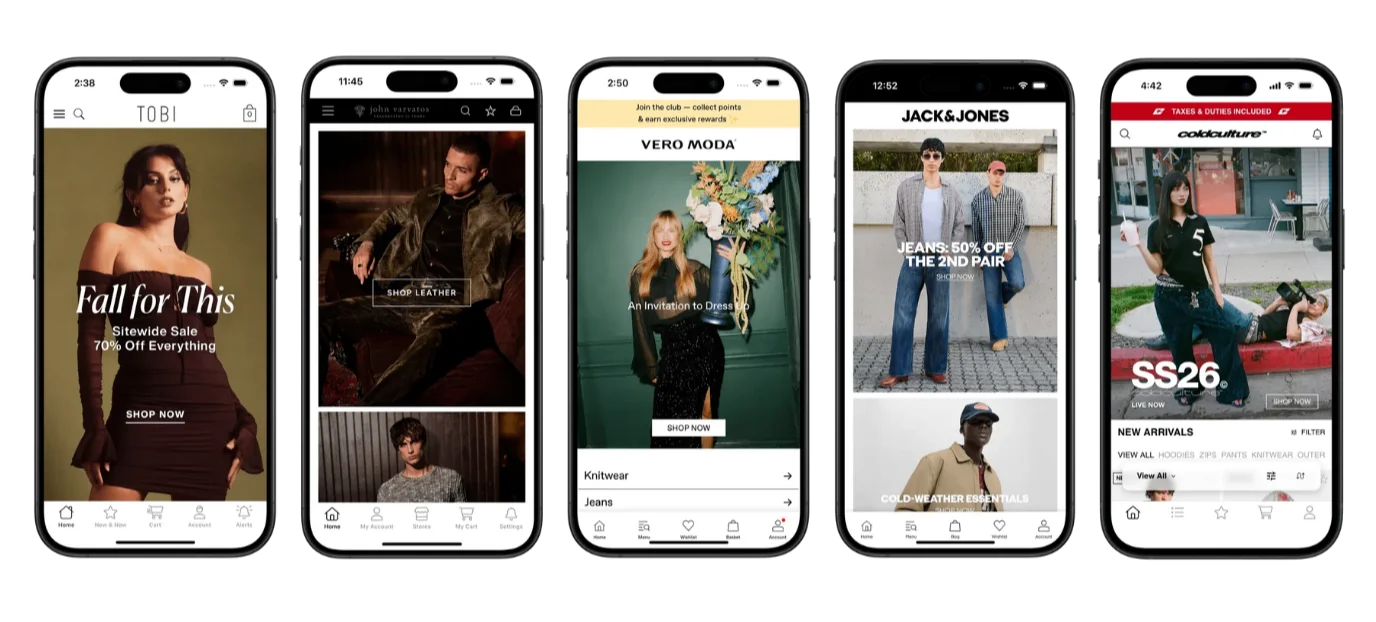
Your Luma store, your Hyvä store, your Alokai headless frontend: the app renders that, with native capabilities added on top: push notifications, App Store and Google Play presence, native navigation, and deep linking.
The investment you’ve made in your web storefront carries over completely. Every extension, every checkout customization, every payment gateway works because the app shows your existing storefront.
When you update your website, the app reflects those changes without a separate deployment.
Tadashi Shoji, a luxury fashion brand running on Magento, chose this path after evaluating native app development from scratch:
"At first, we explored the viability of building our own native apps from the ground up. And while that was achievable, managing them effectively moving forward would not have been feasible due to the disconnected nature of such an approach."
-- David Chamberlin, Lead Developer at Tadashi Shoji
Their app now generates 18% of total online revenue, with app users converting at 8.3x the rate of mobile web visitors.
MobiLoud starts at $1,499/month, with no long-term contracts. Compare that to the six-figure cost and multi-month timeline of custom native development, and it’s easy to see the appeal - especially when the frontend solutions for Magento are so powerful, making your website already look and feel much like an app from the start.
With MobiLoud, you’re not choosing between a native app and a PWA. You can build a PWA (or headless storefront), and get all the benefits of this approach - and then extend it further by turning your site into a native app.
If you’re interested in what a native app could do for your business, get in touch. Book a free consultation and we’ll show you what’s possible, and walk you through the process of turning your Magento website into a mobile app in just 30 days.
FAQs

Convert your website into a mobile app