Headless Commerce Examples: 10 Brands That Made the Switch (and Why)

Headless commerce isn't just an architecture trend. Brands across categories (Nike, Gymshark, Target, TOMS, Burberry) have adopted it for specific, practical reasons: faster page loads, custom storefronts, omnichannel delivery, and the ability to scale during traffic spikes. Here's what they built and why.
Headless commerce isn't just an architecture trend. Brands across categories (Nike, Gymshark, Target, TOMS, Burberry) have adopted it for specific, practical reasons: faster page loads, custom storefronts, omnichannel delivery, and the ability to scale during traffic spikes. Here's what they built and why.
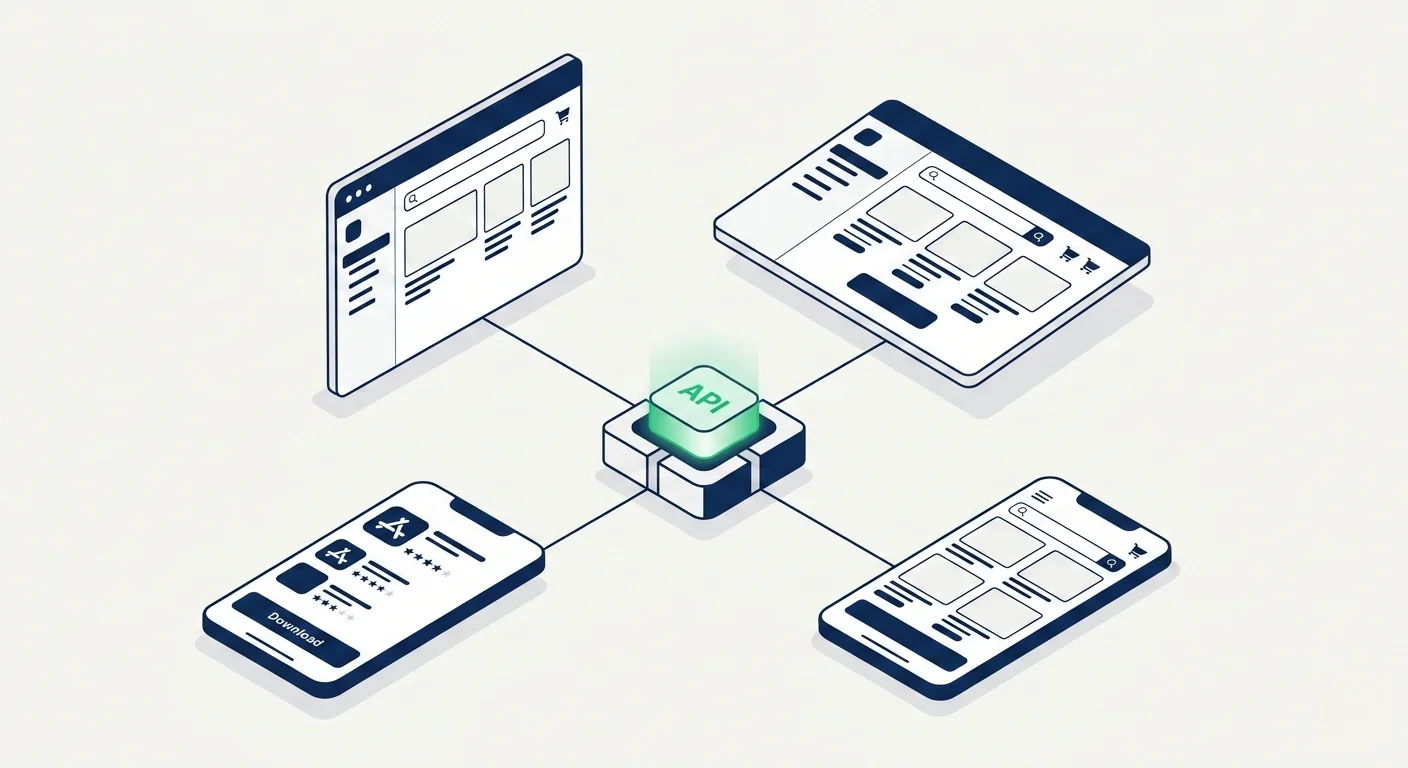
It's easy to talk about headless commerce in the abstract: decoupled frontends, API-first backends, frontend flexibility.
It's more useful to see what it actually looks like when brands implement it.
The examples below span DTC startups, mid-market brands, and global enterprises. Each went headless for different reasons, used different platforms, and got different results.
What they share is a decision that their existing platform setup was limiting what they could build, sell, or deliver.
1. Nike
Platform: Custom headless (Next.js with server-side rendering)
Why they went headless: Mobile-first DTC strategy
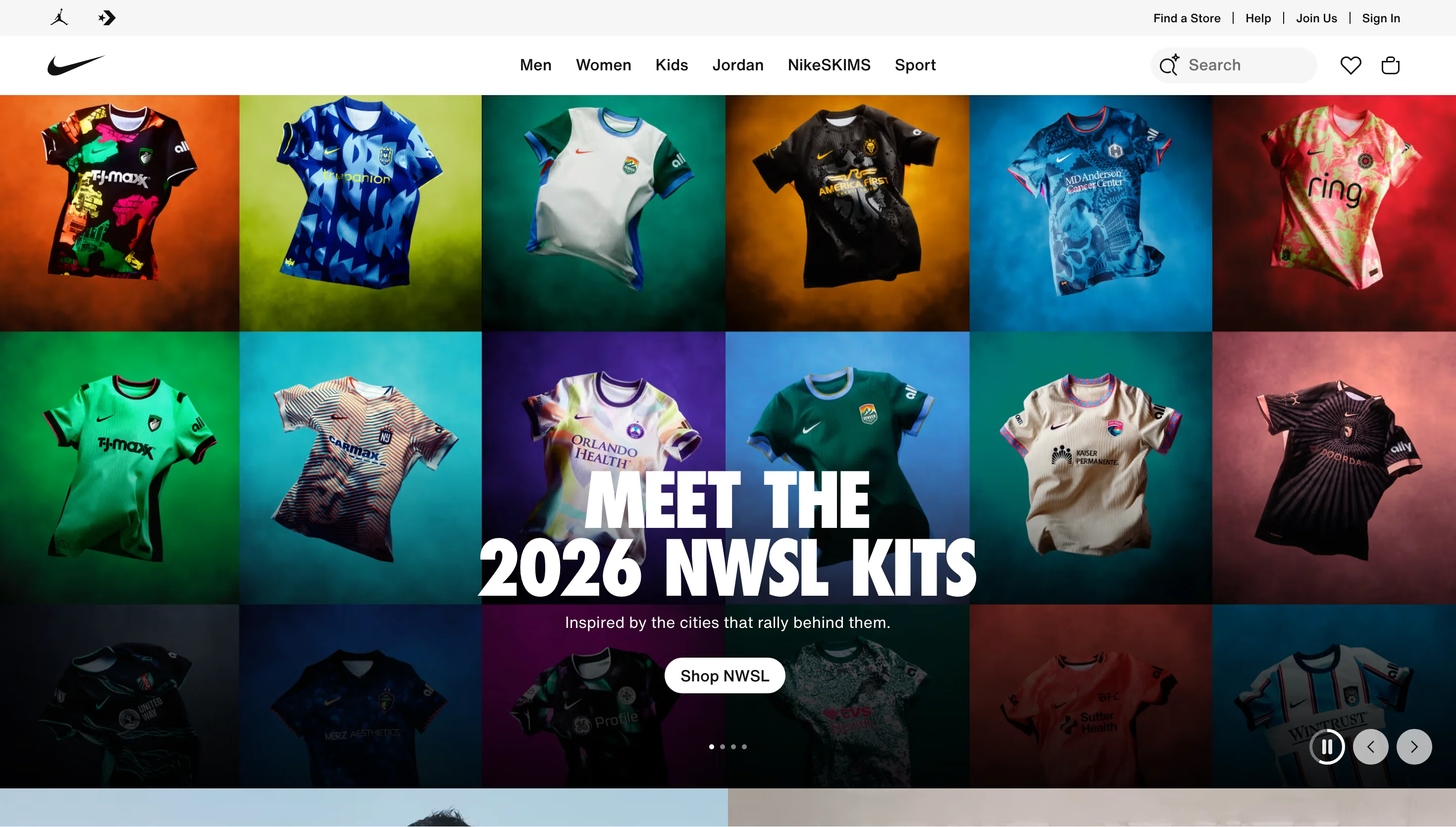
Nike's shift to headless was driven by its broader move toward direct-to-consumer sales. The brand needed storefronts that could serve dozens of markets with localized experiences, handle massive traffic spikes during product drops, and prioritize mobile performance above everything else.
Their architecture uses Next.js with server-side rendering, Redux for state management, and GraphQL for data operations, all backed by Nike's internal microservices. This gives them full control over the experience per market, per device, and per customer segment.
The result: significantly improved mobile conversion rates, faster page loads, and the ability to run market-specific storefronts without maintaining entirely separate codebases for each region.
2. Gymshark
Platform: Shopify Plus (custom React headless frontend)
Why they went headless: Performance during high-traffic sales events
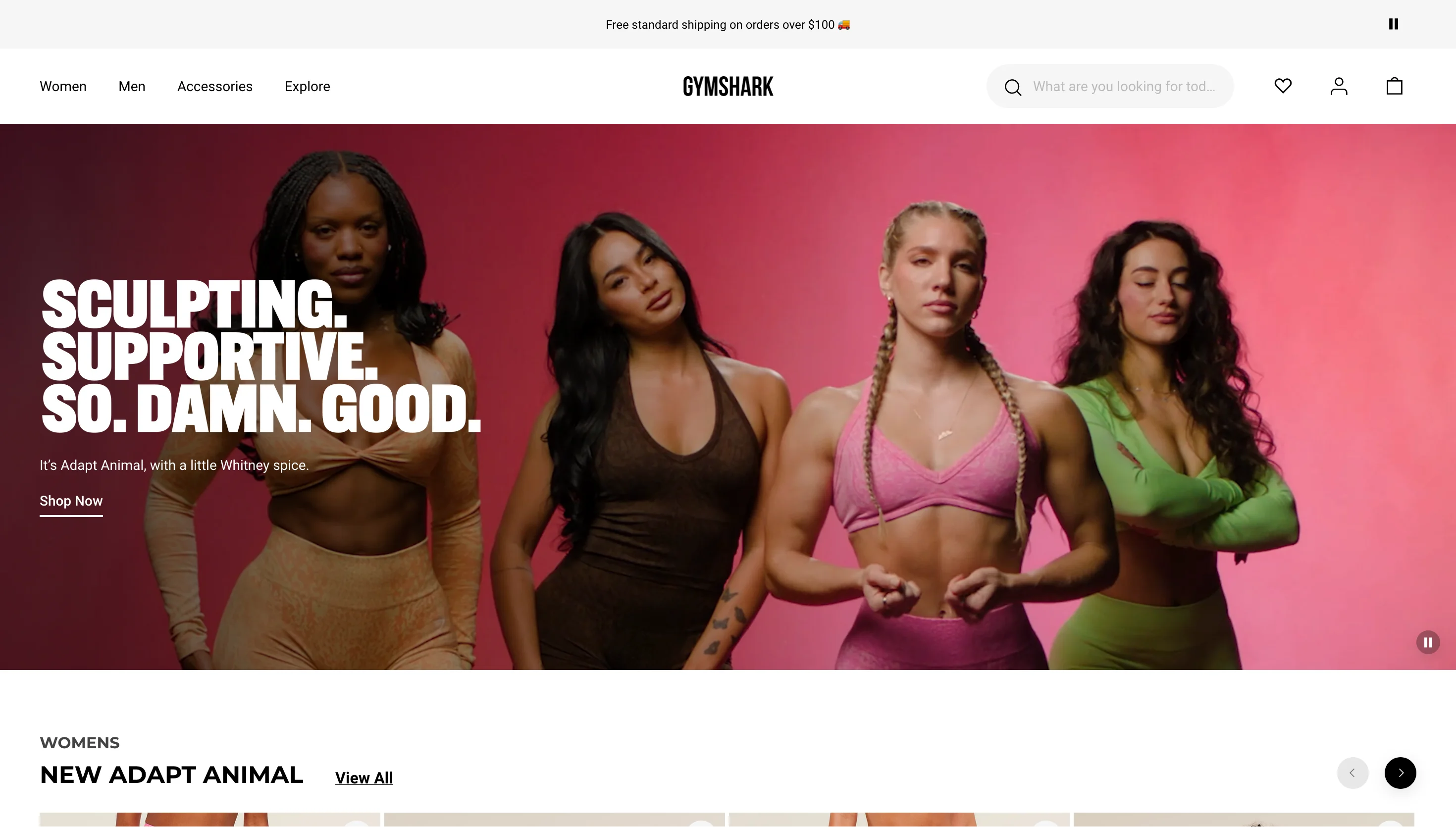
Gymshark's move to headless was born from a painful Black Friday. In 2015, their site on Adobe Commerce (Magento) crashed for eight hours, costing an estimated GBP 100,000. The brand needed a storefront that could handle 450,000 concurrent users during flash sales without performance degradation.
Their headless stack pairs Shopify Plus on the backend with a custom React frontend, Contentful for content management, and Algolia for search, all stitched together with AWS Lambda. This isn't Shopify Hydrogen; it's a custom headless build that predates Hydrogen's release.
The headless frontend also gives their design team more creative control, which matters for a brand whose visual identity is core to its appeal.
3. Allbirds
Platform: Shopify Plus (headless via APIs)
Why they went headless: Brand-first design and international expansion
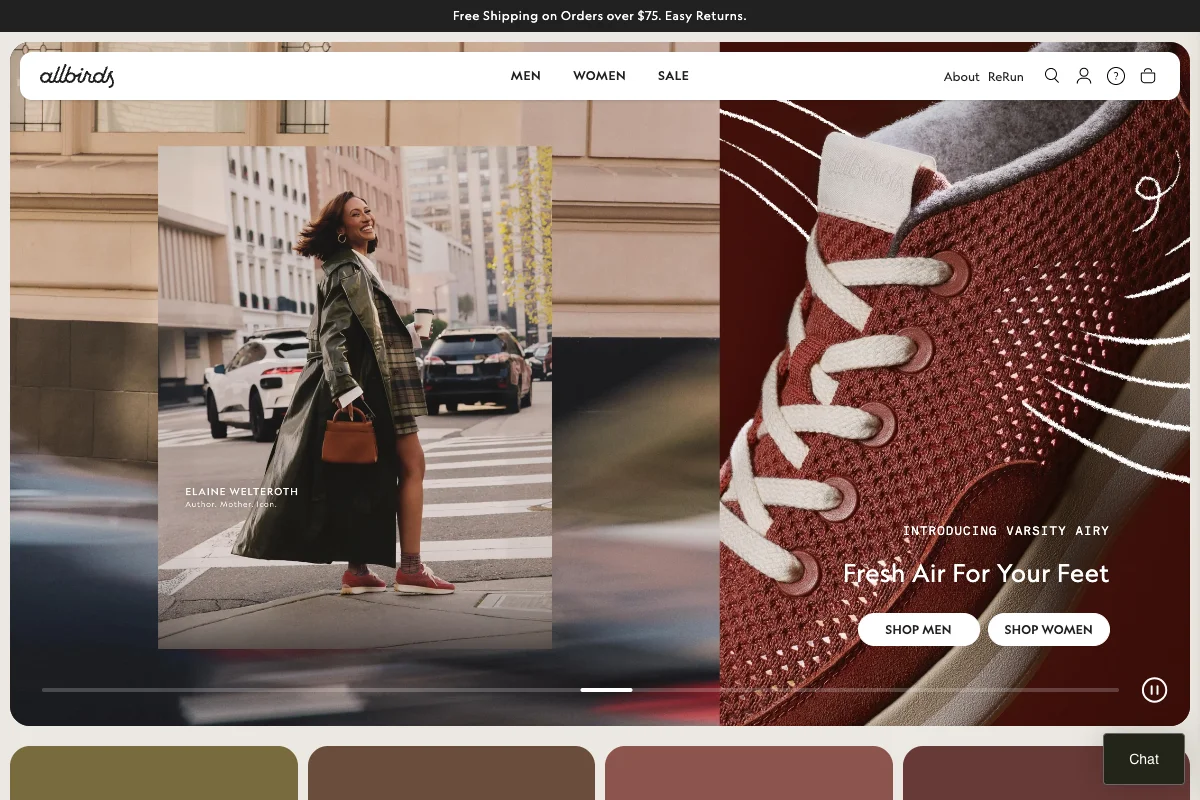
Allbirds built its brand around sustainability and simplicity, and the shopping experience needed to reflect that. Standard ecommerce templates couldn't deliver the clean, purpose-driven design language the brand wanted.
Going headless on Shopify gave Allbirds full control over the frontend while keeping Shopify's commerce engine handling products, orders, and payments.
They've used the flexibility to build features like an integrated store locator that bridges online and offline shopping, and to optimize the experience for international markets with different needs.
The headless approach also enabled faster page loads, which directly supports their goal of reducing friction in the purchase path.
4. Target
Platform: Custom headless architecture
Why they went headless: Omnichannel unification (web, app, in-store)
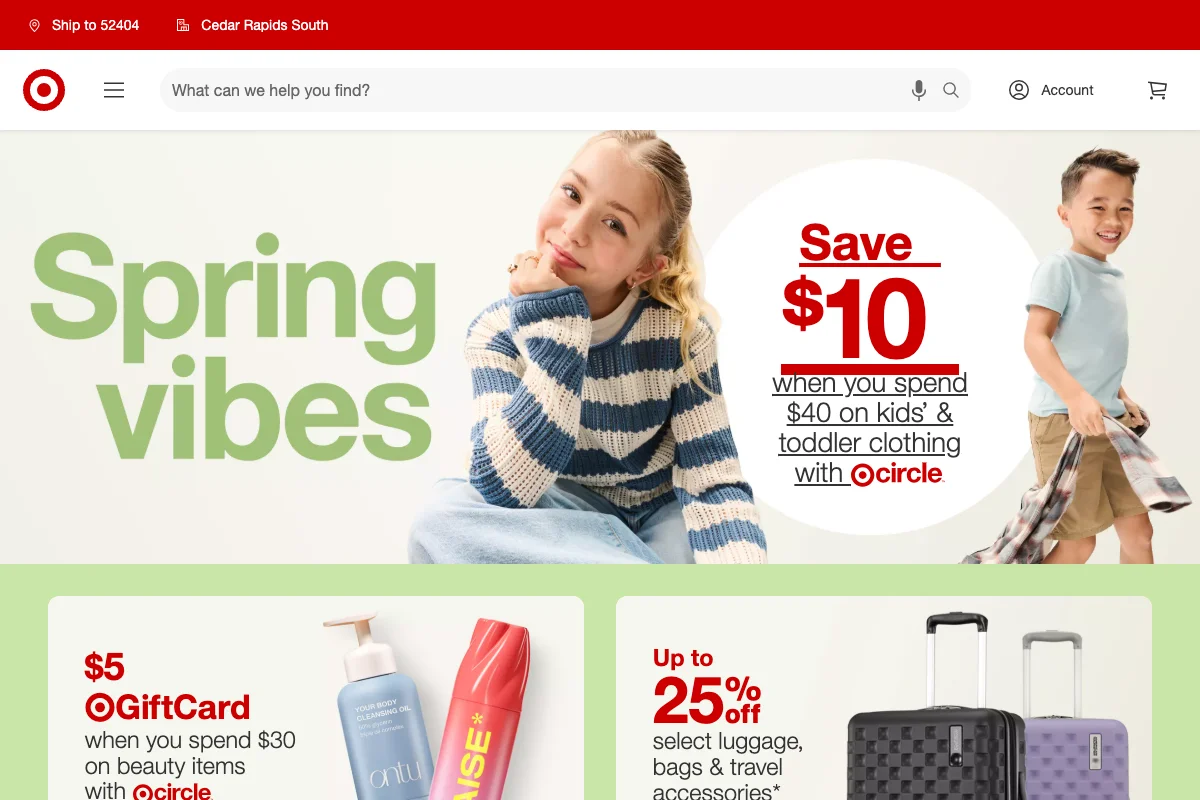
Target's headless implementation is driven by one of the most complex omnichannel operations in retail. The same commerce backend needs to power the website, the mobile app, in-store kiosks, and services like same-day pickup, delivery, and Drive Up.
A monolithic platform couldn't serve all of these channels from a single data layer. By decoupling the frontend and backend, Target can build purpose-built experiences for each channel while maintaining consistent product data, real-time inventory, and pricing across all of them.
The practical benefit: a customer can check inventory on the app, add items to their cart, and pick them up in-store 30 minutes later with accurate stock information at every step.
5. Burberry

Platform: Composable MACH stack (Contentstack + commercetools)
Why they went headless: Immersive editorial commerce
Luxury ecommerce has different demands than mainstream retail. Burberry needed product pages that blend long-form storytelling, editorial photography, and video with commerce functionality. Standard ecommerce templates treat the product as a data object (image, price, description, buy button). Burberry treats it as a narrative.
Their composable architecture pairs Contentstack as the headless CMS with commercetools as the commerce engine, plus Smartling for translation across 59 countries. The content layer is fully decoupled from the commerce layer, allowing the creative team to build rich, magazine-style product experiences while the transactional side runs independently.
After the migration, developer support tickets dropped from 40+ per week to fewer than 1, and translation work became 80% faster.
For brands where the shopping experience IS the brand, headless provides the creative freedom that templated platforms can't match.
6. SKIMS
Platform: Shopify Plus (Hydrogen)
Why they went headless: Speed at scale
SKIMS generates enormous traffic, both through organic demand and high-profile marketing moments. Product launches and celebrity collaborations create traffic spikes that can overwhelm standard Shopify storefronts.
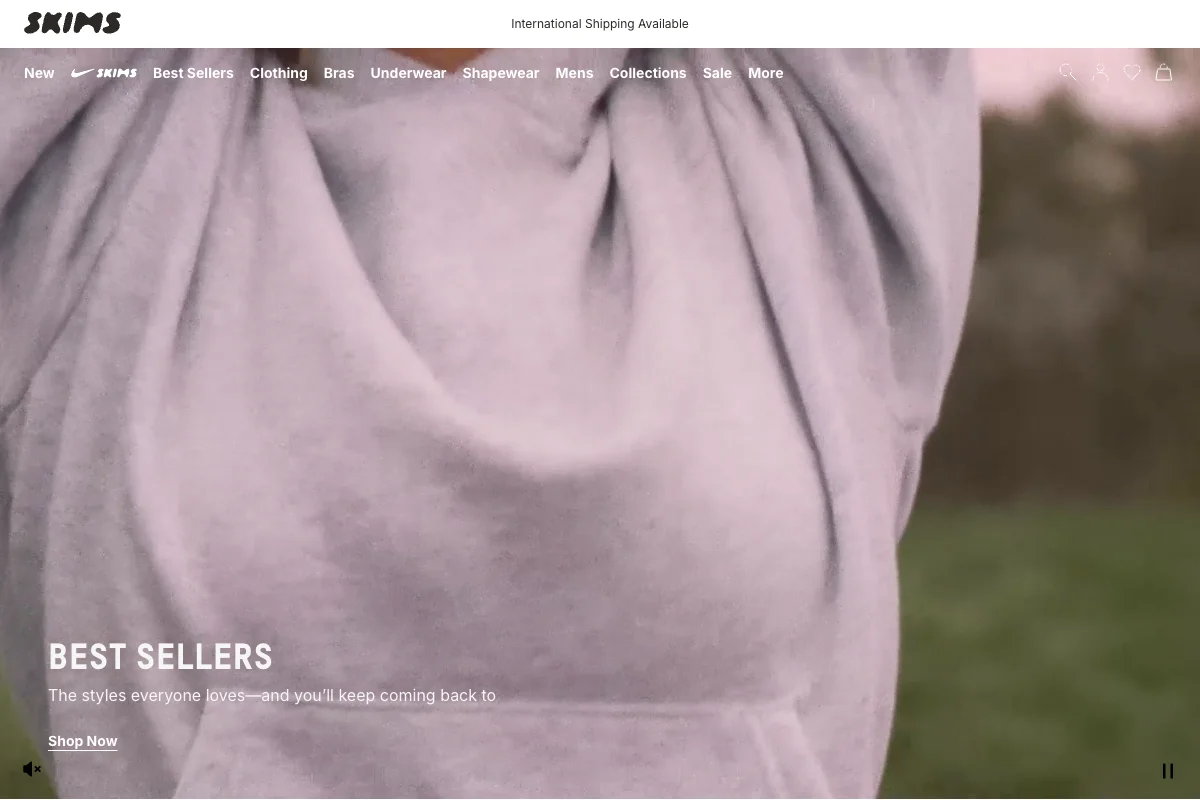
By building on Hydrogen, SKIMS gets a fast, server-rendered storefront that handles surges gracefully while giving the team full control over the visual experience.
For a brand this design-driven, the ability to break free from Shopify theme constraints was as important as the performance gains.
7. TOMS
Platform: Shopify Plus (Hydrogen + Builder.io)
Why they went headless: Migrating off Salesforce Commerce Cloud
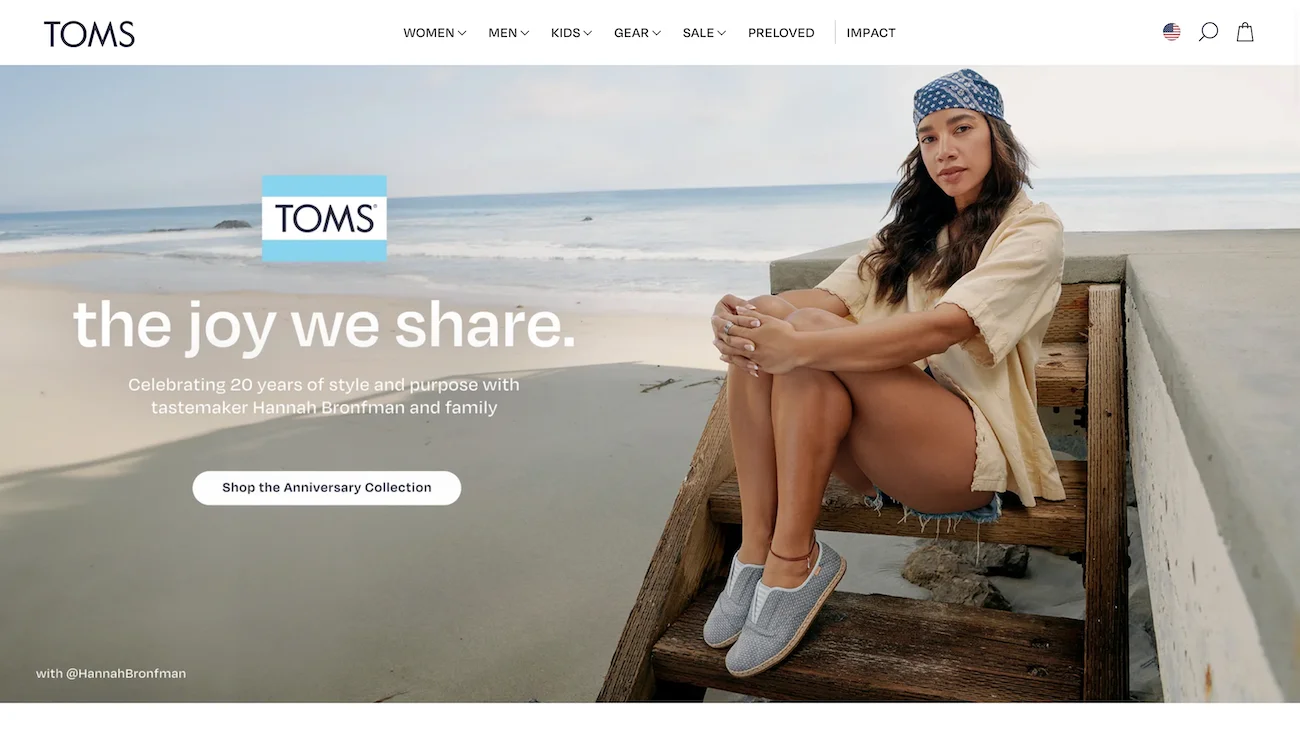
TOMS migrated from Salesforce Commerce Cloud to Shopify Plus with Hydrogen, driven by three goals: lowering total cost of ownership, improving site performance, and giving their marketing team more control over content.
The new stack pairs Hydrogen with Builder.io as a headless visual CMS, giving non-technical teams drag-and-drop content management, A/B testing, and personalization across four international storefronts (US, CA, UK, EU) managed from a single admin. The agency CQL delivered the build with a strict 2MB-per-page performance budget to keep load times fast.
For brands evaluating a move off legacy enterprise platforms like SFCC, TOMS is a useful reference point: the migration delivered lower licensing costs and more operational agility without sacrificing the multi-market complexity the brand requires.
8. Good American
Platform: Shopify Plus (Hydrogen)
Why they went headless: Inclusive sizing UX
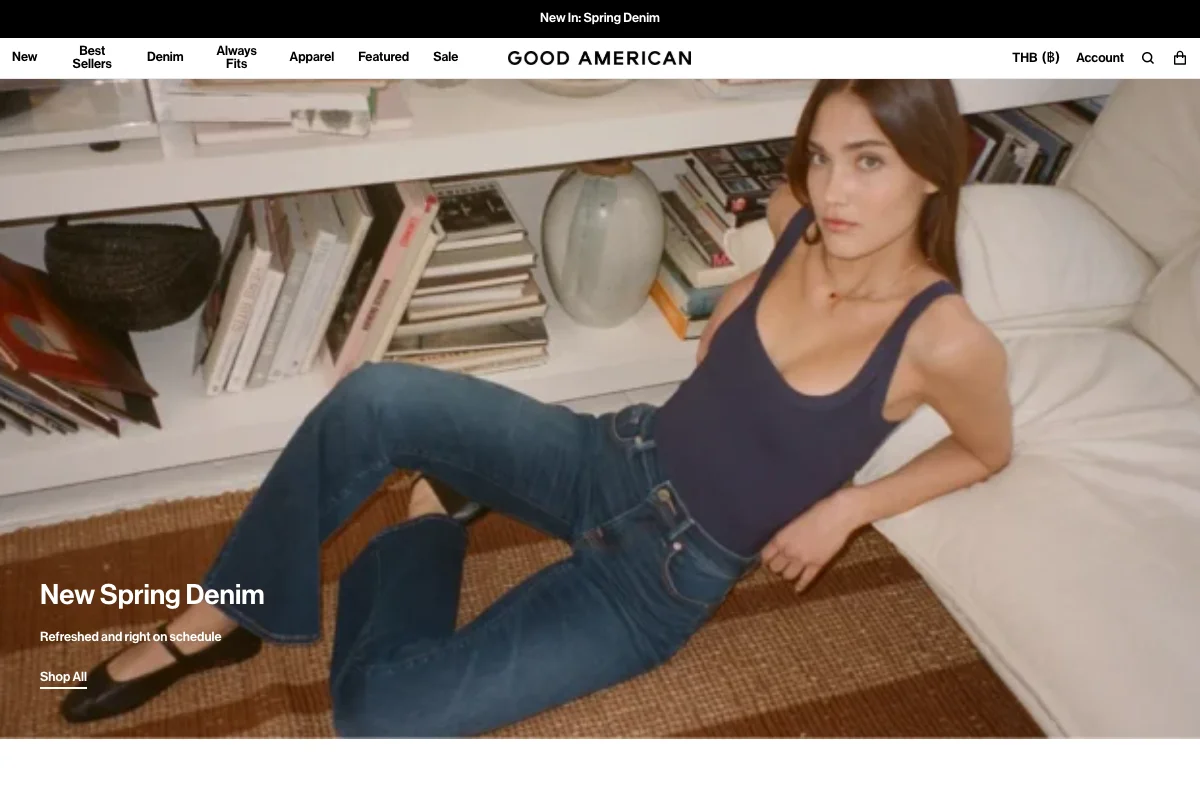
Good American's inclusive sizing model (00-32) creates unique UX challenges. Standard product pages with size dropdowns don't communicate the brand's commitment to inclusive fashion.
The headless frontend lets the team build custom product experiences that center size inclusivity in the browsing and purchasing flow.
Beyond sizing UX, the headless approach gives Good American faster page loads and more control over how products are merchandised, which is critical for a brand competing in the crowded DTC apparel space.
9. Amazon
Platform: Custom microservices architecture
Why they went headless: The original API-first commerce
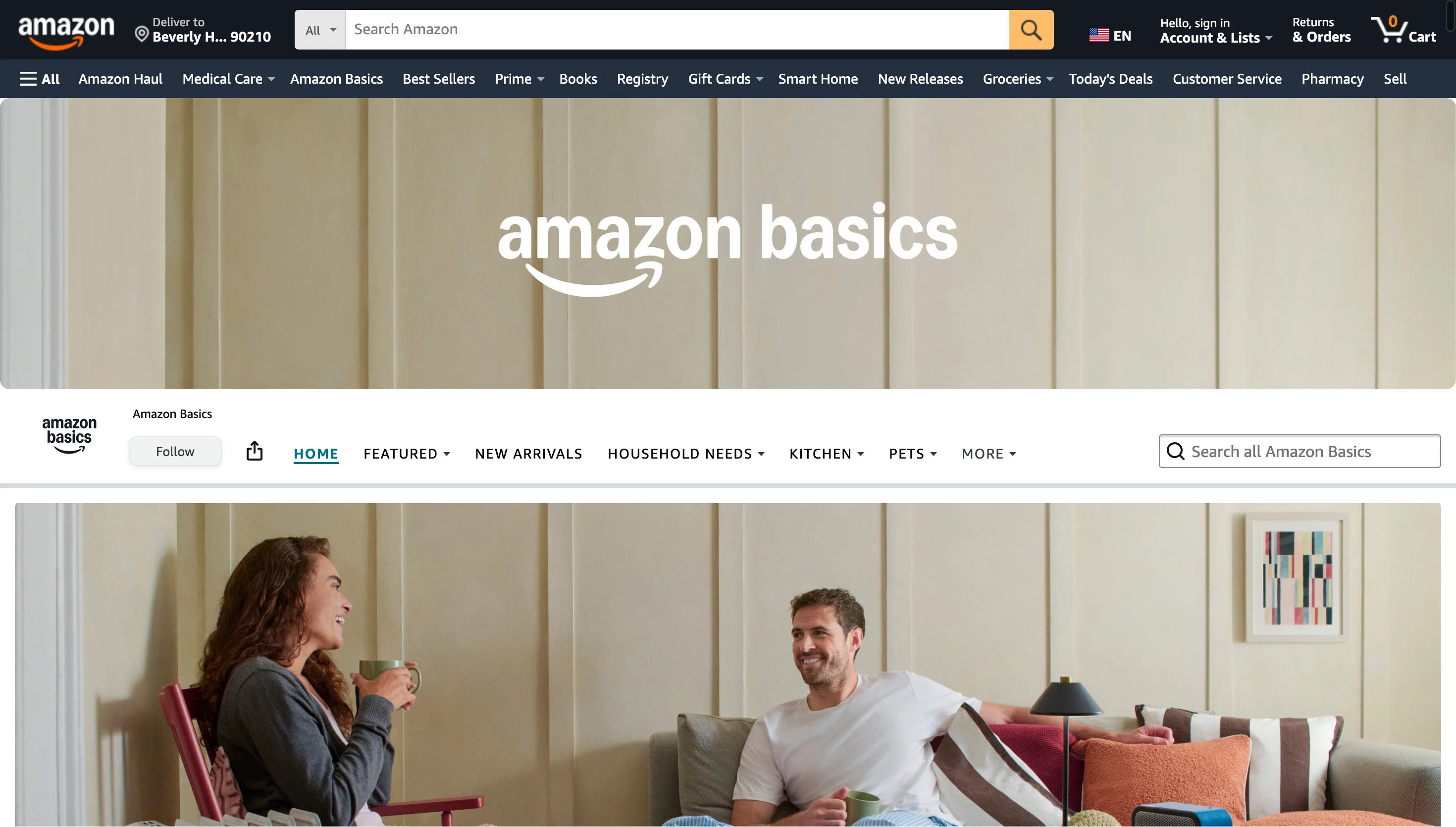
Amazon was headless before "headless" was a term. Their architecture is built entirely on microservices, with every capability (search, recommendations, cart, checkout, fulfillment) exposed as an independent API. The frontend consumes these services to render the shopping experience.
This architecture is what allows Amazon to run massively different experiences (marketplace, Prime, Subscribe & Save, Alexa shopping, Amazon Go) all from the same underlying commerce infrastructure.
It's the most extreme example of headless at scale, and the model that inspired the modern headless commerce movement.
Most ecommerce brands won't need Amazon-level complexity, but the architectural principle is the same: decouple the backend from the frontend so you can build different experiences for different channels.
Learn more: How the Amazon App Uses a Hybrid of Native and Web Technologies to Stand Out
10. Staples Canada
Platform: Shopify Plus + Contentful (headless CMS)
Why they went headless: Legacy platform modernization
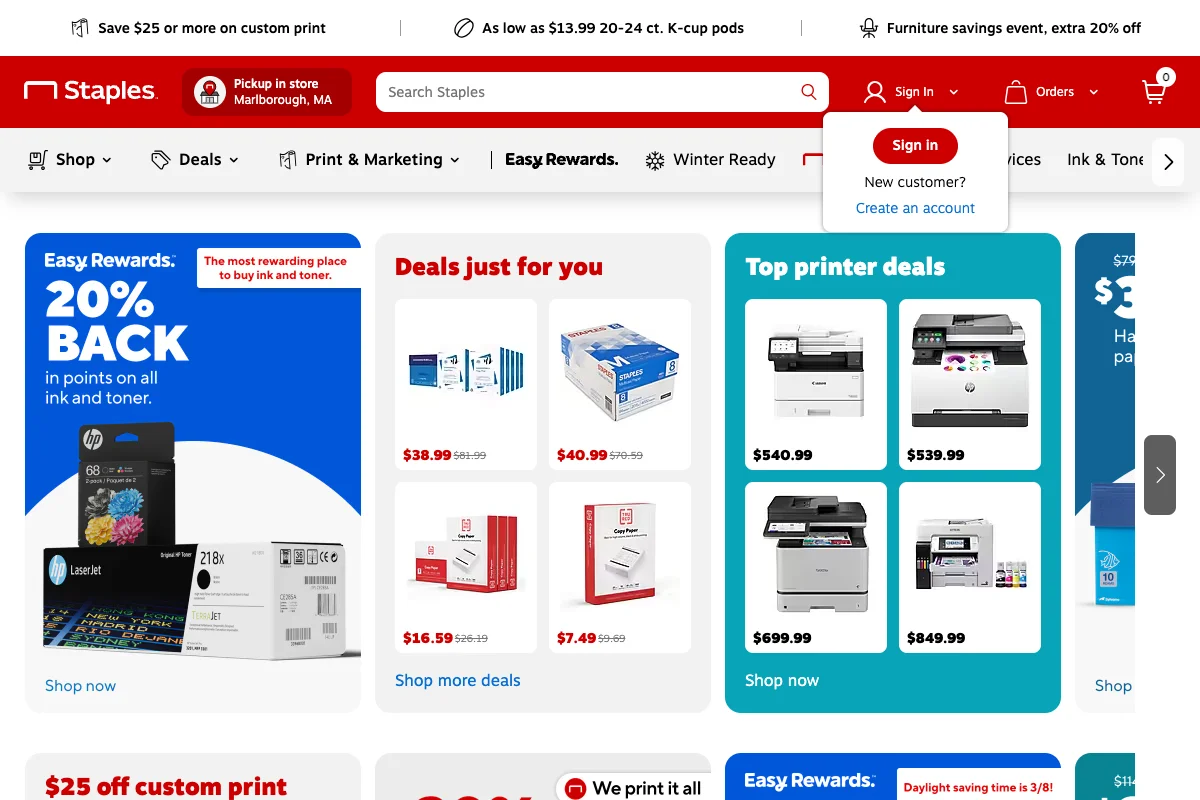
Staples Canada represents a different headless use case: modernizing a legacy ecommerce platform that was too complex to maintain and failed during traffic spikes.
After a 2017 corporate split, the team rebuilt on Shopify Plus with Contentful as a headless CMS, Algolia for search, and Bazaarvoice for reviews, completing the migration in under 12 months for roughly half the cost of a Salesforce or SAP Hybris implementation.
The results were immediate: all-time Black Friday records, 100% uptime during peak traffic, and content publishing times that dropped from 1-2 days to 5 minutes. When COVID hit, the team launched curbside pickup in 72 hours, something the old platform could never have supported.
Patterns Across These Examples: Why Brands Go Headless
A few consistent themes stand out:
Performance is the most common trigger
Brands go headless because their current setup is too slow, especially on mobile and during traffic spikes.
Gymshark, Nike, and SKIMS all cited load time and conversion improvements as primary outcomes.
Creative control for brand-driven companies
Burberry, Allbirds, and Good American didn't go headless for technical reasons alone. They needed frontends that could express their brand in ways that templates couldn't support.
Shopify Hydrogen dominates the mid-market
Five of the ten examples here run on Shopify's headless framework. For brands on Shopify Plus that need more frontend flexibility, Hydrogen has become the default path. See our Shopify headless commerce guide for more on that.
The omnichannel bet
Target's headless architecture exists to serve multiple channels from one backend. Amazon is famous for their mobile app. Other brands on this list - Nike, Allbirds, Gymshark - are everywhere.
For brands of this size - or brands led by Kim Kardashian - the resources are there to build and maintain a separate mobile UI.
But for others - or even for enterprise brands that just don’t see the need in adding the complexity of managing different UIs with different dev teams - mobile apps are still a gap in the omnichannel strategy.
That's a gap MobiLoud helps close by allowing brands to extend their headless web storefront into native iOS and Android apps.
Want to see more about how MobiLoud works, and how it fits into your omnichannel strategy? Click here to dive deeper.
What These Brands Have in Common
Every brand on this list reached a point where the standard approach wasn't enough. The template was too limiting, the page load was too slow, the platform couldn't serve a second channel, or the checkout couldn't be customized.
That's the real test for whether headless makes sense: not whether the architecture is trendy, but whether your current setup is actively holding back the experience you want to deliver.
FAQs

Convert your website into a mobile app