The Omnichannel Mobile App: How to Add an App Channel Without the Complexity

Your mobile app should be the easiest omnichannel channel to keep in sync, not the hardest. When your app is built from your existing website, every update flows to every channel automatically. No double management, no feature drift, no dedicated app team required.
Your mobile app should be the easiest omnichannel channel to keep in sync, not the hardest. When your app is built from your existing website, every update flows to every channel automatically. No double management, no feature drift, no dedicated app team required.
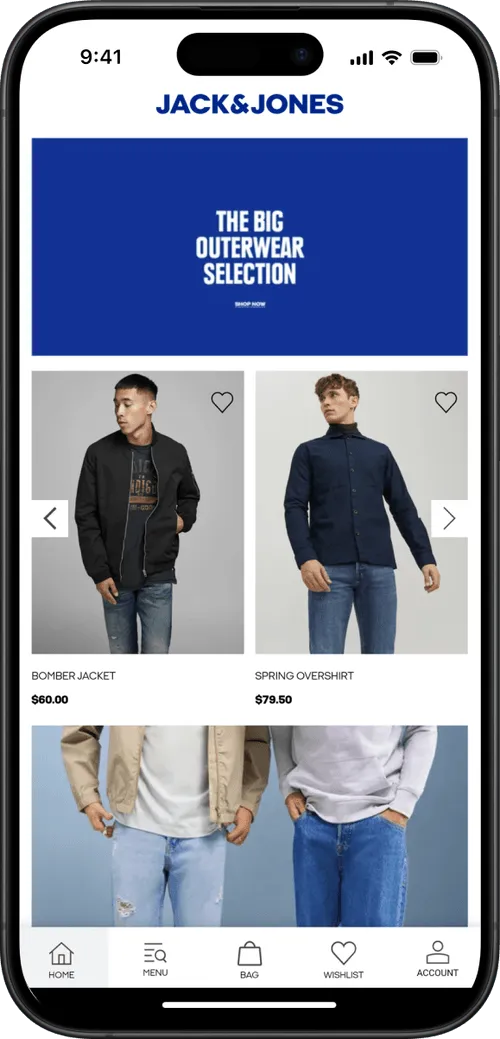
Here's the typical omnichannel approach: unify the data layer, connect the CRM, make sure the email matches the website matches the social ads. And that's the right instinct.
But then someone says "we should have a mobile app," and the whole thing falls apart.
Not because mobile apps are a bad idea. Apps account for 94% of time spent on mobile devices, and drive more conversions, more repeat purchases and higher AOV than mobile websites.
For any brand with consistent revenue, the app channel is the highest-LTV touchpoint you can add.
The problem is how most apps get built. Traditional app builders create a parallel universe: a separate content system, a separate design system, separate integrations, separate updates.
You launch the app and it looks great on day one. Three months later, it's running last season's promo banner while your website has moved on. Your Klaviyo flows trigger in the app differently than on web. Your loyalty program works on the site but glitches in the app.
That's not omnichannel. That's two channels pretending to be one.
And if you build a custom native app, the same thing happens - at 50x the price.
There's a better way to think about launching a mobile app for omnichannel brands.
The Channel That Quietly Falls Out of Sync
You've probably seen this play out, even if you haven't named it.
Brands like yours invest real money into their omnichannel stack. They connect their POS to their ecommerce platform. They build unified customer profiles across email, SMS, and web. They run coordinated campaigns across social, search, and marketplace channels.
Then they launch a mobile app.
Suddenly, they're managing two storefronts. The website gets updated daily by the marketing team. The app gets updated whenever someone remembers to log into the app builder dashboard (or whenever your email to the dev agency gets actioned… if you remembered to send it).
The result is predictable:
- Product pages diverge. The website has updated descriptions, new photography, fresh reviews. The app is stuck with whatever was pulled in at launch.
- Promotions don't match. You run a flash sale on the website, but the app still shows full price because someone forgot to update the app-side banner.
- Checkout behaves differently. The payment options, shipping calculators, or discount code logic works slightly differently in the app, because it's a separate implementation.
- Integrations break. Your reviews widget, size guide tool, or loyalty program works fine on the website but either doesn't exist in the app or uses a different version with different behavior.
None of this is theoretical. It's the default outcome when your app and website run on separate systems. And I literally see this from real mobile apps all the time.
The irony is painful: the mobile app, which should be your most personal and high-converting channel, becomes the one that undermines the consistent experience you've built everywhere else.
Why Traditional App Development Creates This Problem
Whether you build your brand’s app with a drag-and-drop mobile app builder, or you contract a custom development shop, these things all share the same fundamental architecture: they rebuild your storefront from scratch using APIs.
Your ecommerce platform (Shopify, BigCommerce, Salesforce Commerce Cloud, whatever you're running) exposes product data through its API. The app pulls that data and renders it inside a completely new front end.
Different templates, different design logic, different rules for how everything displays.
This creates three major problems.
Every customization needs to be built twice
That custom size guide you spent weeks perfecting on your website? It doesn't exist in the app unless someone rebuilds it there.
The Yotpo reviews integration you painstakingly configured? Same story.
Your custom landing pages for seasonal campaigns? You'll need to recreate them in the app builder every single time.
Your marketing team can't operate independently
On the website, your team updates content, launches promotions, and swaps out banners without touching code.
In the app, those same changes usually require either the app builder's dashboard (which has its own learning curve) or a support ticket to your app vendor (which goes straight to the end of their backlog).
Feature parity is a moving target
Your website evolves constantly. New integrations, A/B tests, checkout optimizations, third-party widgets.
The app starts behind and falls further behind over time because every improvement needs to be ported over separately.
The net effect is that brands either invest heavily in a dedicated app team to keep everything in sync (which defeats the purpose of simplifying your stack) or they accept that the app will always be a stripped-down, slightly stale version of their website.
Neither option is great if you're trying to deliver a consistent experience across channels.
The Fix: Make Your App an Extension of Your Website
There's a fundamentally different way to build a mobile app, and it solves the omnichannel consistency problem by design rather than by effort.
Instead of rebuilding your storefront from scratch using APIs, MobiLoud takes your existing website and delivers it inside a native iOS and Android app.
Your website becomes the app. Same content, same checkout, same integrations, same everything.
The app delivers your full website experience inside a native container, adding native capabilities like push notifications and deep linking on top.
This architecture eliminates the entire category of "keeping the app in sync" problems, while maintaining the same native experience customers expect.
Here’s how life changes (for the better) with this approach.
One update, every channel
Because the app is rendering your website, there's no second system to update.
When your marketing team changes a product description, swaps a homepage banner, launches a new collection, or updates pricing, those changes appear in the app instantly.
Full integration parity
Every third-party tool that works on your website works in the app automatically.
Klaviyo popups, Yotpo reviews, Smile.io loyalty points, Afterpay checkout, custom size guides, live chat widgets. If it runs on your site, it runs in your app. No integration work, no separate configuration.
Your existing team runs the app
The people who manage your website already manage your app.
There’s no app developer on staff, no separate content pipeline, and no app builder dashboard to learn. Your Shopify admin (or whatever CMS you use) is your app's CMS too.
Checkout stays identical
This is the one that matters most for conversions: the checkout flow in your app is the same checkout flow on your website.
Same payment methods, same discount code logic, same shipping calculators, same post-purchase upsells. Zero divergence.
Your customers get a fast, native app experience. Your team gets zero additional operational overhead.
What the App Channel Actually Adds to Your Omnichannel Stack
If the app is essentially delivering your website, you might wonder what the point is. Why not just focus on the mobile web?
The answer is in the native capabilities that a mobile app unlocks on top of your existing experience.
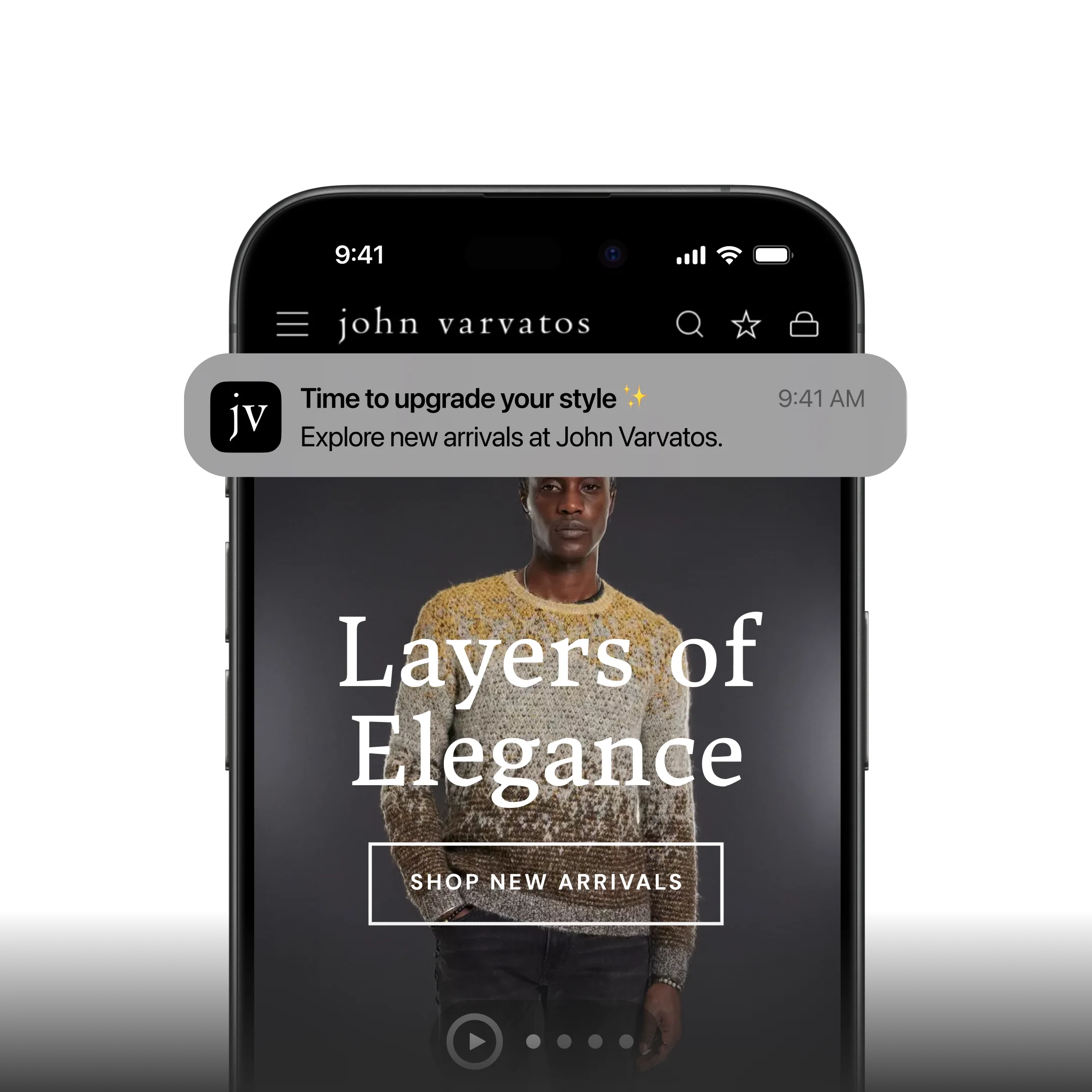
Push notifications
Email open rates have been declining for years. SMS costs money per message and faces increasing regulatory pressure.
Push notifications land directly on your customer's lock screen - with open rates around 20% and they cost nothing to send after the initial setup.
For abandoned cart recovery, flash sale alerts, back-in-stock notifications, and loyalty rewards, push is unmatched.
An owned channel
An app is a channel you own, 100%. You own the conversation, the data, the messaging.
You’re not reliant on Google’s search algorithm, on ad auctions, or your emails landing somewhere other than promotions/spam.
App Store presence
Your brand appears in the App Store and Google Play alongside the biggest retailers in the world. Customers can find you by searching. They see ratings and reviews.
It signals legitimacy in a way that a mobile website bookmark never will.
Home screen real estate
Your app icon sits on the customer's phone, competing for attention with maybe 30-40 other apps they use regularly.
That's fundamentally different from competing with every other website in a browser tab.
It keeps your brand top of mind by default, and leads to far more engagement from your best customers.
.webp)
Because the app is built on your website, you get all of this without sacrificing anything.
Your full product catalog, your complete content library, your entire checkout flow, every integration you've built. It all carries over.
How to Build a Low-Maintenance, Omnichannel Mobile App
Adding an app channel through the website-to-app approach is simpler than most brands expect.
With MobiLoud, it’s just three steps from now to launch.
- Book a strategy call. Share your website URL and talk through your goals. The MobiLoud team will assess fit and walk you through exactly how the app will look and perform for your specific store.
- Get your custom app preview. The team builds a working preview of your native app so you can see it in action before committing. You'll see your actual website, your actual products, your actual checkout, all running inside a native app.
- Launch in 30 days. MobiLoud handles the build, App Store submissions, and launch. Your app goes live on both the App Store and Google Play while you focus on running your business.
From there, your app stays in sync with your website automatically. No ongoing maintenance. No developer needed for content changes.
You get the benefits of a native mobile channel, with the app infrastructure done for you, and no duplicate work.
It’s the best way to launch an app that adds to your revenue, not to your to-do list.
Adding a Channel Shouldn't Mean Adding Complexity
The whole point of an omnichannel strategy is to make things simpler for your customers.
They shouldn't notice the transitions between your channels. They shouldn't get a different experience depending on which touchpoint they happen to be using.
But too often, adding a mobile app does the opposite. It adds complexity for your team and inconsistency for your customers.
It doesn't have to be that way. When your app is an extension of your existing website rather than a separate rebuild, the omnichannel promise actually holds.
One experience, every channel, no extra operational burden.
If you're running a brand that's ready for an app channel but doesn't want to manage another platform, book a free strategy call with MobiLoud.
There’s no commitment required. We’ll just walk you through the process, share some examples of what’s possible, and give you a clear picture of what the app channel can do for your business.
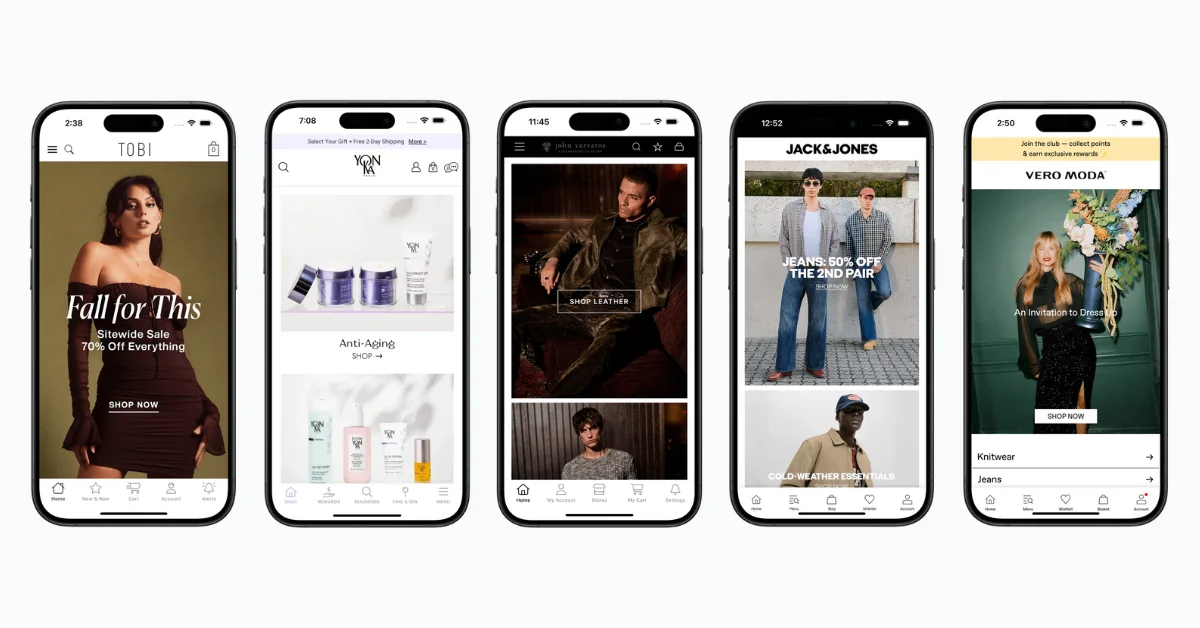
We've built over 2,000 apps for brands in exactly this situation. From first call to App Store, you could be live in about 30 days.
Ready to explore it? Get in touch and get a free consultation now
FAQs

Convert your website into a mobile app