Most of your customers are shopping on their phones. A mobile app is the best way to build a direct connection with these customers, and an owned channel that aligns with how people shop today.
But building an ecommerce app, when you’re looking at it from square one, can feel daunting. Like looking at the summit of Mt Everest from base camp.
What should our app look like? What features do we need? How can we make our app experience as good as it can be?
Don’t panic - we’re here to help.
We’ve been building mobile apps for online brands for over 10 years, for companies ranging from lean DTC brands to Fortune 500 companies. So we know what your ecommerce app needs, and what it doesn’t.
Here's a no-nonsense breakdown. All the ecommerce mobile app features you need to build to ship the perfect app for your customers.
Core Storefront Features
First up: the core features your app needs to let people browse and buy your products (that’s why the app exists, after all).
Product Catalog and Search
Clear product listings, organized categories and collections, well-built product pages with quality images and variants, and search that works.
This is the core of the app. Your catalog has to load fast and be easy to move through.
Search is also crucially important on a small screen. Navigating back and forth between pages is more of a hassle, so fast and accurate search with good filtering makes all the difference here.
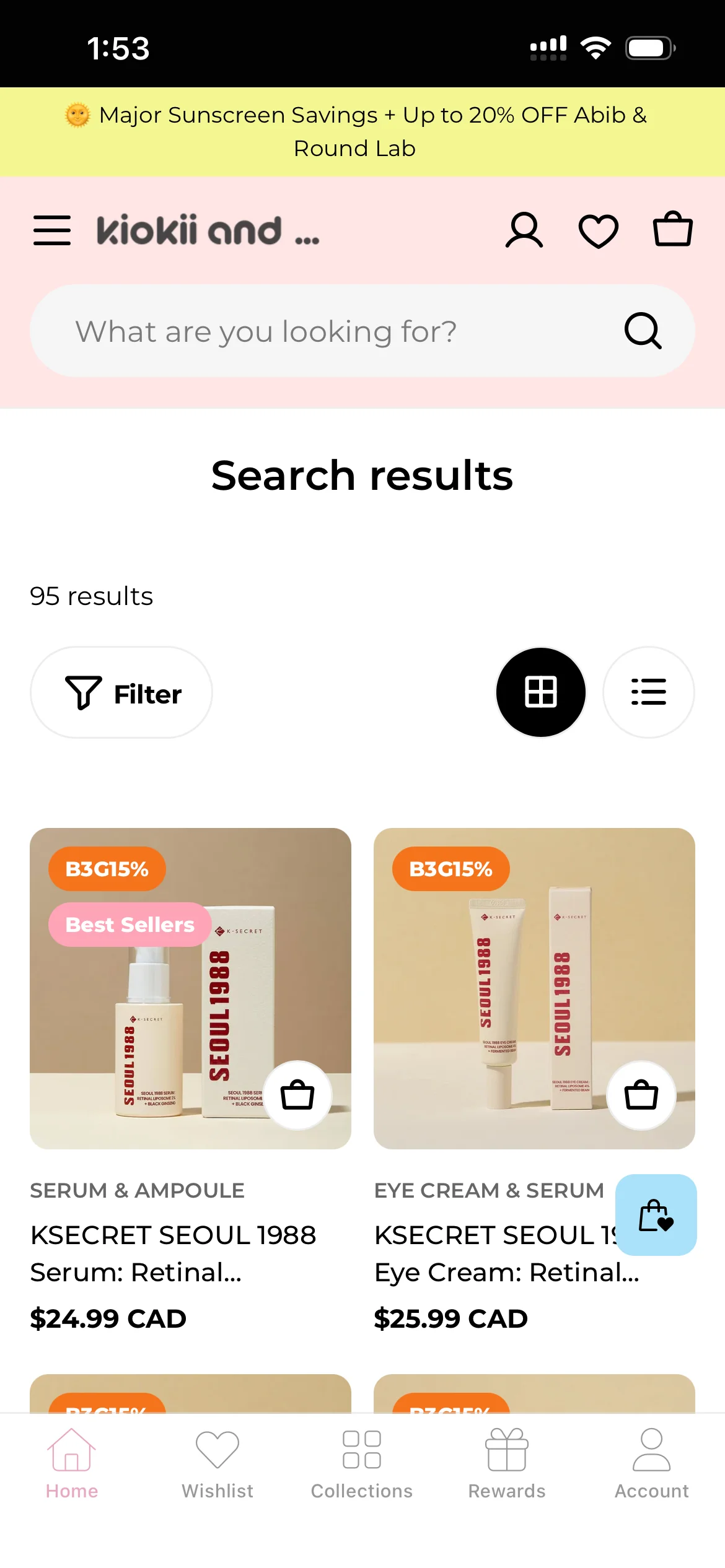
What to avoid: search experiences that don’t live inside the app. Some mobile apps navigate out to the browser when the user makes a search, which makes for a clunky user experience (and often breaks). Make sure it’s all contained within the app. Learn more here: How to Keep Your Site Search Working Inside Your Mobile App
Cart and Checkout
Checkout is where the sale happens. Obviously, you need to let customers add items to their cart and check out within the app.
This is not always the case, though. Poorly built apps may link out to the brand’s website for checkout; a disconnected, clunky experience (like the search issue mentioned above), and adding extra friction that an app is supposed to reduce.
Payment Options
Shoppers expect quick, one-tap payment methods. Apple Pay, Google Pay, Shop Pay. Potentially Buy Now, Pay Later options like Klarna, Afterpay, or Affirm.
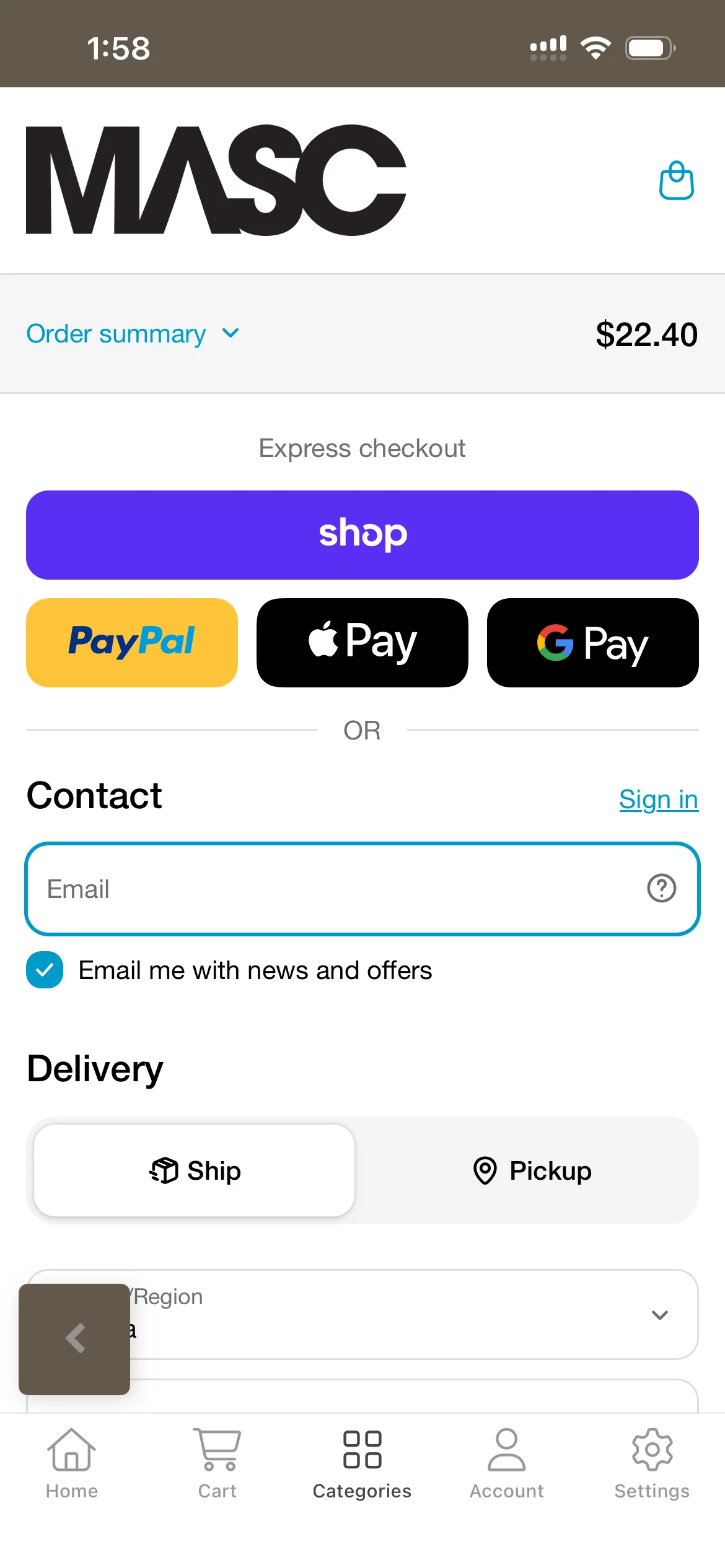
Making it easier to pay is the quickest, easiest CRO win. No one wants to have to find and type in their credit card every time they make a purchase, especially not on their phone.
Accounts and Order Tracking
Customers expect to log in, see their past orders, reorder in a couple of taps, and track their orders through the app.
This is another one of the big convenience wins of an app. It’s a surface that makes it easier for your best customers to come back, buy again, or manage their orders, all without having to dig through emails, find your URL and log in every time.
Reviews, Wishlists and Other PDP Widgets
Reviews give shoppers the confidence to buy. Wishlists let them save something for later instead of forgetting about it.
An ecommerce store without these features today would look bare, incomplete.
The same goes for other features you have on your storefront: subscriptions, product bundles, BOPIS (buy online, pick-up in store). If these are a key part of your web PDPs, they should be in your app as well.
Cross-Channel Sync
A crucial mobile app feature most people don’t think about.
You need all your store data to sync, in real time, across your different channels (ie website and app).
Same accounts. Same base pricing, same inventory, order details.
When someone buys the last unit of a certain SKU on your app, it shouldn’t show as available on your site, and vice versa. If someone places an order on your website, they should be able to see its progress when they open your app.
This is probably the most important feature for your app to have. Otherwise, you’re creating a whole new store to run.
Native App Features
This is the layer that justifies building an app, and that differentiates your app from your mobile website. They’re what you can’t get with a mobile website alone.
Push Notifications
Push notifications are one of the biggest reasons to build an app.
They're a direct, owned channel straight to your customer's phone, with no inbox provider, no carrier, and no algorithm deciding whether your message gets seen.
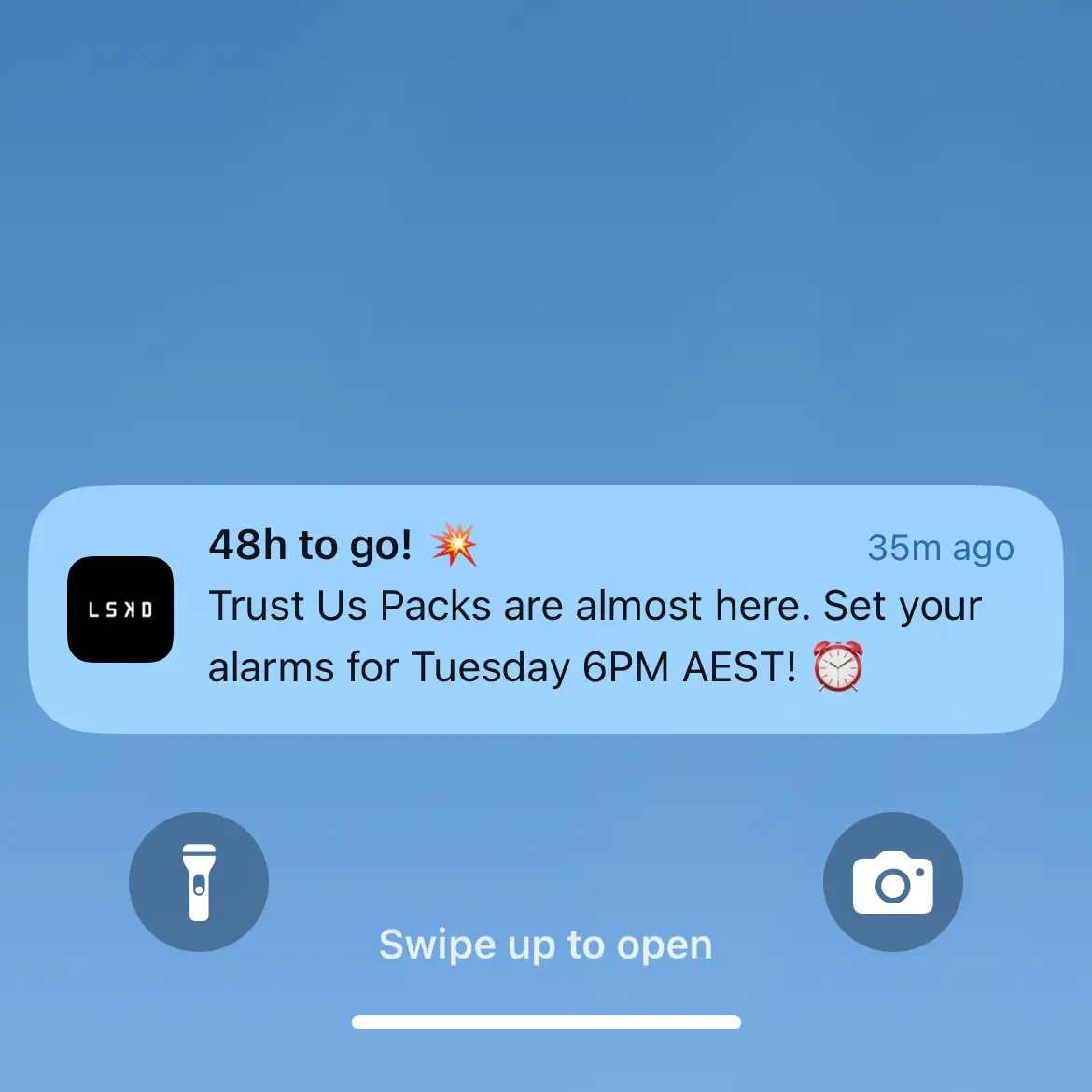
That's what makes them powerful. A push notification lands on the lock screen, where they’re almost guaranteed to be seen. They cost nothing to send, and are a powerful tool for many different use cases, from promotions to order updates to abandoned cart reminders.
Home Screen Icon
Your app’s icon isn’t exactly a feature you’re going to choose whether or not to build, but it’s one of the key features of your app nonetheless.
Having an icon on your customer’s home screen changes the game in a real way. It’s an always-on reminder that your brand exists, visible every time the customer opens their phone, and a stupidly easy way for your customers to come back and casually browse your store.
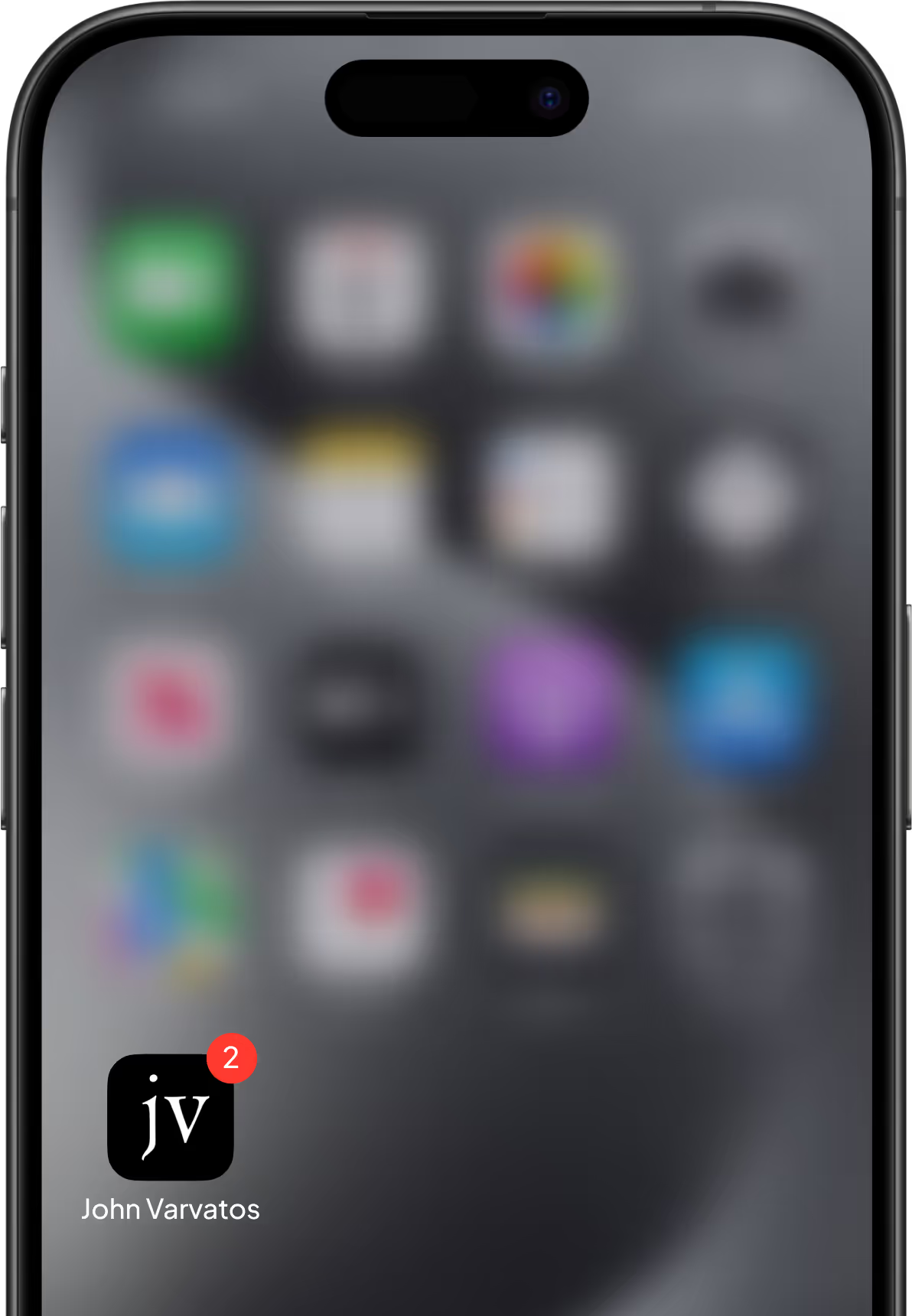
That’s half the value of having an app in the first place; just making it easier for your customers to open your store.
Native Navigation & UI
Customers expect some small native UI touches from a mobile app, which make apps feel smoother and easier to browse on.
Tab bars, swipe gestures, loading indicators. Splash screens and welcome flows that load when the customer opens the app.
All these make your app feel polished, professional, and like a real app is supposed to.
App Store Listings
Like a home screen icon, getting your brand in the app stores is a big advantage of launching an app.
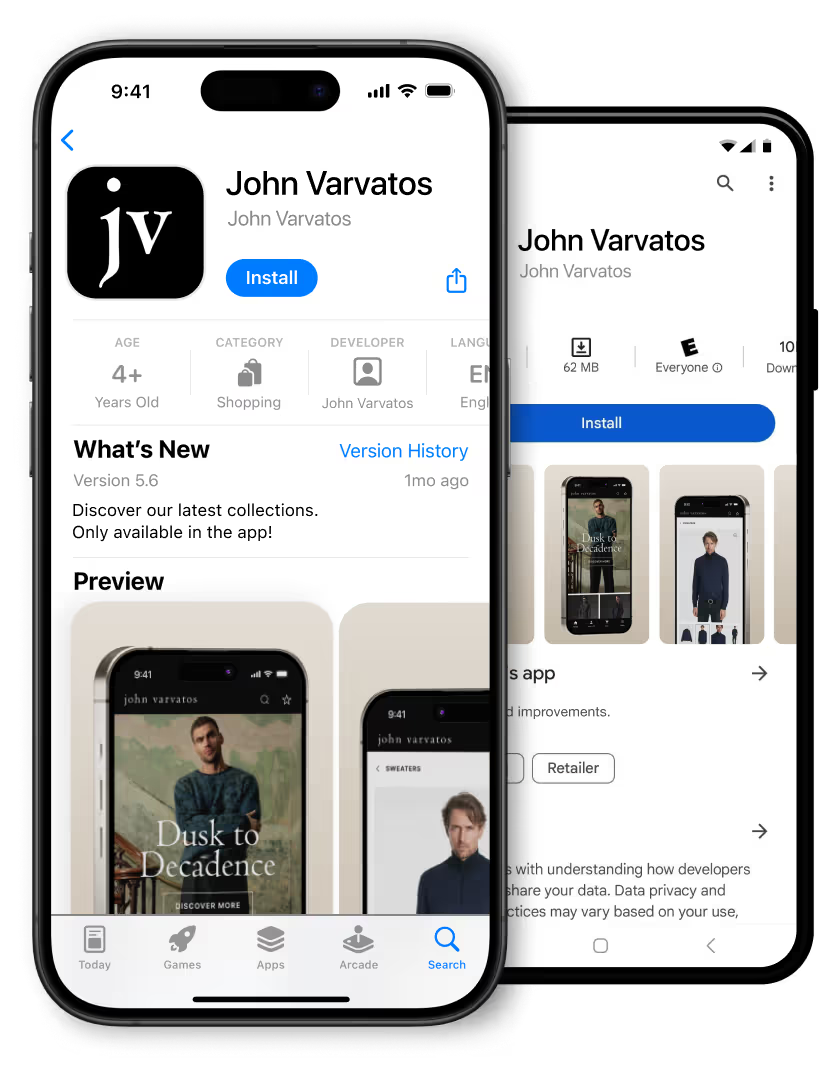
On one hand, it gives your brand authority, and legitimacy. Those little “Download on the App Store” brands are some of the best social proof you can have.
On another, it extends your brand’s reach. It’s another place you can be found. Another place to be seen. Today, showing up in as many different places as possible is a massive advantage for organic and AI visibility. Your iOS App Store and Google Play Store listings feed this.
Deep Linking
Deep linking means a link or a notification opens your app directly, if the user has it installed.
It’s a neat feature of apps. It means if someone’s searching on Google and your brand comes up, or if you send them a push notification, or a link in an email, they won’t get sent to your mobile website or to a generic page on your app. They’ll land right where they have the best chance of converting.
Loyalty & Retention Features
Apps are a more convenient, higher converting shopping experience. But the most value comes from their impact on loyalty and retention.
You want to make your app a hub for your VIPs. Something that rewards your best customers, and nurtures people to become long-standing, loyal customers who buy significantly more over their lifetimes.
App-Exclusive Offers
Use your app to give exclusive offers and perks to people who download it.
These can be app-exclusive promos, early access to promotions and new product drops, and other perks that people only get through the app.
App-exclusives do two things. They reward people for downloading the app, making them feel special, and building a closer connection between them and your brand. And they give people a clear reason to keep the app installed - a hook that makes your app a real, powerful retention asset.
Personalized Recommendations
You can make your app a personalized surface for your customers.
Recently viewed items, recommended-for-you sections, and merchandising based on what a shopper has browsed or bought all help surface the right product at the right time, and make your app feel like a store built specially for each individual customer.
Loyalty and Rewards Programs
Your app should also be a hub for loyalty and rewards.
Make sure your loyalty program is in your app - more than that, make sure it’s a core part of your app.
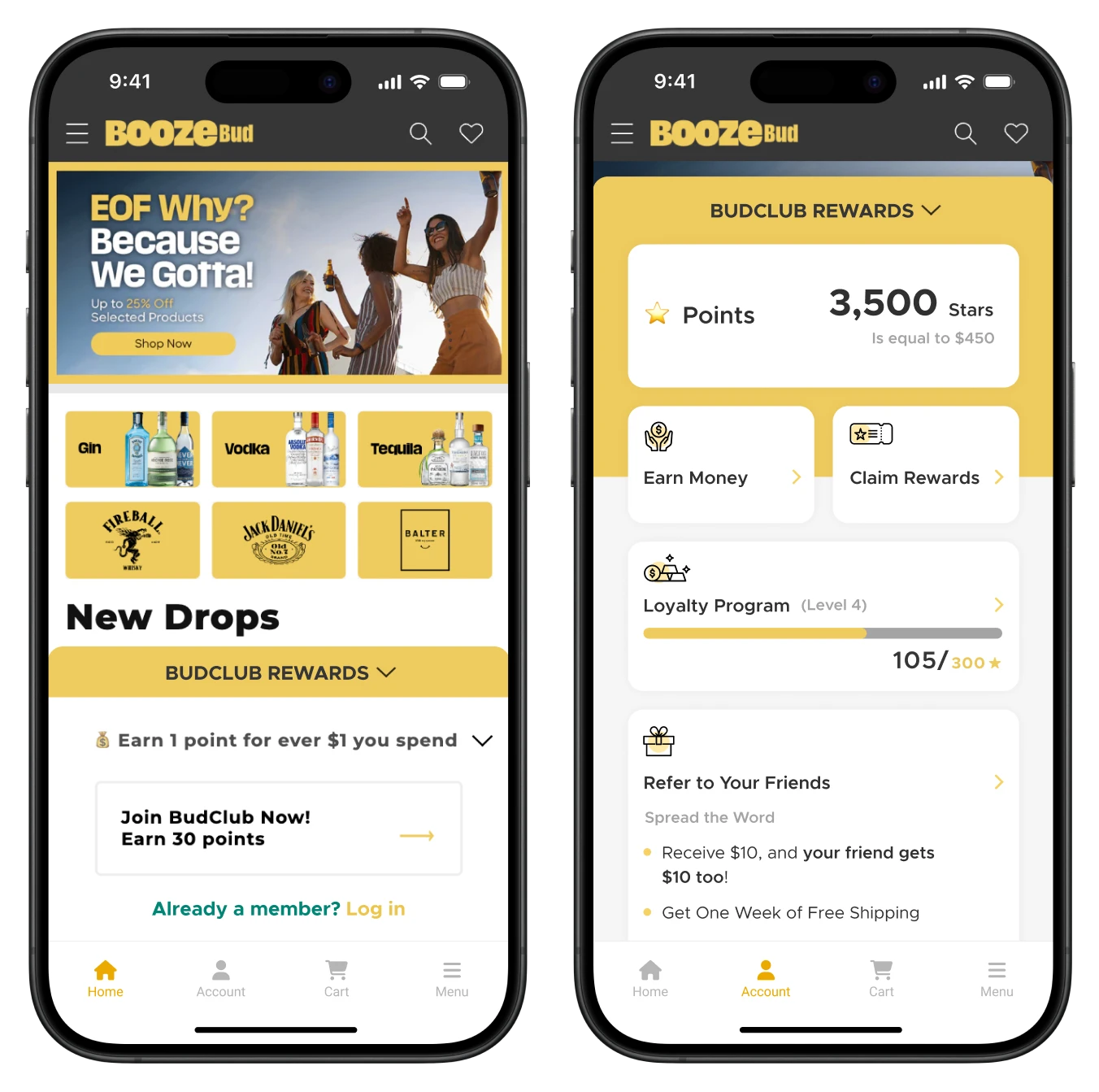
Higher points, better rewards for app users. A dedicated tab on the bottom menu making it easy for app users to check their balance, redeem their rewards.
The Venn diagram of people who download your app and the most engaged members of your loyalty program is nearly a perfect circle. Keep this in mind when building your app.
Automated Push Flows
A step further from simply building push notifications into your app: build automated flows that engage customers on autopilot.
- Abandoned cart reminders
- Back in stock alerts
- Wishlist price drop notifications
- Shipping/order updates
- Re-engagement nudges
This is where push gets super powerful. Campaigns that you barely have to touch, which drive revenue and work behind the scenes to bring customers back to your store regularly, and make shopping in your app a habit.
Category-Specific Features
Beyond the essentials and the native layer, there are some features that aren’t essential for every brand, but may be necessary in some case, and for some categories more than others.
Augmented reality is a good example. AR try-on and product visualization can be useful if you sell furniture, eyewear, cosmetics, or anything where "how will this look in my space or on me" is the deciding question.
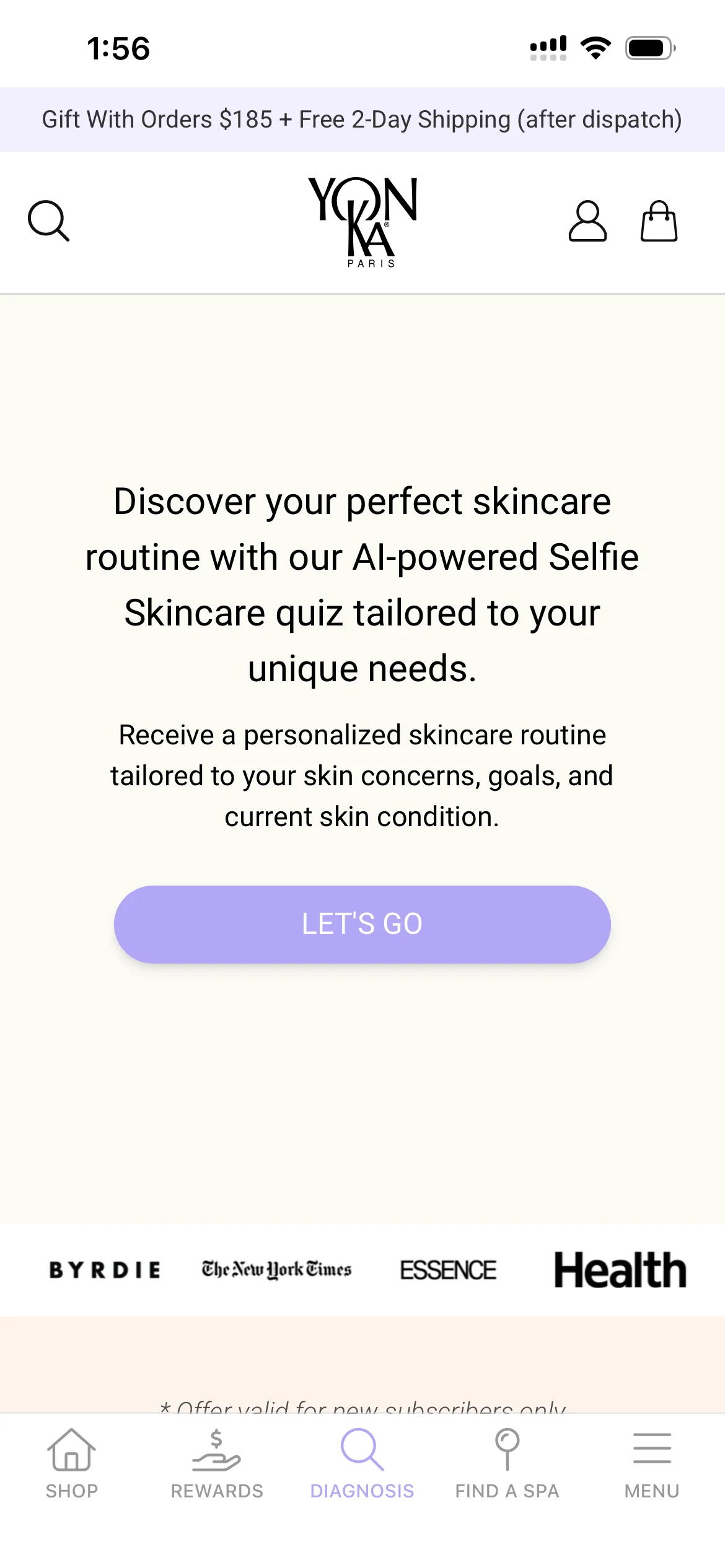
Some brands have custom product configurators, bundle builders, AI-powered styling guides and quizzes.
For some, live shopping is a key channel, and a real reason to launch an app. For others, live shopping is not something you think about or need.
The core features we’ve listed above are necessities for just about every ecommerce brand’s mobile app. The rest are brand-dependent. You’ll know whether they’re something that your brand really cares about, or something you can ignore.
Most Ecommerce Mobile App Features Are Already On Your Site
Here’s the key takeaway you should get from this article.
Most of what your app should do, your website already does.
Mobile-friendly product pages, search, checkout, Apple Pay and Shop Pay, reviews, wishlists and your loyalty program.
All of this already exists, already optimized for mobile visitors.
Today, with Shopify, other major ecommerce platforms, and especially with custom frontend frameworks, you can build a beautiful, fast, responsive UI that looks and feels just like you’d expect from an app.
Launching Your App Should Be About Extending, Not Rebuilding Your Store
Most ecommerce mobile app builders and custom builds do the same thing: they rebuild your website’s features in a native app.
Everything that already works, built again from the ground up.
Whether you’re using a no-code app builder, or contracting a custom-coded app, you’re rebuilding a lot of what doesn’t need to be rebuilt.
That means redundant work; creating a new version of your product pages that already convert. And it also means much more work on an ongoing basis, as you’ve given yourself two separate storefronts to manage.
Think about it this way. Perhaps 80% of your mobile app features are already built. Your goal should be to extend those features into a native surface, adding the native app features that your site doesn’t have on top of your existing site - not rebuilding a new channel, separate from your app.
How MobiLoud is Different
MobiLoud is a different way to build your mobile app.
MobiLoud’s approach doesn’t try to rebuild all the features on your website. It builds you an app on top of your existing site, using what you’ve already got as the foundation of your app.
This means:
- Faster time to market
- Full consistency between your app and site experience
- Both channels fully synced on the backend
- Less ongoing work to manage your app
You get all the native features we listed above; push notifications, native UI, app-exclusive experiences, and your brand on the home screen and in the app stores.
But you get all this without rebuilding the parts that already work.
Final Thoughts
A strong ecommerce app needs three things:
- The essential storefront features customers need to browse and buy
- Native additions to make it feel and function like a real app
- Loyalty and retention features that make your app a hub for VIPs
What most brands get wrong is thinking all this needs to be built from the ground up.
If you’re looking to launch an app for your brand, look first at what you’ve already got.
If your site isn’t mobile-friendly; if your product pages are clunky on mobile, or your checkout is difficult for mobile users, fix this first.
Then, once you’re sure you’ve done everything you can for your mobile site, look into a solution like MobiLoud to extend your already-great web experience into a powerful native mobile app.