How to Increase Customer Retention Through Mobile Apps

Mobile apps boost retention by keeping your brand visible on the home screen, bringing customers back through free push notifications, and reducing the friction of repeat purchases. App users return 2-5x more often and spend 10-50% more per order. MobiLoud makes it easy to launch - converting your existing site into a full-featured mobile app.
Mobile apps boost retention by keeping your brand visible on the home screen, bringing customers back through free push notifications, and reducing the friction of repeat purchases. App users return 2-5x more often and spend 10-50% more per order. MobiLoud makes it easy to launch - converting your existing site into a full-featured mobile app.
Getting a customer to buy once is hard. Getting them to buy again is even harder.
For most ecommerce brands, retention is the biggest lever they're not pulling. You spend money acquiring customers, they make one purchase, and then they disappear. Maybe they come back in six months. Maybe they don't.
The math is brutal: acquiring a new customer costs 5-7x more than retaining an existing one.
And with customer acquisition costs up 60% over the past few years, brands that can't retain customers are burning money.
Mobile apps are one of the most effective tools for solving this problem. They address the core reasons your customers aren’t coming back, and deliver a proven lift in one of the most important metrics for your business.
Check out more data on how mobile apps move the needle for ecommerce brands in our latest Ecommerce Mobile App Benchmark Report.
Why Customers Don't Return
Before we talk about solutions, it helps to understand the problem.
Customers don't come back for a few predictable reasons:
They forget about you
They bought something, it was fine, but you're not top of mind when they need something again. Someone else's ad reaches them first.
It's too much friction to return
They have to find your site, remember their login, maybe re-enter payment info. Every step is a chance to abandon.
You can't reach them
Email open rates are around 20%. Social algorithms decide who sees your posts. You're competing with every other brand for attention.
They don't feel connected to your brand
There's no relationship. You're just another online store.
When the customer wants to make another purchase, they only come back to you if you’re able to win the bidding war again.
How Mobile Apps Drive Retention
A mobile app addresses all four of these problems.
1. You're on Their Home Screen
This is the simplest advantage, and it's underrated.
When someone downloads your app, your brand is now sitting on their phone. Every time they unlock it, there you are. You're not competing with 47 browser tabs or buried in a bookmark folder.
Home screen presence keeps you top of mind without spending a dollar on ads. When that customer needs something you sell, you're one tap away.
The numbers reflect this: app users return 2-5x more often than mobile web visitors. It's not because the app is magic. It's because you're right there, easy to access, constantly visible.
.webp)
2. Push Notifications Bring Customers Back for Free
This is the retention superpower.
With email, you're lucky to get 20% of people to open it. And that's if it even lands in the primary inbox.
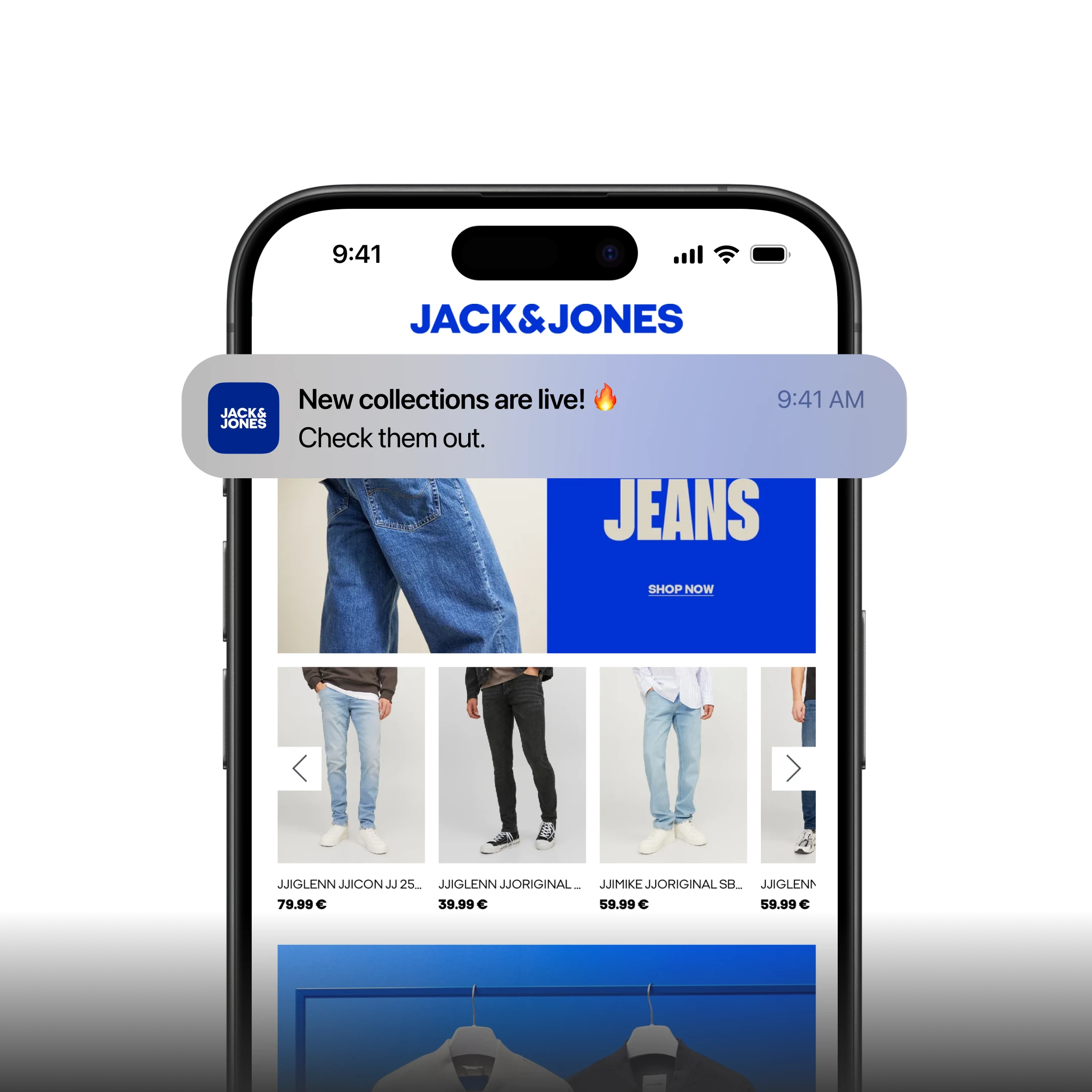
Push notifications are different. They pop up on the phone's lock screen. Open rates are 30-50%, sometimes higher. Nearly 100% visibility.
And here's the key: there's no cost to send them.
No ad spend. No cost-per-click. You're reaching your best customers directly, whenever you want.
A few ways brands use push notifications for retention:
- Restock reminders. "Running low on your last order? Reorder with one tap."
- Back in stock alerts. "That item you wanted is available again."
- Personalized recommendations. "Based on your last purchase, you might like this."
- Sale announcements. Flash sale notifications can drive immediate traffic.
- Loyalty updates. "You're 50 points away from your next reward."
Each of these is a touchpoint that brings someone back who otherwise wouldn't have thought about you that day.
The conversion rates are strong, too. Push notifications typically see 6%+ conversion rates. Compare that to the 1-2% you might see from email or ads.
3. Frictionless Return Visits
Every piece of friction between a customer and a purchase is a chance for them to drop off.
On mobile web, returning to buy something means:
- Finding the site (or remembering the URL)
- Waiting for the page to load
- Logging in (or resetting a forgotten password)
- Navigating to the product
- Entering payment info (or finding the saved card)
In an app, it's:
- Tap the icon
- Browse (already logged in, payment info saved)
- One-tap checkout
This isn't just convenience. It's the difference between someone completing a repeat purchase and someone getting distracted halfway through.
Apps reduce the cognitive load of buying from you again. That matters more than most brands realize.
4. Longer, More Engaged Sessions
When someone visits your site on mobile web, you're competing with everything else on their phone. Notifications popping up. Other tabs open. One swipe away from Instagram.
In an app, there's less distraction. It's just your store.
The result: app users spend 3-7x longer per session than mobile web visitors. They view 4x more products. More browsing means more products discovered, more items added to cart, and bigger orders.
Session length directly correlates with both conversion and retention. The more time someone spends engaging with your brand, the more likely they are to come back.
5. Loyalty Programs Actually Work
If you have a loyalty program, you've probably noticed the same thing most brands notice: participation is lower than you'd like.
People sign up, earn some points, and then forget about them. Email reminders get buried. The program becomes an afterthought.
An app gives your loyalty program a home.
Points balance is visible every time they open the app. Progress toward the next reward is clear. Redemption is easy.
You can also use the app to drive deeper engagement:
- Double points for in-app purchases
- App-exclusive rewards
- Push notifications when they're close to a reward tier
Loyalty programs and apps are built for the same goal: turning one-time buyers into repeat customers. Together, they're more effective than either one alone.
.webp)
6. A Direct Relationship with Your Best Customers
Here's something that gets overlooked: the people who download your app are already your best customers.
Someone doesn't download an app from a brand they're lukewarm about. They download it because they like you, they plan to buy from you again, and they want easier access.
An app gives you a direct line to these high-value customers. No algorithms deciding who sees your content. No ad platforms taking a cut. Just you and your most engaged buyers.
That relationship compounds.
The more they use the app, the more loyal they become. The more loyal they become, the higher their lifetime value.
The Retention Math
Let's make this concrete.
Say you have 100,000 customers. Your current repeat purchase rate is 20%. That's 20,000 customers buying again.
Now imagine you launch an app. 15% of your customer base downloads it (15,000 people). These app users have a repeat purchase rate of 50% - consistent with what brands typically see.
That's 7500 repeat purchases from app users alone.
If your average order value is $75, that's $562,500 in additional revenue from repeat purchases - customers who might not have come back otherwise.
And that's before factoring in the higher AOV that app users typically show (10-50% higher) or the fact that app users make purchases 2-5x more frequently.
The point isn't the specific numbers. It's that retention improvements compound.
A mobile app doesn't just shift purchases from web to app. It creates net-new revenue from customers who would have otherwise churned.
What About the Cost?
The traditional objection to mobile apps has been cost and complexity. Custom app development can run six figures and take 6-12 months.
But that's not the only option anymore.
If you already have a mobile-optimized website (and you probably do - that's where most of your traffic comes from), you don't need to rebuild everything from scratch.
Your website already handles:
- Product pages
- Checkout
- Account management
- Navigation
- All your integrations (reviews, loyalty, subscriptions, etc.)
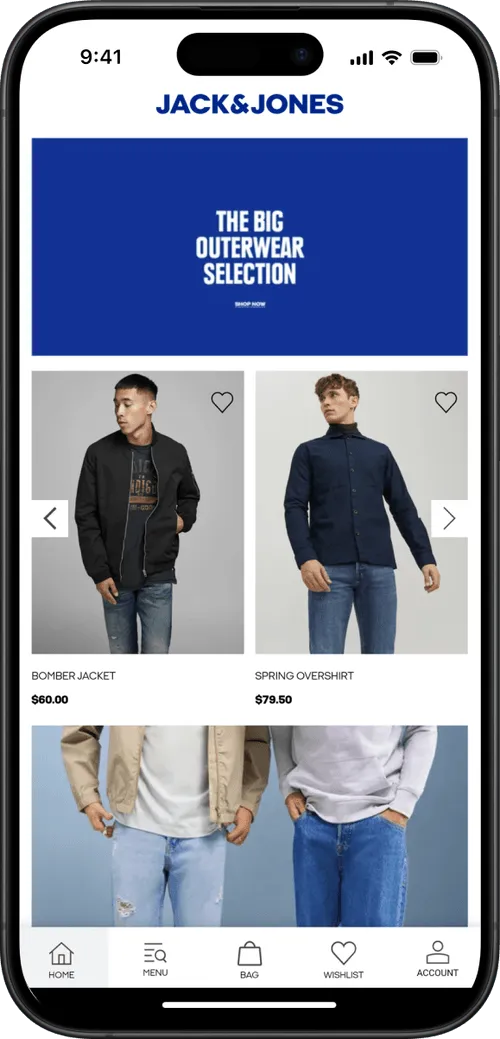
MobiLoud converts your existing website into a native app. Same design, same checkout, same features. Fully synced - when you update your site, your app updates automatically.
You get the retention benefits of an app (push notifications, home screen presence, one-tap access) without the cost and complexity of building something from scratch.
You could add six-figures plus in new revenue, for around $1-2K per month. That's about as big of a no-brainer as there is.
Is an App Right for Your Brand?
Mobile apps aren't for every brand. If you're just starting out and don't have repeat customers yet, an app probably isn't the priority.
But if you're an established ecommerce brand with a loyal customer base, and you're struggling to keep those customers coming back, an app is worth serious consideration.
The brands seeing the best results typically share a few characteristics:
- Strong mobile traffic. If 60%+ of your traffic is mobile, your customers are already comfortable buying on their phones.
- Repeat purchase potential. Consumables, subscriptions, fashion, pet supplies; categories where customers buy regularly.
- An engaged audience. People who follow you on social, open your emails, buy multiple times.
If that sounds like your brand, an app can turn occasional buyers into loyal customers, and loyal customers into your most profitable revenue stream.
Getting Started
If you're curious whether a mobile app makes sense for your brand, here's how to think about it:
- Look at your repeat purchase rate. If it's lower than you'd like, an app can help.
- Check your mobile traffic. If it's the majority of your traffic, your customers are ready for an app.
- Consider your LTV. The higher your potential customer lifetime value, the more an app investment pays off.
Most growing brands today should have their own mobile app. And MobiLoud is the best way to do it.
We’ll give you a free preview so you can see exactly what your store would look like as an app - no commitment required.
If retention is a challenge for your brand, it's worth exploring.
Get your free preview now, or book a free consultation to go over your project in more detail.
FAQs

Convert your website into a mobile app