Somewhere in the App Store right now, there's an app with your brand's name attached to it that you'd rather customers didn't open.
You commissioned it years ago. It was a real investment, probably somewhere between $50K and $100K, maybe more. The launch went well, and the team responsible for it patted themselves on the back.
But since then, it wasn’t really maintained, the bugs and inconsistencies slowly piled up. And now it’s not getting used, and it’s not showing your brand in the best light.
We’ve heard this story hundreds of times from people who came to us for an app consultation. Often the same thing: custom build, used to be good, but they didn’t have the team to support it.
The good news: you can have an app - it can deliver the kind of user experience your customers expect in 2026 - and it doesn’t have to suffer the same as your first app.
Why Your Legacy Mobile App Fell Behind (and Why Fixing It Won't Stick)
The original idea for your app probably went like this:
Pay once, we’ll launch the app, earn back the investment. From there, we’re in the black, and every incremental dollar from the app is pure profit.
Unfortunately, apps don’t work that way. For a small number of apps, maybe you can get away with a one-time cost, and perhaps hire a freelancer once or twice a year to do some small changes.
Not for an ecommerce app. Keeping a shopping app running takes a lot of work.
It means handling every major iOS and Android release (Apple ships one every year, and each one deprecates APIs and tightens rules), every SDK and API update from the tools your app integrates with, every bug that surfaces, and every change your business makes that the app needs to reflect.
That last one is the killer for ecommerce. Your website isn't static. You’re constantly making changes and improvements, running promotions, changing your homepage and hero products every season.
Essentially every one of those changes means extra work to keep the app consistent with your website. And with a custom native app, it means billable hours for developers to make those changes in your app.
The cost to keep a custom app running
The industry rule of thumb for maintaining a mobile app is 15-25% of the original build cost per year. But for a fast-moving ecommerce app, that’s probably far too low.
Kenneth Chan, founder and CEO of fashion retailer Tobi, put a number on what it takes to do this properly:
"We had an app in 2014 and found that it was too much to maintain. To keep a platform like this in-house I feel like you'd probably need around six people."
There’s a team running your website, working on it constantly. You’re shipping new features, fixing issues, updating your content.
If your IT team all went on a break for six months, there probably wouldn’t be a business to return to after that. It’s just too important to have a team working on your site, day in day out, keeping it sharp.
The same is true for an app.
Why repairing or rebuilding your legacy app leads down the same path
If you have a legacy app that was built years ago, and is underperforming, you might figure the bill has come due, and you need to pull a team in for a several-months-long sprint to fix all the problems.
Or you might just decide it’s time to scrap the app, and do the same thing the company did earlier; another custom build, this time modern and up to 2026 standards.
The problem here is you’re just going to end up in the same place, five years from now.
With the pace ecommerce is moving now, you actually might end up in the same place five months from now.
If you’re still looking at launching a custom app as a one-time project, you’re going to end up with a decaying app that eventually drifts apart from your website.
Building a custom app means investing in it, not one time, but for as long as you expect it to stay live.
David Cost, VP of Ecommerce at Rainbow Shops, a retailer with over 1,000 stores, was blunt about it:
"If we had unlimited time and money, we would probably go for a custom native app, but that is half a million to a million a year to maintain."
Re-doing the app the same way you built it in the first place means jumping on a treadmill. If you want an app that doesn’t come with a timer (or a half-million dollar yearly bill), you need to change your thinking.
Your Website Already Does Most of What Your App Should Do
It might not have been the case in 2013, when you first built your app. But today, your mobile website delivers an experience that’s not far off what a customer expects from an app.
90% of what you’d build in your app, your website realistically already does. Browsing, search, product pages, checkout, account management, loyalty, reviews, support: all of it lives on your site and all of it works.
Building a standalone custom app isn’t just a costly decision in terms of maintenance; it’s largely redundant. You’re putting all this effort into rebuilding a lot of what you already have.
Then you’re paying a tax to keep your app in sync with your website.
You can build almost anything on the web today. You can build UIs that look like Amazon’s app, you already have a mobile-friendly checkout with Apple Pay/Google Pay, and you can build experiences that are fast and smooth to navigate.
There’s little reason now to rebuild all of this from scratch in a new codebase that requires a new development team to maintain.
Modernize Your Legacy App, Using Your Existing Website as a Foundation
MobiLoud is the best way to rescue your old, outdated, legacy app, and launch a new app: modern, fast, and delivering a unified experience with your website.
Instead of rebuilding a completely new channel that has to be managed separately, MobiLoud builds custom iOS and Android apps on your existing tech stack.
You’ll manage the bulk of the content and design through your web platform (e.g. Shopify, Magento, Salesforce Commerce Cloud; MobiLoud works with any platform, including custom builds). While MobiLoud’s team builds and maintains native components and features (navigation, deep linking, push notifications) and custom screens that differentiate your native app.
Because it’s your website powering your app on the backend, the two channels are fundamentally in sync. Your existing web team can manage everything, including app-specific pages.
There’s no need to add headcount or work with freelancers to make changes to the app. The feature lag that killed your last app doesn't get a chance to start, because there's no second surface waiting on a development cycle.
The advantages of MobiLoud’s approach (vs a custom rebuild)
This way of building a mobile app is just better all around. It’s better in the short term, and much better for your brand long-term.
- You launch for a fraction of the cost
- It takes a matter of weeks to go live; not months, like a “from scratch” rebuild
- It’s quicker and easier to make changes to your app
- Your app syncs with your website changes automatically (no constant duplicate work)
- Any big new features, site redesigns or migrations only need to be done once
MobiLoud has published 2,000+ custom, low-overhead apps since 2013. And as the capabilities of ecommerce platforms and mobile web code increases, the reasons to build an app as a separate codebase get thinner and thinner.
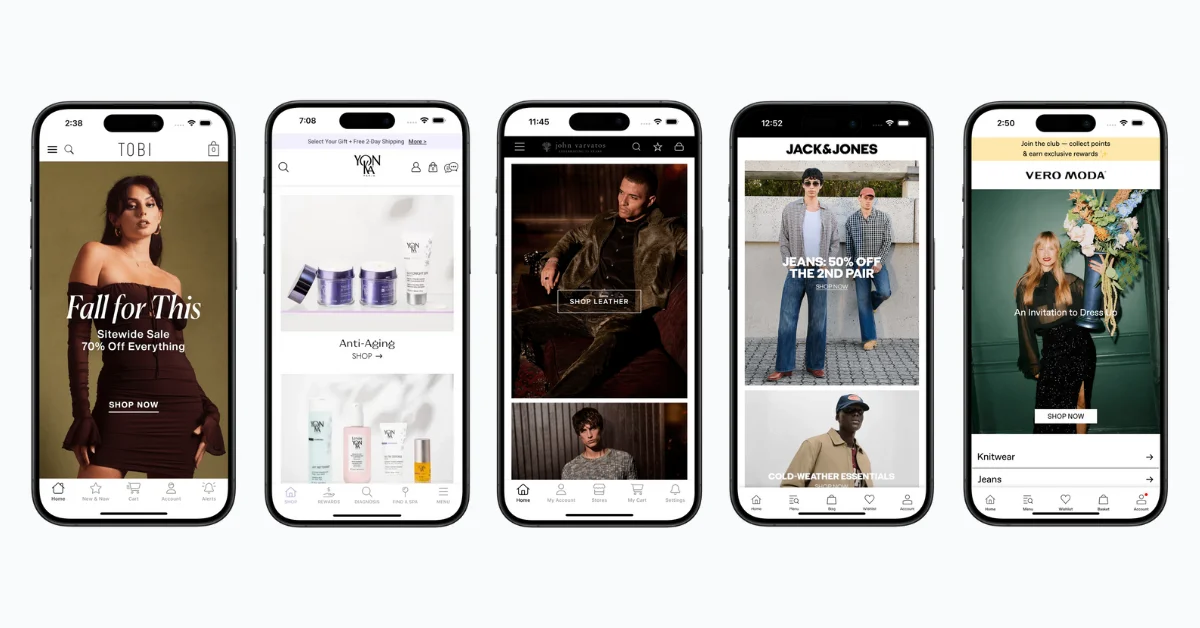
Learn more in these case studies of ecommerce brands we worked with (a number of whom successfully replaced a legacy app with a fast, modern app, fully synced with their store).
What Replacing Your Legacy App Looks Like
So let’s say you were to replace your old, outdated app with a new one, powered by your website.
What happens to the old app? And the users it had?
It can go one of two ways.
Assuming you own the Apple Developer and Google Play accounts behind your old app, you can probably ship the new app as an update.
This is the best-case scenario if you had an app that’s not fundamentally broken, and has a lot of users. You won’t need them to re-download the app, and you won’t lose your users. It’s just an update that usually happens in the background, and your customers will automatically get the new, improved version.
The alternative is a new app, with a new listing. This is a better option in some cases - such as if your old app accumulated a lot of bad reviews, and doesn’t have many active users anymore.
You take the fresh slate approach: a new listing, new launch, and your new app maintains the rating that reflects the current build.
If you do your app with MobiLoud, the team will work with you on all of this, helping you understand the best course of action for your relaunch, and making sure you go live with as minimal disruption as possible for current users.
Final Thoughts
Tech moves fast. Ecommerce moves fast.
That pace means there are a lot of mobile apps out there which have gone without attention for too long, and are still delivering a 2016-level user experience.
If you’re in this boat, make sure you don’t make the same mistake that was made earlier: underestimating the long-term cost of a mobile app.
MobiLoud is the best way to revitalize and relaunch your app, not just for the product you get now, but the product you’ll have five years from now.
If you want to see what this looks like for your brand, get a free preview and we'll show you your website as a native app. We’ll also walk you through how we'd replace your legacy app, what the timeline looks like, and what it takes to keep the new one permanently in line with your site.