How Much Does it Cost to Create an App in 2026?

Building a mobile app costs anywhere from $10,000 to $300,000+ for custom development, depending on complexity, platform, and who builds it. Cross-platform frameworks like React Native or Flutter can cut that by 25-50%. If you already have a website, a website-to-app platform like MobiLoud can get you a native app for $799/month, with no upfront development cost and a launch timeline under 30 days.
Building a mobile app costs anywhere from $10,000 to $300,000+ for custom development, depending on complexity, platform, and who builds it. Cross-platform frameworks like React Native or Flutter can cut that by 25-50%. If you already have a website, a website-to-app platform like MobiLoud can get you a native app for $799/month, with no upfront development cost and a launch timeline under 30 days.
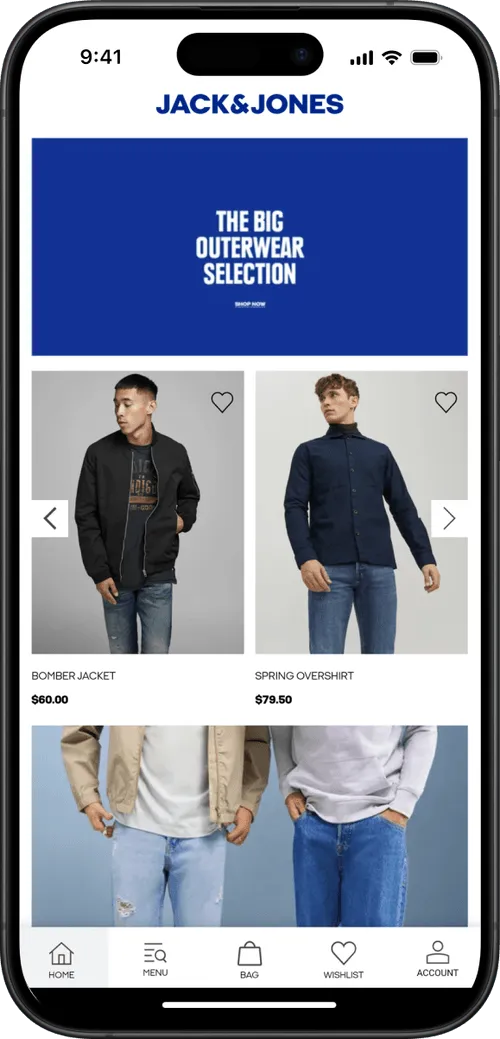
The mobile app industry is booming, and your business wants in. But how much does it cost to create an app for your business?
A mobile app cost depends on a great number of factors. These include the complexity of your project, how you hire people to work on the project, and whether you want to go all out to build a fully native app.
However, if you want a benchmark for mobile app development costs, to help you get a rough idea of how much it costs to make an app, that's what we're going to give you. We'll share a range of figures, depending on your needs, and help you understand whether developing an app is viable for your business.
How Much Does It Cost to Build an App? (The Short Answer)
Most app projects in 2026 fall somewhere between $10,000 and $300,000, with the average cost for a funded startup's v1 app landing around $80,000-$250,000.
But that range is almost uselessly broad without context. The final number depends on three things:
- What you're building
- Who's building it
- How you choose to build it.
If you want both iOS and Android (which most businesses do) custom native development means building two separate apps. That roughly doubles the cost compared to a single-platform build.
Cross-platform frameworks (React Native, Flutter) reduce that duplication, by increasing the code overlap between the two platforms.
Then there are no-code tools, which don’t require developers (and thus let you launch for much cheaper).
Alternatively, if you’re building from the starting point of an existing website, a website-to-app platform eliminates a significant amount of the cost and effort of building a brand new app from scratch.
The rest of this guide breaks down each cost driver in detail so you can estimate what your specific app will actually cost.
One important note before we get into numbers: all the cost ranges in this guide are estimates based on aggregated data from GoodFirms, Clutch, Indeed salary data, freelancer rates from Upwork, and published agency pricing.
Your actual cost will depend on your specific requirements, and quotes from real development teams will always be more accurate than industry averages.
App Development Cost by Complexity
The single biggest factor in app development cost is complexity. A simple app with basic features costs 5-10x less than an enterprise build with custom backends, integrations, and advanced functionality.
Simple Apps ($10,000-$60,000)
Simple apps include things like calculators, basic productivity tools, content-display apps, and single-purpose utilities. They typically have:
- 5-10 screens
- Standard UI components (no custom animations)
- Basic user authentication
- Minimal or no backend (local data storage)
- Single platform (iOS or Android, not both)
At the lower end ($10,000-$25,000), you're looking at an MVP with core functionality only. At the higher end ($40,000-$60,000), you get polished design, basic analytics, and both platforms.
Development timeline: 2-3 months for a single platform, 3-4 months for both.
Mid-Complexity Apps ($60,000-$150,000)
This is where most business apps fall. Mid-complexity apps include features like:
- Payment processing and in-app purchases
- User profiles and account management
- Real-time messaging or chat
- Location services and maps integration
- Push notification systems
- Third-party API integrations (payment gateways, CRMs, analytics)
- Custom UI/UX design
An ecommerce app with a product catalog, cart, checkout, and user accounts typically costs $50,000-$150,000 for custom development, depending on the number of integrations and the level of design customization.
Development timeline: 3-6 months.
Complex and Enterprise Apps ($150,000-$300,000+)
Enterprise-grade apps include features like real-time data synchronization across devices, advanced security protocols, machine learning or AI functionality, multimedia processing, complex admin dashboards, and multi-language support.
Examples: banking and fintech apps, telehealth platforms, social networking apps, large-scale marketplace apps.
The costs here can exceed $300,000 easily, especially when you factor in extensive backend architecture, sensitive data security protocols, and regulatory compliance requirements (HIPAA, PCI-DSS, SOC 2).
Some enterprise builds run $500,000 to $1M+ when both platforms, admin tools, and ongoing development contracts are included.
Development timeline: 9-12+ months, sometimes longer for highly regulated industries.
What About Cost by App Type?
Different app categories tend to cluster at different cost levels because of the features they typically require. Here are rough ranges for common app types (custom development, both platforms):
- Ecommerce apps (product catalog, cart, checkout, user accounts): $50,000-$150,000
- On-demand / delivery apps (real-time tracking, maps, payments, driver and customer sides): $80,000-$200,000
- Social networking apps (profiles, feeds, messaging, media sharing): $100,000-$300,000
- Marketplace apps (two-sided with seller and buyer flows, listings, transactions): $100,000-$250,000
- Fintech / banking apps (secure transactions, regulatory compliance, account management): $150,000-$400,000
- Healthcare / telehealth apps (HIPAA compliance, video calls, patient records): $120,000-$300,000
- SaaS / productivity apps (dashboards, analytics, team features): $50,000-$150,000
- Content and media apps (article/video feeds, subscriptions, offline access): $30,000-$100,000
These ranges assume custom native or cross-platform development with a professional team. A website-to-app approach for ecommerce or content apps can reduce costs to a fraction of these numbers, since the core functionality already exists on the website.
What Factors Drive App Development Cost?
Beyond complexity, several other variables affect the final price tag. Understanding these helps you estimate more accurately and make smarter tradeoffs.
Feature Complexity
Every feature compounds the cost. A chat feature, for example, isn't just a text input and a message bubble. It requires WebSocket infrastructure, message storage, notification logic, and potentially moderation tools. Individual feature costs add up:
- Push notifications (basic): $1,500-$5,000
- User authentication and profiles: $2,000-$5,000
- Payment integration (Stripe, Apple Pay): $3,000-$8,000
- In-app chat (third-party SDK): $2,000-$5,000
- In-app chat (custom-built): $10,000-$15,000
- Social login (per network): $500-$1,000
- Analytics integration: $1,500-$3,000
- Offline mode with data sync: $8,000-$12,000
The cost is largely driven by development time. More features means more hours billed.
A useful exercise before getting quotes: rank your features by priority and get separate estimates for a Phase 1 launch versus the full feature set. This gives you flexibility to cut scope if the initial quotes come in higher than your budget.
AI-powered features are increasingly common in 2026, and they come with a significant cost premium. Adding machine learning-based product recommendations, chatbot functionality, or image recognition can add $20,000-$150,000 to the project depending on complexity. For most ecommerce apps, AI features are better handled through third-party integrations (like Algolia for personalized search or Nosto for recommendations) than custom-built models.
Platform Choice (iOS, Android, or Both)
Building for a single platform costs roughly half of building for both. Native iOS development uses Swift or SwiftUI; native Android development uses Kotlin or Java. These are entirely separate codebases, which means separate development teams, separate testing cycles, and separate maintenance.
For most businesses launching a consumer app, you need both platforms. Android holds roughly 72% of global market share, while iOS dominates in the US and high-income markets.
Skipping one platform means leaving a significant portion of your audience without access.
This is one reason cross-platform frameworks and website-to-app solutions have gained traction; they let you ship to both platforms without doubling the cost.
Design and UX Requirements
A basic app using standard platform UI components (Material Design for Android, Human Interface Guidelines for iOS) is significantly cheaper than one with custom illustrations, animations, micro-interactions, and a bespoke design system.
Design costs typically run 10-15% of the total project budget. For a $100,000 app, that's $10,000-$15,000 for design work, which includes wireframing, prototyping (usually in Figma or Sketch), visual design, and asset creation.
Tablet optimization adds roughly 50% to the design and development budget. Supporting both landscape and portrait orientations adds another 30%.
Backend Infrastructure and API Integrations
Most non-trivial apps need a backend: a server, database, and API layer that stores data, manages user accounts, processes transactions, and connects to third-party services.
Backend development typically costs $6,000-$30,000 depending on complexity. A simple backend using Firebase or AWS Amplify costs less than a custom-built backend with multiple microservices.
Third-party integrations (Stripe for payments, Twilio for SMS, Algolia for search, Klaviyo for email) each add development time. Expect $1,000-$5,000 per integration for straightforward implementations, more for custom configurations.
Security and Compliance
For most consumer apps, basic security (HTTPS, encrypted storage, secure authentication) is included in standard development. But if you're handling financial data (PCI-DSS compliance), health data (HIPAA), or serving EU customers (GDPR), compliance requirements can add $10,000-$50,000+ to the project.
Security audits and penetration testing, which are recommended before any public launch, typically cost $5,000-$15,000 from a third-party firm.
Even standard consumer apps need to account for data privacy regulations. If your app collects user data (which almost every app does), you need a privacy policy, consent mechanisms, and often data deletion capabilities.
The EU's GDPR requires explicit consent for data collection, the right to data deletion, and breach notification procedures. California's CCPA has similar requirements. Meeting these requirements isn't optional, and non-compliance penalties are steep.
App Development Cost by Region
Here’s the biggest factor that influences the cost of your app: where your developers are located.
Hourly rates vary 3-5x between regions - a developer in New York City will almost certainly charge more than one in Eastern Europe or South Asia - making this is often the single biggest lever for controlling budget.
Sources: Compiled from Index.dev, Arc.dev, and Qubit Labs rate surveys.
Why Location Affects More Than Just the Hourly Rate
Lower hourly rates don't always mean lower total cost. Communication overhead, timezone gaps, and differences in project management maturity can increase the number of hours needed.
A $40/hr team that takes 50% more hours to deliver ends up costing the same as a $60/hr team that ships on time.
Eastern Europe and Latin America have become popular middle-ground choices, offering 35-40% savings compared to US rates with stronger timezone overlap (Latin America especially for US-based companies) and mature development practices.
When evaluating quotes from teams in different regions, ask for total project cost estimates (not just hourly rates) and check references from past clients in your market. The cheapest hourly rate doesn't always mean the cheapest project.
How Much Does It Cost to Hire an App Developer?
So far we’ve been looking primarily at the overall cost of building an app. But what this really comes down to is:
Hours to build your app x hourly cost of developers to build it
This is true whether you hire developers independently, or hire an agency to build your app. It’s all labor economics, at the end of the day.
So if we want to deconstruct the cost of building an app further, we’ll look at the baseline cost you can expect for the people who will build your app - covering a few different avenues.
Freelance App Developers
Freelancers on platforms like Upwork and Toptal charge $25-$150/hr depending on experience and location. For a simple app, you might end up hiring 1-2 freelancers, with total costs in the $10,000-$50,000 range.
The upside is flexibility and lower overhead. The downside is that you're managing the project yourself.
You need to handle coordination between designers, frontend and backend developers, and QA. For anything beyond a basic app, project management will be a significant time commitment.
App Development Agencies
Agencies like those listed on Clutch and GoodFirms charge $100-$300/hr (US-based) or $40-$100/hr (offshore). They provide a full team: project manager, designers, developers, and QA.
The upside is reduced management burden and a more predictable process. The downside is cost; a US-based agency building a mid-complexity app will typically quote $100,000-$300,000+. Many agencies also require minimum project sizes ($25,000-$50,000+).
In-House Development Teams
Hiring full-time mobile developers means annual salaries of $80,000-$180,000 per developer in the US, plus benefits, tools, and management overhead.
A minimum viable team (1 iOS developer, 1 Android developer, 1 designer, 1 backend developer), US-based, could cost $350,000-$700,000+ per year in fully loaded compensation.
That’s a lot. Yet for a custom mobile app, it’s required, since mobile apps are not a “one-and-done” project: they required constant maintenance and updates to remain operational.
“If we had unlimited time and money, we would probably go for a custom native app, but that is half a million to a million a year to maintain.”
-- David Cost, VP of Ecommerce at Rainbow Shops
Here's a breakdown of the difference:
How Long Does It Take to Build an App?
The other core factor in the cost of your app: development timeline.
More dev hours = higher cost. It’s a pretty simple equation. It also happens to be longer until you can get a return on your investment, and see actual revenue come through the app, the longer it takes to launch it.
Here’s what you can expect in terms of timeline.
- Simple apps (5-10 screens, basic functionality): 2-3 months for a single platform, 3-4 months for both iOS and Android.
- Mid-complexity apps (payments, integrations, custom design): 3-6 months. This is where most business apps land.
- Complex/enterprise apps (advanced features, regulatory compliance): 9-12+ months. Some large-scale projects stretch to 18 months or longer.
- Website-to-app platforms: 2-4 weeks. Because these platforms build on your existing website, there's no feature development phase.
A common mistake with app development is underestimating the timeline. Nearly half of app projects exceed their original budget, and scope creep during development is the primary cause.
Defining a clear requirements document before starting development is the single most effective way to control both timeline and cost.
The MVP Approach: Controlling Cost Through Phased Launches
One of the most effective ways to manage both timeline and budget is to launch with a minimum viable product (MVP) first, then iterate based on real user data.
An MVP includes only the core features needed to deliver value. For an ecommerce app, that might be: product browsing, search, add-to-cart, checkout, and push notifications. Nice-to-haves like wishlists, loyalty programs, and personalized recommendations can come in Phase 2.
This approach works because:
- Lower initial investment. An MVP might cost $20,000-$40,000 instead of $80,000-$150,000 for the full feature set.
- Faster time to market. You can launch in 2-3 months instead of 6-9 months, and start generating revenue and user data sooner.
- Better allocation of budget. Real user behavior data tells you which Phase 2 features actually matter, so you don't spend $15,000 building a feature nobody uses.
- Reduced risk. If the app doesn't gain traction, you've invested $30,000, not $150,000.
The tradeoff is that your initial app will be more limited. For ecommerce brands with an existing website, a website-to-app approach effectively gives you a "full-featured MVP" from day one, since it carries over all your website's functionality, without the phased development tradeoff.
How Much Does It Cost to Maintain an App?
The launch price is just the beginning. Apps require constant updates, and maintenance costs are ongoing for as long as the app is live.
A standard industry estimate is 15-20% of the initial development cost per year for maintenance. For a $100,000 app, that's $15,000-$20,000 annually. Apps in regulated industries like fintech and healthcare often run higher, at 20-25%+ per year.
This is likely not something you can skip. If you do, expect bugs to pop up, your user experience to suffer, and the return from your app to plummet.
What Maintenance Covers
- Bug fixes and performance optimization. Issues surface after launch that weren't caught in QA. Devices, OS versions, and network conditions in the real world are more varied than any test environment.
- OS compatibility updates. Apple and Google release major OS updates annually. Each update can break existing functionality, requiring development time to test and fix.
- Third-party integration updates. Payment gateways, analytics SDKs, and other integrations release breaking changes periodically. Someone needs to monitor and update these.
- New feature development. Users expect apps to improve over time. Stagnant apps lose engagement and accumulate negative reviews.
- Security patches. Vulnerabilities are discovered regularly. Keeping dependencies up to date is essential.
Hidden Ongoing Costs People Forget
Beyond maintenance development, there are several costs that aren't always included in initial estimates:
- App Store fees: Apple charges $99/year for a developer account. Google charges a $25 one-time fee.
- Cloud hosting and infrastructure: Depending on traffic and data volume, hosting on AWS, Google Cloud, or Azure can run $50-$500+/month for a typical business app. High-traffic apps pay significantly more.
- SSL certificates, CDN, and monitoring tools: Typically $50-$200/month combined.
- Analytics platforms: Basic analytics (Firebase, Google Analytics) are free. Enterprise analytics (Mixpanel, Amplitude) start at $25-$100/month and scale with usage.
- Push notification services: Free at low volumes (Firebase Cloud Messaging), but enterprise push platforms like OneSignal or Braze charge based on audience size.
All-in, a $100,000 app might cost $20,000-$35,000/year to keep running when you include both maintenance development and infrastructure costs. Over a three-year period, total maintenance costs often exceed the original development investment.
How to Reduce App Development Costs
If the numbers above feel daunting, there are legitimate ways to lower the cost without compromising on quality.
Cross-Platform Frameworks (React Native, Flutter)
Instead of building separate native apps for iOS and Android, cross-platform frameworks let you write one codebase that compiles to both platforms. React Native (developed by Meta) and Flutter (developed by Google) are the two most popular options in 2026.
The cost savings are real: a cross-platform app typically costs 50-75% of building two separate native apps. For a mid-complexity app, that might mean $60,000-$100,000 instead of $100,000-$150,000.
There may be some tradeoffs in terms of user experience, performance and platform-specific features. But for most business apps, the differences are negligible. For gaming, AR/VR, or apps with heavy device-hardware integration, it’s more likely you’ll notice the difference between an iOS app built with React Native and one built in Swift.
One thing to note: cross-platform doesn't eliminate the dual-platform problem entirely. You still need to test on both platforms, handle platform-specific behaviors (notifications work differently on iOS vs Android, for example), and maintain the codebase over time.
It reduces cost, but it’s not a 50% reduction.
No-Code App Builders
Tools like Glide ($99-$799/month), Thunkable (from $38/month), and Softr ($29-$199/month) use drag-and-drop interfaces to let non-developers build apps without writing code.
These work well for simple internal tools, prototypes, and basic apps with limited functionality. For consumer-facing apps that need custom design, complex integrations, or performance optimization, no-code builders may limit you too much. There’s a natural ceiling to what you can build with these tools.
That said, if you're building a simple internal tool or testing an idea before committing to a full build, no-code platforms are the cheapest option available.
Just be aware that migrating away from a no-code platform later, if you outgrow it, often means starting from scratch. There's no codebase to export and build on. So while it's cheap to start, it can be an expensive dead end if your app needs evolve beyond what the platform supports.
Learn more about the Best Mobile App Builders available today.
Website-to-App Platforms
Here’s where you can really save on the cost of your app, and completely flip the ROI equation on its head.
Some mobile apps are “from scratch” projects. The business plan, distribution, etc is all built around the app.
But if you’re building a mobile app for an existing business, with a website customers buy from (like an ecommerce brand), you may not need a “from scratch” build.
A service like MobiLoud turns your existing website into an app, skipping the cost of an expensive rebuild.
It uses the functionality of your website to power the app. This means you don’t need to rebuild all of this from the ground up in your app.
The difference? You’re looking at an upfront cost in the low-four figures, with a manageable monthly cost perhaps a tenth of what you’d pay for just one developer on staff.
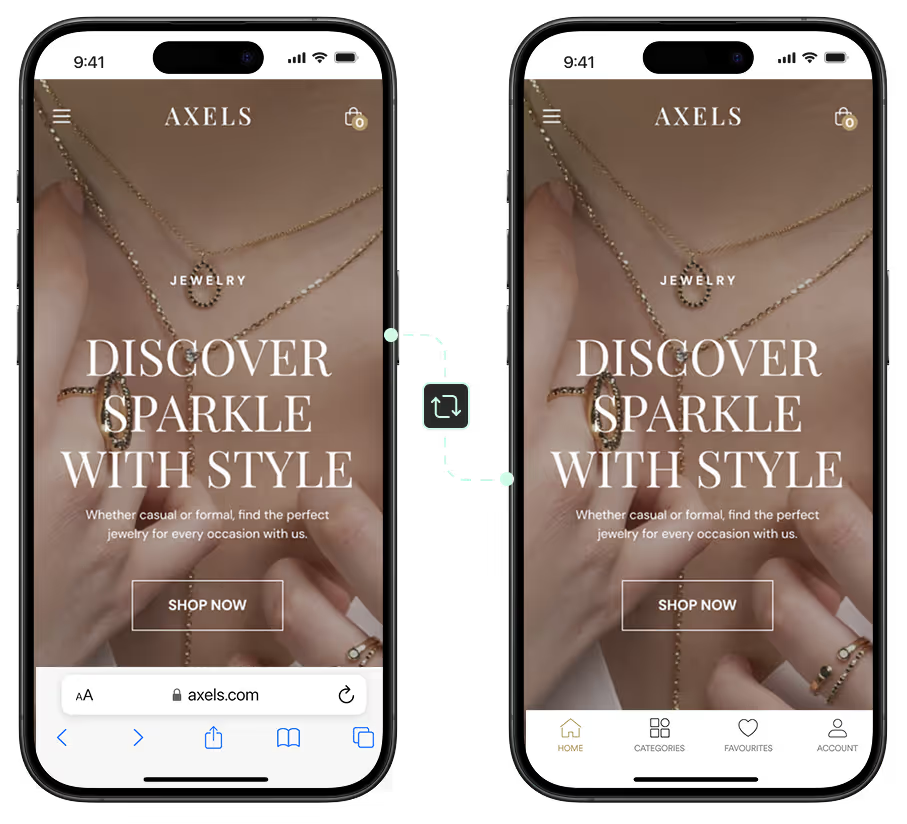
It’s ideal for apps that don’t need any significant new functionality from what already exists on the web. Ecommerce apps are the best example: shoppers usually don’t need a drastically different experience in an app; just a more convenient way to browse and buy, as they do on the web.
For this, it makes little sense to build a custom app, when converting what you’ve already built is so much more cost-effective.
How Much Does It Cost to Make an App With MobiLoud?
Here’s what the cost looks like to turn your site into an app with MobiLoud:
- Monthly subscription: starting from $799/month
- One-time setup fee: variable (typically low four figures)
- Maintenance cost: minimal
MobiLoud handles the entire process: app development, QA, App Store and Google Play submission, and ongoing maintenance. You don't need mobile developers on staff, and you don't need to manage a second codebase.
See more details about our pricing here.
Here’s how that compares to other development approaches:
It’s also much easier to predict - since MobiLoud’s costs aren’t variable, whereas you never really know how many hours a custom app build is going to take (and how many hours will be needed month to month for maintenance).
The cost difference is significant, but it's the operational difference that matters most for ecommerce brands.
With custom development, every change to your website (new product page, updated checkout, seasonal promotion) needs to be separately implemented in the app. With MobiLoud, your app stays in sync with your website automatically.
"The app's been invaluable to us. The cost we're paying versus what we're getting back is tenfold."
-- Nick Barbarise, Director of IT at John Varvatos
"The expense isn't that big... it's a no-brainer."
-- David Cost, VP of Ecommerce at Rainbow Shops
MobiLoud has launched 2,000+ apps across Shopify, WooCommerce, Magento, BigCommerce, Salesforce Commerce Cloud, and custom platforms. We excel in helping mid-market and enterprise ecommerce brands, with custom features and custom tech stacks, launch apps that retain all the unique features from their website - without a six-figure dev cost.
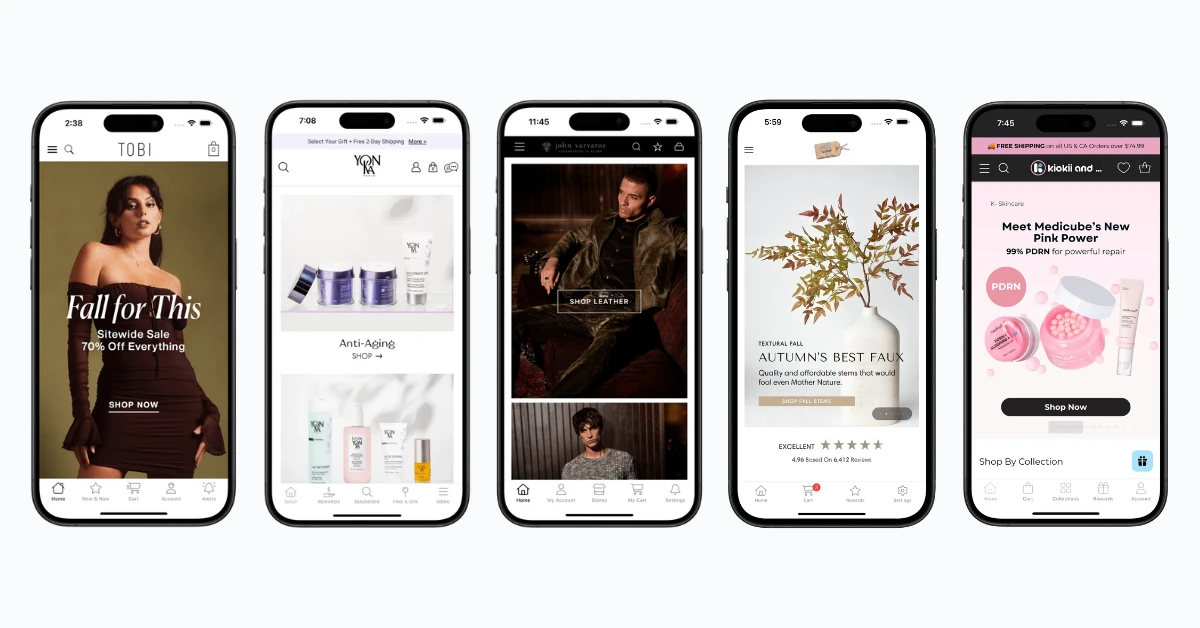
You get an app with native push notifications, deep linking, a home screen icon, and full App Store distribution. It’s everything you need in a mobile app, without the typical cost, making the decision to launch an app a real no-brainer.
How the Process Works
Here’s how to explore launching your app with MobiLoud:
- Book a strategy call. Fill out a form with your website URL, and on a short call our team will discuss your goals, answer your questions, and assess whether MobiLoud is the right fit (or whether you’re better to build custom).
- MobiLoud builds your app. If you’re happy to move forward, we take care of the entire build, taking 99% of the work off your hands and out of your mind.
- Launch in 30 days. MobiLoud handles everything. Your app goes live on the App Store and Google Play while you focus on running your business.
If you want to learn more, see examples of other sites that went this route, and learn about the impact your app could make, book your free strategy call now.
FAQs

Convert your website into a mobile app