Nearly every marketing channel you run has a meter on it. Paid ads charge for every click, SMS charges for every text and email needs fresh creative and effort for every campaign, plus a bigger plan as your list grows.
Push notifications are the exception. Once customers have your app and allow notifications, you can reach them as often as you like for free, with a message that takes minutes to write and appears where they’ll see it.
That changes how you can approach the channel - and it’s why push is one of the highest-return channels a DTC brand can have. This guide breaks down the economics of push notifications: where the return comes from, what brands earn from it, how it fits with your other channels and the mistakes that hold brands back.
The Unique Economic Advantage of Push
Push notifications stand out for a simple economic reason: each message costs close to nothing, and the people who get it are some of your most valuable customers.
Zero Cost per Message
Push notifications are free to send once a customer has opted in. Your costs are the app and a push platform, and most platforms charge by the size of your audience, not by the message.
That changes the economics of your marketing. An SMS costs about a cent per text in the US once carrier fees are added, so every extra message adds to the bill. Send ten times as many push notifications, and yours stays the same.
Minimal Creative Lift
Push notifications don’t need designs, long-form copy or production-heavy assets. A typical push is a short title and a line or two of text, so your team can write and send one in minutes.
That lets you react to a restock, a trend or a slow sales day the same afternoon, without pulling designers off other work. Some of the best pushes are barely a sentence long.
Guaranteed Visibility
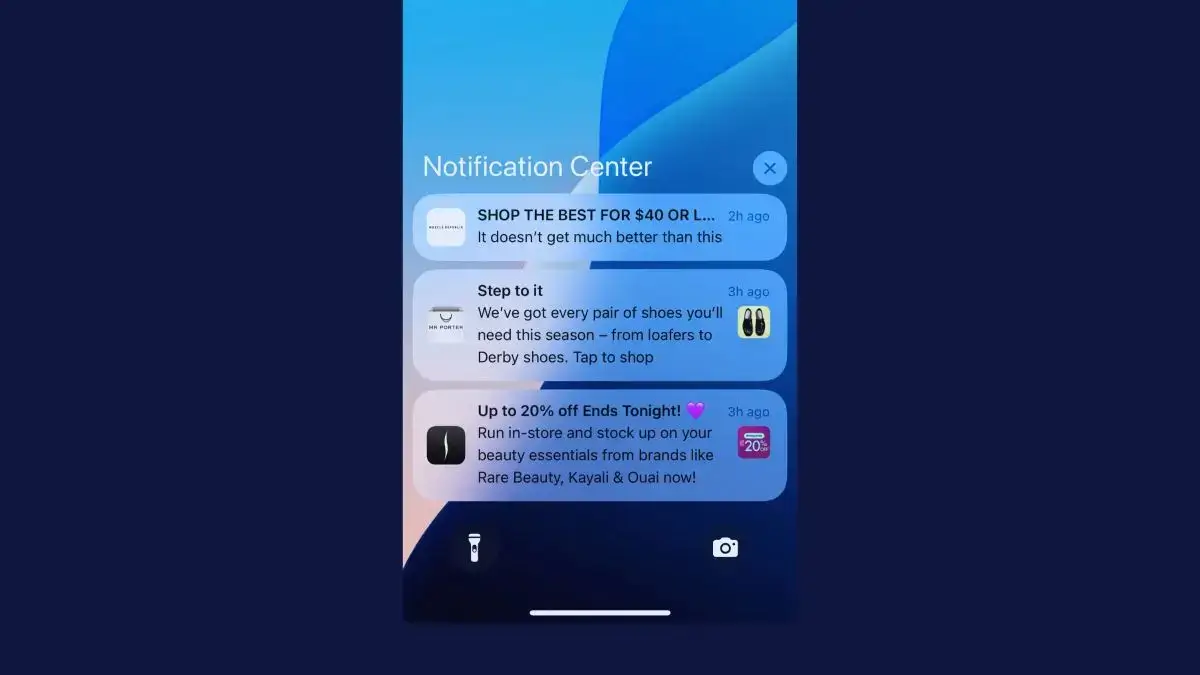
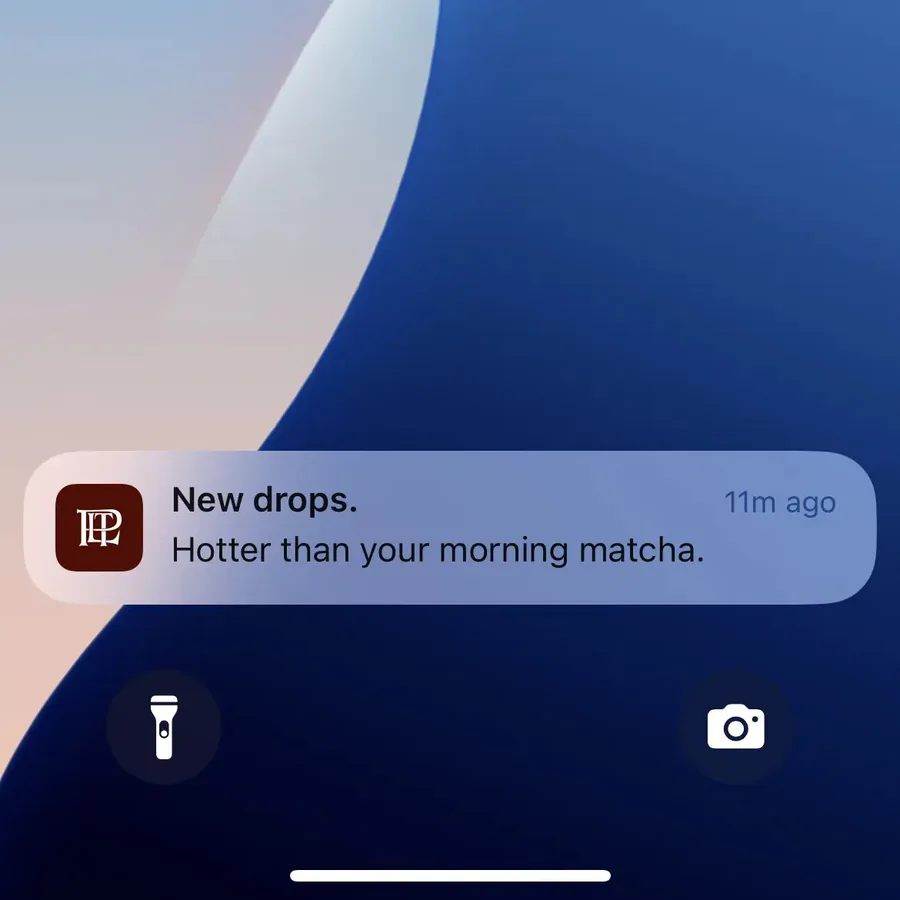
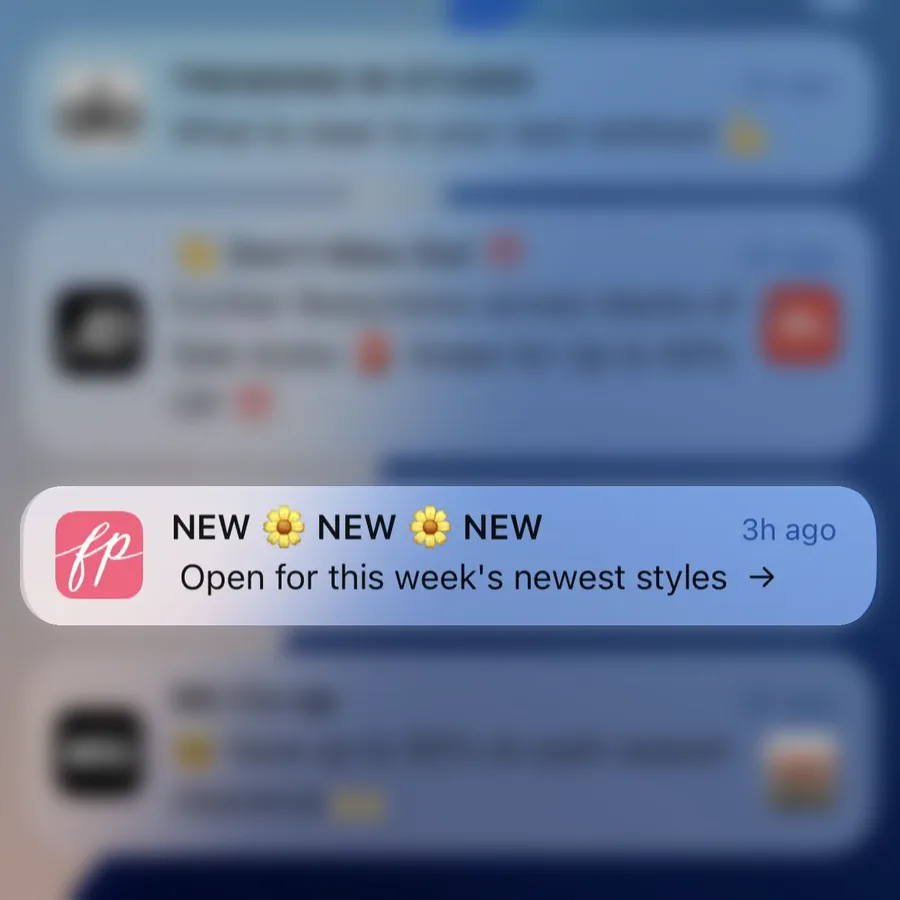
Push notifications skip the crowded inbox and go straight to the lock screen, so nearly every one gets seen, even by customers who never tap it. That’s valuable real estate: Americans check their phones 186 times a day, according to a Reviews.org survey from late 2025.
Email marketers would kill for that kind of visibility.
Immediate Impact
Push notifications are delivered and seen in real time. That makes them ideal for urgent, time-sensitive campaigns, like flash sales, launches and abandoned cart reminders.
A cart reminder can reach a customer while they still remember what they wanted, and one tap takes them back to their cart in your app.
High Intent Audience
You only send push notifications to people who’ve downloaded your app. That limits your reach, but it also means your audience is warmer than on any other channel.
These customers have already committed to your brand by giving it a place on their phone. In our benchmark report, app users at one wellness brand made up just under 16% of its customers but generated more than 62% of its revenue.
Across the brands we studied, apps brought in 3.5 to 7 times more revenue per user than mobile web. Marketing to these customers is far more likely to pay off.
Compounding Results
When you invest in a marketing channel, you don’t want to put blood, sweat and ad spend (and a few tears) into a customer who buys once and forgets you.
Push subscribers are already more qualified, so they’re more likely to become loyal, high-value customers, as long as you nurture them early. App users who get at least one push in their first 90 days have a third higher retention than those who don’t, according to Airship.
Each repeat order builds on the last. In our benchmark report, 60% of first-time app buyers went on to buy again, and app users’ lifetime value was 2.8 to 5 times that of web-only shoppers.
What Return Can You Expect From Push Notifications?
Push notifications can return many times what they cost, and the brands in our benchmark report show how much. Here’s what four of them earned from push, over a single month we tracked in 2025.
| Brand | Monthly push revenue | Where it came from |
|---|---|---|
| Cannabis retailer | $360,496 | Abandoned cart push alone |
| Wellness brand | $31,176 | About half from abandoned cart push, in its first full month of sending |
| Cosmetics brand | $15,804 | Mostly one-off campaigns |
| Luxury fashion brand | $7,494 | Over three-quarters from abandoned cart push, from a small app audience |
None of them paid anything per message. Abandoned cart push alone brought brands in our benchmark report $10,000 to $200,000+ over a 30-day period, often enough on its own to pay for the app.
Campaigns add to that. The cosmetics brand earned most of its push revenue from one-off sends for launches, events and offers, which shows push pays both on autopilot and when you use it actively.
Push vs Other Channels: The ROI Breakdown
Few retention channels can match push on return for cost, because the cost side of the equation is fixed at close to zero. Here’s how push compares with the other channels in your marketing.
| Push | SMS | Paid ads | ||
|---|---|---|---|---|
| Cost per message | None | Low, rising with list size | About a cent per text in the US | You pay for every impression or click |
| Effort per send | A title and a line or two | Design, copy and testing | Short copy, with strict consent and timing rules | Creative, targeting and budget |
| Who you reach | Customers with your app who allow notifications | Anyone who subscribes | Anyone who opts in with a phone number | Almost anyone |
| Best for | Frequent touchpoints with your most loyal customers | Nurturing and retention at scale | Urgent messages that drive immediate sales | Growth and new customers |
That’s why push can turn a profit on messages that would never pay off elsewhere. A weekly tip or a set of product picks would be a waste of your SMS budget, but costs nothing as a push.
The difference shows up in revenue per customer. At the luxury fashion brand in our benchmark report, push earned $52.04 per active user, compared with $5.69 for SMS and $2.72 for email.
Push can also take over work you’d otherwise pay for. Paid ads are still going to be your core growth engine, but retargeting customers who already have your app is a job push does for free.
"Push notifications have replaced expensive remarketing campaigns. Having our brand icon on customers' phones is a game-changer for retention."
Don’t Get It Twisted: Push Is Not a Competitor to Email/SMS/Paid Ads
Comparing push with email, SMS and paid ads doesn’t mean you should stop using them and move your whole budget to push. They’re complements, each filling its own role in your marketing.
- Paid ads are your growth engine. They bring new customers to your brand.
- Email is your catch-all, low-cost channel. It nurtures people new to your brand, drives repeat orders from existing customers and builds brand affinity.
- SMS is your high-impact channel for immediate sales. It reaches anyone with a phone number when a message can’t wait.
- Push is for nurturing your top 15% of customers. They’re the ones who contribute an outsized share of your revenue.
The best brands use every channel together, to meet each customer on the right channel at the right stage of their journey.
Where Brands Fall Short with Push
Brands that have an app but get little from push are usually making one of the same three mistakes.
Mistake #1: Expecting Every Push to Convert
Expecting every push to drive immediate revenue is the wrong mindset. Because of the economics, each message doesn’t have to pay for itself.
You can send 20 messages, get a reaction from just one and still come out ahead. Send five pushes a week, and if one in ten brings a customer back, every subscriber visits your app about twice more a month, at no extra cost.
Think in terms of frequency and consistency rather than single-message performance. You don’t judge a paid ad by one impression, so don’t judge push by one send.
Mistake #2: Not Sending Enough
Some brands hold back, sending one push every few weeks. The economics don’t work without volume: one reaction in 20 messages is a great return over a month, and a poor one over 20 weeks.
If you send one notification a week or fewer, send more. Most brands should send three to six push campaigns a week, plus automated messages like cart reminders, and the typical shopping app in our push notification research sent 4.5 a week.
Sending more pays off in engagement. In Airship’s 2026 benchmarks, based on 2025 data, the apps in the top 10% for pushes per user saw 72% more sessions per active user than their category average.
“But I don’t want to annoy my customers. They might unsubscribe.” That’s where the third mistake comes in.
Mistake #3: Sending Irrelevant, Overly Salesy or Annoying Messages
Over-sending isn’t really the problem. The problem is sending notifications customers don’t want, because they’re always pushing a sale, or they’re irrelevant, impersonal or intrusive.
If customers feel spammed, they’ll turn off notifications or delete the app. But if they enjoy getting your notifications, you can message them every day without any trouble.
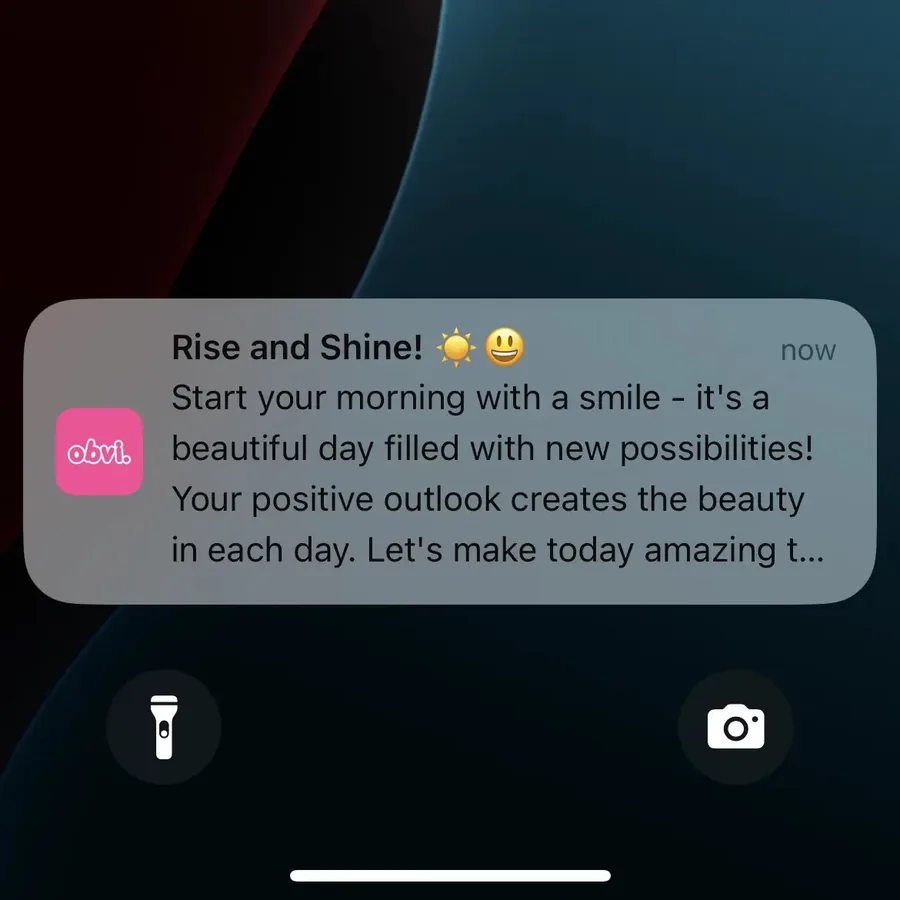
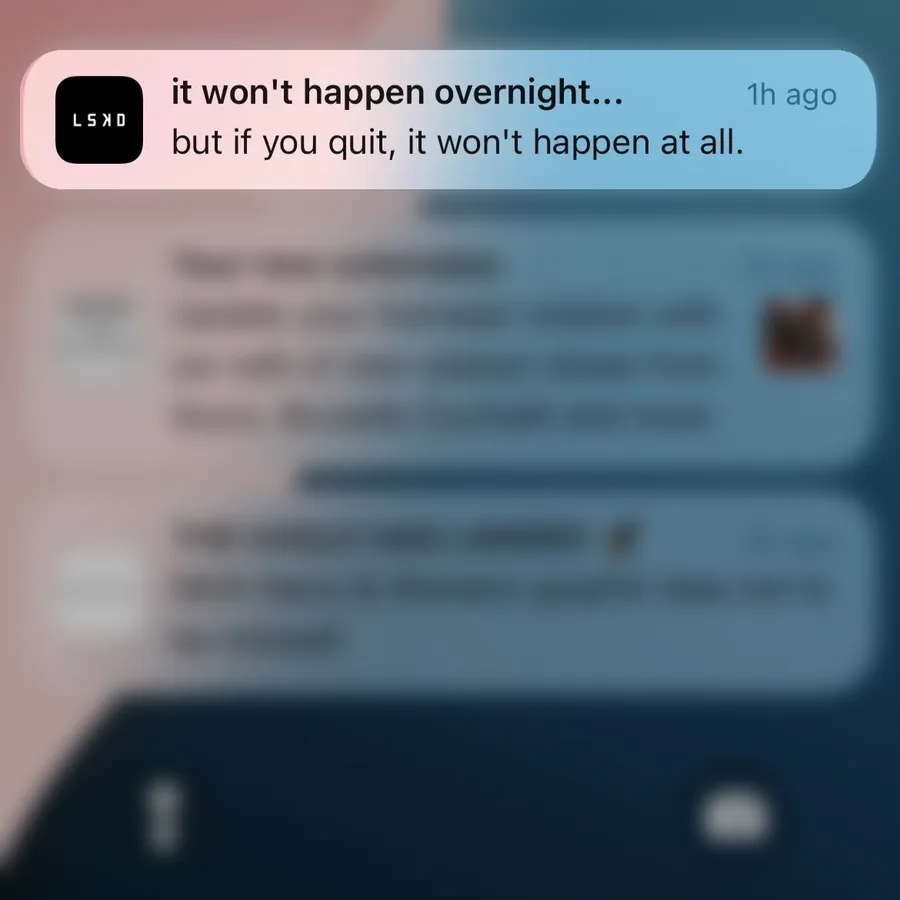
The fix is personalization and value. Keep messages simple, positive and on-brand, and balance your offers with customer experience and awareness notifications that don’t ask for anything.
Action Steps: How to Start Winning with Push Notifications
The biggest change most brands need to make is to shift their focus from immediate results to building awareness and mindshare.
Most of your notifications should keep your brand top of mind and build familiarity with your customers. You can include gentle reminders of what you sell, but you’re not blasting anyone with “buy this NOW” every day.
Because push costs so little and takes so little effort, you don’t need an instant return from every message. Think of it as a billboard, or a display ad on your customer’s phone.
People don’t swerve off the highway to a grocery store the moment they see a Coke billboard. But if they see that billboard every day, Coca-Cola is the first thing they think of when they want a soft drink.
A long-term focus drives long-term results. Still, know when to switch from awareness to urgency.
Some push notifications drive excellent short-term results: product launches, flash sales, personalized offers and reminders about abandoned carts or browsed products. Used strategically, they bring in a lot of sales.
Just make them the exception rather than the norm, and save your boldest pushes for moments like your biggest sale of the year.
To put this into practice:
- Set up your automated flows first. Automated push notifications like welcome messages, cart reminders and back-in-stock alerts earn money every day without anyone pressing send.
- Plan three to six campaigns a week. Make most of them awareness messages, and keep two or three for offers.
- Measure the channel, not the message. Track sessions, repeat purchases, revenue per subscriber and opt-outs over at least 90 days.
Launch Your App and Unlock Push Notifications With MobiLoud
MobiLoud transforms your website into a custom native app, powered by the same underlying code as your site. We build, publish and maintain your app, helping you go live in a few weeks, without the cost and complexity of a traditional app build.
We help established brands launch VIP channels tailored to their best customers, and unlock the power of push notifications as a result. Australian drinks retailer Bottle Stop launched its app to reach loyal customers directly with push - the app now drives 10% of its total revenue.
Once your app is live, our team works with you to make your push campaigns a success, helping you set up automated flows like welcome messages and abandoned cart reminders and guiding you on the ongoing strategy for how to best utilize your new channel.
Final Thoughts: Why You Should Double Down on Push Notifications
If your brand has an app and you’re not making full use of push notifications, you’re leaving easy money on the table.
The economics are too strong to ignore: no cost per send, minimal effort and near-guaranteed visibility, aimed at the customers who already spend the most with you.
If you’re making one of the mistakes above, fix it. Fix your cadence, focus on value and push smarter.
And if you’re not sending push yet because you don’t have an app, that’s the easiest fix of all. An app unlocks push as one of your highest-return channels, and becomes a lasting asset for your brand in its own right.