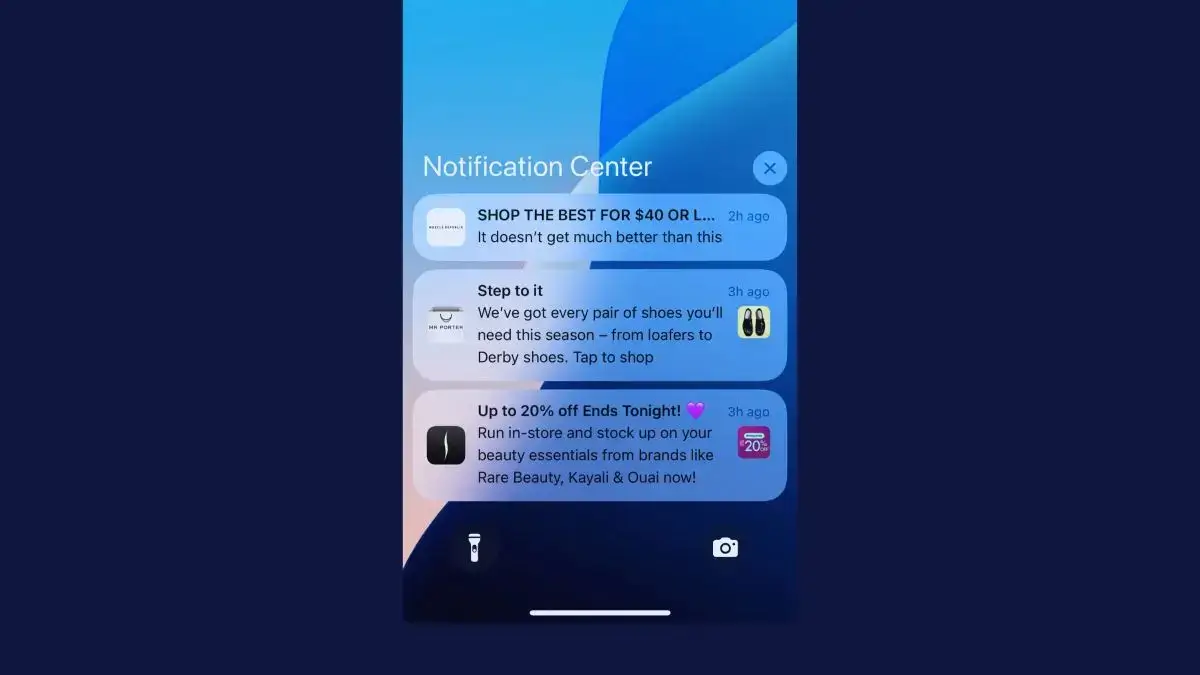
Push notifications are one of the best tools an ecommerce brand has. They land on your customer’s lock screen, cost nothing per message, and bring shoppers back to your app with one tap.
Get the frequency right, and push becomes a direct line to your best customers, driving repeat purchases week after week. Get it wrong, and people turn your notifications off, or delete your app, and you lose that line for good.
So how often should you send them?
This guide gives a look into the push notification frequency from real ecommerce brands, how your frequency should change with the kind of message, and how to find the sweet spot for how often your brand should send push notifications.
How Often Should Ecommerce Brands Send Push Notifications?
Most ecommerce brands should send three to six push campaigns a week, plus automated messages such as abandoned cart reminders and order updates.
We ran a report on how often major brands send push notifications, reviewing nearly 50 shopping apps, recording their activity for our Ecommerce Push Notification Report. We found that the typical app sent 4.5 push notifications a week.
| Push frequency | Share of apps |
|---|---|
| 1 to 2 | 11 of 43 |
| 2.5 to 4 | 8 of 43 |
| 4.5 to 6.5 | 13 of 43 |
| 7 to 10 | 8 of 43 |
| More than 10 | 3 of 43 |
About a quarter of the apps sent one a day or more, and almost half sent five or more a week. At the top, Cider averaged 24 a week, more than three a day. At the bottom, Sephora sent two a week, Gymshark 1.5 and Adidas one.
As the data shows, there’s a sizable discrepancy in regards to how often brands send push notifications. A lot of it comes down to the makeup of your audience, and what kind of notifications you’re sending them.
Why Sending More Can Pay Off
Most brands likely send too few push notifications.
Regular activity keeps your app in your customers’ lives. An app that stays silent for weeks gets forgotten, and when it finally does send something, a lot of customers are likely to turn notifications off (or delete the app).
Airship’s 2026 push benchmarks, based on thousands of apps in 2025, found that apps in the top 10% for pushes per user had 72% more sessions per active user than the average app in their category.
That doesn’t mean every brand should send daily push notifications, or that you don’t have to worry about spamming your users. But familiarity and regularity can earn more sends, and compound your app’s engagement.
The Danger of Sending Too Many Push Notifications
In Airship’s consumer research, published in 2022, 51% of people who opted out did so because they got too many messages too often, ahead of messages that weren’t relevant to them (40%).
When an app sends too many notifications, 42% of people change its notification settings, 39% turn its notifications off completely and 8% delete the app, according to a 2021 YouGov survey of US adults. Only 9% do nothing.
The same survey shows how differently people treat brand promotions and messages from friends. Only 6% thought brand promotions should come more than once a day, while 62% were happy to get personal messages several times a day.
Every customer who turns off notifications is one you can’t reach again for free. So the goal is to send as often as your customers find useful, and no more.
Context Decides How Often You Can Send
Some brands can send far more push notifications than others in the same category, to the same kind of customer. The difference is usually what they send.
Not all push notifications are equal. Customers welcome some and only tolerate others, and how often you can send each kind depends on which it is.
| Type of push | Examples | How often to send |
|---|---|---|
| Transactional | Order confirmations, shipping and delivery updates | Whenever there's a real update |
| Behavioral | Abandoned carts, browse reminders, price drops and back-in-stock alerts | Triggered by what each customer does, with a cap per customer |
| Content and product news | New arrivals, drops, picks, guides and brand stories | Several a week, if they're interesting |
| Promotional | Sales, discount codes and general offers | The most limited, about two or three a week outside big sales |
Transactional Notifications: Send as Needed
Transactional push notifications are the least likely to annoy anyone, because they’re about the customer’s own order. They have real value, so you don’t need to count them toward your weekly limit.
Keep them to real updates, though. One push when an order ships and one when it’s out for delivery is helpful. Three to say an order was received is not.
Behavioral Notifications: Triggered by Each Customer
Behavioral push notifications are sent because of something a customer did, like leaving items in their cart, browsing a category or saving a product that’s now on sale.
Because they’re personal and timely, customers tolerate them more than general promotions. They also only go to the shoppers who trigger them, so they make up a small share of what any one customer sees.
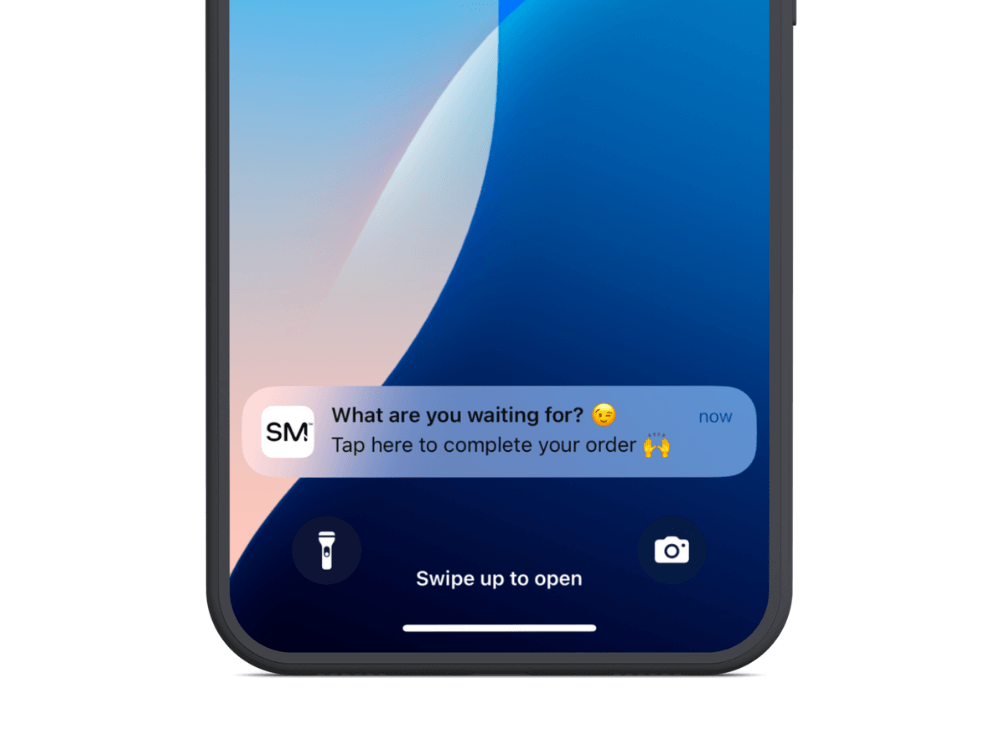
Set a sensible cap per trigger. An abandoned cart flow of one or two pushes works well. Five reminders about the same cart don’t.
Content and Product Notifications: Your Everyday Notifications
New arrivals, product picks, drops and brand content make up most of what leading shopping apps send. In our research, more than two-thirds of all push notifications were about products: new arrivals, picks and sales.
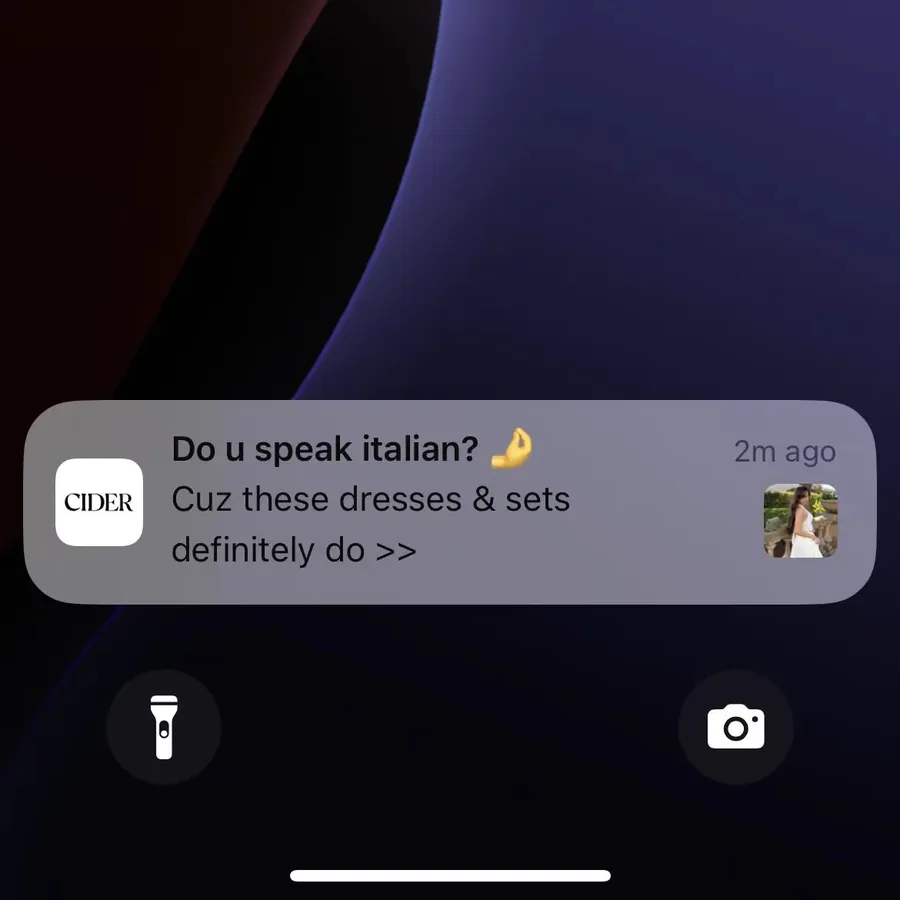
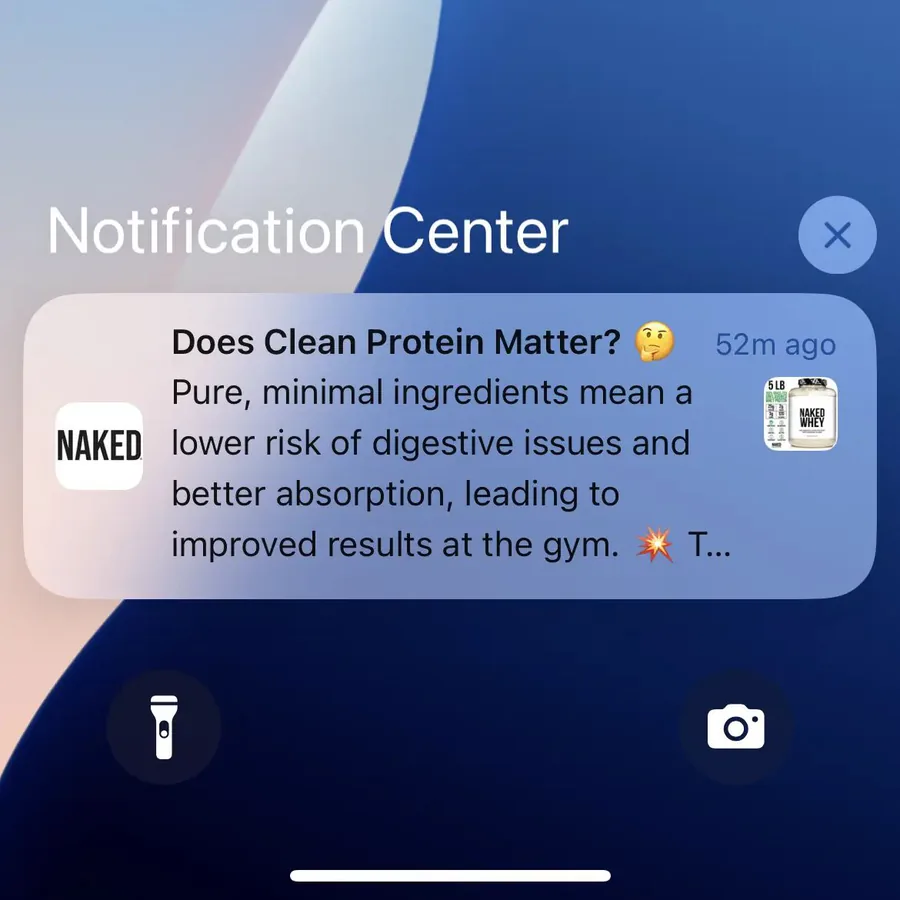
These are the messages that let some brands send every day without losing subscribers. Cider sends around two dozen playful product picks a week, and Naked Nutrition mixes in short fitness and nutrition guides.
Promotional Notifications: Where to Be Careful
The biggest danger in over-sending push notifications is, more accurately, sending too many “salesy” push notifications.
Customers will get tired if, every single day, they’re bombarded with notifications saying something along the lines of “buy this, now!”
This is the kind of thing that’s likely to annoy customers, and lead to them turning off notifications, or deleting the app entirely.
However, promotional notifications don’t always need to be feared. For some brands, customers welcome regular offers. Some brands may do it without feeling intrusive or spammy. Done right, and with the right audience, you may be able to push the volume past what most other brands send.
The Key: The Less Salesy, the More You Can Send
The less your push notifications feel like ads, the more often you can send them.
If your customers enjoy hearing from you, because you tell them about new products, useful content or things they care about, you can message them every day. If every notification asks for a sale, stick to two or three a week, and let transactional and behavioral messages do the rest.
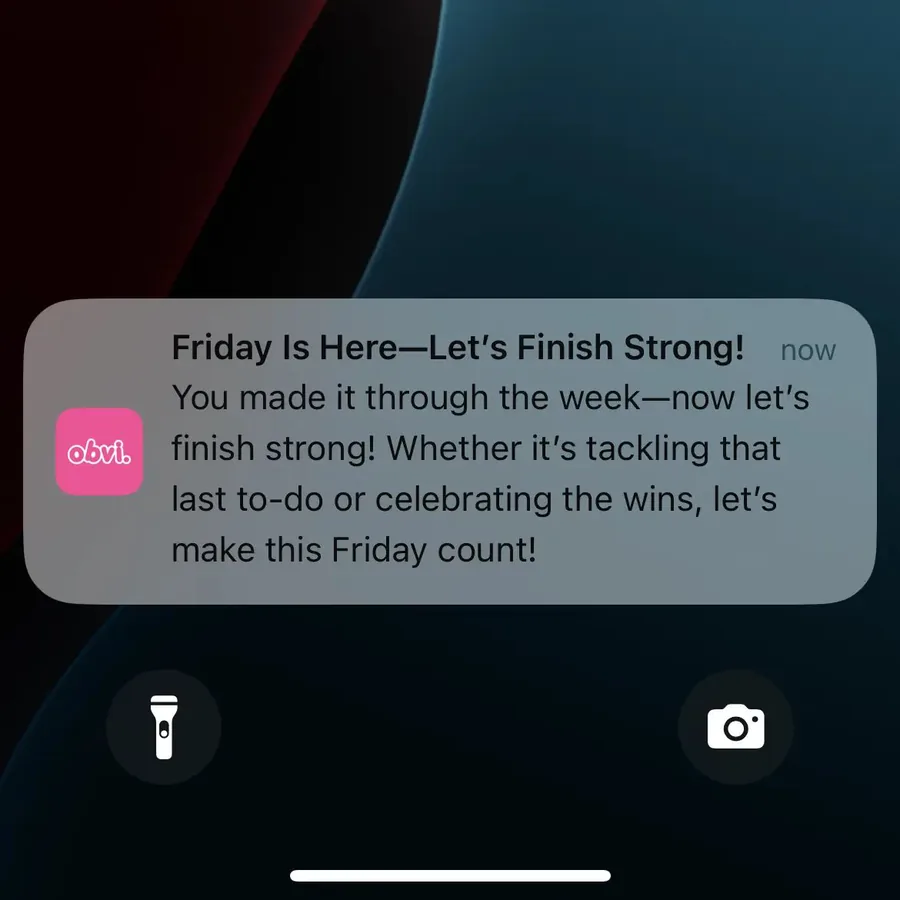
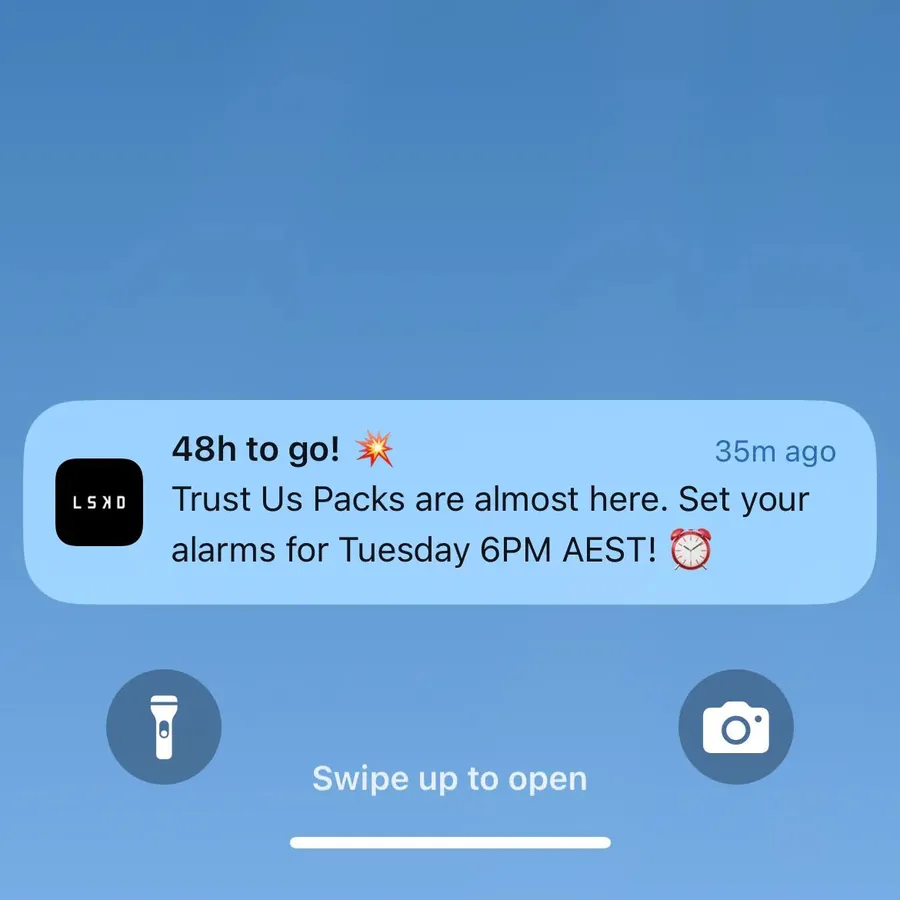
Supplement brand Obvi sends friendly, non-salesy messages, and activewear brand LSKD counts down to its drops, so customers know a launch is coming instead of feeling sold to. Both are good examples of brands that find the sweet spot, and the right way to communicate with their audiences.
High-Frequency Brands: Shein, Temu and Cider
Some brands push the limits on purpose. Fast fashion and marketplace apps like Shein and Temu send push notifications several times a day, with flash sales, coupons, rewards and personalized picks.

That approach suits a business with a huge, fast-changing catalog, low prices and constant new customers. Losing some subscribers is a price these brands accept for the sales that daily pushes bring in.
Most DTC brands have smaller catalogs and fewer new customers coming in, so each subscriber is worth more. Copying a marketplace’s frequency rarely makes sense for them.
How to Find Your Own Ideal Frequency
The sweet spot for how often to send push notifications isn’t something you can copy from a competitor or a benchmark. It depends on your customers, your category, how often people buy what you sell, and how good your messages are.
The way to find it is to test:
- Start at three campaigns a week. Add your automated flows (welcome, abandoned cart, order updates) on top.
- Raise frequency in steps. Add one or two pushes a week, and give each step two to four weeks so you have enough data to compare.
- Watch the right numbers. Track revenue and orders from push, app sessions, opt-outs and uninstalls, not just the click-through rate of each message.
- Stop when opt-outs rise faster than revenue. That’s your ceiling for now. Better messages can move it higher.
- Segment your most engaged customers. People who open the app often can take more messages than those who rarely do.
The mistake a lot of brands make is judging push one message at a time. Since there’s no cost per send, it doesn’t matter whether it takes one push or three to bring someone back to your app.
What matters is overall app engagement and revenue. The real goal is a shopping habit, and push notifications, used well, are the best tool for building one.
Learn more: The Economics of Push Notifications for DTC Brands
Get Your Push Notifications Handled for You
If you’re not sure where to start with push, or you’d rather someone else ran it, we can help.
MobiLoud transforms your website into a custom mobile app, powered by the same underlying code as your website. Your products, accounts, loyalty program and checkout are all there from day one, with push notifications that reach your customers on iPhone and Android.
MobiLoud plans come with an optional done-for-you push notification service. Our team handles strategy and planning, campaigns, analytics and reporting, and sets up key automated flows like welcome messages and abandoned cart notifications.
Final Thoughts
Three to six push campaigns a week is a sensible starting point for most ecommerce brands, with automated messages on top. From there, the best push strategies share a few things:
- They’re tested and adjusted based on data, not assumptions.
- They vary frequency by type, sending transactional updates as needed and holding back on promotions.
- They put relevance ahead of volume, because useful messages can go out far more often than sales pitches.
When you find the right balance, push notifications become one of the most powerful tools you have for repeat purchases, retention and revenue from the customers you already have.