Most of your customers already shop on their phones. Around three-quarters of retail site traffic now comes from mobile, and on Shopify, mobile drove 73% of Black Friday and Cyber Monday sales the last year these numbers were officially reported.
Your business is mobile-first whether you planned it that way or not.
For a Shopify Plus brand, an app is the highest-leverage retention asset you can own, and a core part of your mobile stack.
Yet many Shopify Plus brands, despite doing multiple millions in annual revenue, and paying thousands to Shopify every month, don’t have their own mobile app.
This is a gap - and a gap that, from what I’ve seen, is mostly because brands are unsure on how to approach mobile apps from a strategic point of view.
That’s what this article will fix. It’ll break down the strategic vision for your app, including why it exists, how an app helps your business grow, how to build it right, and the ultimate business case for launching a mobile app for your Shopify Plus brand.
Key Takeaways
- An app is a powerful retention channel. If repeat purchases are important for you, an app is a must. It’ll help you drive a higher volume of repeat purchases, and retain more of your high-spending customers.
- Use your app as a home for your best customers, utilizing app-specific perks, plus the direct line from push notifications to increase engagement and retention.
- When building your app, use one rule to govern the build: your app doesn’t have to be better than your website, but it can’t be worse.
- You don't need most of your customers in the app for it to matter. A small share of customers in your app will drive an outsized share of revenue, which can easily add up to 20-30% of your overall store revenue.
Does Your Shopify Plus Brand Need an App?
The first question is whether you need an app in the first place. In most cases, the answer is yes.
A mobile app is a powerful channel to drive more retention revenue. Our research finds that mobile apps drive stronger revenue metrics in multiple areas: 10-50% higher AOV, up to 7x higher conversion rates, and 3.5-7x higher revenue per user.
The app is a direct, always-on channel to your best customers.
It lives on your customer’s home screen, and gives you access to push notifications, which let you send messages that land instantly on your customer’s lock screen.
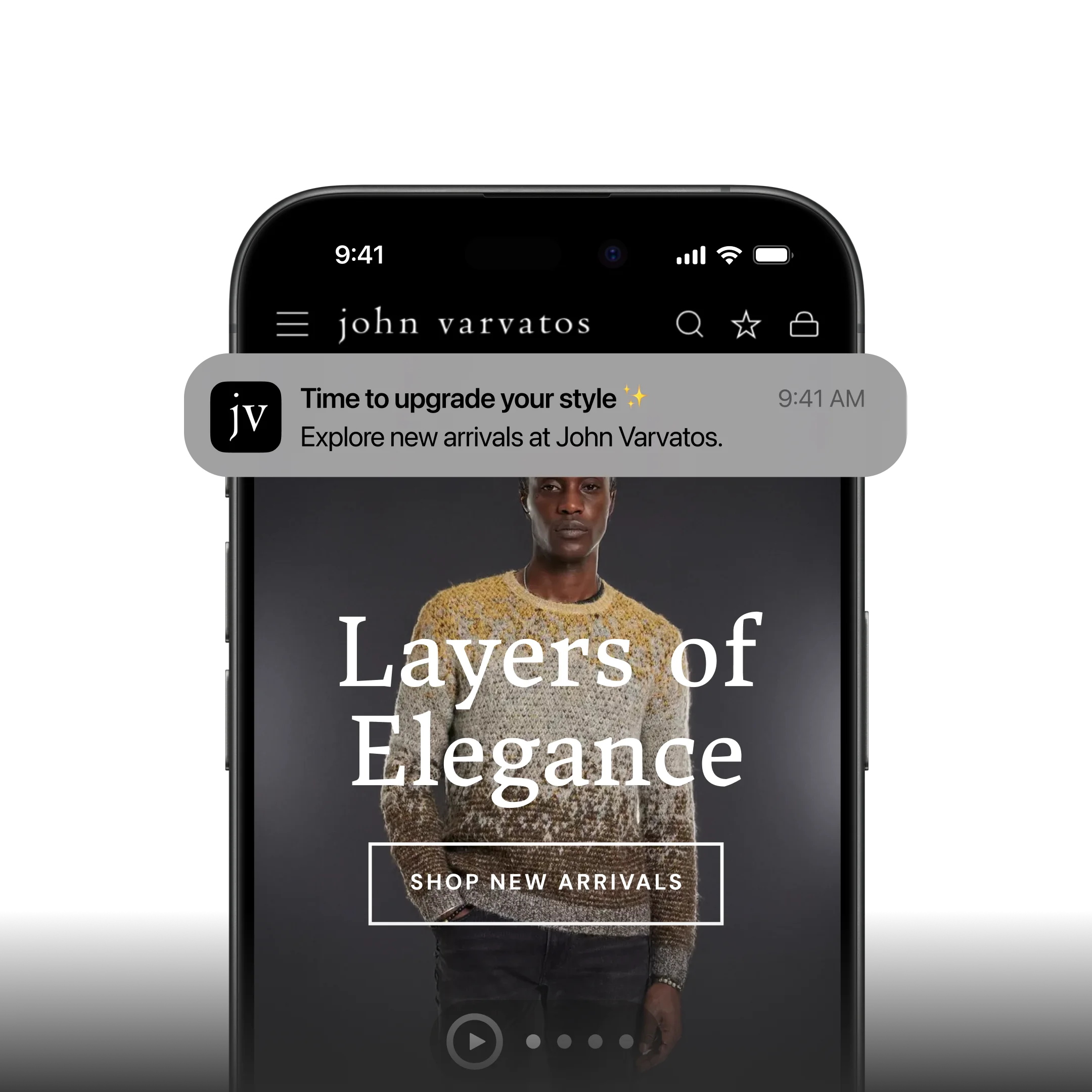
This direct access to your customers means people who download your app shop more often, and stay with you for longer.
When they’re in the app, the mobile-first, contained experience (with none of the distractions of mobile browsers) means they typically shop for longer, view more products, and spend more money.
If repeat purchases are a big part of your business, having an app is a must. This is particularly true for brands in categories such as:
- Fashion
- Beauty, skincare & lifestyle
- Food & beverage
- Grocery
- Sports
- Automotive
- Hobbies
- B2B
The list of categories where an app is a near must is significantly longer than the opposite side.
When You Don’t Need an App
I’m not going to pretend that every single ecommerce brand should have their own app. Not quite.
There are a few situations where it’s not as high a priority (or not the right move to start with):
- Low-scale or early-stage brands doing sub-$1M annual revenue (if you’re on Shopify Plus, this likely doesn’t apply to you)
- Brands with below-average mobile traffic
- Brands that aren’t a natural for repeat purchases
If the retention benefits of an app don’t stand out that much to you, an app might not be the right move.
If your business lives and dies on new customer acquisition and first-sale conversions, that’s not something an app is going to help with.
So if that applies to you, feel free to put the app idea on the backburner.
The Strategic Role of Your App: A Direct Line to Your Best Customers
You’re launching an app to build a stronger, closer connection to your best customers.
When someone downloads your app, they’re self-selecting into a high-intent group. The action of hitting “download”, adding your app to their home screen, is telling you that they like your brand, they love shopping with you, and they want to hear more from you.
That’s the thesis that should guide your Shopify Plus app strategy.
Think of it as a hub for your VIPs. The goal is to reward them for their loyalty, make it easier for them to come back and buy regularly, keep your brand top of mind for them, and sell to them more often (because these are the customers who are, by far, the easiest to sell to).
Want specifics?
Here are a few things to do with your app, that give it a clear, defined role in your overall strategy:
App-Only Perks and Pricing
Exclusivity is the most reliable way to drive installs and reward loyalty at the same time. An app-only discount code, special app-exclusive specials, or members-only pricing makes opening the app worth something in itself.
This does two jobs at once. It pulls customers into the app and onto your push list, which keeps paying you back long after the first download. And it rewards your best customers for being there, which is exactly the group you want to reward.
Shopify Plus gives you more room to run this well. With Shopify Functions and full checkout customization, Plus brands can build more sophisticated and automated discount logic than a standard Shopify plan allows, which makes app-exclusive offers and tiered pricing easier to run at scale.
Early Access and App-First Drops
Launch new products, limited editions, and collaborations in the app first, or only in the app. It makes the app the place to be when something new lands.
Early access rewards loyalty without discounting, so it protects your margins while still feeling like a genuine perk. It also makes app users feel closer to your brand, driving stronger loyalty, on top of the initial spike of your exclusive app launches.
Push Notifications
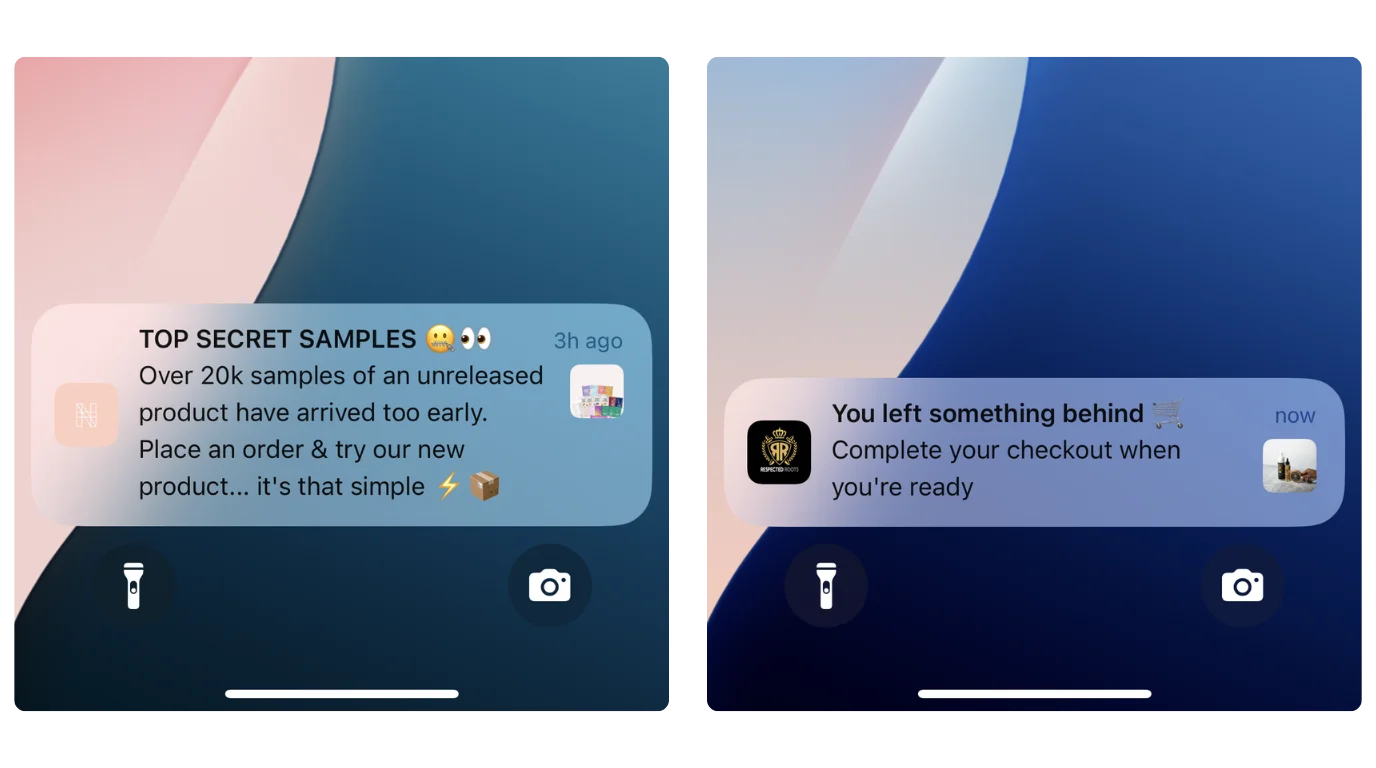
An app lets you send native push notifications: instant, direct messages that light up your customer’s lock screen, and cost nothing to send.
A channel like this is so powerful today - when email open rates are declining, paid retargeting is increasing, and SMS comes with a cost (and regulatory concerns).
Push notifications are one of the best channels for ecommerce brands. They’re perfect for promotions, abandoned cart reminders, new product drops, custom recommendations, and even just simple check-ins that keep your brand top of mind.
BFCM and Other Peak Sales Events
Above all, an app is an owned channel - one where you own the relationship, you own the conversation, the reach.
This is no more valuable than during Black Friday and other major sales events. While everyone else is competing in crowded inboxes, or spending 5x as much on ads, you have a channel with direct access to your customers.
The app is a powerful competitive advantage. Events like BFCM are also a perfect opportunity to get new downloads, by saving your best deals (or priority access) for app users, making it an ideal incentive for someone to get the app.
How to Build Your App
The other strategic angle to think about is how to build your Shopify Plus store’s mobile app in the first place.
Because it is a strategic decision. It’s not just a case of vendor selection. How you build your app, what it looks like, and how it works, are all calls that you need to make (with some thought).
You should have a good idea of what you want your app to be before you start researching app builders or development companies, so your technical choices follow your strategy (not the other way around).
Should Your App Mirror Your Site, or Offer Something More Custom?
Here’s the big picture decision: how unique and differentiated you want your app to be.
Understand there’s no “right” answer here. Both directions are valid.
- Your app is largely a mirror of your website. Same content, same homepage, same store - essentially it is your website, with the browser UI removed and small tweaks and additions to make it look, feel and work like a real mobile app.
- It’s a unique experience. New home page, new sections, new user experience, tailored for repeat shoppers.
For some brands, the app doesn’t really need to do anything new (outside of app-specific functions, like push notifications and the home screen icon).
For others, the idea of the app is to be a unique channel, with a fresh user experience, distinct from your website.
You’ll know what you want from the app. Again, both are legitimate ways to approach it.
The App Can't Be Worse Than Your Site
Whether your app is a unique surface, or something closely linked to your website, there’s one rule that should govern everything.
The app can’t be worse than your website.
This was something first explained to us by David Cost, VP of Ecommerce at Rainbow Shops - a fashion brand with over 1,200 stores across the US, Puerto Rico and US Virgin Islands.
He explained their philosophy on apps:
“In our experience, users break into two camps. There are users who prefer to buy on the app and users who prefer using the browser. You can’t convince one to go the other way, you need to meet them where they are.
Our apps never had any functionality or usability beyond the web experience. The reason to have an app is not to have something that isn’t on the website, but for people who prefer that way to access Rainbow content.
The app needs to be at least as functional as the website. It doesn’t need to be better than the website, but the user experience can’t be worse.”
Too many brands try to create something brand new, delivering a unique user experience, but in doing so end up with an app that’s not as functional as their website.
That means the case for keeping the app installed is tenuous. Why should someone use the app instead of your website, if the website actually does more than the app?
This is one of the most common reasons ecommerce mobile apps fail. Key features from the brand’s website don’t make it to the app, and the value of easy home screen access and slicker UI isn’t enough to overcome that the website is just a more complex user experience.
How MobiLoud Lets You Ship the App You Want
MobiLoud is the best way for just about every Shopify Plus brand to launch a mobile app.
With MobiLoud, you get a mobile app built on top of your existing tech stack. Not a separate channel with a separate codebase (like most other app vendors do).
This means full feature parity by default. Everything from your site automatically works in your app, because it’s using the same codebase and foundation as your website is. You’re not trying to rebuild features that already exist and work on your site.
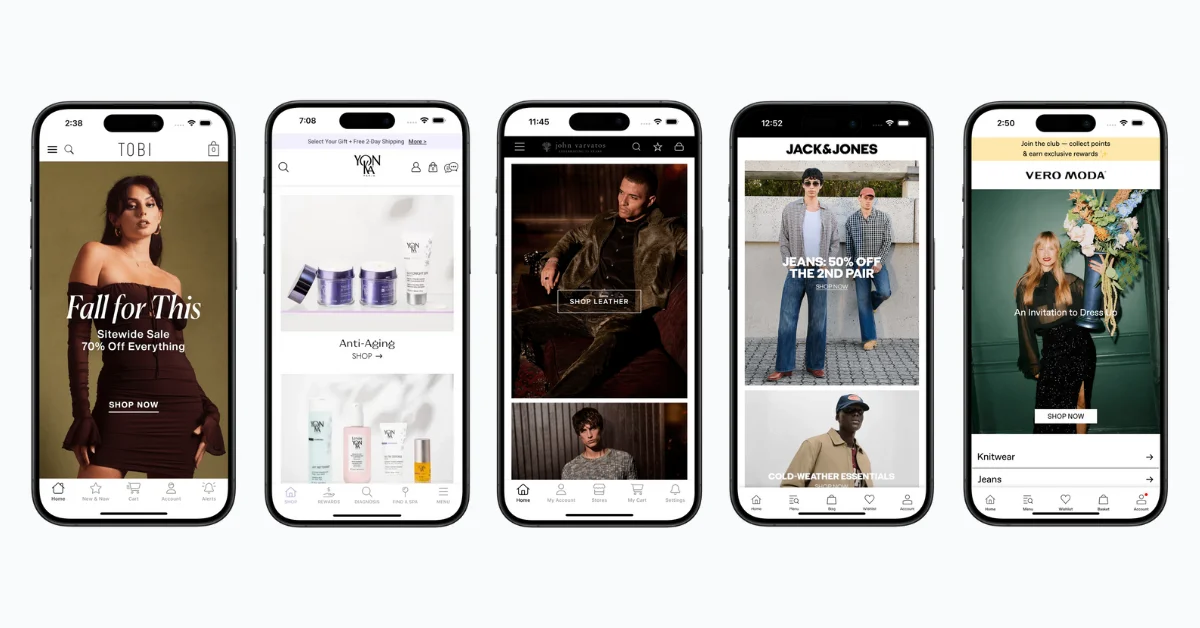
That's particularly valuable for Shopify Plus brands, because many of the custom elements of Shopify Plus sites are difficult to replicate with most standard Shopify mobile app builders.
You can ship your app as a unique experience, with custom app screens, or something more consistent with your website across the board.
Example: see how Cold Culture built a unique experience for their app users with MobiLoud.
It’s easy to manage (since you’re running everything from one platform, not a separate CMS for website and app), and you get an expert team taking care of the app for you.
It’s the right call for perhaps 80-85% of Shopify Plus brands.
If you want very extensive differentiation from your website, and you want to make a lot of incremental changes in the app (essentially, managing it as its own CMS), you may be better off with one of the app builders that work this way (check the App Store or our own breakdown for some of the best options).
But if everything you need to build in your app already exists (or can be done) through your site, MobiLoud is the number one way to go.
What to Expect From Your App (Revenue & ROI)
Lastly, let’s look at the business case for your app.
It’s all well and good to talk about the retention impact and creating a direct line to your best customers, through a channel you own.
But it only matters if that translates to revenue.
Based on real businesses studied in our Ecommerce Mobile App Benchmark Report, we’ve found the following benchmarks to be accurate:
- 3-7x higher LTV from app users
- 10-50% higher AOV
- Up to 7x higher conversion rate
- Total revenue contribution from the app between 10-35%
The last figure means that brands with mobile apps tend to average between 10 to 35% of their total online revenue through their app.
Brands consistently fall within this range (assuming a well-built, well-promoted app).
- Skincare brand Kiokii averages 35% of their online revenue through the app
- Luxury childrenswear brand Junior Couture had 50% of their total online revenue come through their app during the first holiday season it was live
- Retail pharmacy Pharmazone gets a massive 63% of their online revenue through the app
- Men's skincare brand MASC gets 20% of their revenue through the app
These numbers are generally always on a share of customers much less than the share of revenue.
A ballpark estimation, you could expect 5-10% of your regular customers to use the app, and contribute 20-30% of your revenue, once it’s up and running.
At certain revenue thresholds (and assuming that not all of that revenue is net-new, incremental revenue), here are some estimations for what the app could be worth to your business:
| Annual revenue | Total app revenue | Incremental app revenue |
|---|---|---|
| $5M | $1.25M | $0.94M |
| $10M | $2.5M | $1.88M |
| $20M | $5M | $3.75M |
| $50M | $12.5M | $9.38M |
For brands operating at Shopify Plus scale, this kind of revenue channel is too good to not have.
Check out our App Revenue Calculator to spin up an ROI estimate for your mobile app
Final Thoughts
An app is not something to build just to have it.
It’s not just a flashy toy, or something to make your brand look good. It’s a real, strategic business asset.
If repeat purchases and retention are important to your business, you need an app. And if you’re building an app, make sure you do it right: understand who you’re building it for, what kind of user experience they’re looking for, and what features you need and don’t need in the app.
A little time spent getting the direction right for your app will make all the difference on the back end, and set you up to have a powerful, 7-figure plus revenue channel.