Beauty shoppers don't buy once and disappear. They find a foundation that matches, a serum that works, a brand that understands their skin, and they come back. Repeatedly.
That repeat-purchase behavior is exactly what makes beauty one of the strongest verticals for mobile apps.
Mobile apps make it easier for customers to come back, and solidify the relationships that turn a sporadic buyer into a fan.
This guide covers why beauty brands are investing in mobile apps, the features that matter most in this vertical, what you can learn from the apps that Sephora, Ulta, e.l.f., and others have built, and how to get an app like Sephora without the same investment.
Why Beauty Brands Need a Mobile App
Beauty is one of the strongest verticals for mobile apps. Customers already live on their phones and expect a mobile-first shopping experience. An app puts you closer to them, lets you contact them with push notifications, and builds loyalty, which goes further for consumable product categories.
Let’s dive deeper into why just about every beauty brand should have a mobile app.
The Mobile-First Beauty Shopper
Mobile accounts for 59% of digital checkouts in the beauty industry. Social commerce is likely to push this even further, with platforms like TikTok shop making mobile the default way for people to discover and buy products.
Mobile apps are just a better, more stickier channel for mobile sales. An app is easier to come back to, better for habitual browsing, and creates a stronger connection with your mobile-first shoppers.
How App Users Shop Differently
App users shop more often, shop for longer, and spend more than those who shop on mobile web.
App users view 4.2x more products per session than mobile web visitors. They spend 5-7 minutes per session compared to 72 seconds on mobile web. They convert up to 7x more, and spend 10-50% more in each order.
For beauty specifically, these habits appear even stronger. The increased convenience of a mobile app makes it more likely that people will come back when they need to restock, check out complementary products, or make impulse purchases.
Push Notifications: The Retention Channel Beauty Brands Need
Push notifications are one of the strongest reasons to have a mobile app. They reach customers instantly, on their lock screen, with nearly 100% visibility and no per-send cost.
In a time where keeping touch with your customers is getting harder and more expensive, push notifications are like a cheat code.
There’s a wide list of ways that beauty brands can use push notifications to drive revenue. Abandoned carts, promotional notifications, new product launches, replenishment reminders.
When a customer bought a 30-day supply of vitamin C serum six weeks ago, a well-timed push notification can prompt a reorder before they even realize they're running low.
This is part of what makes mobile apps such a powerful asset for consumable brands, where you’re always working to secure the next purchase.
48% of consumers say they've made a purchase as a direct result of a push notification. For a category with high repeat purchase intent, that's a powerful retention lever.
Enhancing Loyalty
Beauty brands run on loyalty, and mobile apps synergize perfectly with loyalty-first brands. For many of these brands, their loyalty program is a key revenue driver.
The numbers from the biggest players tell the story:
- Sephora Beauty Insider: 40M+ members, driving 80% of North American sales
- Ulta Beauty Rewards: 44M active members, generating 95% of revenue
- Bath & Body Works: 37M+ active members, accounting for 80%+ of U.S. sales
- e.l.f. Beauty Squad: 4.5M+ members, with loyalty members having 166% higher lifetime value
An app helps elevate your loyalty program, bringing more people into the program, and making it a focal point.
For brands with mobile apps, the app is the loyalty program. Points tracking, tier progress, exclusive offers, early access to drops; all of it lives in the app experience. 60% of app users remain engaged specifically because of exclusive app-based perks.
What You Can Learn from the Best Beauty Brand Apps
There are plenty of successful mobile apps out there to take inspiration from. Your brand might not be operating on the same scale as Sephora or Ulta Beauty, but you can still learn a lot from the experiences they’ve built for their customers.
Sephora: The All-in-One App
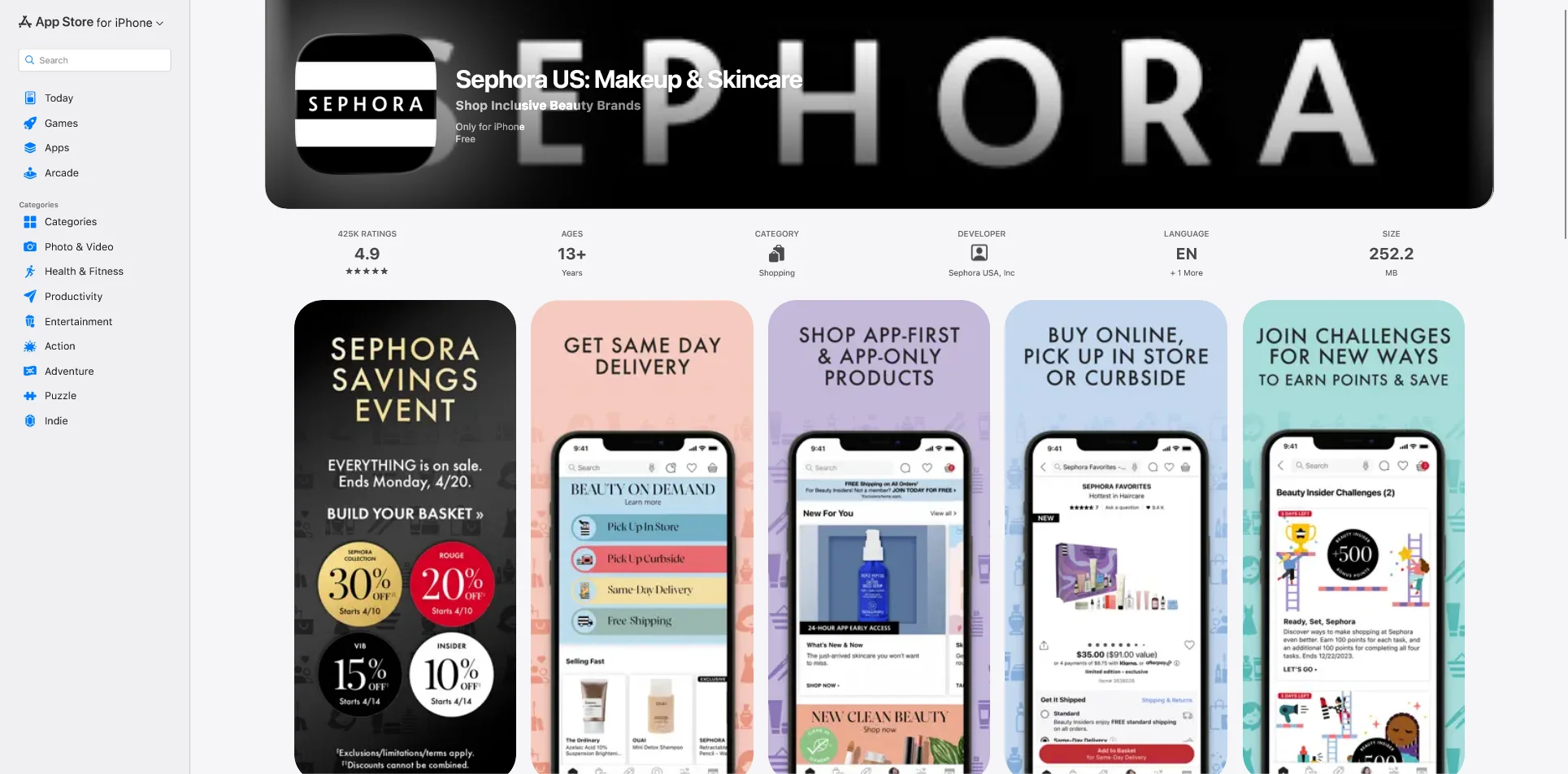
Sephora is the gold standard of beauty brands - especially when it comes to their mobile app.
It combines AR virtual try-on (Virtual Artist), AI-powered recommendations, a three-tier loyalty program (Beauty Insider), virtual consultations with beauty advisors, and, most recently, a ChatGPT integration for AI-curated product recommendations.
The numbers speak to the strategy: they have 40M+ Beauty Insiders globally; 17M North American members drive 80% of NA sales. The app drives 22% more cross-sell revenue and up to 51% higher upsell revenue.
The lesson: The app isn't a shopping channel. It's the hub for the entire customer relationship. Loyalty, education, personalization, and commerce all live in one place.
Ulta Beauty: Loyalty as the Core Experience
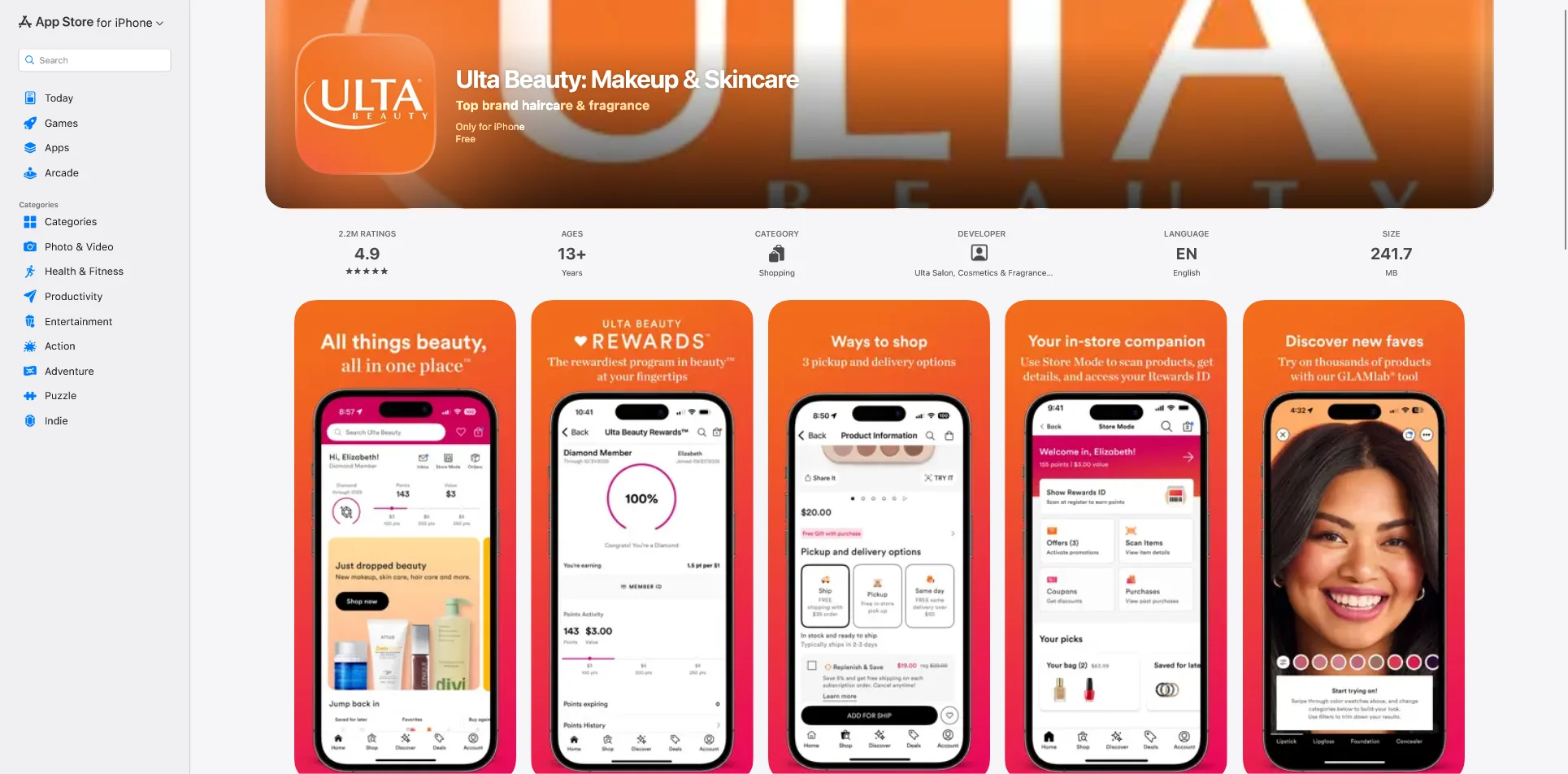
Ulta has 44 million loyalty members, and the most engaged members of their loyalty program contribute the bulk of the revenue.
The app is built around this: GLAMlab for virtual try-on, in-app exclusive offers, store locator with in-store mode, and deep integration with the three-tier rewards program.
The lesson: If your business is loyalty-driven (and most beauty businesses are), the app should be designed around the loyalty experience first, not bolted on after.
e.l.f. Cosmetics: Gamification That Works
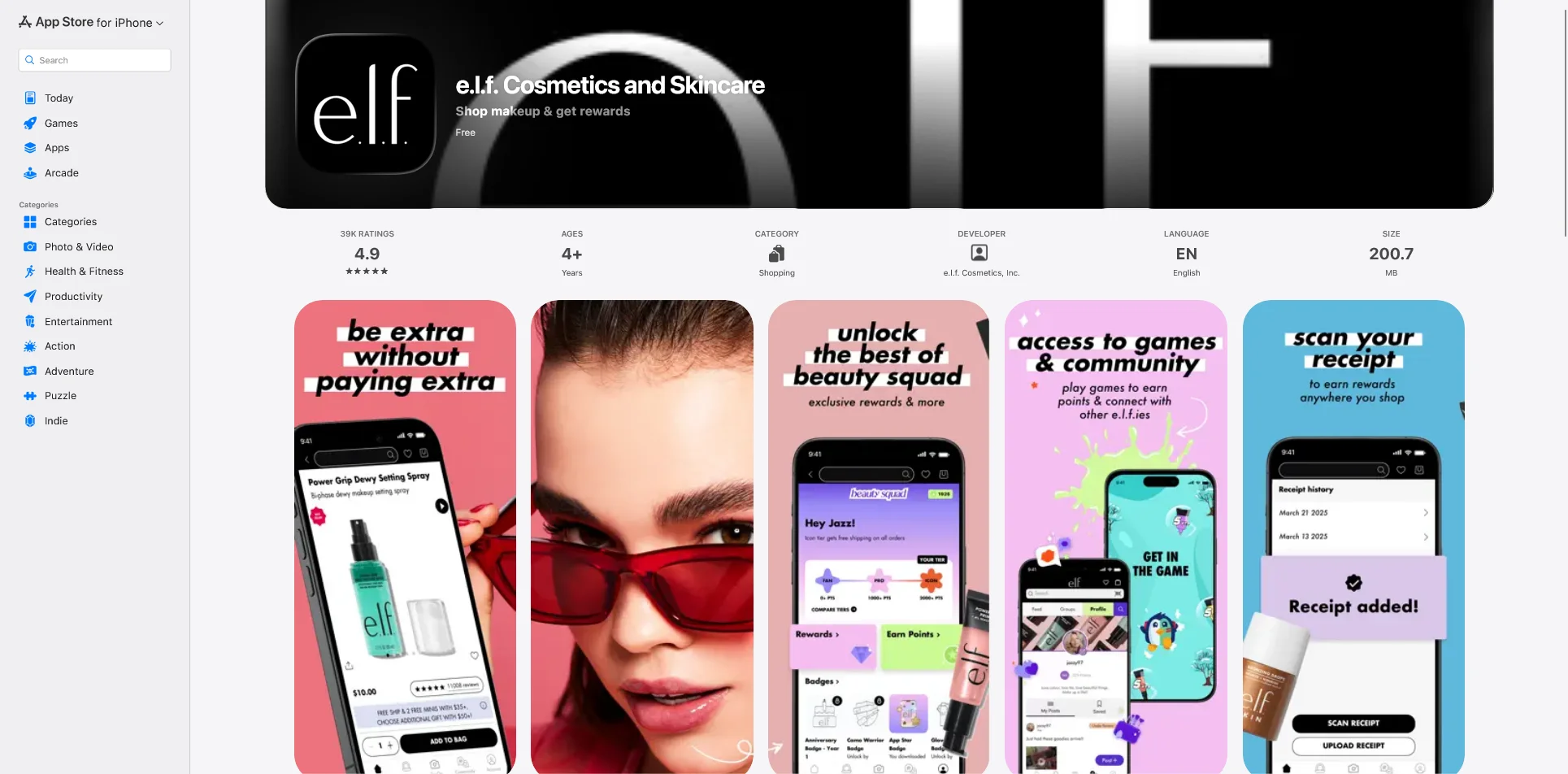
e.l.f. drove a 125% increase in monthly active app users through gamification: mobile games, scavenger hunts, badges, and limited-time challenges. Their Beauty Squad loyalty members have a 166% higher lifetime value than non-members, and loyalty members drive 95% of app transactions.
The lesson: Gamification drives engagement when it's more than a gimmick. e.l.f. connects game rewards to real purchases (gift cards to Chipotle, Target, Amazon), which keeps the loop running.
MAC Cosmetics: Shade Matching at Scale
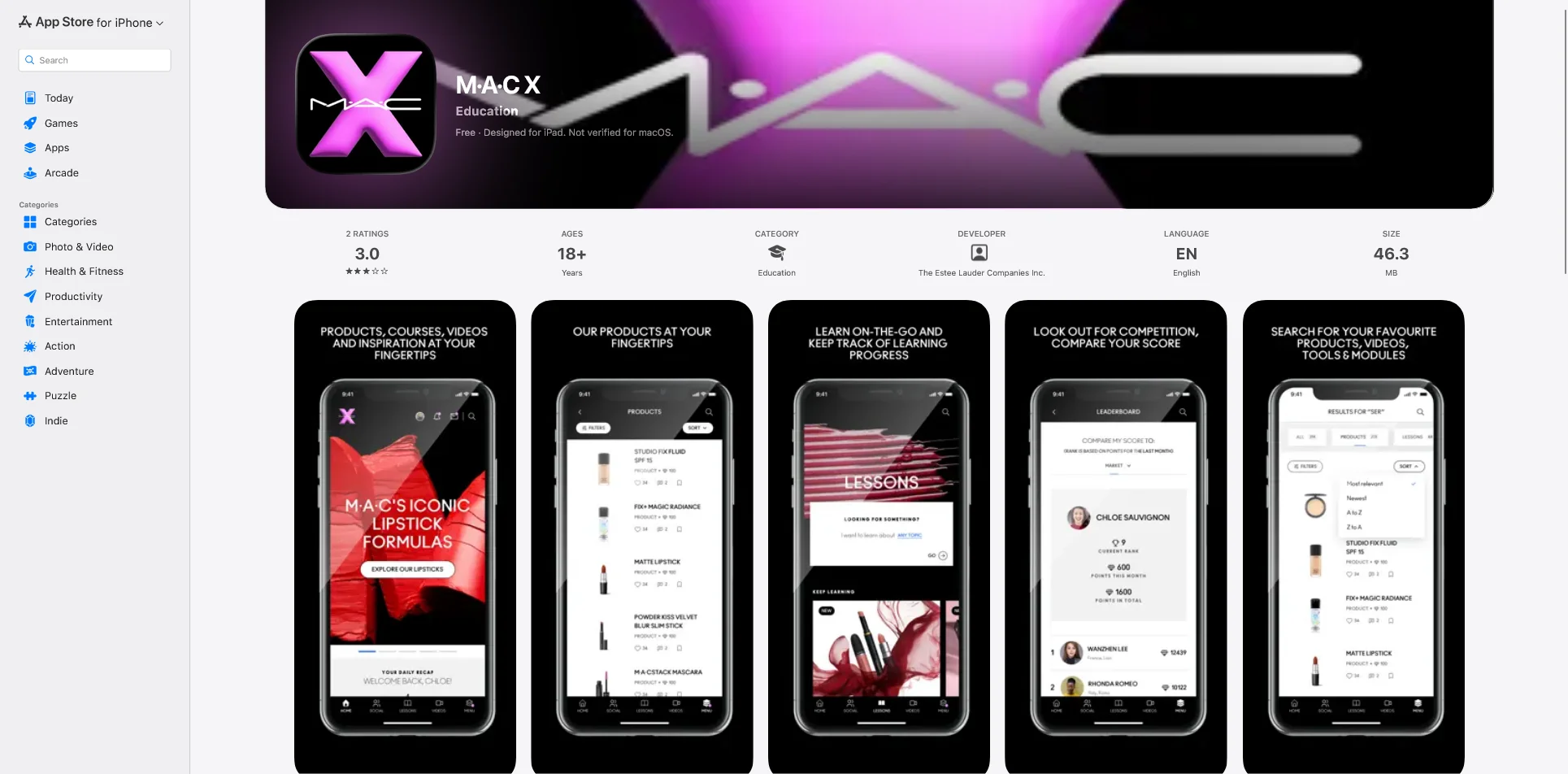
MAC offers virtual try-on across 800+ shades with live camera or photo upload. Their standout feature: cross-brand shade matching, which lets you find your MAC foundation match from another brand's shade.
The lesson: Shade matching is a powerful acquisition tool, not just a retention one. Helping shoppers find their match (even from a competitor's product) builds trust and drives first purchases.
Bath & Body Works: Seasonal Drops and Easy Access
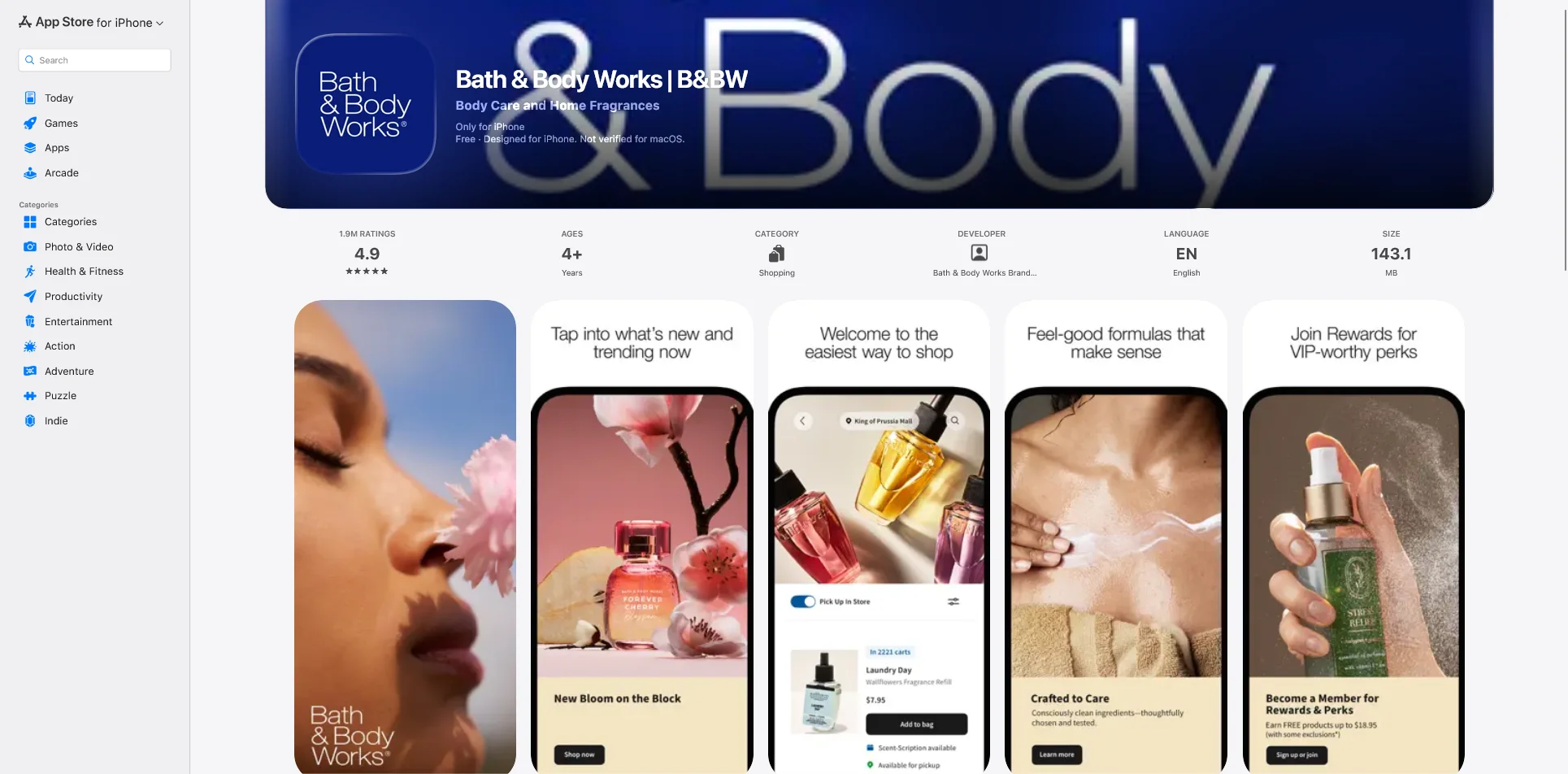
Bath & Body Works' app serves 37M+ loyalty members who account for 80%+ of U.S. sales. The app includes easy access for fast checkout and seasonal drop notifications for limited-edition collections.
The lesson: For brands built on seasonal collections and limited editions, the app becomes the alert channel. Push notifications for new drops drive urgency and reward loyal customers with first access.
Lush: Bridging In-Store and App
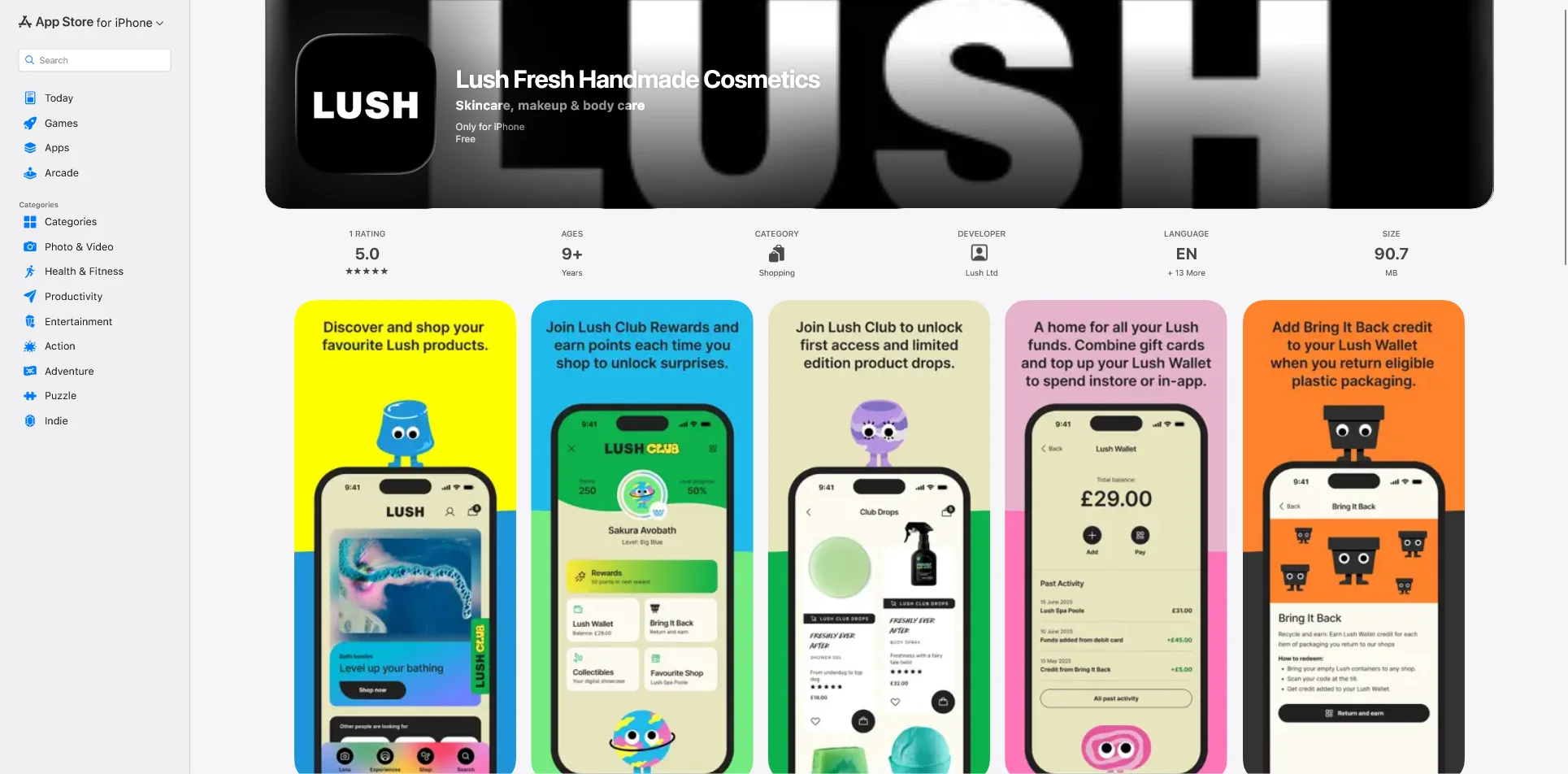
Lush's app includes Lush Lens, which lets customers scan packaging-free products in-store to reveal ingredients, benefits, and how-to-use info. They also offer an immersive "Bathe" feature with audio-visual experiences for bath bomb use.
The lesson: If you sell through physical retail, the app can bridge the in-store and digital experience. It doesn't have to be an ecommerce-only channel.
Kiokii: Convenience & An Active App User Base
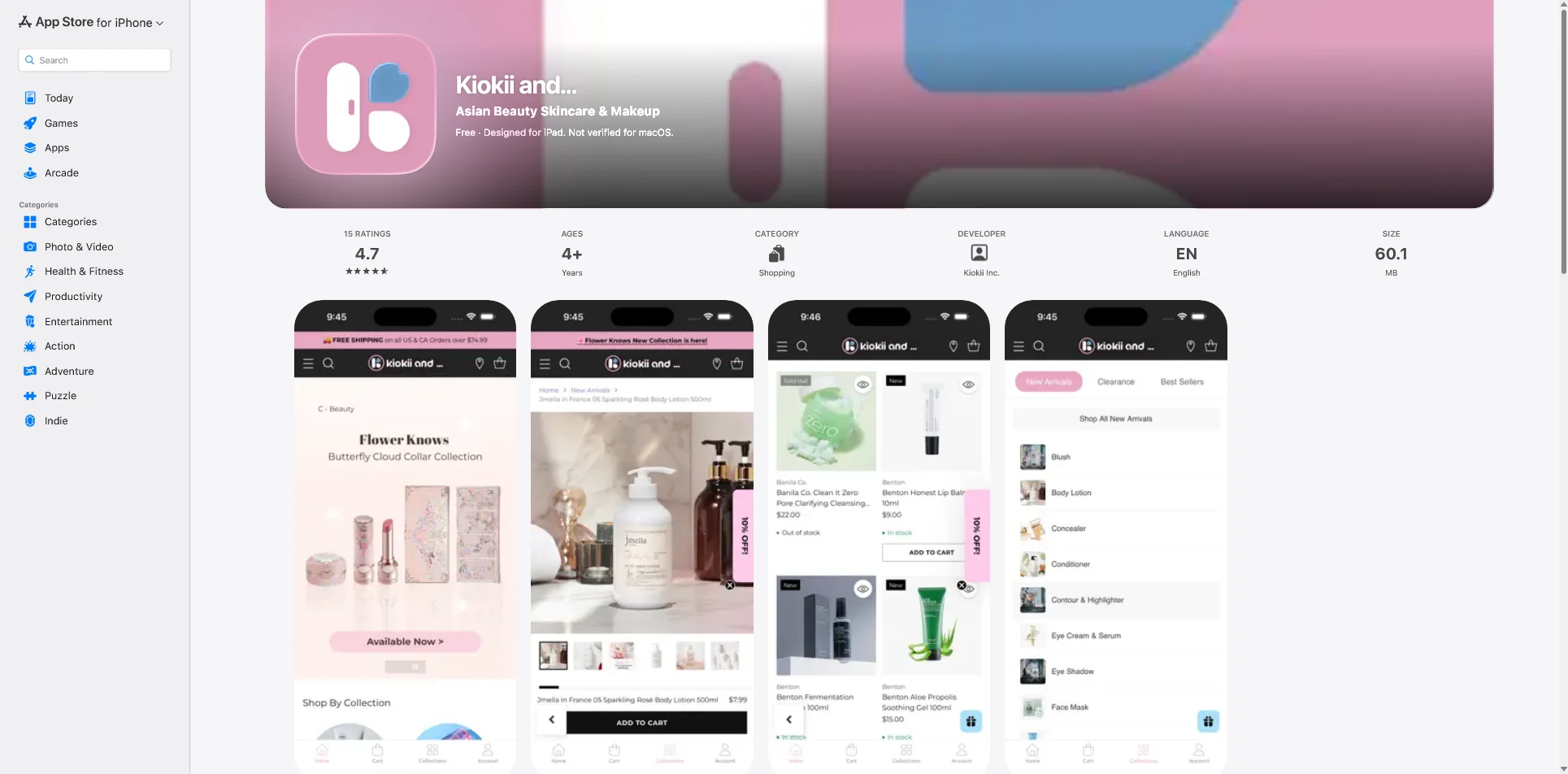
Canadian beauty and lifestyle brand Kiokii and... launched an app for their dedicated base of loyal customers. The app doesn’t offer anything majorly different to their mobile website, yet the extra convenience of being able to access their store via an app has lead to 6.7x higher revenue per user, and a channel that contributes over a third of their total online revenue.
The lesson: Your best customers are ready and waiting to use your app. They want a channel that makes it easier to come back and shop, whether that’s reorders or new purchases.
How a Mobile App Fits in Your Beauty Brand’s Growth Strategy
If you’re looking to build a mobile app, you’re doing it to elevate the impact of repeat customers, and hold on to a higher percentage of your best customers.
Acquisition is one thing. Ecommerce brands, beauty brands especially, are paying more every year to acquire new customers.
The only way to make this work is to get more lifetime value from each customer you bring in.
Mobile apps help you do this. Data shows apps drive up to 7x higher LTV on average - and high performers, particularly retention-driven beauty brands, can easily see even better results.
The Retention Play
The more you’re spending on customers, the more pivotal it is to keep them around.
It’s getting harder to do that with other retention channels; email visibility is declining, and retargeting is getting harder and more expensive.
An app is an always-on presence on the customer’s home screen. It comes with push notifications, which reach the customer directly, at any time.
It keeps your customers closer, maintains constant awareness, and makes your brand a habit - which is what cements long-term retention.
The 80/20 Rule
For the majority of businesses, a small share of customers contributes the bulk of the profit.
That is absolutely true for beauty brands. The majority of your value comes from habitual buyers who spend 20x more than casual customers.
Think of your app as a way to grow this segment. It removes friction from the buying process and increases engagement, incentivizing those who are already your highest-intent customers to spend more.
It also helps bring more customers into your inner circle, increasing the share of high-value customers who power your overall growth.
How an App Complements Your Existing Channels
Don’t think of an app as a replacement for your website, email marketing, or social media.
It sits alongside them, and compliments these channels.
- Your website is for discovery, SEO traffic, and first-time visitors
- Email and SMS nurture leads and drive re-engagement
- Social media builds brand awareness and community
- Your app serves your most loyal customers with the fastest shopping experience, highest engagement, and fewest steps to checkout
The brands seeing the best results use their other channels to drive app installs. Smart banner on your mobile website. A prompt after checkout. A loyalty incentive for downloading.
The app download is a key inflection point; if you can get this to happen, there’s a good chance the customer will stick around for much longer, and that their engagement metrics will shoot up.
How to Build a Mobile App for Your Beauty Brand
Now we get to the practical part - and the biggest objection for most brands. Wanting a mobile app is one thing, but how do you build it?
The misconception: that you need to hire a team of developers, at a cost of six figures plus, to build and maintain your app.
Not today. It’s very realistic for just about any beauty brand today to have their own mobile app.
Here’s how.
MobiLoud: Turn Your Beauty Brand’s Site into a Native App
While there are a few different ways you can go about it, MobiLoud is the best way for most beauty brands to launch their own mobile app.
MobiLoud turns your existing website into a mobile app. Everything you've built on your website (your checkout, your shade finders, your loyalty program, your content) works in the app automatically, and the app and website are fully synced.
This means there’s minimal work required to launch, and maintain your app. And your user experiences across different platforms are always consistent.
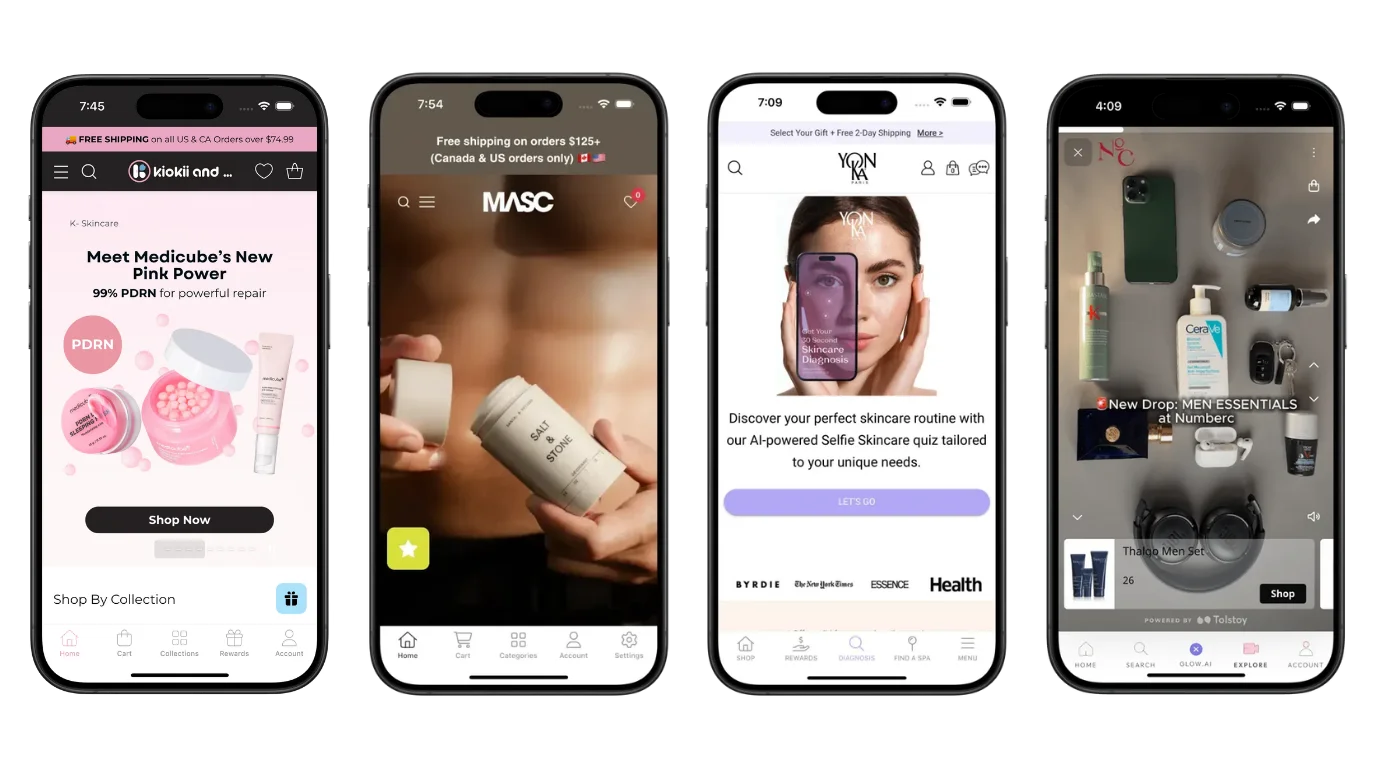
The cost to build an app with MobiLoud starts at $1,499 per month - a significant difference from the $100K+ that you'd typically pay for a custom app, and a drop in the bucket compared to the kind of revenue your app could generate.
Other Ways for Beauty Brands to Launch a Mobile App
Alternatively, you can create your own app using a DIY app builder, or paying developers or an agency to build a custom app from scratch.
The custom app development route is too much for most brands. It costs a lot, adds a lot of operational complexity, all to ultimately replicate a lot of what already exists on your website.
DIY tools are a lot more feasible. The cost is in the same range as MobiLoud’s, and you can compile a clean, unique app experience using the tool’s drag-and-drop app builder.
The difference is, you’ll need to dedicate more time and effort to building and maintaining your app, and the user experience between your website and mobile app may not be consistent. For brands with unique, custom web experiences, the app could end up being relatively vanilla in comparison.
There’s a large number of solid tools available for Shopify brands. Check these out if you’re looking for a DIY solution.
Beauty Brands Seeing Results with MobiLoud
Several beauty and skincare brands have taken the web-to-app approach and seen measurable results.
Kiokii, a Canadian beauty and cosmetics retailer, launched their app with MobiLoud and saw 35% of their total online revenue shift to the app. App users convert at 2x the rate of mobile web visitors, engage in 3x more sessions, and generate 6.7x higher revenue per user. With a two-person ecommerce team, they needed something that didn't require ongoing technical maintenance.
"MobiLoud made launching our app fast, simple, and incredibly effective. With minimal effort, we're seeing strong results and higher engagement. It runs almost on autopilot, and drives revenue."
-- Summer Duan, Ecommerce Manager, Kiokii
Luxury skincare brand Yon-Ka Paris wanted push notifications and a presence on their customers' home screens to drive loyalty and retention. Their custom Yotpo loyalty program carries over into the app, with extra points for in-app purchases.
"We wanted an app to be in our customers' pockets, on their phone directly, be able to send push notifications, and be on top of their mind, increase loyalty and retention, to in the end increase revenue."
-- Raphael Faccarello, Head of Ecommerce, Yon-Ka Paris
MASC, a men's skincare brand, saw 5.1x higher revenue per user in the app compared to web, with app users converting at 3x the rate. The app now drives 20% of their total online revenue. The MobiLoud approach is perfect for their site, which is built on innovative reel-style shoppable videos, which most DIY app builders can’t fully replicate in a mobile app.
“MobiLoud allowing us to use all the features that we already pay for with other companies is important.”
-- Patrick Levesque, Co-Founder, MASC
NumberC, a health and beauty retailer in Kuwait, sees 20-30% of total company sales through their app, with 3x higher engagement time per user.
"We wanted everything to reflect on the mobile app. We have a lot of features and a lot of apps right now installed on our website, and all of them are reflecting seamlessly to the mobile app as well."
-- Zawar Kamal, CEO, NumberC
See more examples of ecommerce brands having success with MobiLoud and mobile apps.
Your Beauty Brand Deserves a Mobile App
The beauty vertical has one of the strongest cases for mobile apps in all of ecommerce. High repeat purchase rates, loyalty-driven purchasing behavior, a mobile-first customer base, and product categories that lend themselves to personalization and replenishment.
If you have a brand with steady repeat traffic and a strong image, you’ve already done the hard part. It’s time now to elevate your brand, and build stronger loyalty and customer relationships, with a mobile app.
You don't need to build what Sephora built. A well-executed app that extends your existing website into iOS and Android, with push notifications, loyalty integration, and a low-friction shopping experience, can deliver meaningful revenue within the first month.
MobiLoud is the easiest, and most scalable, way to launch your own mobile app. The process is extremely simple - just three steps, and you could be live in 6 to 8 weeks.
- Book a free strategy call. We'll walk you through a free app preview, answer your questions, and break down the business case for your mobile app.
- We build the app. MobiLoud handles everything: setup, design, configuration, testing, and app store submission.
- Go live in. In a number of weeks, your app launches on iOS and Android. MobiLoud handles all ongoing technical maintenance.
If you’re ready to explore what an app could do for your brand, and how MobiLoud can help you bring it to life, get in touch.
Get a free app preview to see what your app could look like, learn more about the process, and get the ball rolling.