
Omnichannel vs Multichannel Ecommerce: What's the Difference (and Why It Matters)

Multichannel ecommerce means selling on multiple channels. Omnichannel ecommerce means those channels are connected, sharing data and delivering a consistent experience. The difference isn't semantics: omnichannel brands retain 89% of customers compared to 33% for those with weak cross-channel integration, and see 30% higher customer lifetime value.
Multichannel ecommerce means selling on multiple channels. Omnichannel ecommerce means those channels are connected, sharing data and delivering a consistent experience. The difference isn't semantics: omnichannel brands retain 89% of customers compared to 33% for those with weak cross-channel integration, and see 30% higher customer lifetime value.
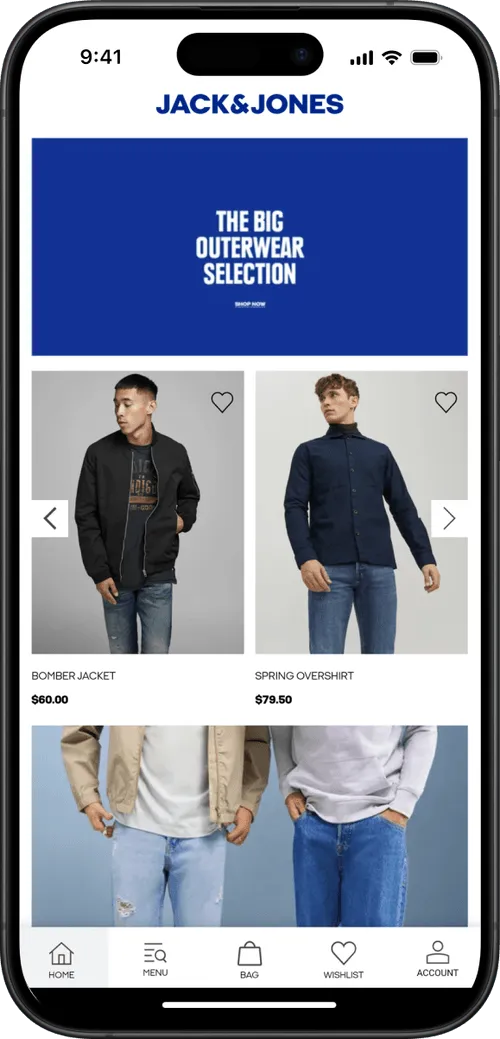
Most ecommerce brands today sell through multiple channels: a website, a mobile app, email, social commerce, maybe even physical retail.
But being present on multiple channels and actually connecting those channels are two very different things.
These terms can be wishy-washy, they can be confusing. But the distinction is important to understand, if you really want to optimize your ecommerce experience for the way consumers buy today.
This guide breaks down what each strategy actually means, how they differ in practice, and how to evaluate your brand’s approach.
What Is Multichannel Ecommerce?
Multichannel ecommerce is a strategy where a brand sells products through more than one channel.
These channels typically include a website, a mobile app, social media storefronts, email campaigns, marketplaces like Amazon, and sometimes physical stores.
The defining characteristic of multichannel is that each channel operates independently.
- The website team manages the website.
- A separate agency or team builds the mobile app.
- Email marketing runs on its own platform with its own customer data.
- The marketplace listing has its own inventory feed.
Multichannel is channel-focused: the goal is to be present wherever customers are shopping. Each channel has its own goals, its own metrics, and often its own version of the customer experience.
Multichannel Ecommerce Example
A Shopify brand sells through their website, has a separate mobile app built by a development agency, runs email campaigns through Klaviyo, and lists products on Amazon. A customer who adds an item to their cart on the website won't see it in the app. A loyalty discount earned in-store doesn't apply online. Each channel works, but they don't work together.
What Is Omnichannel Ecommerce?
Omnichannel ecommerce is a strategy where all of a brand's sales channels are integrated into a single, unified customer experience.
The customer can start shopping on one channel, continue on another, and complete their purchase on a third without losing context, data, or functionality.
The defining characteristic of omnichannel is that it's customer-centric rather than channel-centric. Instead of optimizing each channel independently, omnichannel brands optimize the overall customer journey across all touchpoints.
Brands often cited as omnichannel leaders include Nike (unified app, website, and retail experience), Starbucks (loyalty rewards that work identically across app, web, and in-store), and Target (seamless BOPIS and same-day delivery tied to their app).
Omnichannel Ecommerce Example
A customer browses products on a brand's mobile app during their commute, adds items to their cart, then opens the website on their laptop at home and finds the same cart waiting. They use a discount code from an email campaign, choose buy-online-pick-up-in-store (BOPIS), and receive a push notification when the order is ready. After pickup, they get a follow-up email with personalized recommendations based on their full purchase history across all channels.
Learn more: The Omnichannel Mobile App: How to Add an App Channel Without the Complexity
What's the Difference Between Omnichannel and Multichannel?
All omnichannel strategies are multichannel, but not all multichannel strategies are omnichannel.
The key difference is integration.
Channel Integration vs Channel Presence
Multichannel is about presence: being on multiple platforms. Omnichannel is about integration: making those platforms work as one system.
A brand with a website, an app, and an email list is multichannel. A brand where those three channels share customer data, cart state, and promotions in real time is omnichannel.
Customer Data: Unified vs Siloed
In a multichannel setup, your email platform knows what campaigns a customer clicked. Your website knows their browsing history. Your app knows their push notification preferences. But none of these systems share that information with each other.
In an omnichannel setup, every interaction feeds into a single customer profile, often managed through a customer data platform (CDP). This means your email campaigns can reference in-app behavior, your app can surface products the customer browsed on the website, and your support team can see the full customer history regardless of which channel the customer used.
Experience Consistency Across Touchpoints
73% of retail shoppers engage across multiple channels during their buying journey. In a multichannel setup, each transition is a potential friction point: pricing may differ, promotions may not carry over, and the customer may need to re-enter information.
In an omnichannel setup, the brand looks, feels, and functions the same everywhere. Product pages have the same information. Checkout flows work the same way. Loyalty points earned on one channel are immediately available on every other channel.
Why Does Omnichannel Outperform Multichannel?
The performance gap between multichannel and omnichannel brands is well documented.
- Retention: Retailers with strong omnichannel engagement retain 89% of their customers, compared to a 33% retention rate for companies with weak cross-channel strategies. That's nearly three times the retention.
- Revenue growth: Companies with strong omnichannel strategies see 9.5% year-over-year revenue growth, compared to 3.4% for those without.
- Customer spending: Omnichannel shoppers show 250% higher purchase frequency and 13% higher average order values. Their lifetime value is 30% higher than single-channel shoppers.
- Cart abandonment: Retailers implementing unified commerce see 18% lower cart abandonment rates, likely because consistent experiences reduce the friction that causes customers to drop off.
For a brand doing $10M+ in annual revenue, closing even part of this gap could mean hundreds of thousands in additional revenue, driven not by acquiring new customers but by serving existing ones better across every touchpoint.
What Are the Challenges of Implementing Omnichannel Ecommerce?
Omnichannel sounds straightforward in theory. In practice, 64% of ecommerce marketers cite the need for more resources and investment as the top barrier to implementation.
Tech Stack Fragmentation
The most common barrier is technology. Many brands end up with what amounts to a fragmented stack:
- Their website runs on Shopify or BigCommerce
- Their app was built by a separate agency
- Their email and SMS run through Klaviyo or Omnisend
- Their loyalty program lives in another system
- Their POS handles in-store transactions
Each tool may be excellent on its own, but getting them to share data and deliver consistent experiences requires middleware, custom integrations, and ongoing maintenance.
The irony: brands invest in multiple channels to reach customers everywhere, then spend just as much trying to make those channels talk to each other.
Maintaining Consistency Across Channels
When your website and app are separate codebases maintained by different teams, they inevitably drift apart.
A promotion goes live on the website but hasn't been updated in the app. Product descriptions differ. The checkout flow works slightly differently.
Every inconsistency is a seam your customers can feel, and every seam is a potential drop-off point.
Organizational Silos
Technology is only part of the problem. When different teams own different channels with separate KPIs, they optimize for their channel rather than the overall customer experience.
The email team maximizes opens and clicks; the app team maximizes downloads and sessions; the web team maximizes conversion rate. Nobody owns the cross-channel journey.
How to Build an Omnichannel Ecommerce Strategy
You don't need to overhaul everything at once. The most effective path is to reduce the number of systems powering your customer experience, so channels become different views into the same store rather than separate projects.
The Shared Infrastructure Approach
The brands that get omnichannel right tend to share one principle: every channel should be an extension of the same core experience, not a separate product with its own roadmap and codebase.
Consider what happens when your mobile app is built on top of your existing website rather than from scratch. Same product data. Same checkout. Same promotions. Same loyalty program.
The app becomes a native delivery mechanism for an experience you're already maintaining, not a separate product that drifts further from your website with every update.
This is the approach that scales. Not more channels running independently, but fewer systems powering a consistent experience across every touchpoint.
Omnichannel Consistency Audit: 6 Questions to Ask
Before investing in new channels or technology, audit what you have. Every "no" below is a gap in your omnichannel experience:
- Cart continuity: If a customer adds items on one device, do they appear on another? Test this from website to app and back.
- Promotion parity: Are current sales, discount codes, and loyalty offers identical across every channel?
- Account unity: Does a customer have one account that works everywhere, or separate logins for website, app, and loyalty program?
- Communication coordination: Do push notifications, email, and SMS complement each other, or overlap? Would a customer feel spammed?
- Support continuity: Can a support agent see a customer's full order history across all channels without asking?
- Content consistency: Open the same product page on your website and app side by side. Same images, descriptions, reviews, and price?
How Do Mobile Apps Fit Into an Omnichannel Strategy?
For most ecommerce brands, the mobile app is the channel with the highest omnichannel potential and the highest fragmentation risk.
Mobile commerce accounts for a growing majority of ecommerce traffic. And most mobile shoppers find it more convenient to shop in an app.
A native app offers push notifications, home screen presence, and faster performance, all of which drive the repeat engagement that omnichannel depends on.
But when your app is built as a separate product from the website, it becomes another silo to maintain, another source of inconsistency.
This is exactly why, at MobiLoud, we take the approach of extending your existing website into a native iOS and Android app.
Instead of rebuilding your store as a separate mobile product, MobiLoud delivers your full website experience as a native app. Same product catalog, same checkout, same promotions, same everything.
Your app and website stay in sync automatically because they share the same infrastructure.
The result is true omnichannel consistency between your two most important digital channels, without the integration overhead that usually makes it so difficult.
If you're evaluating how to bring your channels into alignment, book a free demo and we'll walk you through how it works for brands like yours.
FAQs

Convert your website into a mobile app






.webp)
