How (and Why) to Customize Your Shopify Checkout & Post-Purchase Pages

Most Shopify merchants don’t think much about their checkout.
Why would you? Shopify Checkout works out of the box. It’s fast, optimized, and trusted by millions of buyers.
So the focus usually stays on product pages, ads, and traffic.
But what many brands don’t realize is this:
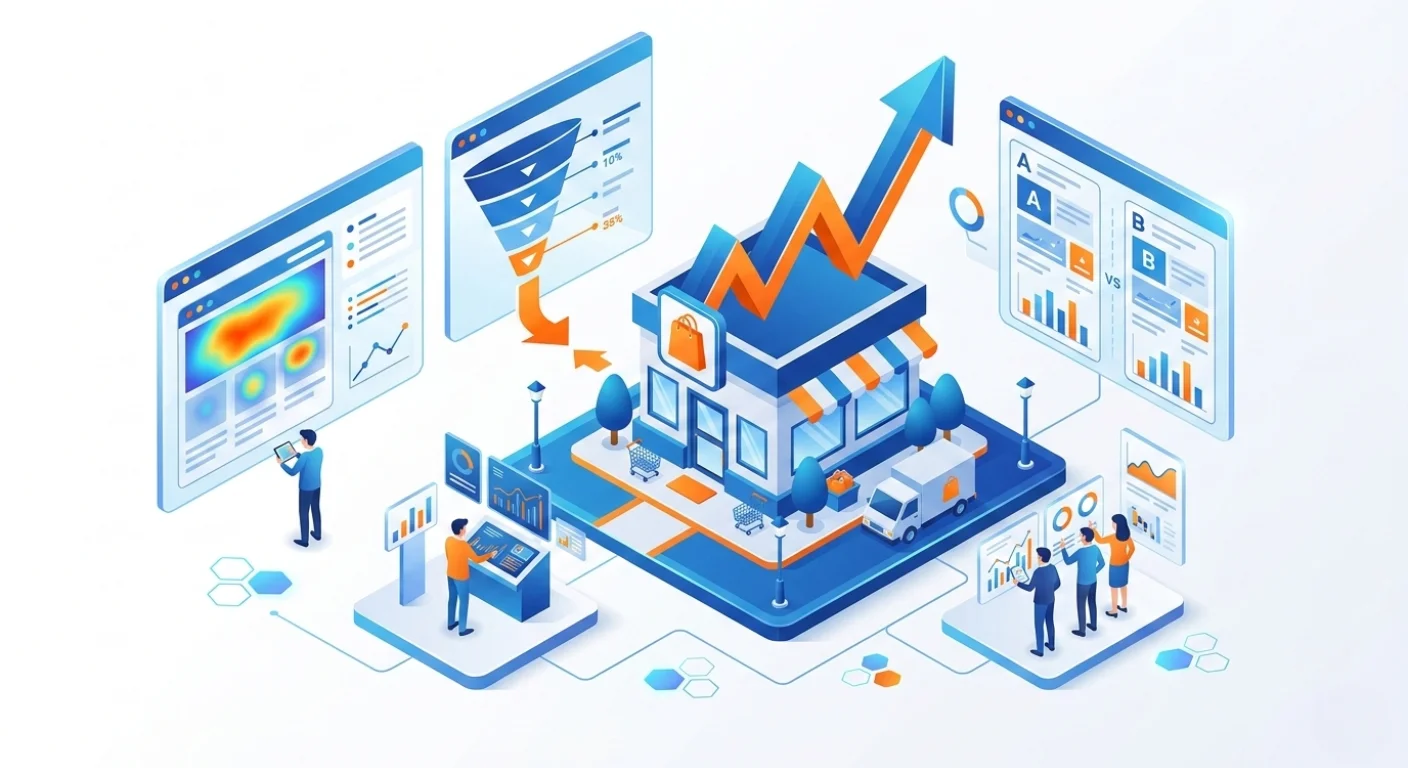
Your checkout and post-purchase pages are some of the highest-leverage opportunities to increase revenue.
This guide breaks down why customization matters, who it’s best for, and how to actually implement it without unnecessary complexity.
Why Your Checkout Deserves More Attention
Every customer who converts passes through checkout.
You’ve already done the hard work:
- Acquired the customer
- Built trust
- Got them to add to cart
Now it comes down to execution.
Even small improvements at this stage can lead to:
- Higher conversion rates
- Increased average order value (AOV)
- Fewer abandoned checkouts
Unlike acquisition, these gains apply to every order.
This is exactly why more brands are starting to invest in tools like Checkout Plus to optimize what happens after the add-to-cart moment.
Customers Are Still Deciding at Checkout
A common misconception is that, when a customer reaches checkout, their buying decision is already made.
In reality, customers are still evaluating, and asking questions:
- Is this brand trustworthy?
- Are there any surprises?
- Is this worth it?
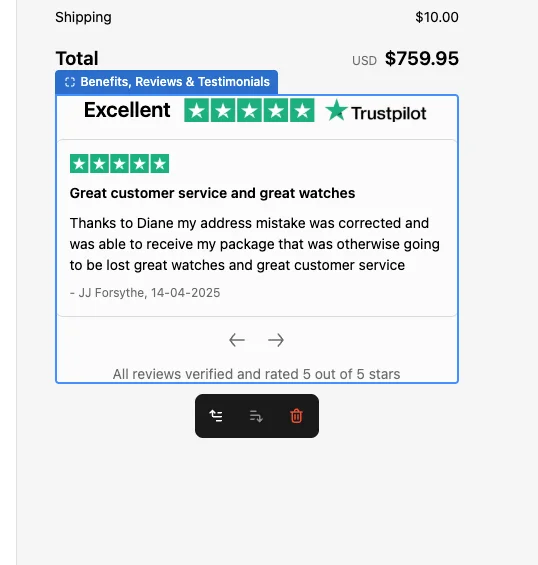
This is where thoughtful customization can make a meaningful difference.
Adding elements like trust badges, clear messaging, delivery expectations and highlighting benefits can reinforce confidence and reduce hesitation at the final step.
It doesn't take a lot of work - certain Shopify apps allow merchants to introduce these elements without needing to rebuild their checkout experience.
Increasing AOV Without Increasing Traffic
Increasing revenue doesn’t always require more traffic.
Often, the biggest opportunity is increasing how much each customer spends - which leads to more revenue, from the same traffic.
Checkout and post-purchase moments are uniquely effective for this because:
- Purchase intent is already high
- Friction is minimal
- Attention is focused
This is where specific tactics can have a measurable impact, like:
- Product recommendations
- Free gift thresholds
- Cart value messaging
Using an app for this is a great way to be able to test and iterate quickly.
The Untapped Potential of Post-Purchase
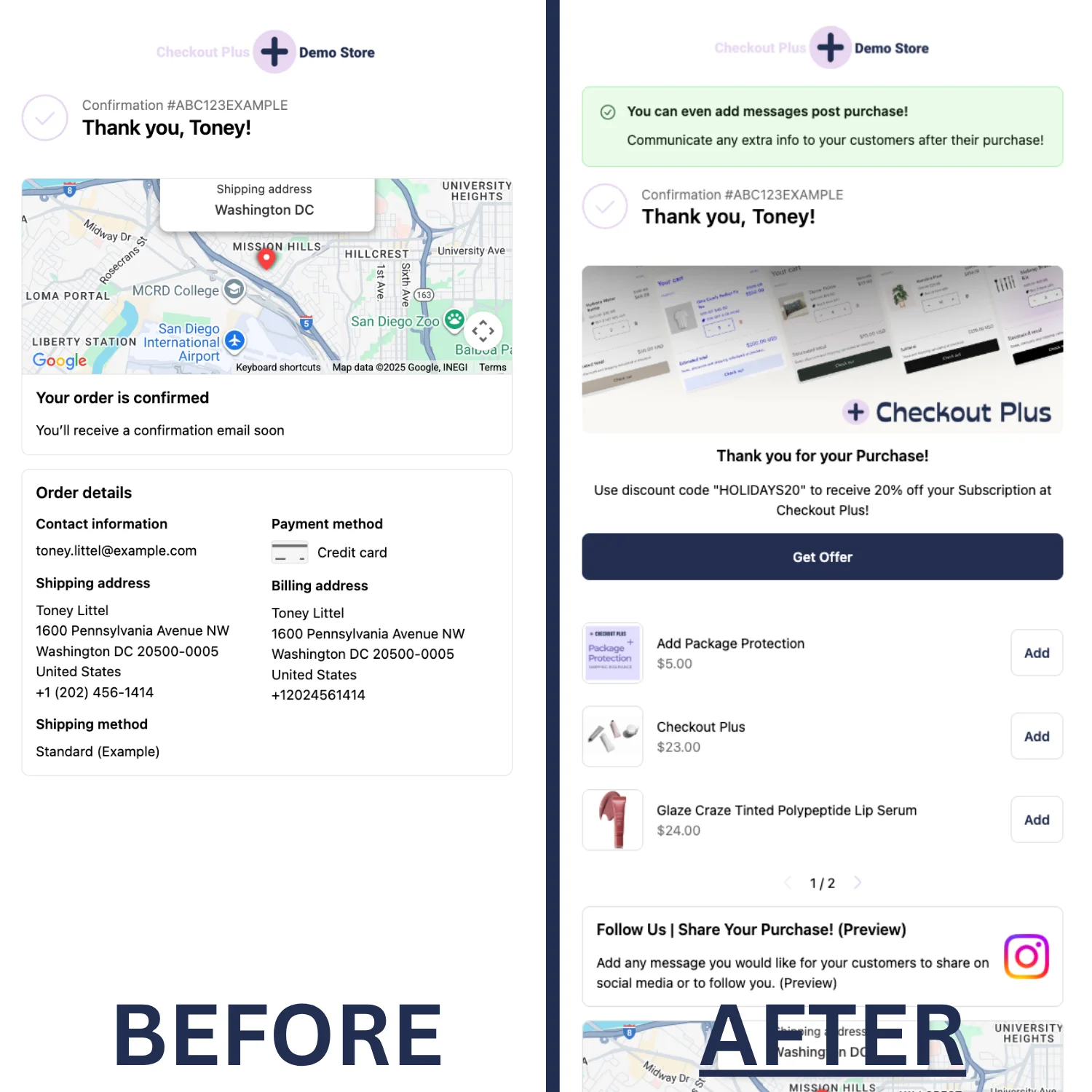
The thank you page is one of the most overlooked assets in ecommerce.
At this point:
- The customer has already purchased
- Trust is at its peak
- Engagement is still high
Yet most stores leave this page untouched.
With a few thoughtful additions, this page can be used to:
- Introduce additional offers
- Encourage repeat purchases
- Collect customer insights
- Strengthen brand connection
Extend your checkout strategy into post-purchase can turn this page into a meaningful revenue driver.
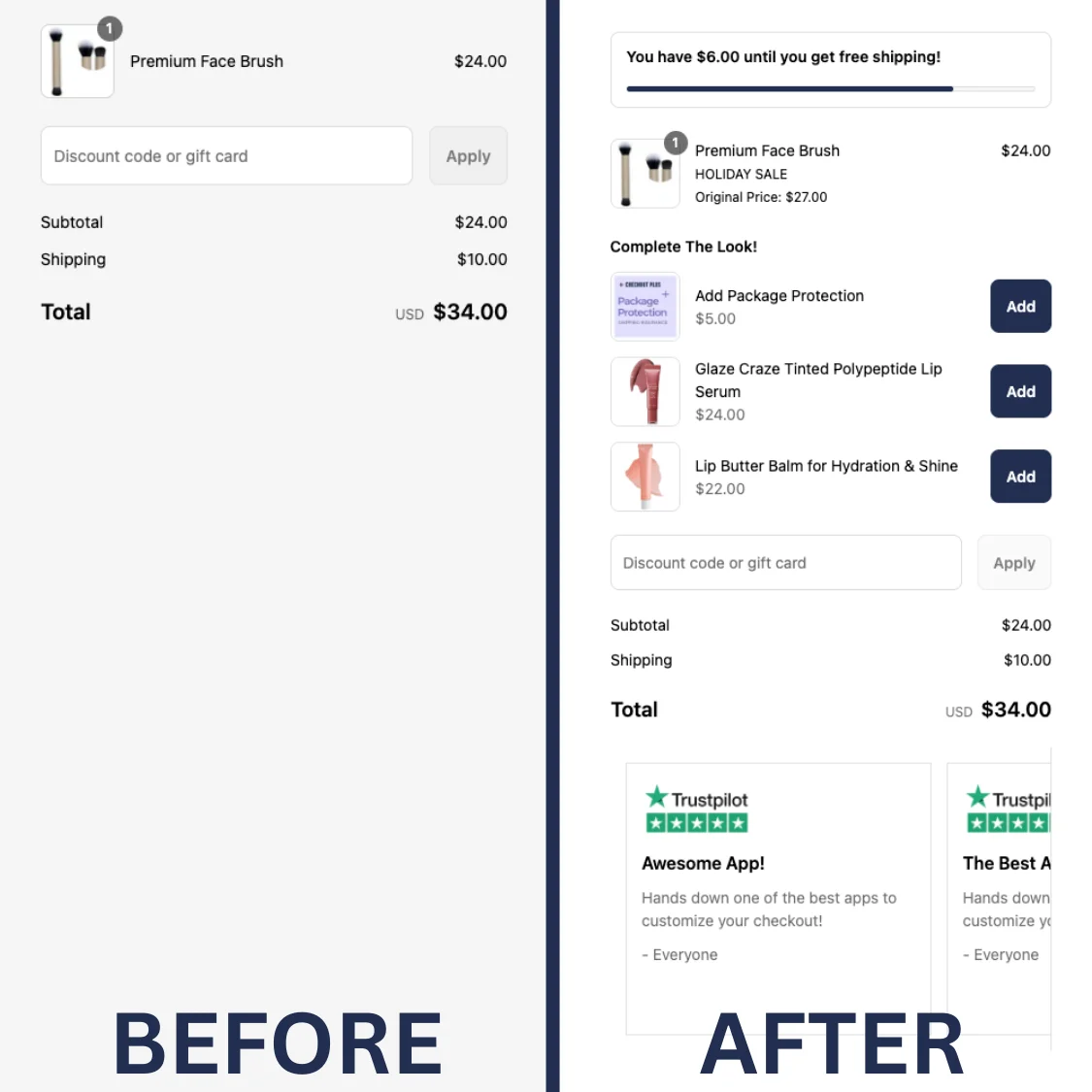
Customization Is More Accessible Than Ever
Historically, customizing checkout was limited to Shopify Plus or required custom development. That's no longer the case.
An app like Checkout Plus makes it easy for Shopify merchants to customize both their checkout and post-purchase experience, without needing a developer or a large budget. It works within Shopify's existing checkout framework, so there's nothing to rebuild.
With Checkout Plus, you can:
- Add messaging, banners, and trust badges at checkout
- Introduce upsells and post-purchase offers
- Customize shipping and payment options
- Set order rules and validations
- Turn your thank you page into a revenue driver
All of this while working within Shopify's existing checkout framework.
If you're already generating consistent traffic and looking to get more from every order, this is worth exploring.
Who Should Focus on Checkout Customization
Not every store needs to prioritize this immediately.
Putting resources into improving your checkout has the biggest impact when:
- You’re generating consistent traffic and orders
- You want to improve AOV and conversion rate
- You’re focusing on retention and customer experience
- You’re looking for growth without increasing ad spend
For many growing brands, this becomes the next logical step after acquisition.
When It Might Not Be the Priority
In some cases, it makes sense to focus elsewhere first:
- Very early-stage stores with limited traffic
- Brands still validating product-market fit
- Stores with major issues earlier in the funnel
In those situations, acquisition and product experience should come first.
What to Expect After Making Changes
Most brands don’t need a complete overhaul to see results.
Incremental improvements tend to compound over time.
Short-term, expect:
- Small increases in conversion rate
- Immediate AOV improvements
In the mid-term:
- Clear insights into what messaging and offers perform best
- More consistent revenue per visitor
And the long-term impact:
- Stronger retention
- Higher lifetime value
- More efficient growth
Measuring the Impact
To understand the effect of these changes, focus on:
- Conversion rate
- Average order value (AOV)
- Revenue per visitor
- Repeat purchase rate
Even modest improvements in these metrics can significantly impact overall revenue.
The Bottom Line
Your checkout isn’t just a functional step.
It’s a critical part of your revenue strategy.
And your post-purchase page isn’t just a confirmation screen - it’s an opportunity to extend the customer journey.
Most Shopify stores leave both largely untouched.
The ones that invest in these moments tend to see stronger performance, better customer experiences, and more efficient growth.
As tools like Checkout Plus continue to make customization more accessible, there are fewer reasons not to put the work into optimizing the most crucial part of your site.
FAQs

Convert your website into a mobile app