15 Best Shopping Apps in 2026

Mobile commerce now accounts for over 40% of US digital spending, with apps claiming a rising share of this market. Among the apps dominating the charts are marketplace giants like Amazon and Temu, but live commerce (Whatnot) and secondhand platforms (Depop) are surging in popularity in recent months too.
Mobile commerce now accounts for over 40% of US digital spending, with apps claiming a rising share of this market. Among the apps dominating the charts are marketplace giants like Amazon and Temu, but live commerce (Whatnot) and secondhand platforms (Depop) are surging in popularity in recent months too.
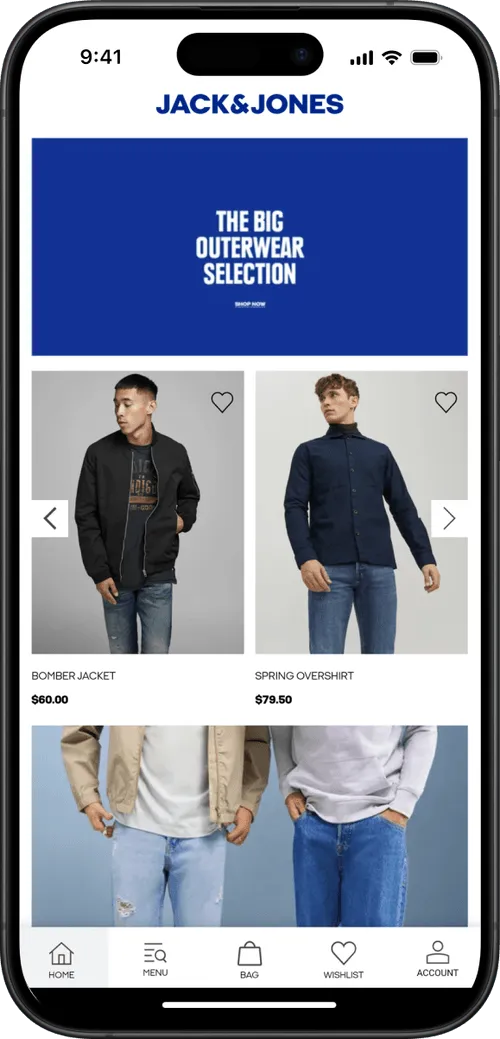
US mobile commerce generates nearly $500 billion in annual spending, and shows no signs of slowing.
Consumers spend over 100 billion hours per year inside ecommerce apps, and the number of mobile shoppers is projected to reach 5.29 billion by 2027.
So which apps are winning the lion’s share of the market?
Temu has held the #1 spot on the App Store for three consecutive years. Whatnot, a live shopping platform most people hadn't heard of in 2023, is now the fourth most-downloaded shopping app in the US. Secondhand marketplaces like Depop have cracked the top 10. And TikTok Shop generated $15.8 billion in US sales in 2025 without even having a standalone app.
All these apps are clear signals of how modern shoppers prefer to browse and buy on mobile.
Let’s dive in - here are the 15 best shopping apps right now, what makes each one stand out, and what brands can learn from them.
Want weekly insights into how 7, 8 and 9-figure brands are driving sustainable growth? That's what you get with our value-packed newsletter, The Retention Edge. Subscribe for free today.
Types of Shopping Apps
Not all shopping apps are the same. The shopping app market covers a range of different types of apps, big and small, branded apps and utility apps. Let’s take a quick look at these different types of shopping apps.
Marketplace Apps
Example: Amazon, eBay
Marketplace apps connect buyers and sellers of all kinds of products and services. Amazon and eBay are great examples, which offer products for sale from a large number of individual sellers and small businesses.
Because of the variety and competitive nature of sellers on online marketplaces, they typically have a wide variety of items to choose from, and offer competitive prices.
Learn More: How to Build Your Own Marketplace Mobile App
Brand Apps
Example: Nike, Zara
Brand apps are created by individual brands to sell their own products. They often provide exclusive deals and discounts to shoppers on the app, above what’s offered to in-store customers or shoppers on their website.
Multi-Brand Retail Apps
Example: ASOS, Target
Multi-brand apps are retailers offering products from a range of different brands. All products are sold by a single retailer (unlike marketplace apps, which have many individual sellers), but there’s a wider selection of branded products available than with a single brand app.
Grocery Apps
Example: Instacart, Shipt
These are only grocery stores, right there on your mobile device. Grocery apps are not too different from multi-brand retail apps, but specialize in groceries and household essentials. They generally allow users to create digital shopping lists and order groceries online to be delivered to their door or picked up in-store.
Buy and Sell Apps
Example: Poshmark, OfferUp
These are apps that directly connect buyers and sellers in a less formal setting than with marketplace apps like Amazon. Like a digital thrift store, buy and sell apps are focused on used items, letting users sell old or unwanted items to other users.
Coupon, Deal & Cashback Apps
Example: Rakuten, Groupon, Capital One Shopping
These apps offer cashback, deals, coupons and rewards on a wide variety of products and services. They may be used in-store, on retailers’ websites, or in some cases allow shoppers to buy products on the app as well.
Mobile app users spend more, shop more frequently, and are more loyal to your brand. Use our eCommerce App Revenue Calculator to see just how much you stand to gain by launching an app.
Most Popular Shopping Apps on iOS
There’s a lot of overlap between the best shopping apps and those which are most popular on the app stores.
With that in mind, let’s take a look at the most popular shopping apps, starting with shopping apps for iPhone/iOS.
Most Popular Shopping Apps on Android
Here are the most popular shopping apps in the Google Play Store.
The Top Shopping Apps for 2026
There are the top download charts - which we showed above. Then there are the "best" shopping apps. The apps that consistently dominate the charts (across both mobile operating systems), maintaining high ratings, and massive profiles.
That's what this list is - the 15 shopping apps that come first in any "best shopping apps" debate.
Now let's take a deeper look at the world's best shopping apps today.
1. Amazon
App Store rating: 4.8/5 | Play Store rating: 4.3/5 | Downloads: 500M+ (Play Store)
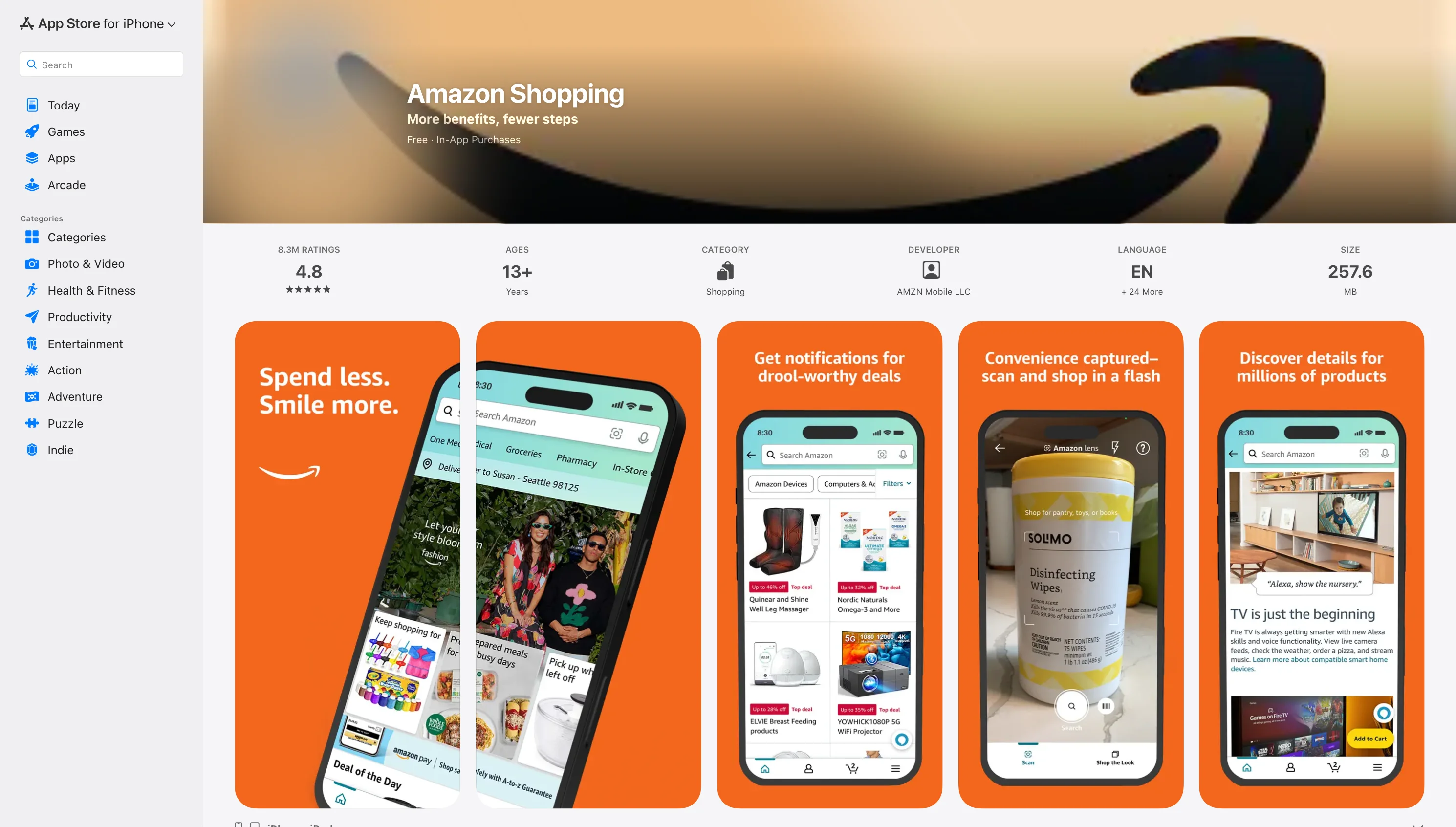
Amazon remains the default shopping app for most US consumers, with 105+ million monthly active mobile users. The app's strength isn't any single feature; it's the combination of Prime shipping, one-tap purchasing, and a product catalog that covers practically everything.
The app experience leans heavily on personalization: recommended products, reorder suggestions, and deal alerts based on browsing history. Subscribe & Save, same-day delivery, and in-app Alexa integration keep users coming back.
Why it works: Convenience and trust. Amazon has trained consumers to start their product searches in the app rather than a browser.
2. Temu
App Store rating: 4.6/5 | Play Store rating: 4.6/5 | Downloads: 500M+ (Play Store)
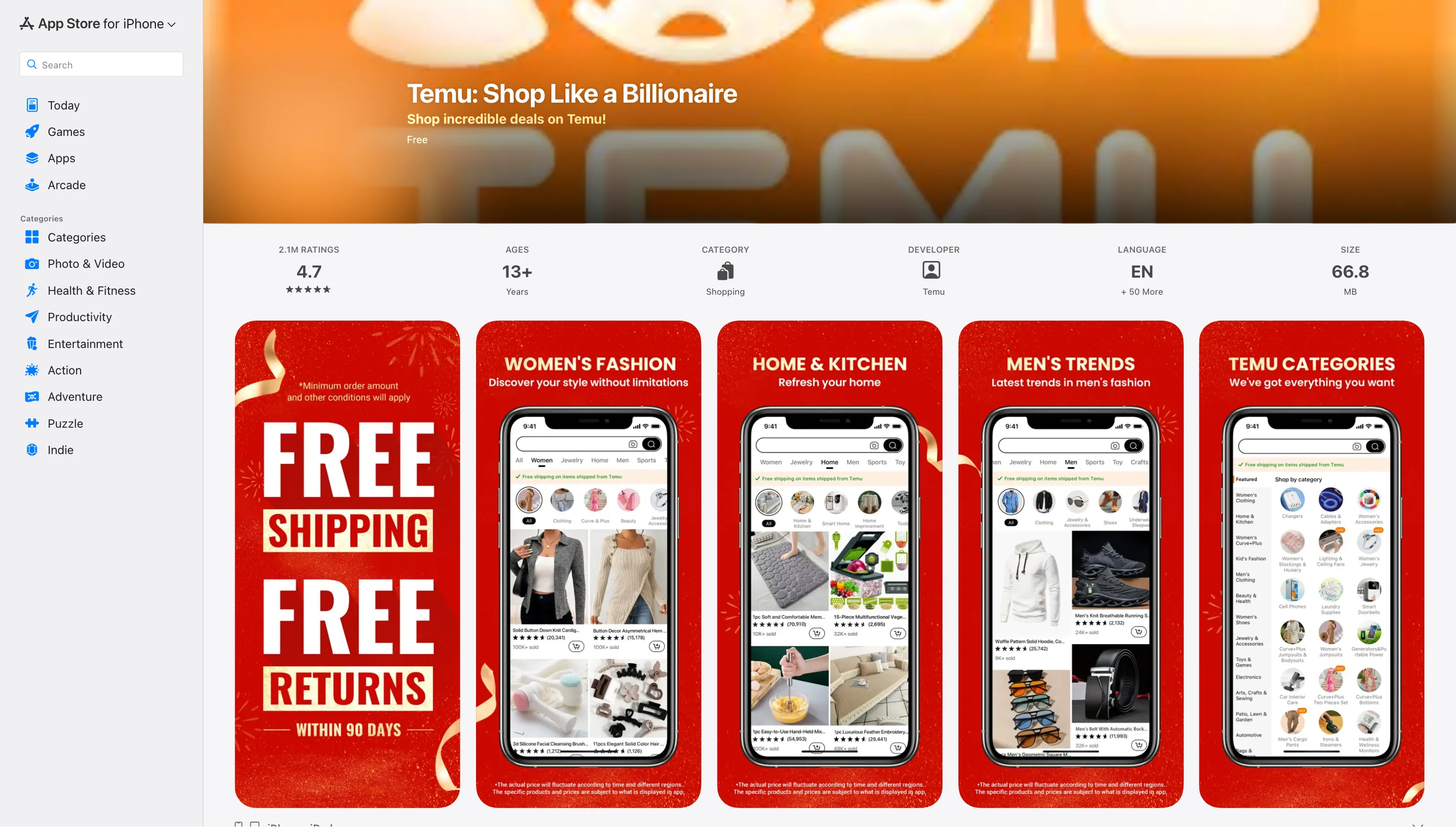
Temu has been the #1 most-downloaded shopping app globally for three consecutive years, with 1.2 billion cumulative downloads and 530 million monthly active users at its peak. The app connects buyers directly with manufacturers, cutting out middlemen to offer prices that undercut most competitors.
What sets Temu apart is engagement. Users spend an average of 21 minutes per session, more than double Amazon or eBay. Gamified features like spin-the-wheel discounts, group buying, and daily check-in rewards keep people opening the app.
Why it works: Rock-bottom prices combined with addictive app mechanics that drive daily engagement.
3. Shein
App Store rating: 4.7/5 | Play Store rating: 4.7/5 | Downloads: 100M+ (Play Store)
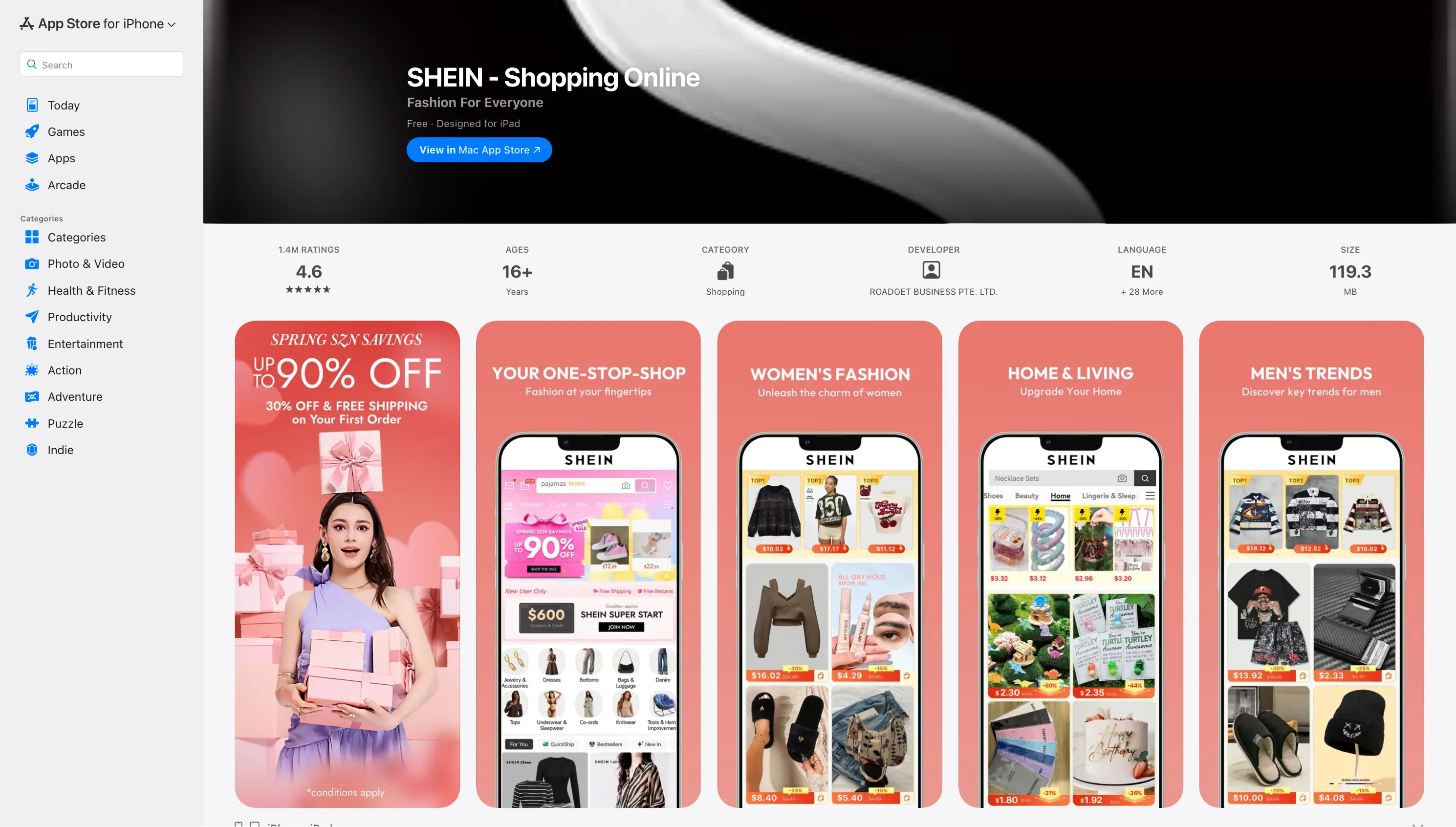
Shein pulled in 74 million downloads in the first half of 2025 alone and maintains 215 million monthly active users globally. The app adds thousands of new styles daily, powered by a vertically integrated supply chain that moves from trend identification to finished product in as little as two weeks.
The app experience is built around discovery. Personalized feeds, style recommendations, and user-generated outfit photos make it feel more like a social platform than a traditional store.
Why it works: Speed-to-trend and price, delivered through a social-first app experience that resonates with Gen Z shoppers.
4. Walmart
App Store rating: 4.8/5 | Play Store rating: 4.7/5 | Downloads: 50M+ (Play Store)
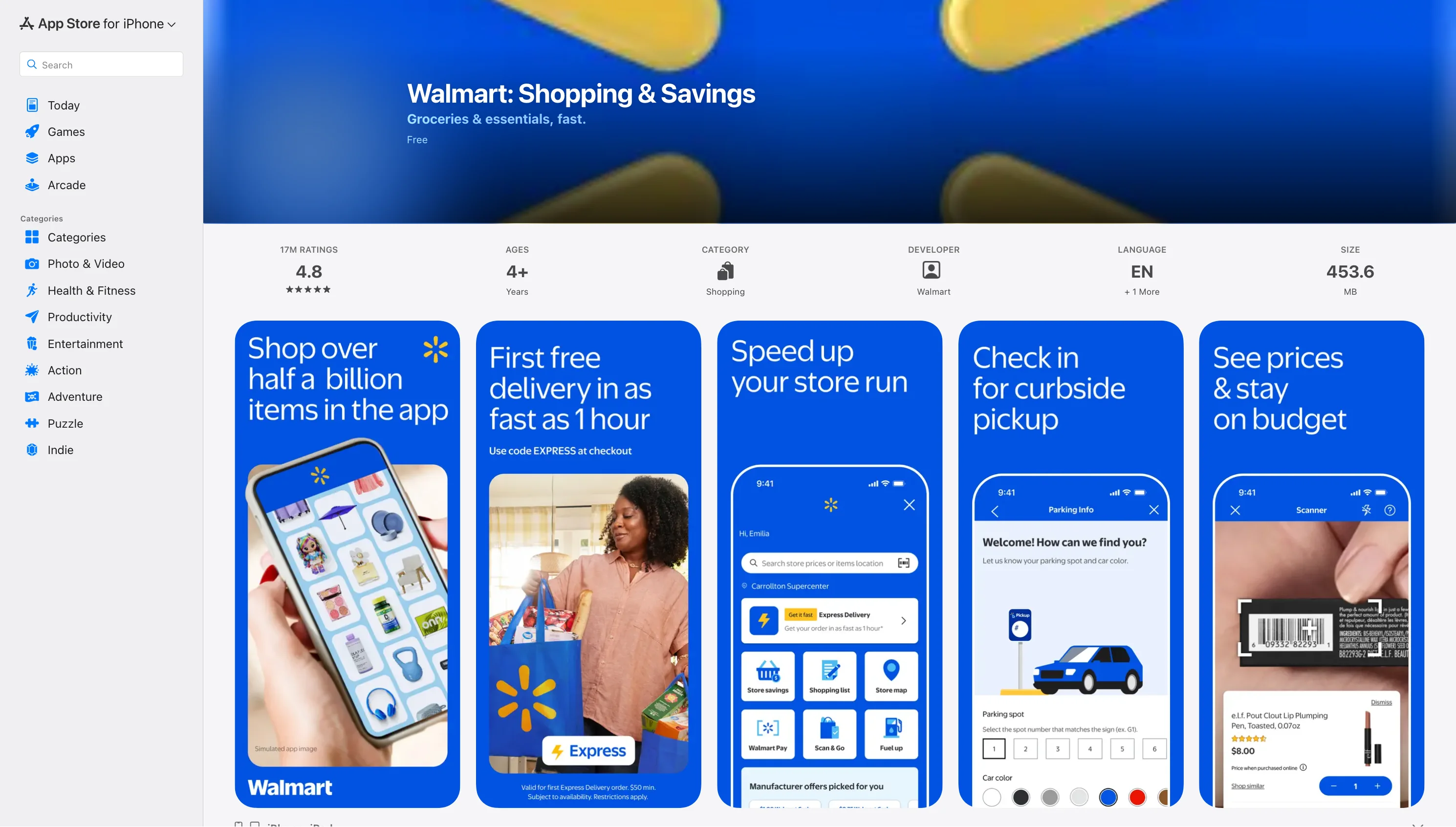
Walmart's app benefits from something most pure-play ecommerce apps can't match: 4,700 physical stores. The app bridges online and in-store seamlessly, with features like curbside pickup, in-store maps, pharmacy management, and Walmart+ membership perks including free delivery.
With 64+ million monthly active users and a growing third-party marketplace, the app has become a genuine multi-category competitor to Amazon, particularly for groceries and everyday essentials.
Why it works: Omnichannel integration. The app makes Walmart's physical footprint a competitive advantage rather than a legacy burden.
5. Whatnot
App Store rating: 4.9/5 | Play Store rating: 4.6/5
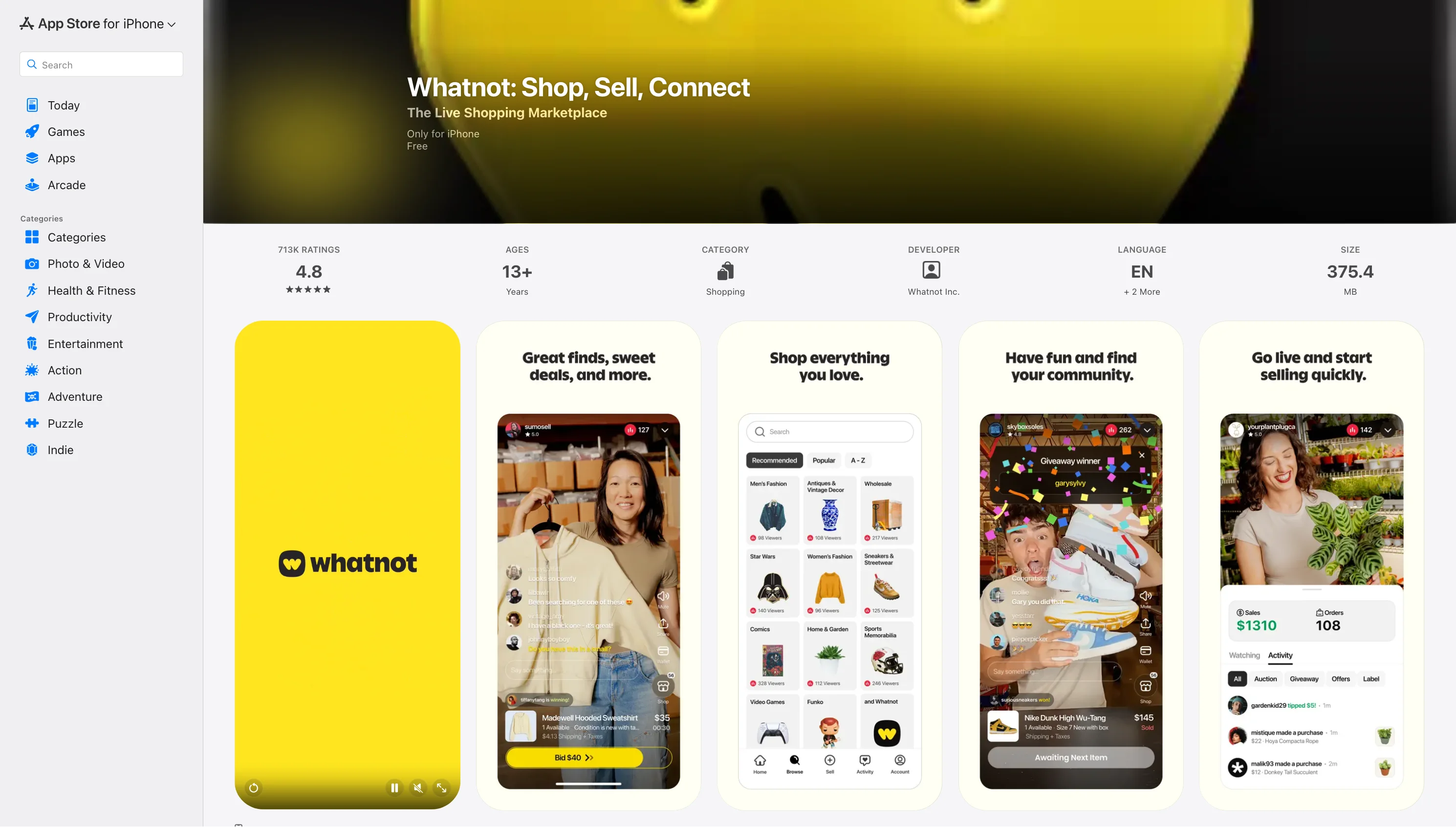
Whatnot is the breakout shopping app of the past two years. The live auction and shopping platform saw 541% year-over-year download growth and hit $6 billion in gross merchandise value in 2025, doubling from $3 billion the year prior. Users spend an average of 80+ minutes per day on the app.
Originally focused on collectibles like trading cards and sneakers, Whatnot has expanded into 15+ categories including food, luxury goods, and cars. The format, live video with real-time bidding, creates urgency and entertainment value that static listings can't replicate.
Why it works: Live commerce combines entertainment with shopping, creating engagement levels that traditional apps struggle to match.
6. Shop (by Shopify)
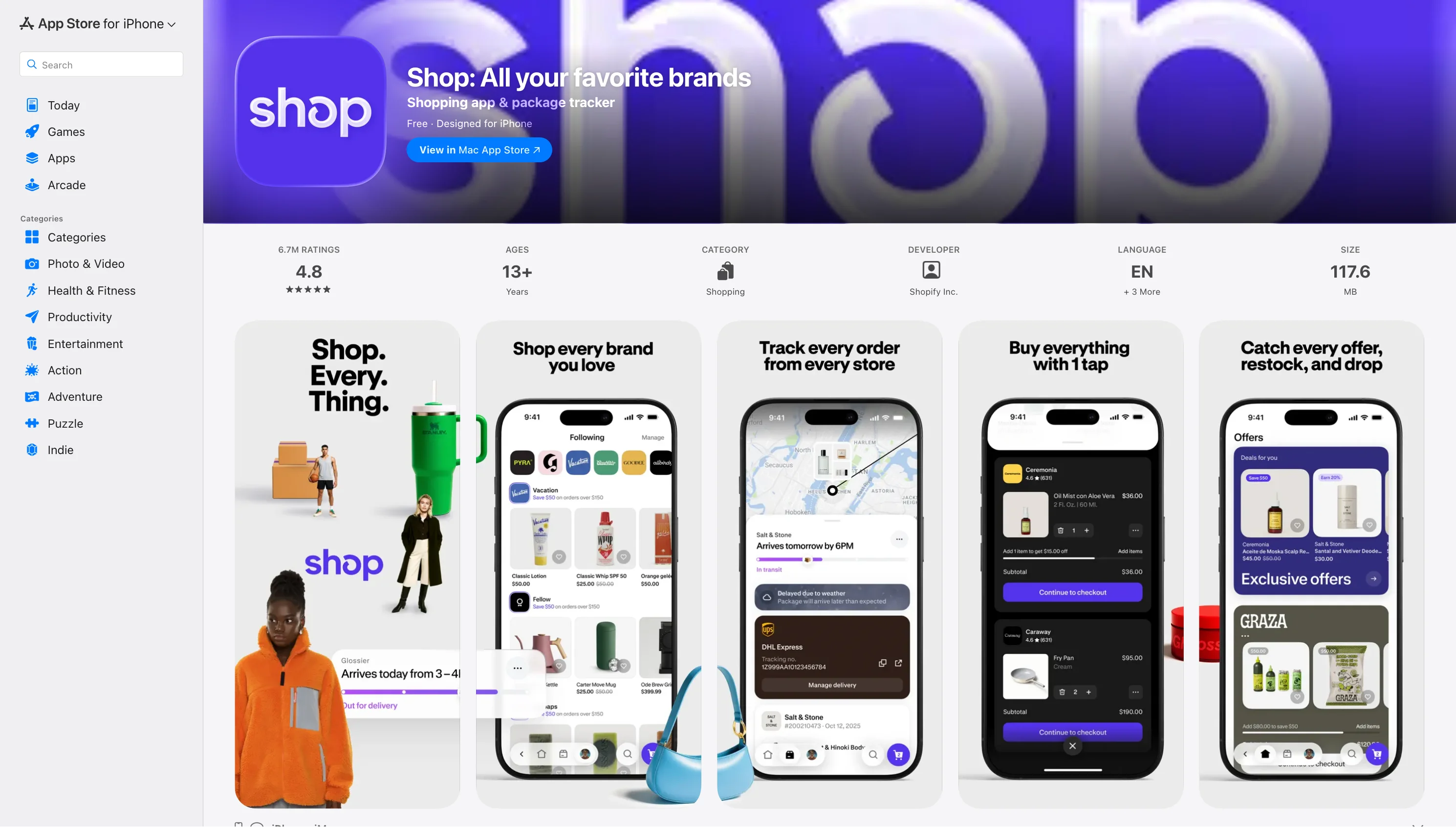
App Store rating: 4.8/5 | Play Store rating: 4.5/5 | Downloads: 10M+ (Play Store)
Shop aggregates the Shopify ecosystem into a single consumer-facing app. Users can browse and buy from thousands of independent brands, track orders across all Shopify-powered stores in one place, and discover new products through personalized recommendations.
For consumers, it's a unified inbox for independent brand purchases. For Shopify merchants, it's a discovery channel that puts their products alongside other brands without the competitive pressure of a traditional marketplace.
Why it works: It gives independent brands marketplace-level visibility while letting them keep their own branding and customer relationships.
7. eBay
App Store rating: 4.8/5 | Play Store rating: 4.3/5 | Downloads: 500M+ (Play Store)
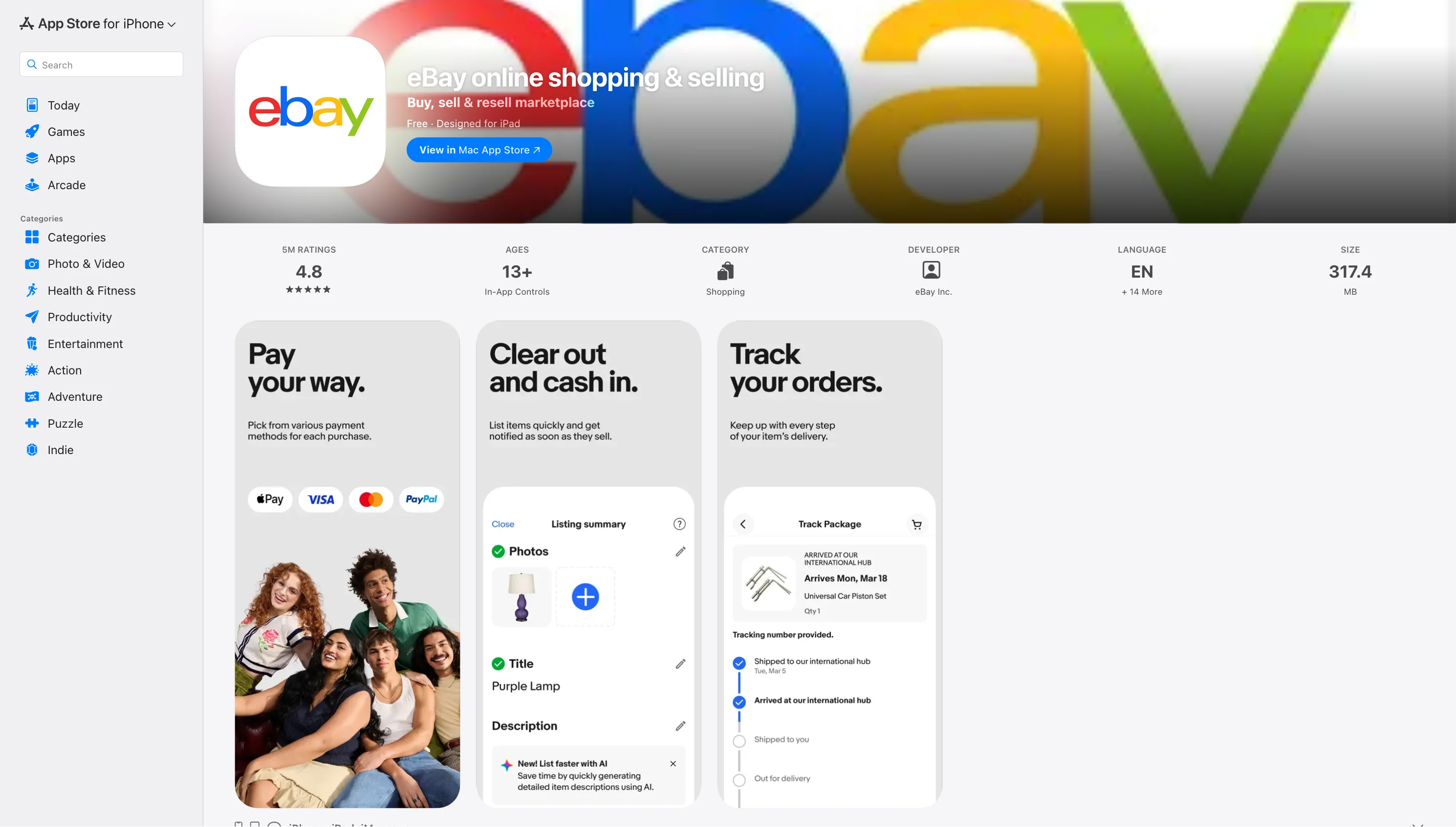
eBay has carved out a durable niche in collectibles, vintage goods, refurbished electronics, and hard-to-find items. The auction format still drives engagement for certain categories, while Buy It Now serves everyday shoppers who want fixed pricing.
The app's Authenticity Guarantee program, which verifies sneakers, watches, handbags, and trading cards, has helped the platform maintain trust in categories where counterfeits are a concern.
Why it works: Unique inventory you can't find anywhere else, backed by buyer protections that make high-value purchases less risky.
8. Etsy
App Store rating: 4.9/5 | Play Store rating: 4.9/5 | Downloads: 10M+ (Play Store)
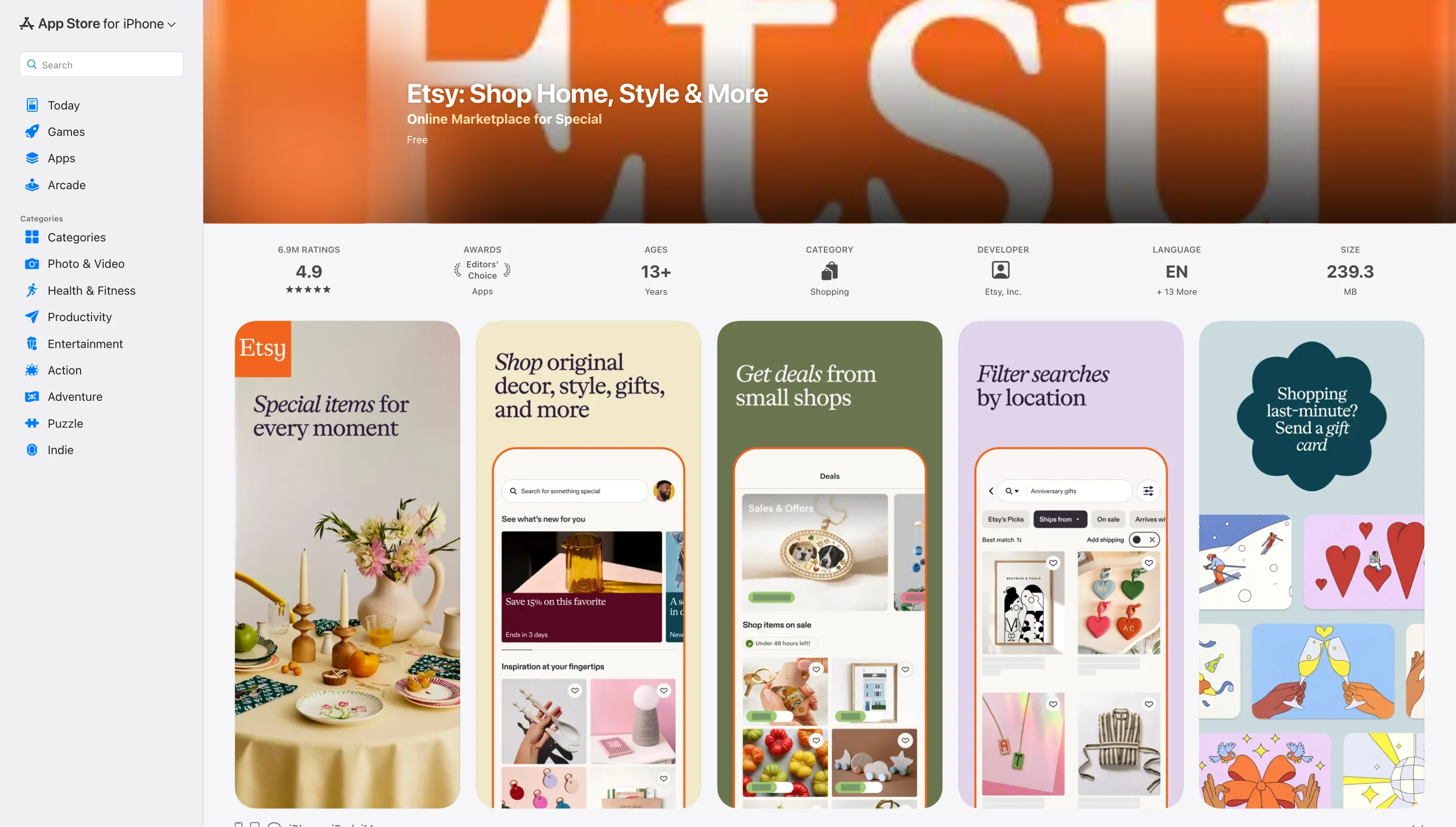
Etsy remains the go-to marketplace for handmade, vintage, and one-of-a-kind goods. The app experience highlights the maker behind each product, with shop stories, process photos, and direct messaging that create a personal connection between buyers and sellers.
Gift shopping is a major use case: Etsy's personalization options (custom engravings, monogramming, made-to-order items) give it an edge that mass-market platforms can't easily replicate.
Why it works: Differentiated inventory and an emotional connection to makers that turns browsing into discovery.
9. Depop
App Store rating: 4.8/5 | Play Store rating: 4.3/5 | Downloads: 10M+ (Play Store)
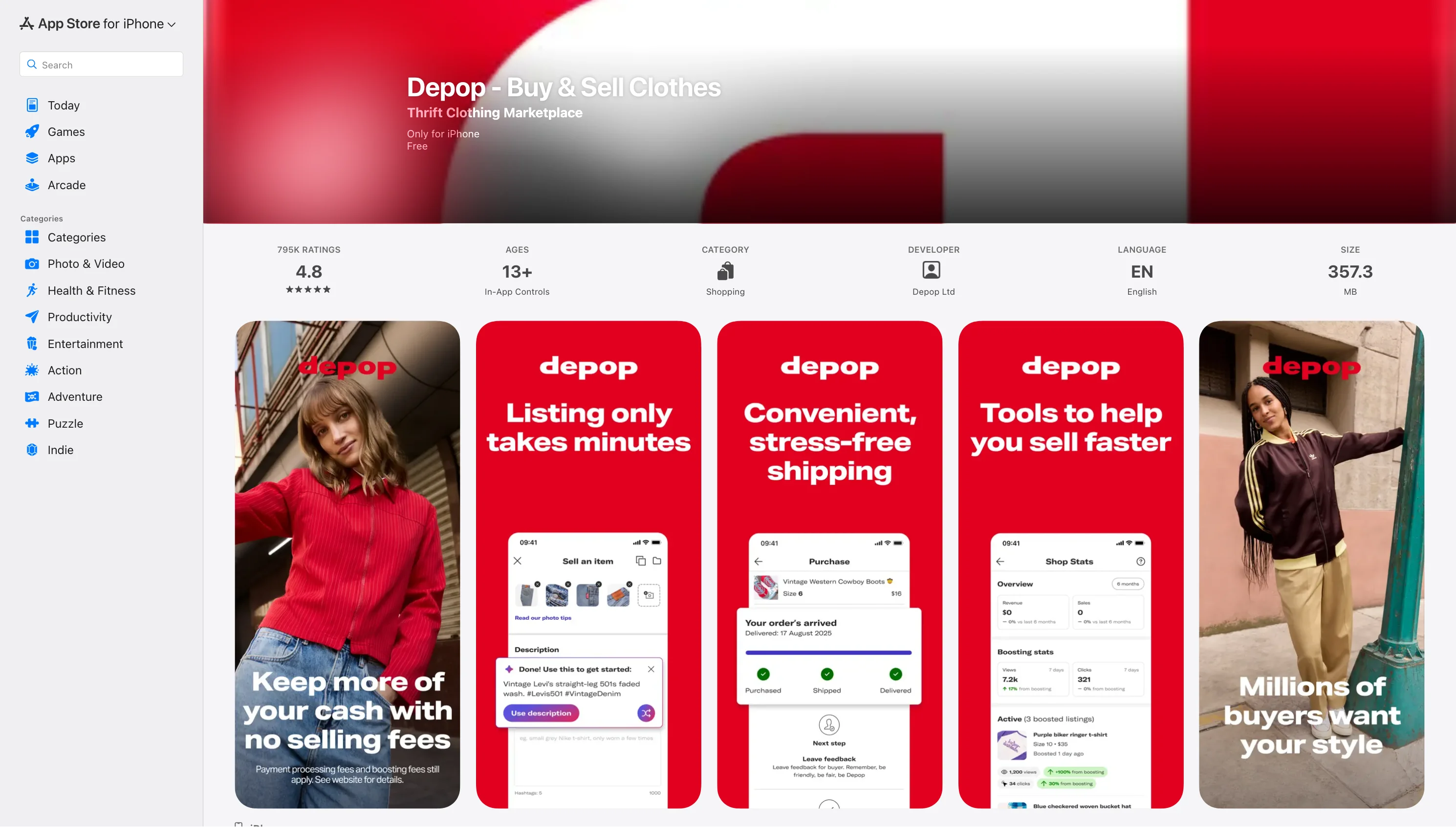
Depop has climbed to #7 on the App Store shopping charts by making secondhand shopping feel like scrolling a social feed. The app's interface borrows heavily from Instagram: profile pages, follower counts, and a discovery feed that surfaces items based on your style preferences.
Popular with Gen Z buyers and sellers, Depop has become a cultural platform as much as a shopping one. Sellers build personal brands, and limited drops create the same urgency you'd see from a streetwear label.
Why it works: It made resale feel aspirational rather than budget-driven, turning secondhand shopping into a lifestyle.
10. Nike
App Store rating: 4.9/5 | Play Store rating: 4.5/5 | Downloads: 50M+ (Play Store)
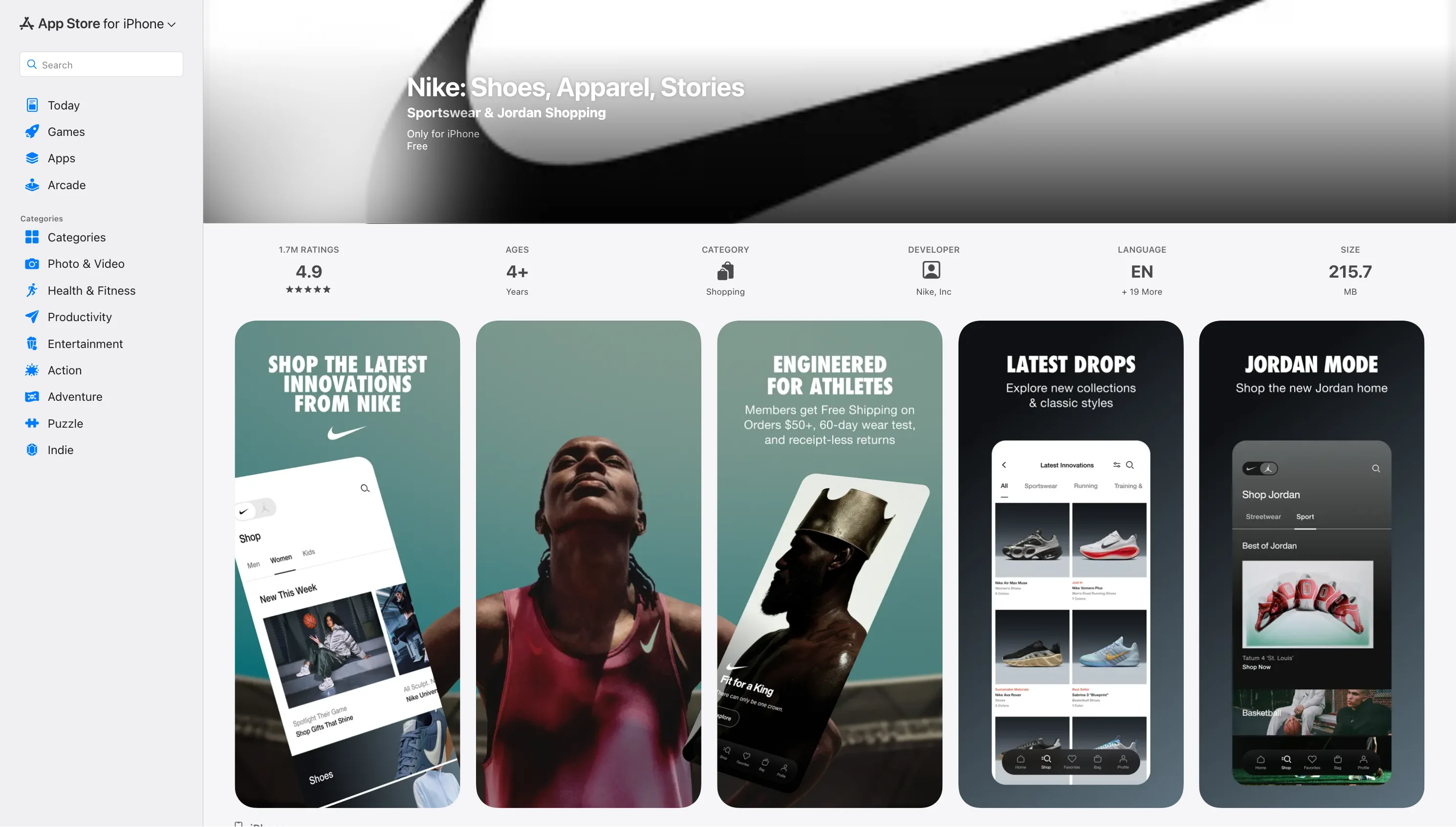
Nike's app is the gold standard for branded retail apps. Members get early access to new releases, exclusive products, and personalized recommendations based on sport preferences, size, and purchase history.
The app goes beyond transactions: workout tracking, style guides, and member-only events create reasons to open the app even when you're not buying. This keeps Nike top-of-mind and drives repeat purchases.
Why it works: It blends shopping with content and community, creating ongoing engagement that extends well beyond checkout.
11. Target
App Store rating: 4.9/5 | Play Store rating: 4.8/5 | Downloads: 50M+ (Play Store)
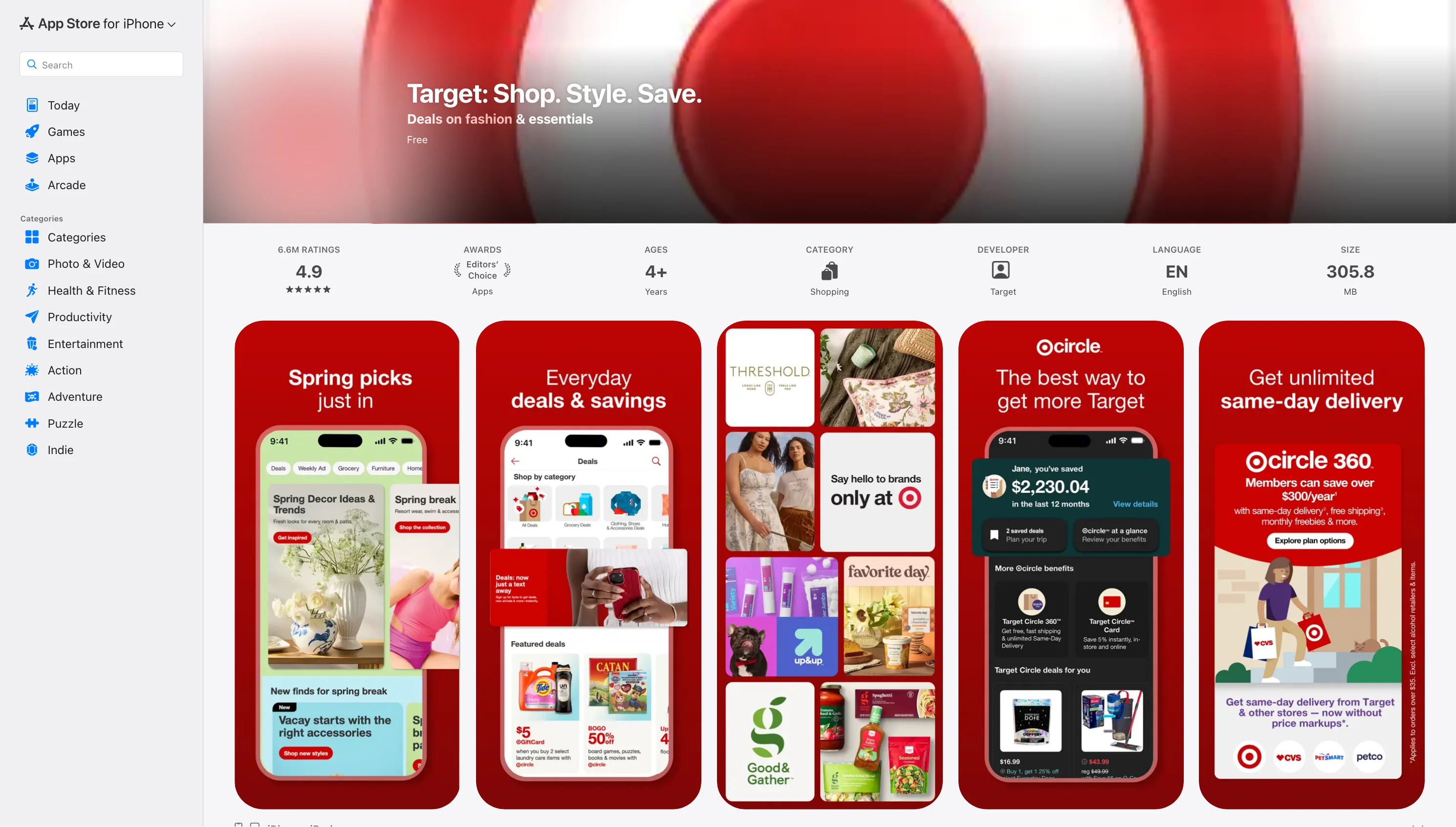
Target's app ties together its digital and physical retail experiences with features like same-day delivery (via Shipt), in-store order pickup, and the Target Circle loyalty program, which offers personalized deals and 1% earnings on every purchase.
The Wallet feature consolidates Circle offers, gift cards, and payment methods, making checkout fast both online and in-store. Drive Up, which brings orders to your car, has become one of the most popular features.
Why it works: A seamless bridge between online browsing and in-store convenience, with loyalty rewards that keep customers in the Target ecosystem.
12. Poshmark
App Store rating: 4.8/5 | Play Store rating: 4.7/5 | Downloads: 10M+ (Play Store)
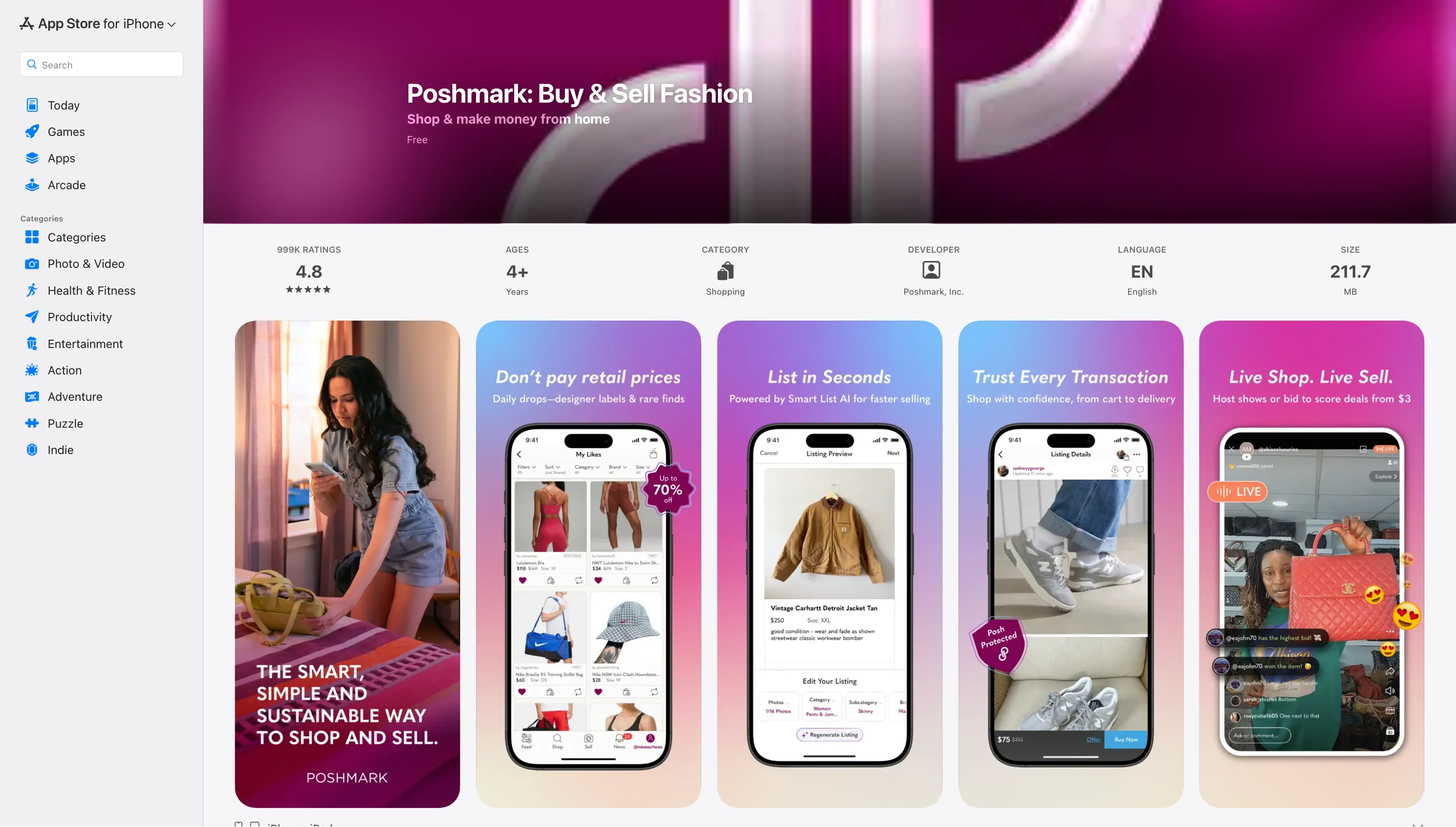
Poshmark combines social commerce with resale, offering both secondhand items and new products from over 9,000 brands. Posh Parties, live virtual shopping events organized by category or brand, add a community layer that static listings lack.
Seller tools are a differentiator: listing takes about 60 seconds, and Poshmark handles shipping logistics with a prepaid label for every sale.
Why it works: It turned resale into a social experience, making it easy for casual sellers to participate while giving buyers a curated, community-driven marketplace.
13. Instacart
App Store rating: 4.8/5 | Play Store rating: 4.3/5 | Downloads: 10M+ (Play Store)
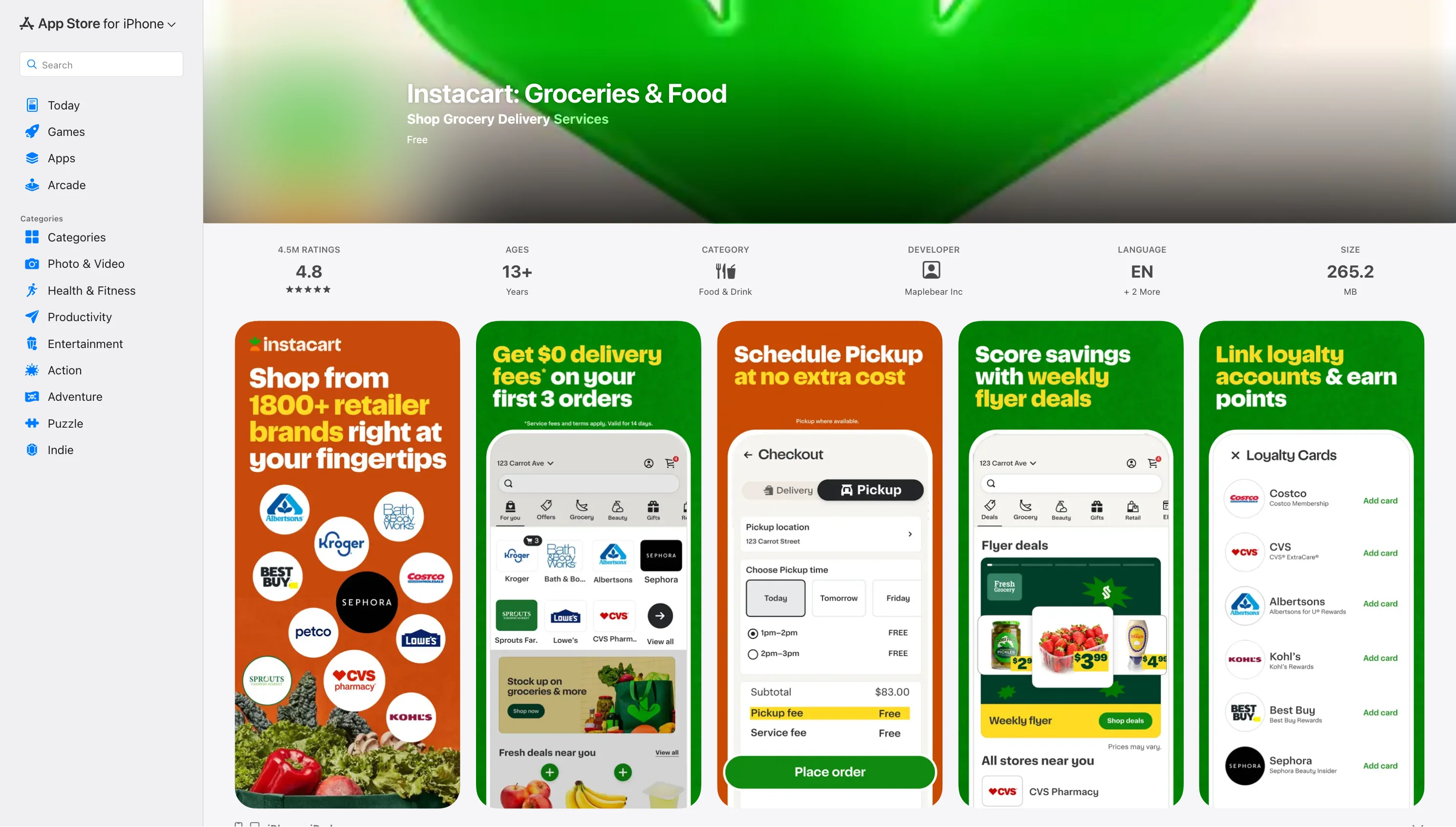
Instacart connects shoppers with personal shoppers across 1,500+ retail partners, including grocery chains, convenience stores, and specialty shops. Same-day delivery and curbside pickup are available in most US markets.
The app's strength is selection across stores. Rather than being locked into one retailer, users can compare prices and shop from multiple stores in a single order.
Why it works: Aggregation. One app to shop from virtually every grocery chain in your area, with the convenience of delivery or pickup.
14. OfferUp
App Store rating: 4.8/5 | Play Store rating: 4.4/5 | Downloads: 50M+ (Play Store)
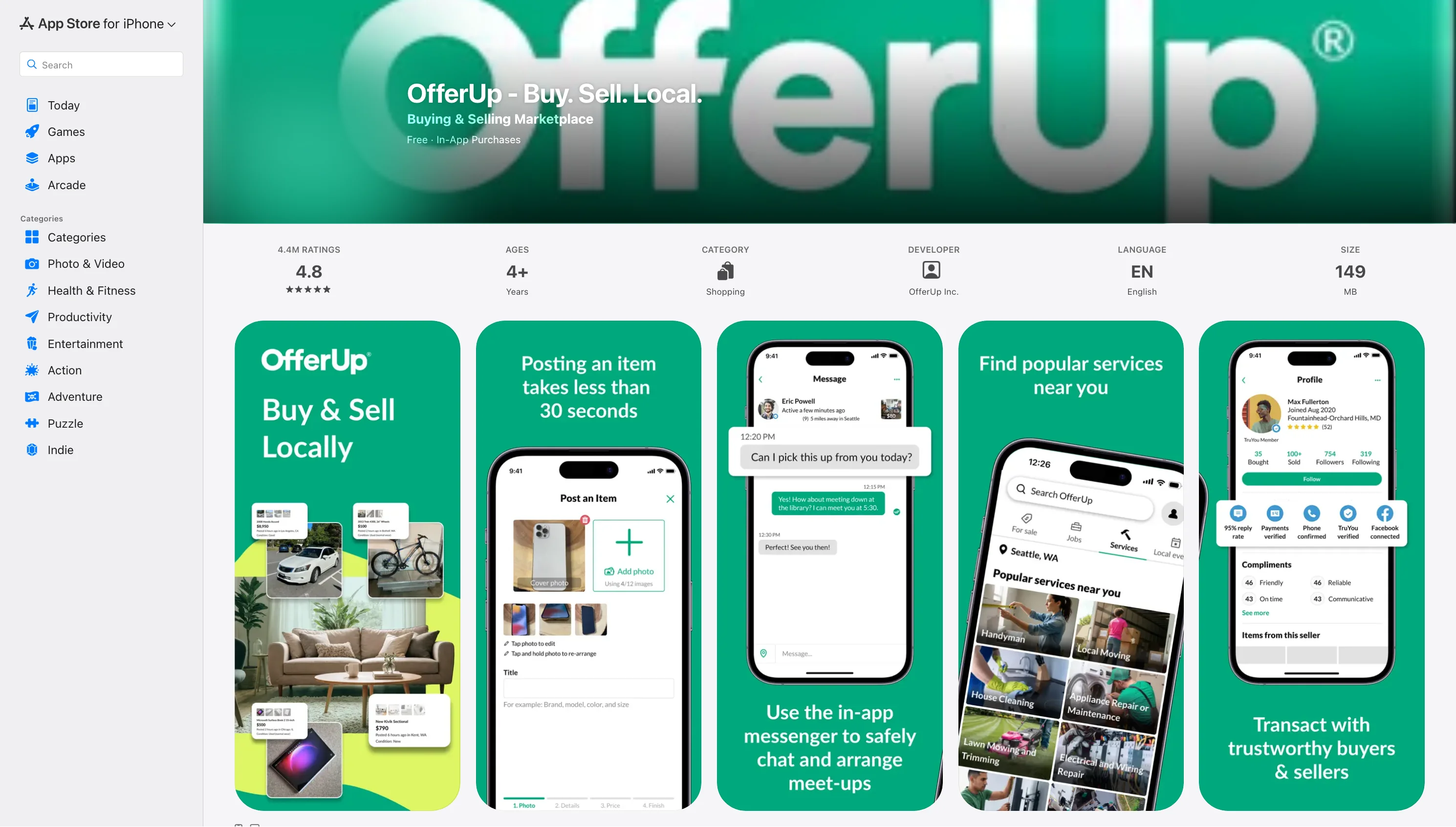
OfferUp (which absorbed Letgo) is the leading local buy-and-sell app for furniture, electronics, vehicles, and other items you'd rather not ship. Location-based browsing shows what's available nearby, and in-app messaging makes it easy to arrange meetups.
TruYou verification and community meetup spots at police stations add safety features that differentiate it from older classifieds platforms.
Why it works: Simple, fast listings and local discovery make it the easiest way to buy and sell in your area.
15. Rakuten
App Store rating: 4.8/5 | Play Store rating: 3.9/5 | Downloads: 10M+ (Play Store)
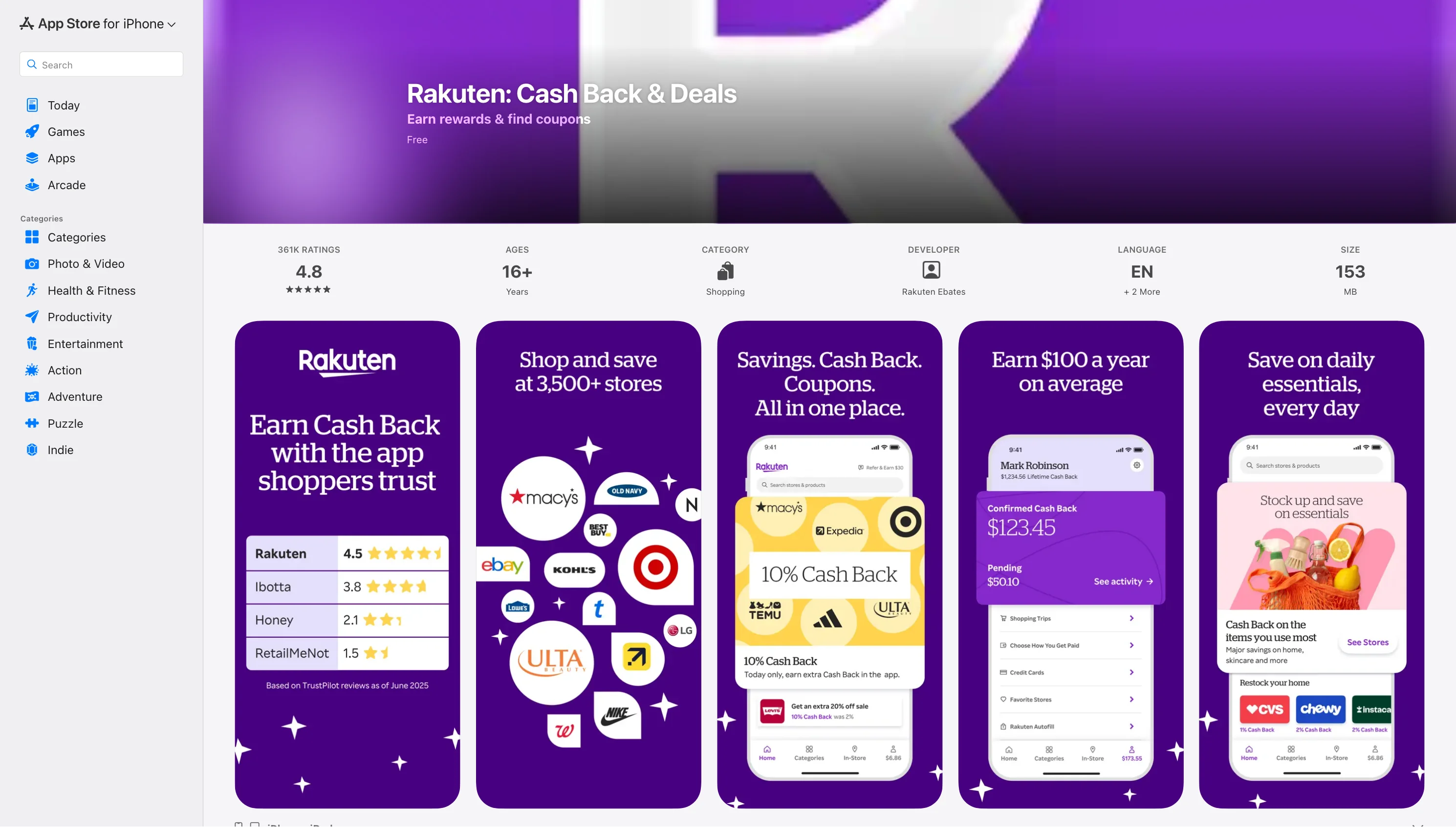
Rakuten offers cashback of up to 10% at over 3,500 partner retailers, including major brands like Nike, Sephora, and Walmart. The app also surfaces deals, coupon codes, and price comparisons.
It works as a layer on top of your existing shopping habits. Link a card, shop at participating stores, and cash back accumulates automatically. Quarterly payouts via check or PayPal keep users engaged over time.
Why it works: Passive savings. Once set up, users earn cashback without changing how they shop.
What the Top Shopping Apps Have in Common
What makes each of these apps so successful?
Part of it is simply the broad reach of each ecommerce platform. Amazon, Walmart, Shopify are at the top of the charts because they’ve already built up ecosystems with massive userbases.
But that’s not the whole picture.
Looking across these 15 apps, a few patterns stand out:
- Personalization drives engagement. Every top app uses browsing history, preferences, and behavior to surface relevant products. Generic catalogs don't hold attention.
- The line between content and commerce is blurring. Whatnot's live streams, Depop's social feeds, and Nike's workout content all create reasons to open the app beyond buying.
- Omnichannel wins. Walmart and Target's apps succeed because they enhance the in-store experience rather than competing with it.
- Trust features matter. eBay's Authenticity Guarantee, OfferUp's TruYou, and Poshmark's shipping labels all reduce friction and risk.
Takeaways for Brands
The common thread? The best shopping apps create habits, not just transactions.
They give customers reasons to come back daily, whether that's new inventory, exclusive content, cashback rewards, or community features.
For ecommerce brands looking at this list, the lesson isn't to compete with Amazon or Temu on selection or price.
It's that having your own mobile app, one that delivers a native experience with push notifications, personalized content, and frictionless checkout, is one of the best moves you can make for serious retention and repeat revenue.
Building a native app doesn't have to mean a six-figure development project. MobiLoud lets you extend your existing website into a fully native iOS and Android app, complete with push notifications, native navigation, and your full ecommerce experience, without rebuilding your stack.
MobiLoud has helped over 2,000 businesses enter the App Stores and launch their own apps, including hundreds of high-end ecommerce brands.
Want to do the same? Book a free demo to see how your store would look and perform as a native app.
FAQs

Convert your website into a mobile app