What You Get From Joining an Ecommerce Community (And 5 Worth Your Time)

A good ecommerce community is a shortcut past problems other operators have already solved, a source of honest benchmarks, a door to warm intros, and a lever for better vendor economics. The payoff is usually worth multiples of the membership fee, and one of the best ways to accelerate your brand's growth.
A good ecommerce community is a shortcut past problems other operators have already solved, a source of honest benchmarks, a door to warm intros, and a lever for better vendor economics. The payoff is usually worth multiples of the membership fee, and one of the best ways to accelerate your brand's growth.
There’s no substitute for experience. Especially in ecommerce - operators who have a unique, real perspective, built from the real experience of running their business, are the number one resource to tap into, whether you’re starting a new business or trying to scale an existing one.
That’s why ecommerce communities are so valuable. They connect you with like-minded business owners, with real perspectives, not the kind of fluff that gets regurgitated online for engagement.
Not all communities are worth your time (or the cost to be a member). But find a good one, and it can be the best way to kickstart your growth.
Keep reading and we’ll explain all the benefits - and some of the best communities to join.
Want weekly insights into how 7, 8 and 9-figure brands are driving sustainable growth? That's what you get with our value-packed newsletter, The Retention Edge. Subscribe for free today.
What a Good Community Does for You
Here are some of the things you get from being a part of a high-quality community.
Solutions for problems other operators have already solved
Running an ecommerce brand means hitting the same walls thousands of people have already hit.
- Checkout friction & conversion issues.
- Returns that eat your margins.
- A 3PL that ships slow in peak.
- Your first international market.
The lonely version of that is Googling or ChatGPTing, reading contradictory threads, sorting through AI slop, and guessing. The community version is posting a question and getting five detailed replies within an hour from operators who have already done it.
You still have to apply the advice to your business. But you don't pay the tuition twice.
Get honest benchmarks
Ecommerce is full of numbers nobody will show you publicly. Email revenue share. Mobile vs desktop AOV. First-order contribution margin. What a healthy repeat rate looks like for your category.
Inside a real community, people post their actual numbers. Not vanity metrics on Twitter. Real ones, because there's trust and because everyone benefits from the transparency. When you can see that your AOV sits in the 60th percentile for your category, or that your return rate is actually low, you stop making decisions based on vibes.
Opening doors you can't cold-email your way into
The best agencies, operators, investors, and vendors don't answer cold outreach. They answer warm intros from people they trust. Communities are how those intros move.
You meet someone in a Slack channel. A year later you need a Klaviyo freelancer who is actually good, and they send you three names with context. The value of one good intro can be six figures.
Stack your vendor economics
Group buying is one of the most underrated benefits of premium communities. The better operator groups negotiate deals with attribution tools, email platforms, 3PLs, ad platforms, and analytics software. Discounts of 20 to 50 percent on software you were going to buy anyway. For a brand doing $10M, those savings can cover the membership fee several times over.
It makes the lonely parts of the job survivable
Most ecommerce founders are running their business alone, even if they have a team. Cash flow stress, a bad month, a co-founder conflict, a burnout stretch. Employees can't be your sounding board for any of that. Spouses get tired of hearing it.
Other operators get it. They've had the same month. They know what it feels like when inventory is stuck and ads are underperforming and you have payroll on Friday. That peer support doesn't show up on a P&L but it's the reason a lot of founders make it to year five.
Early signal on what's working
Playbooks hit Twitter and LinkedIn long after they've stopped working. What's actually working right now is being discussed in private chats between operators who are running the tests. New creative formats. Meta policy shifts. What's happening to Amazon PPC costs. Which TikTok Shop categories are still profitable.
You won't find the edge in a public thread. You'll find it in a DM from someone who trusts you enough to share.
Accountability
Most operators don't have a boss. The thing they say they'll ship by end of quarter slides to next quarter, then the quarter after. Communities with regular operator calls, mastermind groups, or cohort structures pull you out of that drift. You commit to peers. You report back. The goals you set with other operators in the room tend to actually happen.
How to Identify a Community Worth Joining
The communities that work for a $500K brand are not the communities that work for a $30M brand, and vice versa. Picking wrong is the most common mistake. A solo founder joining a $200M operator group will feel imposter syndrome and drop out in six months. A nine-figure operator joining a beginner Facebook group will get nothing from it.
Three filters worth running before you pay for anything:
- Revenue band. The best discussions happen when everyone in the room is within one order of magnitude of you. Look for communities that gate on revenue or stage, not just anyone who wants to join.
- Format match. Some operators get value from live calls and in-person dinners. Others want async Slack and never want to get on a Zoom. Match the community format to how you actually work.
- Give-to-get culture. Lurkers get nothing. Before joining, check whether the community has a strong culture of sharing data, intros, and honest takes. A private forum full of people waiting to be sold to is worthless.
Just being part of a community isn’t enough.
It’s about finding the right community for you, and surrounding yourself with the right people to help you get where you want to be.
Five of the Best Ecommerce Communities
These are the ones we'd recommend to most ecommerce operators, depending on stage and channel.
Million Dollar Sellers
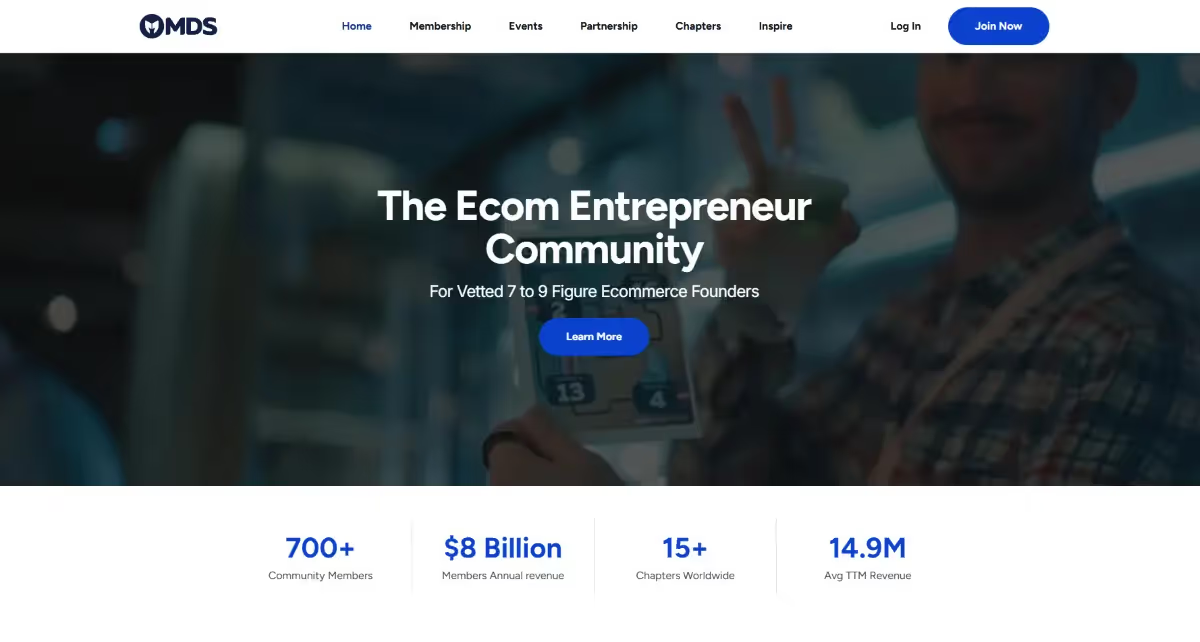
When your business hits 7 or 8 figures, the questions you face start to change. And so does the kind of support that’s actually useful. Million Dollar Sellers (MDS) is an invite-only membership group built for founders at that stage.
The community brings together over 700 ecom entrepreneurs doing between $1M and $500M+ a year. Members gain access to a trusted network of Amazon (and beyond) sellers, expert advice on operations, strategy, exits, and all business-related matters.
A 24/7 active online space, weekly live calls, in-person events across the globe, 17+ local Chapters, and smaller Squads for more focused conversations.
Sound like your kind of room? Book a free discovery call to see what it’s all about.
Workspace6
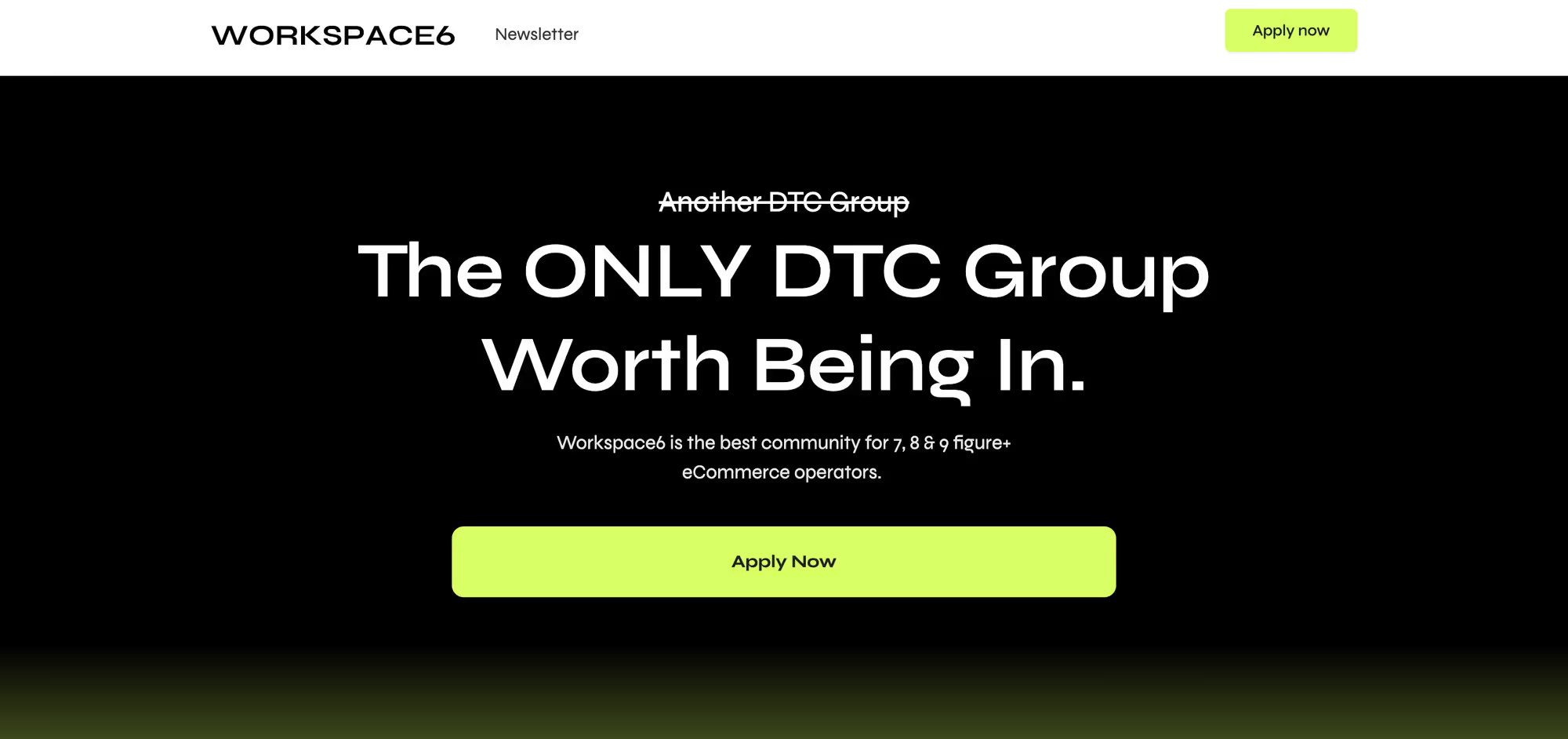
Workspace6 stands out as the premier community for 7, 8, and 9 figure+ ecommerce operators - just ask anyone who's experienced its magic firsthand.
Rub shoulders with a carefully curated group of brand owners spanning various industries, all united in their quest to strategically scale their brands to new heights.
With over $10 billion in collective revenue across hundreds of members, Workspace6 offers unparalleled networking opportunities and exclusive discounts on essential ecommerce software like Northbeam, Triple Whale, and Post Pilot.
Plus, with weekly digital meetups, you'll be networking on a whole new level. 24/7 active communication, networking, and knowledge await you around the clock.
eCom Fuel
You may already be familiar with Ecommerce Fuel through their popular podcast, but there's a lot more than that. With over 1400 members, they're a community of seasoned entrepreneurs, not just beginners or vendors, ensuring a wealth of meaningful ecommerce experience to share.
Their discussion forum is a bustling hub of activity, offering rapid, insightful answers to your ecommerce queries. With thousands of new comments each month and years of archived discussions, you'll find a pandora’s box of knowledge, all professionally moderated to maintain quality and keep pitches at bay.
With an average member revenue of $5 million, joining Ecommerce Fuel offers a potential 10X ROI guarantee, all for as low as $199 a month.
Startup CPG
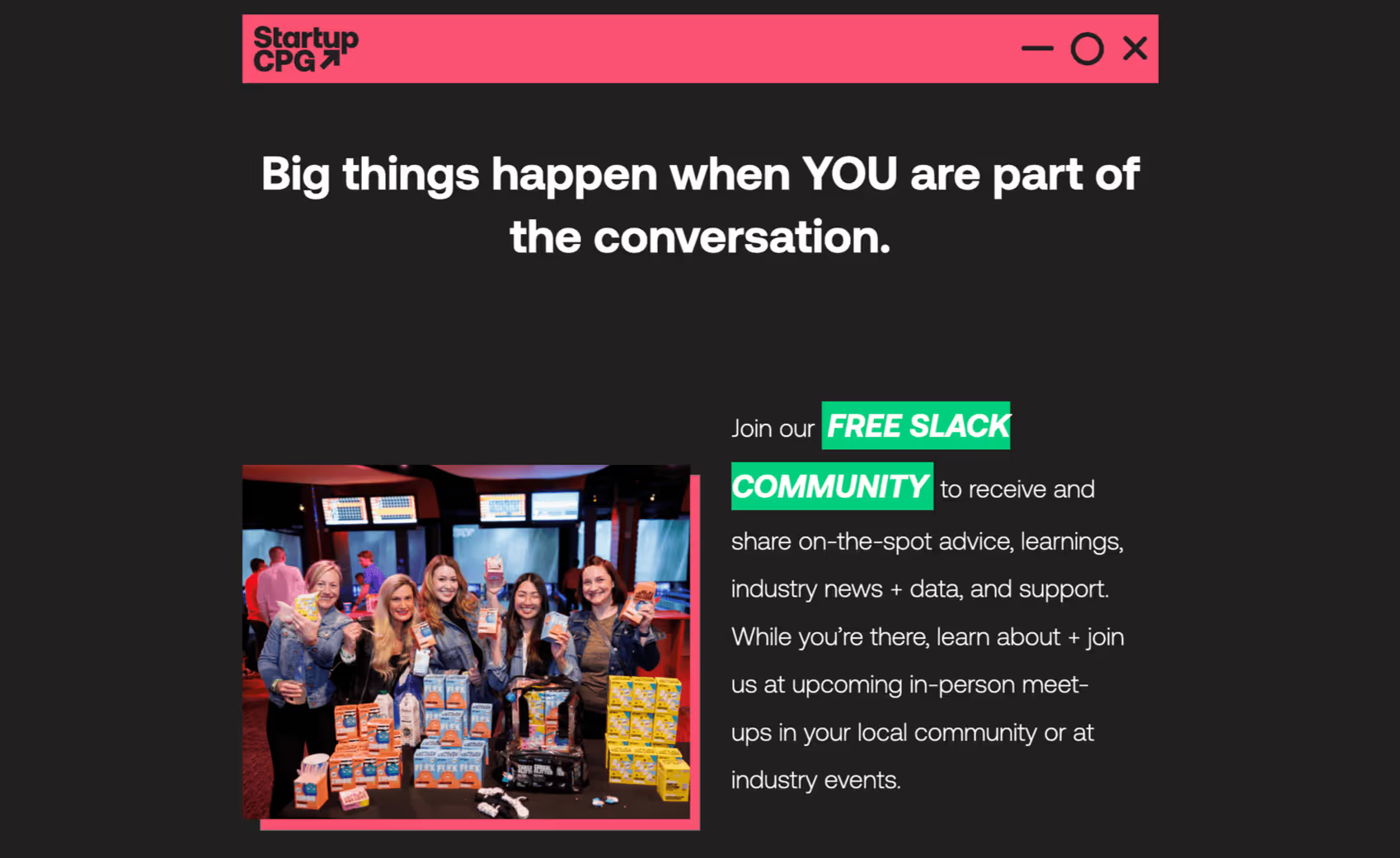
According to them, virtual get-togethers are so 2020. Can’t help but agree!
With 10 city hubs, Startup CPG hosts regular meetups for all 20,000 of their members. Whether it be talking about the latest brands, getting on-the-spot advice, industry news, and dates, you won’t regret joining Startup CPG.
How can you join, you may ask? Subscribe to their newsletter, look for the introduction email in your inbox, and join the conversation on Slack to stay up to date.
The Takeaway
Joining a community is a small decision that compounds. The operators who treat it as a line item and actually show up get a network, a set of benchmarks, a vendor stack, and a set of relationships that pay off for a decade. The ones who join and lurk get nothing.
Pick one that matches your stage. Post in it within your first week. Offer help before you ask for any. In a year you'll look back and wonder how you ever operated without it.
--
Once you're ready to turn that network into more repeat revenue, a mobile app is one of the highest-leverage moves for brands past $3M. See how MobiLoud turns your website into a native iOS and Android app without rebuilding anything, and why top operators use it to drive retention, AOV, and LTV.
FAQs

Convert your website into a mobile app