Do Shopping Apps Boost Conversion Rate & LTV? How?

Yes, shopping apps significantly boost conversion rate and LTV by removing friction, creating a focused buying environment, and bringing customers back through push, loyalty, and habit. By making checkout faster, sessions more intentional, and repeat visits more frequent, apps drive higher order values and far more repeat revenue than mobile web.
Yes, shopping apps significantly boost conversion rate and LTV by removing friction, creating a focused buying environment, and bringing customers back through push, loyalty, and habit. By making checkout faster, sessions more intentional, and repeat visits more frequent, apps drive higher order values and far more repeat revenue than mobile web.
Short answer: yes, dramatically.
Long answer: apps change how your best customers shop in ways mobile sites can’t. They buy faster and come back more often because the experience is smoother and more dependable.
Most of your traffic is already on mobile. Mobile web works well for browsing, but checkout often gets interrupted. A page reloads, a login expires, or a notification pulls them out of the flow.
An app removes those interruptions. It opens fast, keeps people signed in, and gives them a steady place to shop.
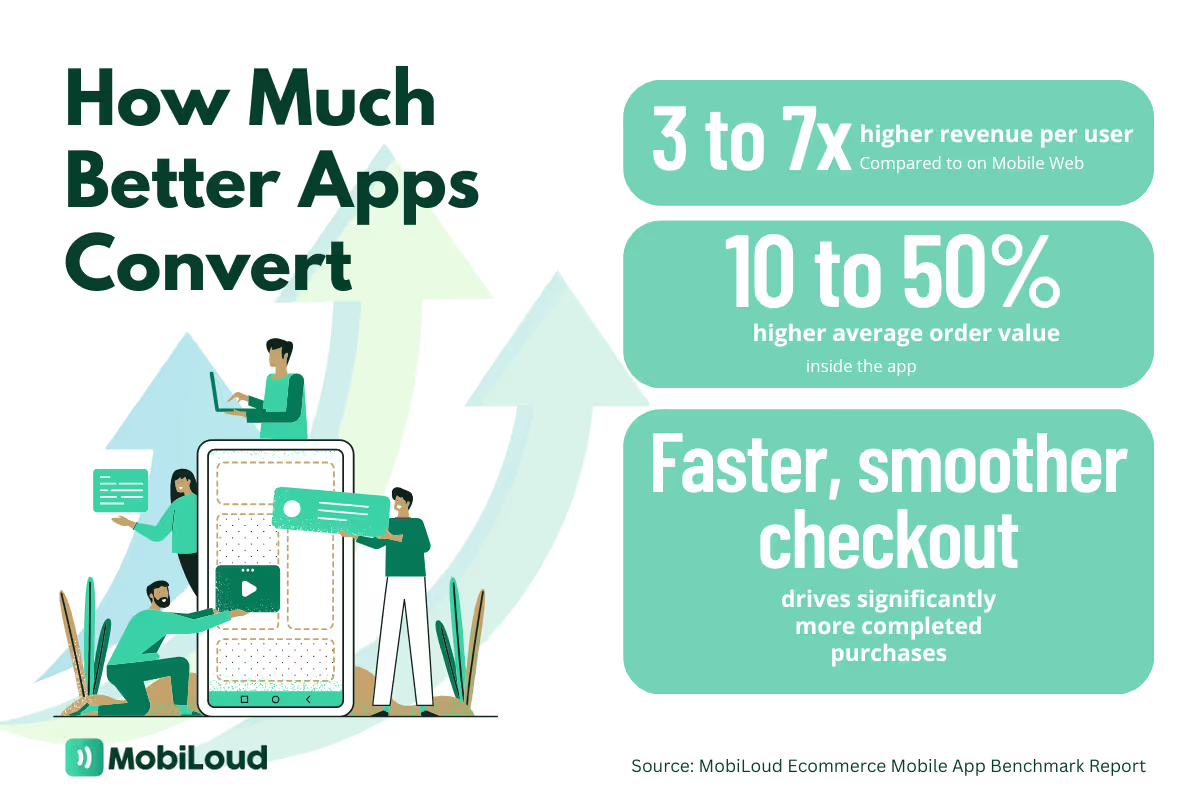
Our Benchmark Report shows this clearly. Many brands see three to seven times more revenue per user inside their app compared to mobile web.
This article explains why apps perform this well and what that means for your store, from reducing friction to building retention and lifting lifetime value.
1. Apps eliminate friction from the buying experience (→ higher conversion rate)
If you’ve ever watched someone try to check out on your mobile site, you know where things fall apart. A page stalls. A password is forgotten. A form field resets. A tiny interruption becomes a lost sale.
An app removes those moments.
It opens instantly and keeps people logged in. Shipping and payment details stay saved, and checkout feels stable instead of fragile. And an app is always one tap away.
When you take friction out of the buying experience, more people finish the purchase.
You can see it in the numbers. Many stores in our Benchmark Report see three to seven times higher revenue per user inside their app. Average order value often rises ten to fifty percent because a smoother experience encourages bigger baskets.
Real brands show this in their numbers.
Tadashi Shoji saw conversion and revenue per user climb as more customers shifted into the app.
Country Life Natural Foods saw the same effect. A smoother journey led to higher conversion and stronger order values.
This is the foundation for everything an app does. Before you talk about push or loyalty, it starts here: remove friction, and shoppers finish the purchase. And when you remove enough friction, they come back more often.
2. Apps create a closed, distraction-free environment
Mobile browsing works well for quick lookarounds, but it rarely holds attention. A shopper opens a product page, then a notification pulls them away. Tabs stack up. The page reloads. It’s normal browser behavior, not a conscious choice to leave.
An app changes that setting.
When someone opens your app, they’re entering a space that feels contained. No tabs hovering. No browser prompts. Fewer moments that break momentum.
This matters because shopping isn’t just about interest. It’s about staying focused long enough to make a decision.
The State of Ecommerce 2026 Strategy Deck highlights this idea. It shows that when distractions drop, people stay engaged longer, session value rises, and they make decisions faster. People browse more, compare more, and commit faster.
You can see this play out in real stores. Tadashi Shoji, Kiokii, and Country Life Natural Foods all saw customers spending more time in their apps than on mobile web. Nothing dramatic changed; customers just stayed in the environment longer.
Focused sessions lead to better outcomes. More browsing. More product discovery. More completed checkouts.
A distraction-free space isn’t just a nicer experience. It quietly supports stronger conversion.
3. Push notifications outperform email and SMS (→ more sessions → more purchases)
Email and SMS depend on people checking their inbox. Push reaches them instantly.
And that difference shows up fast.
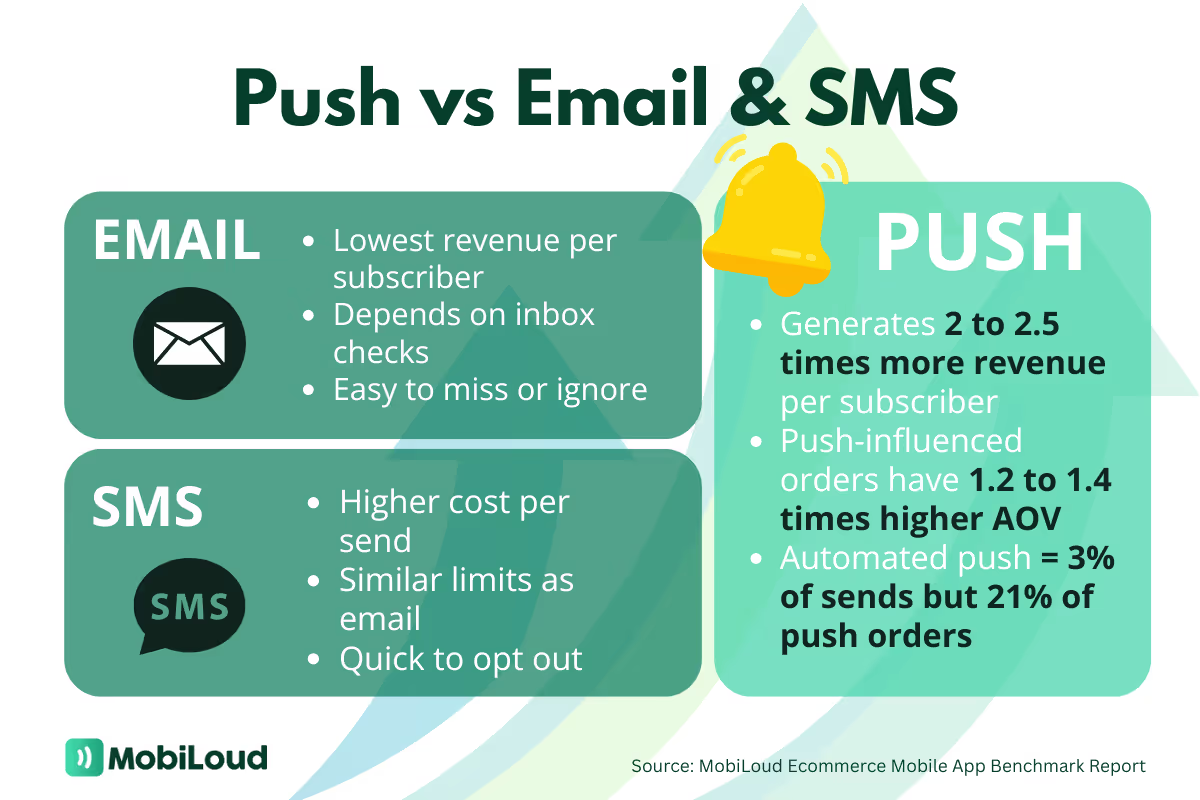
In our Benchmark Report, push subscribers generate two to two and a half times more revenue per subscriber than email or SMS. There’s no inbox to sift through. Customers tap the message and land right back in the app.
Push orders also carry more value. They come in with a one point two to one point four times higher average order value than traffic from email or SMS.
Automation pushes this even further. One brand generated more than thirty thousand dollars in a single month from push, and half of it came from automated abandoned-cart messages. These messages made up only three percent of all sends, but drove twenty-one percent of push-attributed orders.
Kiokii sees this pattern daily. Their app brings customers back far more often than mobile web, and push is a major reason. A timely message gets people to return, not just browse once.
Repeat sessions lead to repeat purchases. Push is one of the simplest ways to spark both.
4. Apps turn your best customers into super customers
Every store has a small group of customers who buy often and rarely hesitate once they find something they want. They’re already committed shoppers, and they just need a smoother path.
An app gives them that path.
Our Benchmark Report shows that app users generate three to seven times more revenue per user. It becomes obvious why when you look at their behavior. High-intent shoppers don’t want delays. When the app opens quickly and checkout takes seconds, they follow through instead of bouncing.
The pattern holds in repeat behavior too. Sixty percent of first‑time app buyers make another purchase.
You can see this across brands:
- Country Life Natural Foods saw their most loyal customers returning more frequently after the app launch.
- Kiokii noticed their app users coming back far more consistently than mobile web shoppers, especially when they received timely push alerts.
- Tadashi Shoji found that their app outperformed the website on every retention metric.
These customers don’t need convincing. They simply need an experience that matches how quickly they want to shop. The app gives them that and turns an already valuable segment into a dependable source of revenue.
5. Apps increase retention through habit formation
People don’t always shop because they planned to. They shop because something sparks the thought. A moment of interest. A notification. A familiar icon they tap without thinking.
An app makes that possible in a way mobile web can’t match.
When your store sits on the home screen, it becomes part of someone’s routine. They don’t need to search for you or wait for an email. The store is right there whenever they feel like seeing what’s new.
This is where retention starts to shift — when people return naturally.
When customers return without paid ads or constant promotions, lifetime value rises and acquisition costs fall.
The State of Ecommerce 2026 Strategy Deck reinforces this point. It points out that loyalty programs, personalization, and recurring engagement are major drivers of retention. People stick with brands that show up consistently and make returning easy.
You can see this in Country Life Natural Foods. Their app users came back more often simply because opening the store was effortless.
Habit is powerful, and an app is one of the few tools that can create it.
6. Apps centralize loyalty, rewards, subscriptions, and repeat flows
Retention doesn’t come from the first purchase. It comes from everything that happens afterward: loyalty points, refill reminders, subscriptions, early access, recommendations, and wishlists.
These features exist on the mobile web, but they often compete with too much noise. People forget to log in. Tabs reset. The experience isn’t built for long-term engagement.
Inside an app, these same features work the way they’re supposed to.
Customers stay logged in. Loyalty points are visible every time they open the app. Refill reminders arrive through push right when they matter. Subscriptions are easier to update. VIP drops feel more exclusive. Recommendations feel more personal because they’re based on real browsing patterns.
The State of Ecommerce 2026 strategy report reinforces this. It points out that personalized access, rewards, loyalty programs, and smart promotions are central to modern ecommerce, and an app is the most natural place for them to live.
You can see this in real brands.
Kiokii uses app-based loyalty and promos to keep customers engaged.
Country Life Natural Foods uses their app to deliver personalized content and stronger repeat flows.
When loyalty features live inside the app instead of being scattered across emails and browser prompts, customers actually use them. And when they use them, LTV rises.
7. Apps give you more owned data and better personalization
Personalization only works when you truly understand how people shop. Mobile web makes that harder because sessions are shorter, drop-offs happen more often, and tracking can miss key parts of the journey.
An app closes those gaps.
You can see real session patterns: which categories people browse, how they move from product to checkout, and how to segment them based on actual behavior—not guesses.
This kind of data makes your timing better, and timing is often what turns interest into a sale.
The State of Ecommerce 2026 deck points to the rise of advanced personalization and AI-powered experiences. Those approaches only work when you have steady, reliable behavioral data, and an app is the channel that provides it.
Some brands are already using this advantage.
reLink Online builds stronger segments and sends more accurate targeting based on app behavior.
Sleefs uses app-level data to power smarter push messages and more relevant offers.
When you understand your customers more clearly, you can reach them in ways that feel natural and well timed. An app is the channel that makes that possible.
How MobiLoud Helps
Apps work. They remove friction, bring customers back, and turn your best buyers into reliable revenue.
The challenge is building one without slowing your team down.
MobiLoud solves that by taking your existing site and turning it into a mobile app without rebuilding anything. Your checkout, your design, and your integrations all carry over. We handle the setup, publishing, and maintenance.
You get the lift of an app without the cost or complexity of a full rebuild.
Want to see your app in action? We’ll show you a preview or walk you through it on a quick call.
FAQs

Convert your website into a mobile app