The 7 Best Customer Retention Tools for Ecommerce (2026)

Repeat customers drive profit. Tools like MobiLoud, Klaviyo, Yotpo, Gorgias, Smile.io, Omnisend, and Reamaze help brands lift repeat purchases through better engagement, loyalty, and post-purchase experiences. Pick the one that fixes your biggest retention gap.
Repeat customers drive profit. Tools like MobiLoud, Klaviyo, Yotpo, Gorgias, Smile.io, Omnisend, and Reamaze help brands lift repeat purchases through better engagement, loyalty, and post-purchase experiences. Pick the one that fixes your biggest retention gap.
Global ecommerce sales are projected to hit $6.42 trillion in 2025. Yet most stores still retain only 15–43% of their customers. That’s the performance gap every brand needs to close, and the right tools can do it.
Below are the 7 best customer retention tools for ecommerce in 2026. These are platforms designed to lift repeat purchases, boost lifetime value, and improve your LTV:CAC ratio:
- MobiLoud – turn your store into a mobile app to boost repeat sales.
- Klaviyo – automate personalized email and SMS campaigns.
- Yotpo – build loyalty, referral, and review programs.
- Gorgias – keep customers loyal with fast, responsive support.
- Smile.io – create simple loyalty and rewards systems.
- Omnisend – unify email, SMS, and push campaigns in one platform.
- Reamaze – strengthen retention through live chat and post-purchase engagement.
In this article, we’ll break down what each tool does, who it’s best for, how much it costs, and why it can move your retention metrics above the 25% industry median.
What Are Customer Retention Tools for Ecommerce?
Customer retention tools are software platforms that help ecommerce stores increase repeat purchases and customer lifetime value through automation, personalization, and engagement.
They’re built to solve one problem: most customers don’t come back after their first order. According to MobiLoud’s 2025 Benchmark Report, mobile apps increase customer retention up to 5x higher than mobile websites, and 60% of first-time app buyers make another purchase.
Retention tools help close that gap by:
- Automating re-engagement through email, SMS, or push notifications.
- Building loyalty programs that reward repeat buyers.
- Personalizing offers based on purchase history or behavior.
- Improving post-purchase experience through fast support and feedback loops.
These systems don’t replace good products or services. Rather, they make sure every satisfied customer buys again.
Why Do Retention Tools Matter More Than Ever in 2026?
Ecommerce is growing fast, but retention isn’t keeping up.
Global online sales are forecast to reach $6.42 trillion in 2025, rising to $7.89 trillion by 2028. Yet Decile’s 2024 data shows that most brands still retain only 15-43% of their customers and average a repurchase rate of 18-48%. That means most of the traffic and ad spend built to win new customers pays off only once.
At MobiLoud, we found that app shoppers spend over 200 minutes per month in retail apps compared with just 11 minutes on mobile web, and convert at 1.7x higher rates.
The economics don’t add up without retention. When acquisition costs climb and repeat orders stall, margins disappear.
App users, however, generate 2.8–5x higher lifetime value than web-only shoppers, a difference that compounds over time. Retention tools close this gap by keeping existing buyers active through timely communication, loyalty incentives, and personalized offers.
Mobile and AI trends make these tools even more critical:
- 77% of ecommerce visits now come from mobile devices, and
- 60% of U.S. shoppers use AI assistants like ChatGPT or Gemini for purchase decisions.
Stores that don’t automate re-engagement or build mobile-first experiences risk losing visibility where buyers already are, especially when mobile app retention strategies now define how often customers return.
Retention is no longer option, but rather the lever that makes every marketing dollar compound.
The 7 Best Customer Retention Tools for Ecommerce
The table below summarizes the seven tools, helping you get a quick glance at them before we go into details.
How We Selected the Tools
We focused on retention tools that prove real lift in repeat purchases, retention rate, and lifetime value, not just engagement. Each platform on this list met four key benchmarks:
- Performance impact: Demonstrated improvement in repurchase rate or retention% beyond the 25% industry median.
- Ecommerce readiness: Direct integrations with Shopify, WooCommerce, or BigCommerce, so implementation doesn’t need custom code.
- Transparent pricing: Clear, scalable plans published as of 2024–2025.
- Current adoption: Positive merchant reviews and active updates within the past 12 months.
We compared 20+ platforms using data from our 2025 Benchmark Report, Decile’s 2024 Benchmarking Guide, and Shopify’s Global Ecommerce Growth Report (2025) to determine which tools consistently move retention metrics.
1. MobiLoud – Turn Your Store Into a Mobile App to Drive Repeat Sales
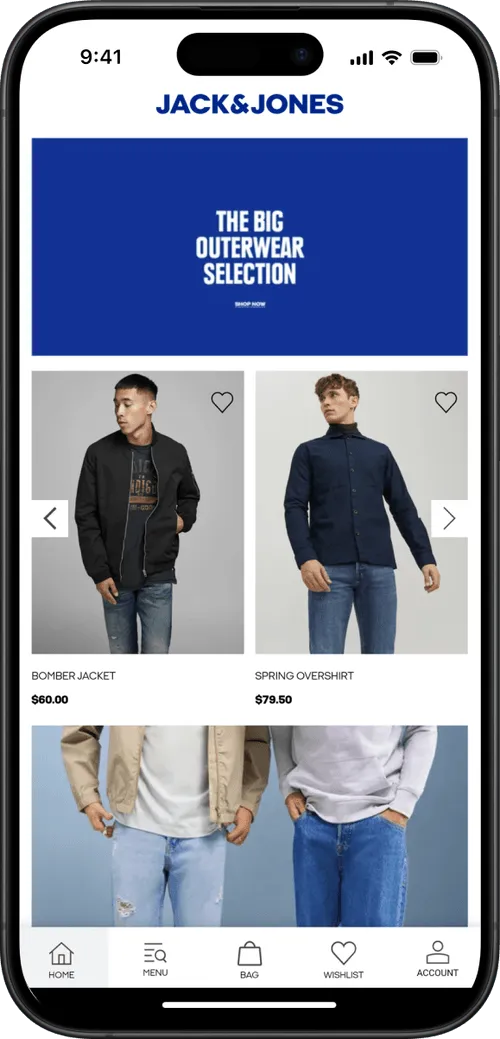
What it does: MobiLoud converts your Shopify, WooCommerce, or BigCommerce store into a fully functional mobile app, keeping your brand one tap away.
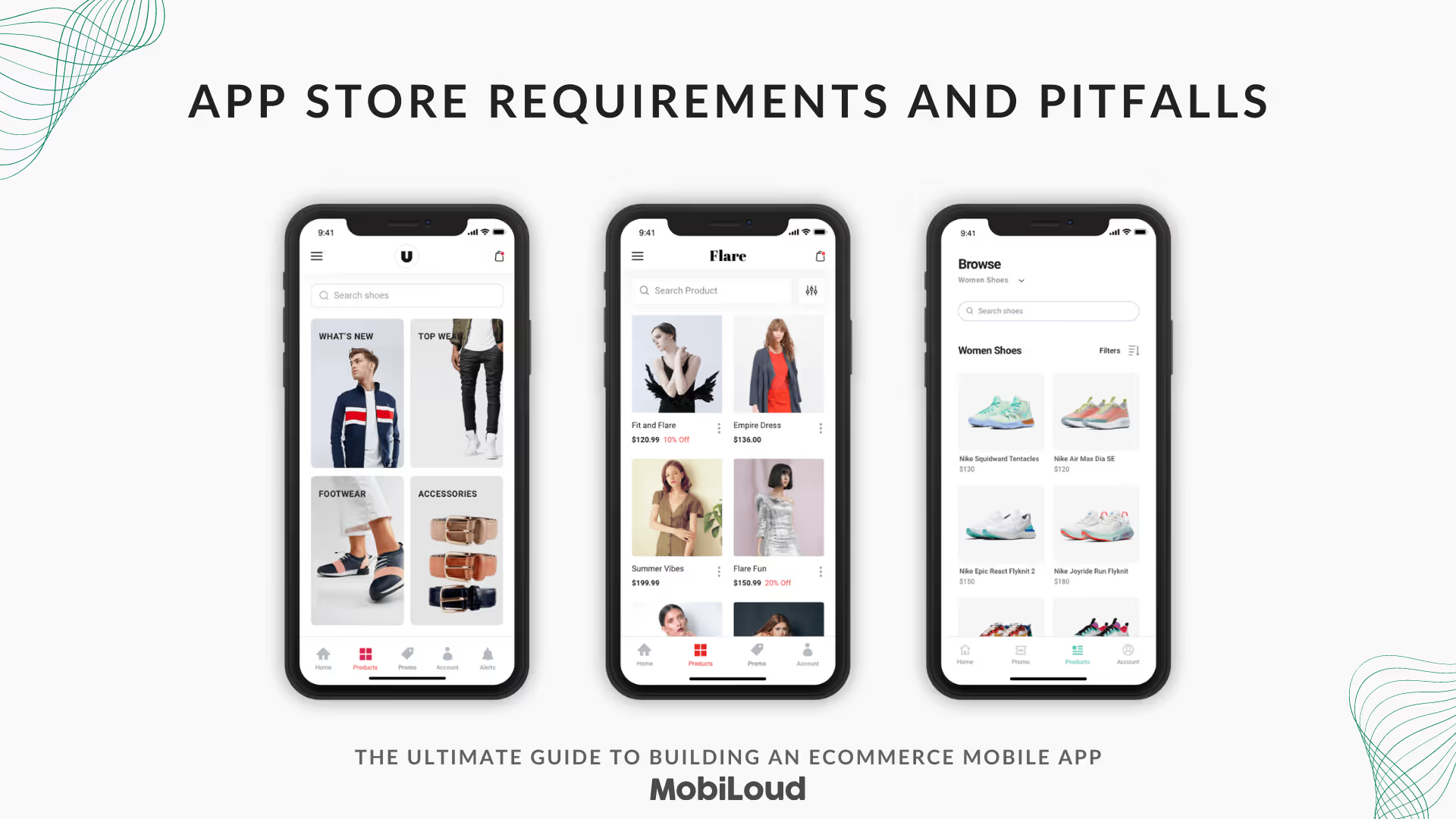
By turning your website into a mobile app, MobiLoud helps your brand retain customers with built-in push notifications and faster repeat-purchase journeys.
Why it matters: Apps now outperform mobile web by a wide margin. They drive 3.5–7x higher revenue per user and 1.7–3x higher conversion rates despite accounting for a smaller share of total traffic. Many retailers also see 10–30% of total online revenue come from their app, and top performers reach 50–60%.
Use cases:
- DTC beauty and apparel brands using push campaigns to announce drops or restocks.
- F&B stores promoting reorder reminders and subscription renewals.
Pricing: Starts at $299 per month, with higher tiers for advanced branding and publishing support.
Best for: Shopify merchants and DTC brands ready to own their mobile channel through a Shopify mobile app builder that connects their storefront to native iOS and Android apps.
2. Klaviyo – Email and SMS Automation That Drives Repeat Purchases
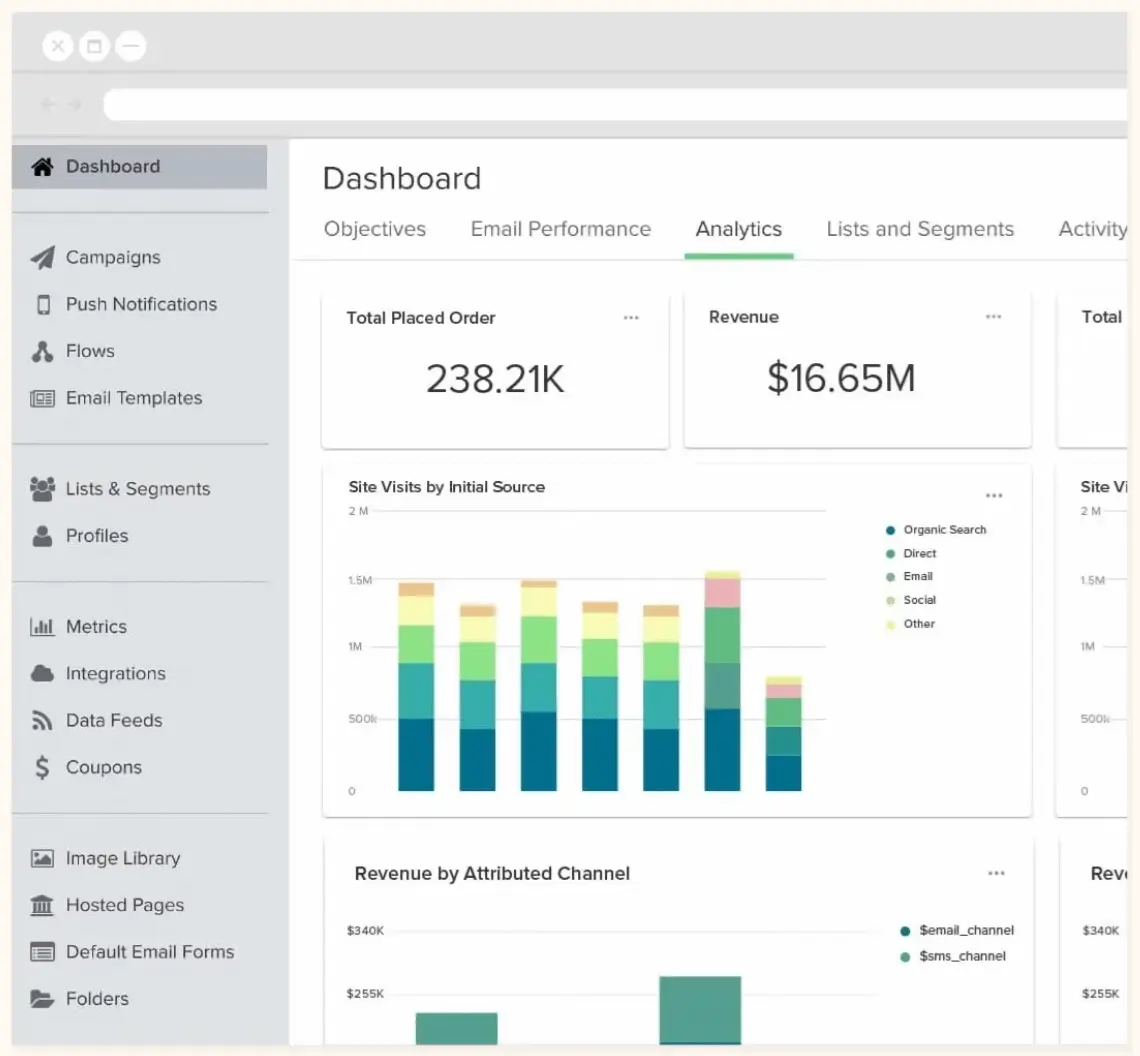
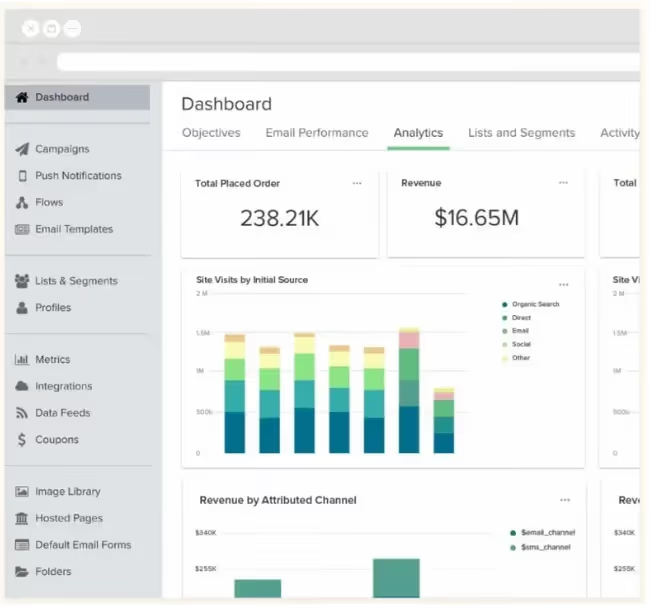
What it does: Klaviyo automates personalized email and SMS flows that drive reorders, win-backs, and upsells.
Key features: Predictive segmentation, A/B testing, and prebuilt retention workflows.
Use cases:
- Recovering abandoned carts.
- Triggering reorder campaigns for consumables or seasonal products.
Pricing: Free for up to 250 active profiles; paid plans start at $45 per month.
Best for: Ecommerce brands scaling data-driven re-engagement through automation.
3. Yotpo – Build Loyalty and Referral Programs
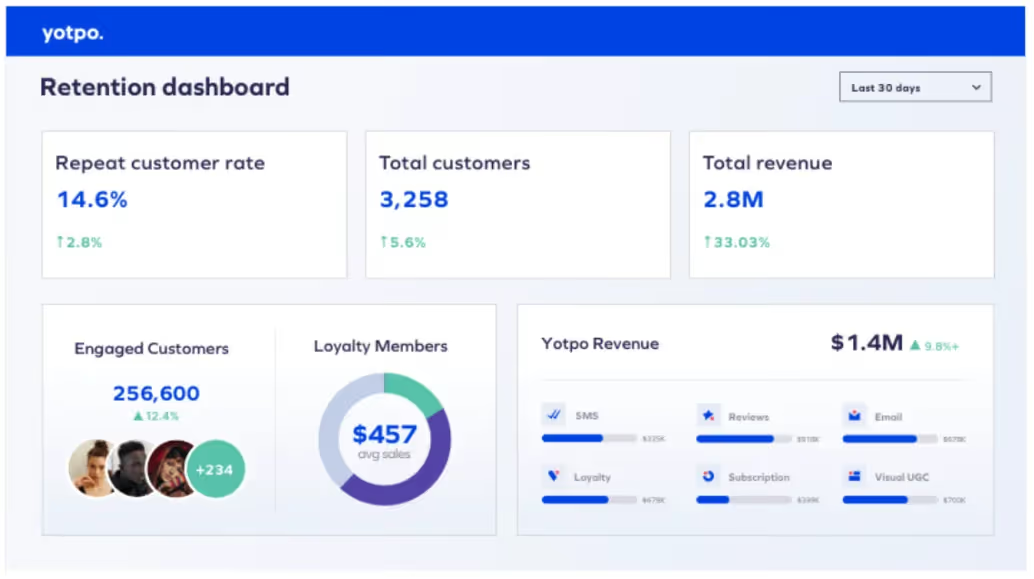
What it does: Yotpo combines reviews, loyalty programs, referrals, and UGC into one platform to turn happy buyers into advocates.
Why it matters: According to Decile 2024, categories with high emotional engagement, like fashion, beauty, and F&B record, repurchase rates of 25–31% when loyalty programs are active.
Use cases:
- Rewarding points for purchases, referrals, and social shares.
- Encouraging verified reviews that strengthen brand credibility.
Pricing: Starts at $79 per month.
Best for: Brands building long-term loyalty ecosystems that drive recurring revenue.
4. Gorgias – Keep Shoppers Loyal With Fast Support
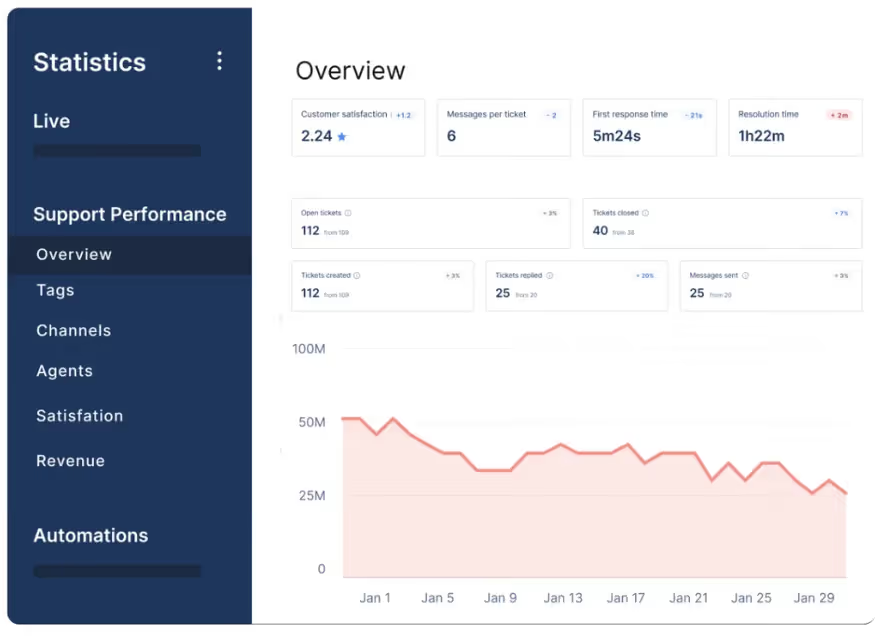
What it does: Gorgias centralizes support across email, chat, and social channels, helping teams resolve issues before customers churn.
Why it matters: Fast, personalized service directly impacts retention — shoppers are far more likely to reorder when their last issue was handled quickly.
Use cases:
- Responding to shipping or refund inquiries.
- Automating routine responses with macros while keeping replies personal.
Pricing: Starter plan from $10 per month, scaling by ticket volume.
Best for: Stores where customer experience equals retention, especially mid- to high-volume DTC brands.
5. Smile.io – Simple Loyalty and Rewards for Growing Brands
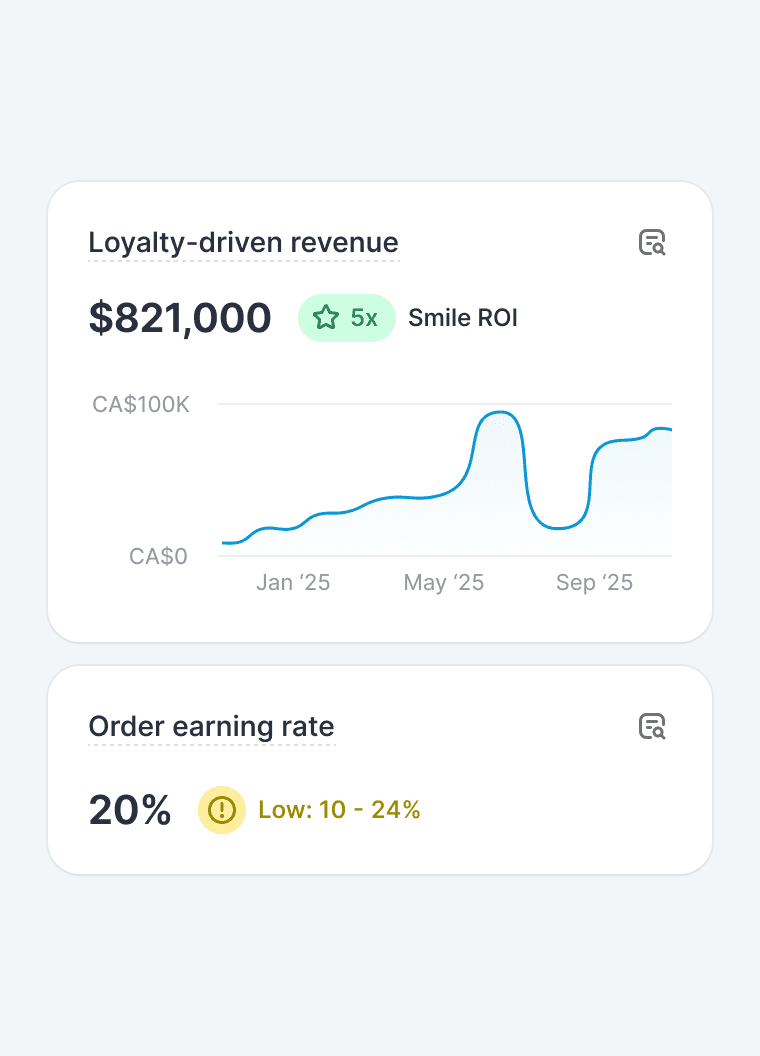
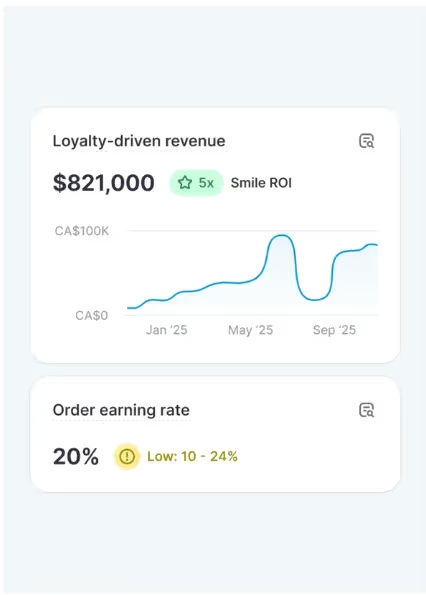
What it does: Smile.io helps Shopify merchants launch loyalty and rewards programs without custom development.
Use cases:
- Smaller stores creating points-based systems to drive a second purchase.
- Mid-sized brands adding referral rewards to increase organic growth.
Pricing: Paid plans from $49 per month.
Best for:Growing Shopify brands seeking a lightweight way to build repeat customers.
6. Omnisend – Unified Email, SMS, and Push Campaigns
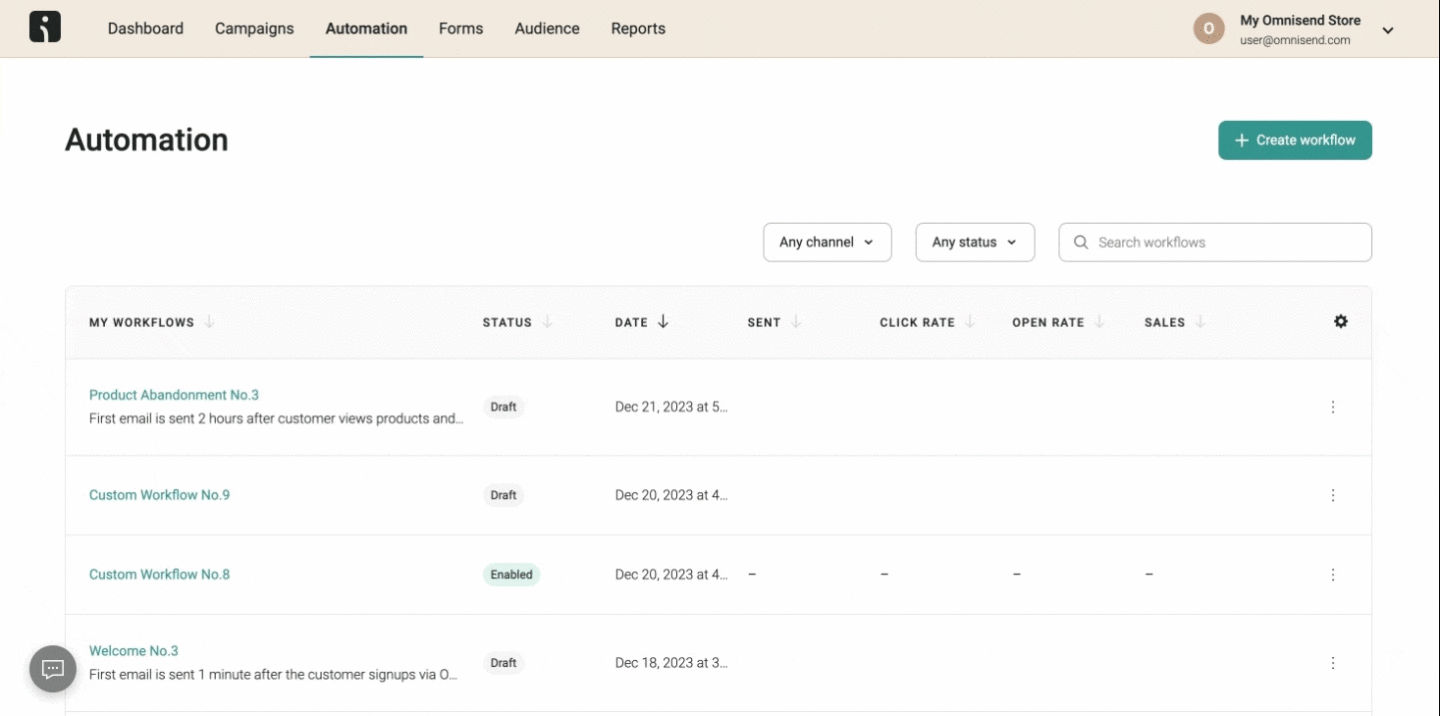
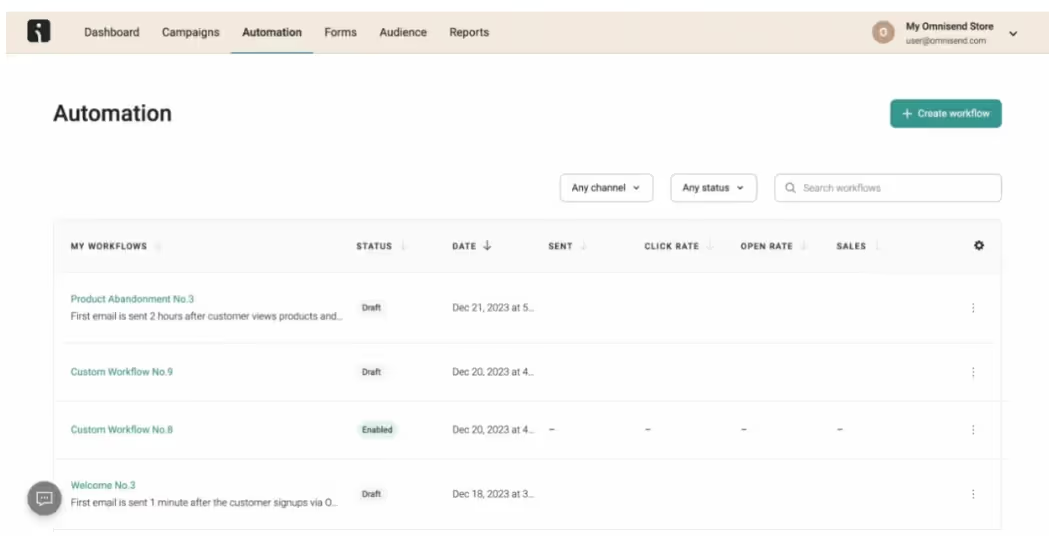
What it does: Omnisend unifies email, SMS, and web push automation to keep customers engaged across channels.
Why it matters: Multi-channel retention drives stronger CLV — a key factor behind top-performing brands with LTV:CAC ratios above 3:1.
Use cases:
- Coordinated holiday or product-launch campaigns.
- Re-engaging lapsed customers with behavior-based triggers.
Pricing: Free up to 250 contacts; paid plans start at $16 per month.
Best for: Stores wanting an all-in-one platform for cross-channel retention.
7. Reamaze – Retention Through Support and Conversation
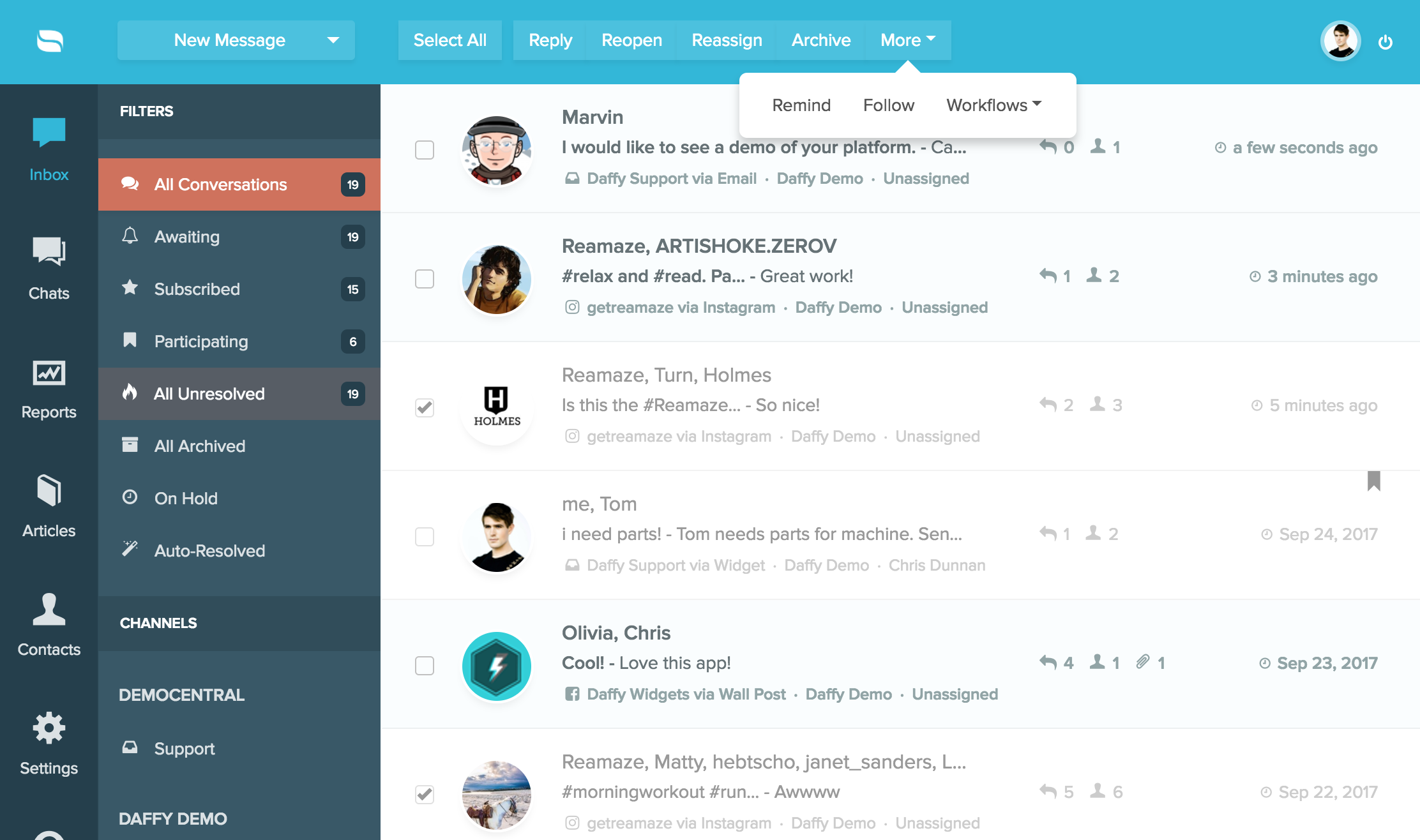
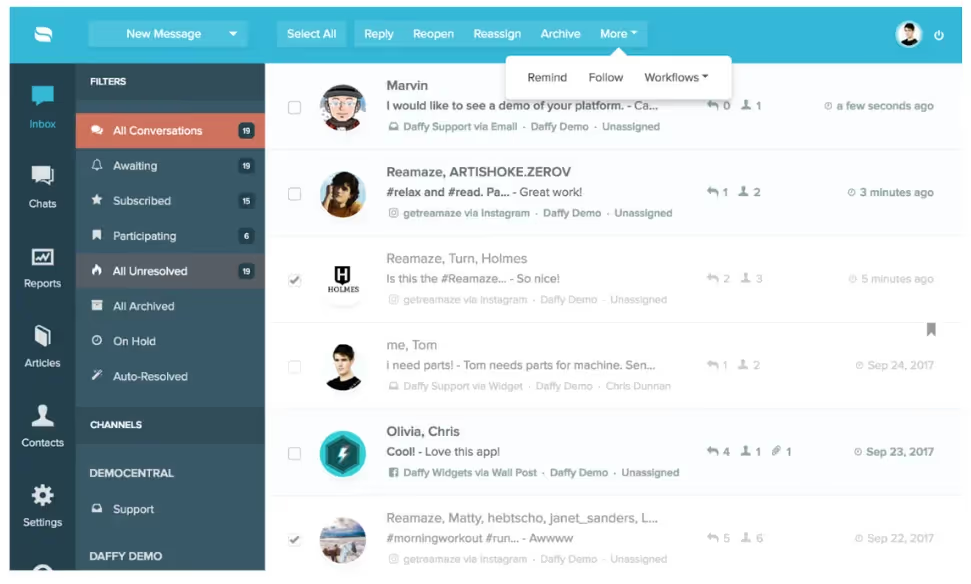
What it does: Reamaze combines live chat, chatbots, and helpdesk tools to turn customer service into a retention driver.
Use cases:
- Post-purchase support and feedback collection.
- Upsell or subscription renewal through chat automation.
Pricing: Starts at $29 per month per user.
Best for: Brands using conversational support to retain and re-engage repeat buyers.
How Do You Choose the Right Retention Tool?
Before choosing a retention tool, get clear on what you’re solving for. Use the steps below to match the tool to your actual retention gaps and how your customers behave.
1. Identify where your retention is breaking down
Look at repeat purchase rate, churn after first order, and support bottlenecks.
Your weakest point tells you which type of tool will drive the fastest lift.
2. Map your tool to your purchase frequency
Match the tool to how often your customers buy.
High-frequency categories benefit from loyalty and push; low-frequency brands gain more from lifecycle automation and strong post-purchase workflows.
💡Benchmark tip: If your repurchase rate sits below 25% or your LTV:CAC is under 3:1, it’s time to adopt one of these retention systems before scaling acquisition further.
3. Choose channels your customers actually respond to
Check whether your audience prefers email, SMS, push, in-app engagement, or support-driven communication.
Pick a tool built around those channels.
4. Match the tool to your team’s bandwidth
Some platforms need hands-on work (automation). Others run quietly in the background (loyalty, mobile apps, support systems).
Choose what you can realistically maintain.
5. Check how well the tool plugs into your stack
Strong retention tools sync cleanly with Shopify, BigCommerce, Klaviyo, Gorgias, loyalty systems, and your existing workflows.
Avoid anything that creates duplicate work.
6. Tie the tool to a concrete revenue goal
Pick the tool based on the metric you need to improve:
- Repeat orders,
- AOV,
- LTV,
- Churn, or
- Response times.
Tools work best when tied to one clear outcome.
7. Consider how fast you need results
Some tools compound slowly (loyalty programs).
Others show lift immediately (push notifications, lifecycle automation, mobile apps).
Final Thoughts
Acquisition keeps getting louder. Retention keeps paying the bills.
Ecommerce is booming, but growth alone doesn’t equal profit. Only brands that keep customers coming back will turn that scale into sustainable revenue. The best customer retention tools for ecommerce, like MobiLoud, Klaviyo, and Yotpo, aren’t just apps but are systems that protect your margins by turning first-time buyers into loyal ones.
On average, brands launching with MobiLoud report 5–10x ROI in the first month, thanks to push automations and repeat purchases that require no added ad spend.
Whether you focus on push notifications, loyalty programs, or post-purchase automation, the math is simple: Retention compounds. Acquisition resets.
If you’re ready to own your mobile channel and re-engage customers where they actually shop, book a consultation with MobiLoud now. Start building your mobile app and turning your best buyers into repeat ones.
The brands winning this year aren’t chasing new clicks; they’re earning the next order.
Frequently Asked Questions
What’s a good ecommerce retention rate?
A healthy ecommerce retention rate falls between 25% and 40%, depending on category. Decile’s 2024 data shows retention as low as 15% in home goods and as high as 43% in supplements, with a 25% median across industries. Any brand consistently above 35% is outperforming most competitors.
How do push notifications compare to email for customer retention?
Push notifications for ecommerce outperform email not just in engagement, but in revenue impact. According to the 2025 MobiLoud Benchmark Report, they deliver 2–2.5x higher average revenue per subscriber than email or SMS. The typical open rate is around 16% while automated campaigns generate anywhere from $10k to $200k+ in monthly revenue. MobiLoud, for one, uses these automated flows to re-engage inactive shoppers or trigger perfectly timed reorder reminders.
Which retention tools integrate best with Shopify?
MobiLoud, Klaviyo, Yotpo, Smile.io, and Gorgias have dedicated Shopify apps and plug-ins. Such integration allows merchants to sync customer data, loyalty points, and purchase events without manual setup.
Are customer retention tools worth it for small ecommerce stores?
Yes. Even small gains in repeat purchase rate can significantly improve profitability. A 5% lift in retention can increase profits by 25–95%, according to industry benchmarks. When your LTV:CAC climbs above 3:1, retention software quickly pays for itself, especially tools with free or low-entry tiers.
Can AI really improve customer retention?
Absolutely. Shopify’s 2025 data shows nearly 60% of U.S. shoppers now use AI tools like ChatGPT or Gemini when making purchase decisions. Retention platforms that personalize offers or automate outreach with AI can meet customers where they already seek recommendations, increasing conversion and loyalty.
FAQs

Convert your website into a mobile app