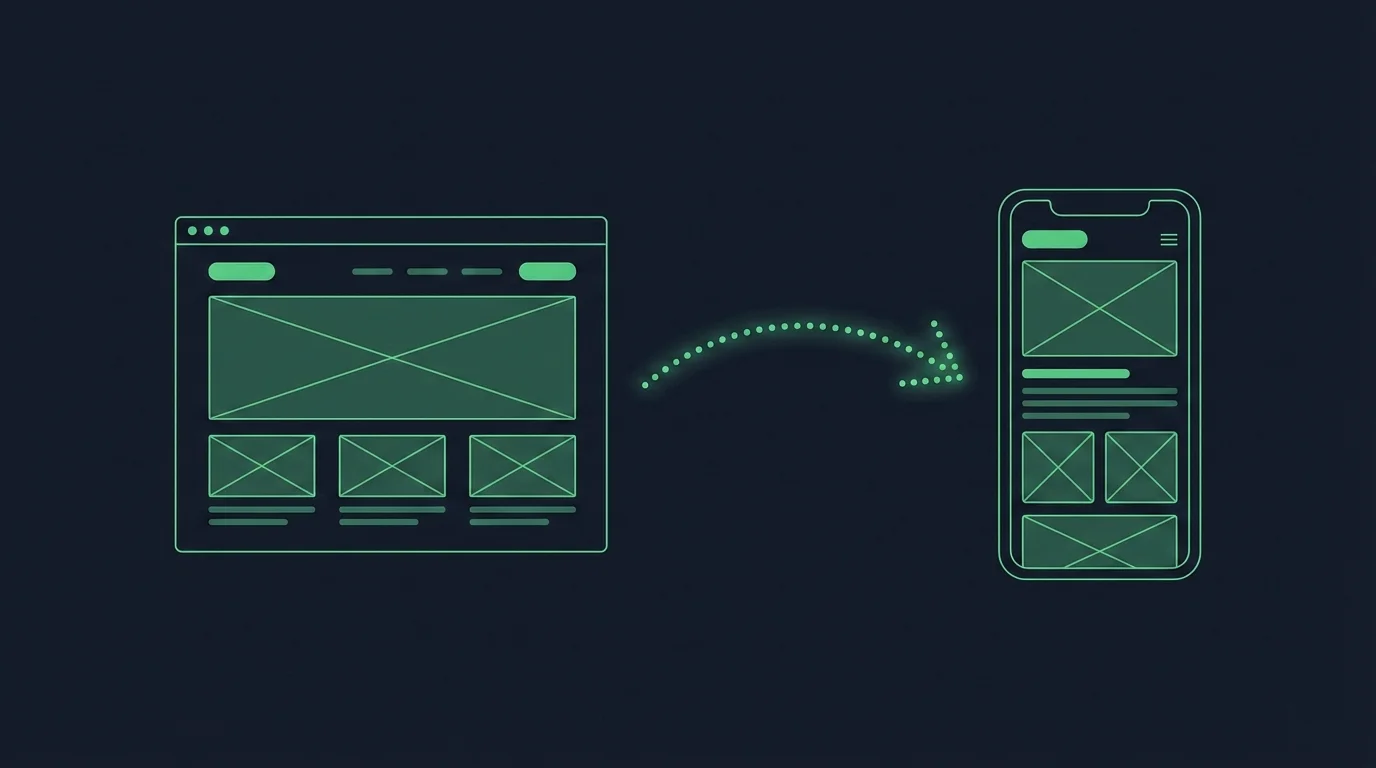
Most of what goes into a website is about winning new customers. Search, ads, social posts and a smooth checkout all work to bring someone in and turn them into a buyer.
Bringing that customer back is harder. Once they close the tab, your next chance to reach them depends on an email they might open or an ad you pay to show them again.
A mobile app gives you a shorter way back. It puts your brand on your customers’ home screens and lets you reach them directly with push notifications.
This guide covers 10 benefits of mobile apps (seven for your business and three for your customers), why app users tend to be worth more than mobile web visitors and how to tell whether an app makes sense for you.
What Are the Benefits of Mobile Apps for Businesses?
Most of the advantages of a mobile app come from the customers who already know your business. The app makes it easier for them to come back and buy again, and gives you a direct line to them.
1. Your Best Customers Come Back More Often
Getting someone to visit your website once is the easy part. Getting them to come back again and again is harder, and it’s where an app helps most.
An app keeps your brand one tap away. Customers don’t have to search for you, find an old email or remember your web address, and when they open the app, they’re still signed in with their details saved.
For a business built on regular customers, that convenience lifts your repeat customer rate. In our Ecommerce Mobile App Benchmark Report, 60% of first-time app buyers went on to buy again.
Luxury menswear brand John Varvatos sees the same pattern. Its app users visit 12 times more often than its mobile web shoppers and buy at four times the rate.
2. You Can Reach Customers Directly With Push Notifications
Email, social media and ads all compete for attention, and you can’t control when people see them. An app adds push notifications, which appear on the lock screen of every customer who has allowed them.
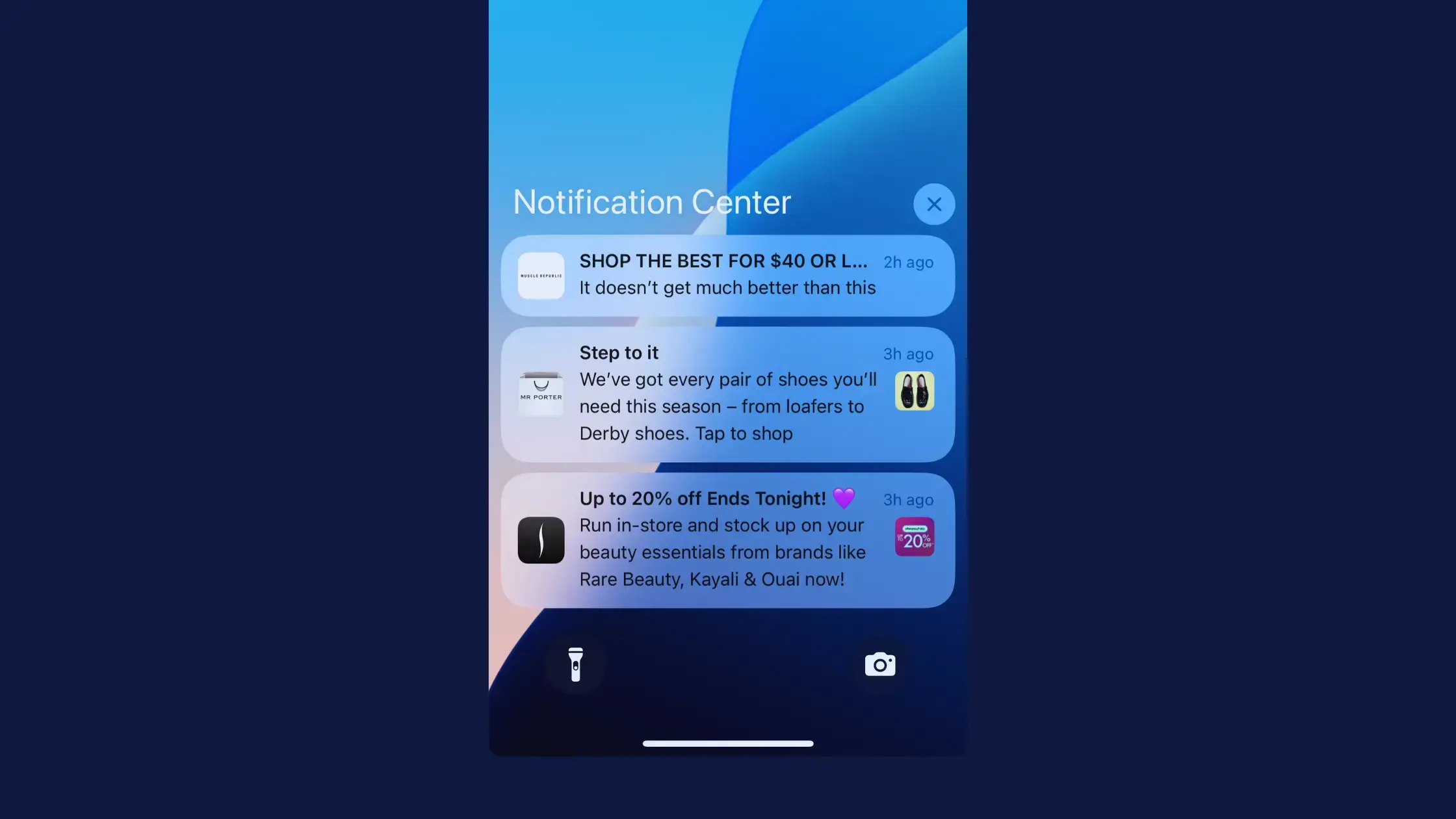
You can send push for new arrivals, back-in-stock alerts, price drops, order updates, loyalty rewards and abandoned carts. Each one can open the exact product or page it’s about, instead of your homepage.
Automated notifications do a lot of the selling. In the same benchmark report, abandoned cart notifications alone brought brands $10,000 to more than $200,000 in extra revenue a month.
3. App Users Convert Better and Spend More
Customers who open your app are usually close to buying. They know your brand, they’re signed in and their payment details are saved, so there’s less standing between them and checkout.
The difference shows up in sales. Across the live ecommerce apps in our benchmark report, app users converted at 1.7 to 3 times the rate of mobile web visitors and spent 10% to 50% more per order. They also brought in 3.5 to 7 times more revenue per user.
Part of that gap comes from who downloads an app: mostly loyal customers who were likely to buy anyway. The app turns that loyalty into more orders by removing the small bits of friction that stop people buying on mobile.
4. Repeat Sales Cost Less to Generate
Winning a first order usually costs money, whether it’s search ads, social ads, affiliate fees or a first-order discount. Bringing that customer back through the same channels means paying again.
An app changes that. Once someone has installed it and allowed notifications, you can reach them whenever you have something to say, without paying per click or per message.
GSF Car Parts, a UK car parts distributor with more than 200 stores, built its app partly for this reason. Its digital director calls the app a very efficient way to run the business, mainly because it avoids the extra cost of Google advertising.
5. You Get Better Data on Your Customers
Most of your website’s visitors are anonymous, and browsers make it harder to recognize the ones who return. On iPhone, Safari deletes the cookies websites set with scripts after seven days without a visit, according to WebKit.
App users usually stay signed in, so what they browse, buy and respond to is tied to their account. That gives you a clearer picture of each customer, from their order history to the notifications they open.
With customers’ consent, you can use that picture to personalize what they see: recommendations based on past orders, reorder reminders timed to when a product runs out and offers that match their loyalty status.
6. Your Brand Stays on Customers’ Home Screens
Your app icon sits on customers’ home screens, next to the apps they open every day. People spent about 3.6 hours a day in apps in 2025, according to Sensor Tower, so it’s a spot they see constantly.
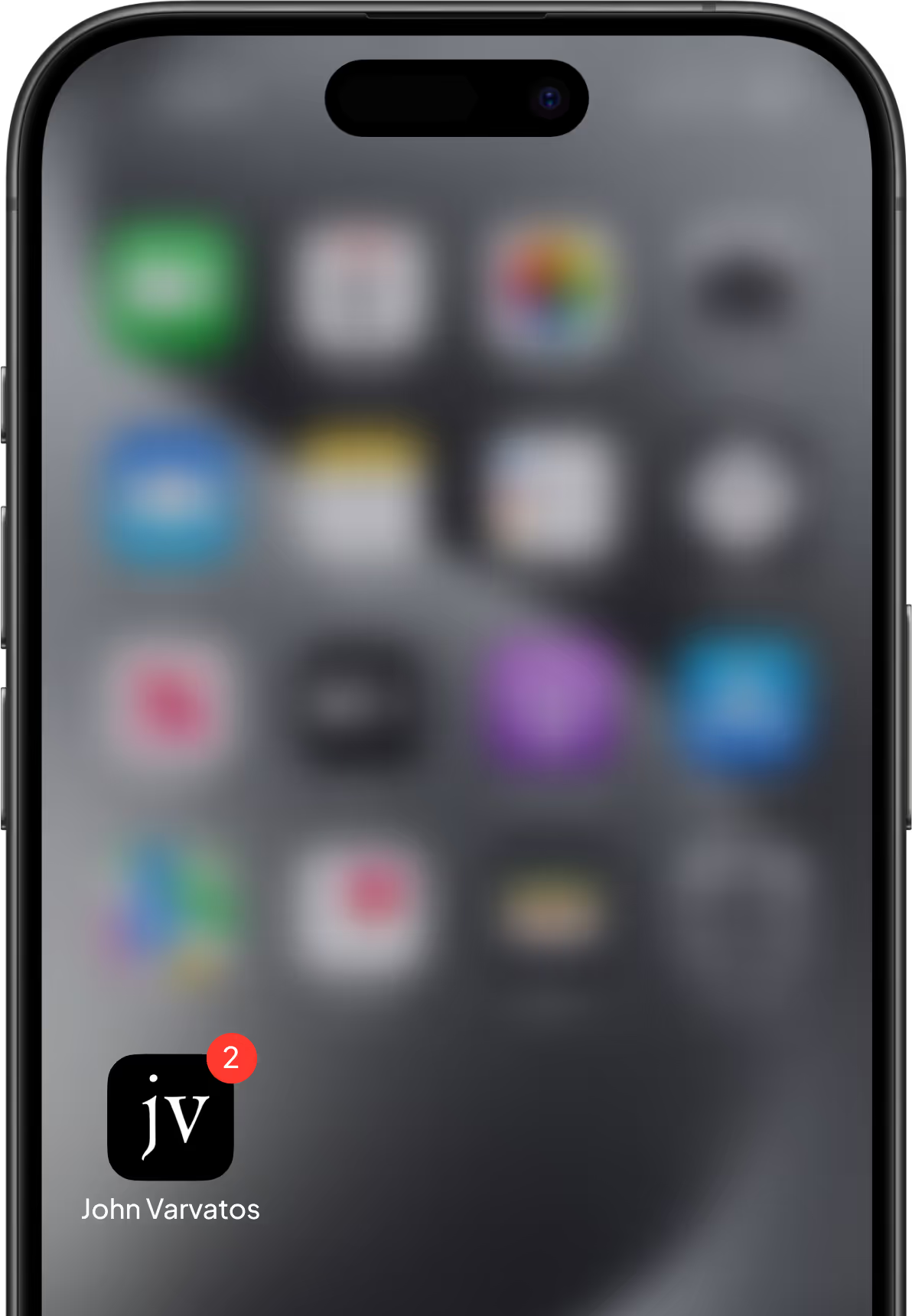
A browser bookmark or an email in a crowded inbox is easy to forget. An icon on the home screen reminds customers you’re there whenever they pick up their phone, and a badge on it tells them when there’s something new.
7. You Can Give App Users Their Own Perks
Convenience is enough for your most loyal customers. For everyone else, an app is more compelling when it offers something they can’t get on your website.
That could be early access to sales and new collections, prices or products just for app users, extra loyalty points for app orders or content for members.
Industrial Safety Products, a safety equipment distributor for industries from construction to fire protection, sends discount alerts to app users first and keeps some discounts for the app alone. Its app users now bring in five times more revenue each than its web users.
Why Do Customers Prefer Mobile Apps?
Your app only pays off if customers choose to use it. They do when it makes the things they do often, like reordering, checking new arrivals or tracking an order, quicker than doing them in the browser.
8. Coming Back Takes Less Effort
Customers open your app from their home screen and pick up where they left off. They’re still signed in, with their saved items, past orders, addresses and loyalty points ready.
For a single visit, that saves a few taps. Across months of repeat orders, those taps add up, and your app becomes the easiest way to buy from you.
Canadian beauty retailer Kiokii launched its app after customers kept asking for a faster, more convenient way to shop on mobile. About 10% of its customers now shop in the app, and they bring in 35% of its online revenue.
9. The Experience Is Designed for Mobile
A good app looks and works the way people expect on their device. Native apps use the navigation, gestures and controls people know from their other apps, and unlike a web app running in the browser, they can use everything the device offers.
That makes everyday tasks quicker, like signing in with Face ID, scanning a barcode to reorder a product or finding the nearest store.
An app can also be built around what mobile customers do most, instead of everything your website does for every visitor. The best ones open straight to what regulars come for, such as new arrivals, their account or a quick reorder.
10. Alerts and Perks Are Useful to Them
Good notifications save customers effort. A back-in-stock alert means they don’t have to keep checking, an order update arrives when it matters and a reorder reminder shows up around the time they run low.
Loyalty programs work better in an app too. Customers can see their points and rewards at a glance and use them in a couple of taps, instead of digging through an account page.
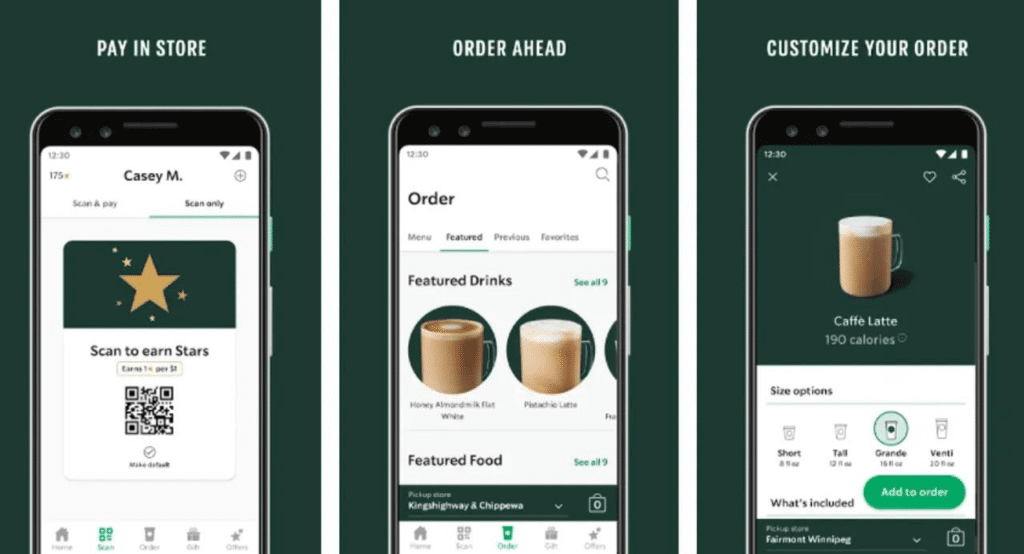
Starbucks is one of the best-known examples. Customers use its app to order ahead, pay in store and collect Stars toward free food and drinks, and Starbucks Rewards keeps some offers and challenges for app users.
Why Do App Users Outperform Mobile Web Visitors?
App users tend to buy more often and spend more than mobile web visitors, and three things drive that gap together:
- Your most loyal customers are the ones who download your app.
- The app makes buying easier, with customers signed in and their details saved.
- Your icon and push notifications give you more chances to bring them back.
Because loyal customers are the ones who download it, your app doesn’t need a big audience to matter. For the three brands we tracked in our benchmark report, the app was used by just 2% to 16% of mobile users but brought in 24% to 65% of mobile revenue.
The other two points mean the app does more than give loyal customers a new place to shop. A study in Marketing Science followed a large retailer’s customers before and after it launched an app. Those who adopted the app bought 33% more often than those who didn’t, and spent 36% more even after returns.
Their spending rose in the retailer’s stores as well as online. In other words, the app brought in extra revenue, rather than shifting the same orders over from other channels.
Learn more about how mobile apps and mobile websites compare
How to Launch an App Without Starting From Scratch
The benefits above come from customers who already know you, and those customers already shop on your website. Yet most ways of building an app start from zero, with a separate app for iPhone and Android to design, build and keep in step with your site for as long as it’s live.
MobiLoud takes a different route. We transform your website into a custom native app, powered by the same underlying code as your site, so you start with everything you’ve already built: your products, accounts, checkout and the tools you rely on.
From there, we design the app around how your customers shop on mobile, with native navigation, push notifications and pages just for app users. The changes you make on your website appear in the app too, so your team keeps working in one place.
We build and publish the app for you, and most brands go live in a few weeks. Once it’s live, our team works with you to make your push campaigns a success.
Women’s fashion brand XCVI relaunched its app this way. Its team now spends about 10 fewer hours a week on upkeep than with its previous app, and app users bring in 4.8 times more revenue per person than mobile web shoppers.
"MobiLoud keeps this whole thing simple and streamlined. No more juggling two different platforms, no more wasted time on maintenance. We can just focus on marketing and growing the business."
When Does a Mobile App Make Sense?
A mobile app pays off when customers already have a reason to come back. The more often they buy, read or check in, the more each of these benefits is worth.
An app is most likely to pay for itself when:
- Customers buy from you again, whether that’s every week or a few times a year.
- A large share of your traffic and sales comes from mobile.
- You have new products, content or offers to share regularly.
- You run a loyalty program, membership or subscription.
- You can promote the app through your website, emails, packaging or stores.
The case is weaker when most customers buy once, like a sofa or a wedding dress, or when you’re still finding your first customers.
Your website will always do the work of finding new customers. An app is how you keep the best of them, and for an established business, their orders are often the most valuable sales you make.
- Build an app if you have a base of repeat customers and want them coming back more often, for less than you spend on ads.
- Put your mobile website first if most of your sales are one-off purchases or you’re still building an audience, and add an app once customers start coming back.