























What Hygraph teams actually need to know
An app channel for Hygraph brands, without the storefront rebuild
The question is not whether a mobile app makes sense for your Hygraph-powered storefront. It is how to launch one without rebuilding the composable frontend you have already invested six or seven figures into.
Push reaches customers where email and search cannot
Email open rates have fallen for years, and the promotions folder eats a large share of what does get delivered. SMS works but carries TCPA-style compliance overhead, costs that scale with volume, and a customer-experience cap before opt-outs climb. For enterprise composable brands, the retention-channel ceiling sits well below where it used to.
Mobile apps change the shape of the channel. An icon on the home screen, persistent login, push notifications direct to the lock screen, and the install itself as a signal of your best customers. Native push has 10-15x higher opt-in rates than web push, and reaches the customer where email and SMS cannot. App users are already opted in by definition.
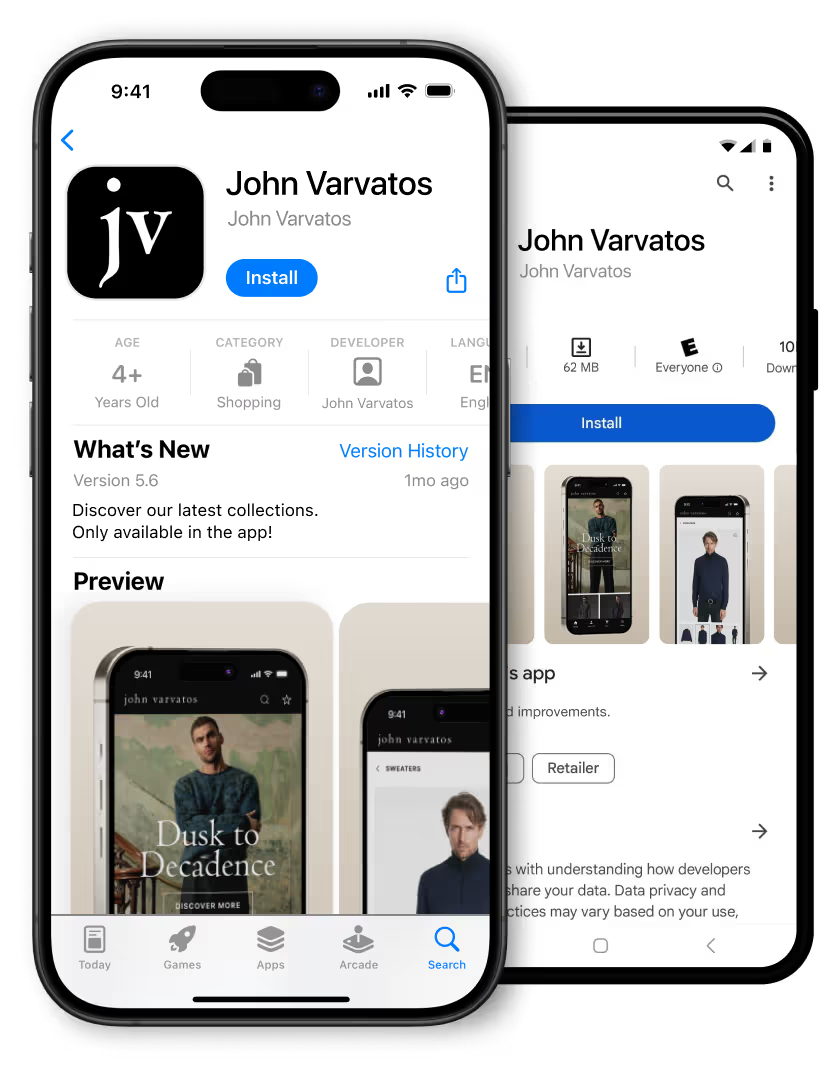
Across the ecommerce category, app users convert at 3-7x mobile web rates, spend 10-50% more per order, and deliver roughly 3x the lifetime value. MobiLoud's own roster shows the same pattern on adjacent enterprise platforms: Tadashi Shoji on Magento drives 18% of total online revenue through the app, with 10x revenue per app user vs mobile web. John Varvatos on Salesforce Commerce Cloud generates 10x the revenue per app user vs mobile web. Junior Couture on Salesforce Commerce Cloud reports around 50% of peak season revenue from 5% of users. Modere on BigCommerce Enterprise shipped a multilingual app across 10 markets in four weeks during a platform migration. XCVI drives 4.8x revenue per app user against the same brand's mobile web.
Every other path rebuilds your storefront from scratch
The other routes to a Hygraph mobile app all ask the same thing: rebuild your composable storefront in a separate codebase. Custom native (Swift, Kotlin, React Native) means replicating every React component, every Content API query, every Content Federation source, every commerce backend call, every Schema Builder content model, every Localization rule, every webhook, and every best-of-breed integration (Algolia, Stripe, Adyen, your loyalty and personalization layers) your team has wired in, all in a different language and on a different release cycle. The team then carries the duplicated work going forward: every editorial publish, every federated source change, every schema update, every storefront deployment ships twice.
Hygraph's own App Framework is a real building block, but it is built for editorial CMS extensions: custom fields, sidebar widgets, and content workflows for the editorial team inside Hygraph. It has nothing to do with consumer-facing iOS and Android apps. Whatever frontend your team has chosen (a Next.js storefront, a Remix build, a custom React frontend), the route to a real mobile app is a separate decision.
A PWA on your Next.js frontend solves a different problem. It makes the mobile web faster and is technically installable via the browser's add-to-home-screen option, but very few customers do that. There is no App Store or Google Play presence, and push notification support is limited (especially on iOS, where push works only if the PWA is already installed to the home screen).
The cost is real (in-house mobile teams run $500K-$1M+/year fully loaded for an enterprise composable build; agencies $500K-$1M+/year), but the deeper problem is the duplication itself. You are not paying for a mobile app; you are paying to maintain a second version of your storefront, separate from the composable one your team chose for a reason.
Your stack stays the source; our team owns the iOS and Android side
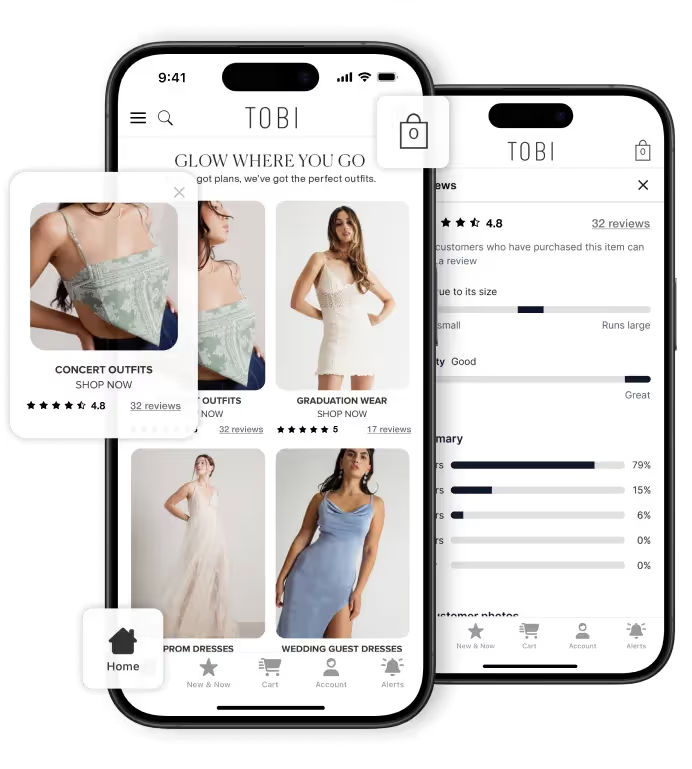
MobiLoud is the combination of a native platform and a service team. The platform bridges your live Hygraph-powered storefront to an iOS and Android app and brings the features a native app needs built in: push notifications via OneSignal or Klaviyo, deep links into any product or content page, persistent login, native navigation, smart banners, in-app payments, and analytics tied into GA4, Firebase, or Triple Whale. The native integrations you would otherwise build once-per-app are built into the platform once.
Together, your existing Hygraph-powered storefront plus our platform is a custom mobile app experience, built on the storefront you already operate, not a second one you rebuild from scratch. Every Content API query, every Content Federation source, every Schema Builder change, every Localization rule, every webhook, every commerce backend call, and every best-of-breed integration that ships on the web shows up in the app automatically. Editorial content your team publishes in Hygraph goes live in the app instantly, the same way it goes live on the site, no app store review cycle for content changes.
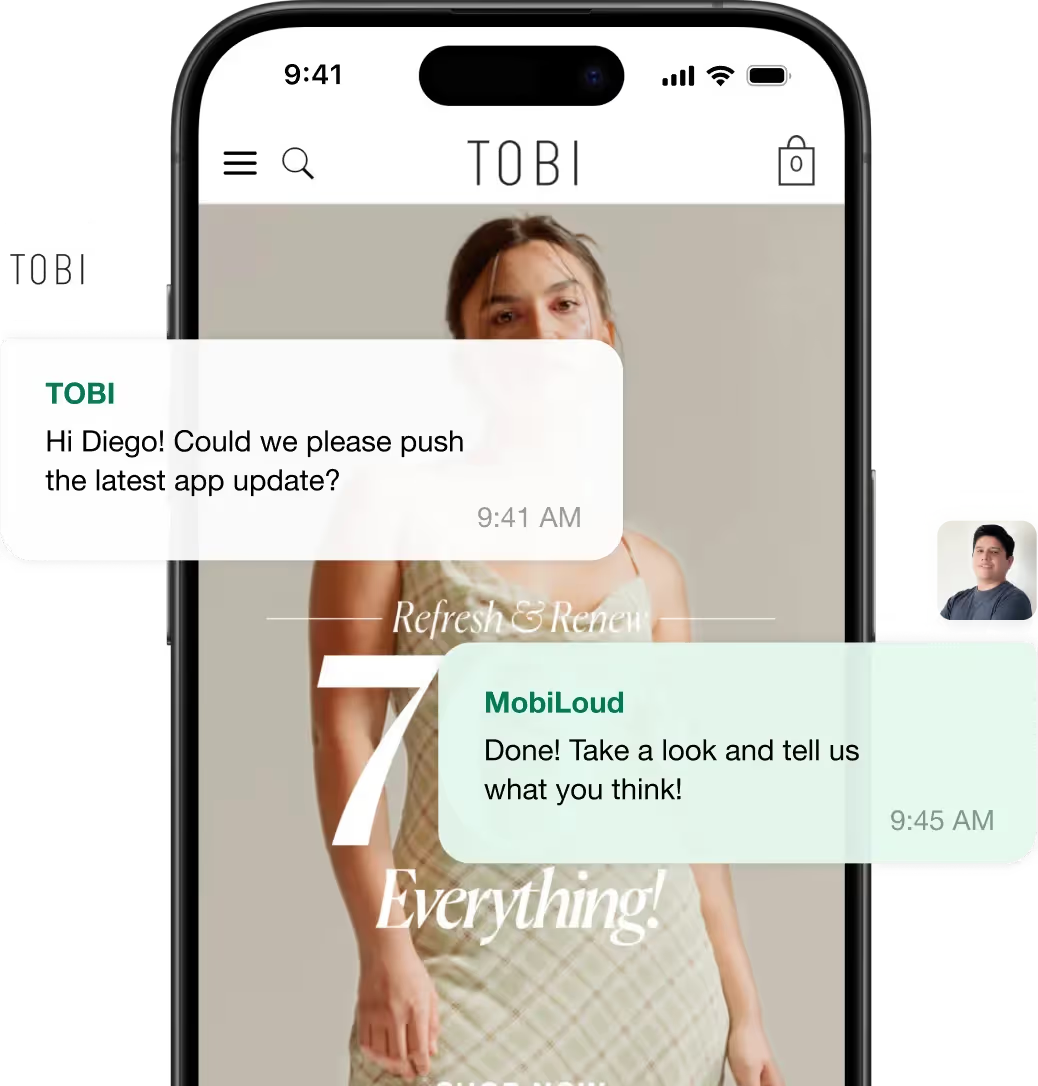
Your composable team builds for the app the way they build for the storefront: Next.js, React, GraphQL, Hygraph Content API, all on the release cycle they already run. Our team guides on the app-specific patterns and applies direct customizations to the app experience when something needs to look or behave differently in the app. The native SDK integrations that come up infrequently (loyalty, attribution, custom analytics, native barcode) we handle from our side, and we run the iOS and Android operational track: builds and submissions under your developer accounts, OS update cycles, certificate renewals, and store policy.
"I could continue developing the way I am used to. It was completely frictionless for me. I really have to applaud MobiLoud for being so compatible so that we were able to do that."
David Chamberlin, Lead Developer at Tadashi Shoji, on building their headless mobile app on MobiLoud.
After launch is where the channel actually compounds
We are focused on the results we see enterprise customers achieve regularly. The launch playbook is where we start: install prompts on your site, smart banners on mobile web, QR codes, email announcements to your existing customer base, and an app-user incentive to drive the first wave of installs. The push strategy gets built into the integration we set up (abandoned cart, back-in-stock, content drops, promotional campaigns), all running directly in your existing Klaviyo or OneSignal account.
On Enterprise, your customer success manager runs monthly performance checkpoints against peer enterprise composable brands, builds analytics dashboards on the app channel, reviews what is working in the category, and proposes what to try next. The push strategy gets refined as the channel grows, and scoped native SDK integrations come online as your roadmap needs them.
MobiLoud has served 2,000+ brands. The results above are not exceptional. They are what the channel delivers when it is launched and run properly. The fastest way to know whether it works for your Hygraph-powered storefront is the free preview: we build a working version of your Hygraph mobile app from your live storefront in roughly 5 to 7 working days, so you can see exactly how it looks and feels before you commit to anything.