Hybrid App vs Website-to-App: A Practical Comparison for Your Ecommerce Website

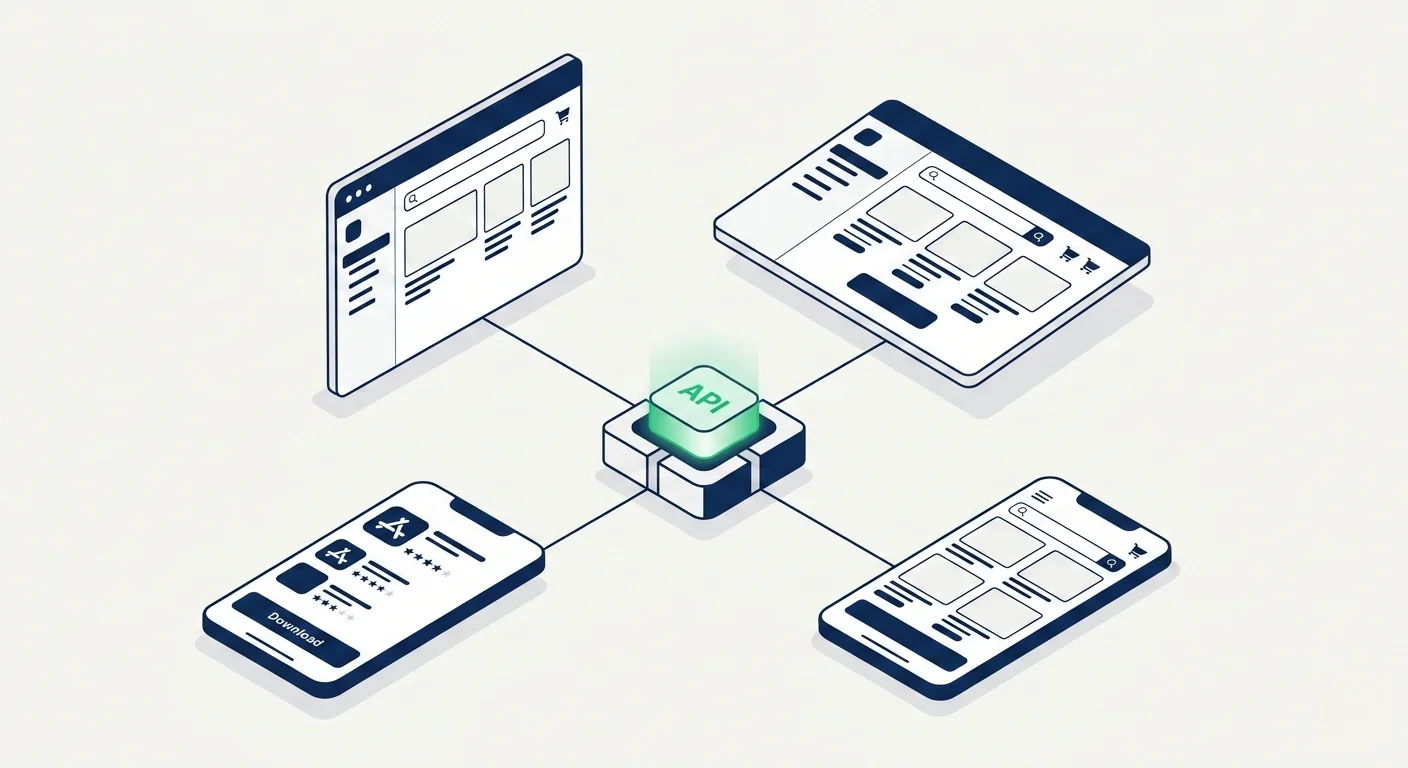
Hybrid apps and website-to-app services can look similar to customers, but they change operations in very different ways. A hybrid app is a second product with its own roadmap, maintenance burden, and reliance on specialized developers. A website-to-app partner like MobiLoud keeps your website as the single codebase, turns it into iOS and Android apps, and adds push notifications plus home screen presence to drive retention.
Hybrid apps and website-to-app services can look similar to customers, but they change operations in very different ways. A hybrid app is a second product with its own roadmap, maintenance burden, and reliance on specialized developers. A website-to-app partner like MobiLoud keeps your website as the single codebase, turns it into iOS and Android apps, and adds push notifications plus home screen presence to drive retention.
You have a mobile site that works.
Traffic and revenue are there, leadership wants an app on your customers' home screens, and now you are weighing a hybrid app vs website-to-app approach.
On paper, both options sound similar.
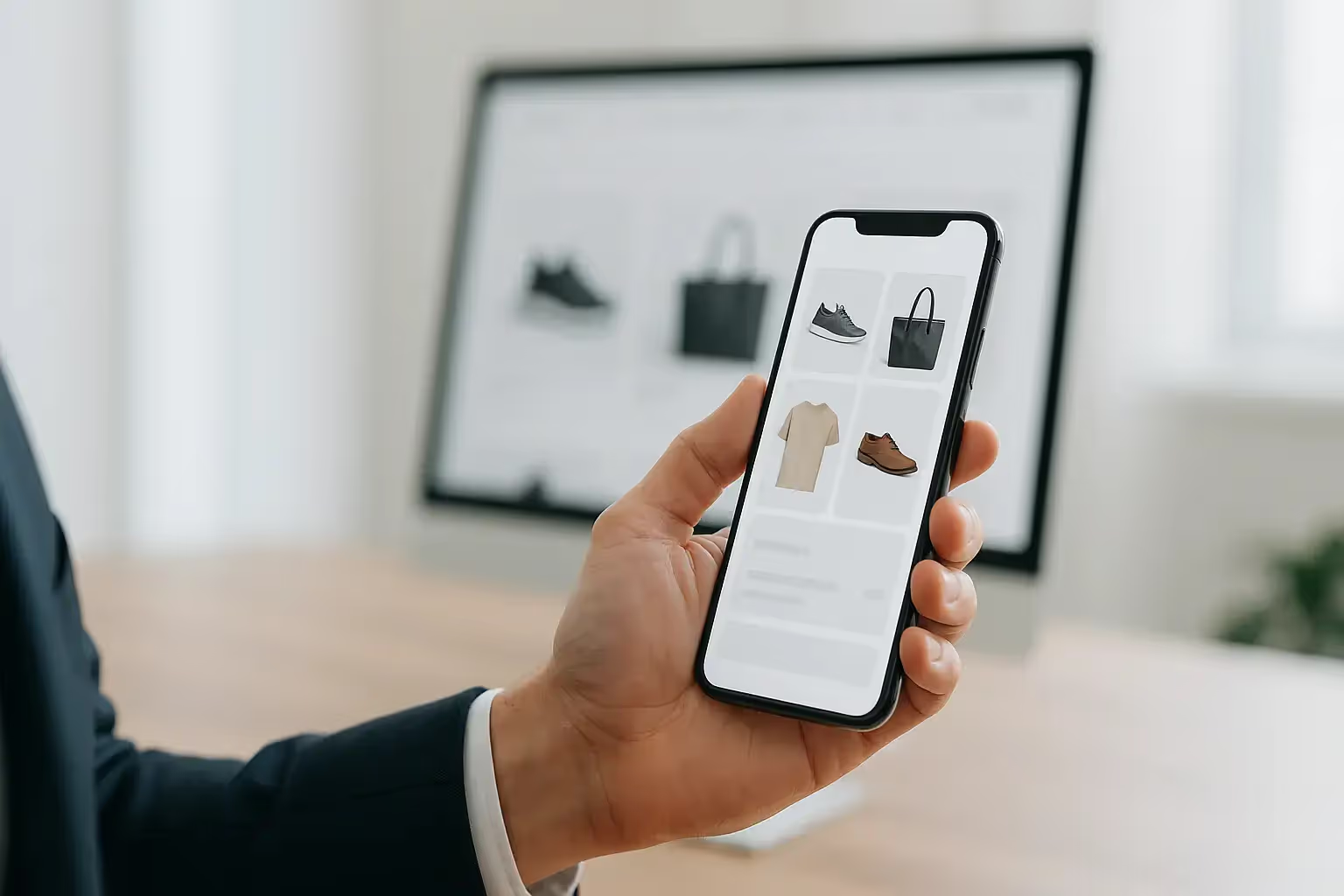
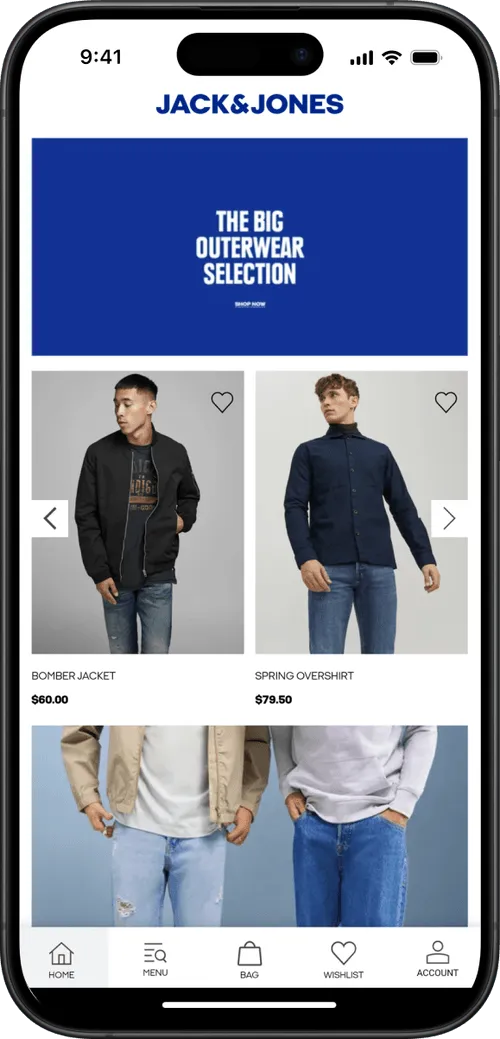
Either way, you end up with iOS and Android apps that load your existing site, let customers browse and buy, and support push notifications.
The difference shows up in everything that happens after launch: who owns the codebase, who handles OS updates and app store policy changes, how much attention the app pulls from your core web roadmap, and whether it truly helps you retain your best customers or becomes another neglected channel.
In this guide, we will compare hybrid apps and website-to-app services through the lens of cost, tech debt, and retention, using real-world constraints from ecommerce and content brands.
Hybrid Apps
When most teams talk about a hybrid app, they mean hiring an agency or internal developers to build a separate mobile app that talks to your existing backend and website.
Under the hood, this usually means frameworks like Ionic, Apache Cordova, or React Native that let developers write much of the app using web technologies while still shipping as native iOS and Android apps.
Hybrid apps can be powerful.
They also come with serious operational overhead that is easy to underestimate when you are looking at polished case studies and proposal decks.
What “Hybrid App” Means in This Context
For this article, a hybrid app means:
- You commission an agency or build an internal team.
- They create a new app project using a hybrid framework.
- The app pulls content and data from your existing website or APIs.
- You now have a separate codebase and deployment pipeline for iOS and Android.
If you need a deeper technical primer, our guide on what hybrid mobile app development is walks through how these frameworks work and where they sit relative to fully native apps and PWAs.
The important thing for a founder or marketing leader is that this is a separate product. Even if it reuses your backend, the app has its own code, its own bugs, and its own backlog.
Where Hybrid Apps Work Well
Hybrid apps can be a great fit when:
- You have an in-house engineering team with mobile or JavaScript expertise.
- The app needs device-level features or offline behavior that go beyond what a website can reasonably do in a webview.
- You treat the app as a strategic product with its own roadmap and are ready to invest in continuous releases, QA, and monitoring as platforms evolve.
If you want to push the limits of what a mobile experience can do and you have the team to support that, building directly in hybrid frameworks and choosing from the best frameworks for hybrid app development can make sense.
The challenge is that many brands go hybrid to “save money compared to fully native” while implicitly assuming the maintenance cost will also be low. That is rarely how it plays out.
Second Codebase and Constant Coordination
Every new feature on your site now triggers a question: “Do we need to implement this in the app too?”
Sometimes the answer is yes immediately. Sometimes you delay and the app quietly drifts out of sync.
Over a year or two you end up with:
- Two sets of UI components to update when your branding evolves.
- Two places to debug when third-party scripts, analytics, or checkout flows change.
- Two teams or vendors who need to coordinate around launches and campaigns.
This is the essence of technical debt in practice: messy code is only part of the problem; the real cost is the ongoing servicing of an additional system that must stay in step with your business.
Because hybrid apps are still native apps at the distribution level, you also inherit:
- OS-level changes from Apple and Google that can break logins, payments, or tracking.
- App store policy changes that require updates just to stay listed.
- Annual cycles of SDK updates, build tooling changes, and device quirks.
Agencies will happily estimate a build. Very few will give you a realistic, multi-year picture of the maintenance load your team is signing up for.
Operational Risk
Hybrid projects often start with a strong relationship: you have a lead developer, a project manager, and a clear scope.
Fast-forward two years, and the agency may have rotated key people, merged, or shifted focus. Your internal champion may have moved roles.
When Apple tightens privacy rules, when a major OS release breaks part of your stack, or when you want to redesign the app, you are left trying to:
- Re-brief a new agency team on years of context.
- Rebuild trust in estimates and timelines.
- Justify incremental budgets for “maintenance” work that doesn’t obviously drive revenue.
For many ecommerce brands and publishers, that level of operational risk around a retention channel is hard to justify.
Website-to-App Services
A website-to-app service like MobiLoud takes a different approach.
Instead of building and maintaining a separate mobile product, it converts your existing website into iOS and Android apps and manages the app layer for you as an ongoing service.
Technically, platforms like MobiLoud ship fully native apps that keep your website as the base, while adding app-native capabilities on top. This includes push notifications, native navigation, and app-specific UI such as menus, tabs, and deep links.
For users, it feels like a focused, branded app that stays in sync with your site.
For your team, it means you still manage everything in one place, your website, without doubling the work across platforms.
What Website-to-App Services Actually Do
A good website-to-app partner does three big things for you:
- Convert your existing site into apps. They use your current mobile site as the foundation, mapping navigation, login, checkout, and content flows into a native app experience.
- Handle the native layer and app stores. They design and configure the app shell, integrate push, manage builds, and deal with Apple and Google until you are approved.
- Maintain the app over time. When OS versions change or store policies shift, they do the engineering and submissions work to keep you live.
The key design choice is that you keep a single codebase.
Change a layout, add a new collection, or tweak your checkout on the site, and the app reflects it automatically.
You can see how this works in practice in our overview of how to convert a website to an app and the detailed breakdown in our how it works page.
Same Experience, Less Tech Debt
Because website-to-app services build a thin but robust native layer around your site, you get much of what founders look for in a hybrid app without the second product:
- No rebuild required. You keep every optimization, plugin, Shopify app, or custom integration that already works on your site.
- Everything works instantly. If it works on your mobile web experience, it will work in the app as soon as it loads there.
- Always in sync. There is no app backlog of “missing features” because the app and site share the same underlying logic and content.
- Retention-first features. You add unlimited push notifications, home-screen presence, and app-only promotions on top of the experience that already converts.
Our site-to-app feature overview dives deeper into how this architecture lets you avoid an extra layer of tech debt while still giving customers a real app on their phones.
For marketing and product teams, this matters because it keeps the app aligned with your real growth levers: repeat purchases, loyal readers, and owned reach, rather than a constant fight to keep two codebases in sync.
When Website-to-App Is Not the Right Fit
Website-to-app shines when your website is already a strong, mobile-optimized product.
It is not a magic fix for a weak or slow site.
You may want a more traditional hybrid or native build if:
- You need heavy offline functionality that cannot sensibly be driven by a web-based frontend.
- You rely on deep, device-specific features that go beyond what can be integrated via webviews and native bridges.
- You want an app experience that is intentionally very different from your website, with its own UX and content model.
For most established ecommerce brands, publishers, and membership sites, though, the constraint is not “What can the app do technically?”
It is “How do we create a great app channel without doubling our workload and tech debt?”
That is where website-to-app services are structurally stronger.
Hybrid App vs Website-to-App: Key Differences
At a glance, a hybrid app and a website-to-app build might look almost identical to a customer. Under the hood and operationally, they are very different.
In essence, a hybrid app is a custom build with its own app codebase that your team (or agency) develops and maintains.
A website-to-app service is an ongoing partner that converts your existing website into iOS and Android apps and manages the app layer for you.
If you want a deeper technology-first comparison across native, web, and hybrid approaches, our native, web, or hybrid apps guide goes further than we can here.
How MobiLoud Fits into This Decision
MobiLoud exists for brands that look at the table above and think: “We want the app as a retention engine, but we do not want to become an app company.”
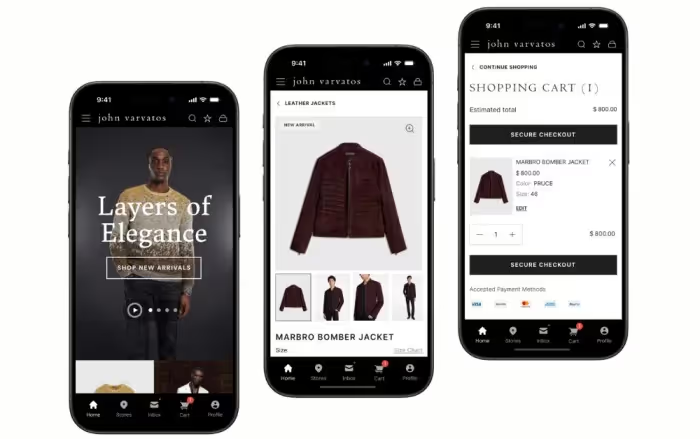
Rather than offering yet another DIY builder, MobiLoud is a fully managed website-to-app service:
- We convert your existing site into full-featured iOS and Android apps.
- We handle app design, configuration, builds, and store approvals.
- We maintain the native layer over time while you keep iterating on the website.
No Rebuild and Everything Works Instantly
There is no rebuild or migration.
We start from your current site, whether it runs on Shopify, WooCommerce, Magento, a headless stack, or a custom backend.
Because the app loads your existing site using the same templates and integrations, all of your:
- Payment methods and checkouts.
- Personalization tools and A/B tests.
- Reviews, search, loyalty programs, and other key apps work in the app as soon as they work on the site.
Our customers use this to move fast.
They can redesign the homepage, launch new collections, or experiment with merchandising on the site, and know that the app will reflect those improvements automatically.
Fully Managed, With No Extra Tech Debt
MobiLoud’s team builds, launches, and maintains the apps as a service.
You do not need an internal app team, and you do not need to budget for periodic rebuilds as platforms change.
Behind the scenes, that includes:
- Monitoring OS and policy changes from Apple and Google.
- Updating SDKs, build tooling, and app configurations as required.
- Handling resubmissions and resolving review feedback.
From your side, you keep a single roadmap: your website.
There is no second backlog of “app-only” fixes to worry about unless you want to add app-specific features intentionally.
A Real Retention Engine on the Home Screen
By moving your best customers into an app that lives on their home screen, receives unlimited targeted push notifications, and provides a focused browsing environment without browser clutter or competing tabs, you turn your mobile presence into a more durable, retention-focused channel.
Our articles on critical mistakes with web-to-app tools and cross-platform app development show how brands use this kind of setup to keep repeat purchases and reader engagement high without over-complicating their tech stack.
The key is that you are not trying to squeeze lower CAC out of an app. You are using the app to increase lifetime value and revenue from the customers you already worked hard to acquire.
Final Thoughts
Hybrid apps and website-to-app services are closer cousins than they first appear.
Both use web technologies to deliver mobile experiences, and both can put a polished app in your customers’ hands.
The fork in the road is ownership and focus.
Hybrid apps give you control and flexibility, at the cost of a second product and all the tech debt that comes with it.
Website-to-app services like MobiLoud give you a real, full-featured app that stays in lockstep with your website, without turning your team into an app development shop.
If you want to see how this would look for your brand, you do not have to commit blindly. Our team can build a free live preview of your app using your existing website as the foundation.
FAQs

Convert your website into a mobile app