Hiring an App Developer: Full Cost & Process Guide

Hiring a mobile app developer can cost anywhere from $50,000 for basic apps to over $300,000 for complex, feature-rich applications, with timelines stretching from 3 to 12+ months depending on scope. Between vetting portfolios, managing development, and navigating post-launch maintenance, it's a significant investment of time and money. If you already have a mobile-optimized website, tools like MobiLoud offer a faster, more affordable path, turning your existing site into a full-featured mobile app without the trial and error of finding the right developer or the six-figure price tag.
Hiring a mobile app developer can cost anywhere from $50,000 for basic apps to over $300,000 for complex, feature-rich applications, with timelines stretching from 3 to 12+ months depending on scope. Between vetting portfolios, managing development, and navigating post-launch maintenance, it's a significant investment of time and money. If you already have a mobile-optimized website, tools like MobiLoud offer a faster, more affordable path, turning your existing site into a full-featured mobile app without the trial and error of finding the right developer or the six-figure price tag.
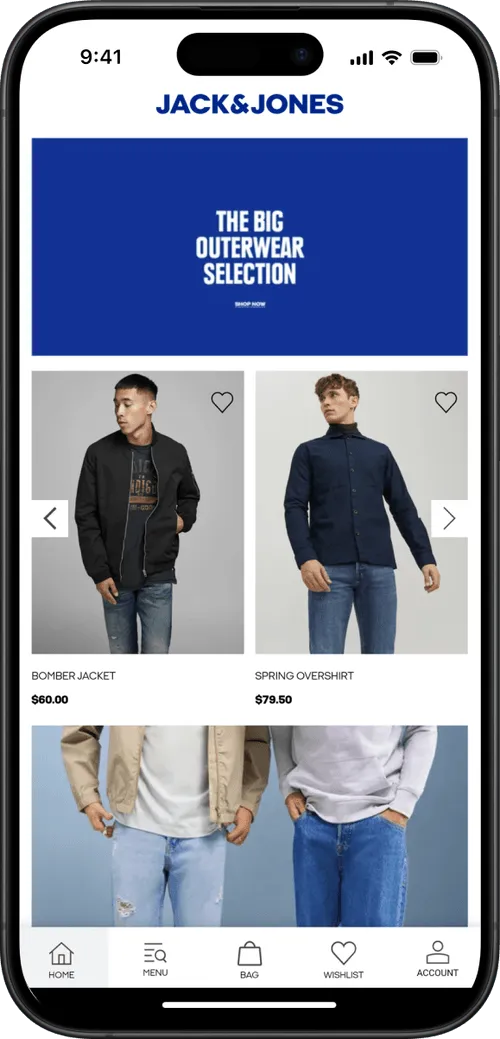
As a business owner, you’re probably seeing more and more customers browsing and buying on their phones. Your mobile traffic is growing, and it’s starting to feel obvious: you should really have an app.
Mobile apps drive 88% of all mobile time spent by users, giving you a direct line to customers from their home screens.
But deciding to build an app is the easy part. The hard part is finding and hiring someone to do it.
Should you go with a freelancer, an agency, or an in-house team? What will it cost, how long will it take, and what are the risks?
With global app revenue hitting $535.8 billion in 2024, the market is booming, and so is the number of developers promising the world. Some deliver. Many don’t.
The good news: you don’t need to be technical. You just need a clear picture of your options, realistic cost ranges, and what’s involved in a typical app project.
In this guide, we’ll cover where to find mobile app developers, what to expect to pay, what goes into building an app, and how to evaluate your options, plus a simpler alternative that could help you launch an app without hiring developers at all, if you already have a website.
Where to Find App Developers
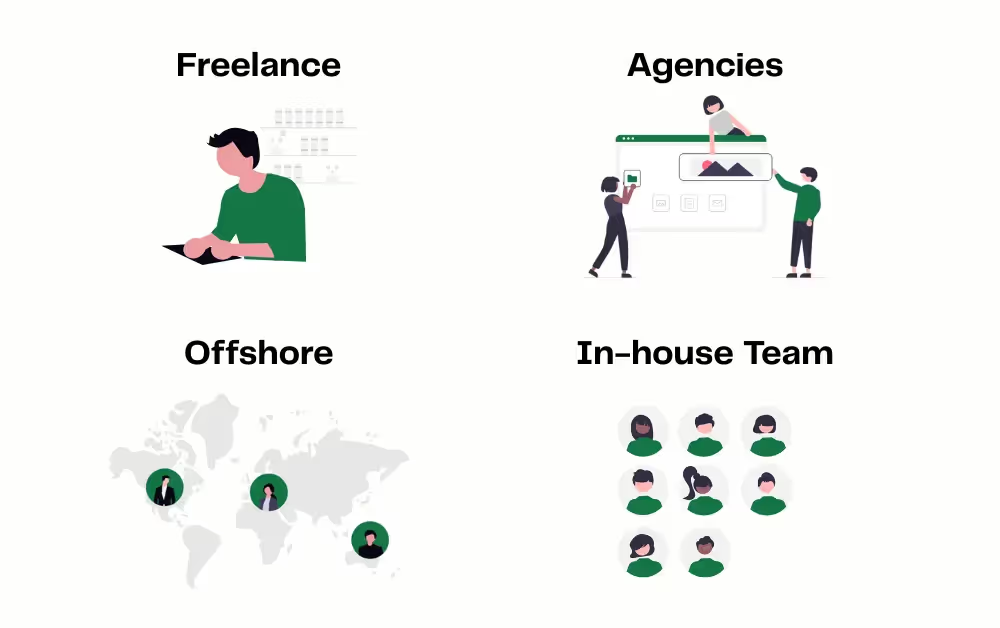
Finding mobile app developers is easier than ever, but finding good ones is another story. Here are the most common places business owners look.
Freelance Platforms
Sites like Upwork, Toptal, and Fiverr give you access to thousands of individual developers.
- Pros: Lower cost, flexibility, fast turnaround
- Cons: Harder to vet quality, no team support, risk of scope creep
Freelancers work well if you have a clear spec and can manage the project yourself.
Development Agencies
Agencies offer full-service mobile app development: design, development, testing, and deployment.
- Pros: Professional teams, established processes, accountability
- Cons: Higher cost (typically $100K+), longer timelines
Agencies work well for big budgets and polished products, but you'll pay premium rates.
Offshore Development Teams
Hiring offshore: Eastern Europe, South Asia, Latin America, offers lower hourly rates. Developers in India charge $20–$50/hour, compared to $100–$150/hour+ in the US.
- Pros: Significant cost savings, access to large talent pools
- Cons: Time zone challenges, communication barriers, variable quality
Offshore can work if you have strong project management and clear requirements. Without that, you risk delays and misalignment.
In-House Teams
Building an in-house app team means hiring iOS developers, Android developers, and designers.
- Pros: Full control, aligned with your business
- Cons: Expensive, slow to scale, ongoing salary costs
Most businesses can't justify the overhead unless apps are core to the business model.
Understanding Mobile App Development Costs
Let's talk numbers. Mobile app development can cost anywhere from around $10,000 to over $500,000+ depending on complexity, platform, and who you hire, which is consistent with typical ranges for how much it costs to create an app in 2025.
Simple Apps: $5,000 – $50,000
Think basic functionality like login, simple data display, maybe a form or two. These apps take 2–4 months to build and are fine for MVPs or internal tools.
Medium Complexity Apps: $50,000 – $150,000
Apps with integrations (payment gateways, third-party APIs), geolocation, push notifications, or social logins fall into this range. Expect 4–7 months of development.
Complex Apps: $100,000 – $300,000+
Advanced apps with AI, real-time data, custom backends, or heavy customization can easily hit six figures. Development can stretch 9–12+ months.
What Drives Cost
- Platform choice: Building for both iOS and Android costs more than one platform
- Design complexity: Custom UI/UX is expensive; templates are cheaper
- Developer location: US-based developers cost 3–5x more than offshore teams
- Features: Every integration adds time and cost
- Ongoing maintenance: Budget 15–20% of build cost annually
When you factor in not just build costs but also maintenance, updates and your own time managing the project, the most cost-effective mobile app development options often aren’t the ones with the lowest headline price.
What Goes Into Building a Mobile App
When you hire a mobile app developer, here's what you're actually paying for.
Discovery and Planning (1–4 weeks)
This is where you define goals, map features, create wireframes, and outline the technical requirements. Skipping this step is how projects go off the rails.
Design (UI/UX) (3–8 weeks)
Designers create mockups, user flows, and prototypes. Good design makes or breaks user adoption, so don't skimp here.
Development (6–20 weeks)
Developers write the code for your app, frontend (what users see) and backend (servers, databases, APIs).
If you're building for both iOS and Android natively, you need separate codebases. Cross-platform frameworks like React Native or Flutter can save time but come with trade-offs.
Testing and QA (3–8 weeks)
Quality assurance teams test the app across devices, operating systems, and edge cases. Bugs caught here are cheaper to fix than bugs caught by users.
Launch and Deployment (1–2 weeks)
Submitting to the Apple App Store and Google Play involves compliance checks, review processes, and sometimes rejections. Budget time for revisions.
Post-Launch Maintenance (Ongoing)
Apps need updates: bug fixes, OS compatibility, new features. Most businesses spend $5,000–$20,000+ annually on maintenance.
Weigh months of custom dev against faster options using this website-to-app vs custom native vs DIY wrappers breakdown.
Evaluating App Developers
Once you've found a shortlist of candidates, how do you actually vet them?
Review Their Portfolio
Look for apps similar to what you want to build. Download them. Use them. Are they polished? Do they perform well?
If a developer can't show you live, published apps, that's a red flag.
Verify Technical Expertise
Ask about their tech stack. Do they specialize in iOS, Android, or cross-platform? What frameworks do they use?
You should understand their approach and why they recommend it.
Assess Communication
Poor communication kills projects. Ask how they handle updates and feedback. Do they use project management tools? How often will you hear from them?
Check References
Ask for references from past clients. Were deadlines met? Did the app work as promised?
Testimonials on a website are nice. Conversations with real clients are better.
Watch for Red Flags
- Promises that sound too good to be true ("We guarantee your app will get 100,000 installs in the first month")
- No contract or vague scope documents
- Upfront payment demands without milestones
- Lack of clarity on ownership and intellectual property rights
The Reality Check: Time, Effort, and Risk
Even if you find a great developer, building a mobile app isn't a "set it and forget it" process.
The average app takes 4–6 months to build, and that's if everything goes smoothly. Delays are common. Scope creep can blow budgets.
You'll need to stay involved, expect weekly calls, design reviews, and testing rounds.
And the work doesn't stop at launch. You'll need to promote the app, gather feedback, fix bugs, and release updates.
For many businesses, the full cost isn't just the development, it's the months of management and iteration. That’s before you even think about how you’ll retain users and bring them back to the app repeatedly.
The Easier Alternative: MobiLoud
Here's the thing: If you already have a mobile-optimized website, you may not need to hire a developer at all.
MobiLoud is a website-to-app service that converts your existing site into full-featured iOS and Android apps, no rebuild, no six-figure budget, no trial and error finding the right developer.
All the work you’ve already put into your website like layouts, product pages, navigation, content, and checkout flows comes with you into the app instead of being rebuilt from scratch. What works on your site today continues to work inside your apps.
Instead of starting from scratch, MobiLoud turns your existing mobile site into fully native apps, using your website as the engine of the experience.
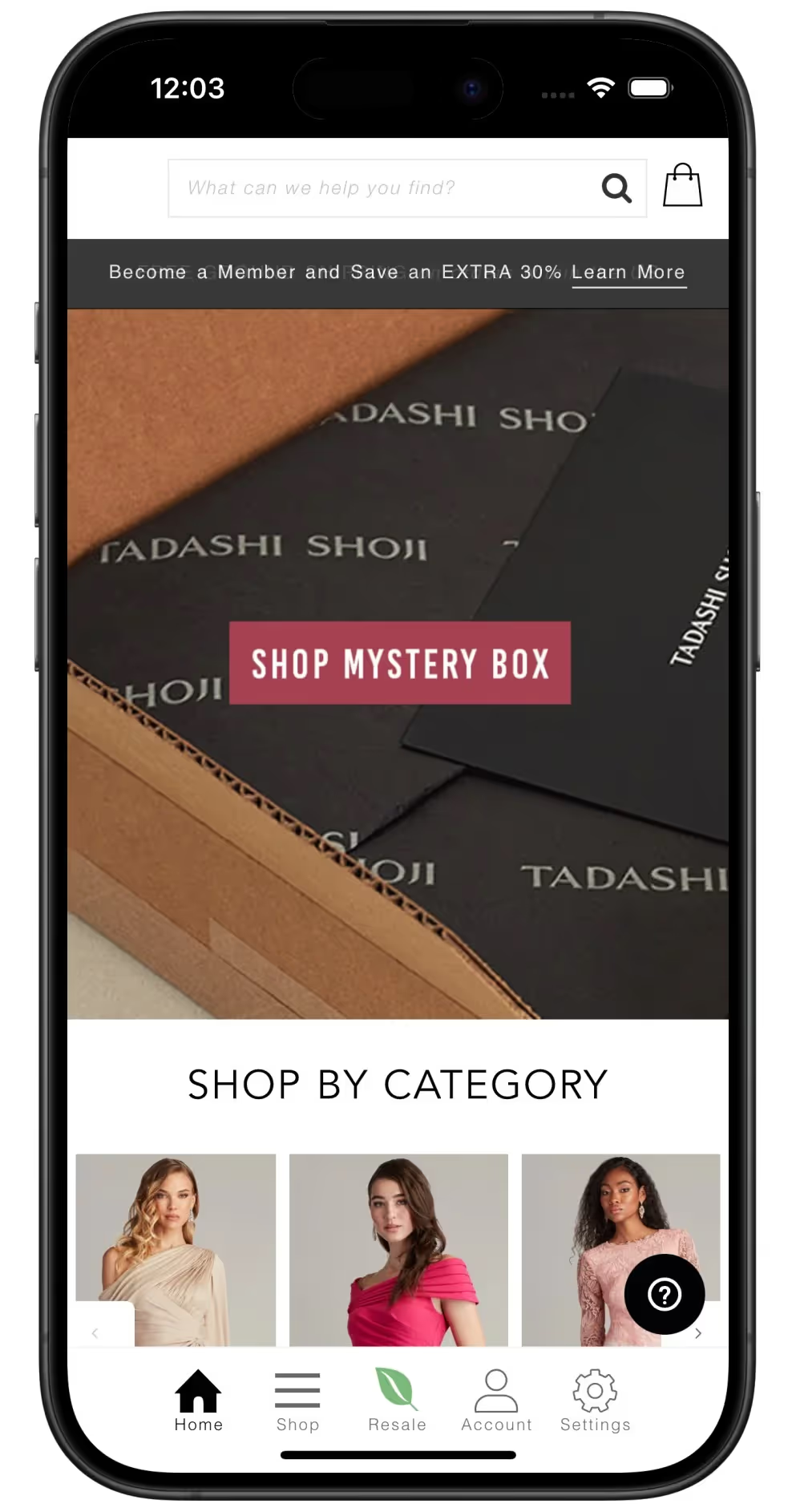
Everything that works on your mobile site, checkout, integrations, plugins, works in the app. You get:
- No rebuild required: Your existing site becomes the app
- Unlimited push notifications: Reach customers directly on their home screens
- Fully managed service: MobiLoud handles design, development, app store submission, and updates
- Faster time to market: Typically live in around 30 days
- Lower cost: A fraction of what custom development costs
MobiLoud works on a simple model: a one-time setup to get your apps launched, plus an ongoing subscription for hosting, updates, and support.
Beyond saving time and budget, having your own mobile app is a retention and LTV play. Once customers install your app, you’re on their home screen with a direct line back through push notifications, which tends to drive more repeat visits, more sessions, and higher revenue per user compared to relying on mobile web alone.
For ecommerce stores, publishers, and web-first businesses, MobiLoud offers a proven path to launching high-quality mobile apps without the overhead of custom development.
Turn your existing site into iOS and Android apps in about 30 days with this step-by-step website-to-app guide for MobiLoud.
Final Thoughts
Hiring a mobile app developer is a significant investment.
You'll spend months searching, vetting, negotiating, and managing. You'll pay anywhere from $50,000 to well over $300,000. And you'll own the ongoing responsibility of updates, bugs, and feature requests.
For some businesses, especially those with unique, complex requirements, custom development is worth it. If you need highly specialized functionality that your current site doesn’t support, a bespoke build can be the right choice.
But if you already have a strong, mobile-optimized website, there's a smarter way. MobiLoud turns your site into native apps in weeks, not months, for a fraction of the cost.
No hiring headaches. No scope creep. No $100K+ development budgets, and you preserve all the optimization work you’ve already done on your site.
If you're serious about launching a mobile app without the trial and error of hiring developers, book a demo with MobiLoud and see how fast you can go from website to app, while also setting yourself up for better retention and higher lifetime value from your best customers.
FAQs

Convert your website into a mobile app