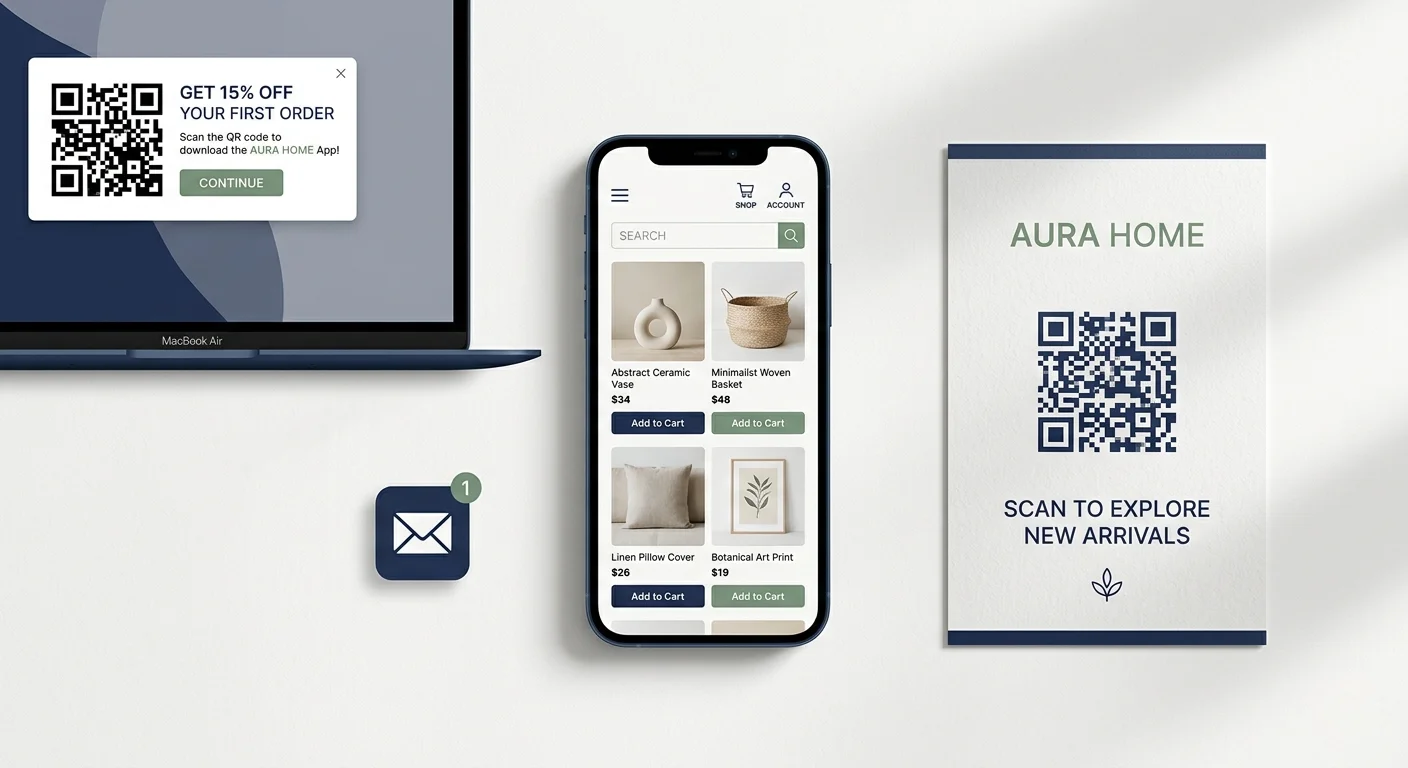
An app launch is easy to underplan. After weeks of building and testing, the app clears review and appears in the App Store and Google Play. Then it goes live to almost no one, because the customers who’d use it most haven’t heard it exists.
A planned launch looks different. Your best customers hear about the app from your emails, your website and your social channels on the day it goes live. They download it, allow notifications and place their first app order within days, and their ratings make the next customer’s decision easier.
Getting there takes a few weeks of preparation and a plan for the first month, not a big budget. This playbook walks through each stage: getting your app and store listings ready, choosing a launch offer, announcing the app on launch day and turning first downloads into regular customers.
What Does an App Launch Involve?
An app launch has three stages: the weeks before the app goes live, launch day itself and the first month after it. Each stage has its own job.
| Stage | When | What to get done |
|---|---|---|
| Getting ready | Three to four weeks before launch | Test the app, write your store listings, set up tracking, choose a launch offer and set a release date |
| Launch day | The day the app goes live | Announce the app by email, on your website, by SMS, on social media and in your stores |
| The first weeks | The first 30 days | Welcome new users, ask for push permission, send your first push notifications, collect ratings and measure results |
Your launch audience is mostly people who already buy from you. They’re the regulars an app serves best, and you can reach them through channels you already own instead of paying for installs.
How Do You Get Your App Ready for Launch?
The weeks before launch decide how your app looks to the first customers who find it. Use them to test the app, prepare your store listings and plan the release, so launch day is about telling people instead of fixing things.
Test the App the Way Customers Will Use It
Test every journey a customer takes, on real iPhones and Android devices. That means browsing, search, signing in, adding to cart, checking out with each payment method and tracking an order.
Then test the links you’ll send on launch day. Tap them from an email, a text message and a social post, and check that each one opens the right store on each device.
Apple’s TestFlight and Google Play’s testing tracks let your team try the release version before anyone else. Our guide to the App Store and Google Play requirements covers what each store checks before it approves an app.
What Makes a Good App Store Listing?
A good App Store listing tells customers within seconds what the app gives them. Every launch link ends on your App Store or Google Play page, so treat it like a product page.
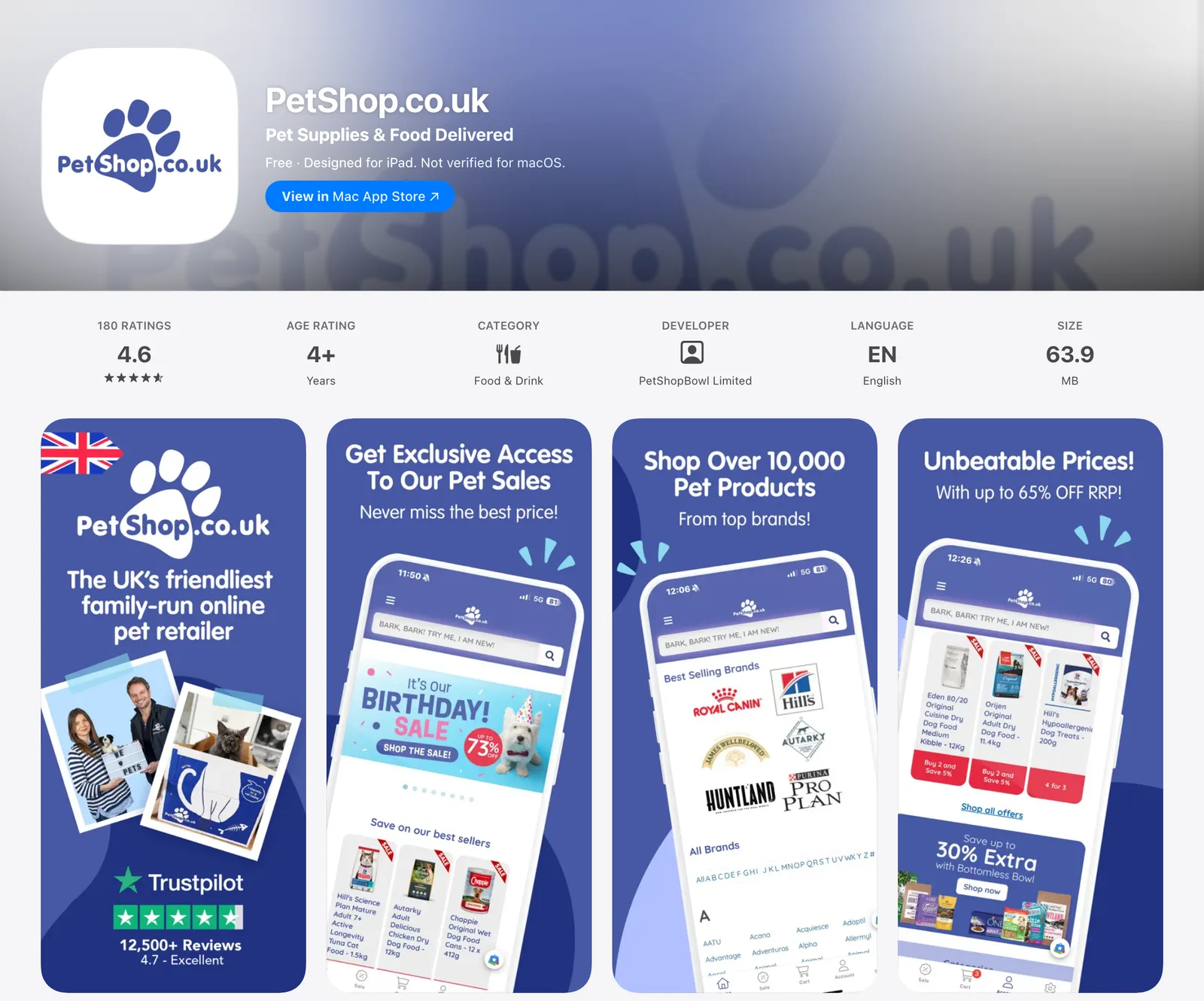
Most visitors already know your brand and search for it by name. Use your brand name in the app name, a subtitle that says what you sell and a description that leads with what customers get, like app-only offers, early access to sales and order updates.
PetShop.co.uk’s App Store page shows how. Its subtitle says what it sells, and its screenshots lead with exclusive access to its sales, more than 10,000 products and prices up to 65% off.
Our guides to app store optimization and App Store screenshots go deeper on keywords, descriptions and screenshot design.
Set Up Tracking Before Launch Day
Decide how you’ll measure the launch before it starts, so the first week’s results aren’t lost. Connect the app to the analytics tool you use for your website, with purchases tracked, so you can compare app customers with mobile web shoppers from day one.
Then give each launch channel its own store link. App Store Connect lets you create campaign links that attribute downloads to each campaign, and Google Play’s acquisition reports track visits from UTM-tagged links.
A separate link for the email, the text message, the website banner and your social bio tells you which channel brought customers in.
When Should You Launch Your App?
Launch your app on a date when your team is around to answer customers and fix problems quickly. Then work backward from it, because both stores need time to review the app.
Apple reviews 90% of submissions in under 48 hours, while Google says some apps face extended reviews of up to seven days. Submit early, then hold the approved app until your launch date.
Both stores let you do that. App Store Connect lets you release the app yourself or schedule a date, and Google Play lets you choose when approved changes are published.
A manually released app can take up to 24 hours to appear in the App Store, so release it a day before you announce it.
You can build anticipation before launch day, too. A new app can go up for pre-order on the App Store up to 180 days before release, and it downloads automatically onto customers’ devices on launch day. Google Play’s pre-registration does the same on eligible Android devices.
If the launch is news, plan for attention beyond your customers. Apple recommends submitting a featuring nomination at least three weeks ahead, and our guide to getting featured on the App Store explains what Apple’s editors look for. A press release can carry the story to trade and local media.
What Should You Offer Customers to Download Your App?
A launch offer gives customers a reason to download your app today instead of someday. Some customers will download it because you asked, but a clear reward turns your announcement into an action.
It’s an offer worth making. App users are among your most valuable customers, and in our benchmark report, their lifetime value was 2.8 to 5 times that of web-only shoppers.
These are the launch offers brands use most:
| Launch offer | How it works | Best suited to |
|---|---|---|
| First-order app discount | A one-time code for the first order placed in the app | Most brands, and the simplest offer to promote |
| Early access | App users shop a sale, drop or new collection before everyone else | Brands with regular drops or big sales, since it costs no margin |
| Bonus loyalty points | Extra points for orders placed in the app | Brands with an established loyalty program |
| Gift with the first app order | A free sample or small product added to the first app order | Beauty, food and other brands with low-cost samples |
| App-only products or prices | Products, bundles or prices available only in the app | Brands with exclusive lines or very competitive pricing |
| Pre-order access | App users order new products before they're widely available | Brands with launches customers wait for |
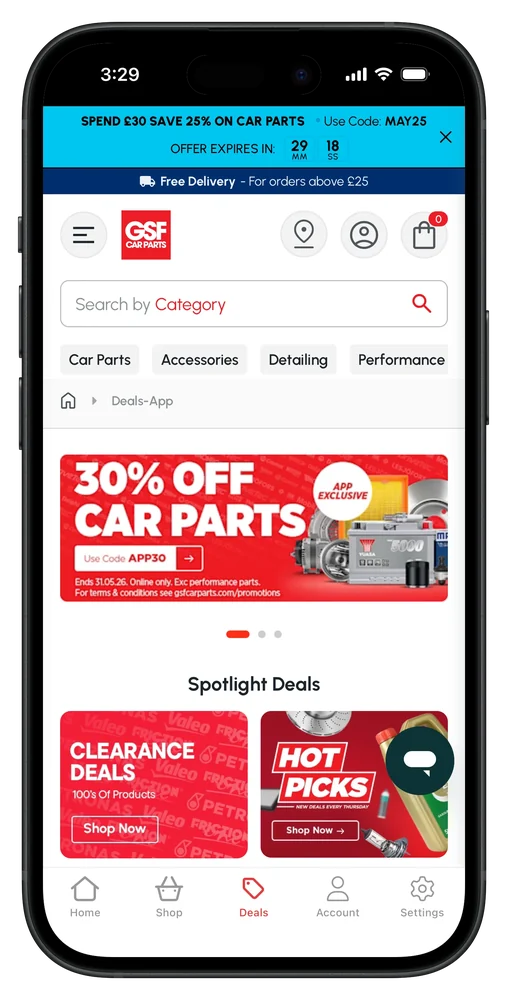
GSF Car Parts, a UK car parts retailer with more than 200 stores, planned its app around reasons to download from the start. It wanted app-only offers, prices slightly better than its website’s and a dedicated page for app-exclusive products.
At launch, its app’s deals page led with an app-exclusive code for 30% off car parts.
How Do You Choose a Launch Offer?
Choose one headline offer for launch day and use it everywhere. The email, the website banner and the social posts should all make the same promise, because one simple offer is easier to remember than a list of perks.
Pick it with your best customers in mind. Brands with regular drops can lead with early access, while brands that discount often may get more from bonus points or a gift than from another percentage off.
Then tie the offer to the app. Deliver the code inside the app, for example in a welcome push notification, instead of printing it in your launch email, so it rewards the download. Our guide to driving app downloads covers how to structure a first-order app discount.
How Do You Announce Your App on Launch Day?
Announce your app on launch day through the channels where your customers already hear from you: email, your website, SMS, social media and your stores. They reach people who know your brand and already trust it.
You don’t need all of them at once. GSF Car Parts added banners to its homepage and sent one email to its subscribers, and its app had 19,000 downloads and 12,000 push subscribers in its first 30 days.
"We've added some banners to the homepage of the site. We've sent one single email out to our subscriber base, letting them know that we now have an app. To be absolutely honest, we haven't really got going yet on promoting it. So we are really pleasantly surprised that it has grown very quickly."
What Emails Should You Send for an App Launch?
Send a short sequence of three emails around launch day, because your list is the largest group of known customers you can reach at once:
- A teaser a week or two before launch, saying an app is coming and hinting at the launch offer
- The launch email on the day, with the offer, two or three app screens and buttons for both stores
- A reminder a few days later to anyone who didn’t open or click the launch email
Keep each email about the customer. “Shop new drops before anyone else” gives people a reason to download, while “Our app is here” only gives them news.
Put the App on Your Website
Your website reaches customers while they’re shopping, so put the app where they’ll see it on launch day:
- A homepage banner announcing the app and the launch offer
- An app page that explains what customers get, with links to both stores
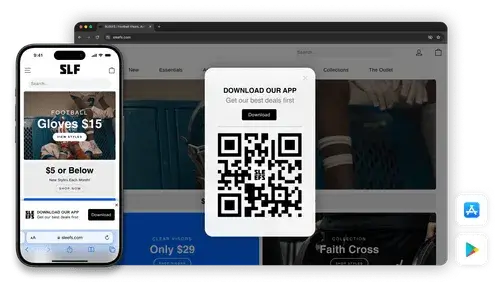
- A smart banner on your mobile site that opens the right store in one tap
- A QR code on your desktop site that customers can scan to download the app
- Store badges in your footer and on your order confirmation page
Sleefs’ website shows two of these. Mobile visitors see a download banner at the bottom of the screen, and desktop visitors get a QR code that takes them to the app.
Leave these up after launch day. They keep bringing in downloads long after the announcement is over.
Text Your SMS Subscribers
SMS subscribers read your messages on the device they’d install the app on, so a download is one tap away. Send one text on launch day with the offer and a link that opens the right store for each device, then one reminder a day or two later.
Use the text to sell push notifications, too. Tell subscribers what they’ll get by allowing them, like first access to sales and restock alerts, so they say yes when the app asks.
Show the App on Social Media
Social media lets you show the app instead of describing it. On launch day, point your bio link to the app, pin a launch post and share a short video that walks through browsing, the launch offer and checkout.
You don’t need a production team for that video. An AI video editor can cut the pauses from a raw recording and add subtitles, and eye contact AI keeps a presenter looking at the camera while they read from a script.
On Instagram, save your launch Stories to a Highlight on your profile, with the walkthrough, the offer and answers to common questions. New followers can still find them after the Stories expire.
Tell Customers in Your Stores and Orders
Your stores and your packaging reach customers while they’re buying from you or just after. Staff can mention the app at the register, and signs with a QR code catch people while they wait. An insert in every online order reaches each customer who’s just bought.
Industrial Safety Products, a safety equipment distributor, launched its app this way. It posted on social media, added a QR code and download banners to its website and slipped printed flyers into every order it shipped. It saw a good number of downloads in the first few weeks after launch.
What Should You Do in the First Weeks After Launch?
The first weeks decide whether downloads turn into regular customers. In our research, apps delivered their strongest results once brands started adding push campaigns and automations after launch.
Welcome New Users With a Short Onboarding
A customer’s first minute in your app should show them why they downloaded it. A few welcome screens can introduce what’s only in the app, show the launch offer and lead into your request for push permission.
Keep it short, with a way to skip. Customers who download your app at launch already know your brand and want to shop, so two or three screens are plenty.
When Should You Ask for Push Permission?
Ask for push permission once customers have seen what your app offers, not the moment it first opens. On iPhone, the system prompt only appears once, so a refusal in the first second is hard to undo.
Show your own screen first, explaining what customers will get, like early access, restock alerts and order updates. Then trigger the system prompt after a positive moment, such as browsing a category or placing an order.
Every customer who says yes is someone you can reach on their lock screen at no cost per message. Our guide to push notification opt-in rates shows what good looks like and how to raise yours.
Send Your First Push Notifications
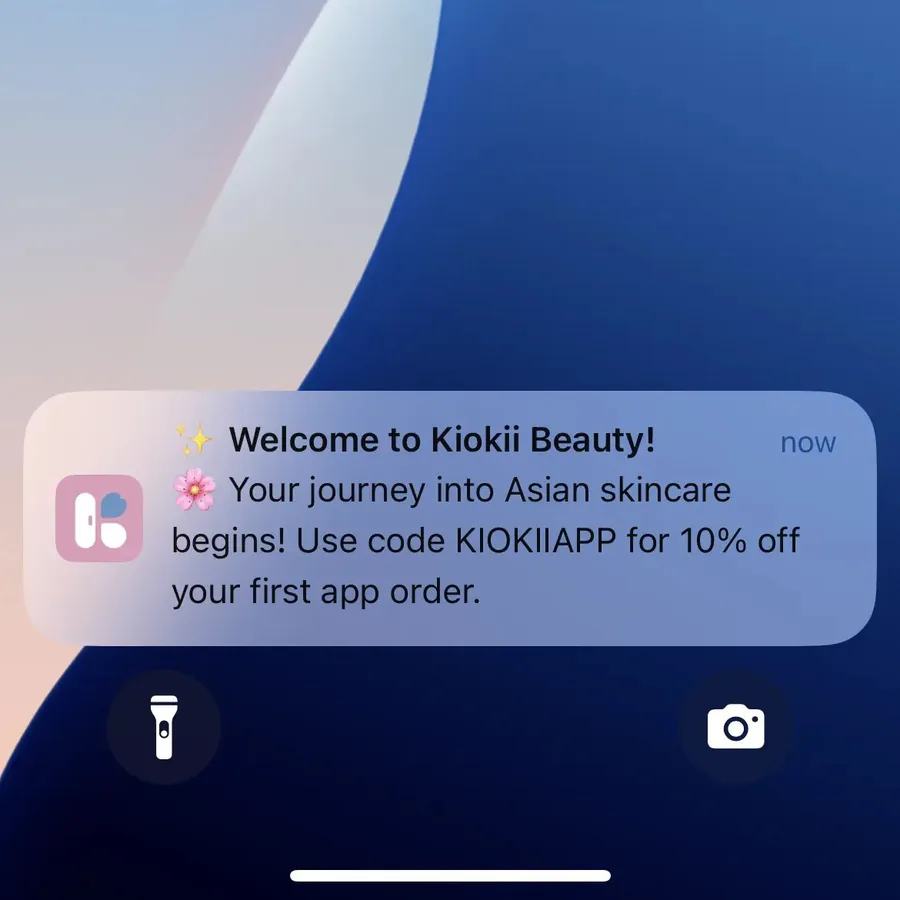
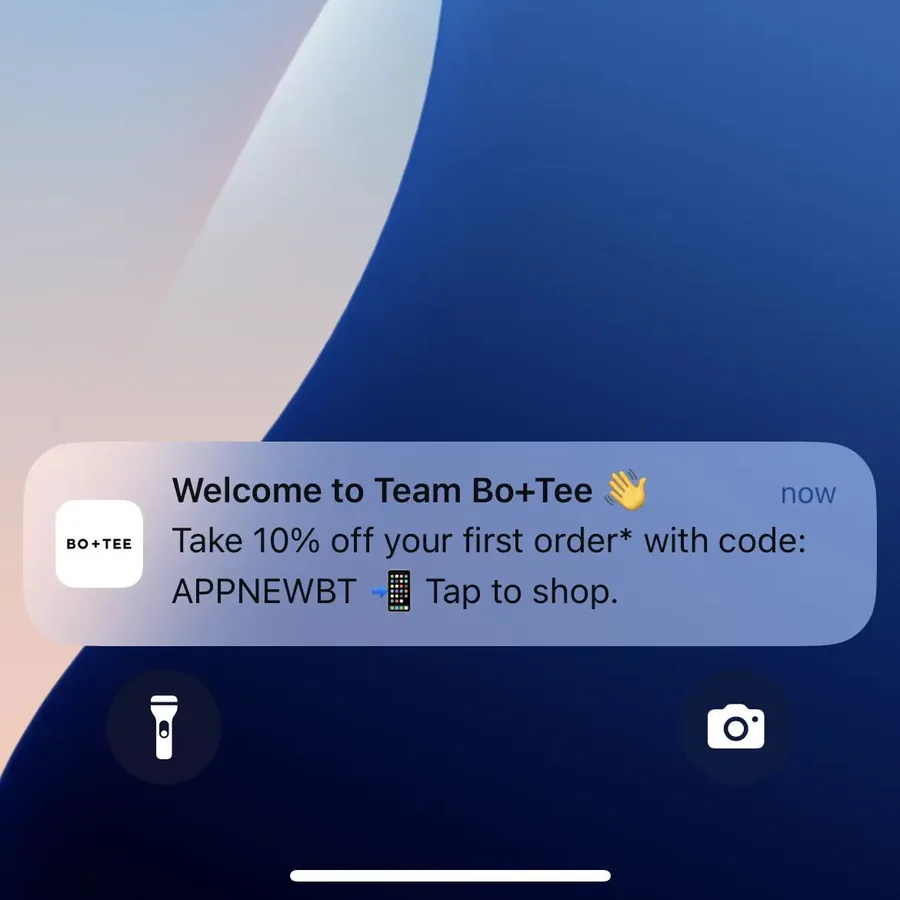
Start with the notifications that send themselves. Our push notification report recommends a welcome message with your launch offer straight after install, then a second one 24 hours later if the customer hasn’t bought yet.
Kiokii and Bo+Tee both open with a welcome push that carries a code worth 10% off a first order.
Switch on abandoned cart reminders in the first week as well. In our benchmark report, every brand that turned them on recovered significant revenue, with no discounting and no work beyond the initial setup.
Then start your first campaigns: new arrivals, early access for app users and a last chance on the launch offer. Our push report puts the sweet spot for most brands at three to six notifications a week.
For a lean team, push becomes one of the easiest channels to run, as Industrial Safety Products found.
"A newsletter or a digital campaign requires much more work: design, content generation, the whole send. A push notification is a copy, and it generates a lot more clicks. We've realized we have to prioritize it."
How Do You Get Ratings for a New App?
You get ratings for a new app by asking satisfied customers at the right moment, with the stores’ built-in prompts. Ratings matter most in the first weeks, when your listing has few of them and every visitor is deciding whether to trust it.
Ask after a moment of satisfaction, such as a customer’s second order. Apple lets you show its rating prompt up to three times in a 365-day period, and Google Play limits how often its in-app review dialog appears, so don’t spend them in a customer’s first session.
Don’t ask “Do you like the app?” before the prompt, either. Google’s guidelines rule out questions like that, and the built-in prompts already let happy customers rate you in a couple of taps.
Reply to reviews in the first weeks, especially the critical ones. On the App Store, the reviewer is notified of your reply and can update their review.
How Do You Know If Your Launch Worked?
You know your launch worked when downloads turn into active users, push subscribers and app orders. After 30 days, look at how many people use the app each week, how many allowed notifications, how much revenue came through the app and how app users compare with mobile web shoppers.
PetShop.co.uk’s first month shows what a strong start looks like: more than 5,000 downloads, over 1,000 active users and 10% of the company’s revenue, according to its case study.
Use the store links you tagged before launch to compare channels, and put more effort into the ones whose downloads turned into orders. Our guide to measuring mobile app performance covers the metrics to track from there.
Keep Promoting the App After Launch
Launch day brings in your first wave of app users, and steady promotion brings the rest. Keep your website banners and QR codes up and add the app to your welcome and post-purchase emails. Mention it on social media whenever app users get something first.
Our guide to driving app downloads covers that ongoing promotion in detail, from smart banners to email flows and paid install campaigns.
Launching Your App With MobiLoud
A launch is easier when your app starts from a store your customers already trust. MobiLoud transforms your website into a custom native app, powered by the same underlying code as your website.
Your app is built with your website, not separate from it. Your products, accounts and checkout are there from the first day, and every change to your site shows up in the app, so nothing is rebuilt or updated twice.
That frees your launch to focus on what the app adds: native navigation, push notifications, pages and offers just for app users and a place on your customers’ home screens.
Our team builds your app, submits it to the App Store and Google Play and keeps it up to date. Most apps go live within a few weeks.
We also work with you on the launch itself, from smart banners and QR codes on your website to your first push campaigns. GSF Car Parts got templates from us for the notifications to send before, during and after its launch.
Final Thoughts
Launch day is your best chance to reach every loyal customer at once with a reason to download your app. A planned launch gets those customers into the app early, allowing notifications and placing orders, and that’s when the app starts to pay for itself.
If time is short, focus on the essentials: a tested app, a clear store listing, one launch offer, a launch email, a website banner and a well-timed push permission request.
With more time, add SMS, social video, in-store signs and pre-orders. Have your first push campaigns ready before launch day, too.