The 5 Best Swipecart Alternatives
Looking for better Swipecart alternatives? We compared Swipecart with MobiLoud and 4 other tools - check it out.....




.webp)


Looking for a Swipecart alternative?
In this article, we'll discuss some of the best alternatives to Swipecart, a Shopify mobile app builder. We'll start with a brief overview of Swipecart, including how it works and who it's designed for, then explore other options to help eCommerce store owners build and launch their own mobile apps.

Swipecart is a drag-and-drop app builder that supports Shopify stores, WooCommerce stores, and custom eCommerce stores.
It enables store owners to build an app for their site without coding or hiring a development team.
Swipecart operates with themes, templates, and blocks that let users build and publish their apps.
For each app screen, you drag and drop design elements onto a canvas to create the user interface.

After designing the screens, you add functionality using predefined integrations and connect your app with external tools, such as analytics and marketing platforms.
Swipecart offers four pricing tiers.
(Note: Pricing is no longer displayed on their website, so these figures may not be current.)
The Starter plan includes unlimited push notifications, native Android and iOS apps, 1 standard integration, and 1 standard Shopify app.
Higher plans offer advanced features with up to 6 Shopify apps and standard integrations.
The Enterprise plan provides access to all Shopify apps and integrations. These plans do not include advanced analytics or dedicated support.
Swipecart uses pre-built templates to create apps with core eCommerce capabilities.
Additional functionality is available through their integrations and Shopify apps, though the app’s features are built within the limitations of the platform's templates and blocks.
While Swipecart allows app building without coding and advertises quick setup, users may find it requires some time to configure the app to their satisfaction.
Store owners with limited time may find the setup process requires a moderate time investment.
Here’s a review from Swipecart’s Shopify app store page:
"The app is fairly user-friendly, but it has too many features for someone as busy as me, a business owner ... If you're interested in building your own app, this might be a good fit. However, for me, it's just too time-consuming."
Some users mention support response times and the nature of support interactions.
After reviewing Swipecart's features, pricing, and user feedback, let's explore some of the top Swipecart alternatives, starting with our own platform, MobiLoud.

MobiLoud is a robust alternative to Swipecart and other app builders.
Hundreds of published apps use MobiLoud to convert websites into native mobile apps, including many successful eCommerce stores.

Unlike Swipecart, MobiLoud converts your existing store into a native app.
The app reflects your mobile website, including your theme, Shopify apps, and custom features, providing an authentic native experience.
MobiLoud does not use templates or block-based builders to create your app’s UI, which allows for more flexibility without typical app builder limits.
We provide a fully managed service: our team configures, builds, and tests your app based on your business needs.
Once you approve the app, we handle app store submission and ongoing maintenance, including updates, so you can focus on your business.
MobiLoud offers three pricing tiers:
Annual plans also offer about 15% savings on recurring costs. Learn more about pricing here.
Swipecart relies on pre-built themes and a block-based system, while MobiLoud offers a flexible platform designed for growing eCommerce brands.
MobiLoud allows you to fully replicate your site and all its Shopify apps in your app without rebuilding.
Key advantages include:
Want to skip ahead? Book a free demo now and talk to one of our app specialists.
Here are some other Swipecart alternatives commonly mentioned online.

Plobal Apps is a Shopify-focused app builder. It features a drag-and-drop design process and includes a range of integrations.
As a template-based platform, you build your app inside their system using available themes, blocks, and pre-built Shopify app integrations.
Plobal Apps offers three plans:
Higher-tier plans include more features and integration options.

Shop2App is a Shopify app builder with a drag-and-drop, block-based design system and multiple integrations.
It supports creating apps with a straightforward process, though it uses templates and blocks to build the app interface.
The pricing is on the higher side relative to features offered.
Shop2App offers three plans:

Tapcart is a Shopify app builder with a drag-and-drop interface and a template-based design system.
It is a mature platform commonly used by small and medium-sized eCommerce businesses.
Tapcart offers three plans:
Note: In addition to monthly fees, Tapcart charges transaction fees (revenue share) on app sales, which can impact costs for high-volume stores.
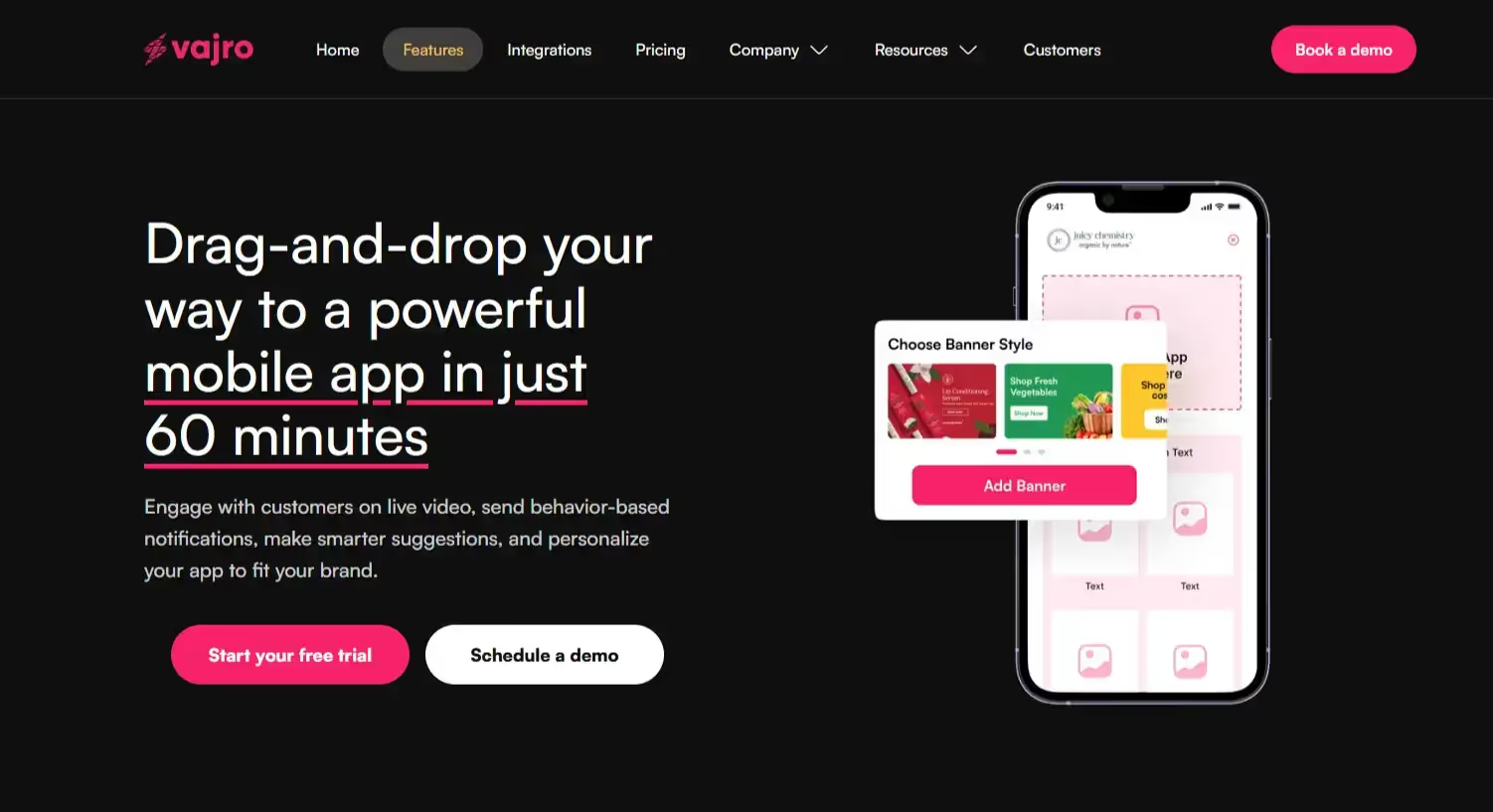
Vajro is a Shopify app builder popular with smaller eCommerce businesses.
It uses templates and drag-and-drop widgets and connects to Shopify through its API. Like other template-based builders, it operates within the limits of its system for design and integrations.
Vajro offers four plans:
Many Swipecart alternatives share similar characteristics. They may offer different integrations, user experiences, or support levels, but they share common architectural limitations that affect how closely an app can replicate a website.
Using a block- and template-based approach lowers the barrier to entry but also limits how much you can customize your app.
Apps built this way tend to follow the design and functional constraints of available templates and blocks, which means the app experience can differ from the website experience.
David from Rainbow Shops shared their perspective on this:
“The app needs to be at least as functional as the website. It doesn’t need to be better than the website, but the user experience can’t be worse.”
Ensuring your app matches your website’s features is important for driving app usage and sales.
Most Shopify app builders rely on the Shopify API to pull product and order information into the app. The Shopify API has its own restrictions, which can affect how some website features translate into the app.
David from Rainbow Shops noted:
“The hybrid solutions on top of Shopify are just too limited. The Shopify API only enables certain things and all the major providers of hybrid apps for Shopify had limitations that the Shopify API would not let them get around.”
For example, customizations like specific product sort orders that boost conversions on the website may not be available in the app when using these builders.
With DIY app builders, the store owner is responsible for designing, building, and maintaining the app.
Support is generally provided through ticketing systems or onboarding guidance, but the bulk of the work—app design, testing, submission, and updates—falls on you.
This can require a significant time investment, especially when navigating app store approvals and ongoing maintenance.
While simpler than custom development, app builders still involve work that can impact your time and resources.
MobiLoud offers a different approach to mobile app creation.
Instead of rebuilding your app within a template-based system, MobiLoud fully converts your existing website into a native app.
Everything in the app—your theme, Shopify apps, custom code, and checkout flows—works exactly as it does on your website.
This provides flexibility beyond what is possible with block-based app builders.
Plus, MobiLoud is a fully managed service. We handle app configuration, building, testing, app store submission, updates, and maintenance.
That means zero learning curve and minimal effort from your side.
Though MobiLoud’s pricing is higher upfront compared to some app builders, the time and labor saved often make it more cost-effective overall.
See examples from Rainbow Shops, SYN•DI•CATE, Bestseller, and John Varvatos to see what’s possible with MobiLoud.
Get started building your eCommerce apps with MobiLoud today.
MobiLoud offers the easiest, most flexible, and overall best way to turn your eCommerce store into a native app. You avoid the limits of app builders, don’t have to do the work yourself, and get a solution that is more affordable than custom development.
With transparent pricing and minimal effort, there’s little risk in seeing how an app can grow your business.
Why wait? Schedule a free discovery call now and learn more.
See how your store performs as a real mobile app. Get a free preview built by our team at app.mobiloud.com, or book a demo with an expert to explore how MobiLoud can boost your retention and sales.