
If you're thinking about launching a mobile app, you’ll likely run into the cross-platform vs native debate before long.
The traditional approach was to build two separate apps, one for iOS and one for Android, using two different programming languages, two different teams, and two budgets. Cross-platform development collapses all of that, and lets you launch on multiple platforms with the same framework.
For most companies launching an app today, this is the right approach. It's faster, cheaper, easier to maintain, and the apps you end up with are often indistinguishable from native ones. Discord, Pinterest, Bloomberg, Shopify's Shop app, and Microsoft Teams are all built this way.
This guide is for non-developers. We'll cover what cross-platform development actually is, how it compares to native, why most teams are choosing it in 2026, and the fastest way to ship a cross-platform app if you don't have a development team in-house.
What Cross-Platform App Development Means
Every mobile app has the same basic set of features: sign-in, browse, search, cart, checkout, push notifications, account settings.
With native development, you build that set of features twice. Once in the iOS programming languages (Swift or Objective-C), once in the Android programming languages (Kotlin or Java).
With cross-platform development, you build it once. A framework like React Native or Flutter takes that single codebase and produces working iOS and Android apps from it.
In practice, that means:
- One codebase instead of two
- One team instead of two
- One set of features that ships to both platforms at the same time
- One ongoing maintenance line instead of two parallel ones
To your customer, the end result is a real native app they download from the App Store or Google Play. They have no way to tell whether you built it cross-platform or natively, and in most cases there's no functional reason for them to care.
Cross-Platform vs Native App Development
Native and cross-platform are the two main ways to build a mobile app. Here's how they compare.
| Native | Cross-Platform | |
|---|---|---|
| Codebase | Two separate (iOS + Android) | One shared codebase |
| Languages | Swift / Objective-C, Kotlin / Java | JavaScript, Dart, C# |
| Cost | Highest | ~50% of native |
| Time to launch | 6+ months | 3-6 months |
| Performance | Best possible | Near-native for most apps |
| Best fit | Heavy-hardware apps (3D games, AR, advanced camera) | Most consumer and B2B apps |
The only time native is the obviously right answer is when your app needs to do something that depends heavily on a phone's hardware. Snapchat-style AR filters, console-quality 3D games, specialized camera processing, that kind of thing.
For everything else, including the vast majority of ecommerce apps, content apps, SaaS apps, and community apps, cross-platform will deliver an experience your users can't tell apart from native.
There's also a third category called hybrid apps, covered alongside native, cross-platform, and pure web in this explainer.
Why Most Modern Apps Are Built Cross-Platform
For a marketing or product team weighing the options, cross-platform development comes down to three real benefits.
1. It Costs Roughly Half as Much, and Ships in Half the Time
Native apps can cost upwards of $150,000 per platform for a moderately complex build, which means $300,000+ to launch on both iOS and Android. Most native projects also take six months or more.
Cross-platform development collapses both of those numbers. One codebase means one team, one timeline, and one budget instead of two. For most teams that translates to roughly half the cost and half the time. Hybrid approaches that reuse an existing website cut even more, sometimes 80-90%.
That isn't a small difference. It's the difference between launching a mobile app this quarter and launching it next year, or between justifying the project at all and shelving it.
2. You Get One App Experience, Not Two Drifting Ones
Anyone who's managed a separate iOS team and a separate Android team has lived this story.
A feature ships to iOS first. The Android version comes out three weeks later, with a slightly different design and one missing setting.
The next sprint, the gap widens. Six months in, your two apps feel like two different products.
Cross-platform development eliminates that drift by design. The same team ships to both stores from the same codebase, so your iOS users and Android users see the same app, get the same features at the same time, and have the same experience when they hit a customer support issue.
For brands, that consistency is what makes the app feel like part of the company instead of a separate product line your customers happen to share.
3. Long-Term Maintenance Costs Half as Much
App maintenance is generally estimated at 15-20% of the original build cost per year. That's the cost of OS updates, security patches, bug fixes, new features, and keeping up with whatever Apple and Google change next.
If your apps cost $300,000 to build natively, you're looking at $45,000-$60,000 a year, every year, to keep them running. With cross-platform, you halve that bill too. One codebase to maintain, one team to coordinate, one set of updates to ship.
The math gets even better when you consider how often Apple and Google push platform-level changes that require app updates. Every one of those changes hits twice with native, once with cross-platform.
The Frameworks Being Used to Build Cross-Platform Apps Today
If you're talking to a developer or an agency about your app, you'll hear a few framework names come up. You don't need to know how any of them work, but it helps to know what they are.
- React Native is Meta's framework, used in Discord, Pinterest, Shopify's Shop app, and Meta's own products. It uses JavaScript, the same language most websites are built with, so it's the most common pick for teams that already have web developers.
- Flutter is Google's framework, used by Alibaba, Google Pay, and eBay Motors. It uses a language called Dart and is known for highly polished, custom-designed interfaces.
- Ionic is a "hybrid" framework that uses standard web technologies (HTML, CSS, JavaScript) to build apps. It's popular for content-driven and internal business apps.
These are the workhorse frameworks of cross-platform development today. (You may still see references to Xamarin, Microsoft's older framework, but Microsoft has retired it in favor of .NET MAUI.)
The Fastest Path to a Cross-Platform App (for Web-First Brands): MobiLoud
Cross-platform delivers a lot of efficiency advantages over doing separate codebases for iOS and Android.
However, if you’re building a mobile app as an extension of an existing website - particularly relevant for ecommerce sites, online marketplaces, and other businesses where the app and website do more or less the same thing - a React Native or Flutter app is still a lot of unnecessary work.
You’re basically rebuilding your website in a new framework. You have the two-codebases problem all over again, this time with website and app.
For brands like these, MobiLoud is the superior cross-platform option. MobiLoud lets you build custom iOS and Android apps that run on your existing web stack.
Whether you’re on an ecommerce platform like Shopify, BigCommerce, WooCommerce, or you have a custom-built website, you can go live without adding a whole new codebase in a new framework.
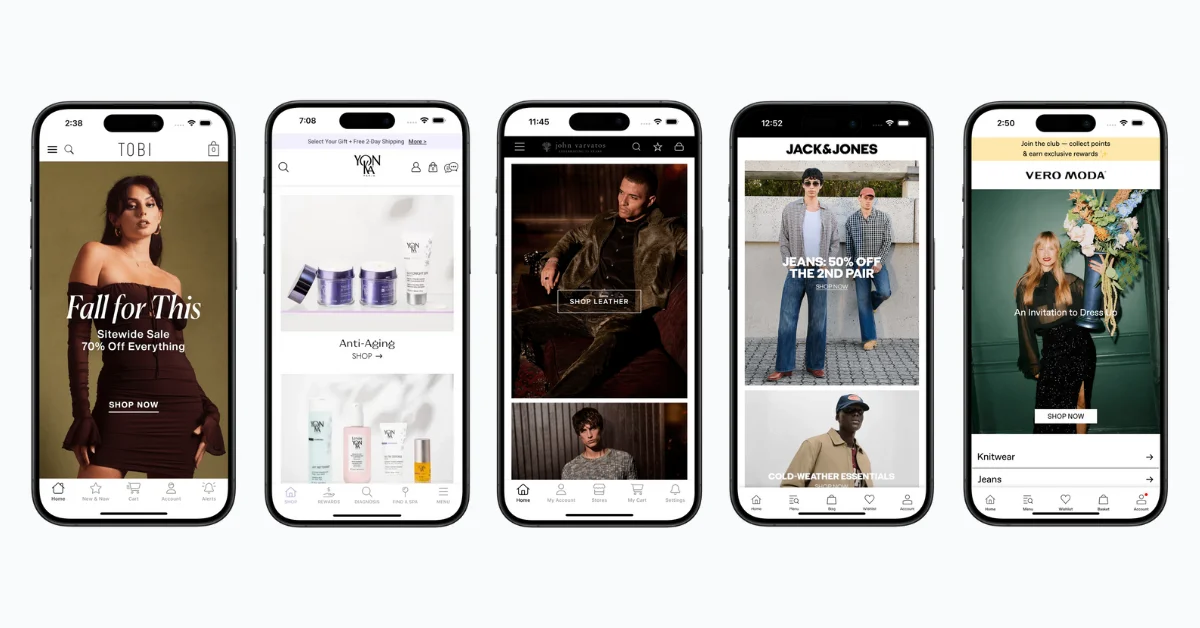
MobiLoud’s team manages the app build and app-specific maintenance for you, while you manage the content and design through your existing systems.
One codebase: three platforms (web, iOS, Android). It’s the ultimate cross-platform solution for web-first brands.
See more about the type of brands MobiLoud works with on our case studies page.
The Bottom Line on Cross-Platform Development
For a small minority of apps (the ones that need deep hardware access or top-tier 3D graphics), native development is still the right answer.
But the bulk of the time, cross-platform development is the better economic and operational choice. One codebase, one team, one launch, lower cost, faster shipping, and easier maintenance.
If you’re building an app from scratch, look at React Native or Flutter, unless there’s anything you really can’t do with these frameworks (which is unlikely).
And if your goal is to turn (or extend) your website into a native app? Go with MobiLoud. You’ll save months of work, hundreds of thousands of dollars in dev costs, and come away with an app that does everything you need, and takes much less work to maintain.
Want to see what’s possible with MobiLoud? Get a free preview of your app now.