





















What teams ask before they turn a website into an app
An app built on your website, without the rebuild
The question is rarely whether a mobile app is worth having. It is how to launch one without rebuilding the website your team already maintains.
Push is the reason most teams want an app
A website can only reach someone who decides to come back. Email open rates have fallen for years and the promotions folder absorbs a large part of what does get delivered. An app changes the shape of that: an icon on the home screen, persistent login, and push notifications that arrive on the lock screen in seconds. The install itself is a signal, because the people who install are the people who already use your site most.
That holds whatever the site does. A membership site pushes new content to members. A course platform pushes a nudge to someone who stopped halfway. A publication pushes a story the moment it goes live. An internal tool pushes an approval to the person holding it up.
Every other path rebuilds the site from scratch
The other routes to a mobile app all ask the same thing: rebuild your site in a separate codebase. Custom native (Swift, Kotlin, React Native, Flutter) means replicating every page, every form, every permission rule, and every integration your team has shipped, in a different language and on a different release cycle. Once two codebases exist, every update ships twice, and the two drift within months.
No-code exporters look cheaper and solve a different problem than the one most teams have. They hand back a build. They do not submit it, answer an App Store reviewer, renew a certificate, or fix the app when an OS release changes something underneath it. That work is continuous, and it is what actually determines whether the app is still working a year later.
The cost of the custom route is real, at $500K-$1M+/year fully loaded for an enterprise-scale build. The deeper problem is the duplication. You built your site the way you did because it fits how you work, and a rebuilt mobile version gives that up on the mobile side while you pay to maintain both.
Your site handles the content. Our team does the native engineering
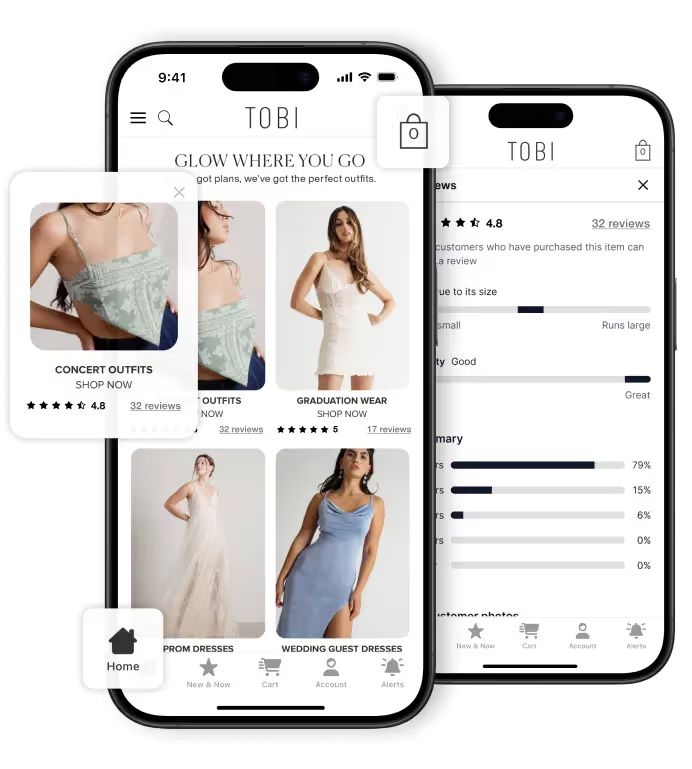
MobiLoud is the combination of a native platform and a service team. The platform bridges your live site to an iOS and Android app and brings the features a native app needs built in: push notifications, deep links into any page, persistent login, native navigation, smart banners, in-app payments, and analytics tied into GA4 or Firebase. The native integrations a custom build would assemble once per app are built into the platform once.
Together, your existing site plus our platform is a mobile app experience built on the site you already operate. Every page, every integration, and every change that ships on the web shows up in the app the same day.
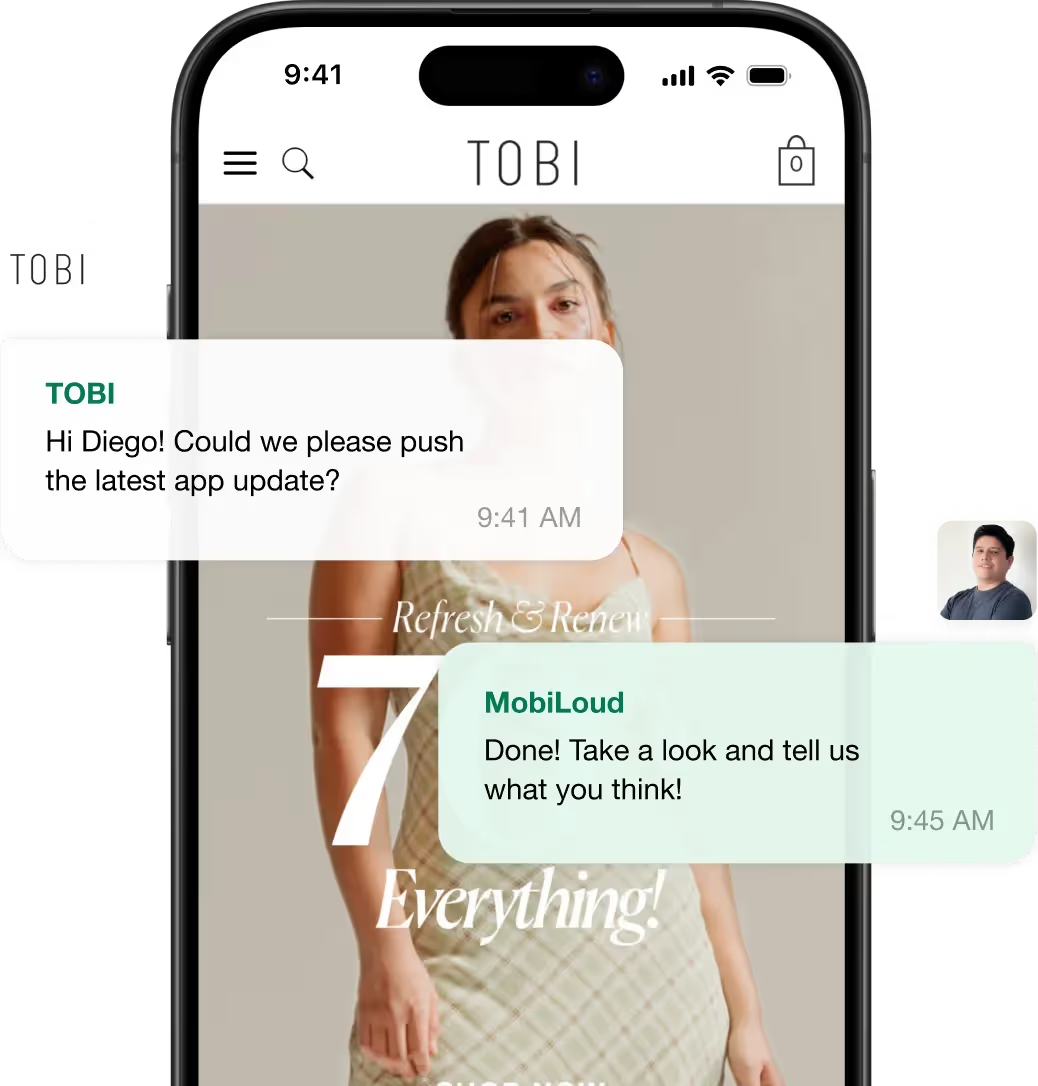
Your team keeps building the way they build the site, on the platform they already use, on the release cycle they already have. Our team guides on the app-specific patterns and applies direct customizations to the app experience when something needs to look or behave differently there. The native SDK integrations that come up infrequently we handle from our side. We manage the iOS and Android operational track: builds and submissions under your developer accounts, OS update cycles, certificate renewals, and store policy.
Getting approved is part of the job
Apple's Guideline 4.2 rejects apps that amount to a repackaged web page, and it is the reason most do-it-yourself attempts stall. An app has to bring real native function to get through: push notifications, deep links, native navigation, persistent login, and the platform features that apply to what your site does. MobiLoud builds those in as standard, submits under your developer accounts, and handles the reviewer back-and-forth until both apps are live. When a store policy changes later, keeping the apps compliant is our work, not yours.
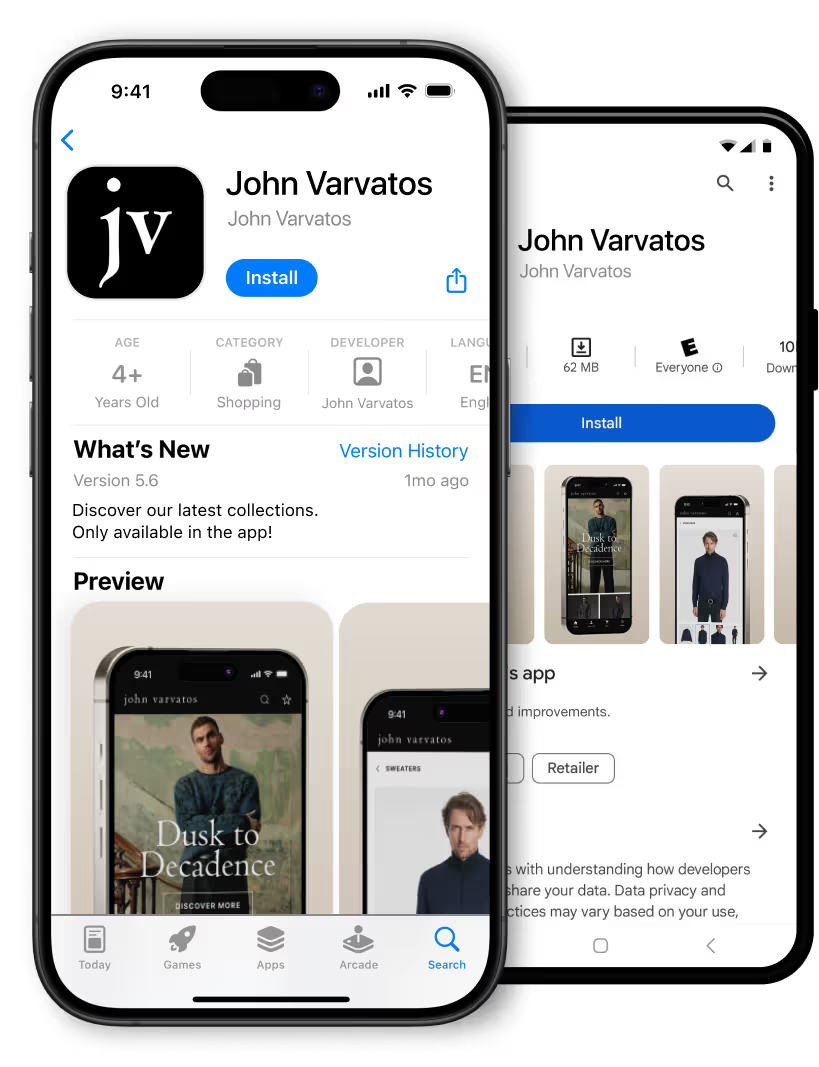
MobiLoud has published 2,000+ apps since 2013, across ecommerce, publishing, education, membership, and internal tools. The fastest way to know whether it works for your site is to see it: we build a working version from your live site so you can install it on your own phone before you commit to anything.