





















What ecommerce teams actually need to know
An app channel for your store, without the storefront rebuild
The question is not whether a mobile app makes sense for your ecommerce brand. It is how to launch one without rebuilding the storefront your team already has.
Push reaches customers where email and search cannot
Email open rates have fallen for years, and the promotions folder eats a large share of what does get delivered. SMS works but carries compliance overhead, costs that scale with volume, and a customer-experience cap before opt-outs climb. The retention-channel ceiling for ecommerce brands is well below where it used to be.
Mobile apps change the shape of the channel. An icon on the home screen, persistent login, push notifications direct to the lock screen, and the install itself as a signal of your best customers. Push reaches the customer where email and SMS cannot, and app users are already opted in by definition.
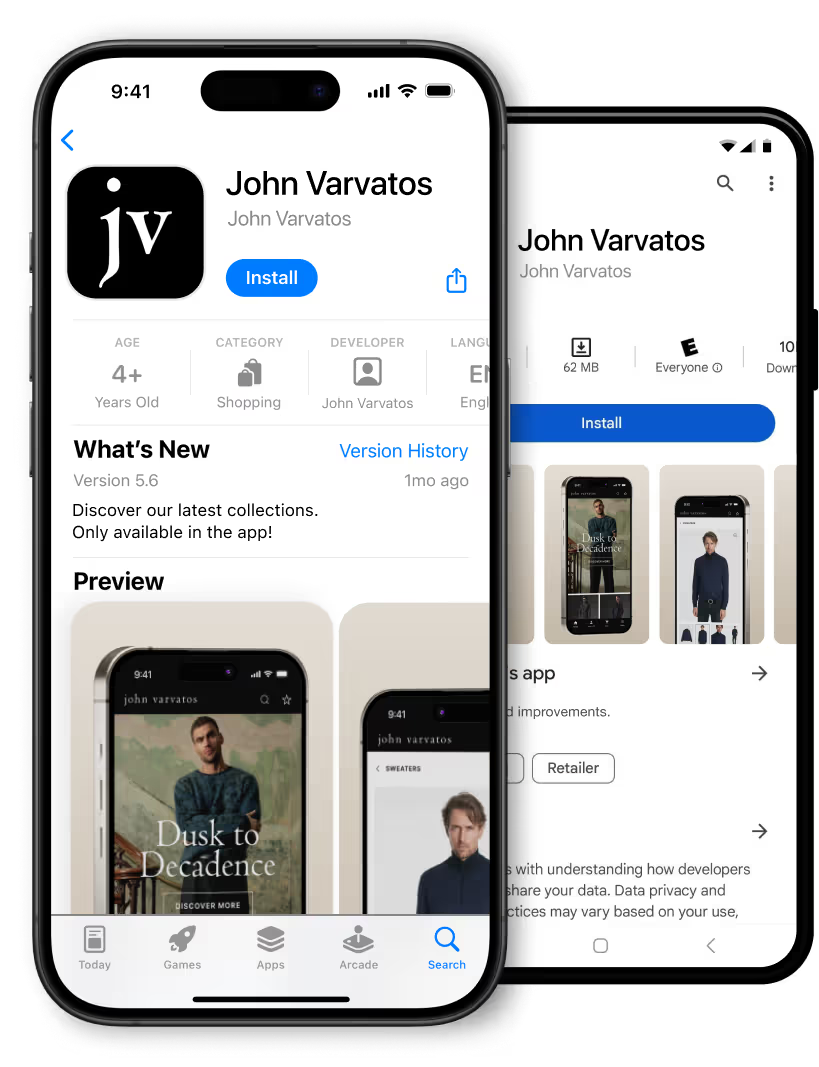
Across the ecommerce category, app users convert at up to 7x mobile web rates, spend 10-50% more per order, and deliver roughly 3x the lifetime value. John Varvatos generates 10x revenue per app user vs mobile web. Tadashi Shoji accounts for 18% of online revenue through the app. PetShop.co.uk hit 10% of revenue from the app in the first month. The pattern holds across teams that have already done the work of getting catalog, pricing, and checkout right on the web.
Every other path rebuilds your storefront from scratch
The other routes to a mobile app all ask the same thing: rebuild your storefront in a separate codebase. Custom native (Swift, Kotlin, React Native, Flutter) means replicating every product page, every checkout flow, every business rule, and every integration your team has shipped, in a different language and on a different release cycle. App builders replicate it a different way, inside their template system, where custom features and integrations that do not fit the platform get left behind. Either way, the team then carries duplicated work: every promo, banner, drop, price change, and integration update ships twice.
The cost is real (custom-native costs $500K-$1M+/year fully loaded for an enterprise-scale build), but the deeper problem is the duplication itself. You built your store the way you did because it fits how you sell. A rebuilt mobile storefront gives that up on the mobile side, paying to maintain a second store separate from the first.
Your store handles the commerce. Our team does the native engineering
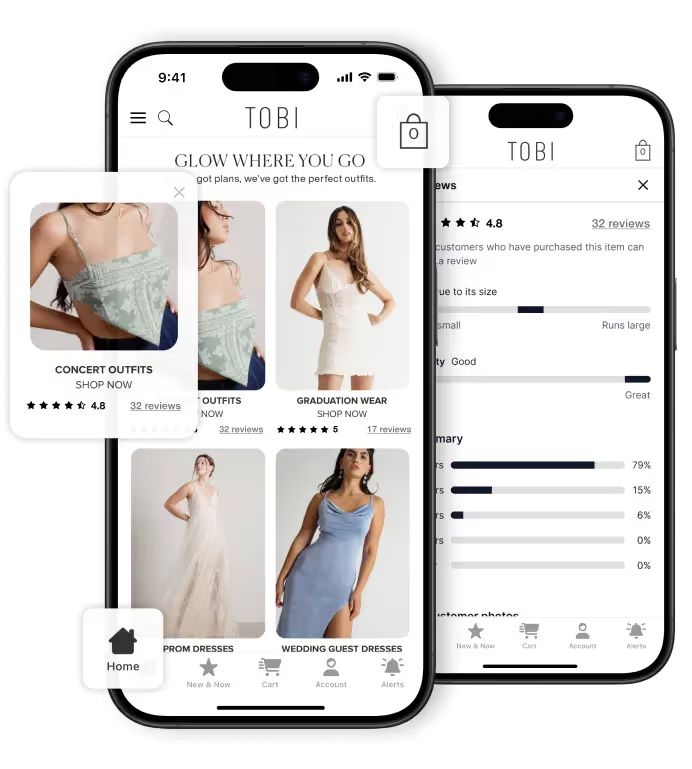
MobiLoud is the combination of a native platform and a service team. The platform bridges your live store to an iOS and Android app and brings the features a native app needs built in: push notifications via Klaviyo or OneSignal, deep links into any page, persistent login, native navigation, smart banners, in-app payments, and analytics tied into GA4, Firebase, or Triple Whale. The native integrations a custom build would assemble once per app are built into the platform once.
Together, your existing store plus our platform is a mobile app experience built on the storefront you already operate, not a second one your team rebuilds from scratch. Every product, every collection, every checkout flow, every integration, and every promotion that ships on the web shows up in the app the same day.
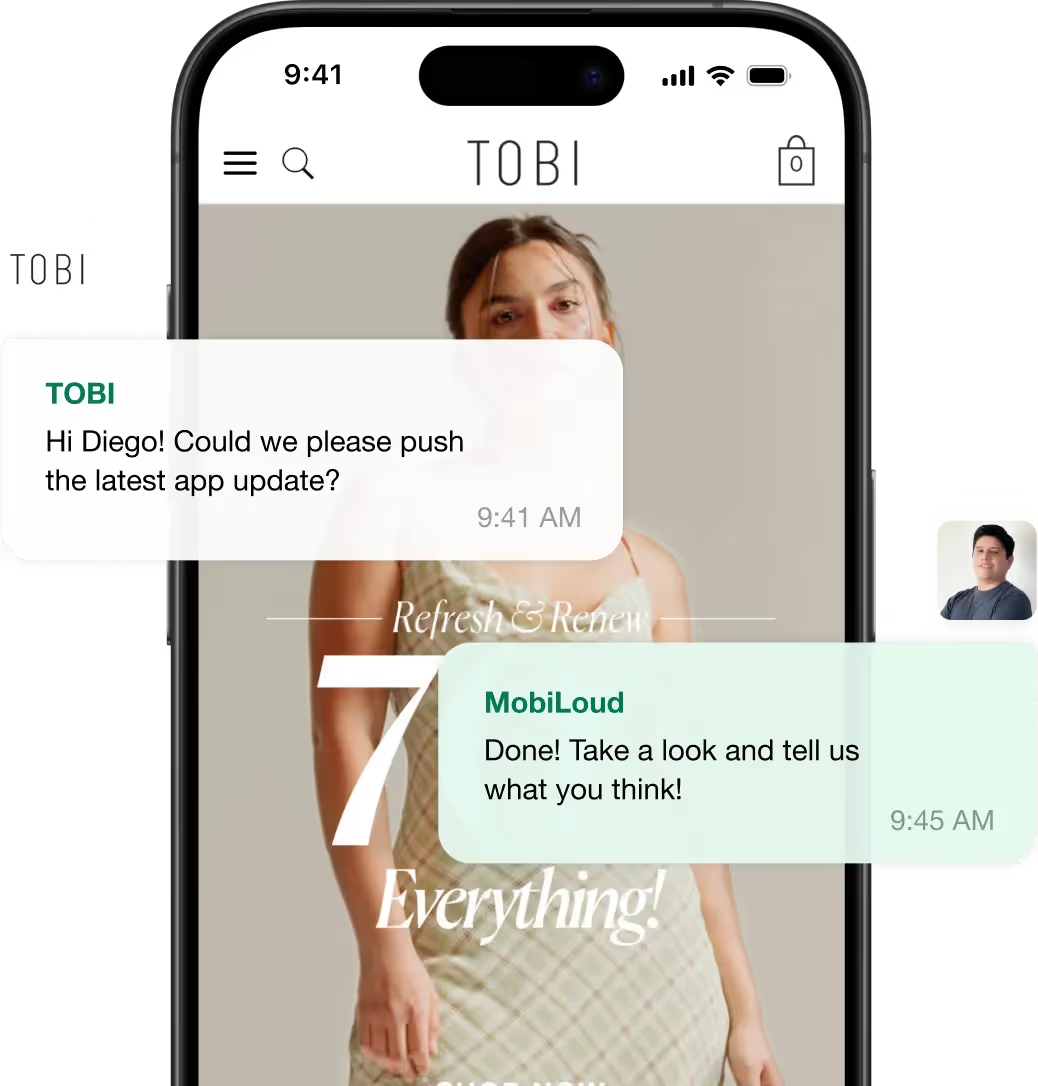
Your team builds for the app the way they build the store, on the platform they already use, on the release cycle they already have. Our team guides on the app-specific patterns and applies direct customizations to the app experience when something needs to look or behave differently in the app. The native SDK integrations that come up infrequently (custom payment processors, attribution tools, a POS bridge, niche analytics) we handle from our side. We manage the iOS and Android operational track: builds and submissions under your developer accounts, OS update cycles, certificate renewals, and store policy. John Varvatos, Tadashi Shoji, Jack & Jones, Junior Couture, and PetShop.co.uk are all built on this combination.
"We had a code-based app, not showing the website but using data from an API endpoint, and we didn't want to do that anymore. We couldn't find another company that could offer the same features at the same price point, same time to market, and make it as easy as MobiLoud could."
Svend Hansen, Product Owner at BESTSELLER, on consolidating Jack & Jones from three native codebases to a MobiLoud app.
After launch is where the channel actually compounds
We work alongside your team to deliver the results we see ecommerce customers achieve regularly. The launch playbook is where we start: install prompts on your site, smart banners on mobile web, QR codes, email announcements to your existing customer base, in-store signage where relevant, and an app-user incentive to drive the first wave of installs. The push strategy gets built into the integration we set up (abandoned cart, back-in-stock, drops, promotional campaigns), all sent directly from your existing Klaviyo or OneSignal account.
On Enterprise, the work continues past setup. Your customer success manager checks performance monthly against peer ecommerce brands, builds analytics dashboards on the app channel, reviews what is working in the category, and proposes what to try next. Included monthly development time covers app-side tweaks, custom platform integrations, and direct support for your team when something needs an app-side fix.
MobiLoud has published 2,000+ apps since 2013. The results above are not exceptional. They are what the channel delivers when it is launched and managed properly. The fastest way to know whether it works for your store is the free preview: we build a working iOS and Android app from your live store in roughly 5 to 7 working days, so you can see exactly how it looks and feels before you commit to anything.