Ecommerce mobile app development
Get native iOS and Android apps for your brand, with no second storefront to manage. MobiLoud turns your existing store into a full-featured mobile app, giving you all the benefits of an app without the operational tax.
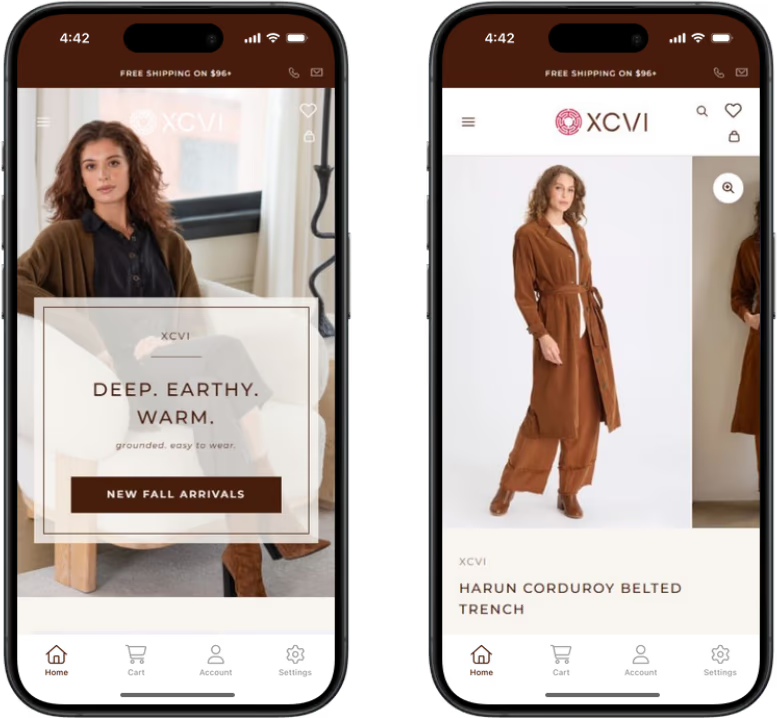
2,000+ apps published since 2013








A new retention & engagement channel
A mobile app is an always-on channel living on the place your best customers look at hundreds of times a day.
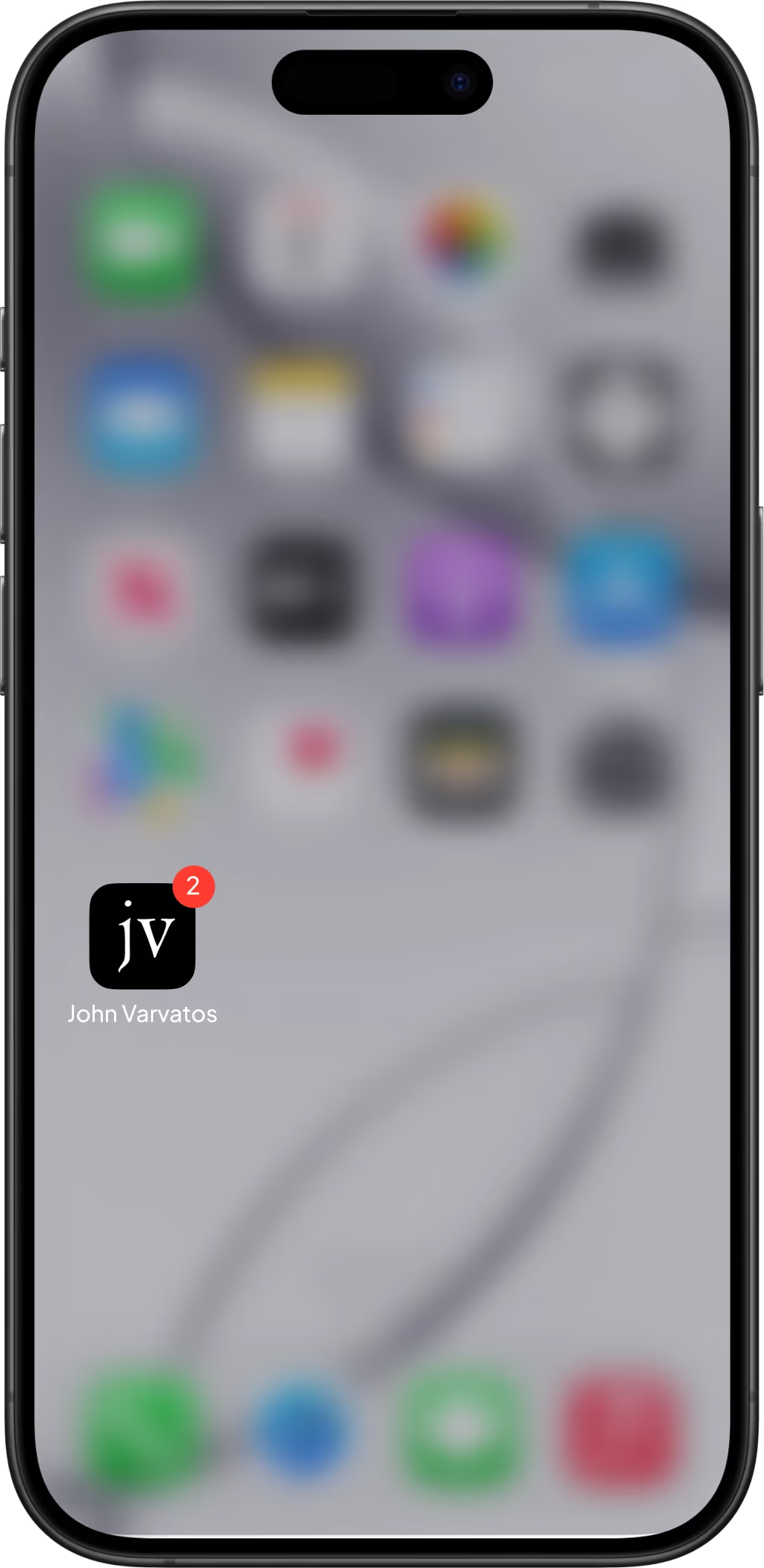
Your icon sits on the home screen, one tap away. No searching, no URL, and no competitor’s ad on the way in.
One tap or a push notification brings your highest-intent customers into your store, with no ad spend or algorithm controlling your reach.
Drive stronger loyalty and build a base of superfans with app-only drops, early access, member-only pricing and loyalty perks.
App shoppers come back more often, spend more, and become a high-value segment that funds your growth.
How it works
MobiLoud turns the store you already run into native iOS and Android apps. Your live storefront powers the app, so all the work you’ve put into your site carries over to your app.
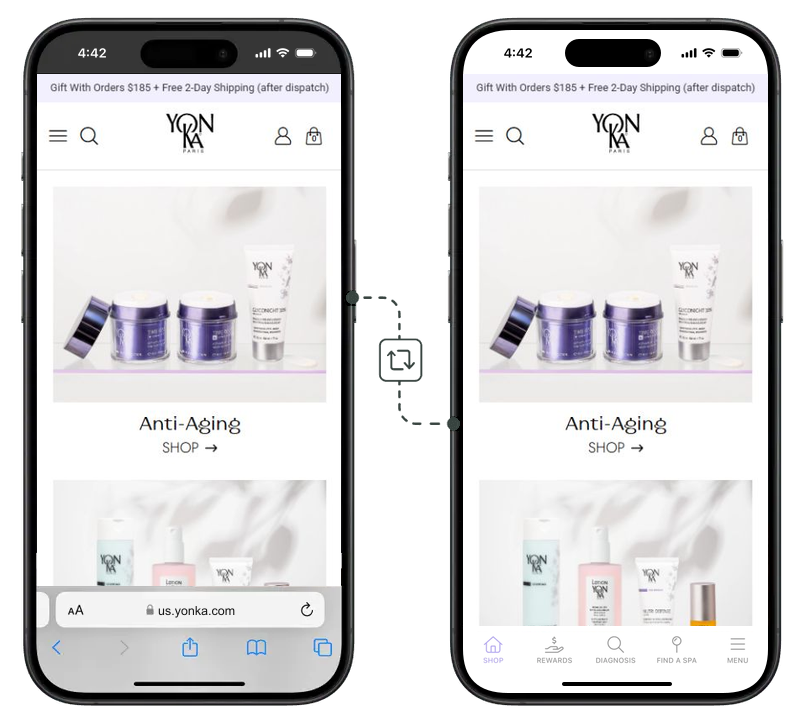
No templates, no rebuilding. The starting point is what you already have.
We build a native layer, with all the native features your customers expect in an app.
We get your apps live in the App Store and Google Play. They live in your own accounts, and our team takes care of all native upkeep.
The full native app experience
We turn your store into a custom mobile app that looks and feels like it cost a million dollars.
A tab bar, gestures and transitions that behave the way iOS and Android users expect.
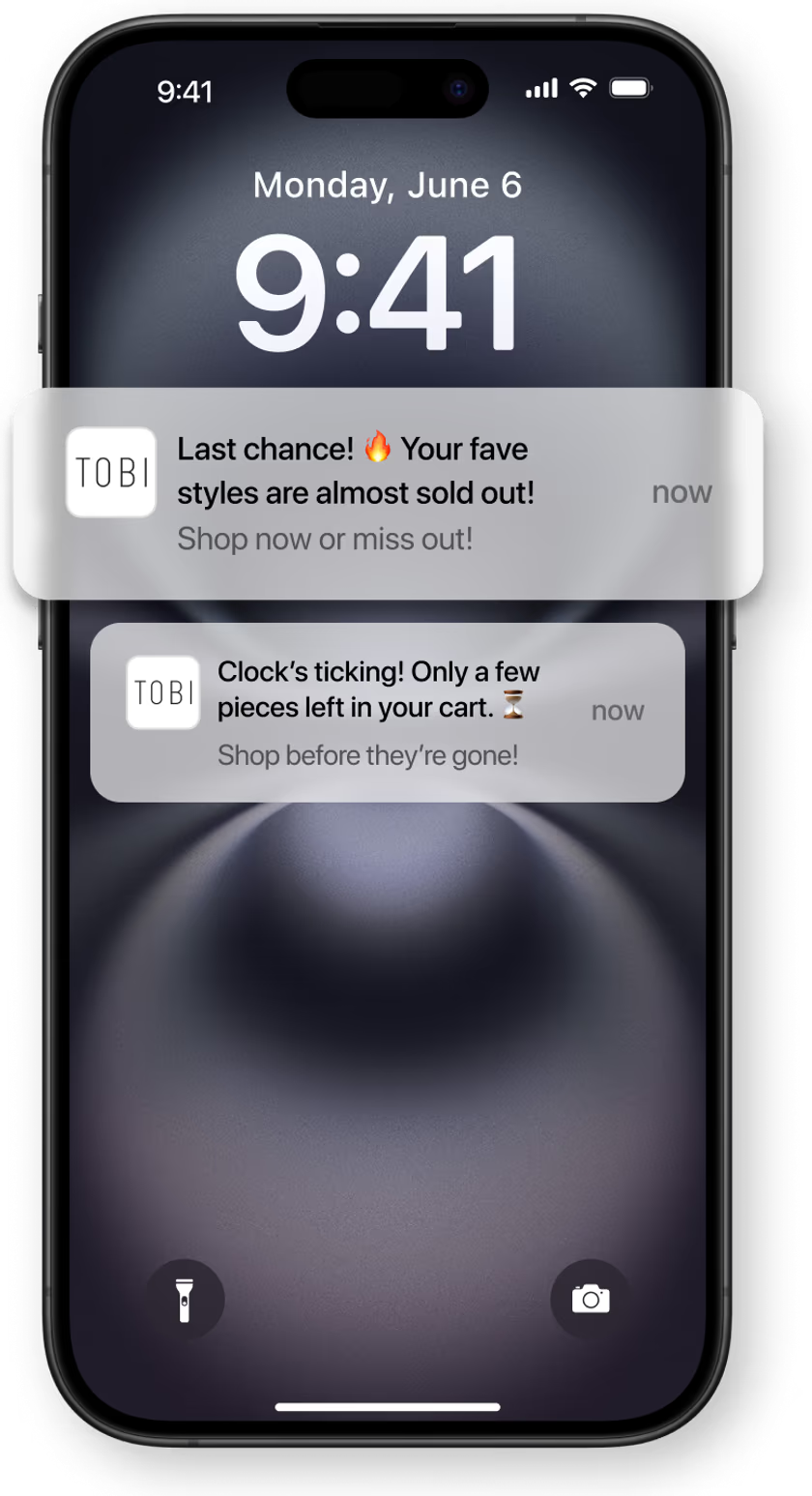
Send native push notifications, reaching your best customers instantly, for free, right on their lock screen.
A branded first-run screen that introduces the app, asks for push permission in context, and can open with a first-order offer.
Pages, promotions and pricing that exist only in the app. Run drops, early access and member perks for your VIPs.
Every link opens the right page in the app. Native Google, Apple and Facebook sign-in, using the accounts already on the phone.
App data flows into GA4, Firebase, Triple Whale and your ad platforms, so you have full visibility into your app’s impact.
Want to see it in action? We’ll build a free preview from your live store, so you can see what’s possible.
Get a free app previewA direct line to your VIPs
Apps self-select for your best customers, and bring them into a channel where buying is easier, and reaching them costs next to nothing.
Up to 7x
Higher conversion rates than mobile web
10-50%
Higher AOV
3-5x
Higher customer lifetime value
Email open rates keep falling, and SMS costs more with every send.
Push reaches your best customers instantly, on their lock screen, with no per-send cost, no carrier restrictions, no inbox filters, and minimal noise to compete with.
MobiLoud helps you unlock this channel and gain a competitive advantage over your competitors who struggle to reach their customers at the right time.
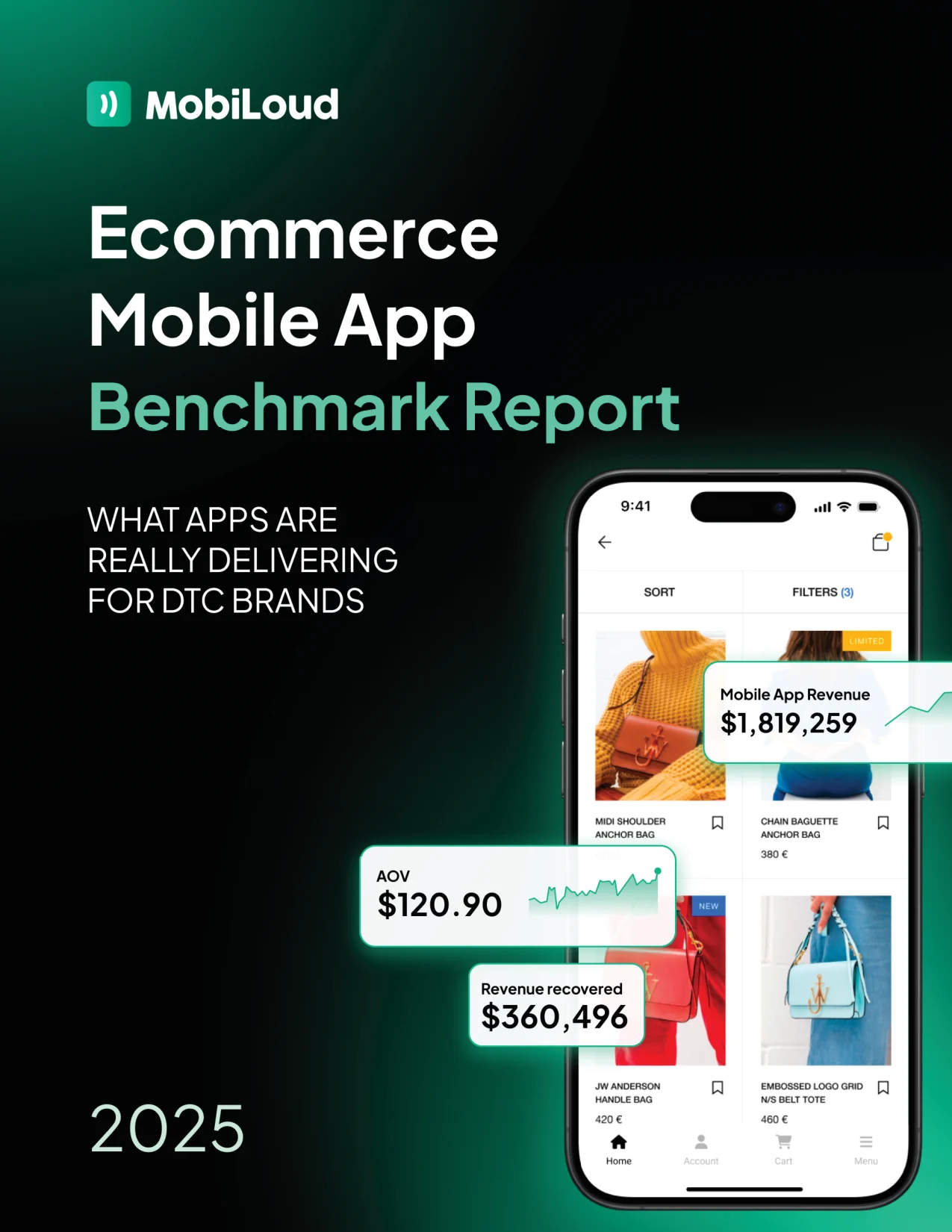
Ecommerce mobile app benchmarks
Our free report shows you what you can expect from a mobile app, with real case studies and industry benchmarks to aim for.
Download the free reportWhat makes MobiLoud different
Custom development and template app builders both give you a second storefront to build, merchandise and maintain. MobiLoud doesn’t. One codebase, powering web and app.
Custom mobile apps for ecommerce brands
MobiLoud doesn’t force you into a template, or make you pick and choose which features carry over to your app. If it works on your site, it’ll work in your app.
MobiLoud works with Shopify, Shopify Plus, BigCommerce, Adobe Commerce, Salesforce Commerce Cloud, and any other platform. Migrate to a new platform and your app comes with you.
Bring your existing checkout, including all the payment methods, tax and shipping rules, subscriptions, discount logic and any checkout extensions, into your app.
Reviews, loyalty, subscriptions, search, upsells and support. Everything installed on your store keeps working in your app, with no custom dev needed.
Theme code, custom sections and metafield-driven layouts all carry over to your app. You keep working with one theme, powering two unique channels.
Bespoke features, custom scripts and anything your developers built for your store run in the app, out of the box.
Build and manage app-only pages, offers and experiences in the CMS you already use. No second dashboard, and no separate place to publish.
Global brands can display multiple storefronts, currencies and languages in one app.
Full support for any B2B and wholesale pricing, workflows and features that work on your site.
Learn more about how we integrate with 5,000+ different ecommerce tools.
Get a free, working preview of your store as an iOS and Android app.
Get a free app previewRunning your ecommerce mobile app
Your team keeps working the same way, shipping everything through your existing workflows, while our team handles all the app-specific maintenance.
Your team
Handled by MobiLoud
The process
We help you bring your store to life as native mobile apps, in weeks, not months.
Days 1 to 7
Before anything is signed, we build a working iOS and Android preview from your live store. You evaluate your own app, not a deck.
Week 1
Onboarding call to agree configuration and the launch plan, plus access to your store and developer accounts. Security review runs in parallel if you need one.
Weeks 2 to 4
Native navigation and design tuned to your brand, push wired into your Klaviyo or OneSignal account, analytics into GA4 and Firebase. QA on real iOS and Android devices, then your sign-off.
Weeks 5 to 8
Submitted to the App Store and Google Play under your accounts. We manage both reviews, typically one to two weeks. Then the launch playbook goes live: smart banners, install prompts, an announcement to your list.
After launch
Our team handles all the app-specific maintenance needed after you go live, along with providing support and guidance to help you get the most out of your app channel.
Everything your legal, security and finance teams will ask for:
Already have an app? The same process applies, with the store listings migrated under your accounts so ratings, reviews and your installed base come with you.
The MobiLoud team knows what it takes to build successful mobile apps for online brands.
"We couldn't find another company that could offer the same features at the same price point, same time to market, and make it as easy as MobiLoud could."

Svend Hansen
Product Owner
"We wanted to give our loyal customers a convenient way to keep coming back and reach them directly with push notifications. Our app now drives 10% of our total revenue with minimal effort from our team."

Damien Smith
CEO of BoozeBud
"Your level of service is unmatched. You are always there when we need you, and go above and beyond to make sure everything runs smoothly for us."

Kenneth Chan
Founder & CEO

Still weighing it up? Get a free preview and see exactly what your app would do.
Get Your Free PreviewA custom native build can cost $250,000 to $800,000 a year through an agency, or $500,000 to $1M+ a year fully loaded for an in-house development team. MobiLoud starts at $1,499 a month with a one-time setup fee, which works out significantly more cost-effective than a custom app built from scratch.
With MobiLoud, it takes roughly 6 to 8 weeks from kickoff to both apps being live on the App Store and Google Play, including review and submission. A custom native build typically takes 6 to 12 months to reach version one.
MobiLoud works for any ecommerce platform: Shopify and Shopify Plus, BigCommerce, Adobe Commerce and Magento, WooCommerce, Salesforce Commerce Cloud, VTEX, Shopware, PrestaShop, headless builds and fully custom sites. All work the same way, because it’s your live site powering the app, not a platform’s API.
No. This is the main difference between MobiLoud and custom native development. A native build needs every product, price, promotion, cart rule and account behavior exposed through an API and then re-implemented on the mobile side. MobiLoud uses your live, existing storefront, so there are no APIs needed.
With MobiLoud, you get both iOS and Android binaries, but they’re always in sync. Because they both pull from your live website, you’re not juggling two separate platforms or making the same updates twice.
If your store is fast, your app will be too. Modern technology means there’s minimal difference in performance between an app powered by your website, and a fully custom app built from scratch. The better your store performs on the web, the better it will perform in your app, and MobiLoud’s approach to building it doesn’t add any meaningful lag or latency.
Push notifications get sent through a push notification provider, similar to an email marketing service. The app sends them through the device’s native delivery mechanism, which means there’s no carrier, algorithm or inbox filter to contend with. In MobiLoud apps, you can use OneSignal or Klaviyo to send native push notifications, with all the segmentation, scheduling and other tools you need to build and run push automations.
Yes. Apps powered by your website can be published to the app stores. The basic requirement is that they provide native capabilities beyond what your website does, and MobiLoud’s native layer does that. MobiLoud has successfully published over 2,000 apps since 2013, and handles the full submission and review process for you.
Yes. Switching to MobiLoud is a smooth process. The MobiLoud team builds new apps based on your current storefront, and ships them as an update to your existing app listing, which means your users don’t need to download a new app; they automatically receive the new version as soon as they update.
The apps are submitted under your own Apple Developer and Google Play Console accounts, so the listings, reviews, install base, analytics and customer relationships are all yours. MobiLoud retains IP in the platform and the code that builds the app. If you ever move to another solution, the listings, reviews and users stay with you.
Start with a 30-minute call about your website, your app ideas, and the business case. We’ll gather the details, then build a working preview to show you on a second call.
A working app preview. Built from your live site, so you see what your customers would see.
Your revenue model. What an app is worth on your traffic and your platform.
A concrete path to launch. Timeline, pricing, and what happens next.
Bring your questions and ideas for your app. 30 minutes, no commitment.

