
Medusa (often called MedusaJS) has become a popular choice for headless commerce because it gives developers real control over their ecommerce stack.
It separates your commerce backend from the storefront, which means you can build fast, customized shopping experiences using modern frameworks like Next.js, Gatsby, or Remix.
You probably chose Medusa for that exact reason: you wanted flexibility. You wanted to own your code, optimize performance, and create a unique customer experience.
But when it comes the time to launch a mobile app, that flexibility creates a challenge.
Because Medusa is a headless platform, it doesn't offer a mobile app by default. You’ll need to build a separate app using React Native or Swift, which adds a second codebase to your stack that requires its own maintenance and updates.
That's a lot of extra work. But here's the good news: you don't have to start from scratch.
You can take the work you've already done on your mobile web storefront and turn it into a polished native app without hiring mobile developers or managing a separate app codebase.
This guide will show you how to ship App Store-ready iOS and Android apps for your Medusa store in about 4 weeks, using the storefront you already built.
The Challenge: Why Headless Storefronts Make Mobile App Development Harder
Building a mobile app for a headless platform is harder because there’s no default storefront you can simply reuse for mobile.
With Medusa, your store is a set of APIs connected to a custom storefront that you built and maintain. To create a native app the traditional way, you have to recreate that storefront experience in a different environment.
Why DIY Builders Don’t Fit Medusa
Most drag-and-drop app builders are designed for specific platforms with fixed templates. They're not built for custom headless storefronts.
For a Medusa setup, that creates a problem. You either compromise your experience to fit their templates, or you end up needing custom development anyway to match your storefront, checkout, and integrations.
Either way, you're not saving much time or money.
Templates Still Mean a Rebuild
Medusa provides guidance for building a mobile app with React Native and Expo.
That sounds like a shortcut, but in practice, it's still a separate project you need to fully build out for your brand. Your UI, your checkout flow, your third-party integrations, your search experience. All of it needs to be rebuilt.
If you want a production-quality native app, you're still recreating features you already have working on the web.
The Cost of Two Storefronts
When you build a custom native app, you create a permanent maintenance burden.
Every time you update your site, you also need to update your app to match. You're effectively running two storefronts.
- High cost. Complex ecommerce apps can easily cost six figures once you factor in real requirements and ongoing maintenance.
- Long timeline. Recreating a custom storefront experience typically takes months, not weeks.
- Feature lag. Your app often falls behind your website because new features and campaigns need extra work to be ported over.
Why a Separate App Codebase Slows Medusa Brands
Building a custom iOS and Android app from scratch might make sense in a few edge cases, but for most Medusa stores, the bigger challenge is maintaining it long-term and keeping it aligned with the storefront.
The Plugin and Integration Workload
In the Medusa ecosystem, you rely on plugins and integrations for payments (Stripe), search, shipping, analytics, and more.
If you build a separate native app, you need mobile SDKs for each service and you need to wire them up in a second codebase. If a service doesn't have a solid mobile SDK, you're stuck.
With MobiLoud, your app uses the same storefront your customers already use on the web. Anything that already works in your Medusa frontend carries over into the app without rebuilding it.
Mobile Commerce is Too Big to Wait On
Mobile commerce is already measured in the hundreds of billions annually, and projections estimate US retail mobile commerce sales will approach $700 billion by 2026.
Spending 6-12 months building a separate app means delaying your ability to capture high-intent, high-LTV mobile shoppers.
Push Notifications that Drive Repeat Purchases
One of the biggest reasons to have an app is push notifications for campaigns and automations.
You can send targeted messages to users and run automated flows. The technical setup is handled for you so your app connects properly to Apple and Google's native push systems. The result is a direct channel to customers' phones that doesn't rely on inboxes or ad platforms.
The Solution: Build Your Medusa App with MobiLoud
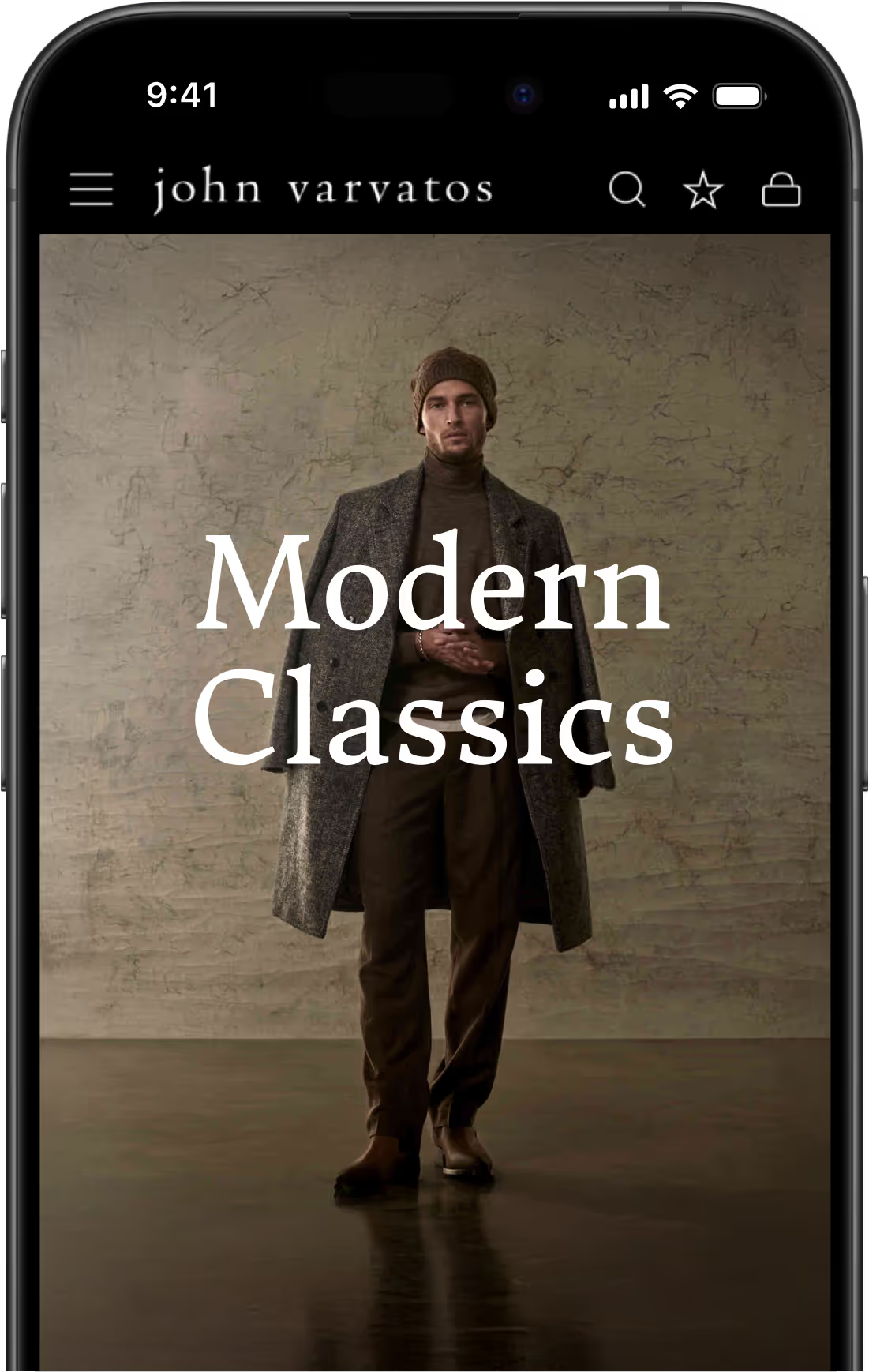
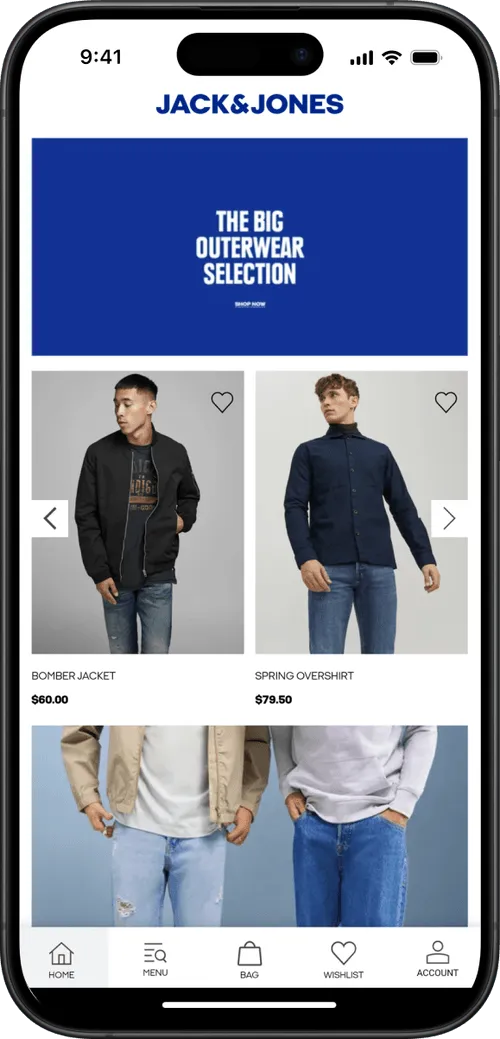
MobiLoud is a fully managed service that takes your existing, mobile-optimized storefront and turns it into native iOS and Android apps.
We don't touch your Medusa backend, and we don't ask you to rebuild your storefront. Your existing storefront becomes the foundation of the app, with native features added where they matter: navigation, push notifications, and app UI.
How It Works with Medusa
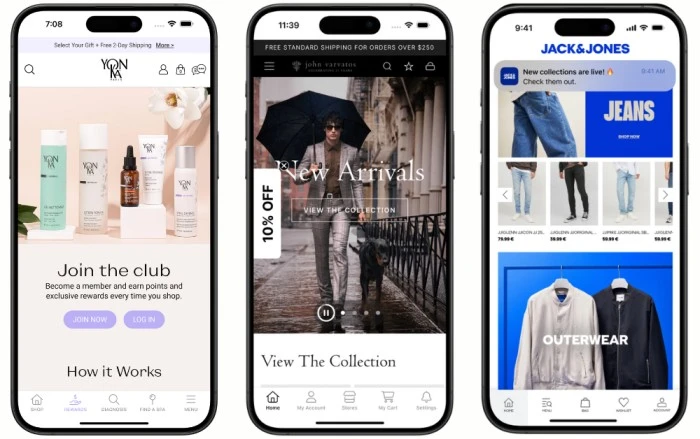
Since Medusa is backend-agnostic, your store is really your storefront application talking to the Medusa API. MobiLoud converts that storefront application into a native app experience.
- Real-time sync for storefront changes. When you deploy changes to your storefront (via Vercel, Netlify, etc.), those updates show up in the app without needing to resubmit a new app version for typical content and UX changes.
- Native app experience. MobiLoud adds native navigation (tab bars), splash screens, and native push notifications on top of your storefront.
- Feature parity by default. Your search, custom product flows, and checkout work out of the box because the app runs your existing storefront.
Ping Identity reports that headless commerce adopters have seen up to a 50% reduction in the time it takes to launch new digital experiences. MobiLoud extends that speed to mobile by letting you launch without a separate mobile build.
The Mobiloud Process: From Storefront to App Store
Turning your Medusa storefront into native iOS and Android apps doesn't mean rebuilding your frontend or hiring a mobile development team.
MobiLoud takes what you already have and handles everything for you.
1. Start With a Free App Preview
First, we create a preview based on your storefront and walk you through what the app experience would look like. You’ll see how your key flows translate to an app, like browsing, product pages, cart, checkout, and account.
This is also where we identify any app-specific needs, like authentication flows, redirects, or checkout behavior.
2. Branding and Navigation
Next, we configure your app based on your existing website. Your branding and content carry over automatically, and we add native navigation like tabs and menus to make the mobile experience feel natural.
We also make small adjustments to ensure everything feels fast, polished, and ready for an app environment.
The goal is a clean, app-quality experience that still runs on the storefront you already manage.
3. Build, Review, and Submit
We build the iOS and Android apps, test them across different devices, and prepare everything needed for the Apple App Store and Google Play.
We handle the submission process and work through any reviewer questions until your apps are approved.
4. Launch and Ongoing Support
Once your apps are live, we manage updates and maintenance going forward. That includes keeping up with iOS and Android changes and providing continued support for native features like push notifications.
Frequently Asked Questions
Does MobiLoud work with my custom Next.js storefront?
Yes. MobiLoud uses your storefront as the foundation, so it works with custom Medusa storefronts built with Next.js, Gatsby, Remix, Vue Storefront, and similar frameworks.
Can I use native device features?
Yes. MobiLoud includes essential native features like push notifications. Some additional native capabilities may be possible through custom integrations, but apps that need heavy use of device features like camera access or geolocation are usually better suited for fully custom native development.
How does checkout work?
Checkout runs inside the app using your existing storefront checkout flow. That means you keep your current payment providers (Stripe, PayPal, etc.) and the same compliance setup and integrations you already use on the web.
Ready to Launch Your Medusa App?
MobiLoud turns your Medusa storefront into polished iOS and Android apps without adding a separate mobile build to your roadmap.
You keep the same storefront experience you already have on the web: your product browsing, cart, checkout, and account flows all work the same way.
As your business grows and changes, your app stays in sync automatically. You're not maintaining two different versions of the same customer experience.
Your team stays focused on Medusa, your storefront, and growing your business. We handle the mobile app side.
Ready to see your Medusa store as a native app? Get a free app preview today, or book a consultation with one of our experts to discuss your specific needs and timeline.