Best AppMySite Alternatives: Top 5 App Builders for 2026
AppMySite is an affordable starter tool for simple WordPress, WooCommerce, and Shopify apps, but template-based builders can struggle with custom plugins and complex purchase flows. For established ecommerce brands ($1M+ revenue) that need full parity with their existing site, including integrations and checkout, MobiLoud is the better fit. Developers who want code-level control can choose AppPresser, while design-focused teams can use GoodBarber’s DIY builder with its own CMS.
AppMySite is an affordable starter tool for simple WordPress, WooCommerce, and Shopify apps, but template-based builders can struggle with custom plugins and complex purchase flows. For established ecommerce brands ($1M+ revenue) that need full parity with their existing site, including integrations and checkout, MobiLoud is the better fit. Developers who want code-level control can choose AppPresser, while design-focused teams can use GoodBarber’s DIY builder with its own CMS.
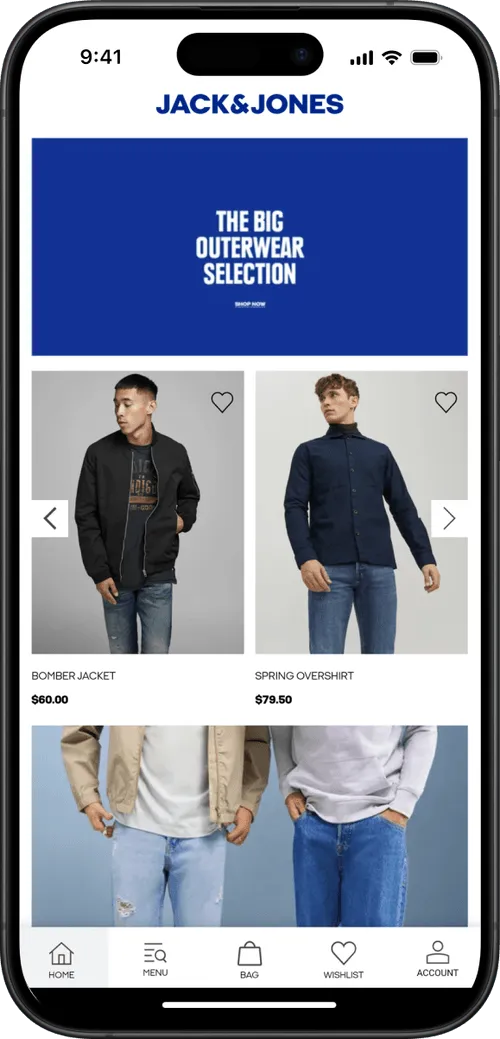
Many ecommerce founders start with a simple website, but as mobile traffic grows, the need for a dedicated app becomes clear. Tools like AppMySite promise an easy path to the App Store, and for basic needs, they deliver.
AppMySite has become a go-to choice for turning WordPress and WooCommerce sites into apps, and more recently it has added support for Shopify stores too.
For many small teams, that combination of affordability and convenience is compelling.
But with mobile commerce projected to reach nearly 60% of global ecommerce sales this year, a generic "lite" app isn't enough.
You need a channel that drives repeat purchases and higher revenue from your best customers.
The challenge with template-based builders is the "feature gap." You optimize your site with custom plugins and flows, only to find the app builder can't support them. You can end up choosing between preserving your tech stack and accepting a more limited app experience.
Here, we compare the top AppMySite alternatives for every stage of growth, from budget plugins to premium, fully managed services.
AppMySite Alternatives: At a Glance
Here’s a quick side-by-side look at how leading app builders compare. Use this overview to narrow down which option best fits your tech stack, budget, and internal resources before diving deeper into each tool.
Still on AppMySite but worried about plugin and checkout gaps? Compare it side-by-side with a no-compromise alternative in our MobiLoud vs AppMySite comparison.
Why Many Teams Outgrow Entry-Level App Builders
Entry-level app builders work well for basic content sites or standard stores, turning a simple feed into a native-feeling interface.
If you have a straightforward blog or a standard catalog and just want a basic branded presence in the app stores, they can be a great starting point.
As you scale, though, template- or block-based systems can start to feel limiting.
The big constraint is plugin and integration coverage. Because these tools rebuild your site with their own native layouts, they depend on specific integrations.
If you rely on sizing guides, advanced filters, booking forms, or other custom plugins and they aren’t supported, those features may not carry over into the app.
Common constraints teams run into include:
- Template Limits: You rebuild using the builder’s widgets instead of your own design system.
- Double Management: Banners, layouts, and promotions need to be updated separately in an app dashboard.
- Checkout Friction: Redirecting users to a browser for checkout can break the experience and hurt conversions.
- Integration Limits: If a plugin or third-party tool isn’t in the library, it often won’t be reflected in the app.
If you are looking for a mobile channel that drives real retention without asking you to compromise on features, it is time to consider the alternatives.
Ready to skip templates and ship a real app? See how MobiLoud can convert your existing site into native apps for iOS and Android without a rebuild or extra codebase to maintain.
Top 5 App Builders to Consider Next: Compared
Now that we’ve covered where entry-level builders fall short, it’s time to look at the leading alternatives.
1. MobiLoud
Best for: Established ecommerce brands ($1M+) that want complete parity (design, checkout, integrations) without rebuilding.
MobiLoud is built for brands that have outgrown template-based app builders and want a true no-compromise app.
Unlike DIY builders that make you recreate your store experience inside their widgets, MobiLoud turns your existing ecommerce site into native iOS and Android apps.
This difference matters. If it works on your site (your theme, checkout, subscriptions, search and filtering, analytics stack), it can work the same way in the app.
Why MobiLoud is the "No-Compromise" Upgrade
- 100% Feature Parity: We amplify your existing site, keeping all themes and logic.
- Fully Managed: We handle the build, submission, and maintenance.
- Unlimited Push: Send unlimited notifications. With open rates avg. 20%, it's a powerful retention lever.
- Always in Sync: Updates on your site reflect instantly in the app—your website remains the single source of truth.
- No Revenue Share: You keep what you earn, there are no percentage-of-revenue fees on top.
- Low Tech Debt: You avoid maintaining a separate app codebase; we handle OS updates and app store changes for you.
- App Store Approvals: We guide you through Apple and Google’s review processes so your app gets live and stays compliant.
For high-volume stores, this means better retention and 3x higher conversion rates without the agency price tag. Because app users are often your most engaged customers, the real win is higher revenue per user and stronger LTV, not just a single-session conversion lift.
Pros:
- Works with any plugin or theme.
- No "double management" of content.
- White-glove service (we do the heavy lifting).
Cons:
- Requires a functional mobile responsive site to start.
- Higher price point than DIY tools (but far less than agencies).
If you are tired of hearing "we don’t integrate with that plugin yet," MobiLoud is your answer.
2. AppPresser
Best for: WordPress developers and technical teams comfortable with Ionic/Angular.
AppPresser was one of the first "WordPress-to-App" solutions on the market, and it remains a strong choice for deeply technical users.
Unlike generic builders, AppPresser is built specifically for the WordPress ecosystem.
AppPresser is powerful for technical users, especially for BuddyPress or LearnDash sites where deeply integrated plugins are needed.
However, you still build the app using their layout builder and API. If a plugin isn't supported via their API integration, it won't render natively, leading to the same "feature gap" potential as AppMySite.
Pros:
- Deep integrations for BuddyPress and LearnDash.
- Visual customizer is powerful for those who know what they are doing.
- Good documentation for developers.
Cons:
- Complexity: It has a steep learning curve compared to AppMySite.
- Maintenance: You are responsible for building and updating the app; it is a DIY tool.
- Performance: Some pages can feel "heavy" if not optimized correctly.
For a deeper comparison, check out our guide on AppPresser alternatives
3. GoodBarber
Best for: Design-focused creators who want a beautiful app and don't mind a separate CMS.
GoodBarber is arguably the most beautiful DIY builder available. Its templates are sleek, native, and ideal for content-heavy apps like magazines or radios.
However, GoodBarber pulls content into its own CMS structure. You are essentially managing two platforms: your WordPress site and your GoodBarber app. This ensures a fast UI, but breaks connection to complex site functionality.
You can't easily run your specialized WooCommerce checkout inside the interface.
Pros:
- Stunning, design-forward templates.
- Excellent for content apps (magazines, radios).
- Progressive Web App (PWA) support is strong.
Cons:
- Separate CMS: Content sync can be buggy or limited.
- Plugin Limits: Very limited support for custom WordPress functionality.
- E-commerce Limitations: Not designed for complex retail stores with thousands of SKUs.
Read more in our GoodBarber comparison
4. WPMobile.App
Best for: Budget-conscious bloggers and solo entrepreneurs.
If price is your primary concern and you have a simple content blog, WPMobile.App is the most direct competitor to AppMySite's lower tiers. It is a straightforward plugin that you install on your WordPress site.
You pay a one-time license fee, making it attractive for small startups. It presents your mobile content inside an app shell and provides a basic menu.
However, it lacks advanced marketing tools, automated push flows, or white-glove support. It's a "what you see is what you get" tool, great for reading a blog, but often insufficient for complex ecommerce.
Pros:
- Affordable: One-time payment model.
- Simple: It lives right in your WP dashboard.
- Good Ratings: Popular within the WordPress repository for basic use.
Cons:
- Simple UI: The apps focus on getting your content into a basic app shell, without many advanced design options.
- Limited Support: Documentation is available, but you'll usually be responsible for solving most issues yourself.
- No Growth Features: Lacks the retention engines (smart push, analytics) of premium tools.
5. Custom Agency Development
Best for: Massive enterprises with unique hardware or AR needs (e.g., Ikea, Sephora).
Finally, the "dream" alternative is to hire an agency to build a fully custom native app from scratch (Swift for iOS, Kotlin for Android).
For most businesses, this path is hard to justify.
Agencies promise the world, but the reality is a heavy, often mid–five–figure-or-higher price tag and months of development. The real killer is maintenance: every iOS or plugin update can break your custom code.
This route only makes sense if you need features the web can't provide (AR, 3D gaming). For standard ecommerce, addressing cart abandonment is better solved with a managed solution than by reinventing the wheel.
Pros:
- Infinite flexibility (if you have the budget).
- Total ownership of code.
Cons:
- Extremely Expensive: High CapEx and OpEx.
- Slow: Months to launch.
- Tech Debt: You become a software company, not a retailer.
Final Thoughts
AppMySite serves a purpose. If you have a simple blog or a standard WooCommerce or Shopify store and just want "an app" to say you have one, it is a cost-effective choice.
But if your goal is to grow a serious mobile channel, one that retains customers, drives repeat purchases, and flawlessly executes your unique brand experience, many teams eventually hit the wall of template-based limitations.
MobiLoud is the alternative for when you possess a website you are proud of. We don't ask you to rebuild it; we give it the mobile home it deserves.
You get the power of custom development with the ease of a managed service, ensuring your app grows with your business, not against it.
When your best customers move into the app, they come back more often and buy more, increasing revenue per user and long-term LTV.
Ready to see your actual site running as a top-tier native app? Book a demo today and let's get you on the App Store.
Preguntas frecuentes

Convierte tu sitio web en una aplicación móvil