
Why we looked
We downloaded the shopping apps of 48 popular brands, turned notifications on, and saved every push they sent us: 249 in all. For 43 of them we kept watching for one to three weeks, long enough to see how often they send.
Why? To see how successful brands really use push notifications.
It’s underused partly because you need an app to send it. Web push has very low opt-in rates and isn’t very effective, and a lot of brands don’t realise you no longer need $100k+, or a dedicated development team, to have your own app.
It’s misunderstood because there’s no playbook for it yet, the way there is for email, SMS and social. With email and SMS it takes little thought to be at least average: your provider has ready-made flows for welcome messages, abandoned carts, Black Friday and more. With push, the playbook is still being written.
- Should it only be a direct-response channel?
- Should it be kept for urgent, time-sensitive messages?
- Are brands even scratching the surface of what it can do?
The best way to start understanding push is to see how brands use it today. The market is small: fewer than 5% of successful brands have an app at all, and not all of those use push, or use it well. But that still leaves plenty that do, and are almost certainly seeing a strong return.
So that’s where we looked: how many notifications they send, what kind, and how they approach push overall. What we found is below, followed by a starter kit for your own: a quickstart guide, 39 ready-to-use templates, and the full swipe file.
How often do leading brands send push?
Push frequency is a hotly debated topic, with a lot of conflicting advice.
The most common approach we see is brands afraid of sending too many. They’ve seen the stat that some share of people will turn notifications off if an app sends too many, so they rarely send at all, in case the next one is the one that pushes it too far.
But if you never send push notifications, you’re missing much of the point of having an app.
Other brands take a much more liberal view. Push costs nothing per message, so they get creative, and use it to stay top of mind.
So how often do brands send? Here’s the average we recorded for each app.
- 11 of 43 apps sent about one a day, or more
- 21 of 43 sent five or more a week
- 4.5 a week from the typical (median) app
- 24 a week from the busiest, Cider
| Cider | 24 |
|---|---|
| LAAM | 19.5 |
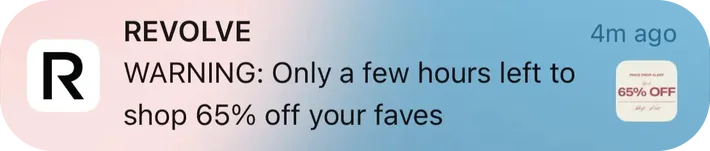
| Revolve | 14.5 |
| PatPat | 10 |
| Pretty Little Thing | 9 |
| Pushas | 9 |
| Mr Porter | 8 |
| Muscle Republic | 8 |
| JD Sports | 8 |
| Bo+Tee | 7.5 |
| NumberC | 7 |
| That's So Fetch | 6.5 |
| Forever 21 | 6.5 |
| LSKD | 6 |
| I Love Ugly | 6 |
| Posh Peanut | 5.5 |
| Motel Rocks | 5.5 |
| New Era | 5 |
| Free People | 5 |
| REI Co-op | 5 |
| Lewkin | 5 |
| Primally Pure | 4.5 |
| Cettire | 4.5 |
| Nu Harvest | 4.5 |
| ASOS | 4 |
| Farfetch | 4 |
| Caden Lane | 4 |
| Alo Yoga | 3.5 |
| Kyte Baby | 3.5 |
| Naked Nutrition | 3.5 |
| Tobi | 3 |
| David Jones | 3 |
| Sephora | 2 |
| Obvi | 2 |
| The Pants Store | 2 |
| Muscle Nation | 2 |
| Kiokii | 2 |
| Gymshark | 1.5 |
| Simple Modern | 1.5 |
| Adidas | 1 |
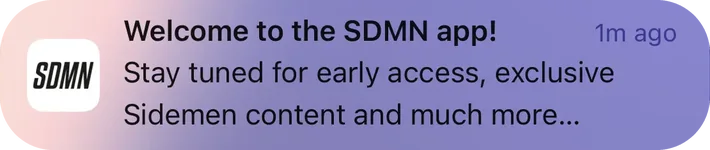
| SDMN | 1 |
| Sportsfuel | 1 |
| Gym + Coffee | 1 |
The takeaways:
- About a quarter of the apps sent a notification a day, or more.
- Almost half sent five or more a week.
- Two, Cider and LAAM, sent roughly three a day.
- From what we saw, three to six a week is the sweet spot for most brands.
Breaking down their strategies
We can’t just say “send three to six push notifications a week” and leave it at that.
What you send matters as much as how often, and this is where most brands get stuck.
Messaging someone three times a week to say “buy this, please” gets tiresome. Messaging them three times a day with real value may be completely welcome.
It’s all about context. So here it is: 22 of the brands we followed, with notifications they sent us and our read of each strategy.
Alo Yoga
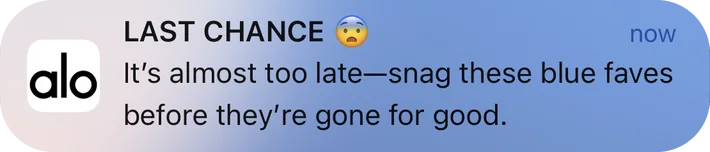

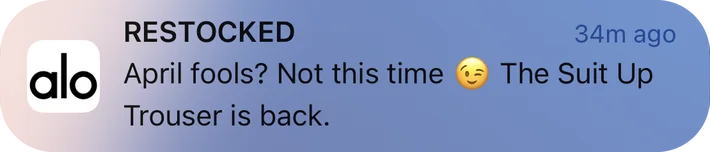
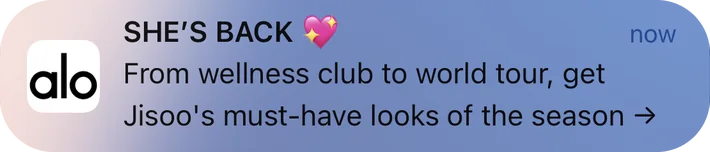
Alo Yoga doesn’t go heavy on push, but it sends just enough to make sure it won’t be forgotten: a mix of trending products, limited-time deals, restocks and recommendations. Not too pushy, and with just enough left out to make the reader curious.
ASOS
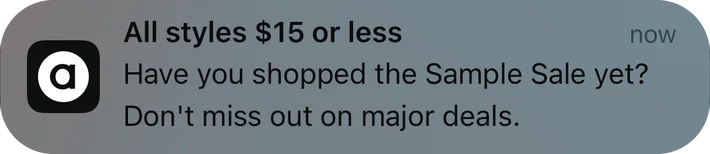
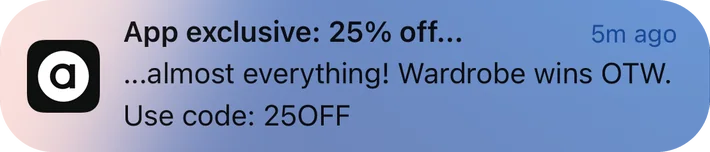
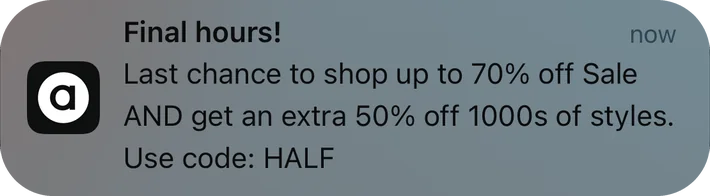
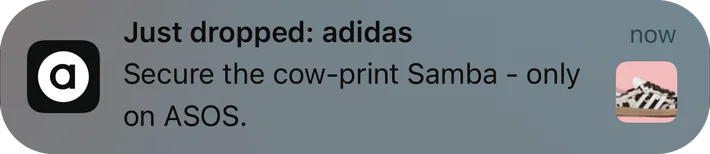
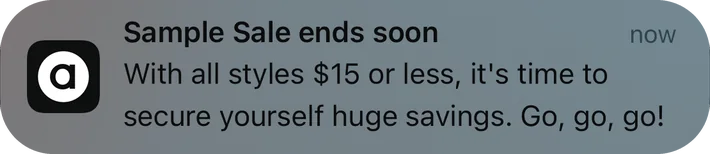
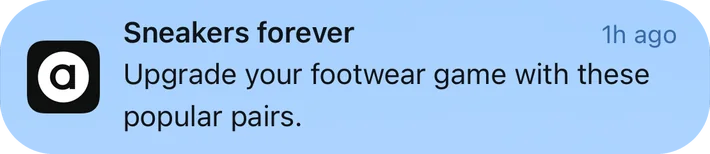
ASOS runs a textbook “promo-first” program: aggressive discounts, tight urgency windows, and the occasional hype drop to keep fashion-savvy shoppers opening the app. The aim is revenue, while keeping the brand on the lock screen and building a habit. It’s a common approach for fast fashion retailers.
Bo+Tee
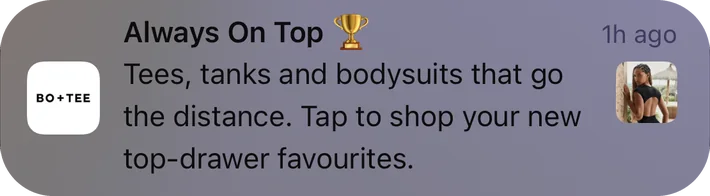
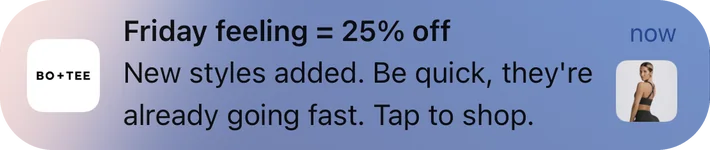
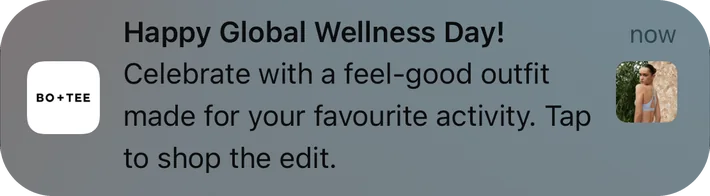
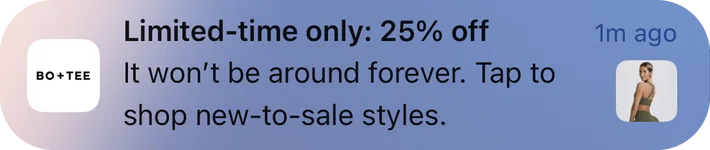
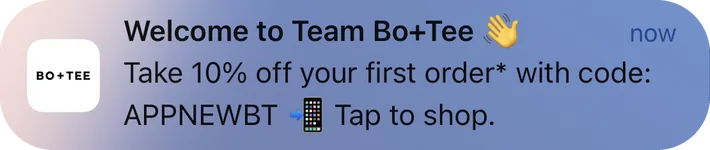
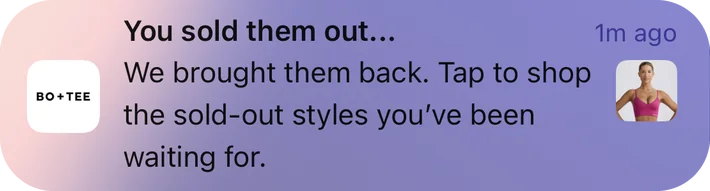
Bo+Tee runs a well-rounded program: an app welcome discount, timely restock alerts, calendar hooks and evergreen range spotlights. The images that come with its notifications give them a little more room on the lock screen.
Caden Lane
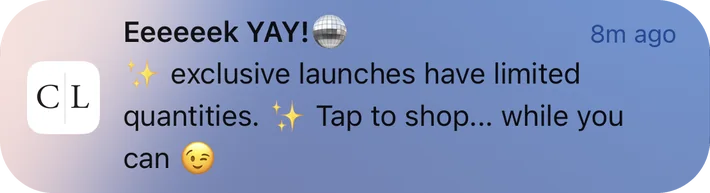
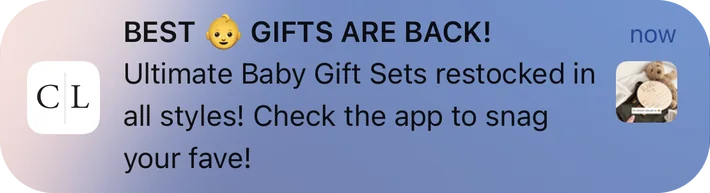
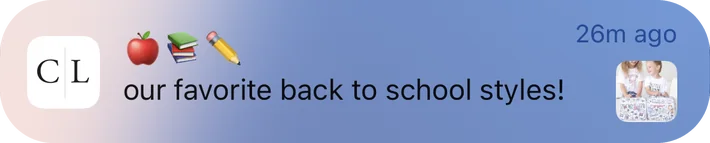


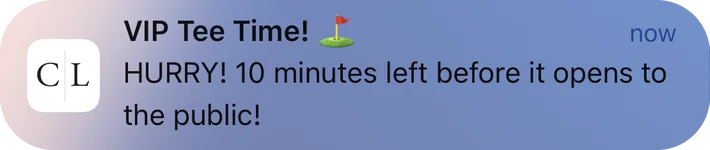
Caden Lane sends VIP-centred hype cycles and emoji-rich mini-events that read like texts from a fellow mum. It doesn’t force engagement with discounts; its nudges are unintrusive, keep the brand top of mind, and give people a reason to open the app.
Cider
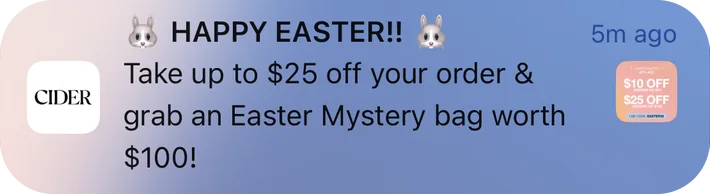
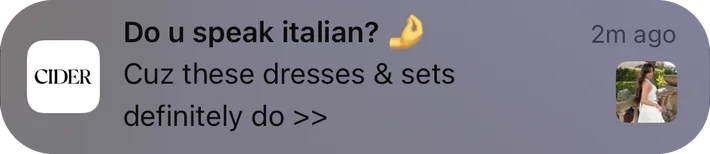

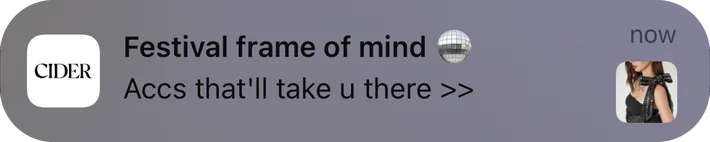
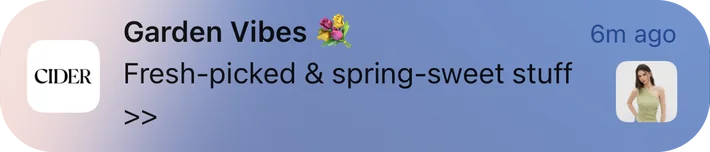
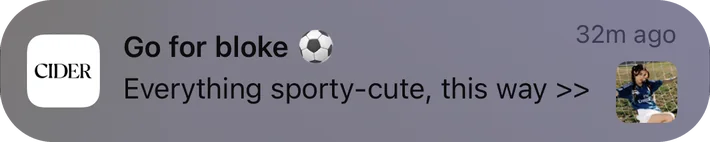
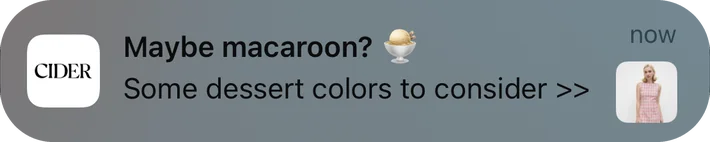
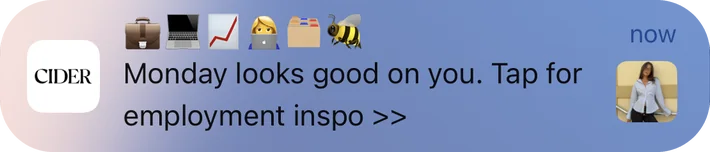
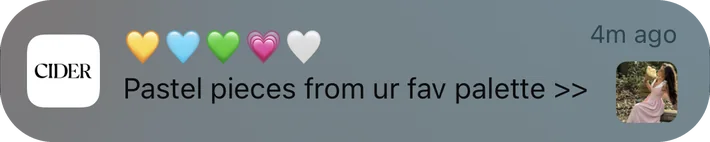

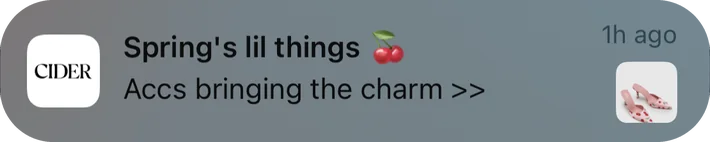
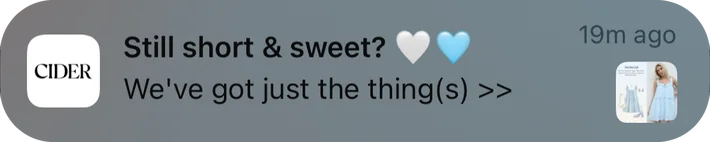
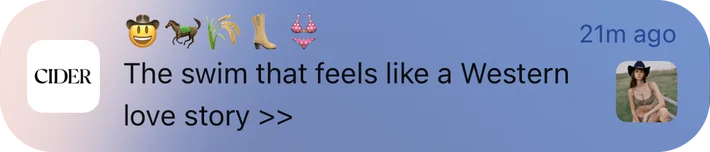
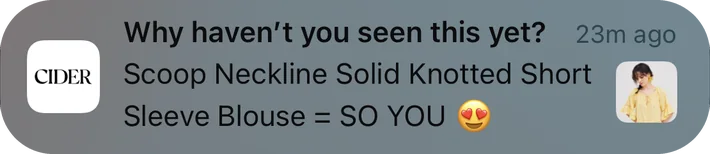
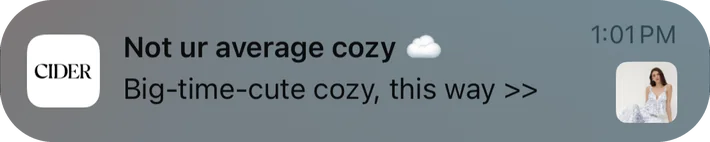
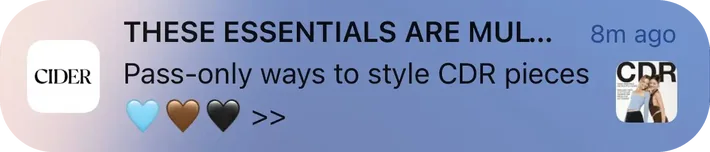
Cider’s push is Instagram Stories on the lock screen: rapid-fire, emoji-saturated mood boards that nudge Gen-Z shoppers to “just browse.” The focus is brand building, with few discounts and a lot of notifications, taking advantage of how cheap and unintrusive push is. One week it sent 31, and every one came with an image.
Farfetch
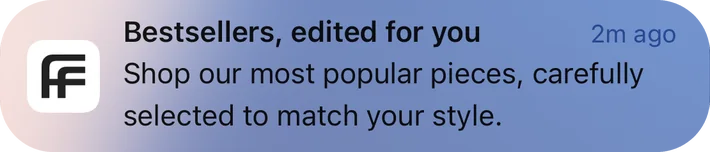
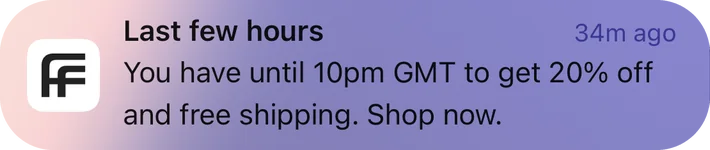
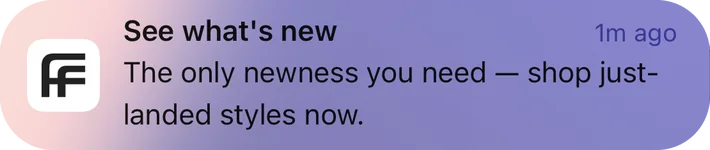
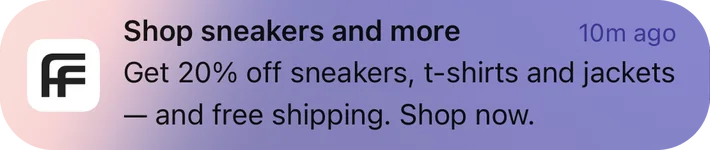
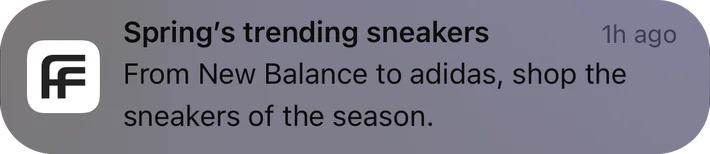
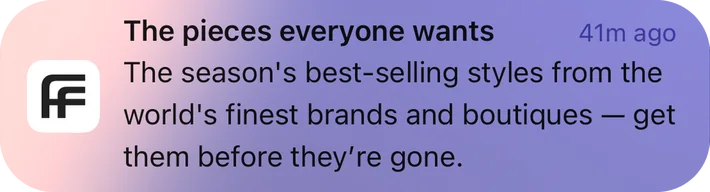
Farfetch sits between ASOS’s discount urgency and Cider’s vibe-led discovery. There’s some discounting, but a lot of soft nudges that keep it visible and drive engagement at little cost.
Gymshark
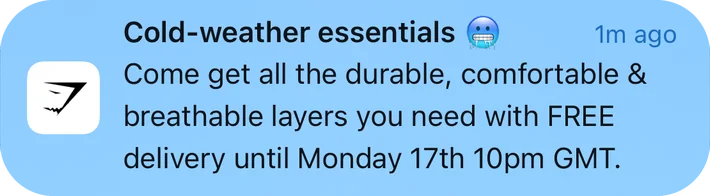
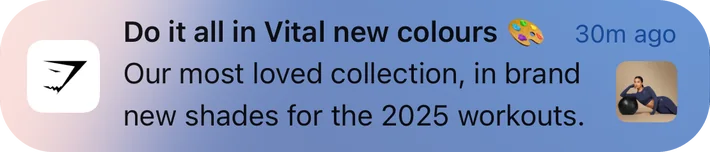
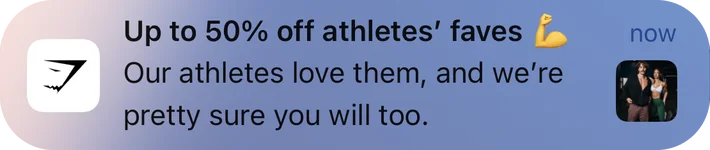
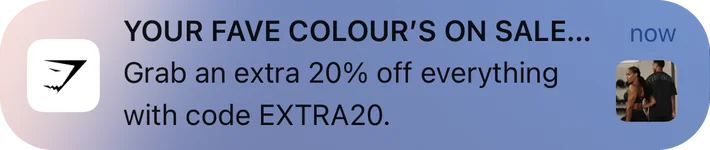
For a major brand, Gymshark does surprisingly little with push: the odd promotion and engagement nudge, and just three notifications in two weeks. One theory is that it doesn’t need to drive awareness the way smaller brands do.
JD Sports
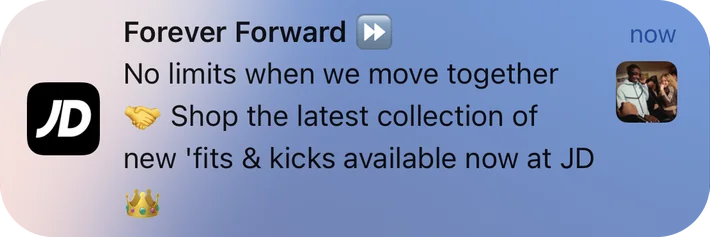
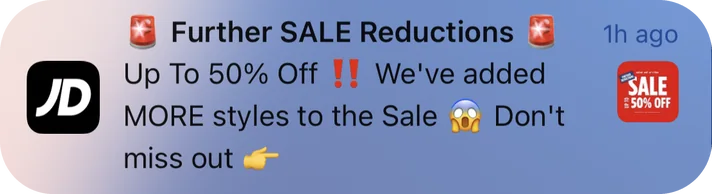
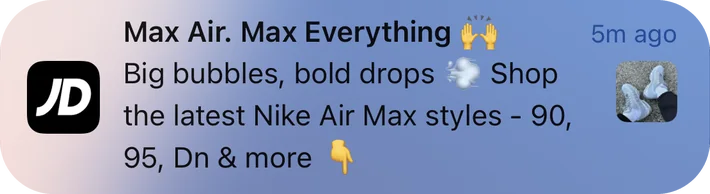
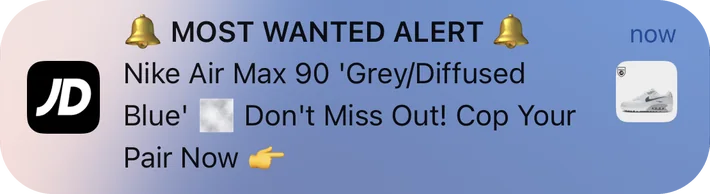
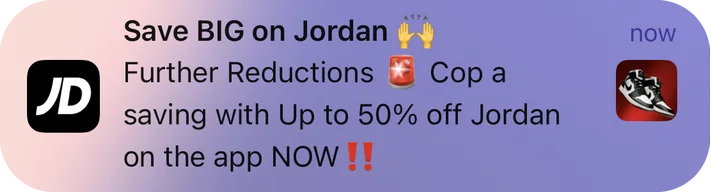
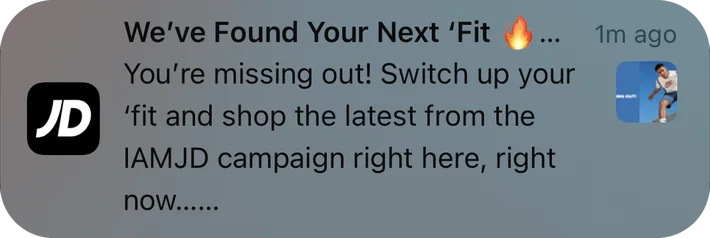
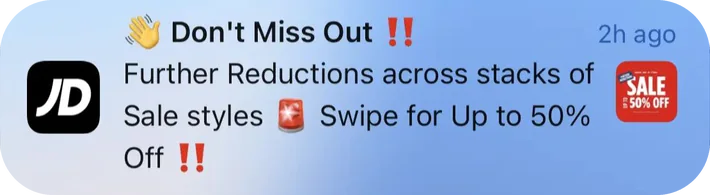
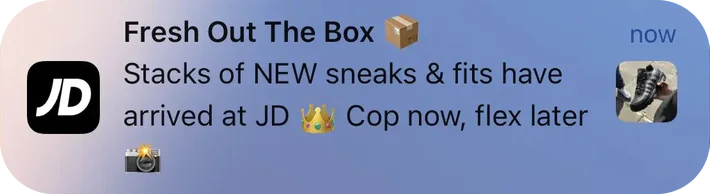
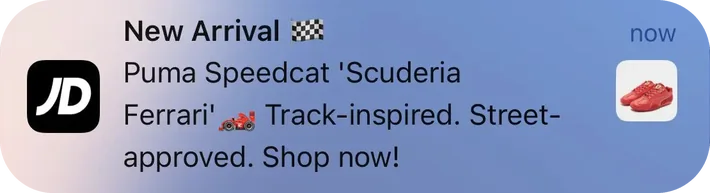
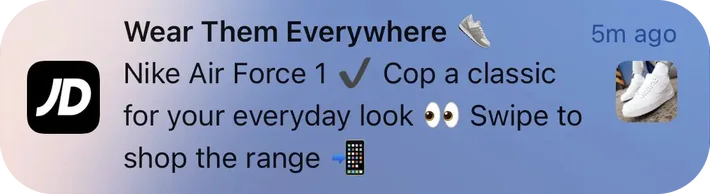
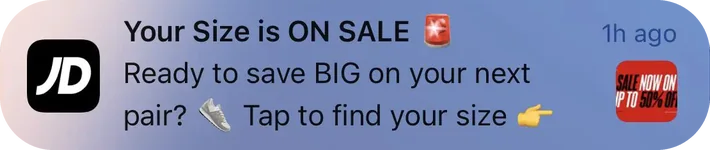
JD Sports is all-in on push, at roughly one notification a day: lots of emojis, an image with every message, and a mix of discounts, drop alerts and product recommendations. The emojis, attention-grabbing copy and urgency make it feel more intrusive, but they also make sure JD isn’t forgotten.
LAAM
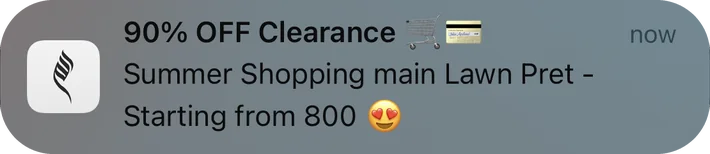
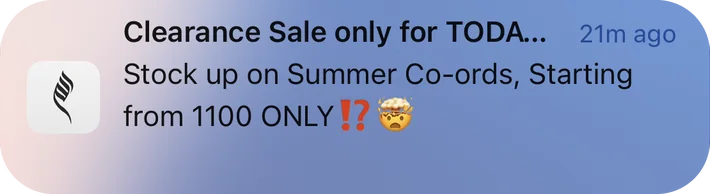
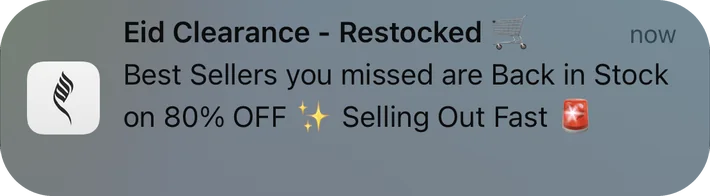
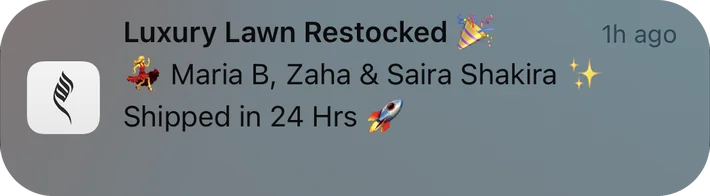
LAAM runs a discount-dominated, urgency-driven program at extremely high frequency: 39 notifications in two weeks. The focus is engagement and awareness at all costs. It would be interesting to see its opt-in rate, and how people respond to that pace.
LSKD
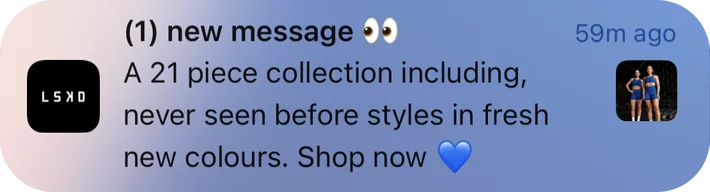
![LSKD push notification: [ALERT]. Online Warehouse Sale is live now on Iskd.co.](/reports/push/swipe/lskd-7.webp)
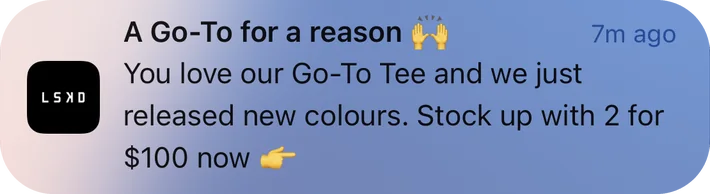
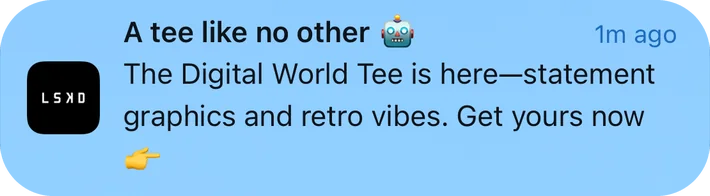
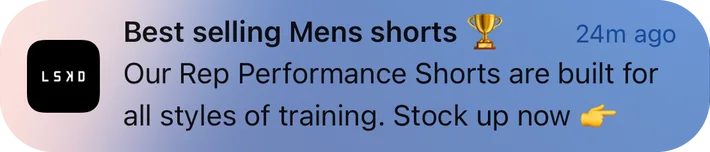
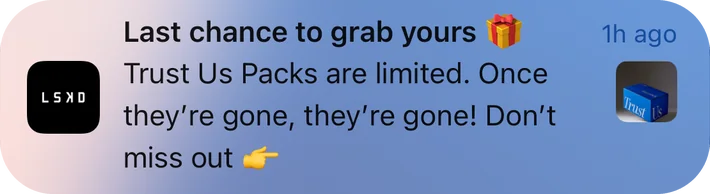
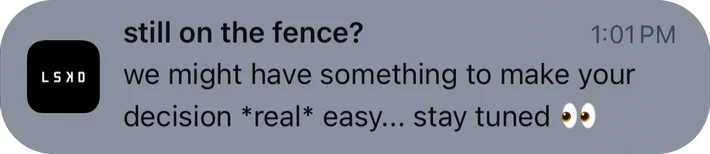
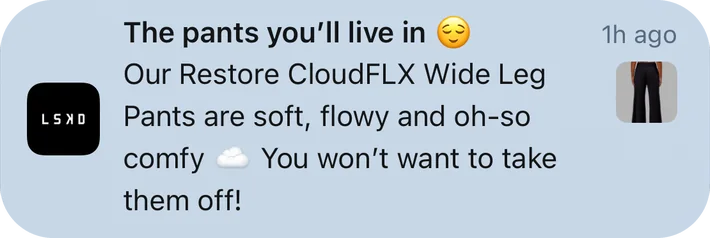
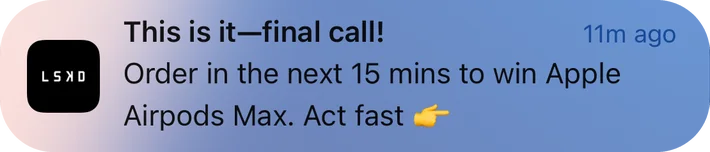
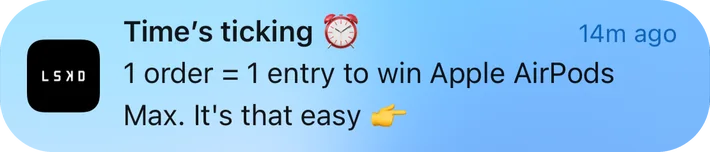
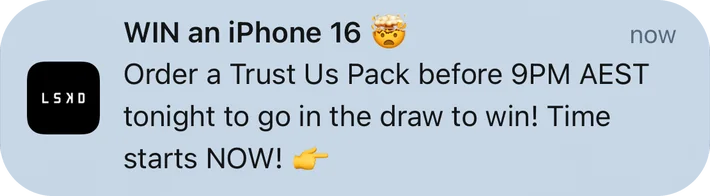
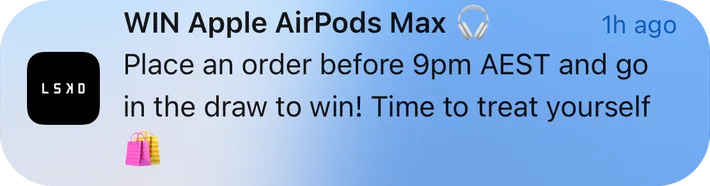
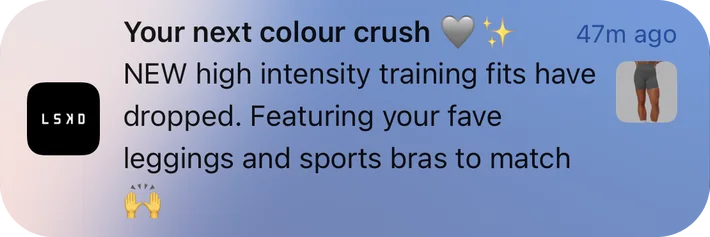
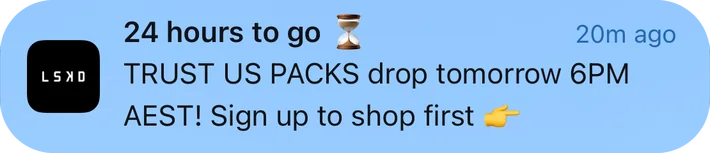
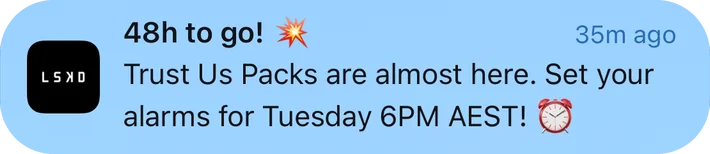
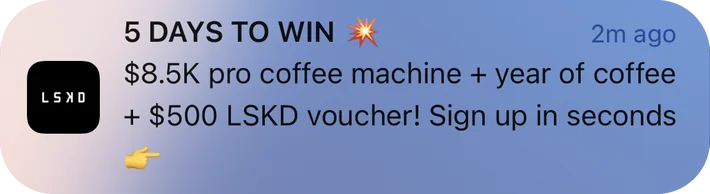
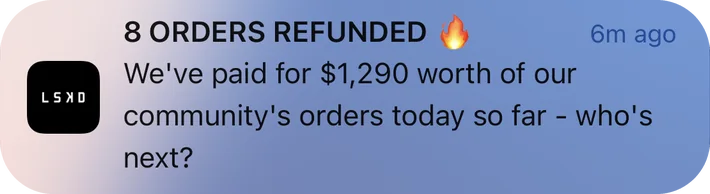
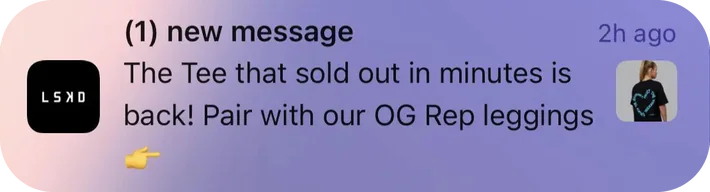
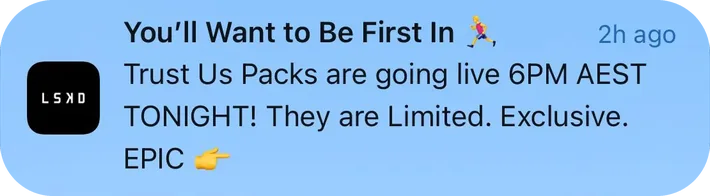
LSKD’s push is event-driven and powered by FOMO. Rather than leaning on discounts, it stacks scarcity, countdowns and giveaways to spark quick action, close to once a day, in a light, conversational voice that suits an athletic lifestyle brand.
Motel Rocks
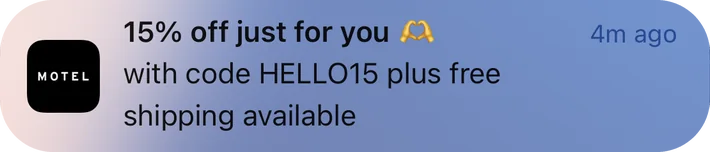
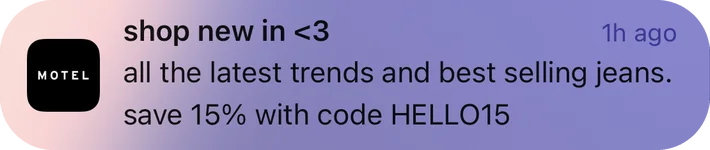
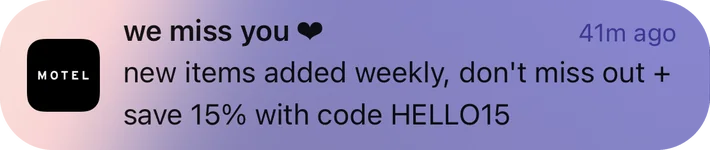
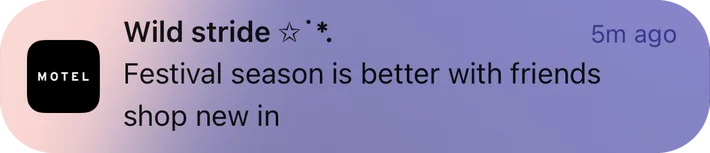
Motel Rocks relies on quick, simple messages: a welcome sequence built around one 15% code, trending product recommendations, and a low-key tone that fits the brand. At five to six a week, it’s right in the sweet spot for frequency.
Mr Porter
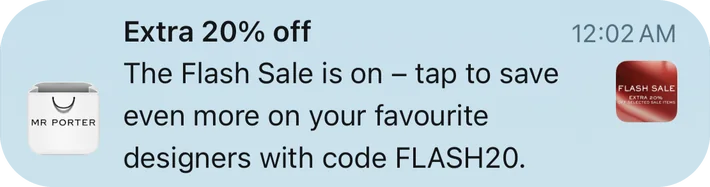
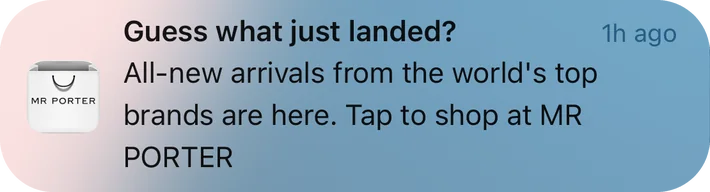
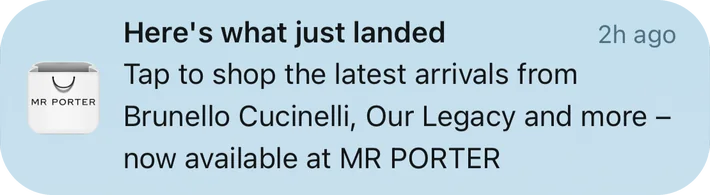
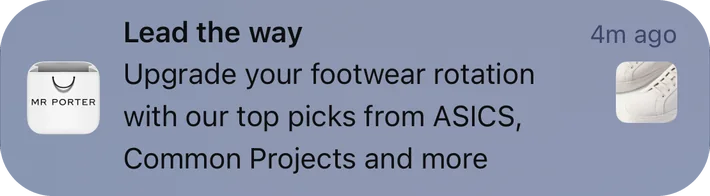
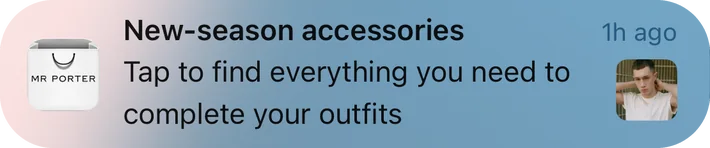
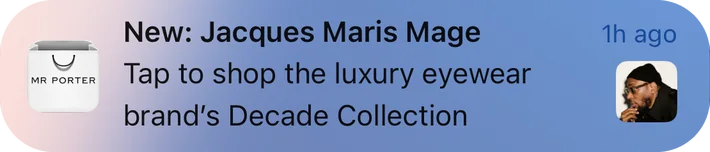
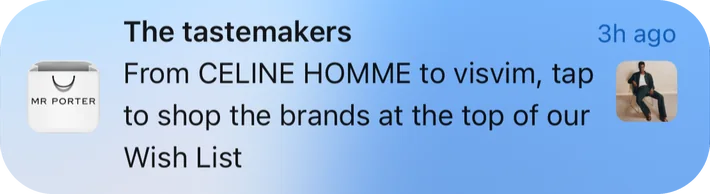
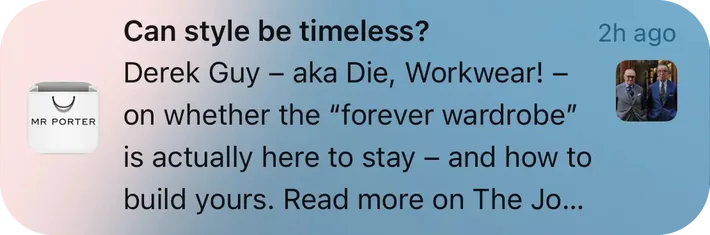
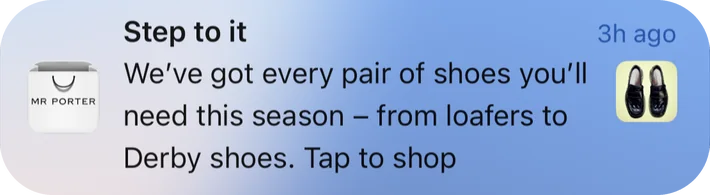
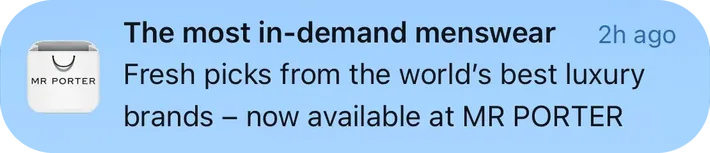
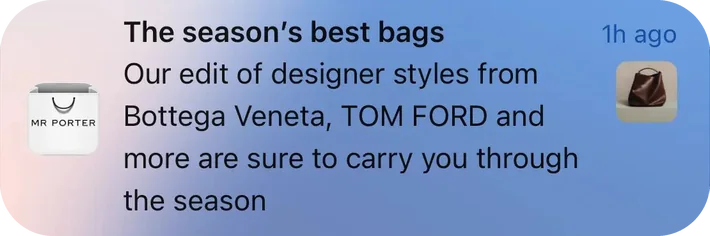
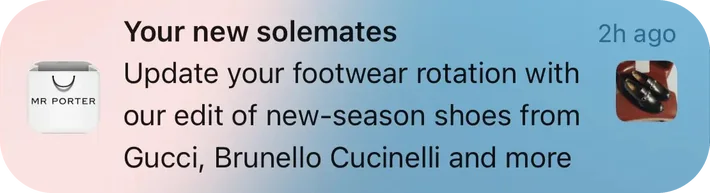
Mr Porter treats push as a digital storefront, with fresh recommendations every day to get customers opening the app and looking around: new arrivals, edits, trending products and the odd flash sale, a little over once a day.
Muscle Republic
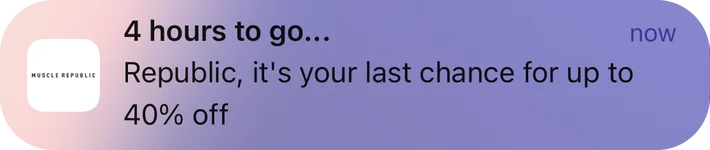
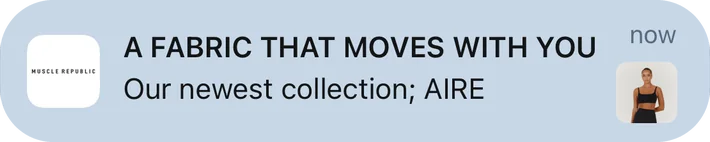

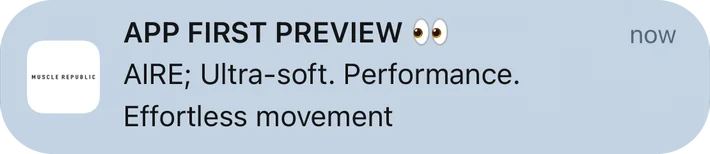

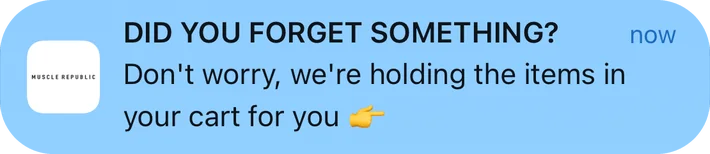
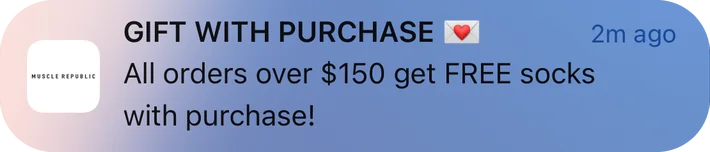
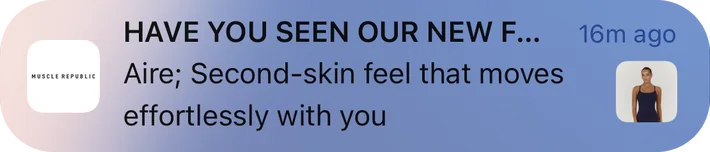

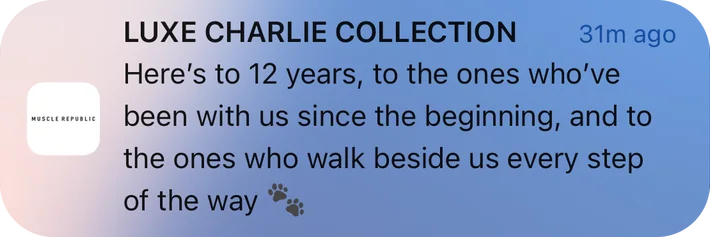
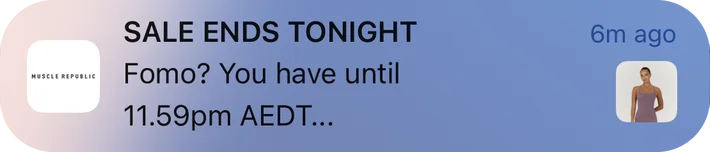
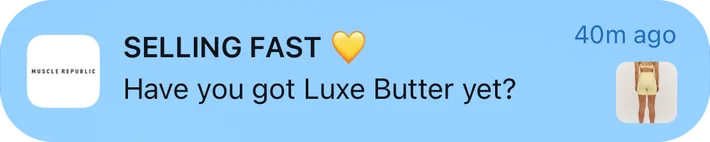
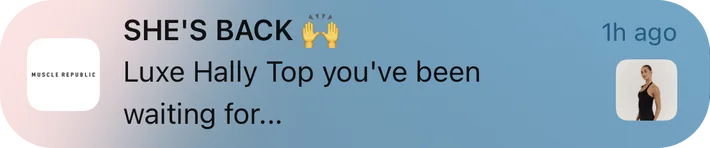
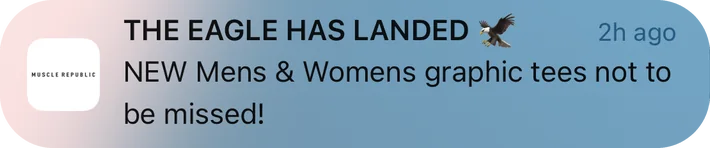
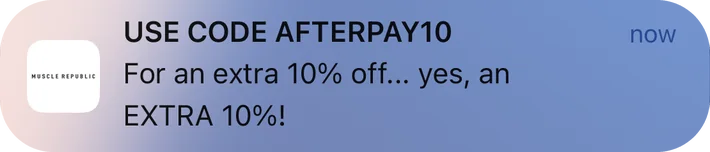
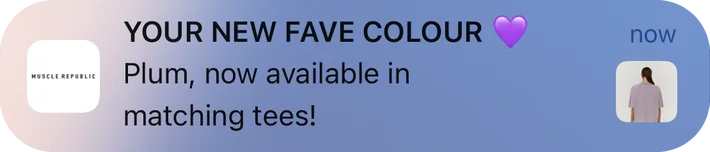
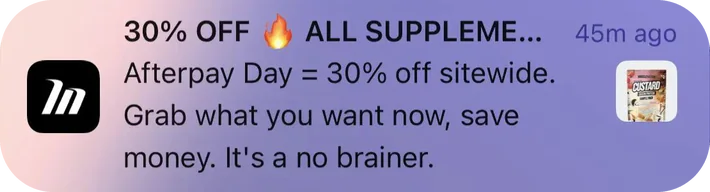
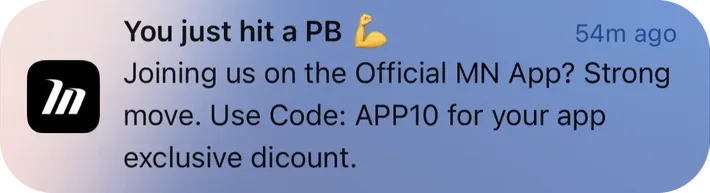
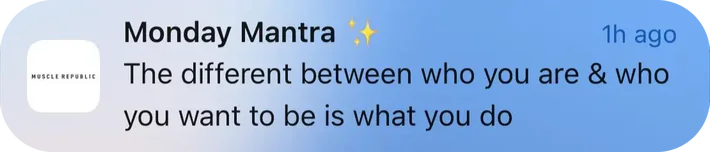
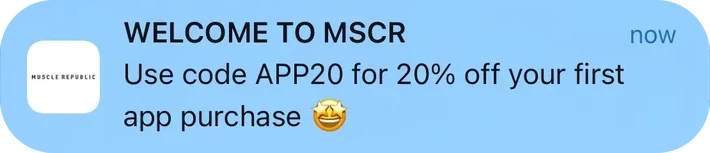
Muscle Republic combines flash-sale blitzes, product-drop hype, cart recovery, welcome incentives, scarcity nudges and even motivational content to keep its feed lively.
Headlines are punchy, often use emojis and are nearly always action-oriented, while rich-push thumbnails add visual context. A daily pace keeps the brand top of mind.
Naked Nutrition
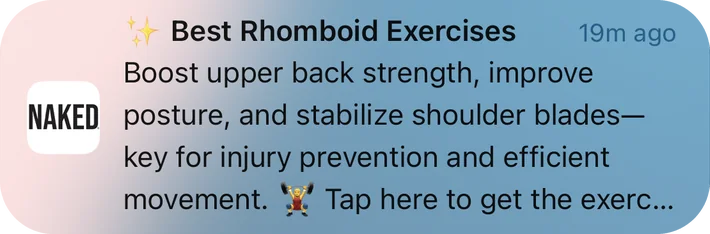
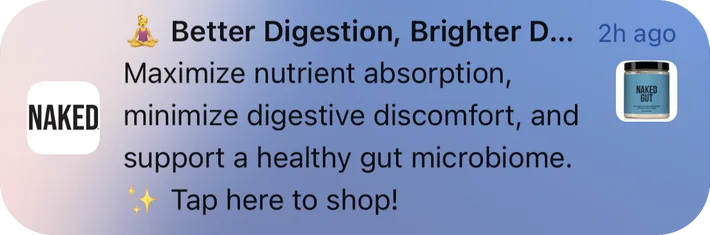
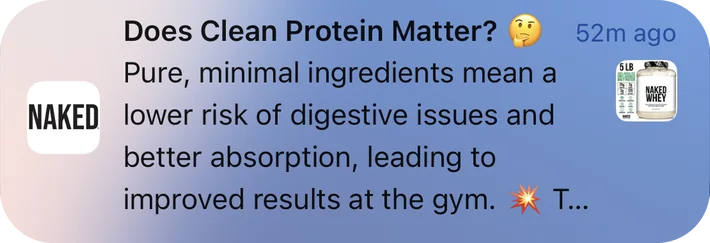
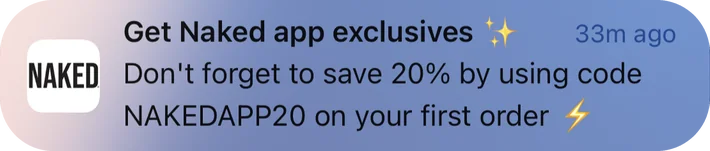
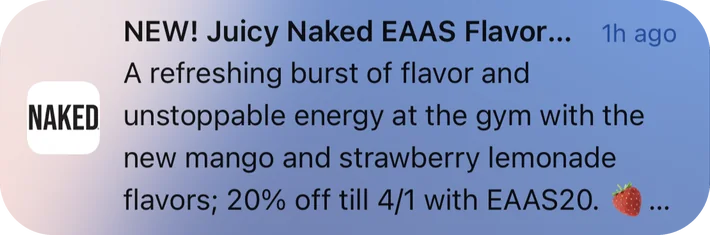
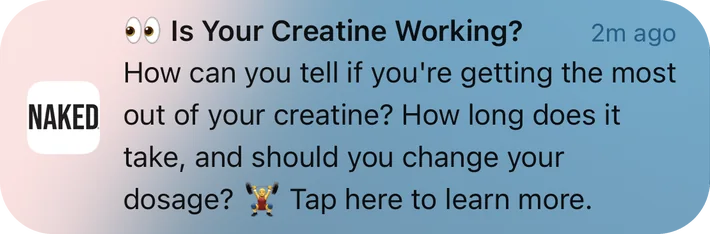
Naked Nutrition uses push for new product and flavour drops, with the odd flash sale. In between it sends educational content, which positions it as an authority on clean supplements and gives people a reason to open the app that isn’t a sale.
Its copy is longer and calmer than Nu Harvest’s, but keeps the ingredients that prompt action.
Nu Harvest
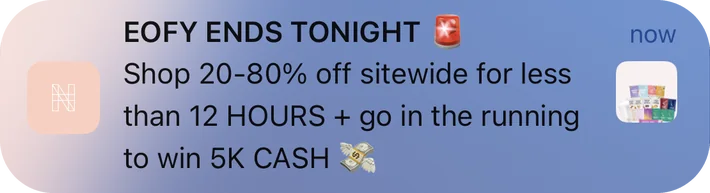
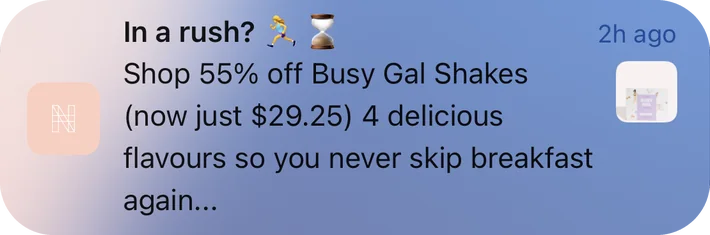
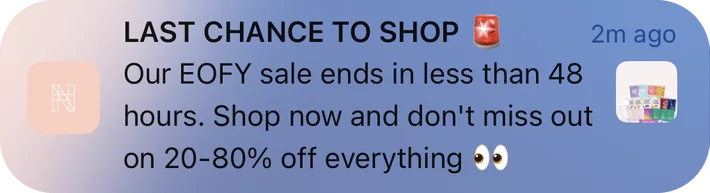
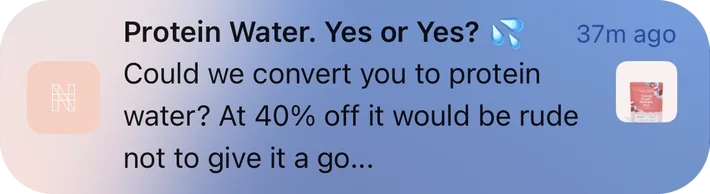
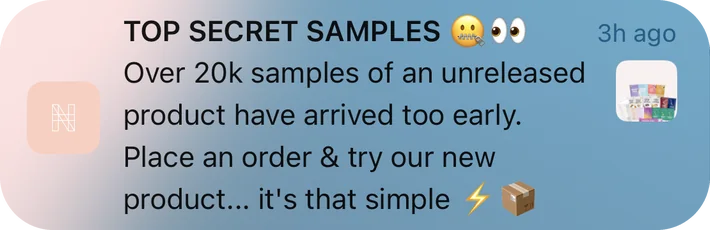
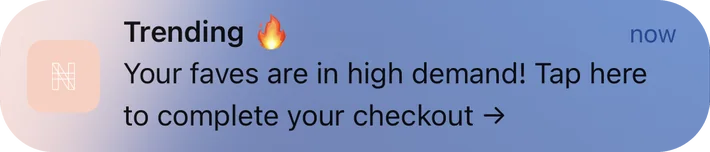
Nu Harvest mixes it up well with trending products, flash sales and new product drops. Every message has an emoji and most have an image. The copy is very conversion-focused, so push here looks like a revenue driver rather than an awareness play.
Obvi
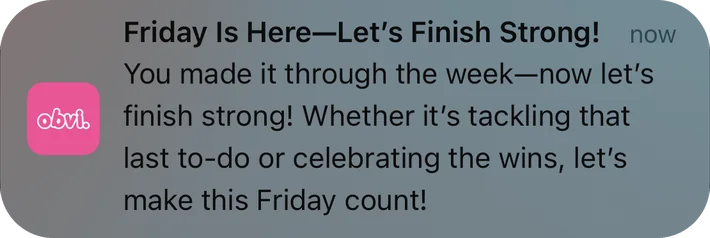
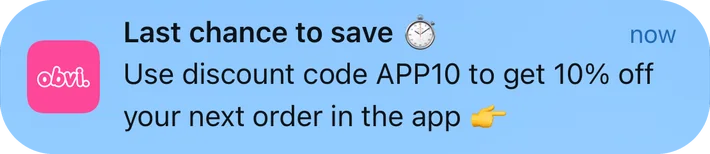
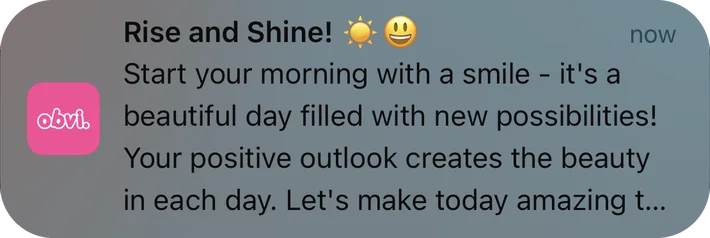
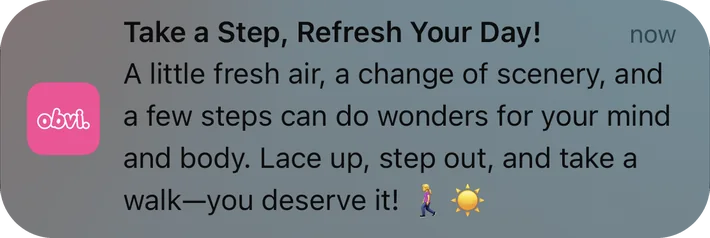
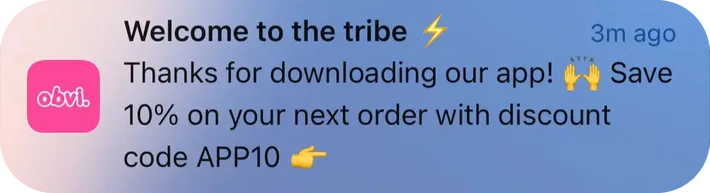
Obvi doesn’t treat push purely as a direct marketing channel. The app sends positive, on-brand motivation with zero sell. Those messages aren’t meant to drive instant sales but to make the brand a fixture in the customer’s mind, for long-term engagement and for the in-store sales that familiarity brings.
The one miss is a welcome message that’s almost word for word the same as Art of Tea’s, likely the push platform’s stock copy.
Pretty Little Thing
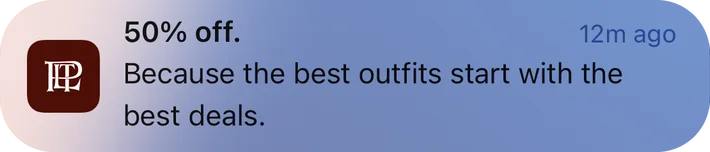
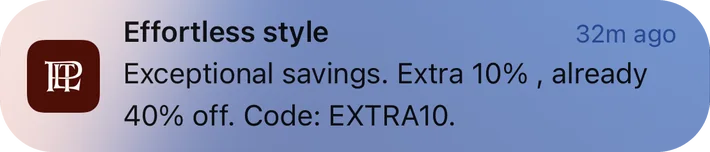
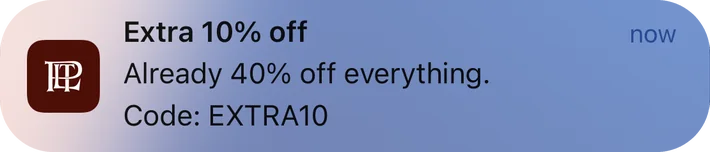


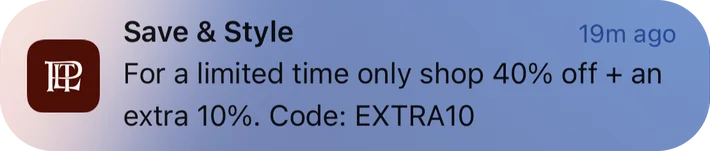
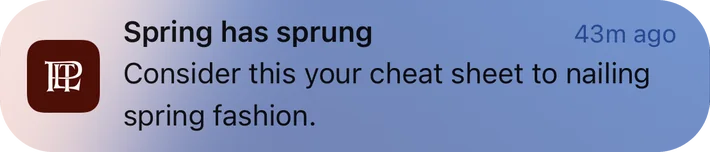
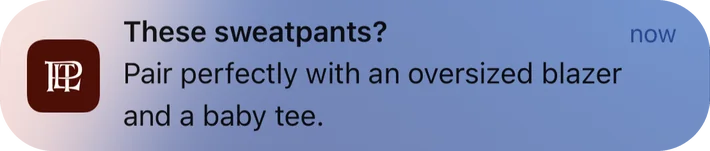


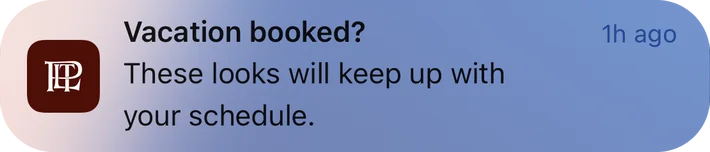

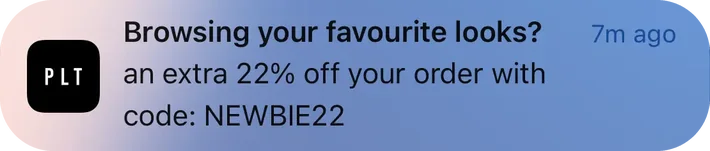
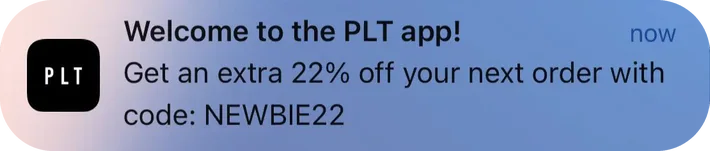
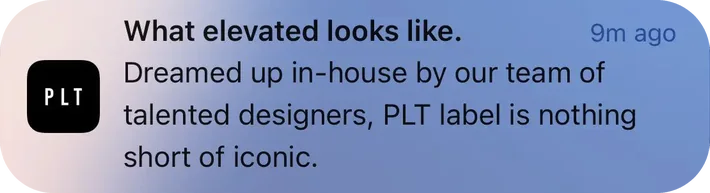
Like ASOS, fast fashion suits rapid-fire push. PLT sends more than one a day in a minimalist style: no emojis, no rich media. Some discounts, some new drops or seasonal lines, some simple nudges. The goal is awareness and habit rather than a high conversion rate on every message.
Pushas
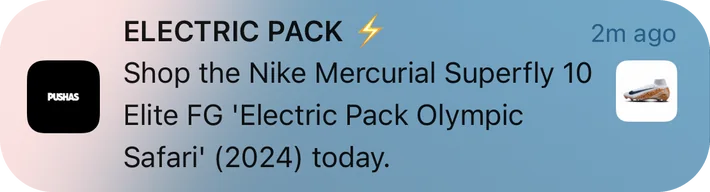
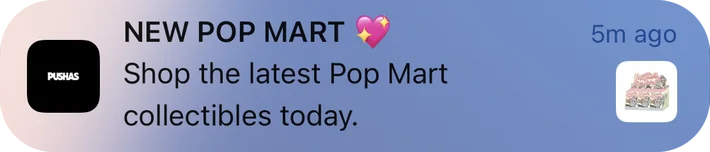
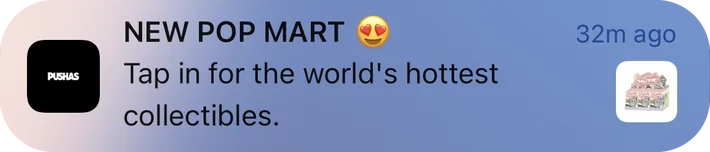
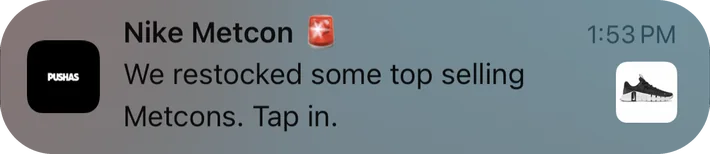
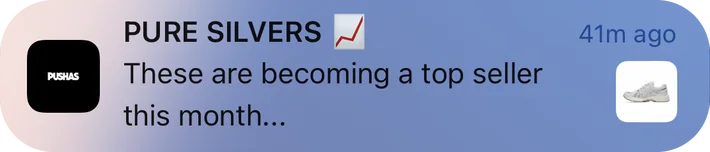
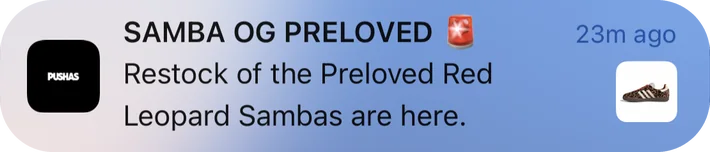
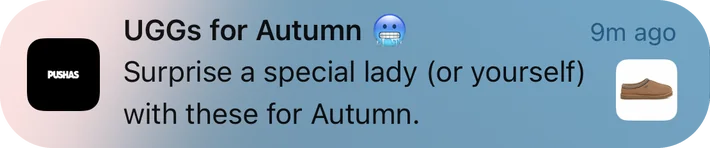

Pushas sends image-rich, hype-laden restock and drop alerts in rapid bursts, with streetwear slang, all-caps product names and exact product thumbnails to mobilise sneaker hunters.
It’s on-brand and uncomplicated. At more than one a day, not every push needs to land: if just one in ten leads to a visit, app users will shop around four times a month.
REI Co-op
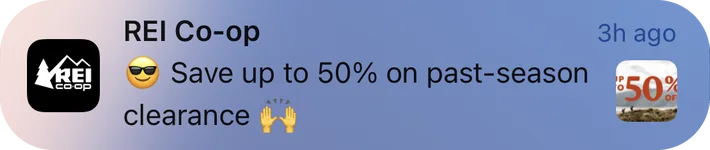
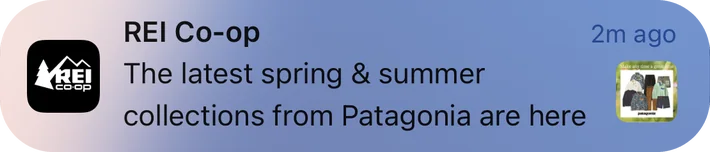
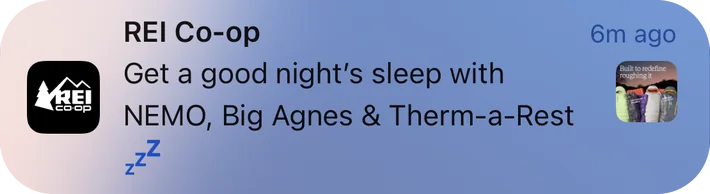
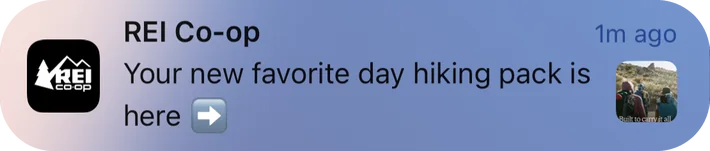
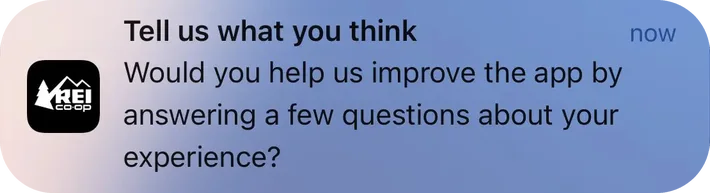
REI’s push feels purpose-driven. Every message has an emoji and an image to catch the eye, with some sales and some recommendations. It isn’t intrusive, the pace is steady at five a week, and the notifications feel well aligned with the brand.
Sephora
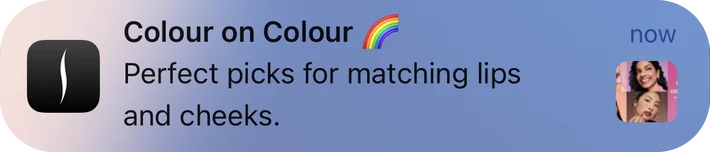
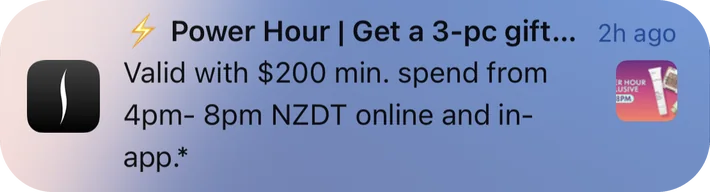
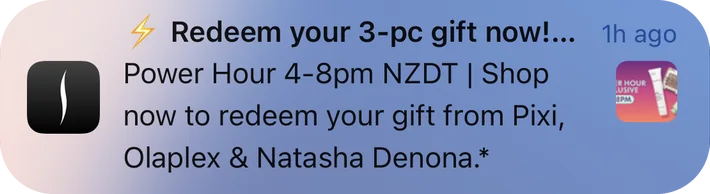
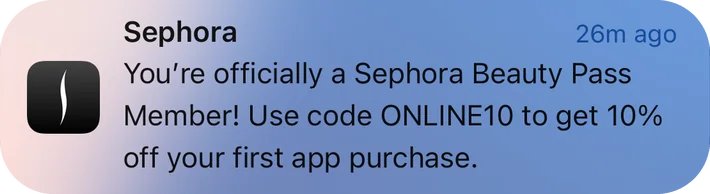
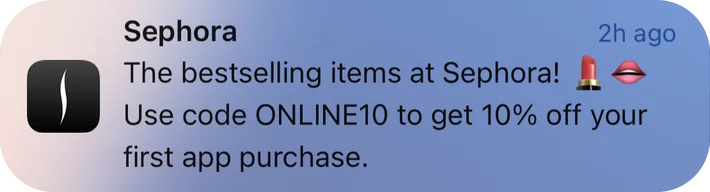
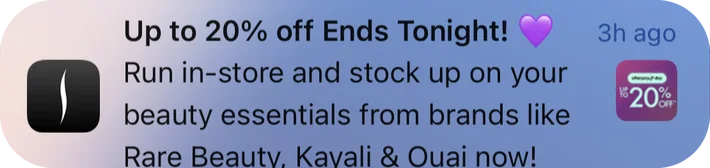
Sephora’s push is built for long-term engagement. Welcome offers, limited-time discounts and gifts with purchase get customers buying and into the loyalty program, where the program and the convenience of the app drive lifetime value.
Simple Modern
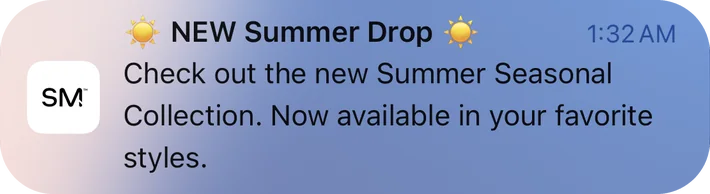
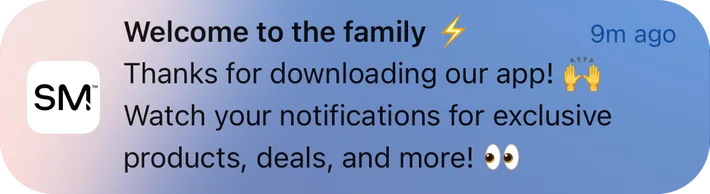

Simple Modern doesn’t appear to do more than the basics: a welcome message, abandoned cart, and a broadcast for a new collection. For a brand with this many products and complementary lines, there’s a lot more it could do with push.
Tobi
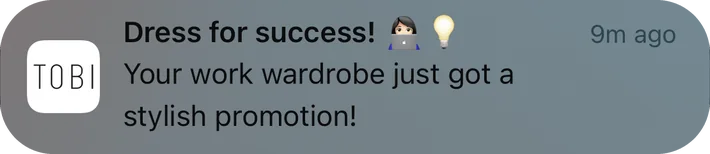
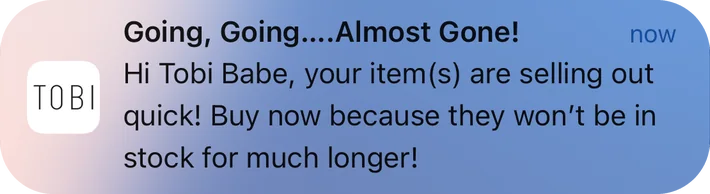
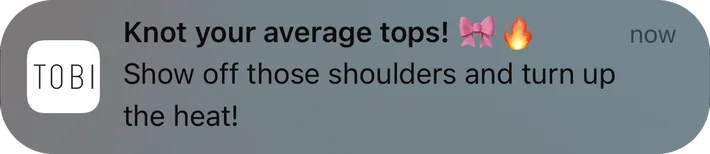


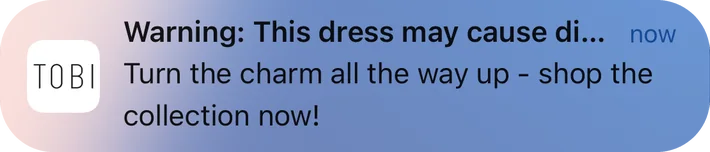
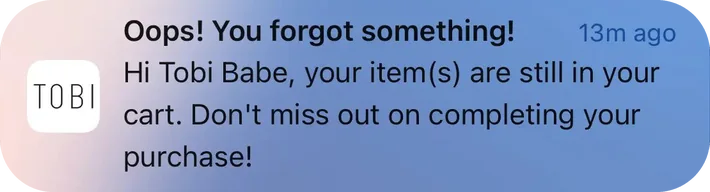
Tobi is playful and on-brand. It sends only three a week, but they’re unintrusive and positive, and aim for app opens that cost nothing. A multi-step abandoned cart sequence stops revenue slipping away.
Your push quickstart guide
A lot of brands would love to drive more revenue and engagement with push, but don’t know where to start.
Here’s a practical playbook: the core journeys to set up first, what makes a notification work, and how to aim it at the right people.
Core push journeys
| Journey | Goal | Trigger and timing | Seen at |
|---|---|---|---|
| Welcome and first purchase | Turn an install into a first order | Straight after install; again 24 hours later if they haven’t bought | Muscle Republic’s “WELCOME TO MSCR” with a 20% code |
| Onboarding | Show what the app does, and learn what they like | Three messages over the first 72 hours | Farfetch: “Welcome to FARFETCH”, then “See what’s new” |
| New in and drop alerts | Build a browsing habit | When a followed category gets new stock, or for a store-wide drop | ASOS, LSKD, Mr Porter |
| Low stock and price drop | Create urgency, and clear stock | When a viewed product runs low or gets cheaper | LAAM’s “Selling Out Fast”, JD Sports’ “MOST WANTED ALERT” |
| Abandoned cart | Recover revenue | An hour after the last visit, with something in the cart and no order | Muscle Republic’s “DID YOU FORGET SOMETHING?” |
| Win-back | Bring back lapsed customers | After 14–30 days without an open | Motel Rocks’ “we miss you” with its 15% code |
Writing a push that works
| Element | What works |
|---|---|
| Title (about 25 characters, one line) | A clear offer (“Extra 20% off”), curiosity (“Guess what just landed?”), or capitals for urgency, as LSKD does |
| Body (up to about 80 characters) | One sentence with one benefit. Name the designers for luxury, as Mr Porter does. Longer paragraphs get cut off |
| Emojis | None to two, chosen to back up the message (⏳ for a countdown, 👉 for a call to action), if they suit your brand’s voice |
| Incentives | One code, used again and again (Motel Rocks’ HELLO15). A gift with purchase protects margin better than a blanket discount, as Muscle Republic shows |
Broadcast or triggered?
| Model | When it fits | Example |
|---|---|---|
| Editorial broadcasts | You curate a large range that changes daily | Mr Porter sends three or four category edits, spaced about three hours apart |
| Launch sprints | A limited drop or a sample sale | LSKD: 48 hours out, 24 hours out, “it’s live”, then “last chance” |
| Triggers only | A smaller range with healthy margins | Browse and order triggers, and very few broadcasts |
Segmenting and personalising
| Level | Data you need | Example |
|---|---|---|
| Basic | Gender, region | Cider’s “Spotty Swim” only to people browsing women’s swimwear |
| Intermediate | Categories viewed, spend | Mr Porter’s “Upgrade your footwear rotation” to shoe browsers |
| Advanced | Predicted lifetime value, response to discounts | A gift with purchase for big spenders, a percentage off for code lovers |
Push notification templates
If you don’t know what to send, start here. Each template is a notification ready to copy, personalise for your brand, and send. The green words are the parts you fill in.
Welcome and onboarding
Welcome and first purchase
Send Right after install. Send the second version 24 hours later if they haven’t ordered.
Onboarding drip
Send Days 2–3 after install, to show off what the app does and learn what they like.
Feature adoption
Send When you ship something new in the app that shoppers would want to know about.
New in and launches
New in
Send When a category someone follows gets new stock, or with each new season or collection.
Countdown launch series
Send In the two days before a limited drop, then as it goes live and just before it closes.
Soft then hard launch
Send The day before a launch, then the moment it’s live.
Category edit
Send A few times a week if you curate a large range: one category, your buyers’ picks.
Brand spotlight
Send When a new label or collaboration lands, for multi-brand retailers.
Content push
Send When you publish a guide, video or lookbook worth an open, with no sale attached.
Pre-order invite
Send When a product opens for pre-order or goes on backorder.
Live shopping event
Send Five minutes before a live stream starts.
Urgency and offers
Back in stock
Send When something a shopper saved or asked about is back.
Low stock
Send When a product someone viewed drops below a stock level you set.
Price drop
Send When the price falls on a product someone viewed.
Wish-list sale
Send When a wish-listed product goes on sale.
Flash sale
Send At the start of a short sale, with the end time in the message.
Gift with purchase
Send When a cart is close to the spend that unlocks a free gift. Protects margin better than a discount.
Buy now, pay later
Send Around payday, or on higher-priced products, if you offer split payments.
Cart and browse recovery
Abandoned cart
Send About an hour after someone leaves the app with something in their cart.
Abandoned browse
Send A few hours after someone browsed a category without adding anything.
Abandoned browse, then a price drop
Send When something a shopper browsed and left goes on sale.
Win-back
Send After 14–30 days without opening the app.
Loyalty and milestones
Loyalty tier unlocked
Send The moment a customer moves up a tier.
Birthday
Send On the customer’s birthday.
Anniversary
Send A year after their first order or sign-up.
Order milestone
Send On a round-number order: the 10th, the 50th, the 100th.
Activity milestone
Send When a customer hits a milestone in your app, like workouts logged or points earned.
Referral ask
Send After a second order or a good review, when they’re happiest with you.
Prize draw
Send On a day you want to lift orders, with the draw time in the message.
Surprise and delight
Send Unannounced, a few times a year.
After the order
Thank you and photo ask
Send When the order is packed.
Shipping confirmation
Send When the order ships.
Out for delivery
Send The morning of delivery.
Review request
Send A few days after delivery.
Returns reminder
Send A few days before the return window closes on an order.
Seasonal and local
Seasonal and holiday
Send Ahead of the dates that matter in your calendar.
Local weather
Send When the forecast turns in a region you can target.
Near a store
Send When a shopper who has shared their location is near one of your stores.
Charity or cause
Send On the day you give a share of sales to a cause.
The push swipe file
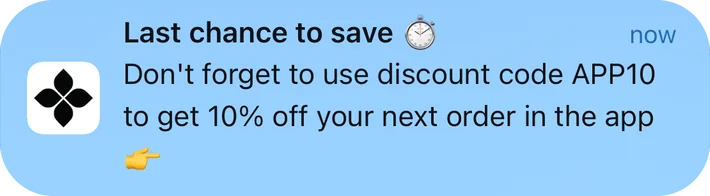
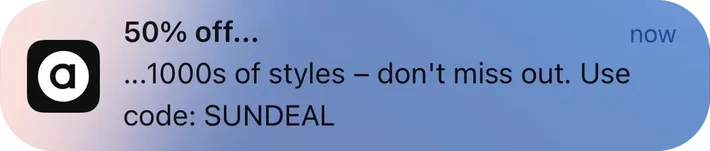
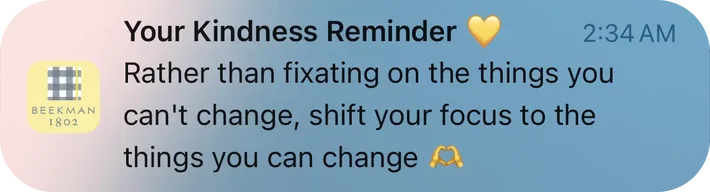
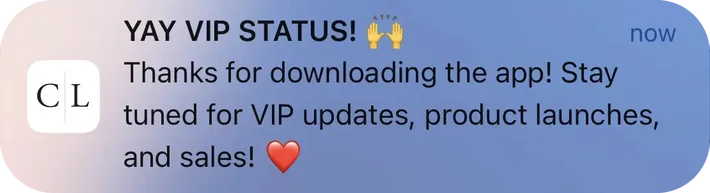
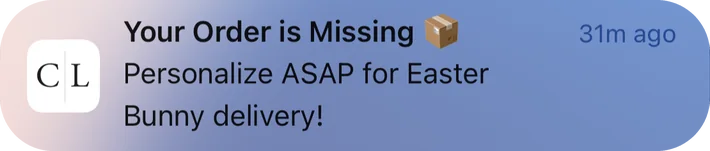
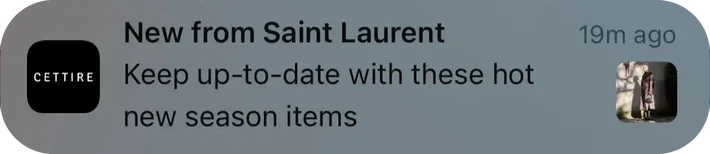
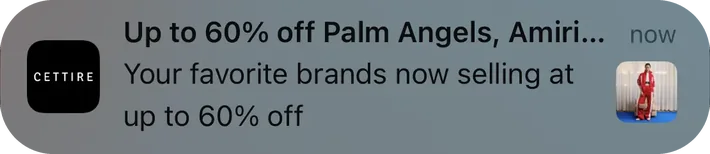
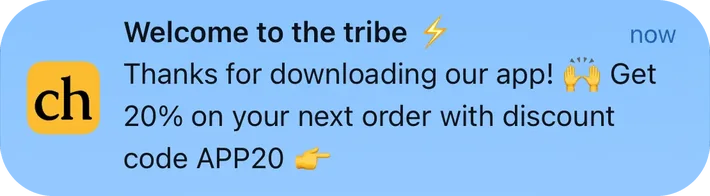
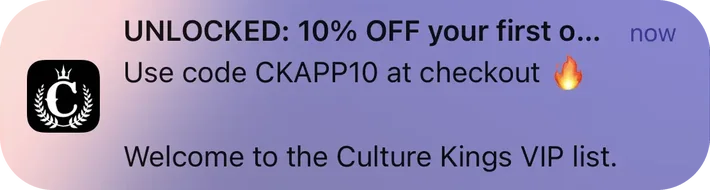
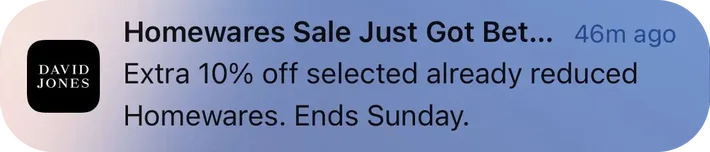
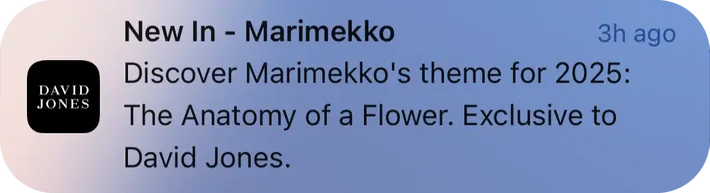
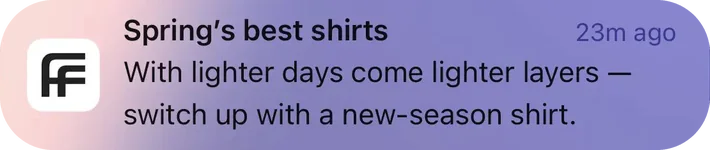
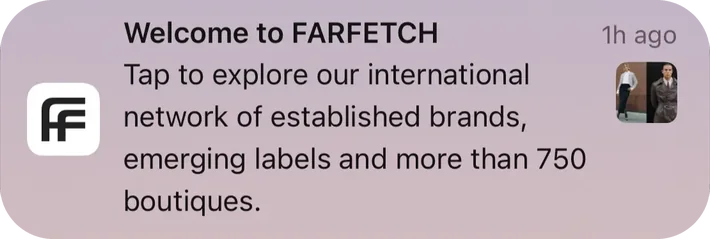
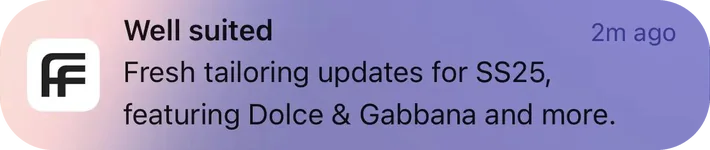
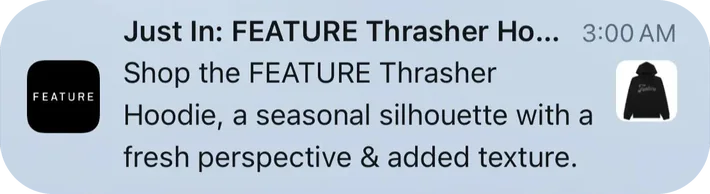
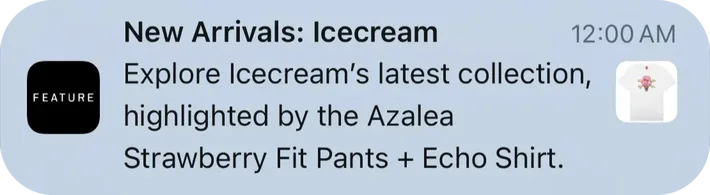
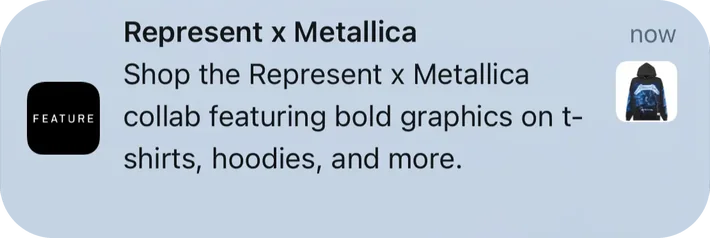
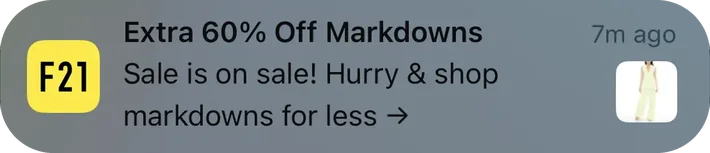
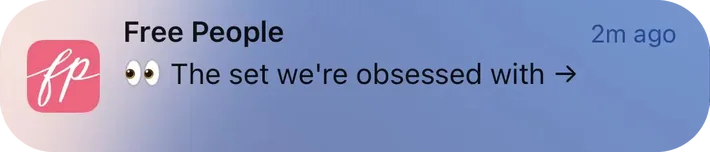
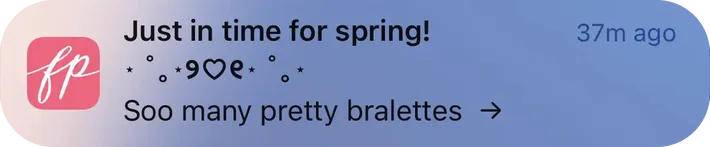
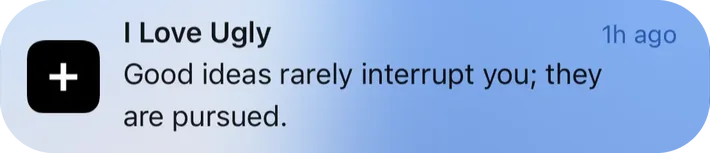
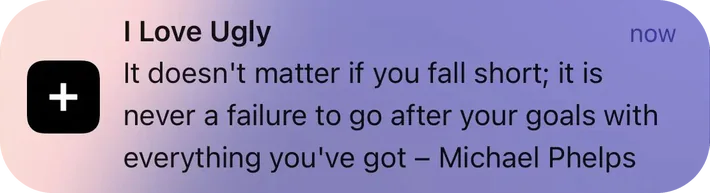
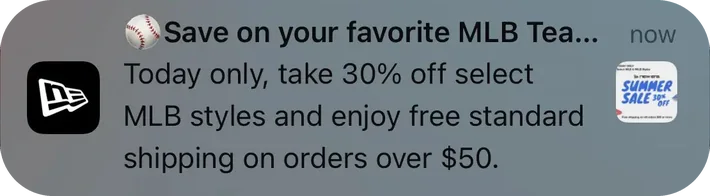
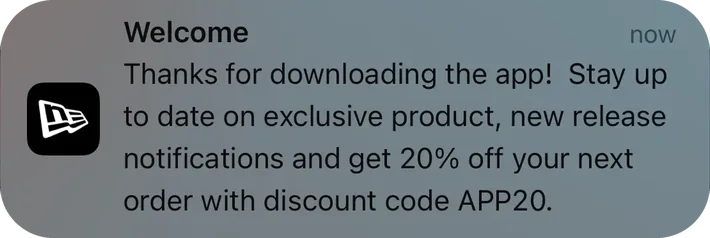
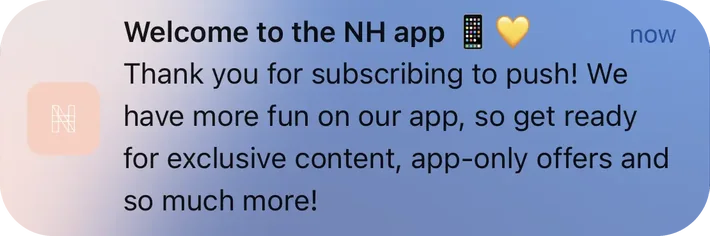
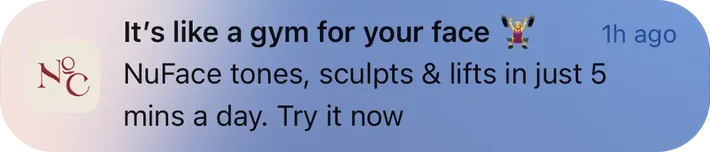
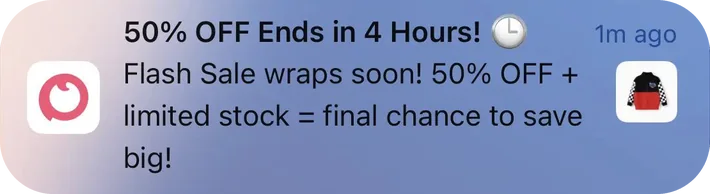
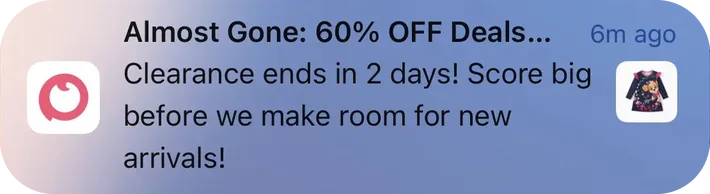
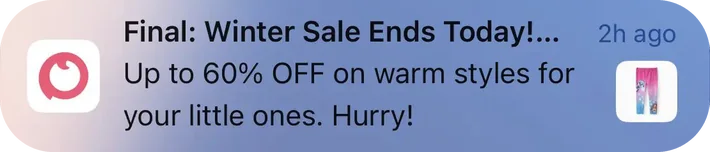
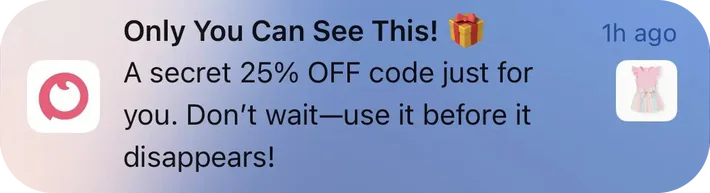
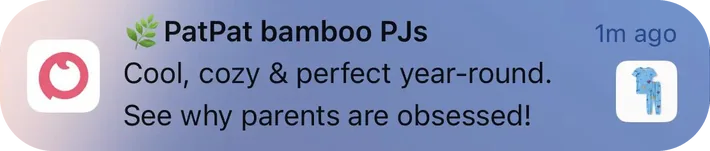
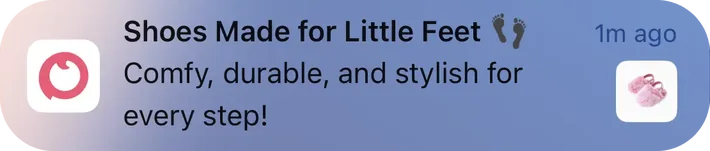
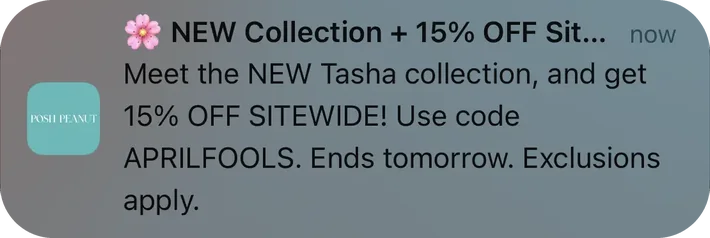
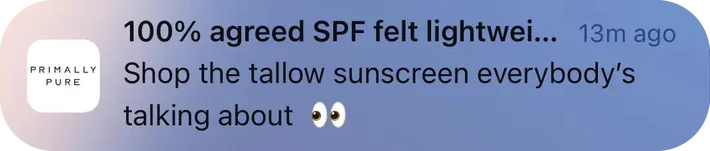
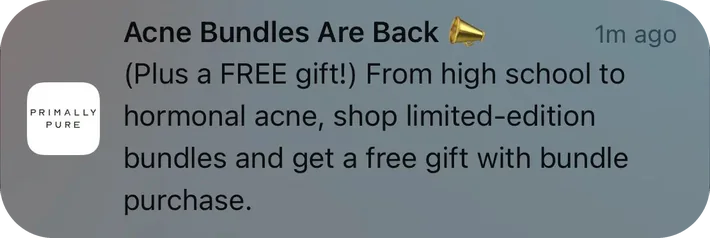
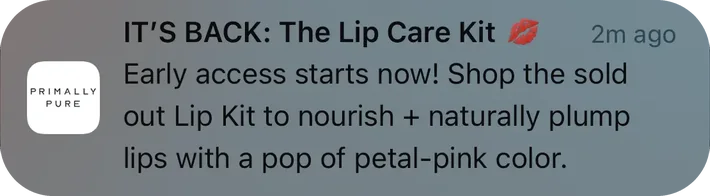
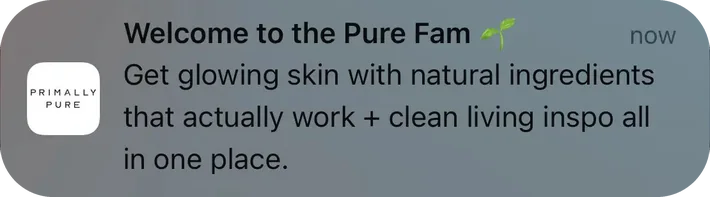
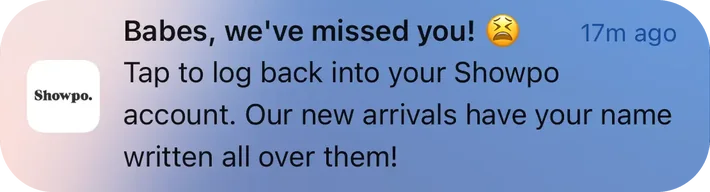
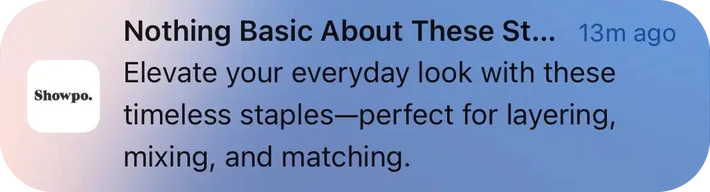
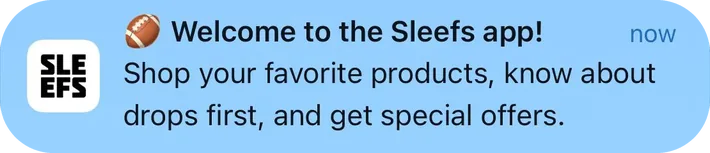
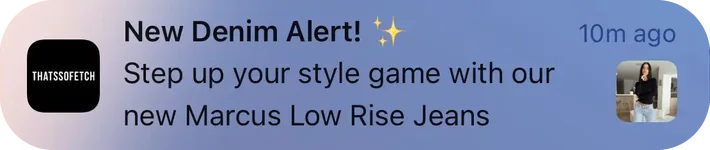
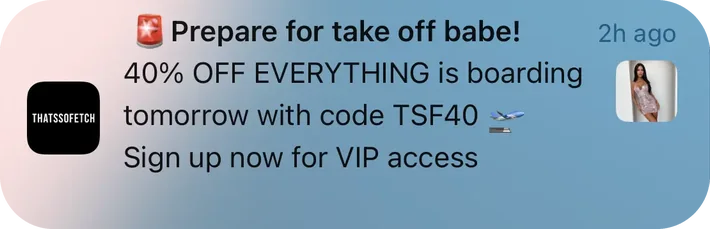
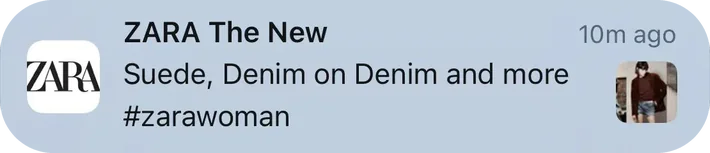
All 249 notifications we saved, from 48 brands. Filter them by the kind of message, or by brand, for ideas you can use.
Showing all 249





















None of this brand’s notifications are of that kind. Try another filter.
Start sending push
There you have it: how brands that are all-in on push use it, what their strategies look like, and a kit of journeys, tips and templates to start your own.
In other words, everything you need to add the most underused channel to your retention strategy.
If you want to launch your own app and drive new revenue with push, but don’t have the time or people to start, MobiLoud can help. We’ll launch your app with minimal effort from your team, and we can even run your push campaigns for you with our done-for-you service.
Check out the links below to learn more about MobiLoud.
Want to see exactly how your app will look and feel?
We’ll build you a live, interactive preview with no commitment required.
It’s the fastest way to experience how your brand can stand out, drive more repeat sales, and stop getting lost in email inboxes.
Get a free preview of your appYour website is already doing the hard work. With MobiLoud, you can turn it into a high converting mobile app in days.
No rebuilding, no code, no extra tech headaches. Just a powerful new channel for your most loyal customers.
See what we do